Theater Review: 'Man of La Mancha' Ticks Off All the Right Boxes
Nelsito Gomez’s direction is a valiant attempt at reimagining dated material, inadvertently laying bare its cracks.

Published on Jul 6, 2026
It's been more than a week since Repertory Philippines' staging of Man of La Mancha ended its month-long run of sold-out shows, standing ovations, and rave reviews—and I do agree with most of them, to an extent.
Nelsito Gomez, in the director's chair, did an amazing job at reimagining the material: a 1965 musical with a book by Dale Wasserman, music by Mitch Leigh, and lyrics by Joe Darion. To say that it is a classic is an understatement, especially with the connotation of "classic" as old. Man of La Mancha is adapted from Wasserman's 1959 non-musical teleplay titled I, Don Quixote, which was inspired by Miguel de Cervantes' The Ingenious Gentleman Don Quixote of La Mancha (more popularly known as Don Quixote). It was originally published in two parts in 1606 and 1615. The recent REP production carries with it 120 years of literary history.
Don Quixote is also widely accepted as the first modern novel, a "classic"—which means to say of the highest quality. When it was released, it unapologetically broke tradition, which at the time consisted mostly of epics, allegories, and heroes. But Cervantes' Don Quixote features complex characters, human beings who changed over time, and introduces multiple viewpoints in the dialogue. It supposedly remains a classic because it captures the fundamental human struggle between idealism and realism.
Yet, it must not be forgotten that themes and concepts can get muddled in the adaptations, and the passage of time may or may not be agreeable to this. For one, Cervantes' 17th-century masterpiece speaks of the dangers of losing touch with reality, following the aging Alonso Quijano who ultimately goes mad from reading chivalric romances and hilariously but tragically tries to revive knighthood as Don Quixote in a world that has outgrown it. Wasserman's mid-20th-century musical adaptation, on the other hand, transformed it into an almost aggressive celebration of delusion, where the central anthem is "The Impossible Dream." And watching the musical in the bleakness of 2026 reveals its underlying escapism.
It is precisely this friction that subjects REP’s revival to a larger cultural discourse: What qualifies a work as a classic, and does every classic necessitate a revival? Also, we must not forget that “classics” are deemed such by certain groups of people, often those considered experts or with authority. Considering the history of the academe, which women did not have access to until the 19th and 20th centuries, that’s usually white and male.
An Immaculate Production
On paper and on stage, the production values are immaculate—Gomez and his team have mounted a staging that ticks off every single box of theatrical excellence.
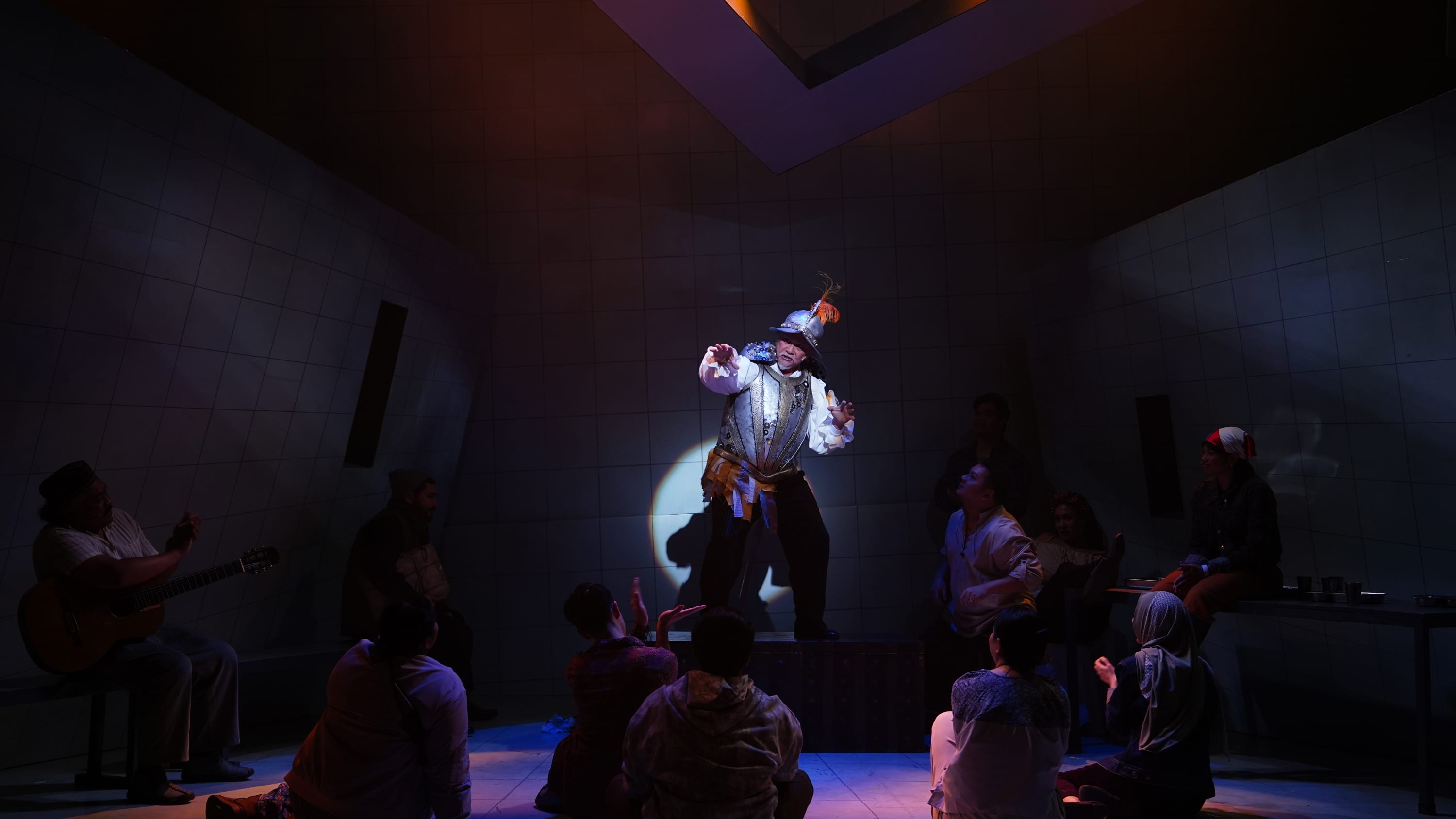
Julio Garcia's set design immediately transports the narrative to a modern-day prison. There's a floor-to-ceiling fence in front, creating a rather generic holding cell, but one that's not exactly about justice or rehabilitation. The characters that Gomez put behind bars obviously represent people who should not be there, but are there because of the color of their skin and/or their religion, making it about militarization and dictatorship. Detention centers and torture camps immediately come to mind (rather than Wasserman’s Spanish Inquisition setting)—an attempt to make the story current, while emphasizing that its truths remain universal.
The panels on the side hang from the ceiling, and when the imprisoned Cervantes (played by Nonie Buencamino) starts off the play within the play (a.k.a. the imagined story in prison), the walls lift off the ground and open up the stage at an awkward angle. The instability of the hanging panels is obvious, but it also gives off that necessary tone of unpredictability happening in Cervantes' imagination.
D Cortezano's lights, though not his best work, straddle the real and the imagined, with red and blue lights visible as both the present-time sirens and as setting in the narrative of Cervantes-as-Alonso Quijano-as-Don Quixote.
Finally, the same gesture of opening up the stage to create the imagined shines the spotlight on the live band at the back under the musical direction of Farley Asuncion. The music is a beauty; the voices—especially of Marvin Ong, who plays Sancho Panza (manservant of Cervantes); and Katherine Sunga, who plays Aldonza/Dulcinea—deserve the standing ovations previously mentioned.
Buencamino, likewise, is a reflection of craft—shifting from a philosophical Cervantes to the erratic Alonso Quijano, and finally to the hopeful Don Quixote, capturing every nuance of these complex personas.
To look at the staging alone is to witness a visually arresting direction with Gomez at the helm. But even long after the show closed its curtains, it’s hard to forget the dissonance that breaks open from the dated text: first, its treatment of trauma and, second, its philosophical POV.
Rape as a Plot Device…Again
Western literature often depicts rape as a means of establishing male dominance, both from the villain (who does the deed) and from the protagonist (whose heroism is propelled). We've seen this in Ovid’s Metamorphoses (before 8 BC), Shakespeare's Titus Andronicus (1594), W.B. Yeats’s Leda and the Swan (1923), and so on.
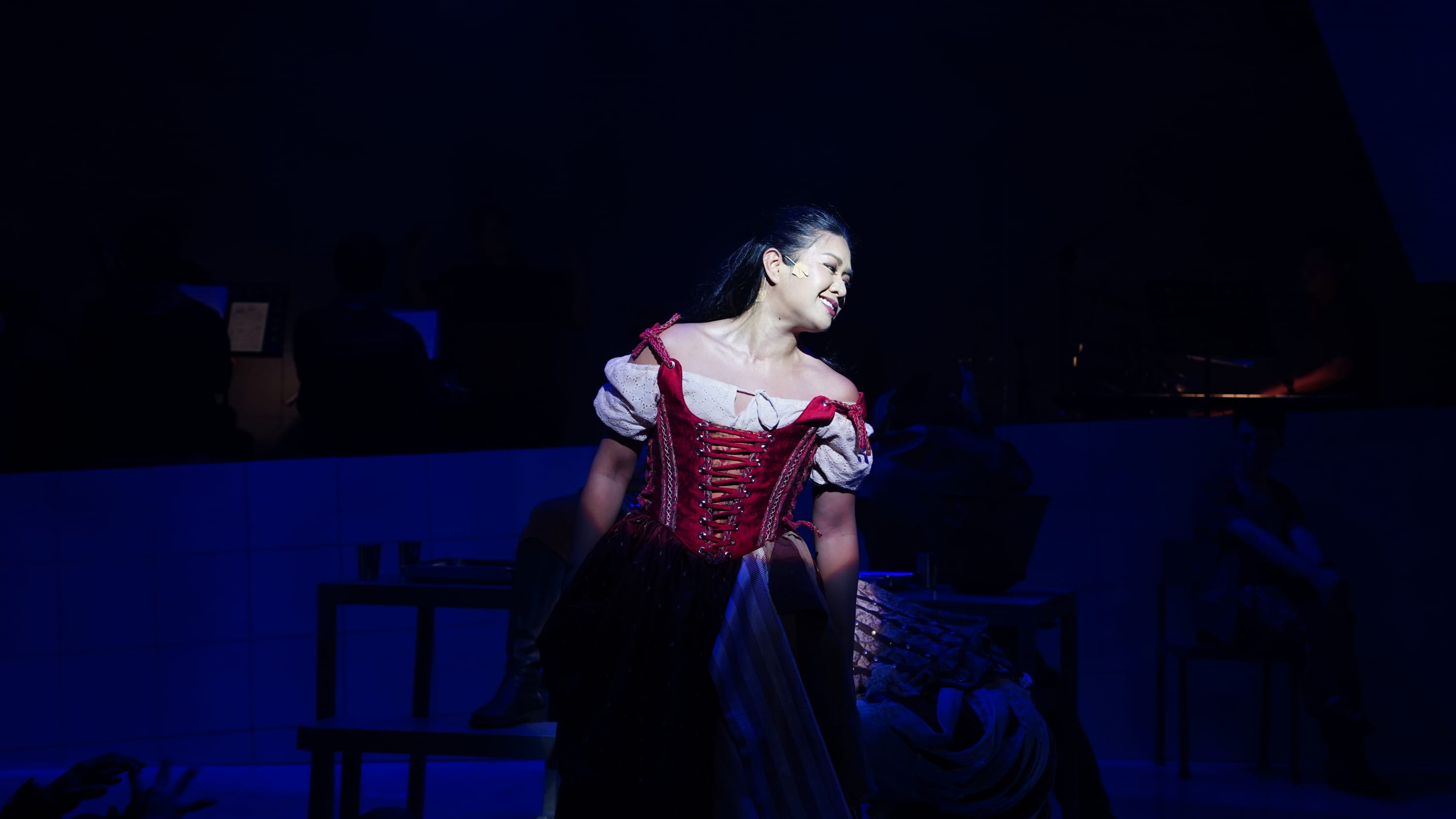
This is also true in Man of La Mancha, where Aldonza, inspired by Cervantes/Quixote's words of showing kindness to one's enemy, goes to the muleteers' lair with the hopes of tending to their wounds. Instead, they beat her, rape her, and carry her off in "The Abduction" scene.
Gomez directs this infamous, brutal sequence of Aldonza's assault with sensitivity, opting for a stylized abstraction behind the table—conveying the horror with lights and sound (and the haunting singing of the ensemble). Still, it cannot be denied that Wasserman's material uses it as a shocking plot device to pick up the narrative's pace, then immediately shifts to the male protagonist's ego.
Simultaneously, as if putting salt on the wound (for the audience, at least, as Quixote is obviously unaware at this point), he goes on to sing the reprise of "The Impossible Dream."
When Aldonza—broken, bleeding, and traumatized—confronts Quixote, the narrative ignores the pain and centers his delusion. The knight stubbornly refuses this reality and insists on calling her his "Dulcinea."
Later on, her trauma still unacknowledged, Aldonza yields to Quixote's delusion on his deathbed. And the musical treats it as a beautiful spiritual awakening in yet another man's moral journey.
Additionally, viewed through the lens of travel literature frameworks—given that Man of La Mancha operates as a hero's journey—Aldonza falls squarely into the trope of the "voiceless young woman," a concept articulated by Pritchard and Morgan in their 2025 study, "Privileging the Male Gaze." While she initially asserts her autonomy by fending off the muleteers in the scene "It's All the Same," her character ultimately succumbs to this reductive narrative trap.
Delusion vs. Actionable Hope
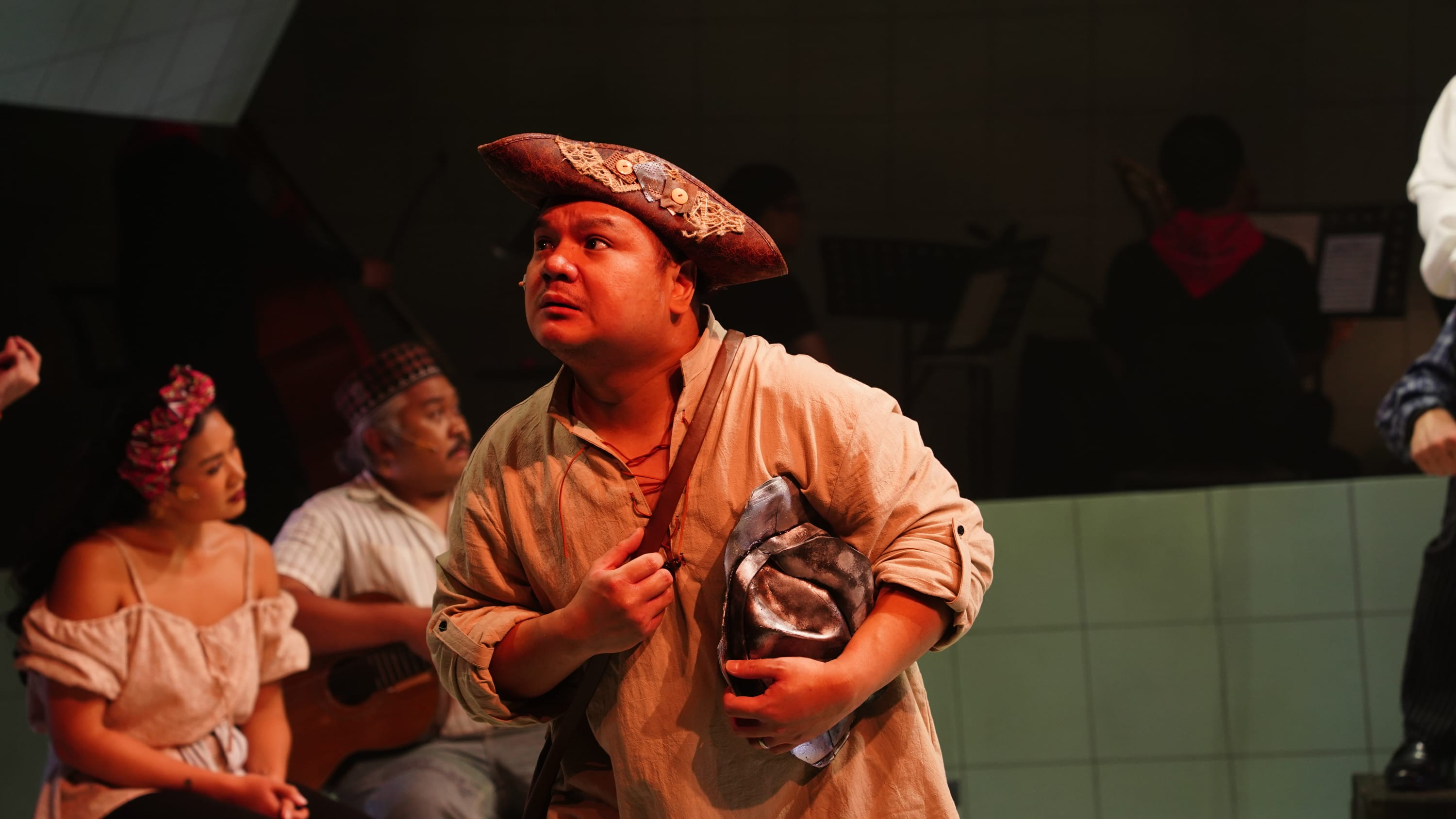
At their core, Don Quixote and Man of La Mancha are celebrated for their themes of hope and perseverance in a cruel world—again, one more than the other. In the time of Cervantes and Wasserman, this may seem like a defiance, where romanticism protests industrialism, but in this century, it borders on escapism, almost leading to the privilege of detachment.
Cervantes, while inside the dungeon, holds on to his imagination and escapes to a world of gallantry. It posits that "dreaming the impossible dream" is an inspiring antidote as we deal with systems of injustice.
At the end of Man of La Mancha, Cervantes is finally taken to trial, and the rest of the ensemble sings "The Impossible Dream". It's a call on the collective to dream the impossible dream together, as one. But is it enough to truly shake up the systems in place?

This is a review of the matinee performance on June 7, two days after opening.
Man of La Mancha ran from June 5 to 28, 2026, at REP Eastwood Theater, 4/F Citywalk 2, Eastwood, Quezon City.
ALSO READ:
Theater Review: 'Jesus Christ Superstar' Finds its Groove in Week Two
Theater Review: Miranda & Yolanda Reaffirms the Expansive Range of Floy Quintos
Christa I. De La Cruz is a Palanca Award-winning writer with over 15 years of experience in feature writing for print and digital media. She earned her Sertipiko sa Malikhaing Pagsulat sa Filipino from the University of the Philippines Diliman and holds an MFA in Creative Writing from De La Salle University.
View More Articles About: