Q&A: Christian Bale on Bringing Frankenstein to Life—Punk-Rock Style
Director Maggie Gyllenhaal is giving the world’s most famous monster a wild, ‘Sid and Nancy’–inspired makeover.

Published on Mar 1, 2026
By now, many of us have likely seen Guillermo del Toro’s haunting, gothic take on Frankenstein that took over Netflix last November. But if you thought you’d seen everything the big guy had to offer, think again. Academy Award-nominated writer/director Maggie Gyllenhaal flips the script with a version that’s less "creepy castle" and more "punk rock rebellion."
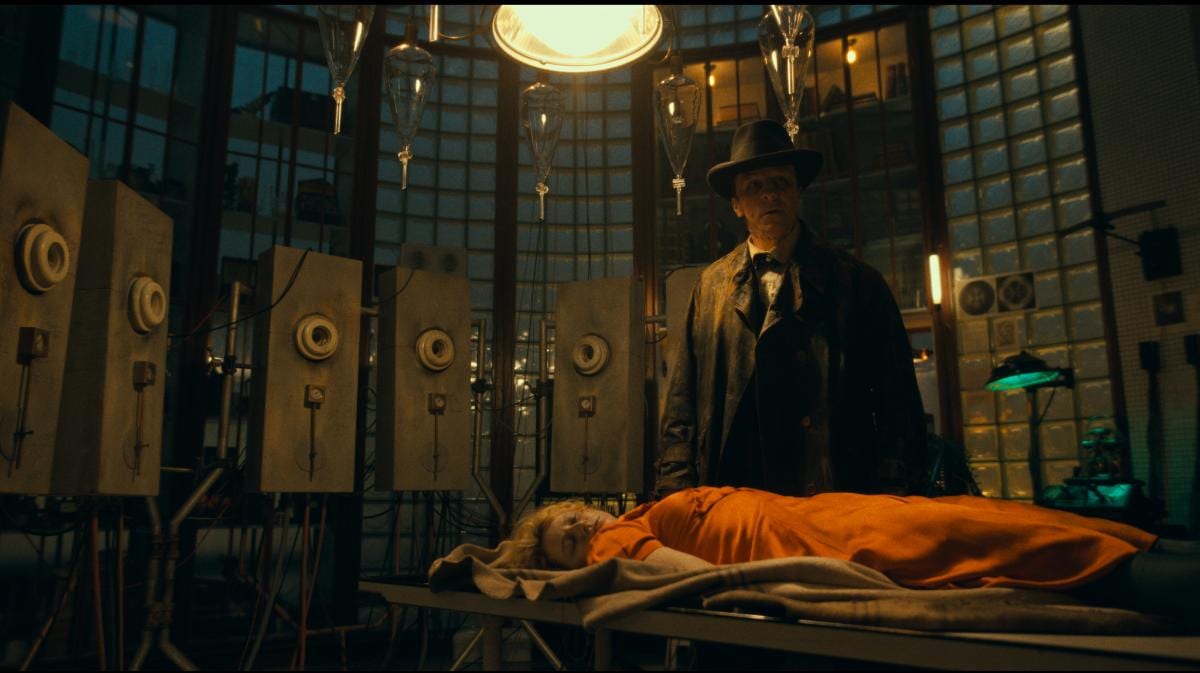
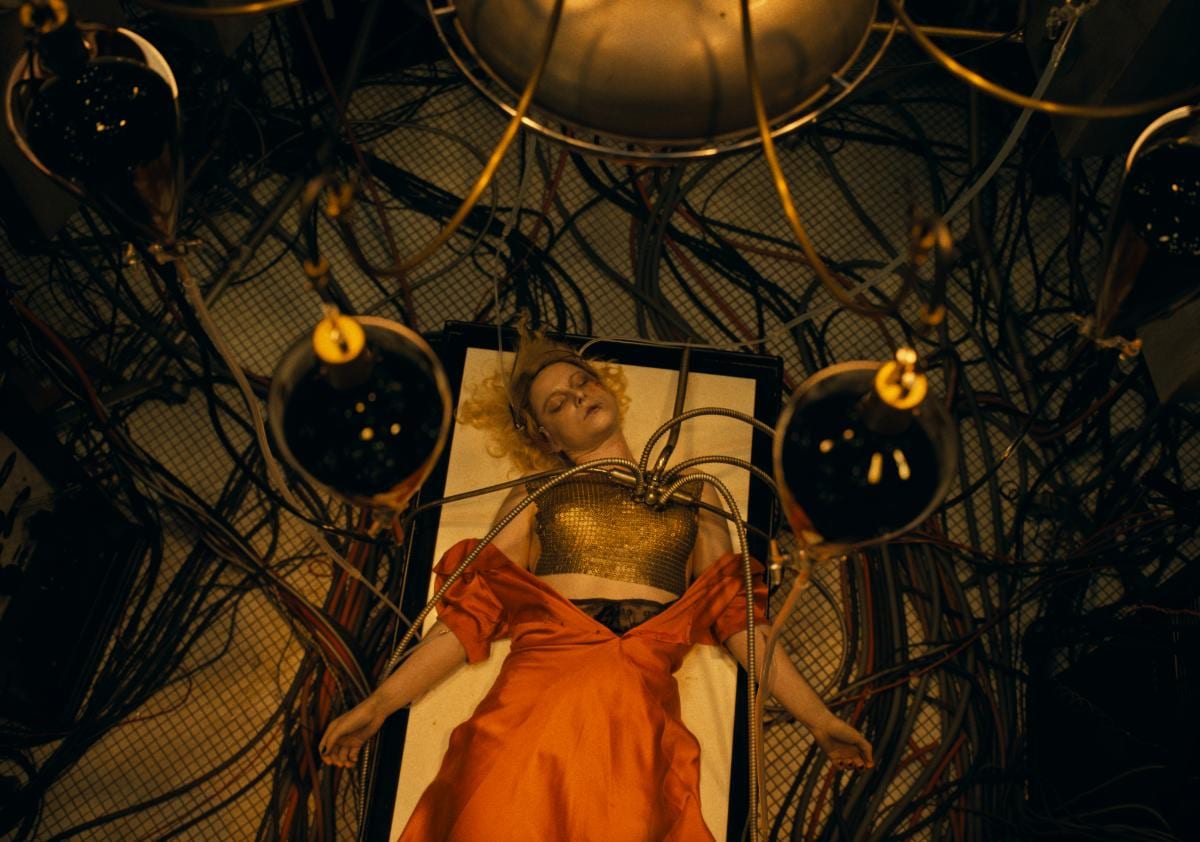
In The Bride!, we find Frank (Christian Bale), a sentient, intellectual creature who has spent over a century with only loneliness as a companion. He heads to 1930s Chicago to find a cure for his solitude, enlisting Dr. Euphronious (Annette Bening) to create a partner. But when The Bride (Jessie Buckley) is revived, she isn't just a companion, she’s a "firecracker" who sparks a wild, combustible romance and a radical cultural movement.
In this exclusive Q&A, Bale talks about the "radical" script he couldn't put down, the "reckless" energy of working with Buckley, and why you need to see this wild, big-swing movie on the big screen.
When you first read the script, what stood out to you and made you want to be part of the project?
Christian Bale: Totally surprised. Loved the script. This was really original. A great radical punk rock take on this. It made me think of Rage Against the Machine’s “Killing In The Name”—"Fuck you, I won’t do what you tell me.” And it was exciting as hell. I couldn’t put it down. Hats off to the people who were willing to take a big swing with it, and that was Warner Bros. But a test for me is always, “Can I ignore something? Can I forget about it? Can I throw it away?” And it just really lingered with me. It had such great fiery, electric moments throughout it. I just couldn’t forget about it.
What was your experience like collaborating with Maggie Gyllenhaal as a director and Jessie Buckley as a co-star?
CB: I knew that there was a great talent between Maggie and Jessie. I don’t watch many films, but I’d seen The Lost Daughter. And then there was also the opportunity to play such an iconic character as Frankenstein’s monster, but a very human one years later, as Frank. And of course, to do it with Maggie, with incredible writing. She’s a wonderful director, obviously. I’ve never been directed by her—Jessie has—but she’s really great. She has this sort of flow and an ability to understand what was helpful for us to hear, whispering in your ear beforehand.
Jessie herself is an absolute revelation. I mean, both Maggie and Jessie—an incredible arrival—two amazing talents who are going to continue to make some incredible stories in the future. There are so many different elements, but there’s great passion. When you feel somebody has made something the way that Maggie has—an original piece that they care greatly about—you get that passion naturally. It just happens. People want to be a part of that. There’s an energy to that which you want to ride alongside.
How did you approach creating your version of Frankenstein’s monster, and what influences—historical, literary, and cinematic—shaped your idea of Frank as a more human character?
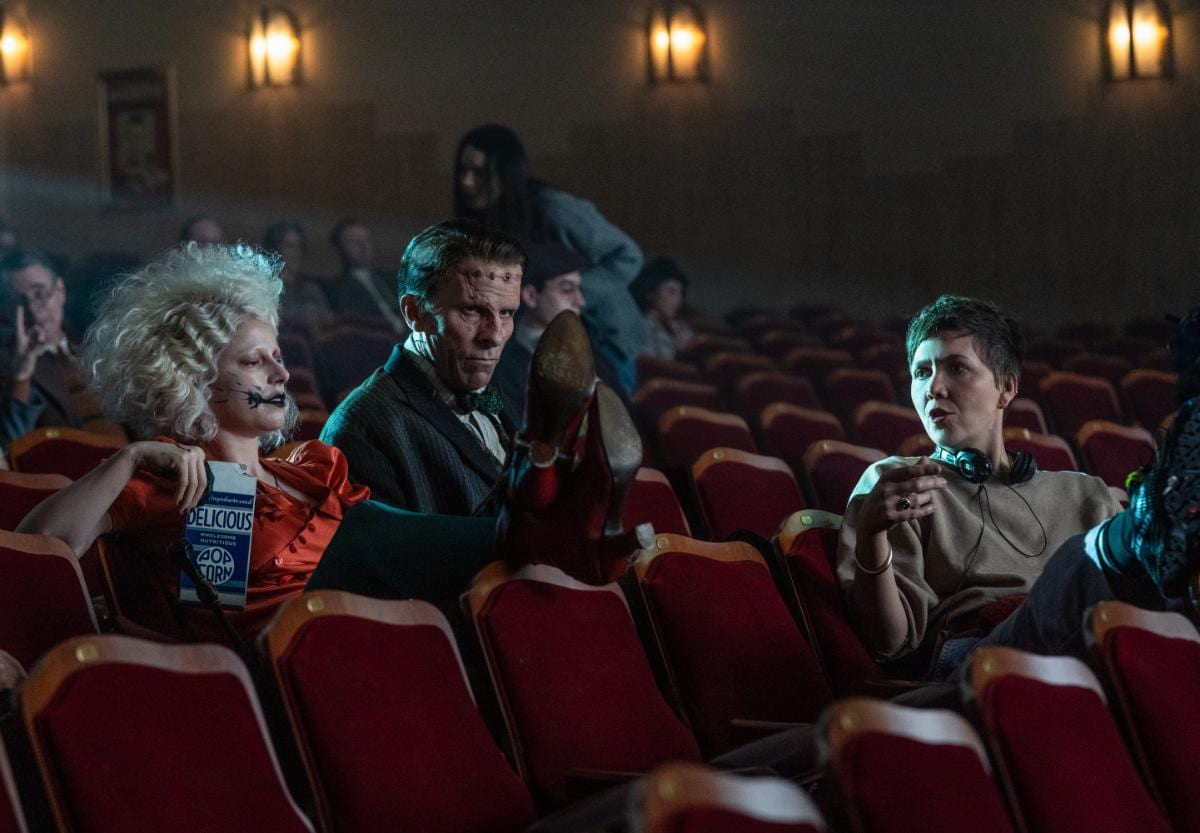
CB: I certainly looked through a great deal—there are too many versions to get through. Frankenstein’s monster appears in so many of them, some of them hilarious. But I liked exploring the idea that there was this Italian scientist, Galvani, who, in 1780, discovered that an electrical spark could animate parts of dead animals, and thinking, “Well, maybe Mary Shelley read or heard about it.” From my point of view, I conceived that this really happened, and that she was writing about having heard of this real monster and got it a little bit wrong. I liked incorporating Karloff’s look, without the flat head, of course, which has always fascinated me—he looks wonderful, but where is the sense in a flat head suggesting that he’s actually made of exhumed body parts?
I combined all of these to create this Frank, who’s a far more human take, because he’s been around for 100-plus years and suddenly finds himself in 1930s civilization. He’s going from someone who’s done enormous, terrible acts in his younger years because of a lack of understanding—abandoned by his father, nobody teaching him whatsoever, immense strength—to a point where, when we meet him now, he’s had a lot of time to teach himself how to talk. I feel like he’s probably sat in the woods sticking a knife in his head for years, filled with regret and guilt. He appears in Chicago just asking for a companion, because he’s dying of loneliness, as I think most of the characters in this film are. And he’d be happy just with somebody who’d sit on a log next to him for the rest of their lives, being quiet and sharing a piece of bread. But instead, he ends up getting this firecracker, this electric woman, who’s on a mission from God. He comes to realize that he thought he was alive, but he was really just breathing—and so begin these insane tales of their adventures.
With so many iconic portrayals of Frankenstein’s monster already out there, how did you decide what made this version worth revisiting, and how did you go about making it your own?
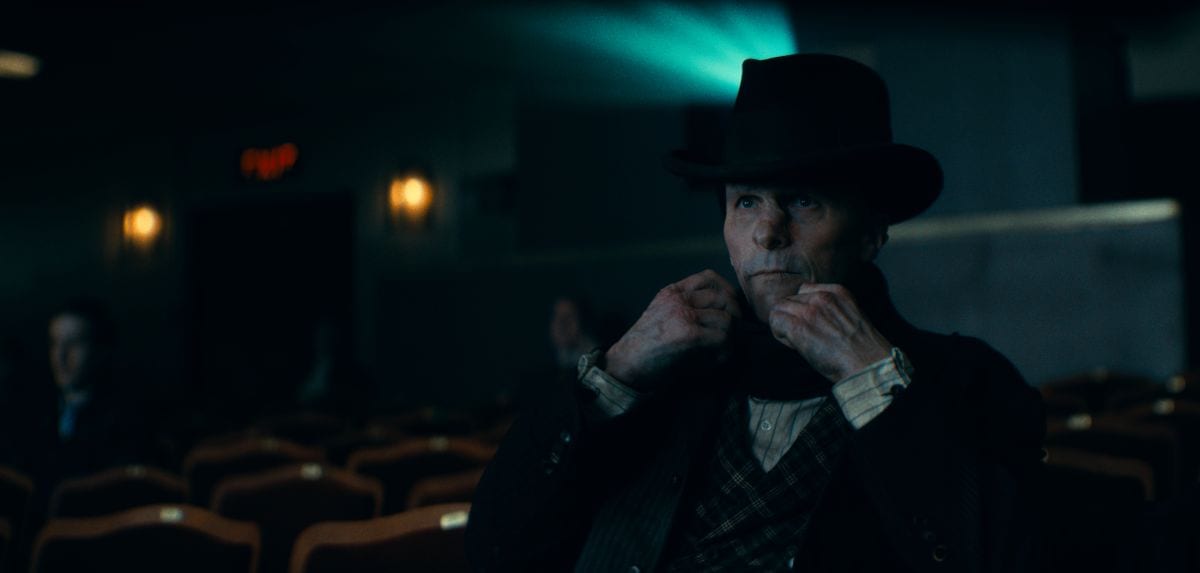
CB: I guess, first of all, it was just considering, “How many people have done this before, and why do it again? It’s got to be something new.” And I felt like this was something new. Very basic things, like the height—I’m not a big guy—but achieving that felt necessary. There’s a different tension in the room when there’s a man you know can do an immense amount of damage but is choosing not to, though he could change his mind at any given moment. That’s very much the image of Frankenstein’s monster. But this is also a far more emotional, cerebral, and relatable journey than perhaps we’ve been accustomed to. So I watched many of the different performances, and then, after a while, I just stopped and said, “All right, I have to try to create my own.”
How did you think about Frank’s idea of love and romance, especially when he’s contrasted with The Bride and her much more dynamic, modern energy?
Frank is quite old-fashioned in his approach to how romance should be—he’s a great fan of the black-and-white movies where you get these gentlemen and ladies who dance with top hats on, and for him, that’s the image of ultimate love. And then, when he meets The Bride and sees that this is a different animal, he adores watching her, because she’s so much more exciting than anything he ever could have fathomed. We also see that he’s very naïve and innocent in many ways, for all of the crimes he’s committed, and that he sees how dynamic she is and how full of life she is. He can’t quite do it himself, because he’s gotten used to a life of restraint and keeping out of the way—but he loves seeing her live that way.
What visual or cultural references did you draw on in shaping Frank and The Bride’s relationship, and how does that dynamic shift the story away from the usual ‘couple’ narrative?
CB: Visually, Sid [Vicious] and Nancy [Spungen] were very much the couple I looked at, especially Sid doing his “My Way” rendition in that white jacket, walking down the steps. But the difference here is that instead of Bonnie and Clyde, it’s Bonnie; instead of Sid and Nancy, it’s Nancy. She is the main character. The love they discover for each other is built on sand, because Frank is making it up—he cannot believe that his true story is enough for anyone to love him. Jessie plays Ida, who is reborn as The Bride. And that terrifying love is about her learning who she is, that she never has to let anyone define her, and that Frank is just along for the ride.
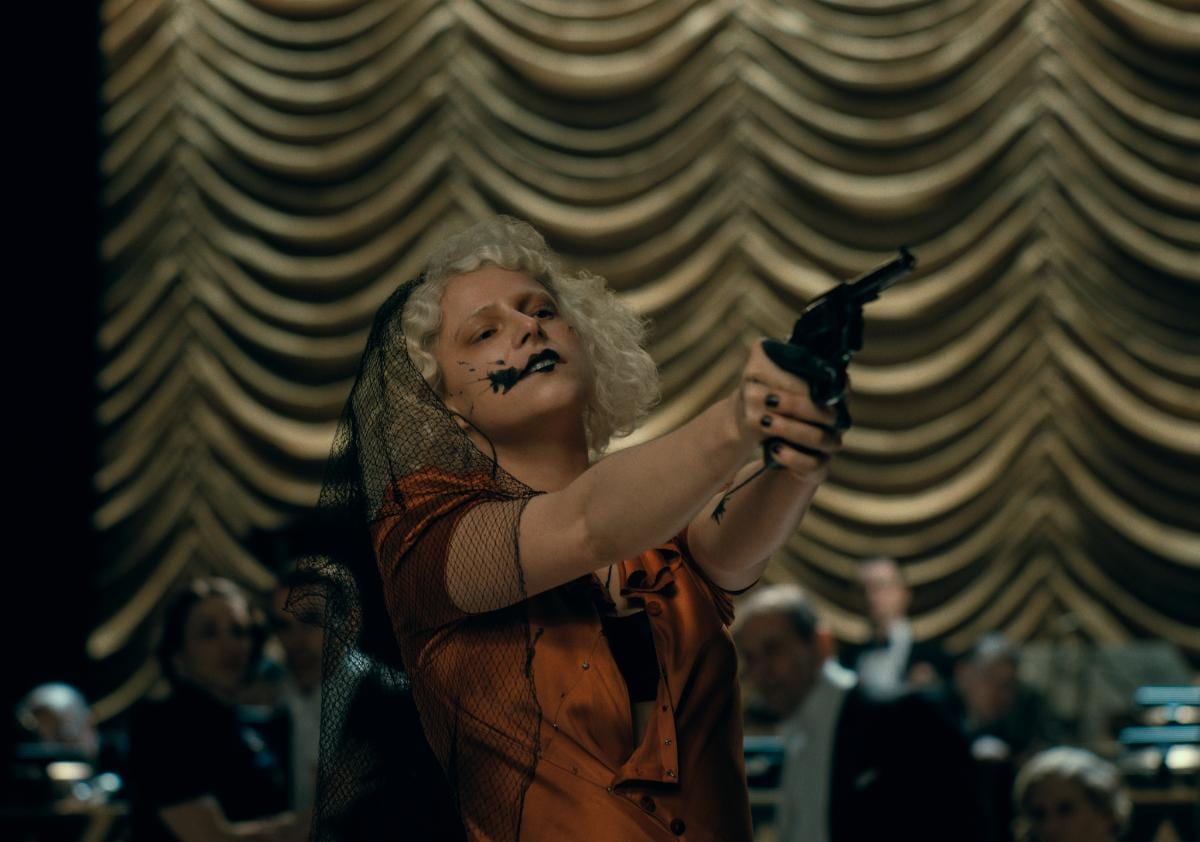
How does The Bride change Frank on an emotional level, and how does their relationship expand into something larger—about identity, rebellion, and what it means to be human?
CB: The Bride brings out more confidence in Frank. He’s terrified that if he lets himself go, other people will get hurt, so he’s lived a restrained life. She shows him there is a version of life where you can dream big and act with sensory overload without hurting people. They make mistakes, but this is a revelation for him after so long of waiting in silence. He loves her for that, and she loves him, but then she discovers the love is based on a lie, and that destroys them. This is a story of abandoned people, misfits screaming to the heavens for meaning, and it sparks a revolution in which people follow her because she expresses publicly what they feel privately. Even though they are monsters, they are very human and relatable.
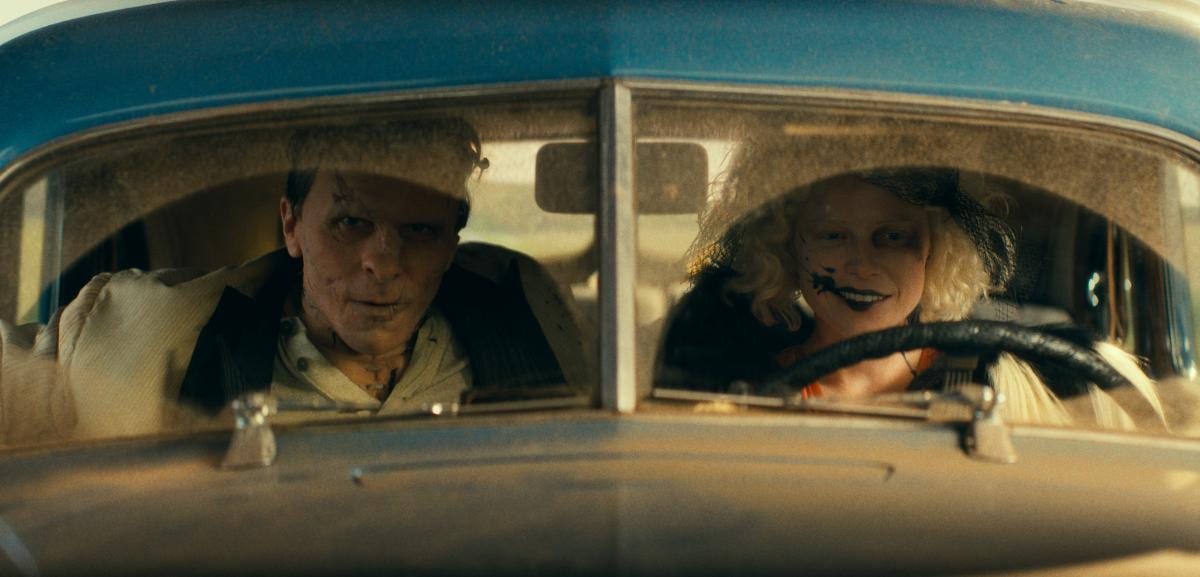
What was your first impression of Jessie Buckley as The Bride, and how did her approach shape the energy of your scenes together?
CB: I’ve only seen Jessie in The Lost Daughter. Maggie had told me what a generational talent she was, but I don’t generally like to watch other people’s work because I just like to see them as the character they are. And she killed it. She, Sandy [costume designer Powell], and Nadia [Stacey], who did the makeup, and everybody else just nailed it. She looked fantastic. And in the first scenes that I had with her, I was looking at her and going, “She’s The Bride, completely.” What impressed me most is that she’s wide open, full throttle, completely reckless in a wonderful way. You don’t want people playing it safe. There’s a danger to her, going off the rails, and she’s bloody great. Why would we do anything else?
And also, something else I love is that I personally get a great kick out of humiliating myself—thinking, “This might go really wrong, but I don’t care, we’ll figure it out.” And I felt like I could see that in her as well: a lack of restraint, no sense of wanting to be overly poised or controlled, somebody really stretching their boundaries. I also feel like she has that same love, hatred, and fascination with people, which I relate to deeply, and it keeps the work endlessly exciting.
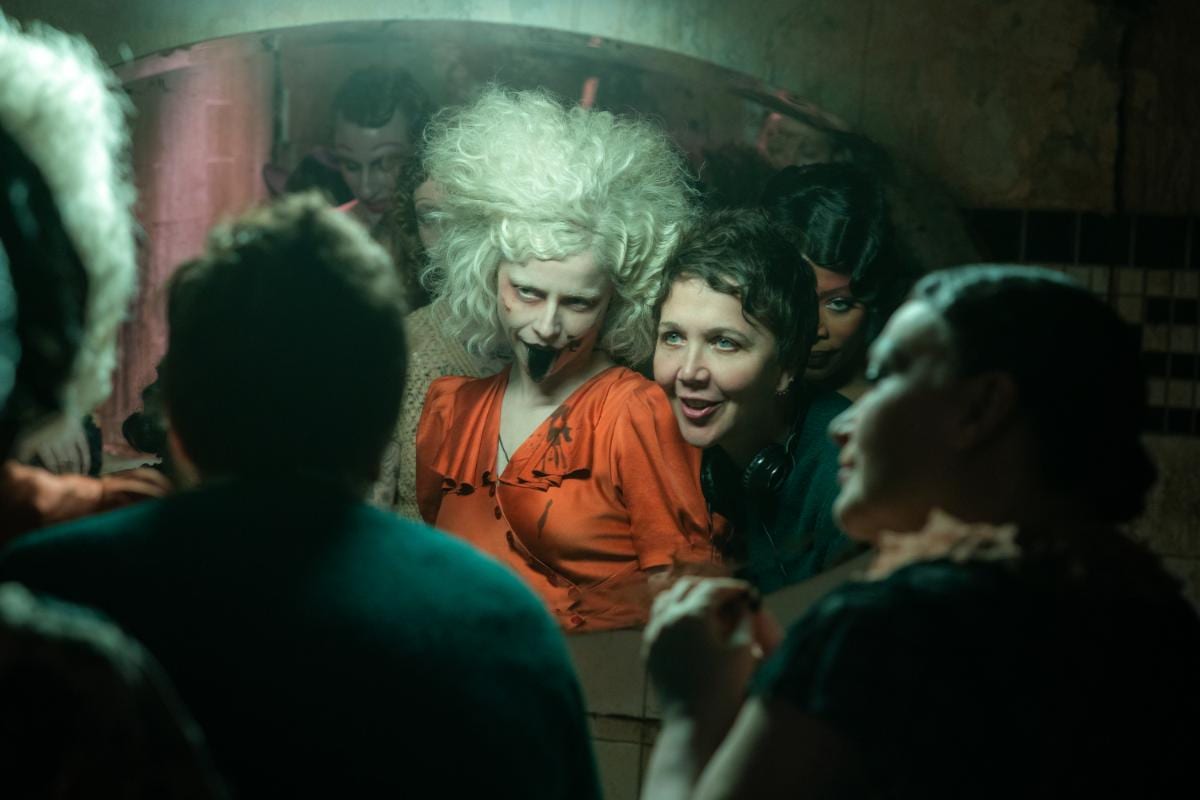
How did Maggie Gyllenhaal’s experience as an actor influence her directing style, especially in the way she communicated with you and created a sense of trust on set?
CB: I don’t like to compare everybody, because everyone is different, and that’s what’s beautiful about this whole thing. But, of course, I can’t believe that being an actor didn’t inform the way Maggie directs. She never had any issue knowing how to talk to an actor, letting you know quietly so you weren’t feeling like you were performing. Maggie would just whisper, and you’d own it, and it’s important that both the actor and the director feel ownership. She was masterful at that, and also completely joyful. She was open about what she didn’t know, whether genuinely or not, letting things flow without pressure and allowing other people to bring ideas. She has one of the softest voices I’ve ever encountered, but she’s a tough cookie in the best way. She knows exactly what she wants and how to get it. And when you’re making a movie of this size, with so many pressures coming at you, I never once felt that pressure coming from her.
How would you describe the overall experience of watching this film, and why do you feel it’s something audiences really need to see in a theater?
CB: This is a roller-coaster ride of a movie. It’s about who we are. It’s about screaming to the heavens. It’s about being a misfit and trying to figure out who the hell we are. It’s got great momentum and excitement to it. The characters are ridiculously engrossing and fascinating. It’s shot in a very large way. It’s intimate, but it’s epic at the same time. It’s monstrous and it’s human all at once. And I can’t help but feel like something will be missed if people don’t watch it in a theater—that sound, the formality of sitting down, the lights going down, knowing you’re about to go on an absolute journey. You can’t recreate that in your living room.
The Bride! opens in cinemas and IMAX March 4
View More Articles About: