'Fallout' Season 2 Is an Ode to Hope and Loss
The second season of Amazon Prime’s faithful video game adaptation just dropped its finale, and it answers questions just as it raises new ones.

by Zach Yonzon
Published on Feb 4, 2026
Fallout is a series of hope. This might be a strange thing to say about a television show about a nuclear wasteland where the remainder of the human race is killing itself off over scraps, but there’s no better way to describe a story led by some of the most noble characters on streaming television. Lucy (Ella Purnell) is a given. Our spunky, dead-fingered, okeydokeying heroine has learned quite a few things on the surface coming from a sheltered life in the vaults, and not all of the lessons have been pleasant. But Lucy has been and (we hope) always will be the moral center of the show, an idealist whose favorite subject is ethics, a bright spot in a bleak world who always strives to make the right choice even if that choice hurts. And boy, does Lucy make some choices that hurt.
Then there’s Maximus (Aaron Moten), the lovestruck Brotherhood of Steel prodigal son who breaks ranks to find and follow Lucy. He’s kind of a given, too. The second season shines a light on life before the nukes fell, giving us more of an insight into how the world of Fallout came to be. It also shows life some time after the nukes fell and before the nukes fell again, giving us more of an insight into how Maximus came to be Maximus. If the first season fully fleshed out Lucy’s origins, the second season gives us just enough of Maximus to understand why he’s the hero he is.
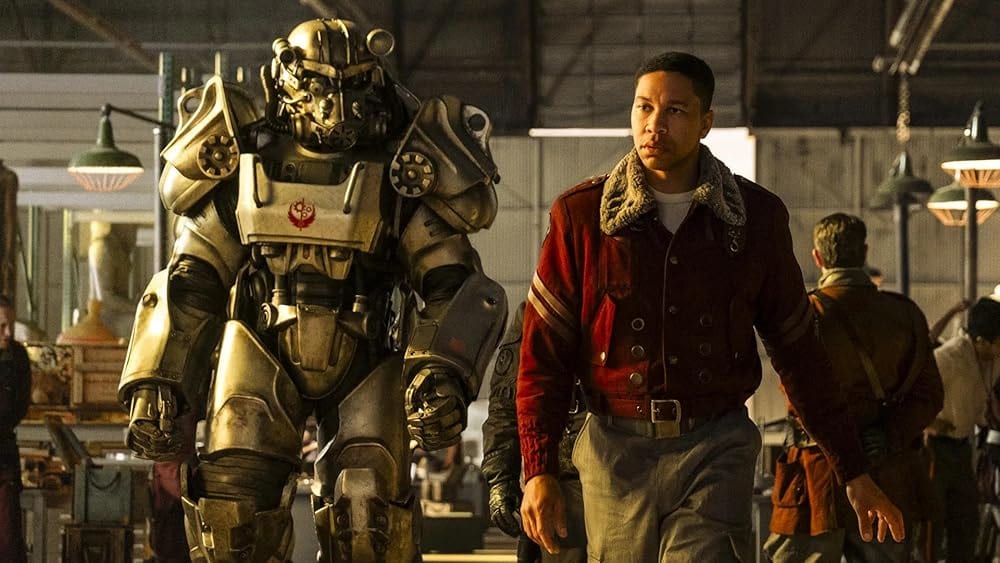
Finally, we have The Ghoul (Walton Goggins), the wasteland-hardened antihero who had little time or patience for Lucy’s naïveté and cheerfulness. Lucy is a little less cheerful this time around — the post-apocalyptic surface life will do that to you — and also a little less naive, but she’s just as stubborn and uncompromising with her beliefs. The Ghoul isn’t quite as noble as Lucy, but being around someone so resolute and full of conviction tends to rub off on people, and this is where Season 2 shines. Fallout may be the result of man’s failure to rein in his greed and lust for power, but it’s also the perfect setting for mankind to show its mettle. Self-preservation is easy. In a kill-or-be-killed world, killing is second nature. The Ghoul has survived for two centuries adhering to the wasteland’s rules, so when he meets someone who makes the most selfless choices to the point of self-detriment and survival and actually wins, it’s a shock to the system.
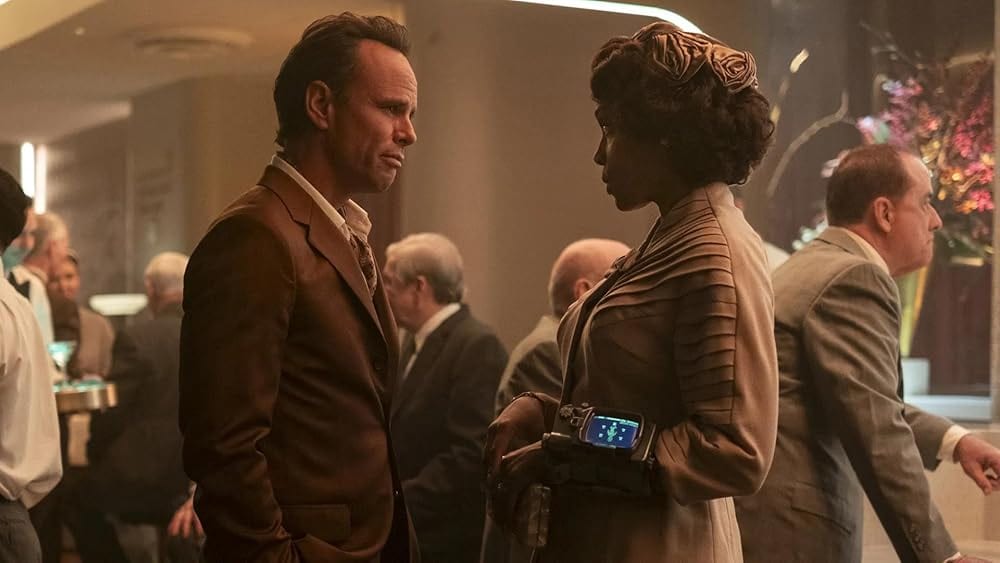
But for the ghoul-formerly-known-as-Cooper-Howard, it’s a reminder of a better time. Cooper used to be Lucy during the pre-apocalypse, maybe even a little more heroic with his years of military service and the way he went above and beyond to try to stop the inevitable nuclear fallout. The job was simply too big for one man, and as RobCo CEO and Fallout: New Vegas baddie Robert House (Justin Theroux) says, “the house always wins.” And he’s kind of right, but only kind of. Because Robert House, who cameo’d in Season 1, played by a different actor (Rafi Silver), is just one player in a very big game. A very intelligent, masterful, and powerful player, for sure, but only one power-hungry man in a world full of power-hungry men, and Robert House doesn’t have all the cards.
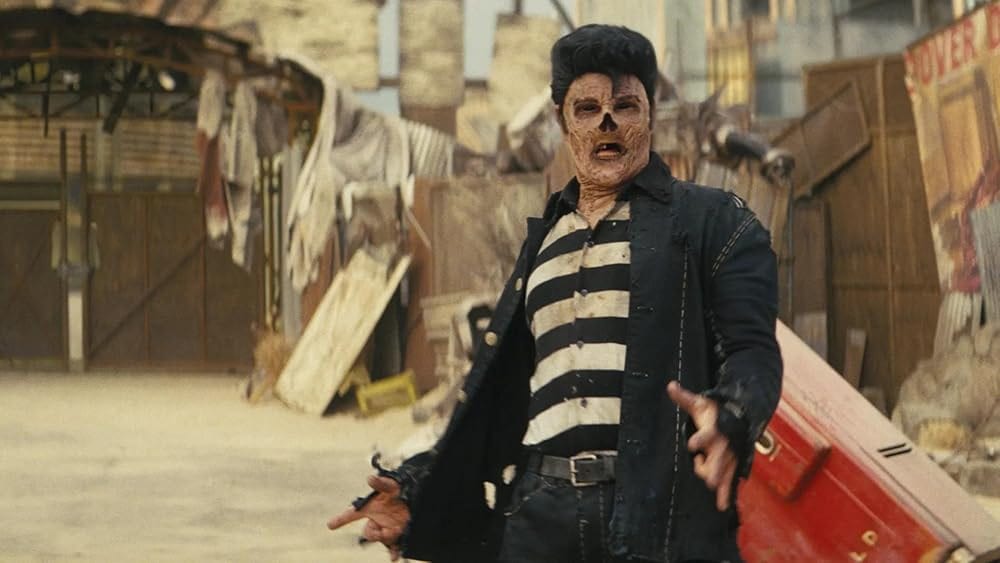
Season 2 builds more of the Fallout world, acting as a somewhat canonical sequel to Fallout: New Vegas and establishing new lore in the process. From the grim fate of Shady Sands to the tattered remnants of the New California Republic to the splintered forces of the Legion and its former leader, Caesar (pronounced ‘kaiser’ both to poke fun at the Legion’s lacking intellect and an obvious reference to German history), Prime Video’s Fallout not only pays homage to the source material but expands upon it. We called the first Season one of the best video game adaptations of all time, but Season 2 raises the bar. In eight episodes, Fallout manages to bridge the past to the present and give us heroes who are truly heroes in a time when a post-apocalyptic wasteland almost seems a viable alternative to our unfathomably wicked reality. The world needs heroes, and we’ll take them even if they’re fictionalized video game characters.
This is why Fallout has value beyond entertainment or fan service. It remains an examination of the effect of corporate and personal greed and how good can still triumph against all odds. Despite being obvious heroes, the characters aren’t paper-thin, either, and even the typically hopeful Lucy commits to choices that change her forever, including one that results in a painful loss after two seasons of searching. Sometimes, even those with the best intentions can go about it the wrong way, as Lucy’s father Hank (Kyle MacLachlan) demonstrates when he improves and perfects a societal solution that eliminates conflict and strife at the expense of free will. There are no easy choices, but we can only trust that Lucy makes the right ones.
As Season 2 closes, it barrels right into a glimpse of a third, with the promise of more Macaulay Culkin, who is poised to make trouble for everyone in the next chapter. The first season was a tough act to follow, having been nominated for and winning a handful of accolades, but showrunners Graham Wagner and Geneva Robertson-Dworet have a clear vision of where they want the story to go, and the second season is more than up to the task. It’s more than vital that both writers understand that hope is the agenda. It was the agenda for the first season, and it remains the guidon for the second. Fallout understands that heroes are found in the unlikeliest of places, and even Lucy’s diminutive, weakly brother Norm (Moisés Arias) stands tall in the face of grave, personal harm. Newly-minted ghoul Thaddeus (Johnny Pemberton) gets his own chance to shine, too, in one of the series’ climactic moments against the terrifying Deathclaws. This is what makes the show so much fun — the heroes are truly worth rooting for, and the villains sometimes actually make some pretty good arguments. Two seasons in, the world of Fallout has grown even bigger, and we can’t wait for more.
All episodes of Fallout are now streaming on Prime Video.
ALSO READ:
Amazon Prime’s Fallout is the Post-Apocalyptic Escapist Comedy We Need
The Devastating True Story Behind HBO's Chernobyl
Zach really, really, really loves films.
View More Articles About: