‘Furious’ Reminds Us That We Aren’t Nearly Angry Enough
Disney+’s new detective thriller is a thickly woven tale of revenge, trauma, and sexual and domestic abuse that should be required viewing for all men.

by Zach Yonzon
Published on Jul 28, 2026
About 240 people’s names appear on the Epstein files in some incriminatory fashion. Out of those 240, only three have been criminally charged, and only one of them remains behind bars. The other two are dead: Jeffrey Epstein died in Federal custody in 2019, while French modeling agent Jean-Luc Brunel was found dead in his cell in 2022. Both deaths were ruled as suicides. Other than Epstein, Brunel, and Ghislaine Maxwell, who was moved to a minimum-security prison that’s essentially a Federally-funded country club, none of the men and handful of women in the files that depict a far-reaching network of the rich and powerful committing unspeakable crimes against children have been charged. The fact that this isn’t even front-page news anymore speaks volumes about how deeply broken our society is today. The fact that nothing is being done about this and the sickening realization that none of the men will likely be held accountable should make us mad. In fact, we should be furious.
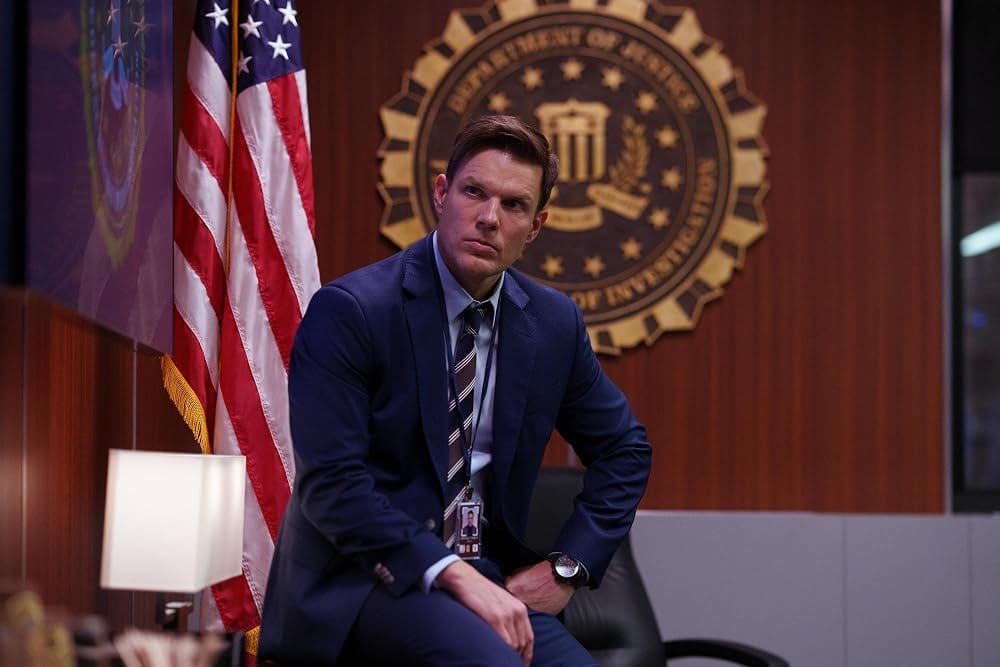
Alice Black (Emmy Rossum) is a low-level FBI agent and former NYPD officer who is in pursuit of a serial killer (Lola Petticrew) in Disney+’s new crime thriller Furious. The show reveals early on that Alice left the NYPD after reporting her ex-boyfriend and fellow cop (Jake Lacy) for domestic abuse. The show should come with a trigger warning for victims of sexual abuse and domestic violence because Furious’ story is deeply rooted in both. Showrunner Elizabeth Meriweather, who created New Girl and adapted Dying for Sex for television, brings forth a gripping and powerful cat-and-mouse chase between two women on opposing sides but who very much mirror one another in ways that unravel through the course of eight intense episodes.
An estimated one in three women globally experience violence committed by a current or former partner at least once in their lifetime. In the United States, that number jumps to almost one in two. The leading cause of death for pregnant women, as if pregnancy weren’t medically risky enough, is suicide and homicide. In the United States, pregnant women are more than twice as likely to be murdered than to die from any medical complication, almost always by an intimate partner. In the Philippines, that number has lessened significantly since 2004, thanks in part to Republic Act 9262, otherwise known as the VAWC Act (Anti-Violence Against Women and Children Act). Alice was forced to leave the NYPD after being ostracized and cold-shouldered by her peers following her report of the hugely popular Marshall, reflecting the reality that most women face when reporting incidents of violence or sexual harassment. For every 1000 reports of sexual assault, only 50 lead to arrests and only half lead to felony convictions or incarceration. Ninety-eight percent of abusers are never held accountable, pretty much like the Epstein files. These statistics obfuscate the more chilling reality that most women won’t even report abuse because the numbers simply show that it’s almost never worth it.
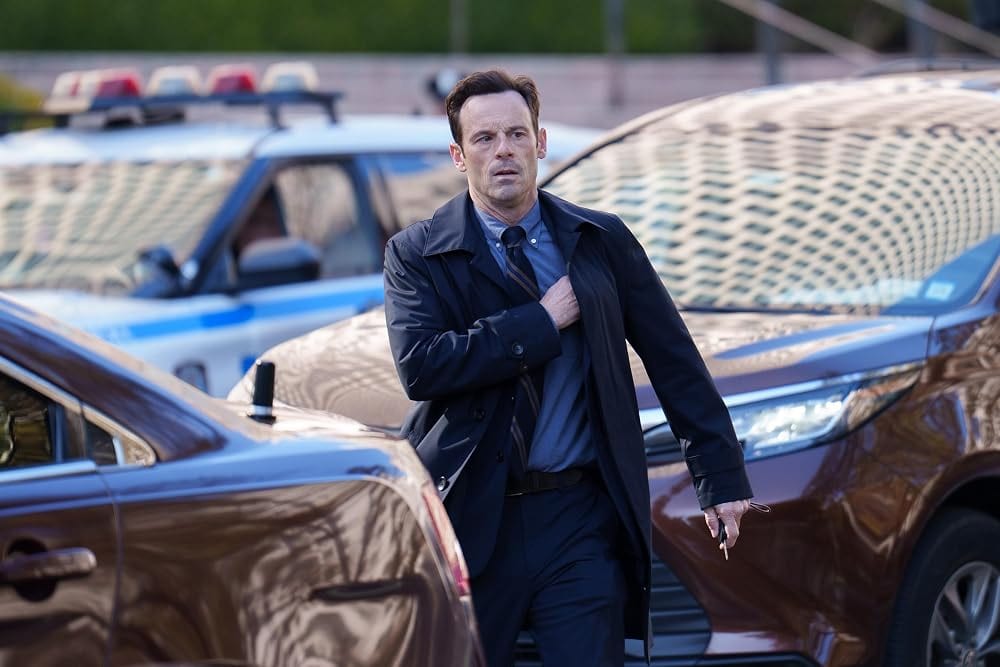
But Furious never preaches or overwhelms with silly things like disheartening statistics. Instead, we get front row seats to Alice’s trauma and how it shapes her entire being. PTSD from domestic violence and sexual abuse is real and it dictates the course of the two women’s entire lives. The experience of abuse changes women’s lives in often invisible ways, from the simple fear of showers to complete bodily dissociation — behavior that almost nobody outside the woman’s closest family or friends would know anything about. The genius of Furious is that it hides these realities in plain sight, and even Alice’s closest friend, her former NYPD partner Danny Kelly (Scoot McNairy), the only man who believed her about Marshall’s abuse, knows next to nothing about her paralyzing fears and her mysterious past. Danny gets the cold treatment from his peers, too, but he’s a straight, white man, so he manages just a little better and gets to stay in the force.
Furious contrasts Alice’s experience vs her ex-boyfriend — for agent Black, the near-fatal hospitalization is a wake-up call that changes the trajectory of her entire life although her secret kinks and traumas have been shaped by something even more sinister from her past. On the other hand, Alice’s report is merely a speed bump for the up-and-coming Marshall, whose promotion is only held at bay by what he describes as ‘rumors’ of domestic violence. This is reality. Most abusers will never give their victims a second thought, if they even think they’ve made a mistake, while victims carry the experience of abuse throughout their lives. Meriweather layers trauma upon trauma, fashioning Alice and her nemesis to be parallels of each other on divergent paths. The story escalates each woman’s pain and shame to the next level with each episode, and as we peel each horrific layer of events, Furious demands us to watch. We mustn’t pretend to not know and we shouldn’t look the other way, because that makes us complicit. Those who know and do nothing are equally guilty.
As feminist as Furious is, it’s never an indictment of ‘all men’, and some women are also part of the problem. Danny is the greenest of flags whose genuine love and tenderness towards Alice translates to actual care and protection. He is the embodiment of a safe space, and a wonderful example of healthy masculinity in a show that’s necessarily laden with toxic men. Interestingly, even the killer, who goes by many names in her chimeric transformations, has a kindly man of her own in the unlikely Alden, played by comedian Steve Way, who was born with spinal muscular atrophy. Alden gives the dark series an unusual heart and welcome, if unexpected, humor. Way’s physical deformity contrasts against Petticrew’s beauty. At many points in the story, people remark on Catherine’s beauty, reducing her to her physical attributes, and it’s clear, even to herself, that her body is her only currency. The 30-year-old Irish actress’ petite frame and youthful features make her look far younger than she is, a masterful casting feat designed to evoke discomfort when she has sex with men several feet taller and who look old enough to be her father.
Furious never makes the patriarchy the enemy, even if it obviously is. Society is simply a boys’ club that works with boys’ club rules, and even Danny benefits from it despite not wanting to be a part of it simply because he’s a man. Danny and Alden are good men in their own ways — when Danny believes Alice and calls out other men’s (and their enabling women’s) bad behavior, it’s simply the bare minimum, while Alden’s devotion to a homicidal maniac might be a little too much but also, maybe not. You see, Petticrew’s protean Jinny or Catherine is some sort of avenging angel on a mission, targeting men involved in the trafficking and abuse of children, a gender-swapped Dexter who methodically kills pedophiles. But Furious never celebrates its killer, framing her instead as a broken product of violence and abuse, stating clearly that victims of violence tend to become the most violent. Her killings are sadistic but never brutal, at times almost peaceful and merciful.
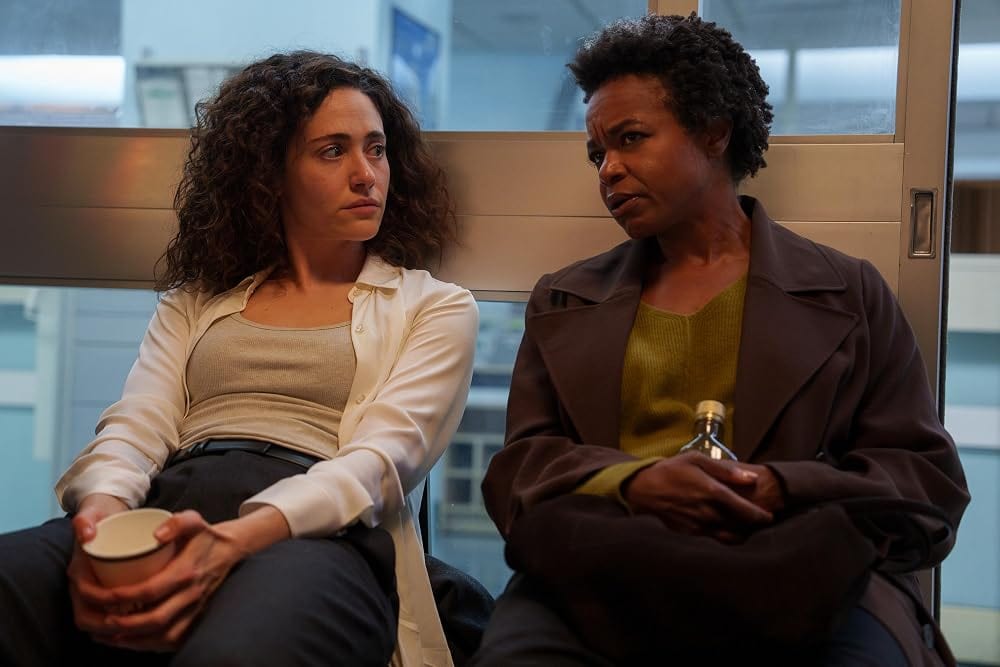
Furious is dark, disturbing, and in its own way satisfying. But the catharsis comes with a deep and frustrating sadness that this might be the best we will get. Furious might be rooted in stark reality, but it’s still strictly fiction. Meriwether based the story loosely on the 1987 film Black Widow but did away with the hypergamous plot, flipping the script to make the victims abusers and enablers. But Furious establishes that the killer is never the hero, and that there’s a high price for vindictive justice or any sort of justice in a broken system. Alice’s FBI superior, Nora Washington (Quincy Tyler Bernstine), says it best: “we become inhuman in defense of humanity,” and “we become evil to fight evil.” What if it’s true? What if the system is irreparably broken and the only justice that can be had comes from homicidal vindictiveness? It’s a heartbreaking thought, but also not necessarily wrong.
Furious is interwoven with a delicate moral complexity built upon sobering truths: the rich and powerful will almost never be held accountable, and women will always be victims in a world designed to strip them of their power. A world where rapists and suspected pedophiles can become President is a world that is unkind to women. A world where wives are drugged by their husbands for other men to rape is a world that is unsafe for women. Furious doesn’t change any of that, but it does remind us that we aren’t nearly angry enough. We must, to retain our humanity, loudly demand accountability. We should be shouting from the rooftops and clamoring for justice for all the children — Furious even takes a small jab at Megyn Kelly, who tried to make pedophilia sound palatable by saying teenagers are different from eight- or five-year-olds, with a similar rationalization. But teenagers are still just children, no matter how ‘mature’ they look. Furious is a mirror that shows us that we should be filled with rage. Anything less makes us part of the problem.
ALSO READ:
15 Must-Watch Movies For Menswear Inspiration
Netflix's 'The Gentlemen' Is Back With a Season 2 Release Date and Teaser Trailer
Zach really, really, really loves films.
View More Articles About: