Kitao Sakurai on Making 'Street Fighter' Bigger, Wilder, and Weirder
The Japanese-American filmmaker talks about his creative vision, casting the film’s iconic characters, and working with Fil-Am stunt choreographer Jon Valera to bring its fight sequences to life.

Published on Oct 9, 2026
"Seriously, this movie has more fights than John Wick," says Japanese-American filmmaker Kitao Sakurai. "It is full of fights. But I also knew that I needed to make a movie for the audience; that even if you weren't into fighting, you would be pulled along by the narrative and these characters."
Legendary Pictures knew Sakurai was the right person for the job, not only because he had experience adapting video games, but also because he was a fan of Street Fighter and knew the game and its world inside out.
For the filmmaker, bringing Street Fighter to the big screen meant resisting the urge to make its larger-than-life world feel "more normal." Sakurai says he wanted to embrace its inherent weirdness while giving its characters real emotional stakes.
In this conversation, Sakurai talks about bringing the world of Street Fighter to the big screen, casting Callina Liang as Chun-Li and Andrew Koji and Noah Centineo as Ryu and Ken, and the camera test that gave the entire team chills. He also explains why David Dastmalchian’s take on M. Bison goes beyond the usual movie villain.
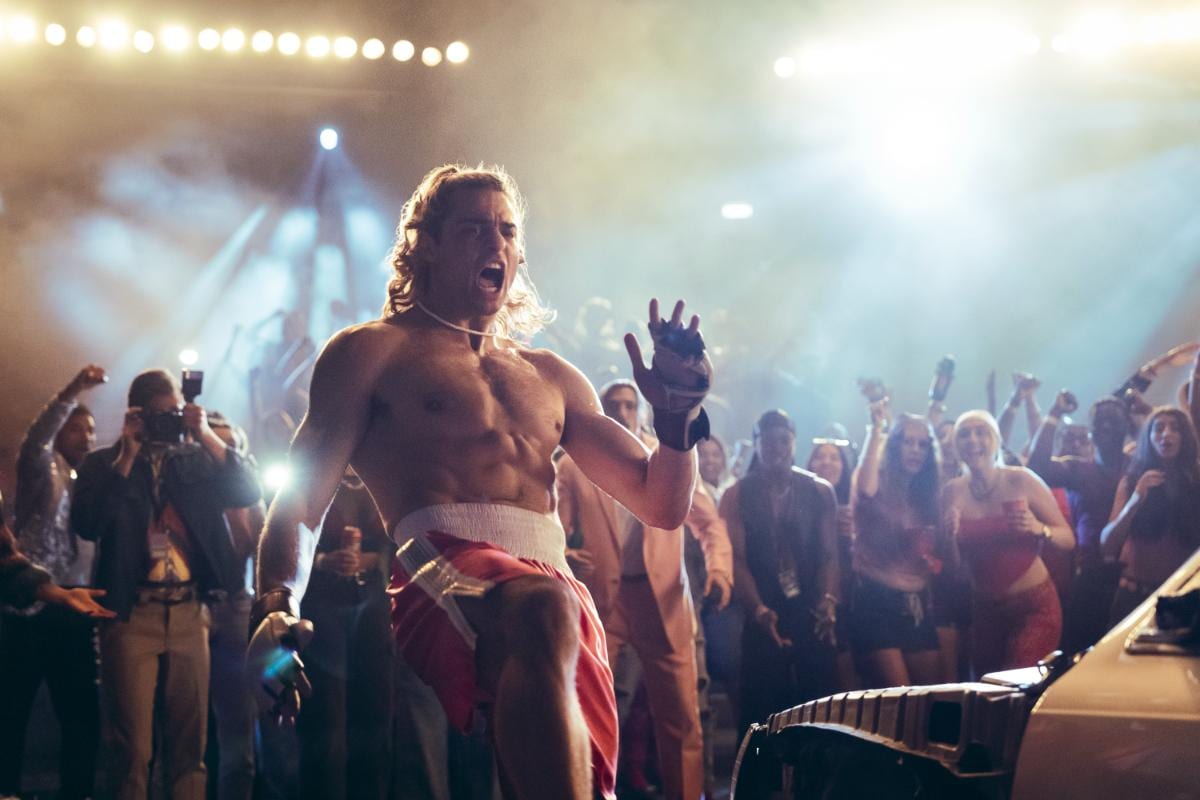
You’ve said you’ve long been a fan of the Street Fighter game. How did you come to direct this live-action adaptation?
Kitao Sakurai: The project was something that Legendary Pictures reached out to me about. They were trying to crack Street Fighter and I had done some video game adaptation work with Twisted Metal [the acclaimed TV series which Sakurai executive produced and directed four episodes of]. But I think what attracted them to me and vice versa was that they were looking to capture the craziness of the tone of the game. What I've loved doing in my career is being a bridge across multiple genres, but still having a very specific tone to my work in terms of comedy and action. I was also a DP (director of photography) for many years, so I think very visually. So, a lot of the things that I love doing coalesced really nicely with what they were looking to do with a Street Fighter movie. They didn’t want to do a Street Fighter movie that felt totally straight down the middle, or a ‘normal’ approach to a video game movie. They wanted to work with somebody that would take a big swing and make something that felt bold and crazy and weird. That was the assignment. And I was all over that.
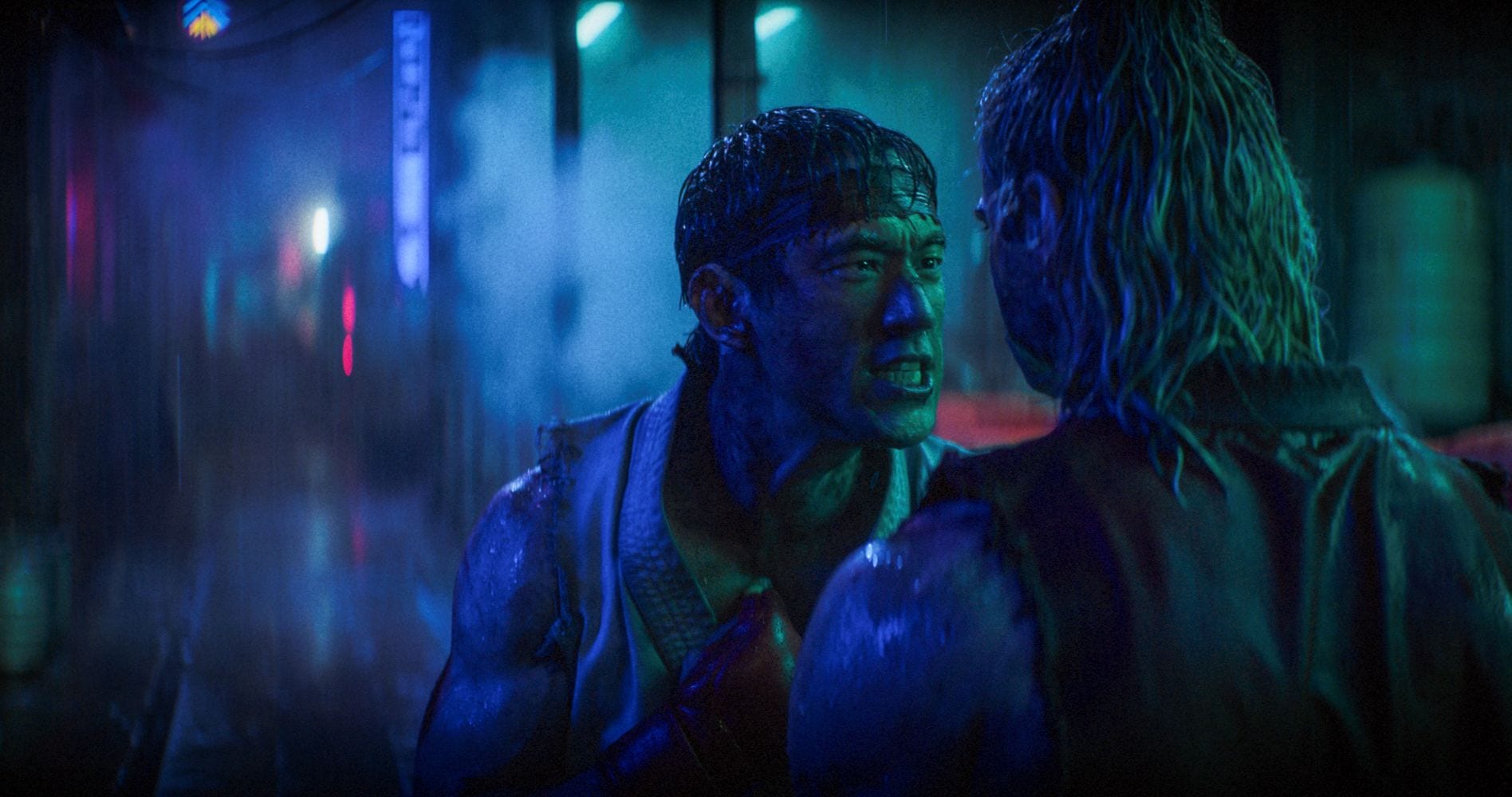
As a former director of photography, where did you start when it came to shooting the many incredible fight sequences in this movie?
KS: They all obviously took a lot of effort and planning. And I have to shout out Jon Valera [second unit director, stunt coordinator] who was our choreographer, because the fights were designed hand in hand with him, across a very multi-phase storyboarding process. I took a larger, conceptual approach. You know, it’s Street Fighter —there needs to be a lot of fighting in it. Seriously, this movie has more fights than John Wick. It is full of fights. But I also knew that I needed to make a movie for the audience; that even if you weren't into fighting, you would be pulled along by the narrative and these characters. And each fight had to be distinctive. Each fight had to exist in its own world and have a very well-defined aesthetic concept behind it, as well as a narrative reason for it. The question was always, “How do we make each fight unique, and what is this fight about?” Then I worked with Jon to really bring to life very specific moves from the game, as well as some specific visual stylistic references, and applied those. All in all, it was a lot of fun!
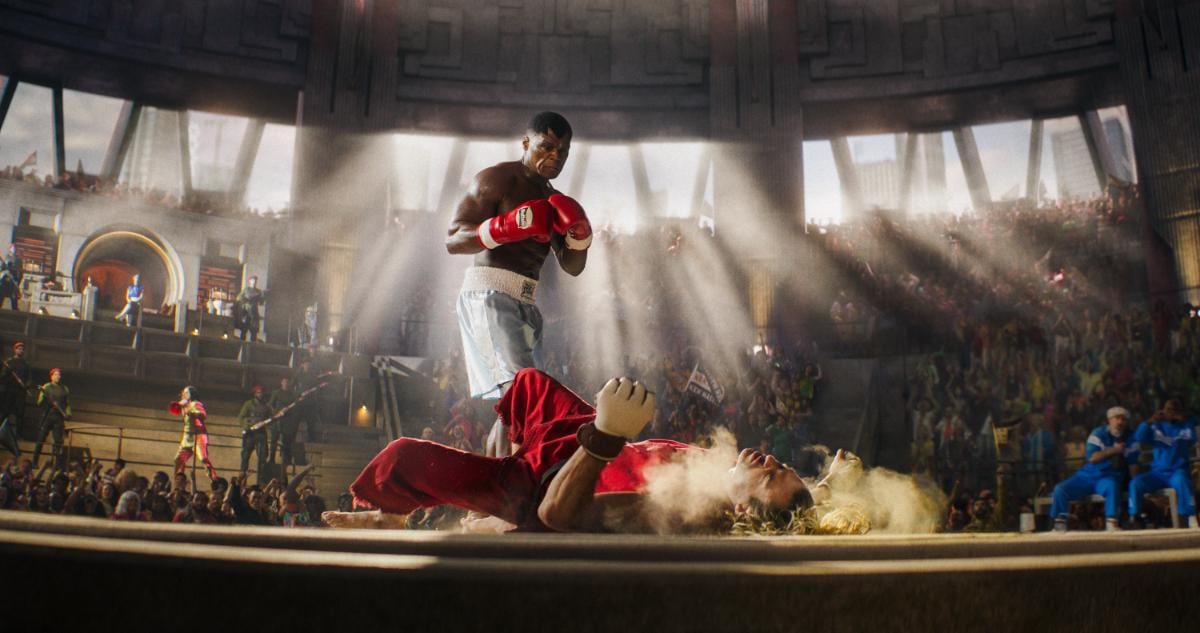
Which is your favorite of all the fights we see on screen, and why?
KS: That's a great question. They're all like my babies because we spent so much time and effort on them, and if they exist in the movie, it’s because we love them! All of that said, the first major fight scene we shot was the E. Honda steam room scene and I really love that because it's such a clear concept that is not only very tied to the game, but also tied to a real feel of where these characters are at. It looks amazing. Visually I love the look of it, with Ryu [Andrew Koji] coming in and out of the darkness and the steam and into the light. But it’s also very tied to the emotionality of the story and the game. I love all the scenes with fighting in them, but personally, if I had to, I’d single that one out.
You mention the game. What has your personal relationship been like with it, over the years?
KS: As a kid, growing up in '90s Ohio, I never had a gaming console, so my experience of games was always going to my friends’ houses. I remember when my best friend got Street Fighter—we would all go to his house and have these communal experiences, playing the game. And these characters are also so baked into popular culture that it’s a bit like Greek mythology. Even if you've never played the game, you know these characters, they're part of our cultural identity. For me, being a half-Japanese kid growing up in Ohio, but also being very tied to Japanese pop culture, anime and manga, Street Fighter was a real kind of intersection between my identity as a Japanese person and who I was as an American kid.
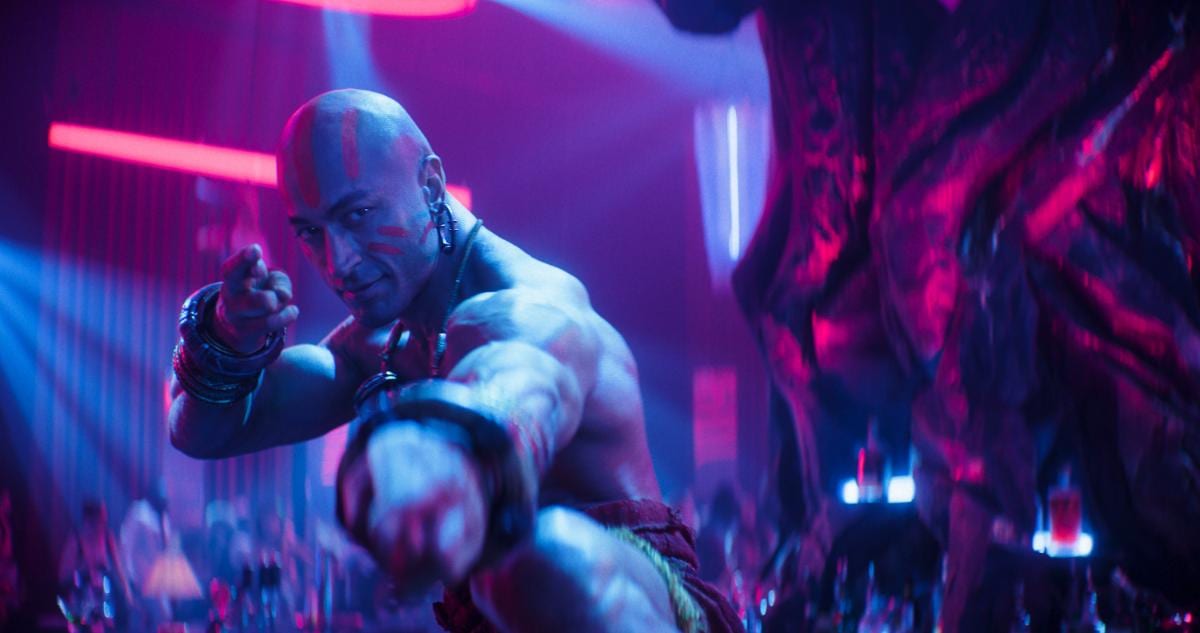
When you did play the game, which character did you choose to fight as, and why?
KS: I remember playing a lot as Dhalsim, just because he felt so interesting and unique. Since then, also Ryu because he is a very interesting character in the world of the game. He’s a very quiet character, like the eye of the storm. He's a very grounded presence in this world of craziness, so I've been drawn to him as well. But for me, it was always the truly ensemble nature of Street Fighter that I liked. Plus, I was never good enough with one character, so I popped around. That's also why I think I have such a fondness for the ensemble nature of it all.
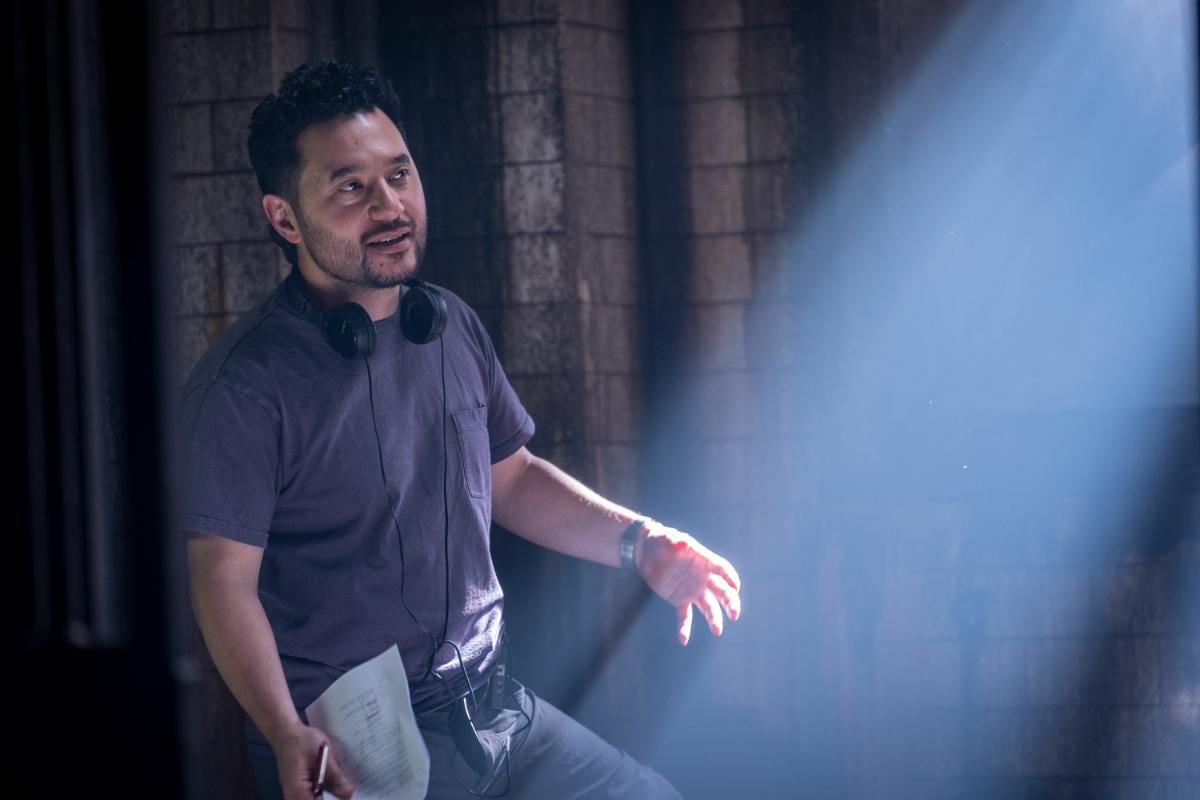
You say that these characters are baked into our consciousness, and yet this movie shows new sides and depths to them. Why was that important to you?
KS: I wanted to make a film that didn't sand down the sharp edges of the craziness of the game and the world. I also knew I wanted to bring to life the looks of these characters and the looks of their moves. In that way, there was an element to it where I wanted to literally bring to life the game. But I also wanted to do that in a transgressive, fuck-you, punk rock way. In a regular movie, you would have to find ways of grounding these elements and making them more ‘normal’. But I didn't want to make them more normal—what I wanted to do was celebrate the fact that this is all crazy! The fun of it was, both from a character standpoint and a plot standpoint, and working with each actor, was figuring out not how to rationalize but contextualize things like Chun-Li's outfit and characters like Guile, to give them all a three-dimensional POV, a backstory, and a place that felt organic is this insane place. That was both the challenge and fun of it.
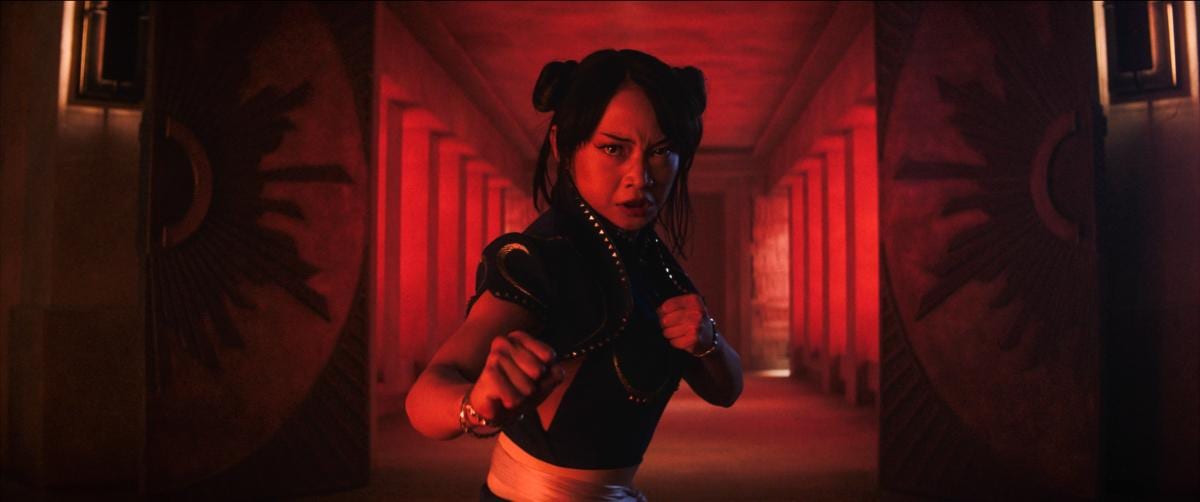
Speaking of Chun-Li, Callina Liang, who plays her, said you called her directly to tell her she’d gotten the part—and she went crazy. What are your memories of that call?
KS: Well, I've certainly never had a phone call like that, where somebody has been so affected by a casting decision. But I think justifiably so. I think Callina’s life will be quite different now because she will be so tied to that character and tied to a character that she herself so identifies with and who means so much to her. It's almost a weird meta thing to be obsessed with a character and then get to play them. It affects you in such a profound way. But I also knew she was the right person for that role. Just in how much of herself she brought to it, even in the auditioning process. When she talked about her past, where she'd come from and who she was as a person, it all tied in very much with how we were conceptualizing the character of Chun-Li. Like so many of the other cast, who she is makes her perfect for that character. It’s an incredible marriage between a character and the person portraying them.
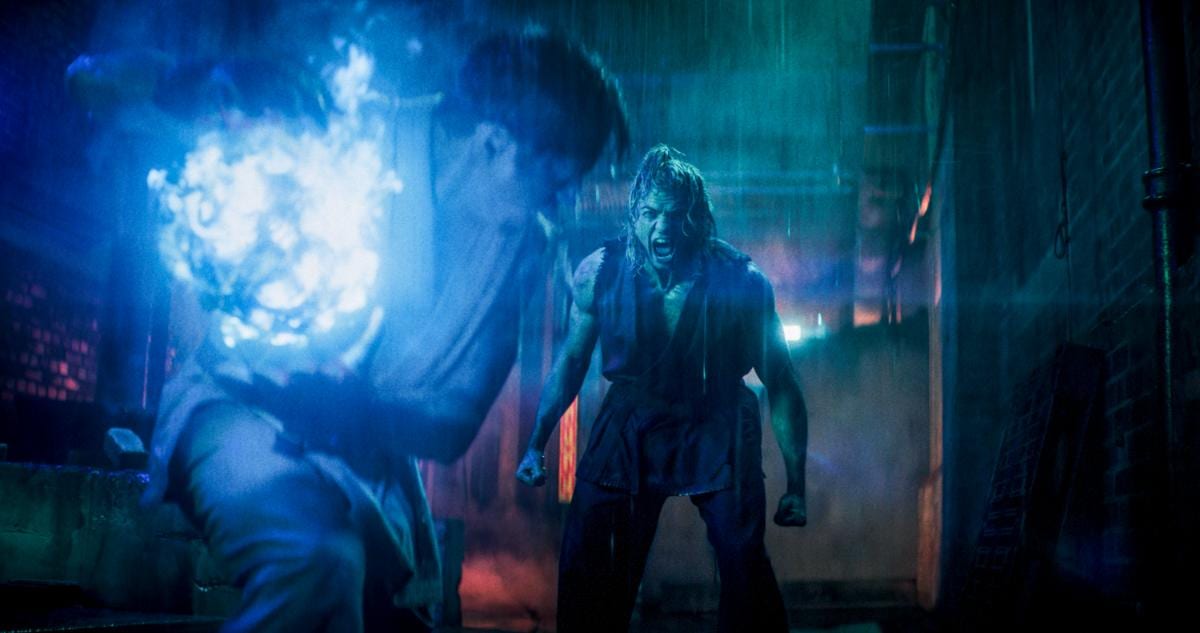
That sentiment also seems very applicable to Noah Centineo and Andrew Koji, who play Ken and Ryu respectively. How would you describe their dynamics?
KS: Absolutely. When you make the right casting decision, in a certain way, you don't have to do a lot of work as far as a dynamic between characters goes. Andrew Koji is Ryu. He really is on every level. He's quiet. In his day-to-day life, he doesn't give much away. He is inscrutable and there's a shyness to him, but also this playfulness underneath the surface. He’s also an incredibly disciplined, world-class martial artist who cares so deeply about martial arts and portraying martial arts on screen. And he cares so deeply about the character of Ryu. Then, at the same time, Noah is totally Ken, in his demeanor, who he is and how he moves through the world. He just is Ken. So, when you put these guys together, there is a kind of yin and yang, oppositional quality to their personalities that also embody the characters of the game so beautifully. And it was a very natural thing. When you’re telling stories about friendship, you always want characters who are really different but who, on a spiritual compatibility level, make sense together, work with each other and make each other better. And Noah and Koji really did that for each other. I mean, they were always fighting, but it was always playful. And that’s just who they are. Those guys loved each other, and you really feel that on screen.
Tell us about the first camera test you did with them in character. What was the moment you knew you had something really special?
KS: It was electric. And everybody, 100 percent of us had that same reaction. We put Koji and Noah into their full costumes, using the real camera, the real lighting. And as soon they hit that pose [the classic, back-to-back Street Fighter image from the game] everybody just got chills. Everyone was like, “Hold on. This is it. This is real.” These two characters just felt fully dimensional and so cool and exciting. That was, for everyone, a real, “Holy shit!” moment. We knew beyond a doubt that this thing was working.
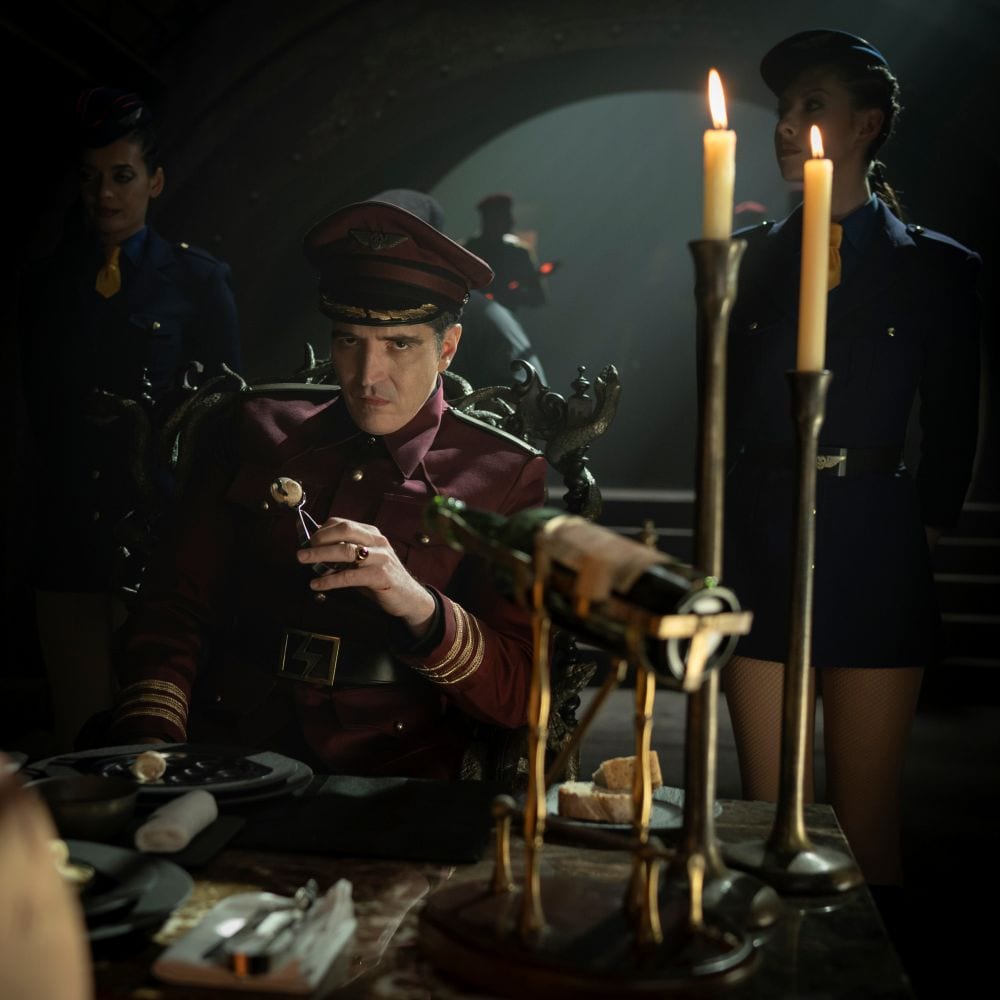
One of your aesthetic departures is in the iconic villain, M. Bison. In the games, he’s a man-mountain. But in your movie, he’s very different, smaller in frame but no less intimidating, and played by David Dastmalchian. Why was he your dream choice?
KS: When it came to M. Bison, I didn't want to make him a villain that felt too arch and just like, “I'm a bad guy, just to be a bad guy.” The best villains in any movies are the villains who if you were to ask them, “Are you a villain?” would be like, “No, I'm not a villain! I’m just doing the righteous work. I'm bringing good into this world.” People who, what they believe in is so fundamentally different from what the rest of us believe in, that they are a villain. That was our approach with M. Bison. And that’s why I knew David Dastmalchian would work. Because he thinks so deeply about each character he portrays and brings a lot of pathos and sympathy to each role. It's like he brings so much from his past and so much of who he is and isn't afraid of accessing darkness in a way that isn't judgmental. He does it always in a way that sympathizes with the dark half of ourselves. Working with David, we read a lot of books together about these narcissistic cult leaders [in the real world] and built a psychological framework behind M. Bison, so we could understand why he is the way he is, and why he has such a following. Why do people in this world [of the game and now the movie] love him? Why does he have power? And what is the power that he craves beyond what he has? So, in a certain way, this movie is also like an M. Bison origin story, almost the beginning of the seed of how we see him in the game. We wanted to create a character who was distinct and had a fully internal logic. Also, the thing that David and I have in common, I think, is a sense of weirdness and freakishness. We like having fun with darkness, finding the joy in that. And M. Bison certainly does!
Street Fighter opens in Philippine cinemas October 14. Rated PG
ALSO READ:
'Lanterns' Uses Its Rings for Deconstruction and Breaking Cycles
58th is the Most Empathic Way to Commemorate the Maguindanao Massacre
‘Forgotten Island’ Is an Unforgettable Exultation of Filipino Culture
View More Articles About: