'Lanterns' Uses Its Rings for Deconstruction and Breaking Cycles
This is the DCU's first deep dive into the Green Lantern mythos.
by Anton Reyes
Published on Oct 6, 2026
DC Films over the past decade hasn’t been afraid to deconstruct the heroes at the center of its multi-billion-dollar franchise. Ten years and one cinematic universe ago, we had Batman v. Superman exploring the inherent complexity of Superman as the image of American power and Batman as the image of justice. Even with a new cinematic universe on the line, James Gunn’s Superman from last year led with stripping the character of his “sent to Earth as a beacon of hope” mission to see if there was still a good man underneath—an approach echoed fundamentally by the follow-up Supergirl film adapting Tom King’s Woman of Tomorrow, which depicts the heroine less as a Superman-but-female and more as a complicated trauma survivor.
It was no surprise then to hear Gunn announce that their DCU’s introduction to the character of Green Lantern would be a True Detective-like series primarily focused on the franchise’s space cops solving a predominantly Earth-based murder mystery—with King himself, Ozark’s Chris Mundy, and Lost and Watchmen’s Damon Lindelof at the helm.
Immediately, it’s made clear that Lanterns wants to dismantle and dissect the two most prolific Green Lanterns, Hal Jordan (Kyle Chandler) and John Stewart (Aaron Pierre), adapting decades’ worth of pieces of these characters’ quirks, inconsistencies, and failures from the comics in order to find out what frightens these guys, what gives them the will to keep going, regardless of what uncomfortable truth is unearthed in the process. An investigation around the Green Lanterns themselves.
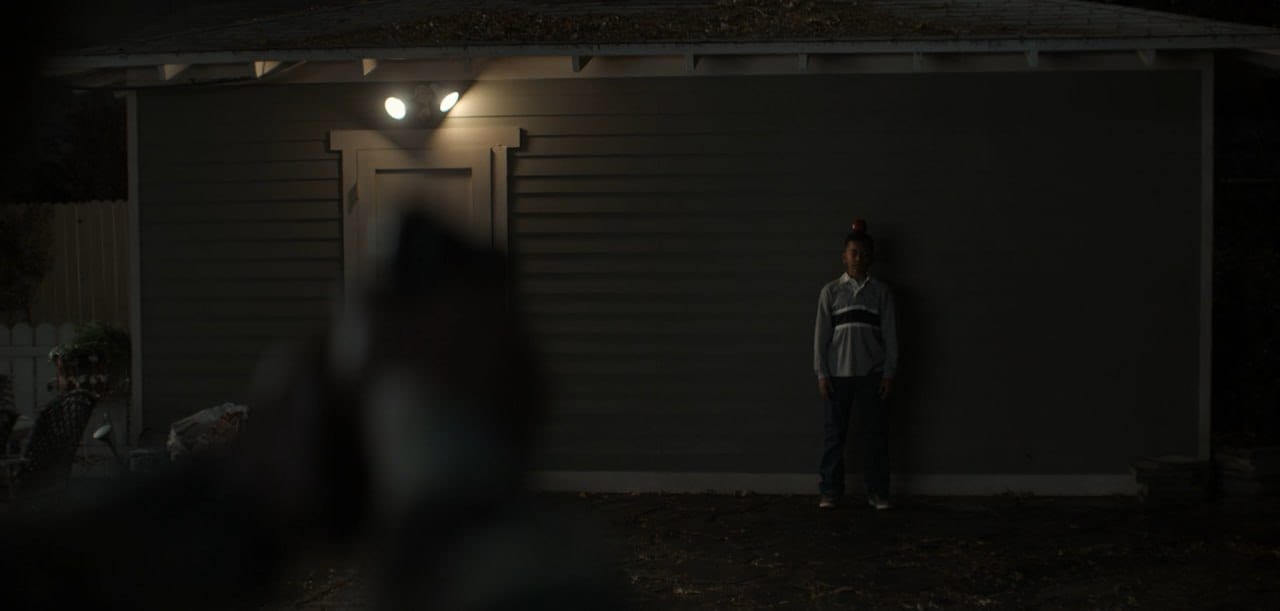
The opening scene alone has 10-year-old John Stewart watching a TV interview with legendary Lantern Hal Jordan, where he says he was chosen by the ring because he “wasn’t afraid,” followed by a scene of Stewart’s dad shooting an apple off the young Stewart’s head as he proclaims that he’s not afraid. In the third episode, it’s revealed both his parents were promised by a Guardian (the seemingly unkillable creators of the Lantern Corps) that they’d make John a Green Lantern if his parents raised him to be “fearless” and obey orders.
John’s parents then spend the next 20 years isolating him from any social life and putting John through fear exercises like the apple target practice and leaving him behind in shady neighborhoods to find his own way back home. A superhero origin centered on a kid systematically broken down by his parents into a blunt, fearless military sniper.
The audience meets Hal on the other side of that Green Lantern career. In his twilight years, Jordan has no friends, no family, just an empty house with 30 years’ worth of achievements laid out all on the floor. Hal enters the series already in an existential crisis, as he had just put his mentor and father figure, Sinestro (Ulrich Thomsen), in prison for launching a coup and killing a Guardian.
This version of Hal is characterized by his long tenure as the Green Lantern of Earth and, conversely, by his inability to have found a life outside the ring, and he was duty-bound to defeat the only person who has ever “stuck” in his life. To the Guardians, however, Hal, the trainee of the only being to ever kill one of them off, immediately becomes their greatest potential threat to their existence, leading the Guardians, for the first time ever, to appoint someone as Green Lantern: John Stewart—a distinction he holds in the comics too!
Not everyone’s going to be a fan of the biting moral revisionism charging through this story, especially if the alternative was perhaps a space opera featuring magic rings and secret alien invasions. But personally, there was a poignancy in the first half of the season’s reframing of these Emerald Knights as less concerned with using willpower to learn how to live with fear and instead using their willpower to push their fears down with layers upon layers of training, discipline, armor, and magic ring constructs.
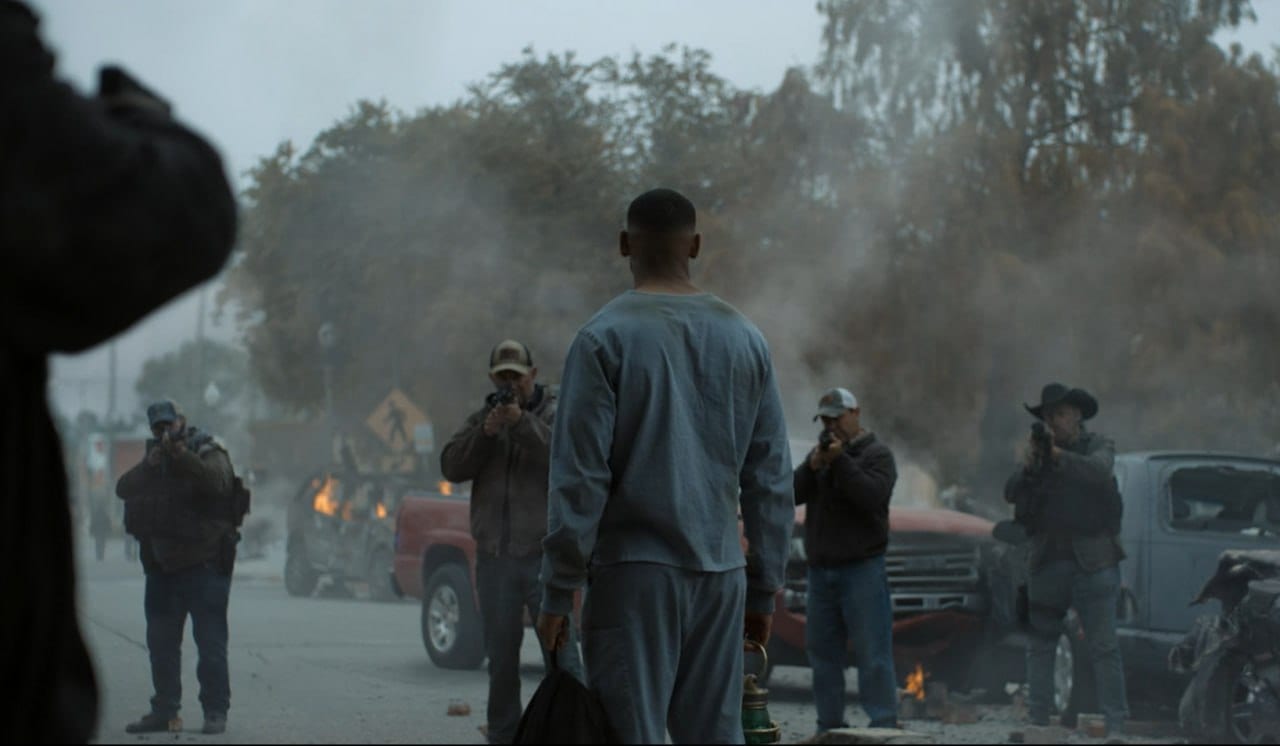
The season’s first arc climax does ultimately have its small rural town setting destroyed as the two protagonists cling to these idealized heroic versions of themselves while fighting over the ring like Gollum and Frodo in Lord of the Rings. The climax revealing a sort of anti-origin story, with Hal losing the ring to John and John ultimately declining the ring and surrendering it back to the Guardians.
It honestly works as a full first season arc in and of itself, but the final three episodes push the arc further with a ten-year time jump; Hal serves his time then returns to the small town (when he explicitly “could’ve gone anywhere else he’s already viewed as a hero”) to do small acts of charity every day even if the people there want him gone, while John rejects the Green Lantern life his parents wanted him and pursues art and architecture.
The penultimate episode is where the season reaches its crescendo, with its flashback vignettes centered on Hal’s father lecturing him on clinging to a baseball. “You can’t hold on to it forever… cause it’s exhausting,” His father tells him at a young age. At first, it comes off as a little too on-the-nose advice for the ring dilemma Hal will be going through in a few decades’ time. However, Hal later reveals to John that his father was actually suicidal, like his father before him, and that Hal too will likely struggle with clinging onto life but probably arrive at the same fate. “They call it the Jordan Boys’ Legacy,” Hal says to John.
And for a moment, the audience too is invited to conclude that Hal gave in to values instilled in him by his father, as Hal follows his dad’s wish and “throws the ball” away. Then the last flashback vignette shows a slightly older Hal, on the day of his father’s funeral, returning to the ball he once threw away, picking it up and pressing on. While John’s bitter secret origin was that of fearless strength forged by parental abuse, the secret origin of Hal Jordan has him reject his dad’s last moral teaching and try to find ways to carry on with life despite all its burdens. The framing too of courageously picking up and pressing on with life every day as what might be why Hal Jordan has the strongest willpower of all Green Lanterns is extremely resonant because of the somber deconstruction his character had gone through up until that point.
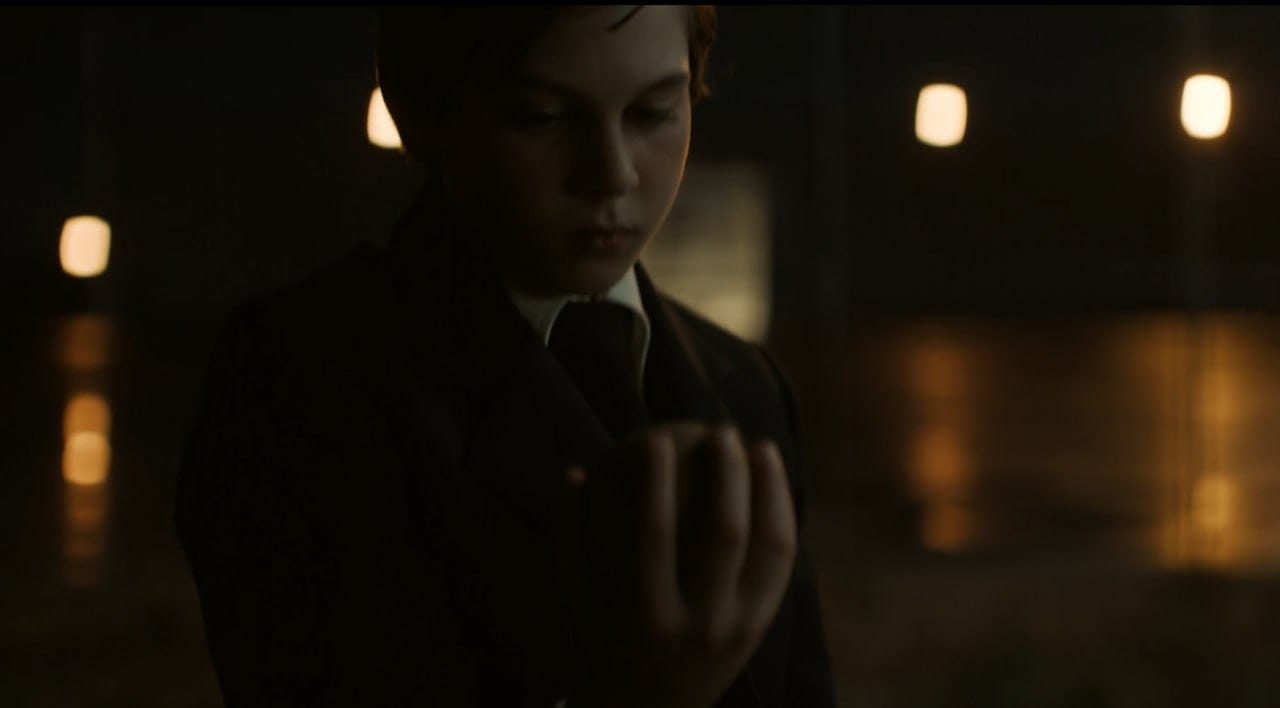
That directly leads into the season finale, as John’s presented with a conflict where a young, dangerously superpowered kid, who’s tormented by the hopeless feeling that they can’t overcome their upbringing and “programming,” asks John to end their life. It’s definitely an unusual and tricky final episode, where the series veers away from any ring-powered action and hones in on the character drama that has defined the show, but one I find more thematically satisfying than narratively satisfying.
On one hand, John realizes that Hal’s last act of heroism, without the ring, was to fight for this kid’s life and freedom, despite all it may entail. He lets the kid go, confident the kid will know how to build a life their own way while also wary the kid won’t—Hal argues, “don’t be afraid to be afraid.” An uncomfortable moral choice, but one definitely fitting within this meditation on things passed down and learning to live with your darkest impulses.
Not to say the finale walks that line perfectly… Funnily enough, looping back around to the True Detective touchstone, its first season definitely took some big philosophical and thematic swings, only for its season finale to play it relatively simply with its “the light is winning” ending. Lanterns, conversely, would’ve probably benefited from its finale taking less of a swing. The conflict with the kid was one thing, but the finale also asks the audience to stand with John as he does several striking acts of forgiveness and grace towards the people who have wronged him. Any one of those choices could probably sustain a whole episode dedicated to them, but the finale strings them together in a season finale wrap-up sequence that overall makes the show’s moral generosity feel more asserted than dramatically worked through.
Still, having to sit contemplating disagreement with the protagonist, especially when it comes to a difficult yet selfless decision, is a feature rather than a deficiency. Ultimately, it speaks to both Hal and John’s willpower to change and make choices for good. Two men who earn their heroism and liberation not by being chosen, but by choosing good.
ALSO READ:
Shazam! Fury of the Gods Is a Feast of Ham and Cheese
The 25 Best Superhero Movies of All Time
View More Articles About: