Rugby in the Philippines: Rucks, Mauls, Speed, Strength, and Brotherhood
Playing this team sport has made me into a better man.
Published on Jul 24, 2026
“There’s rugby in the Philippines?” or “Rugby sa gilid yan, no?” are the usual responses when people find out I play rugby. True enough, I didn’t know much about it until only recently, when I randomly decided to show up to a training day with the Manila Nomads at Circuit Makati back in 2024.
I walked into the field not really knowing where to put myself. Everyone could see I was the “new guy,” awkwardly running around, picking up the ball, asking what to do with it, or passing it clumsily to the next guy—only for it to fall short so he had to run over and pick it up. I was mustering whatever athletic confidence I had, pretending I wasn’t intimidated. There was a rhythm I didn’t understand yet, and every time someone shouted, I had to guess if they were talking to me, warning me, or about to run through me.
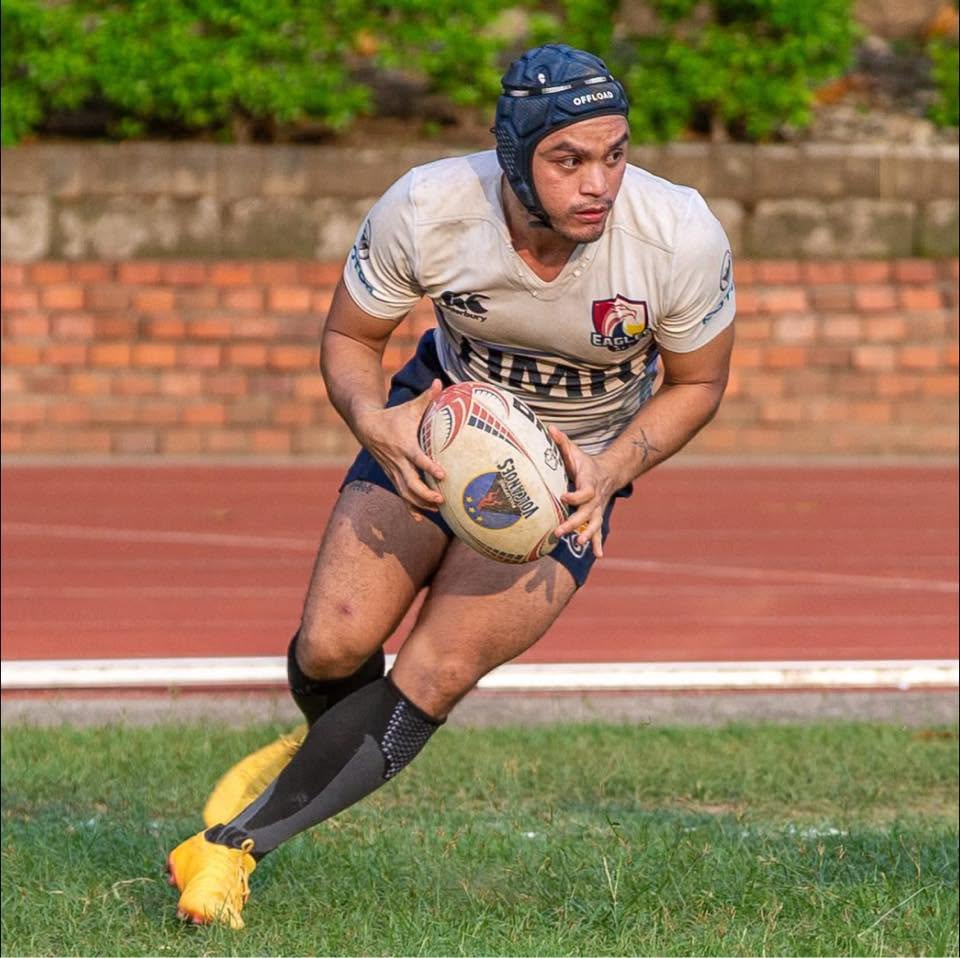
Now, I play with the Eagles RFC. I say “only recently” because, for a while, I wasn’t training consistently enough to confidently call myself an athlete.
Now I can.
I am a Filipino rugby athlete.
Rugby is a serious contact sport. Its implications aren’t like a weekend court you can rent and then call it a day. Not when the risk of breaking or dislocating an arm, a shoulder, or worse, not being able to play rugby anymore, is significantly high. Training days were a mix of “What the f*** is happening?!”, getting yelled at, and dropping the ball so many times that it became embarrassing.
“BALL ON YOUR RIGHT!”
I heard it. Barely caught it. Dropped it.
Jump. Sprint. Run until my stomach hurts. Fall down. Get back up and run again. Catch the ball. Pass. Miss. Get hit in the face. Get bodied to the ground. My body aches. My knees start making a sound, like when you click a pen.
I stop in my tracks, hands on my knees, facing the ground, hearing only the sound of my breathing, trying to remember a good reason why I keep asking my friend for a cigarette.
“I wish I had found out about this sooner.”
I’m 31 now, and I’m kindred to contact sports. I did boxing in high school, judo in college, and CrossFit in my early 20s. It’s a dopamine requirement, since my brain decided it couldn’t produce enough of it to be satisfied just sitting down and staring at the grain pattern of a wooden table while waiting for my food.
Philippine rugby has apparently been active since 1998 through the Philippine Rugby Football Union (PRFU), and reached global status in 2008. I was 13 by then.
In some countries, rugby is their national sport, meaning it is their version of our much-loved basketball.
I probably would have played for the national team by now: the Philippine Volcanoes.
But I didn’t write this to be a wet blanket, so this is where we start:
Playing rugby has made me into a better man: mentally, physically, emotionally. It regulates the imbalances by knocking me to the ground, and I get back up with a smile and a bloody ear or nose.
As men, pain is one way to justify the machoness society says we should have. Pride says we become more confident each time a new bruise records itself on the body. Shame reminds us, usually in private, that some versions of masculinity feel powerful only until the moment passes.
Personally, I think pain is a feeling that keeps us alive and makes us human.
Rugby, as a community, has continued to teach me to keep my ears open, listen to my teammates, speak up so they can see me, expect the ball from me, and work toward one of the many goals: beat the shit out of the other team, legally, by making a try.
A try is rugby’s equivalent of a score, goal, or shot. You score by grounding the ball on the opposing team’s try line, on the other side of the field. The funny thing is, rugby feels foreign until you actually play it. Then suddenly, lightbulb. You think to yourself, this is like patintero. The chaos feels like recess, where boys roughhouse each other and maybe take a fist behind the school building. The after-game drinking feels like every Filipino gathering that somehow starts with sports and ends with someone singing. The only difference is that in rugby, someone can legally fold you in half before asking if you’re okay.
It’s a beautiful feeling to make a try.
Everyone celebrates. Your teammates get so hyped up that they can’t help but hug you and shout at the top of their lungs, like warriors preparing for battle. We are warriors. We made that happen. We worked as a team to channel the ball from one player to the other, find the gap in their defense, break through, run as fast as we can, support, fend off anyone, and have that cinematic try that gets you a hurrah from the boys and a DM from the girl.
When the game ends, win or lose, you celebrate either way. Fingers broken? Bleeding? Shoulders in pain? Or maybe you just bonded with your brothers over good, plain rugby. We smile, shake hands, hug our opponents, and laugh about it over a beer or two.
They’re not afraid to ask and check, “How are you, bro?” “How’s the arm?” “How’s the knee?” “Oh, that’s just a bloody nose. You’ll be fine.” Here, sing some karaoke. Your beer’s on me.
In the field, in the middle of a game, after a 108 kg tank tackles you with all his might, he asks, “Are you okay, bro?” Then he extends his hand and helps you up.
He jogs away, sweat-drenched, and goes back to his position.
“Let’s play rugby!”
They’re not afraid to be your brother. We all understand each other without really talking about it, through the shared physical collision of crashing bodies, chasing balls like rabid dogs. But it’s rugby that teaches controlled aggression, where you have to show that you want the ball, make decisions to carry it, and make the meters needed to score a try. And when you f*ck up, you hope your brothers will be there to support you and carry it to the end.
I think men have a hard time saying they need each other. We can say, “Tara inom,” “Laro tayo,” “Gym tayo,” or “One more set,” but rarely do we say, “I need a place where I can be seen without explaining everything.” Rugby gives you that without making it sentimental. Nobody has to sit you down and ask about your childhood. Sometimes brotherhood is just someone passing you the ball again after you dropped it five times and picked it up five times, then telling you, “It’s okay, bro. You got small hands.” or “Eyesight’s poor, cause you’re old.”
I’m back home, hungry enough to eat for two. My body hurts, and I take a shower. As I wash off the dirt and grime, I see wounds that I didn’t see or feel earlier. A scratch on my arm or leg. A sore quad muscle from getting sat on by a 6-foot-2, 22-year-old whose mullet clearly says, “I’ve been playing rugby since my dad played rugby.”
I still feel the field on my feet, the wind on my face, the taste of mud. I hear my notifications going off. The boys are still happy, talking about how fast Goku was, how insanely strong Miguel took the hit, or even the lowlights of any rugby game.
I lay down in bed. I couldn’t be bothered anymore.
I smile.
Tomorrow is another day to be better.
I’m glad to have found a brotherhood.
Rugby gave me a better view of things. Everyone fucks up, pro or not. You will most likely make a mistake, but that’s okay. Pick it up, move forward, put your body on the line for your brothers, and trust that you can make the effort count.
It’s all that we can really do.

If you’re interested in giving Philippine rugby a go, visit the Philippine rugby website. From Alabang to Bulacan to Davao, there’s a rugby club for you.
I train with the Eagles RFC in Ayala Alabang, Cuenca Park, every Thursday from 5:30 p.m. to 8 p.m.
ALSO READ:
CrossFit Is for the Unathletic
Your Body Will Tell You When's the Best Time to Work Out
Raphael “Dash” Reyes is a Filipino coffee entrepreneur, community roaster, and writer whose work moves between Philippine coffee, local communities, and stories of identity. He currently trains rugby with Eagles RFC in Ayala Alabang.
View More Articles About: