Could the Mindset of Having 'Enough' Be an Act of Revolution?
Reflections on consumer culture, minimalism, and freeing ourselves from the tyranny of more.
Published on Jan 5, 2026
In the wake of the sickening corruption scandals ripping through the Philippines, it has been difficult to scroll through luxury-saturated shopping hauls and "fitchecks" without feeling enraged. Where, once, such images may have evoked jealousy or even a distorted sense of ambition—to maybe have, one day, worked hard enough to afford such a lifestyle—the bombshell revelations of the past few months have raised a mirror to our distinctly Filipino brand of wealth-worship, and got a lot of us wondering if maybe “more more more” is not the best way to live.
The national mood, perhaps, is one of umay. The glow of constant newness and unending high-endedness, against the cultural fear of appearing broke, or worse, cheap—doesn’t hold the appeal it did a decade and a half ago, when social media and authenticity were actually used in the same earnest breath. In the climate of 2026, unli-extravagance is just plain exhausting. As such, in this same climate, the idea of having “enough” doesn’t sound as radical as it did when it was introduced to the mainstream by Netflix’s 2016 documentary Minimalism. A decade later, an aversion to overconsumption feels more appropriate than ever.
The Mirage of "More"
Filipinos don’t need to learn in school how bayanihan was a pre-colonial concept; we simply need to consider how a bahay kubo is built, or look around our own neighborhoods during an inevitable flood, or come across a hungry person when we have a grocery bag full of food, to understand that, by tradition, we prize community over competition. We help each other. We give each other our surplus so that everyone may have what’s sufficient for themselves.
So this mindset of insatiability—much like the movies, malls, and, yes, magazines, that promote it—is imported. Don’t get me wrong: it’s not that multiculturalism is inherently invaluable. However, this value system of bayanihan gets more diluted the more we subscribe to the imperial mentality of amassing things, wealth, power, people, and what have you.
This is to say: if you’re jokingly using the word budol as a synonym for spending, it’s probably your soul telling a little bit of the truth. Deep down we know that amassing more more more is a mirage for a meaningful way of life.
The Sufficiency of Lack
The data is there. Studies show that people who intentionally reduce their possessions report greater well-being, satisfaction, and environmental consciousness. Consuming less stuff (a.k.a. adhering to actual minimalism rather than a minimalist or “clean” aesthetic) is said to create a positive feedback loop: fewer things to maintain equals more clarity in choices and a sharper sense of self grounded in purpose rather than possession.
On one hand, these are Western studies done in Western communities—and so they are relevant to our “imported” sensibilities. On the other hand, the notion of sufficiency isn’t new for Filipinos. Fine, we like to decorate our walls and shelves and public transportation in a way that has been described as horror vacui—the fear of empty spaces. But when there’s one piece of food left on the table, we always cut it into smaller pieces so that more people will be able to share it. In this way, we’re already primed to not just embrace restraint as a holier-than-thou virtue, but to see the value of it for the community. We know how our lives, no matter how modest, can provide for another.
Must we all take a vow of poverty?
Even though the idea of living “modestly” in the Philippine economy feels like accepting the poverty imposed on us by oligarchs and colonial powers, that’s not what’s happening when you resist overconsumption.
Think of it this way: entire industries thrive on manufacturing want, providing a false or inadequate solution, then hooking customers into an eternal loop of paying to keep the want relatively at bay. By buying less—by wanting less—we arrest the metastatic growth of the profit-overlords.
This 2026, choosing “enough” is not some quiet virtue. It does not mean resisting pleasure or ambition, it’s not about decluttering our houses or living up to some Western hipster ideal of authenticity. It’s about participating in the call bayanihan by every means available—whether it’s protest, posting, or putting our debit cards away during the next payday sale.
Embracing the "Enough" Mindset
Perhaps we should see “enough” not as a discipline, but a return to our deepest desire as a culture: to live in harmony with each other, including our land and water. If we see having enough, not as a lack, but as having a wealth of something that can’t be bought, we might finally understand, as individuals and as a nation, what it means to be free.
READ MORE:
Financial Adviser: 5 Ways to Control Your Money When You're Anxious About Your Financial Future
End Your Petsa de Peligro With These 12 Practical Tips on Saving
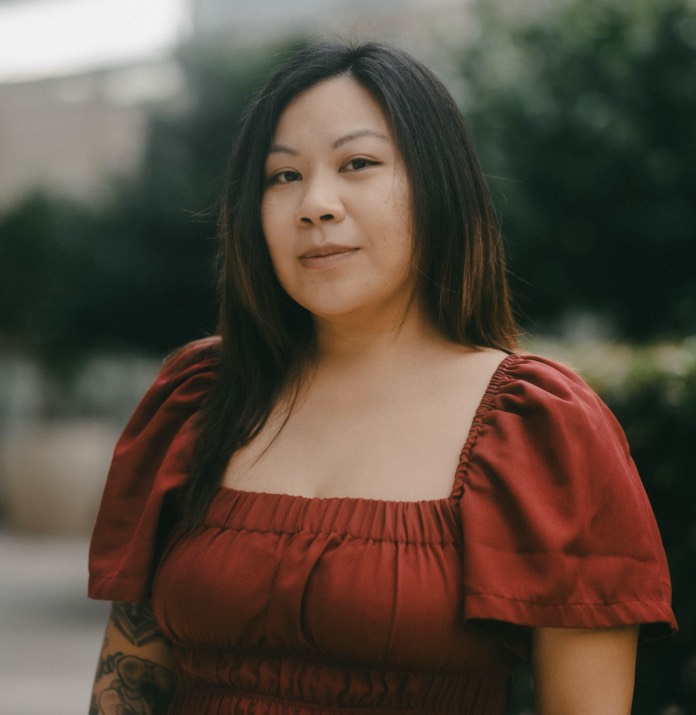
Pauline is a contributing writer preoccupied with decolonization, conceptual art, counterculture, and long conversations over flaky pastries. Follow her on IG: @pauline_arnould
View More Articles About: