Running on Metro Manila's Sidewalks Is Actually an Extreme Sport
With the country’s car-centric infrastructure, moving on your own two feet has become a luxury for the few rather than a right for the many.

Published on Feb 9, 2026
Like many people of my generation (a.k.a. the elder millennials who are coping with generational trauma through endurance sports), I have taken up running in the last year or so. It’s a relatively easy sport to get into, or so I thought. All you need is a trusty pair of running shoes, an hour carved from the busy 9-to-6, a free Strava account (you know what I mean), and the sidewalk.
Living on this side of Mandaluyong, Maysilo Circle is the most accessible for me, with plenty of casual joggers and walkers in the neighborhood thinking the same thing. It is in the center of a residential area, after all. But, as it turns out, being right by the city hall’s backyard does not guarantee a proper pedestrian infrastructure.
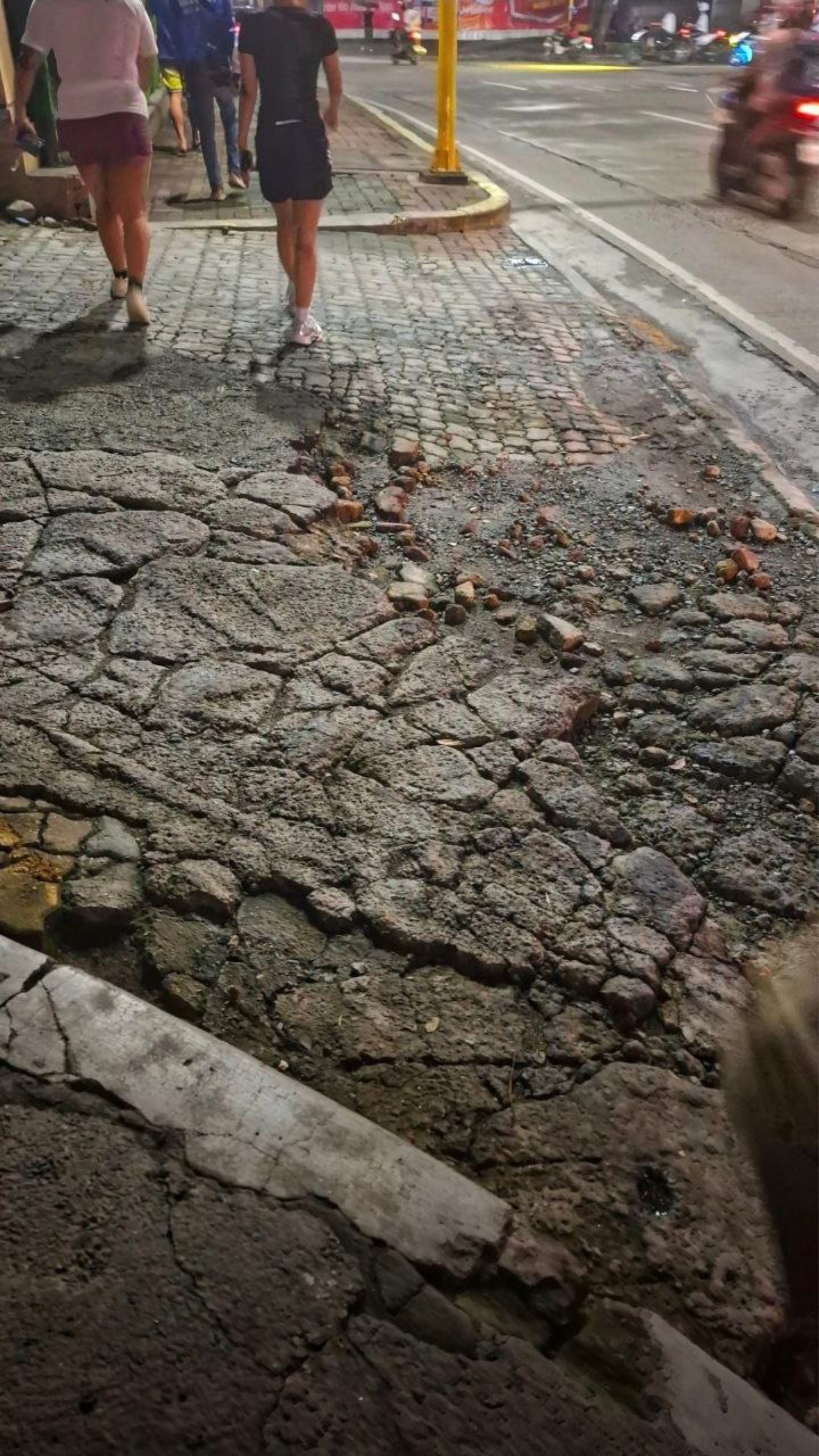
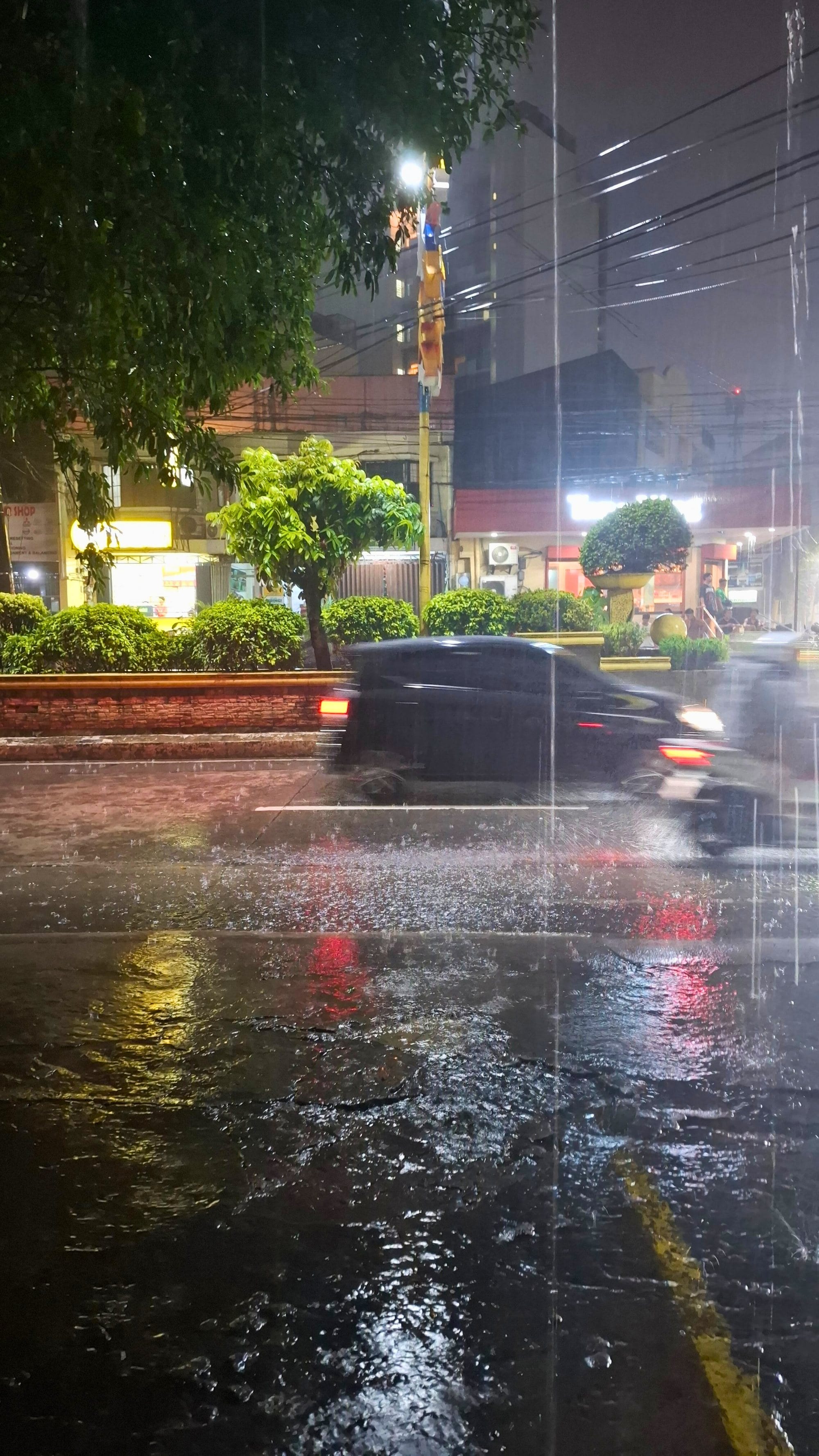
The sidewalk, which measures about 700 meters per lap, is a mish-mash of red bricks, cement, and asphalt. At some points of the circle, the path gets so bad that I have to get off the sidewalk, which is a full step down to the roadside canal—RIP to my knees. It doesn’t help that vehicles, from private cars to first-responder SUVs, are parked on the road, giving runners like me no choice but to hit the next lane, where jeepneys speed through and pull over with no warning. Then, there are other things to avoid: potholes, puddles of god-knows-what, trash, dog poop, spots with no lighting, low-hanging spaghetti wires, and the list goes on. It could be a great obstacle course race track, if that’s what it’s trying to be.
Sometimes, I would walk an extra couple of kilometers to cross the bridge over the Pasig River and go to the better laid-out streets of Rockwell to have a proper run, with some breeze and breathable air from the very few trees around while I do. But not everyone lives in Rockwell, BGC, Filinvest, or any other high-end, mixed-use developments. Most people are in unmanicured neighborhoods and transit-dependent areas where they need to get from point A to point B safely, not even for fitness, but just to access basic facilities.
Walkability in Metro Manila, while a fundamental human and civic right, remains a privilege. It is evident that spaces catering to pedestrians to walk safely are limited to central business districts or privately developed neighborhoods.
Band-Aid Solutions and the Envy of Walkability
Sometime in January this year, a concerned citizen probably got so fed up with the anti-pedestrian bias that she posted a complaint in a public Facebook group called Mandaluyong City News and Updates and tagged the accounts of Mayor Menchie Abalos and Mandaluyong City Public Information Office.
She said [sic]: "Bilang isang Mandaleno.. nananawagan po aq na sana po ay bigyan nyo ng pansin ang pagsasaayos ng Mandaluyong Circle.. Sa mga katulad namin na nag walking at nagjogging sa lugar na yan.. bilang exercise para sa malusog na katawan ay makakatulong po ang pagsasaayos nito at para din po makaiwas sa anumang sakuna." The local government finally did something about it—but only after the post went viral, climbing to 500 comments, 250 shares, and more than 2,000 reactions.
Meanwhile, I'm genuinely envious of a sidewalk that’s just…walkable. Singapore, for example, has pathways that are connected, shaded, and—most importantly—predictable. I try to never miss a morning run when abroad for work trips, knowing that I would not be able to enjoy the same pedestrian luxury when I get home. I could actually focus on my pace because I wasn't busy scouting for the next obstacle. Even their last-mile connectivity is dependable, so choosing to take the MRT to the hotel is a no-brainer. Out there, a five-minute walk or a commute doesn’t feel like a tactical mission. (We all know that “papasok kang sariwa, lalabas kang mandirigma” reference.)
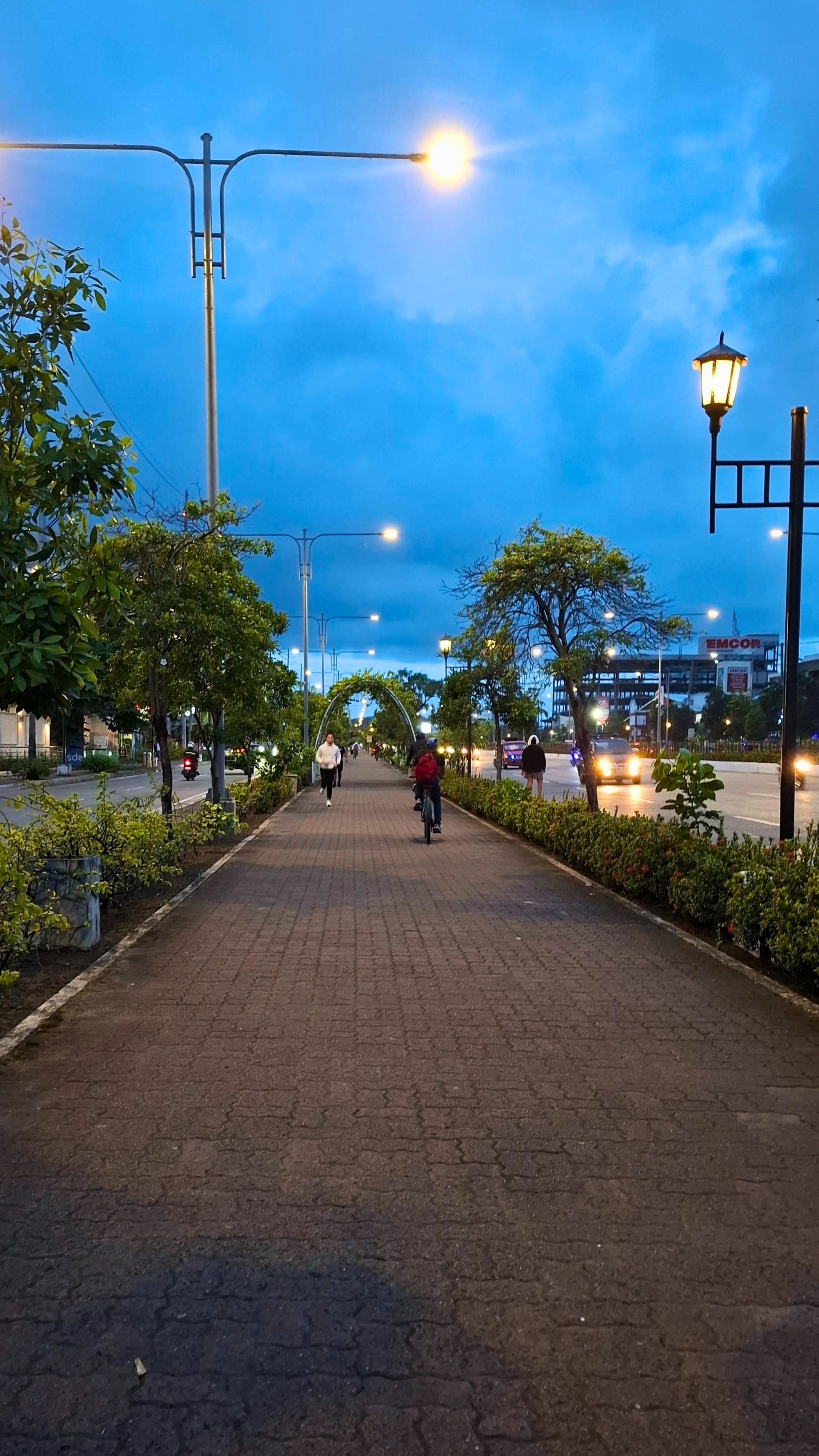
We do have to give credit where credit is due. Iloilo City in the Visayas is arguably one of the most walkable cities in the Philippines. It boasts the Iloilo River Esplanade, which is a 9.29-kilometer-long urban esplanade and linear park along the Iloilo River. There's also the 11-kilometer bike lane and walkway along Diversion Road, where trees and ornamental flowers are planted. Maybe there's hope, after all.
Beyond the Morning Run
This envy of Singapore (and even Iloilo) is not about wanting to just run in a perfect city; it’s about wanting to live in a place where we actually see something out of our taxes—from the income tax deducted from our paychecks to the Value-Added Tax (VAT) on every meal and service, and, yes, even the Netflix tax. In fact, the Philippines imposes the highest VAT rate in Southeast Asia at 12 percent, yet we have mobility plans that feel like a kid's DIY project. It isn't just bad engineering or bad urban planning; it's actually evidence of neglect.
For a runner, this neglect is an inconvenience, but for a senior citizen, a person in a wheelchair, or a parent with a stroller, that neglect means inaccessibility and exclusivity; that pothole or uneven road is almost a "No Entry" sign. We have been conditioned to believe that a functional sidewalk is a bonus or a luxury, something to aspire to by moving to high-end neighborhoods. But the truth is, a walkable city is one of the most basic obligations of a functional government.
This anti-pedestrian neglect has a massive economic price tag, too. Because we cannot safely walk even five hundred meters to a train station or a jeepney stop, we are forced into tricycles, Grabs, or private cars for distances that should take five minutes on foot. More cars on the road mean more gridlock, and more hours in traffic mean an economic drain.
The latest TomTom Traffic Index report said that the Philippines is the most congested country in Asia in 2025, with a congestion level of 45 percent. Congestion level is "the average additional time (in percent) lost to traffic in 2025, compared to driving in free-flow conditions."
A JICA study, meanwhile, revealed that the traffic congestion in Metro Manila alone costs the Philippine economy at least 3.5 billion pesos per day, with a prediction that this could increase to 5.4 billion pesos daily by 2035.
If something as simple as walking or running on a sidewalk feels like a permanent game of bad Tetris—where the bricks are never aligned—then we have to ask where our taxes are really going. We aren't just paying for asphalt or cement; we are paying for the right to move through our own city.
ALSO READ:
Today I Learned: Singapore's Marina Bay Loop Is a Scenic 3-km Run
Walking in New Manila Is a Lesson in History, Culture, and the Paranormal
Christa I. De La Cruz is a Palanca Award-winning writer with over 15 years of experience in feature writing for print and digital media. She earned her Sertipiko sa Malikhaing Pagsulat sa Filipino from the University of the Philippines Diliman and holds an MFA in Creative Writing from De La Salle University.
View More Articles About: