Some Reflections on Truth in the Time of (Dis)information and Agentic AI
We must remember to remember: that remembrance is resistance.
Published on Aug 11, 2026
While scrolling through my Facebook feed right before the Philippine National Elections in 2022, I found a peculiar post. A two-in-one screenshot with two parts: a screenshot of a Facebook status update and a screenshot of a scene from the Korean film Parasite, directed by Bong Joon-ho. This is what it said:
Supporting BBM doesn’t mean we invalidate the experiences of those who were wronged during Martial Law. People have different experiences during that era itself, but it will also be rude to invalidate the lives of those who [lived] peacefully during that time.
The scene from Parasite shows a rich lady who was glad that it rained. She said, “Today the sky’s so blue, and no pollution! Thanks to all the rain yesterday!” In contrast, her impoverished employees’ banjiha, a basement house doubling as a bomb shelter, was flooded from the same rain.
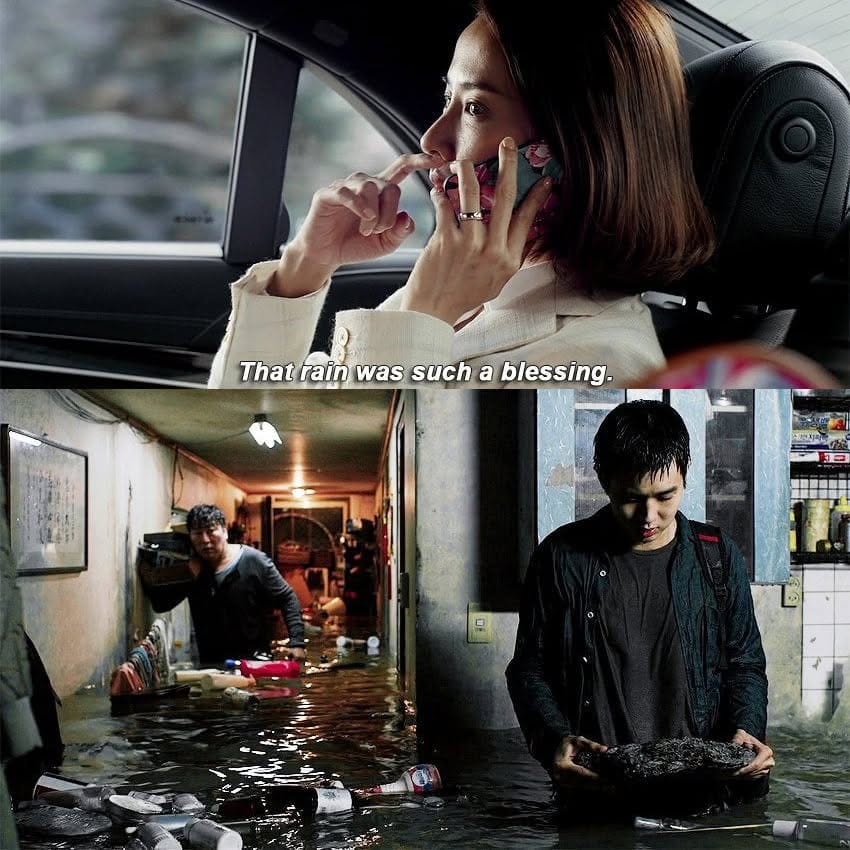
I could not resist the urge to respond to the post. My caption read:
This is what Gideon Lasco, a doctor, medical anthropologist, and columnist for the Philippine Daily Inquirer, calls the “collective selfishness” of Filipinos in an essay of his that is included in his collection The Philippines Is Not A Small Country. This concept describes our inability as a people to sympathize and empathize with those who have experienced pain and suffering EXCEPT when we, too, have experienced them. Our national consciousness is merely reflexive in this regard, which explains why people are quick to dismiss others’ pain and suffering. Denialism, then, is a self-inflicted venom that will kill our country from the inside out.
We will die if we do not use the remedy for this internalized issue: remembrance. This is why we should see the role truth plays when we choose our leaders for our forthcoming election in 2028. They have made a mockery of our democracy by choosing to foster clownery, performativity, and impunity.
Allow me to express some of my reflections on the role of truth in contemporary Filipino life in the 21st century vis-a-vis (dis)information and the undeniable, seemingly irresistible use of AI, especially generative AI, in education and the workplace.
In his The Republic, the Greek philosopher Plato mentioned the concept of truth in “The Allegory of the Cave.” According to him, there are prisoners who know nothing besides how to live in a cave. Their concept of “life” comes from shadows they perceive in the cave, which come from people, objects, or animals that are outside the cave. They believe that these shadows are true and that, after meditating on these shadows, they will bring them “satisfaction,” “enlightenment,” or what Aristotle called “eudaimonia,” meaning “self-realization.” What is disturbing here is that these shadows are mere specters or phantoms, but they remain unperturbed by this reality. Shakespeare’s Macbeth would describe their false epiphanies as “tales told by an idiot, full of sound and fury, signifying nothing.”
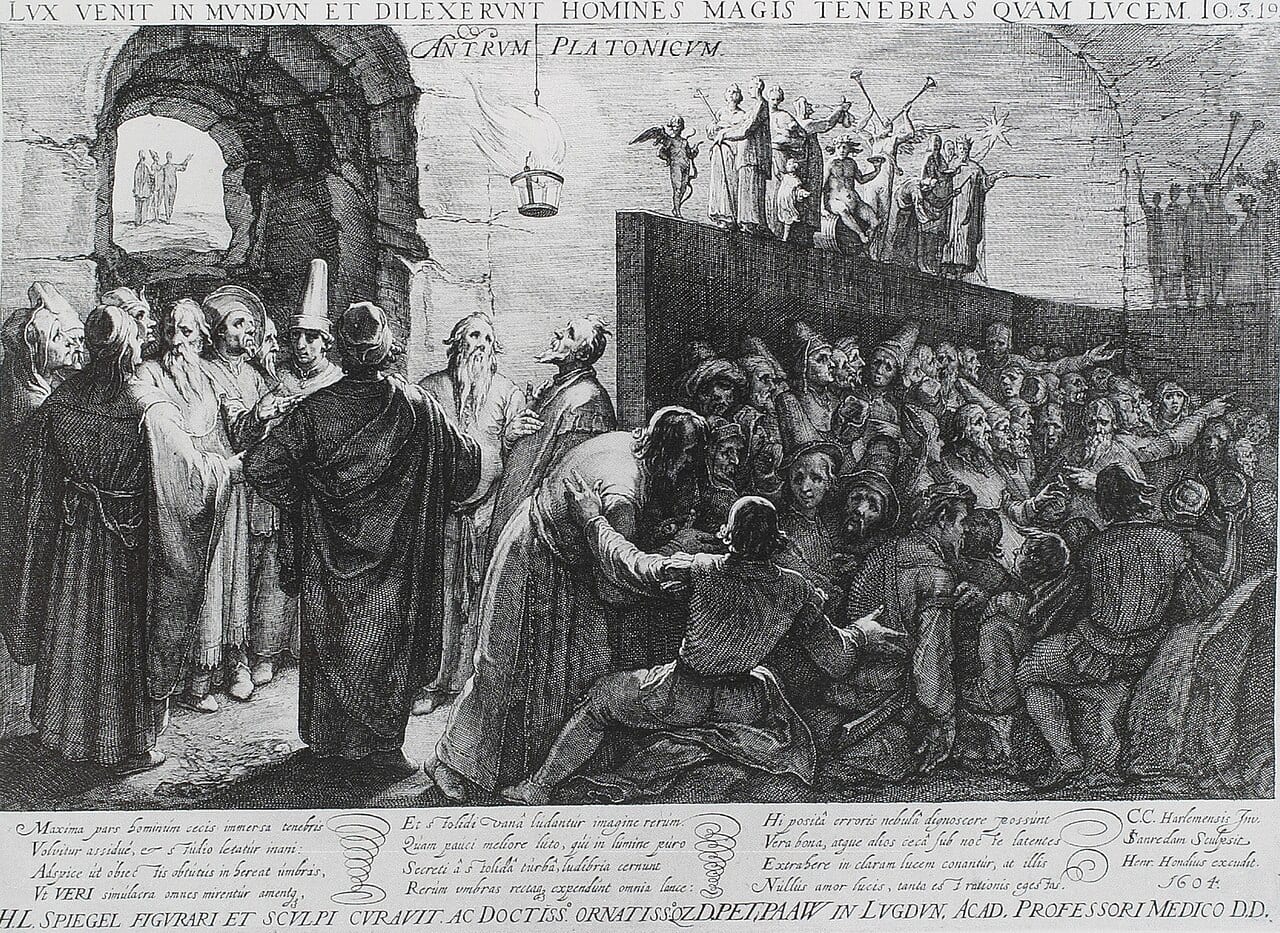
Fortunately (or unfortunately, depending on how you see things), a prisoner exits the cave-prison. Outside, he finally understands the very nature of life. This includes trees, stones, grass, animals, and others he only saw as shadows in the cave. He would not dare to leave the other prisoners behind, thinking it only moral to return to the cave to rescue them from their ignorance; however, in his attempt to educate them, they plot to kill him. Perhaps he seemed arrogant to them. Perhaps they were simply peeved. Or perhaps they were enraged for exposing their stupidity and recognizing that same foolishness embarrassed them to no end.
Exile, or worse, death is the sad fate of those who wish to correct or rectify false beliefs. This happens especially to people who belong to the intelligentsia, and this machinery of falsity is built upon by the cogs and pieces of the greedy who remain in power. Being the bearers of truth and ethos does not guarantee indoctrinated people will readily believe them; imagine the ease of life if this were the reality.
In truth, the burden of recording and evaluating the aforementioned is on the intelligentsia, including how to convince other people to believe in truth that is really the truth, for society should not relish in the relativity of people’s perceptions. Their presence becomes a deterrence toward complete and utter ignorance and intellectual fixity. Or not; it can only go one of two ways, after all. This is increasingly difficult to do because of the society we now live in, where netizens’ respective algorithms across social networking sites like Facebook, X (formerly Twitter), Instagram, and TikTok have become reigning monarchs from the foot to the zenith of Filipino netizens’ minds, while legitimate news outfits, scholars, and institutions have become street dwellers begging for others to believe in them despite the disillusionment of the general populace towards them for whatever reason. The only thing that perhaps keeps the Filipino intellectuals going is their duty to the truth, that, similar to the freed prisoner of the Plato tale, they think it is only moral to rescue people from their ignorance.
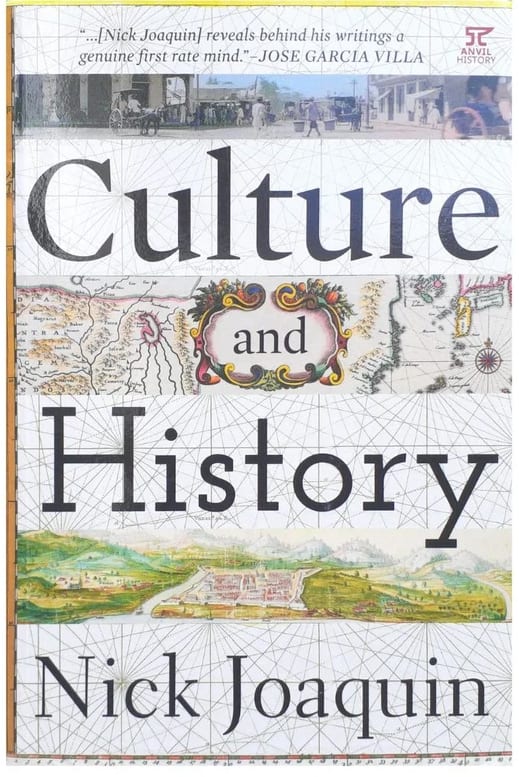
In his essay “Culture as History,” National Artist Nick Joaquin attempts to explain culture in relation to history. According to him, our history is a result of people’s interactions with tools, i.e., technology or anything that makes human life more bearable or easier. In the same essay, he states how much Filipinos emphasize and prioritize “ear culture” instead of “eye culture” despite both existing in the Filipino psyche.
“Ear culture” refers to our oral literature, while “eye culture” refers to our written literature. This probably explains why it is important for the Filipino to watch and view television, plays, and film, including listening to radios or podcasts. This is further complicated by the presence of social media and even AI, where “ear culture” is underscored even more by pattern recognition and massive, massive datasets stolen and compiled from legitimate sources without consent.
On the issue of using AI in the classroom, Vae Dadia wrote in her Esquire Philippines essay titled “The Reading Skill That Makes AI Safe to Use in the Classroom”:
[AI] hands back the consensus with the corners filed off and the seams pressed flat. A reader who cannot feel the seams will take it and call it knowledge. A reader trained to read across difference will take the same output and do the one thing the machine cannot do for her: weigh it. That reader does not need to be a literature major. She needs to have been taught, somewhere, by someone, that comparison is an act of judgment and not a search for sameness.
To “read across the difference” and to feel the texture and depth of it all in this context may mean what Anne Carson echoes from René Descartes: “Dubito ergo cogito, cogito ergo sum.” Or “I doubt therefore I think, I think therefore I am.” This skepticism, this refusal of sameness and acknowledging difference, I believe, will rescue the Filipino from becoming mere automatons or machines that are only capable of operating on pre-munched data. It is the arts and humanities that have the capacity to do the inverse, something that may not be possible in the future if DepEd and CHED remain steadfast in their further reduction or removal of General Education. Without these, we will not need to have Big Brother in our own Oceania; we will become Big Brothers unto ourselves, and then some.
This is why it is undeniable that Filipinos have various and strange beliefs concerning social issues; “ear culture” dictates Filipinos’ consumption of information, thereby coloring their perception of things, including our history, reality, and culture.
The current status of Filipinos’ thinking is not an accident; it is a product of systemic ills shaped and perpetuated by the powers that be. In this regard, it is important to be active for truth and become a champion of it. In his essay “A Poetics of the Literary Work,” Gémino Abad stated that it is natural for man to seek out truth, that man is to use his mind, language, and imagination to intuit culture through his literature, including truth.
If that is the case, these — the mind, language, imagination, and literature — are the keys to unlocking our remembrance of national memory and redemption of truth that was once betrayed and then forgotten. We must remember to remember: that remembrance is resistance. In this way, we will free ourselves from lies and deceit founded on alternative truths perpetuated in decentralized digital spaces across social media by the powers that be. These will all pulverize and snuff out the collective selfishness and self-centeredness festering in the nation.
ALSO READ:
The Reading Skill That Makes AI Safe to Use in the Classroom
Is There Such a Thing as Ethical AI?
Hezekiah Louie Zaraspe teaches literature and creative writing at the University of Santo Tomas (UST) and De La Salle University (DLSU). He holds a Bachelor of Secondary Education, major in English, and a Master of Arts in Creative Writing from UST.
View More Articles About: