A Doctor’s Mission to Protect the Legacy of Philippine Basketball
With at least 25,000 pieces of Philippine basketball memorabilia, Dr. Mico Mesina hopes to keep the stories of its legends alive and inspiring for generations to come.

by Rhia Grana
Published on Jan 11, 2026
Dr. Michael Rico “Mico” Mesina, a radiologist by profession, owns at least 25,000 pieces of Philippine basketball memorabilia—a passion project he started during the COVID pandemic. He has invested roughly seven figures in building his collection. He knows the history behind each item by heart, which has made him a credible authority on the subject. In fact, he is one of the go-to resource persons on Philippine basketball history and is often invited to mount exhibits. Still, he prefers to simply be called a basketball enthusiast.
“I didn’t study history,” he clarifies. “I just want to preserve and promote our basketball heritage, because many young people today no longer know our earlier legends. The oldest players they recognize are usually Alvin Patrimonio and Johnny Abarrientos. Very few are familiar with the likes of Larry Mumar or Caloy Loyzaga. We need to raise awareness about these other legends and honor them, too.”
Introduction to Basketball
As a child, Mesina grew up playing traditional Filipino games like patintero and tumbang preso. “Basketball was usually for the older kids,” he recalls.
But everything changed when his family moved to an apartment near Reyes Gym in Mandaluyong. That’s where he was introduced to a sport that would become his lifelong passion. “In the 1990s, nearly all PBA teams practiced at Reyes Gym. My uncle would bring me along so I could watch the sessions,” he shares.
At first, young Mico would simply join in. But as he began to familiarize himself with the players, his fascination with Philippine basketball grew. “Eventually, I wanted to learn more about the players and the teams. Back then, the internet was still in its infancy, so I relied on sports magazines to get information. That’s how my collecting journey began,” he says.
In those days, his weekly school allowance was just P20 a day. He would save P5 each day, so by Friday he had just enough to buy the latest issue of Sports Life magazine, along with some crackers and a cola to enjoy while reading. “The magazine had articles about past legends and historic moments in Philippine basketball, and that’s what sparked my interest in basketball history,” he says.
The very first issue of Sports Life magazine he bought featured Marlou Aquino. “He was my first PBA idol,” says the self-confessed Ginebra fan. “Before he was drafted, Ginebra was always at the bottom of the rankings. But after 1996, when he joined the team, they became a championship contender.”
He collected magazines for a few years but had to stop when he started to seriously study for med school. He only resumed collecting again during the pandemic.
“Kasi di ba pandemic, medyo bumagal ang buhay ng mga tao. So I was thinking, ‘what's a passion project that I wanted to do na hindi ko magawa-gawa before dahil sobrang busy?’ I decided to look for basketball memorabilia during my time growing up para may nostalgia. So yung mga magazines na kinokolekta ko dati na nawala na kasi naglipat kami ng bahay, tinry kong i-acquire ulit,” he shares.
Thanks to social media, it became easier to find sellers offering these items. He started by looking for ’90s sports magazines, then moved on to much older ones from the ’80s and ’70s, since the PBA began in 1975. What began as a magazine collection eventually evolved into collecting other basketball memorabilia dating back to the 1900s.
A Living Archive of Philippine Basketball
Mesina’s collection offers a tangible way to discover the country’s basketball history. What he considers the crown jewel of his collection is a basketball that dates back to the 1900s to 1910s, now blackened with age and wear. “Kung titingnan ninyo, nasa labas ang tahi niya. Kapag hindi na siya tumatalbog, tatanggalin mo ‘yung tahi at ‘yung parang bladder sa loob, lalagyan ng hangin, tapos itatahi ulit,” he explains.
He shares that two businessmen have already approached him, eager to buy the ball. “Name your price daw,” he recalls. But he refused. “Sayang kasi kung mapupunta lang sa isang private collector at naka-stash sa bahay niya. Walang ibang makaka-appreciate. You can already imagine how beautiful it would look in a museum, with proper lighting, right?”
Seeing his collection is also one way for contemporary fans to discover often overlooked chapters of Philippine basketball history. “Did you know that the first Filipino competitive basketball players were women? Kasi, ’di ba, there were Thomasites who came in the early 1900s to teach and help establish the Philippine educational system. Included in that was the introduction of sports to promote teamwork and character-building among Filipinos,” he explains.
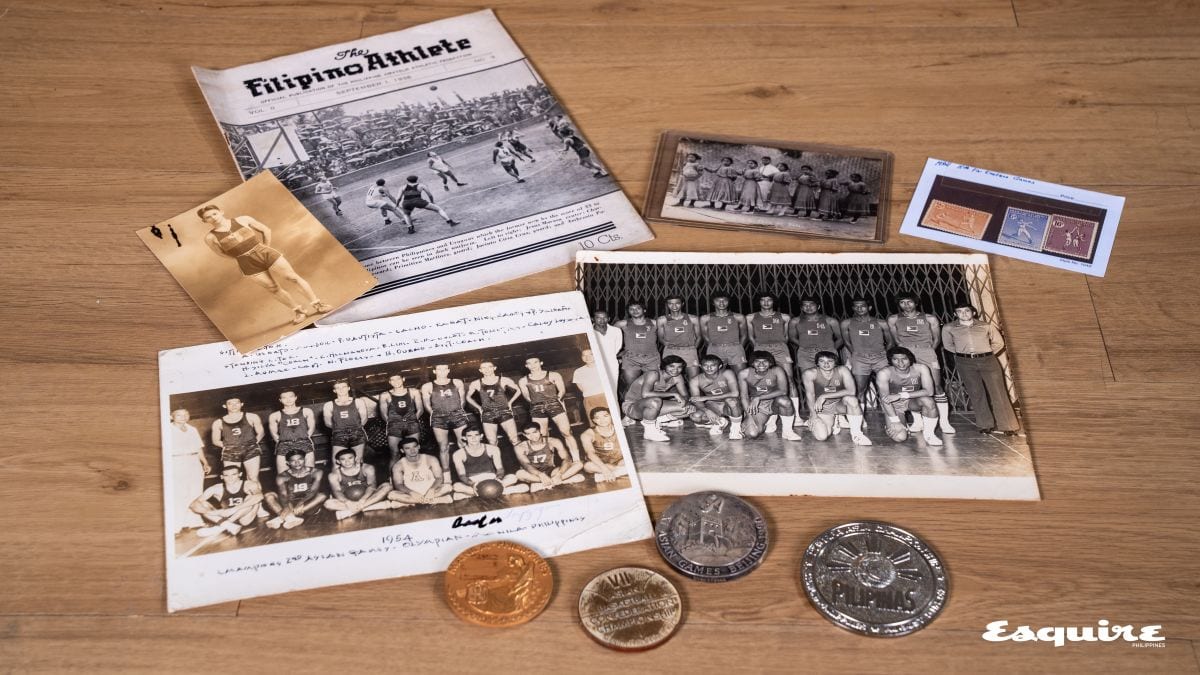
In the Bureau of Education manual, there were two separate lists—one for boys and one for girls. Since basketball had only recently been invented at the time by Dr. James Naismith, it was initially placed under the category for girls. Meanwhile, sports such as track and field and baseball were assigned to boys. This is why, within the Philippine educational system, females were the first to be taught the game of basketball.
In the photo Mesina shared, one can see the first-ever champions of the Manila Carnival basketball competition—female players from Tondo Intermediate School. “They were the most successful team in that tournament, winning titles between 1911 and 1913,” says the basketball enthusiast.
Among Mesina’s most intriguing items is a medal from a politically charged chapter in Philippine basketball history. He explains that the Philippines was supposed to host the World Basketball Championships in 1964, but the event was canceled after then-President Diosdado Macapagal refused to allow communist countries to participate—many of which were basketball powerhouses. As a result, the country was penalized, and a smaller event, the Spalding Invitational Tournament, was held instead. Mesina owns both the program and a medal from that tournament, which he sees as proof of how politics once directly shaped the sport’s local history.
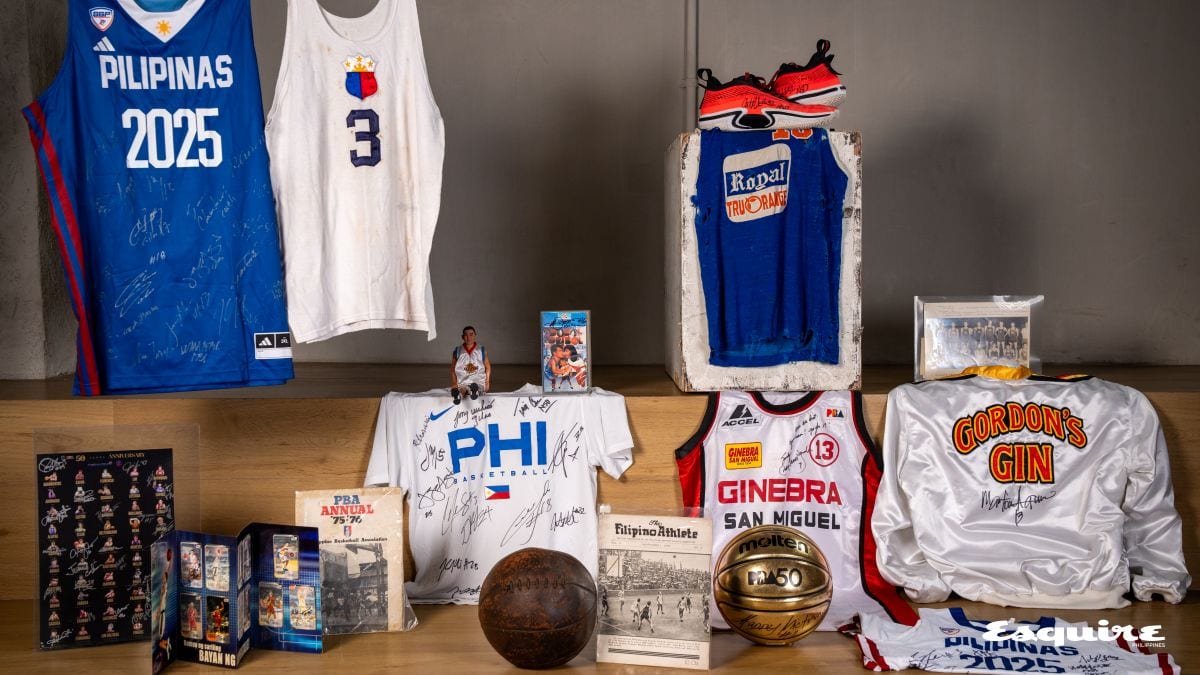
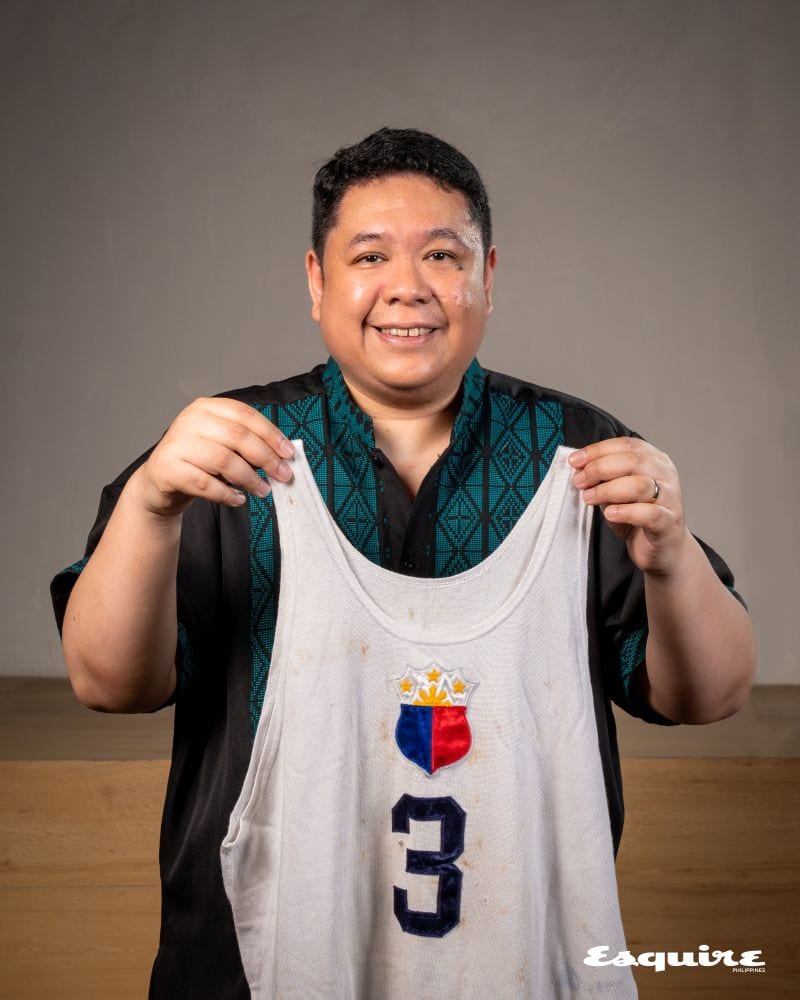
Two of Mesina’s most prized possessions are jerseys worn by two basketball legends. One was worn by Caloy Loyzaga during the 1962 Asian Games, while the other is a Royal Tru-Orange jersey worn by Manny Paner in the PBA’s inaugural season in 1975. “Caloy was the team captain then, as indicated by the No. 3 on his uniform,” he offers. “Manny’s jersey is already weathered with age, so I promised him I would take care of it.”
Also in the basketball enthusiast’s safekeeping are a copy of the annual program from the PBA’s inaugural season in 1975, a silver medal won by the Philippines at the 1990 Asian Games and once owned by Allan Caidic, and another silver medal from the 2013 FIBA Asia Championship.
His other treasured keepsakes include an Adidas Gilas Pilipinas shirt signed by the entire team during their match against the Macau Black Bears, a Gilas Pilipinas shirt gifted by assistant coach Jong Uichico to commemorate the team’s historic win over a European squad in Latvia, and a rare Golden Ball released for the PBA’s 50th anniversary—one he plans to have signed by all 50 of the league’s greatest players.
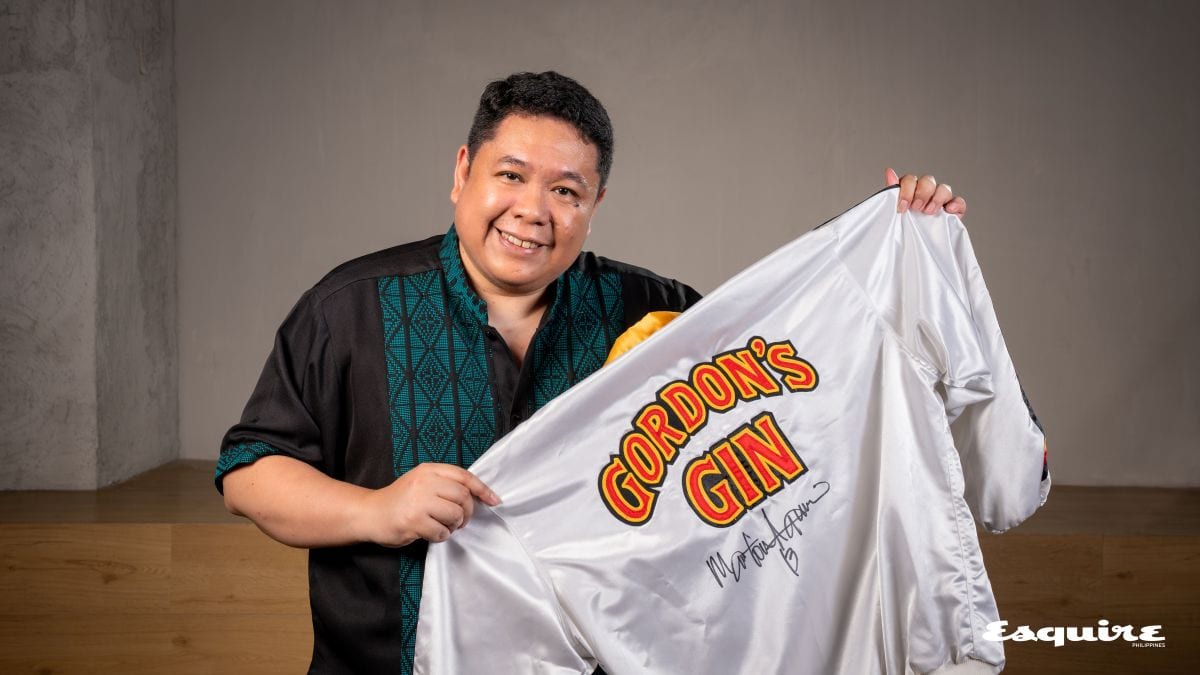
Among his more contemporary memorabilia are the game-worn shoes of Justin Brownlee from Ginebra’s epic Finals series against the Bay Area Dragons, a Ginebra jersey worn by JJ Helterbrand during Robert Jaworski’s jersey retirement ceremony, and an original Gordon’s Gin jacket from 1997, signed by his childhood idol, Marlou Aquino.
The Endgame
For Mesina, collecting basketball memorabilia has been more than just a hobby; it has reshaped his understanding of the sport and its role in Filipino identity.
“With the collecting, I was introduced to the basketball community,” he says. “Before, I was just an outsider looking in. But through my collection, I discovered a whole new world of Philippine basketball. I’ve made friends with numerous legends, players, and coaches.”
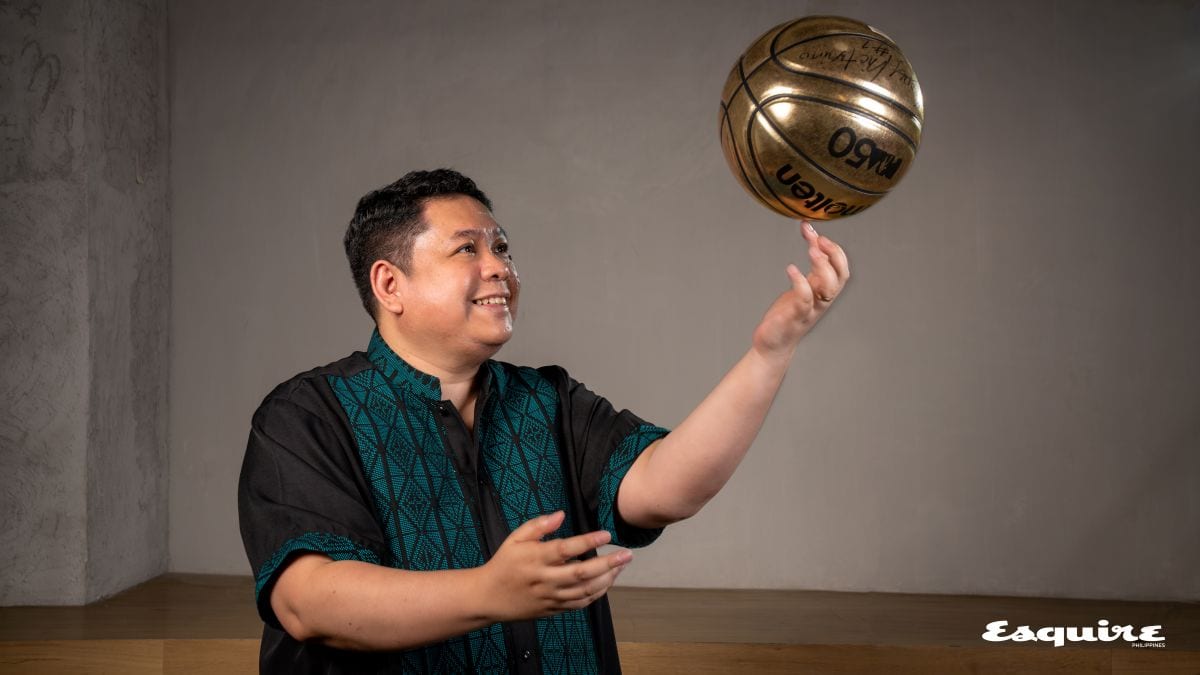
Looking ahead, Mesina envisions his collection reaching an even wider audience. “My long-term goal is to establish a public museum,” he says. He sees it as the endgame in his work as a collector—a way to prevent his carefully curated items from being scattered or lost over time. “Sometimes when collectors grow older, their collections are sold off and the items get divided. That would be such a waste. For me, a museum would give my work a lasting purpose.”
Through his collection and his advocacy, Mesina hopes to ensure that Philippine basketball’s rich history—and the stories of its legends—remains accessible and inspiring to generations to come.
View More Articles About: