Dennis Anthony Uy: ‘Digital Connectivity Today is a Basic Human Right’
He reveals a side of himself rarely seen: an engineering geek-turned-businessman whose eyes light up discussing the possib
Published on Nov 18, 2025
Every year, Esquire Philippines presents Man at His Best, the local iteration of a global signature event where we celebrate extraordinary Filipino men and women reshaping society as we know it. These are the dreamers and doers who have made a profound impact on the Filipino's way of life, who are using their talents and skills to make something of themselves and inspire the rest of us to do better with our lives.
This year, we're honoring eight visionaries in film, politics, music, business, F&B, journalism, and literature. They are the Architects of Tomorrow: laying the groundwork for a better, more progressive country—embodying what it means to be a Man at His Best.
Meet Esquire Philippines' Businessman of the Year, Dennis Anthony Uy
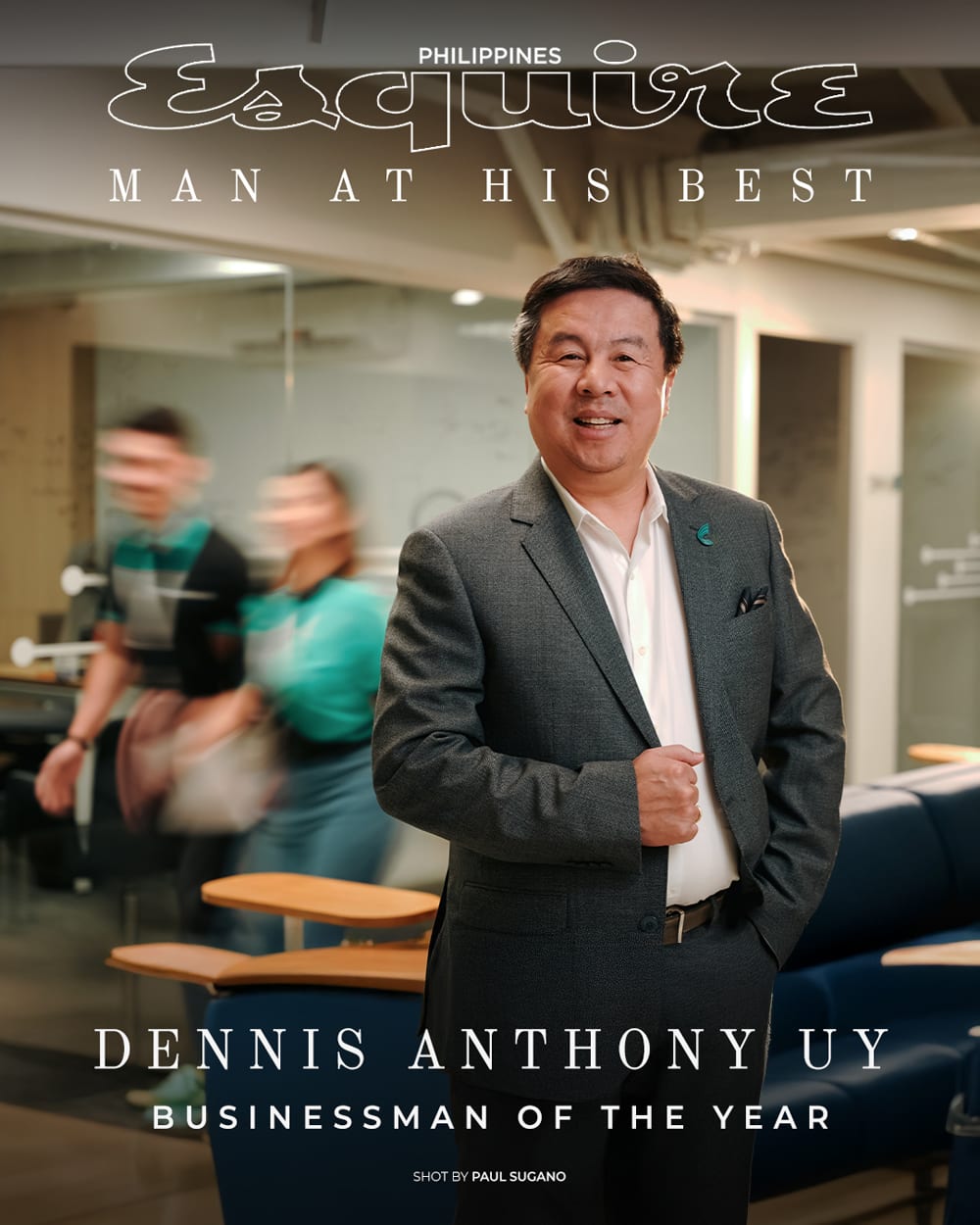
When Dennis Anthony Uy talks about technology, his eyes light up with the same energy he must have had as an 11-year-old boy tinkering with broken refrigerators in his uncle’s supermarket. “At that young age,” he recalls, “I discovered my passion and interest in technology. I remember thinking, ‘One of these days, I want to be like all these skilled technical people.’ That’s where my passion for technology began.”
That spark—ignited in a dusty backroom filled with motors and wiring—would, decades later, lead to one of the Philippines’ most transformative companies: Converge ICT.
Today, Uy is one of the country’s most successful entrepreneurs—a self-made technologist whose foresight and grit have reshaped Philippine internet connectivity. In 2020, the initial public offering of Converge ICT became one of the most successful in Philippine history, raising nearly P30 billion and catapulting Uy and his wife, Maria Grace Uy, into the ranks of dollar billionaires. Yet, he remains rooted in the same hands-on, engineering-driven mindset that powered his journey from China and then to Pampanga and eventually into the boardrooms of global investors.
Uy’s story is one of relentless curiosity and transformation. From the early days of repairing Betamax players and arcade machines to experimenting with dial-up connections and cable TV, he’s always had a knack for spotting the next wave before it crests.
Dennis Anthony Uy: Esquire Philippines' October Cover
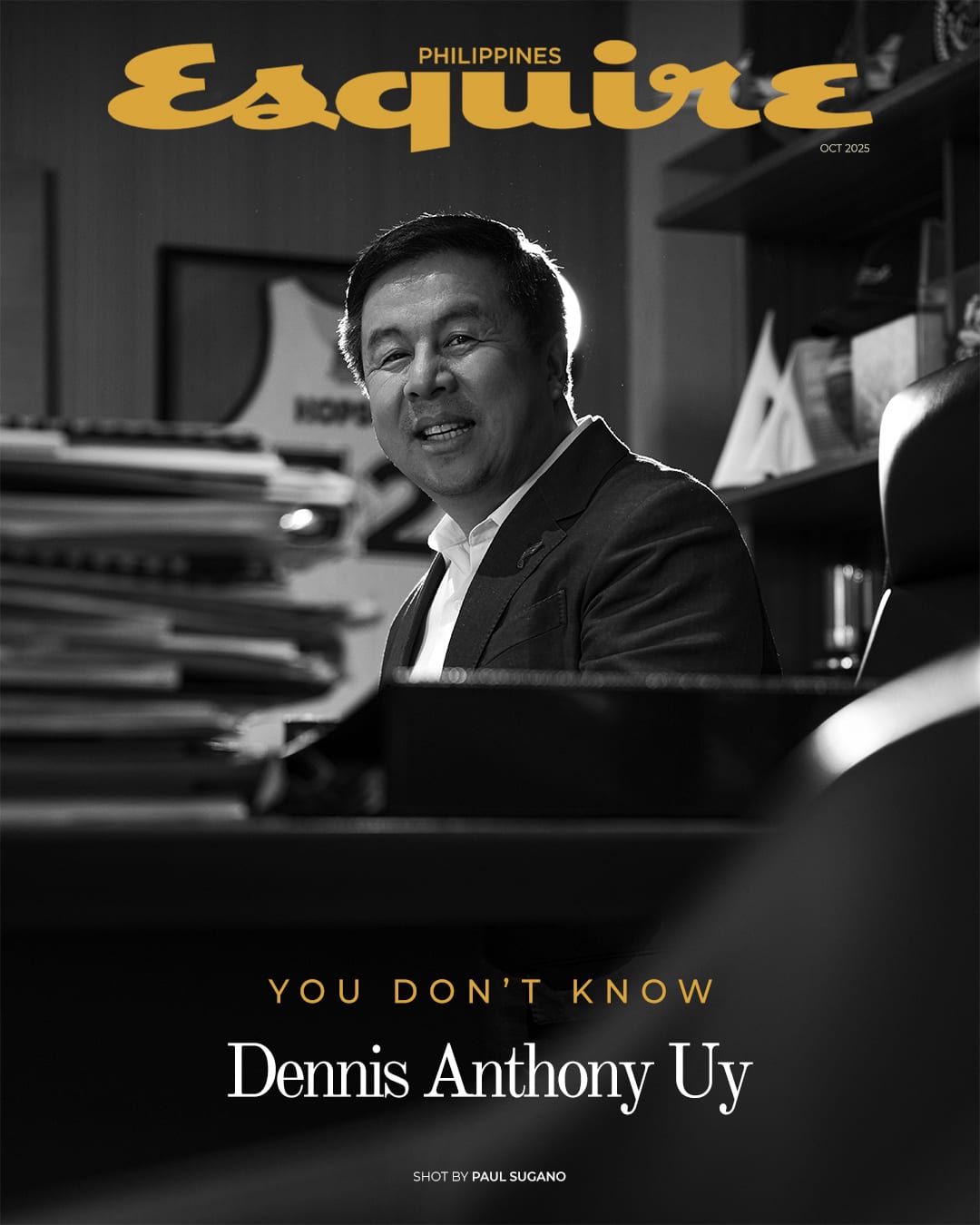
“Stage by stage, technology evolved,” he says. “From Betamax to dial-up internet, to cable TV, and now to fiber. You can really see how technology has progressed.”
That foresight defined his career. In 1996—long before “fiber” became a buzzword—Uy took a bold gamble. “When I decided to move into fiber, I stopped investing in the old technology,” he explains.
“Because I knew that one day, it would be overtaken.” He was right. Today, Converge operates the largest and youngest fiber network in the Philippines, spanning nearly 800,000 kilometers and connecting millions of homes nationwide.
But what makes Uy’s vision remarkable isn’t just his technical acumen—it’s his purpose. “Internet connectivity is the lifeline of the Filipino people today,” he says. “It’s a basic human right.” That conviction drives his approach to business: investing heavily in infrastructure even when it means taking on enormous risks. “No infrastructure, no ROI,” he says. “If people don’t take up your service, something is wrong with your pricing or your structure. Affordability is so important.”
Uy’s pragmatic optimism extends beyond fiber. He’s already thinking about the next frontier—computing and artificial intelligence—and how they can empower ordinary Filipinos. “Once homes are connected, there’s so much you can do,” he says with excitement. “Entertainment, gaming, smart homes, even cloud-based computing for small businesses. This is the future of digitization.”
And yet, despite his billionaire status, Uy remains focused on nation-building through education and innovation. He talks about building a “Tech City of Pampanga,” which is an ecosystem for research, training, and development that could become the Philippines’ own Silicon Valley and expresses interest in possibly going into biosciences, which he calls the future of food security.
“We have to go back to basic education and run parallel with global developments,” he says. “Imagine, in China, even elementary students are already learning about cybersecurity. We need to start early. We can’t afford to fall behind.”
For Uy, success is not measured in money but in impact. “Financial success—I don’t really feel it,” he admits. “What’s more important is making a difference—helping the next generation, supporting communities, and reaching the underserved. Giving them more opportunities and a better future—that’s what true success is.”
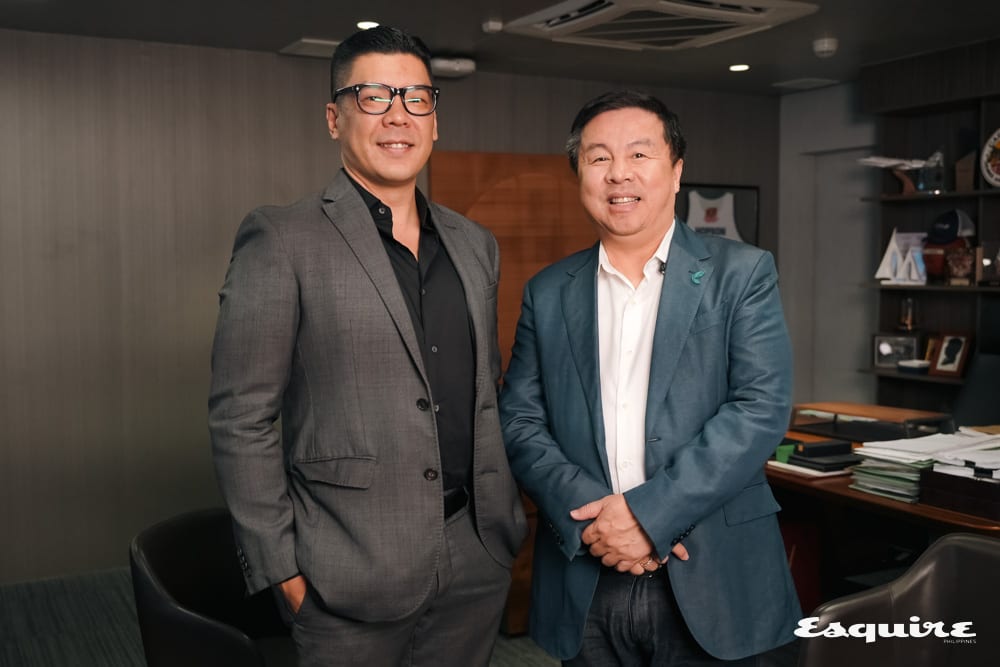
In this rare and candid conversation between Uy and Carlo Almendral, a startup founder and artificial intelligence expert, the tech tycoon reveals a side rarely seen: a visionary CEO with the heart of an engineer and technology geek. It’s a dialogue between two technologists from different generations, meeting at the crossroads of innovation, connectivity, and the digital future of the Philippines.
This interview has been edited for length and clarity.
Carlo Almendral: Your working life began at 11 years old, tinkering with refrigerators in your uncle's supermarket. How did that early hands-on experience with machines shape the way you think about technology and business?
Dennis Uy: I experienced hardship in those days—that was in 1978. It was not easy to live in China. My uncle decided to bring my family out of China. Luckily, he had a business here—a supermarket with a walk-in freezer. At that young age of 11, I discovered my passion and interest in technology because there was a maintenance department there taking charge of the refrigeration system in the supermarket. I was helping with repairs, including the electrical and mechanical works. I took part in washing engines, greasing parts, and rewinding wires. That kind of work excited me then. I remember thinking, “One of these days, I want to be like all these skilled technical people.” That’s where my passion for technology began.
CA: Do you think that experience gave you a different view of how business works?
DU: The nature of human life is, if you’re hungry, and totally come from zero, you need to think about your future. You need to make sure you have a vision of life. Unlike those families whose kids could afford all the nice toys and everything, during my time we had to make sure we built our own path.
CA: You’ve tried other ventures outside of technology, right? What did you learn from those experiences?
DU: Well, I’ve mostly focused on tech. In the beginning, I was doing mechanical work, refrigeration. Then, video games became the in thing, so you had to repair circuit boards. When you dropped a coin, it got stuck in the machine, you had to open it and fix it. I maintained all those machines.
Eventually, we learned how to download programs from the ROM and even modify the game programs. Stage by stage, technology evolved: from the Betamax days, to dial-up internet, to cable TV, and now to fiber. You can really see the different stages of how technology has progressed.
Beyond connectivity, what’s next? Maybe computing? AI and all these new developments are on the rise. So you can see, I’ve kept my whole career aligned with where technology is heading.
CA: But how do you stay focused? There’s so much technology, and you have to get the timing right.
DU: You just stay focused on your core and maybe buy into something adjacent—but don’t go wild. Don’t go into a completely different field. I learned that from experience. Before, I went into agriculture to make fruit juices. But mangoes are seasonal—during peak season, the good harvest goes to the fresh market. If you’re making juice, there’s no steady volume, right? So in the end, I failed. That’s why I say, if you’re not really (invested) that industry, don’t go into it.
CA: It should be related to the thing you're doing.
DU: Yeah, it should be adjacent—and part of its ecosystem. You build an ecosystem to become stronger.
CA: What got you into fiber and connectivity?
DU: Before fiber, we had cable TV, right? It’s almost the same concept, but it used analog technology. Imagine, you had amplifiers in a cascade setup, and to get a signal to the last point, you needed a power supply. For every 700 to 800 meters, you had to install a physical amplifier just to extend the signal.
But with fiber, you can go beyond 30 or even 80 kilometers. So you can already envision where technology is heading. That’s why when I decided to move into fiber, I stopped investing in the old technology, because I know that one day, it would be overtaken.
It’s the same with Betamax. When cable TV came in, you had to stop selling Betamax machines, or you’d just be stuck with them. Today, video is right at your fingertips; Netflix is here, everything’s on the cloud. Technology keeps transforming with time, and you have to follow the flow.
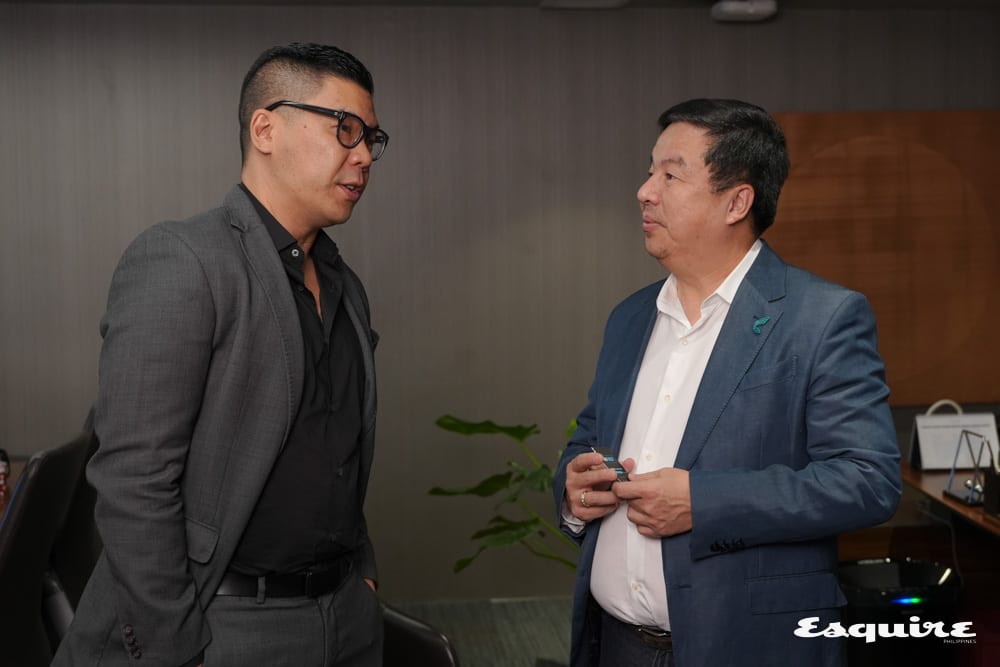
CA: So was that an aha moment for you, realizing that cable was no longer the future, and that you needed to reinvest in and learn everything about fiber?
DU: Yes. Because I already saw it coming. I joined a lot of conferences abroad. In the Philippines, we didn’t have that kind of technology yet—we were just following what others were doing. In the early ’90s, I was the only Filipino attending the Society of Cable Engineers conference in the U.S. every year. You could really see the trends and where the technology was headed.
Remember, even cable TV evolved. They introduced the cable box to prevent signal piracy and to offer video-on-demand through the box. But now, with fiber, everything is IP-based technology. That changes everything. With IP technology, you can build smart homes, smart buildings, even smart cities. It’s connectivity that uses less electronics but delivers more power and range. The capacity keeps growing—and with optical distribution today, a single fiber can be split up to 128 times.
Technology keeps evolving, with greater and greater capacity. That’s why beyond the infrastructure itself, you can now build on top of it—data centers, cloud systems, and so on. All these create a digital experience for people, drive digital transformation for businesses, and ultimately lead to digital transformation for the entire country.
CA: What year was that, when you decided to go into fiber?
DU: 1996. I still remember, back then it cost $9 per meter. Nowadays, it’s just a few centavos. That’s a big difference, right? I even personally visited LG in Korea to bring the fiber in.
CA: In 1996, you could’ve easily gone into satellite instead of fiber. Why didn’t you go into that?
DU: The problem with satellite was that it was too expensive—number one. Number two, it had very high latency, because the signal had to travel from the ground up to space and back. Number three, at that time, the capacity was very limited.
If you were using a satellite connection, affordability was a big issue. Filipinos couldn’t afford it. A single downlink for video was fine, but if you needed two-way data transmission—both uplink and downlink—it was too costly. It could reach around $10,000 to $15,000 per site. Consumers couldn’t afford that, and even enterprises found it difficult.
Back then, satellites were mostly used for military, government communication, and weather bureaus. For entertainment, there was DTH (direct-to-home) satellite TV, but even that was expensive.

CA: So the vision has always been there from the beginning—that you wanted to serve consumers directly?
DU: Well, the vision was really about seeing where the volume of the business is. Any business is a numbers game, right? I started back in the early internet days—dial-up connections. First 28 kbps, then upgraded to 54 kbps. Later came the cable modem, which made things a bit faster through proper coaxial cable.
Now, with fiber, imagine that, you can deliver 20 gig, even up to 100 gig, straight to the home because it’s optical. So yes, volume is very important. Business is a numbers game.
CA: But you also had to go up against a duopoly in that field, right? How did you start to compete in the beginning, and how do you think about competition now?
DU: Well, if you’re deeply knowledgeable about technology, you can see what other countries are doing — and back then, before I entered the fiber business, I saw that Filipinos were suffering. It was a take-it-or-leave-it situation. We had no choice but to accept whatever service was available. At that time, under the duopoly, the Philippines was already branded as having one of the most expensive and slowest internet connections in the world.
Luckily, I came in as a greenfield operator — a new player. We wanted to start fresh and bring in new technology. I had already tested fiber and seen its roadmap. I knew it would eventually replace all the old copper-based technologies. So since 1996, our goal has been to keep upgrading and expanding using fiber to catch up with global standards.
I started first in the provinces, because it wasn’t easy to compete with the big players in Metro Manila right away. I began in the provinces, making sure our foundation and fundamentals were strong. Once that was stable, we expanded to Metro Manila, bringing in new technology that allowed for a faster rollout through microtrenching.
With microtrenching, you only cut about two inches into the road; once you install the fiber, you can cover it immediately, and by the next day, you won’t even see the cut. That kind of innovation came from what I learned abroad. We applied it here — imagine, we were able to finish laying fiber across Makati City in less than 30 days.
Now, nationwide, with large-scale implementation of horizontal directional drilling (HDD) and other modern methods, we’ve built the youngest and largest fiber network in the Philippines — almost 800,000 kilometers of fiber and around 16 million homes passed across the country.
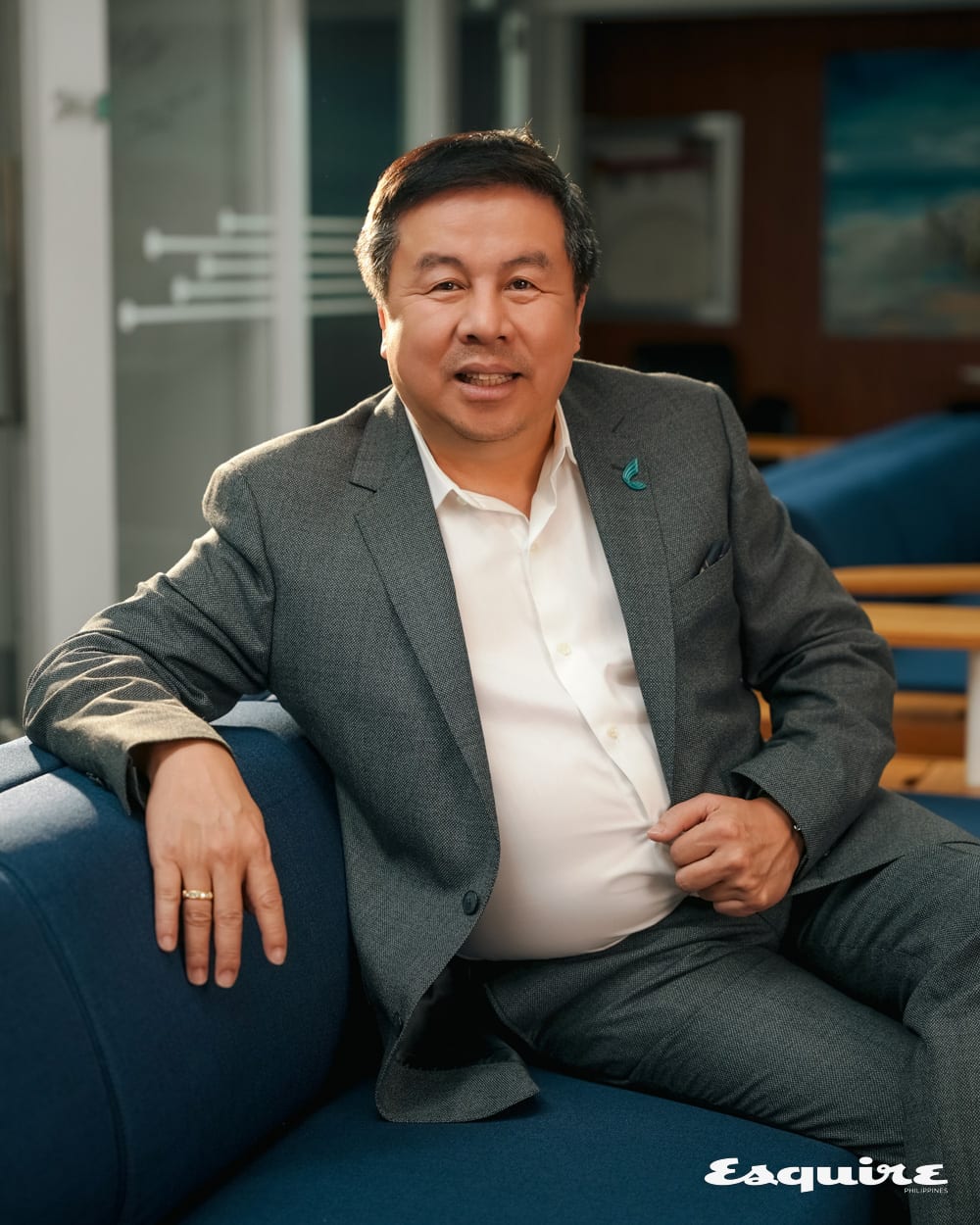
CA: How has Converge grown since those early days? How many people did you have when you were just starting out compared to now?
DU: Today, we have more than 3,000 direct employees. But during our first year—when our revenue was only about a billion—we had just a few hundred people, not even 300.
As someone who started out like a startup founder—where your competitive advantage was speed compared to the older, legacy companies—how do you stay nimble now that you have a 3,000-person organization?
It’s important not to lose that mindset of being hands-on with every move, especially in a technology company. As a CEO, it’s not just about chasing the numbers—that comes second. For me, profit and earnings will follow once you have a strong foundation and infrastructure.
Filipinos need access to new technology, especially internet connectivity. It’s the lifeline of the Filipino people today. As you can see, we now have the largest fiber network in the country. Imagine—we’ve reached almost 60 percent of homes passed in the Philippines, with around 8 million active ports and 17 million homes passed. There are about 25 million households nationwide, and while there are still small, remote areas we haven’t reached yet—especially in the islands—our plan in the coming years is to expand coverage to around 80 to 90 percent of the country through fiber.
CA: I can’t help but notice that you seem to take more risks than your competitors because you want to invest heavily in infrastructure. Like you said, “No infrastructure, no ROI.” Is that mindset rooted in your childhood, your engineering background—or both?
You know, when you talk about investing and rolling out infrastructure, for me, if people don’t take up your service, something is wrong with your pricing or your structure. Affordability is so important. Internet access is just the first step—the real challenge is connecting individual Filipino homes at a price they can manage.
We have to remember, the Philippines is a unique market. We’re the sachet capital of the world, not just Asia. Like in India or Indonesia, most people buy in small portions. Around 70 percent of Filipino households belong to the sachet segment—only about 30 percent can afford postpaid plans. That’s why we have to understand the market deeply.
Coming from the provinces and starting out with cable TV, I already saw how different segments behave. That’s why we created mid-tier and lower-tier offerings—like BIDA Fiber for mass market consumers, and even prepaid fiber, which was the first in the Philippines. With prepaid fiber, people can load as low as P50 to keep their connection active, or load P700 for 15 days or a month, depending on their budget. As money comes in, they just reload and stay connected.
That’s what we call our S2S (Segment-to-Segment) strategy. You identify your market segments, build for each one, and you can capture them all. That’s what’s important.
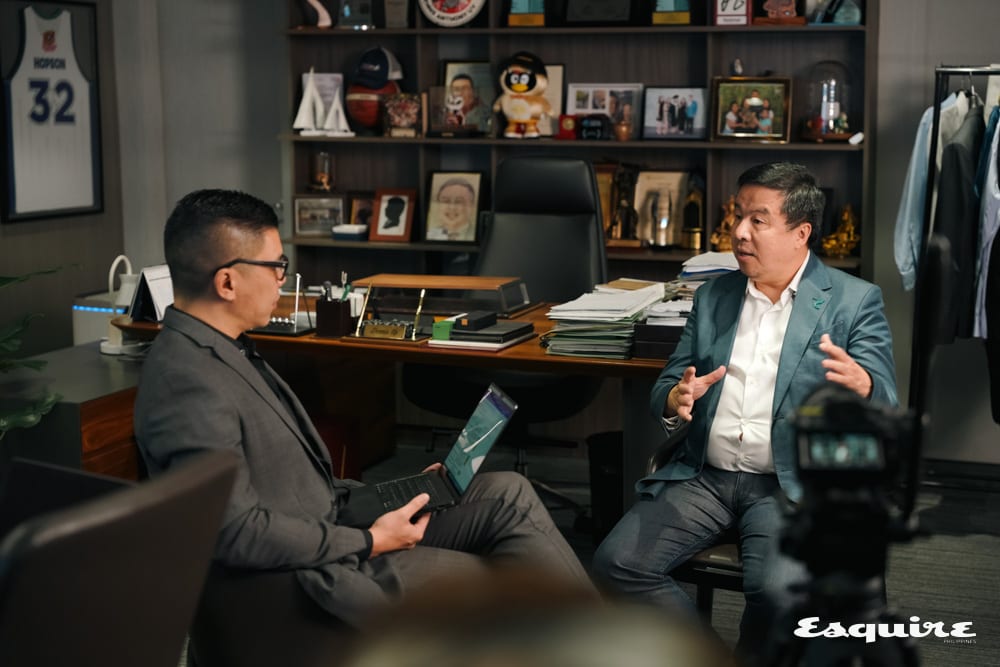
CA: And you offer the same quality?
DU: Fiber is fiber—the quality is the same. At the end of the day, what makes the difference is how fast you can react and innovate. That’s why we focus on AI automation, network monitoring, and digital network inventory.
For example, fault management shouldn’t wait for a customer complaint. Your system should already detect if there’s a fault in a customer’s line, so you can fix it before they even call.
CA: So it’s proactive customer service?
DU: Yes, that’s where we’re heading. We’re already using new technology tools like Automated Network Management Systems powered by AI. With these, we can monitor every customer’s modem in real time. If there’s a loss of signal (LOS), a fiber break, or a power issue, the system automatically sends us an alert. We can identify the specific node and fix the issue proactively.
All these help prevent service interruptions and improve customer experience. When customers see that their connection stays reliable, they’re happy—and that’s how we continue to grow stronger in the market.
DU: Since you study a lot of technology and new processes from around the world, what was the last one that really amazed you—something that made you say, “Wow, we need to bring this to the Philippines”?
DU: We’ve already built the foundation with connectivity—that’s the basic. The next level is computing. That’s why we’re investing heavily in data centers. We already have two that are now fully occupied, and we’re opening two more—one in Caloocan, which will go live this month, and a larger one in Pampanga, which will be activated by December. Those are 3-megawatt and 10-megawatt facilities.
We’re investing in both connectivity and computing because they go hand in hand. You need strong connectivity to transmit data, and powerful computing and storage to process and keep it—that’s what cloud services are all about.
We’re also pushing for data sovereignty—making sure Filipino data stays in the Philippines. This is crucial, not just for us but for every nation. If we allow our data to be stored abroad, we risk losing control over it—and might even have to pay to access it later. So we’re preparing to localize everything and ensure data sovereignty from the start.
Next, on the consumer side, we’re looking at how to bring these advances directly into homes.
CA: What can you do once homes are connected?
DU: Once homes are connected, there’s so much you can do. You start with entertainment—Cloud TV, IPTV, all accessible through the internet. Then there’s gaming, which Filipinos love. Many can’t afford to buy expensive gaming computers, but with the data center computing we have today, they won’t need to. We can offer prepaid gaming subscriptions right at home—just connect a joystick to the TV, and the actual computing happens in the data center.
That’s one example. Another is virtual machines. Many Filipino households still don’t have computers. With a virtual machine, you only need a keyboard and mouse—you can subscribe daily, hourly, monthly, or yearly. You get access to computing power for tasks like drawing, programming, or designing, all through the internet. No need to buy a physical computer.
Then there’s the smart home. In other countries, millions already use home security systems. For example, you can monitor your elderly parents or grandparents at home through CCTV—watch them from your phone, even talk to them. You can also check on your pets while you’re away.
All of these are digital innovations for consumers. On the SME side, businesses don’t need to invest in their own infrastructure anymore. Why hire IT teams or buy servers when you can simply subscribe to cloud platforms? Use it when you need it—pay as you go. Even small businesses like sari-sari stores can benefit. With AI and voice recognition, they can record sales automatically, track inventory, and know exactly how much they’ve sold at the end of the day—all stored securely in the cloud. This is for the future of digitization of small businesses.
CA: Am I reading too much into this? You recently added the former Naver Cloud CEO to one of your boards, right? And we spoke briefly about Naver earlier — are you trying to be the Naver of the Philippines? Is the future of Converge also in hardware and software?
DU: You know, before Naver became that very successful company, it was a long journey — more than 20 years. They started as the ‘Google of Korea,’ the country’s main search engine. They built their own platform early on, and that’s thanks in part to the Korean government’s strong policy support.
The government said, ‘We have our own technology, why bring in others?’ They encouraged Koreans to use local platforms, and that’s how Naver grew. Now they have everything — taxi platforms, insurance, real estate, news, maps — everything Koreans need is on Naver.
We’re actually very close with them. We’ve partnered on several initiatives, sharing technology and best practices from what they’ve done in Korea. We’re also exploring which of their platforms we can bring to the Philippines. In fact, the Naver CEO will be speaking at a business conference at SMX this Monday.
CA: That’s interesting. I think China had a similar approach, right? The Great Firewall — keeping out Silicon Valley companies from their market so they could develop their own. Do you think there’s a future like that in the Philippines?
DU: I think it’s not too late. But we need collaboration. There are already a lot of success stories abroad, and we can bring those pieces together and integrate them here. That’s my mission—to build our own local platform in the future.
CA: You’ve already said that you want everyone in the Philippines to have connectivity. But how do we get there—first, without Converge, and then secondly, with Converge—what’s going to happen?
You know, digital connectivity today is a basic human right. Especially for those in low-lying or remote areas that aren’t yet reachable by any network. In other countries like Malaysia or Indonesia, governments step in to subsidize and make sure the right infrastructure is in place.
You can even use low-orbit satellites, like what Elon Musk is doing, and set up access points to serve small communities. For example, a barangay hall or a small village can have one connection point, and everyone there can access the internet. It’s simple, and it works.
If we put our efforts together—the private sector and the government—we can make sure no one is left behind. In many countries, internet access is already available in every public space. That’s why, when the DOTr asked me to help provide internet access at the “face of the Philippines,” our airports, Converge stepped in. Today, we support all the airport access points and keep them open to the public. Try it—you’ll see that we now have the fastest airport internet in the country.
CA: Yeah, I was just at the airport two days ago. I can attest to that.
DU: Before, we didn’t have that, right? A lot of tourists would arrive, and they had no internet access. Yet they were required to fill out the eTravel form. If they don’t have access, how can they do that?
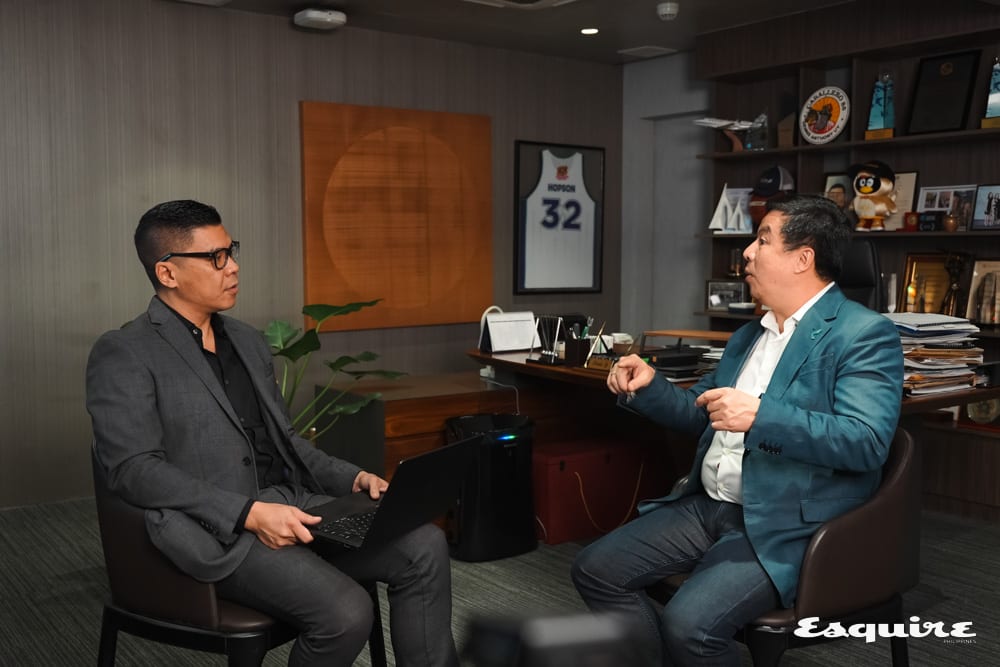
CA: How do you think about expanding? There are so many islands in the Philippines, and you have to maintain the infrastructure you already have. I’m assuming you have some kind of strategy that prioritizes the most populated areas—but how do you think about expansion commercially?
The major islands are already connected by submarine cables. When we built this network back in 2022, we established more than 20 major landing stations and laid about 2,000 kilometers of submarine cable, connecting Visayas, Mindanao, and Luzon.
Today, I’d say around 70 to 80 percent of the country’s populated islands are already connected to our network. For the remaining 20 percent, that’s why I say hybrid connectivity is so important, combining fiber and satellite to make sure everyone gets access.
And if you want to go even farther to the most remote areas, you add wireless. So we have fiber, satellite, and wireless. Together, these technologies can solve the connectivity challenge across the Philippines.
Even if you’re in a far-flung area or up in the mountains, you’ll still be connected. The next level, maybe a year from now, will be satellite phones—they’re already becoming a reality.
Connectivity is basic. You can’t have digital transformation or a truly digital life without it. That’s why we’re focused on reaching every Filipino, wherever they are.
CA: Going back a little bit—your IPO was a massive success. Had you taken on a lot of private investors before that?
DU: No, we didn’t have any private equity or other investors before the IPO. Those who came in early exited before the listing. And yes, it turned out to be one of the most successful IPOs at that time. Investors need to make money, right? So I’m happy for them.
CA: Was that strange? You had built this company from the ground up. What was it like bringing in Warburg Pincus as an investor?
DU: Well, without them, honestly, we wouldn’t have had that level of seal of approval. That’s number one. Number two, they helped us understand how to enter the international market and guided us through that process. That’s part of the growth journey. In fact, even after they exited, we’ve continued to perform well in the market. I always tell my investors: the core business fundamentals remain strong. Of course, markets are influenced by many external forces—what happens in the Middle East, inflation here in the Philippines—all of that affects us.
But I stay focused on strengthening the core business. And today, if you talk about the company’s valuation, it should actually be better than when we went public. We’ve grown significantly—we now have almost three major regions fully connected.
CA: You joined the board of Axiado. What are you learning in terms of security that we need to have in the Philippines?
DU: Well, Axiado is a chipset design company. It’s called a data control unit. Cybersecurity is extremely important today, especially with all the digital transformation happening.
This technology is hardware-based—chip-based, computing-based. So when it detects abnormal or non-traditional behavior at the computing level, it automatically isolates or blocks it. It’s a more proactive approach compared to the reactive systems we mostly use today.
Right now, most cybersecurity setups rely on NSOCs—you monitor what happens, then mitigate or respond through software. But Axiado’s technology works directly at the hardware level. It’s the first of its kind in the world.
That’s why I became interested and invested in the company, and eventually joined its board. Hopefully, this technology will help the whole industry in the future build stronger cybersecurity for high-computing environments.
CA: Right. Because we know that everywhere, as soon as people get online, they immediately become a little more vulnerable and face more security risks. So are you thinking about this long-term—like, are you planning to bring this to the Philippines once everyone is online?
DU: This is hardware-based—built into the server, the computer, and even the CPE (customer premises equipment). Every home has a CPE before accessing the internet. You can install a lot of software security solutions nowadays, and you can also monitor user behavior, detect malware, and identify attacks. So the innovation in technology keeps getting deeper and deeper. At the end of the day, there’s no such thing as perfect security, but we’re seeing a lot of improvement.
CA: Yeah, at least you make it harder for somebody.
DU: Yes.
CA: I think if you’re talking about sovereign AI, you need to have these things—these TCUs—if you really want to have sovereign AI. Otherwise, what’s the point?
DU: Usually, when you talk about sovereign AI, there are many layers of security—not just hardware but also software. It’s a whole field of expertise to make sure everything is secure. And when it comes to security, I think the most important thing is to upskill people. Around 99 percent of security breaches come from human error or internal issues. So if you properly educate people, set clear access rules, define the right processes, and track everything properly, you can prevent a lot of problems. You really need experts to train end users. It all goes back to education. There’s still a lot of work to do to get this right.
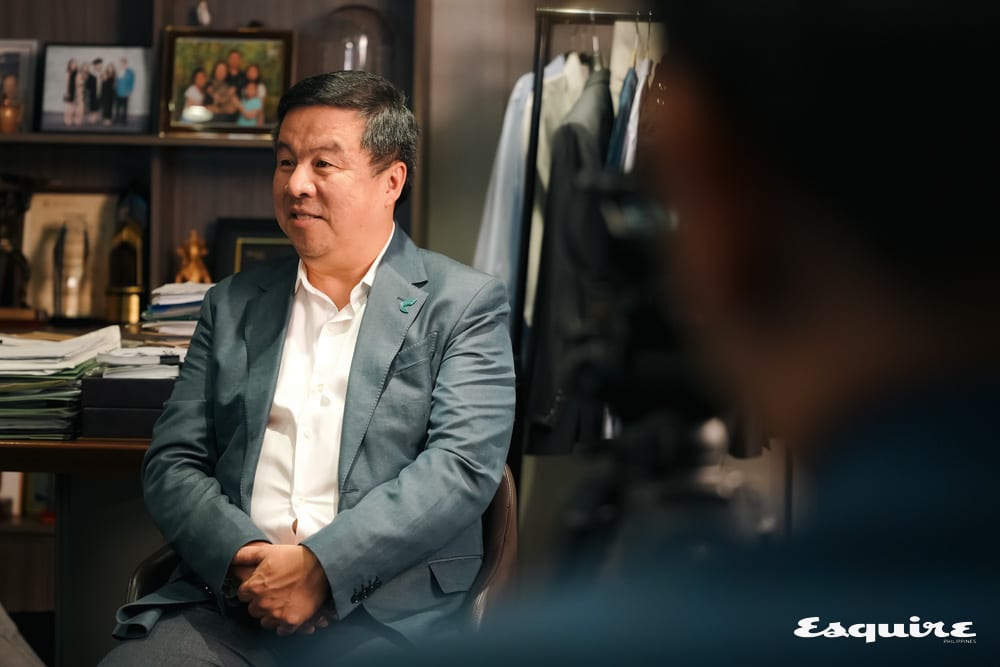
CA: Can you tell us about your education initiatives in Pampanga—or anywhere else?
DU: We’re now entering the age of AI and high-performance computing across different verticals, including cyberspace. The number one priority is to prepare our people—upskill them and teach best practices. So where do we start? We have to go back to the academe.
Imagine in China today, even elementary students are already learning about cybersecurity. We need to go back to basic education and run parallel with global developments. For grade school and high school students, we need to start equipping them now. We can’t afford to fall behind. We should adopt and localize the best practices from other successful countries. It’s actually simple—we just need to start early.
CA: How long have you wanted to do these initiatives?
DU: This, I started already, in fact, signing with University of Philippines, when we have a partnership with Foxconn. And they have initiatives about these AI factories and AI applications. And important here is AI governance. So all these modules, we're trying to get and bring it to UP, to able to part of the curriculum in the AR teachings. In fact, Vietnam is more advanced than us. They focus on AI and software development. We focus in the call center and voice through medium, but they focus in the soft skill. And now, they're producing millions of software developers and they’ve become the software factory in Asia.
CA: And they’re very good—and very cheap.
DU: That’s why we need to go back to education. Everything should be aligned. A lot of educational institutions and government agencies need to work together—the DICT, the Department of Science and Technology, TESDA, CHED, and DepEd. That’s my advocacy: we need to collaborate to make this happen for the future.
CA: Has this always been part of the plan when you and your wife started the company? Did you already want to have an education advocacy, or is this something more recent?
DU: Well, I’ve seen the difference between what’s happening abroad and what we have here. That’s why we need to focus on closing that gap. So yes, I have a plan—but it’s a long-term one. I want to build what I call the Tech City of Pampanga—an ecosystem for R&D, training, certification, innovation, everything in one place. Something like a Silicon Valley model. We need to build that infrastructure, attract talented students, and give them a space for innovation and growth.
CA: That’s great, but those models always work better in Silicon Valley because there are investments and jobs waiting at the end of the education cycle, right? How do you plan to bring investors and jobs into your tech city?
DU: Imagine the mindset of new graduates today. We have so many talented young people, but when they finish school, they immediately think about going abroad. That’s the mindset—why? Because we don’t have a complete ecosystem here. We don’t have enough opportunities.
That’s why I want to create an ecosystem with real opportunities, starting in Pampanga, where I came from. I want to partner with engineering schools there so that when students graduate, they don’t feel the need to leave the country. If you give them good opportunities here, most of them would rather stay. So we need to establish that ecosystem first—to attract and retain young Filipino talent.
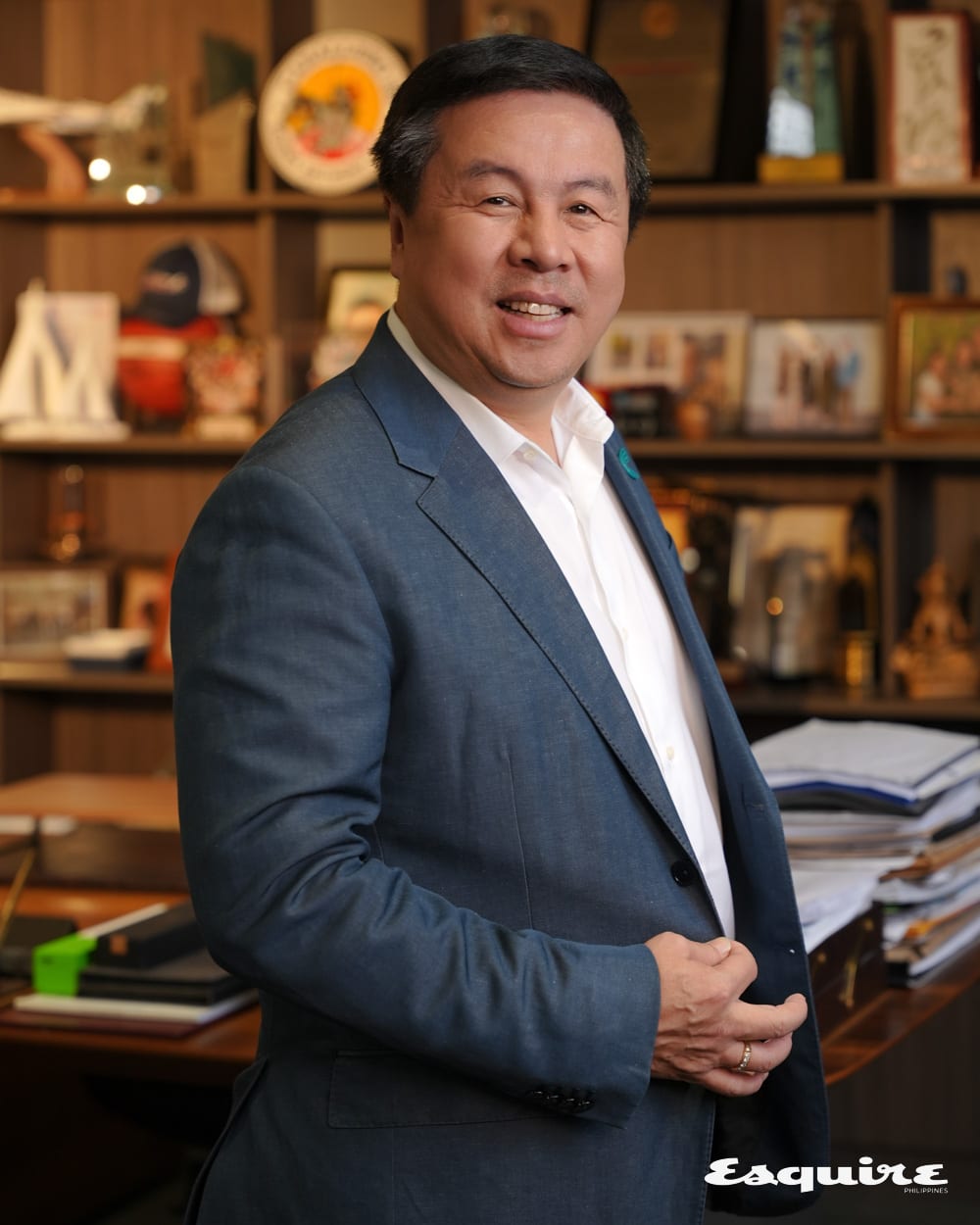
CA: You built Converge with your wife. How do you start a business and still keep the marriage alive? It sounds like a tough, two-headed monster to manage.
DU: You know, my wife has helped me a lot because she’s really an expert with budgets and numbers—she’s an accountant. In terms of technology, though, she’s not involved. So I drive the technology side, and she drives the finance side. That creates a balance.
Sometimes she questions me—normal accountant behavior, right? I always tell her, “We need to put priorities first.” Sure, we argue about business decisions, but at the end of the day, you look at outputs and improvements, not just the numbers.
In terms of technology investments, I take the lead. For daily operations, numbers, and financial controls, she’s on top of everything. It’s the perfect combination.
At home, we discuss some things, but day-to-day work is intense. We make time to travel a lot, which is also part of the business—seeing what’s happening in other cities and countries. I attend technology exhibits and shows all over the world. That’s how I learn fast: what technologies are already in the market, and what the roadmap for the future looks like. That gives me excitement and helps me decide what is suitable for the Philippine market, for both our consumers and enterprises.
CA: It's very hard to be what you can't see, right? How do you think we could bring that to more Filipinos? How do we get exposed more Filipinos to, you know, different ways of doing things and different ways to do business and different technologies?
DU: You cannot learn this in school, right? This is passion. If you love things what you do, you cannot even feel you're tired. Because you love what you're doing. So being in technology myself, the more I can see new technology, something sparks me and the more exciting it becomes. I’m still learning, I’m still studying. I don’t feel tired. I think this is because of human nature; if you like it, even if you didn’t properly study, you'll excel better than those people who went to school. (Laughs.) That's passion.
CA: You’re unstoppable. So let’s say, for whatever reason, you had to start from square one again with your wife. What kind of business would you get into now?
DU: I think bioscience is very interesting. It’s the future of food security, and it involves technology in the agriculture sector. Today, with new technologies, you don’t need to worry about typhoons—you can grow high-value vegetables indoors. You don’t need much water or even soil.
This is the future of bioscience. You can see it happening around the world—in Israel, in Taiwan. One building can produce a high yield of vegetables and even herbal medicines. If I were to start again, this is what I’d be interested in. In fact, I’m already looking into some greenhouses in my “playing ground.”
CA: That’s great. So when you finally step away from Converge—and let’s assume you’re not starting the biosciences business yet—what’s the one thing you hope people will say about Dennis Anthony Uy?
DU: I’ve always said that business will always be there. Opportunities are everywhere. You just need to focus on what you know, don’t go beyond your expertise, because everything requires commitment and passion. And above all, make sure that whatever you do has a real impact on people.
CA: You’ve already achieved all kinds of financial and business success. How does your definition of success change now?
DU: Financial success—I don’t really feel it. It’s not in my wallet; I can’t physically touch it. At the end of the day, fulfillment is what matters. Money is temporary. What’s more important is making a difference—helping the next generation, supporting communities, and reaching the underserved, especially underprivileged people. Giving them more opportunities and a better future—that’s what true success is. There are so many opportunities out there; it’s just about arranging them properly to improve lives tomorrow.
CA: If you look back, if you could meet your 11-year-old self who just moved here, didn’t speak any Philippine languages yet—what would you have told him that might have helped his future?
DU: Whether or not you face hardship, you have to push yourself to take action. Consistency is key. Follow your passion and stay committed to it. Always keep your promises—your track record and character matter. How you treat people and approach others is important, too.
If you put all these together, I believe anyone can succeed, not just me. Be yourself, stay focused, and recognize that opportunities are always there, but you need the right timing. You must transform, embrace new things, and keep learning as you go.
Carlo Almendral is the CEO and Co-Founder of AIFirst, a venture studio and education lab building the next generation of AI talent and startups in the Philippines. A seasoned tech entrepreneur and investor, he has led companies across New York, San Francisco, and Manila, focusing on the intersection of AI, finance, and emerging markets. He is also a founding member of the World Food Programme (WFP) Innovation Council, helping drive technology-led solutions toward achieving the UN’s goal of zero hunger by 2030.

Interview: Carlo Almendral and Dennis Anthony Uy
Production: Esquire Philippines Team
Editor-in-Chief: Paul John Caña
Sittings Editor and Creative Direction: Igi Talao
Photography: Paul Sugano
Videography: Greeko Junio
Grooming: Team Muriel Vega Perez
Special thanks to Jay-Anne Encarnado, Rose Ann Respicio, Rizza Ampong, and the Converge ICT Team.
View More Articles About: