Glenda Gloria: 'You Become a Journalist Because You Want to Serve the Public'
What does it really mean to hold the line in the digital age? Rappler Executive Editor Glenda Gloria says truth-seeking and empathy are at modern journalism's core.
Published on Nov 18, 2025
Every year, Esquire Philippines presents Man at His Best, the local iteration of a global signature event where we celebrate extraordinary Filipino men and women reshaping society as we know it. These are the dreamers and doers who have made a profound impact on the Filipino's way of life, who are using their talents and skills to make something of themselves and inspire the rest of us to do better with our lives.
This year, we're honoring eight visionaries in film, politics, music, business, F&B, journalism, and literature. They are the Architects of Tomorrow: laying the groundwork for a better, more progressive country—embodying what it means to be a Man at His Best.
Meet Esquire Philippines' Journalist of the Year, Glenda Gloria
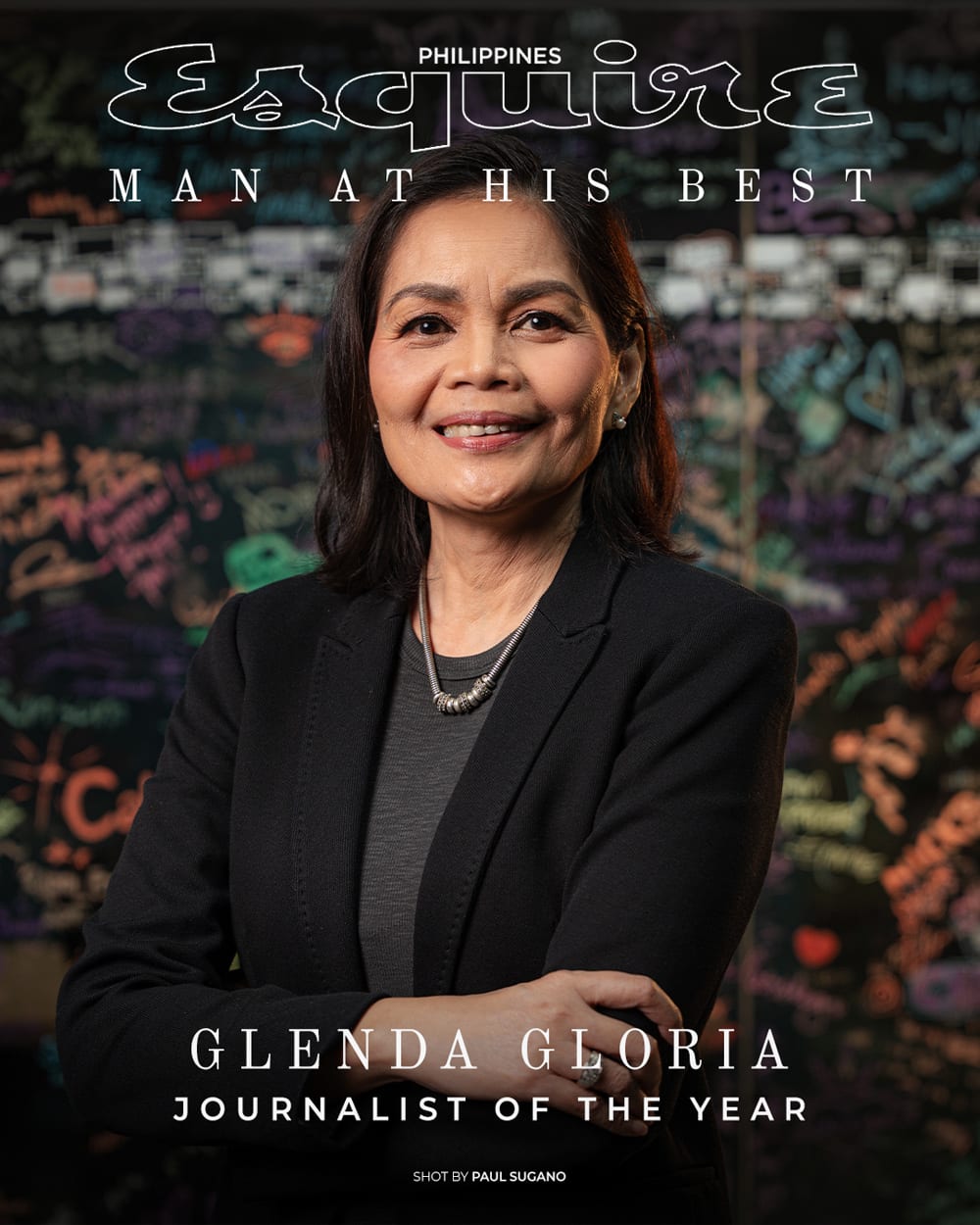
What does it mean to hold the line and when do journalists need to make the truth accessible especially across different social platforms and verticals? Rappler Executive Editor Glenda Gloria is no stranger to that climate of fear that can oftentimes go along with the vocation.
With a career starting even before the 1986 EDSA People Power Revolution that toppled the regime of the late dictator Ferdinand Marcos, Gloria has also taken the pen for the Philippine Daily Inquirer, the Manila Times, the Philippine Center for Investigative Journalism, among other news agencies. She also co-founded the country’s top investigative magazine Newsbreak, in 2001, until it eventually merged with Rappler, which she co-founded with Maria Ressa in 2011.
In 2018, Rappler faced the possibility of shuttering its operations after the Securities and Exchange Commission rescinded its license for allegedly violating foreign equity restrictions on domestic media when it sold its depositary rights to a foreign entity. The Court of Appeals last year upheld its decision that declared Rappler is Filipino-owned and for its holdings company’s certificate of incorporation to be restored. It said that the SEC “acted with grave abuse of discretion” in revoking the certificate of incorporation over the depository notes.
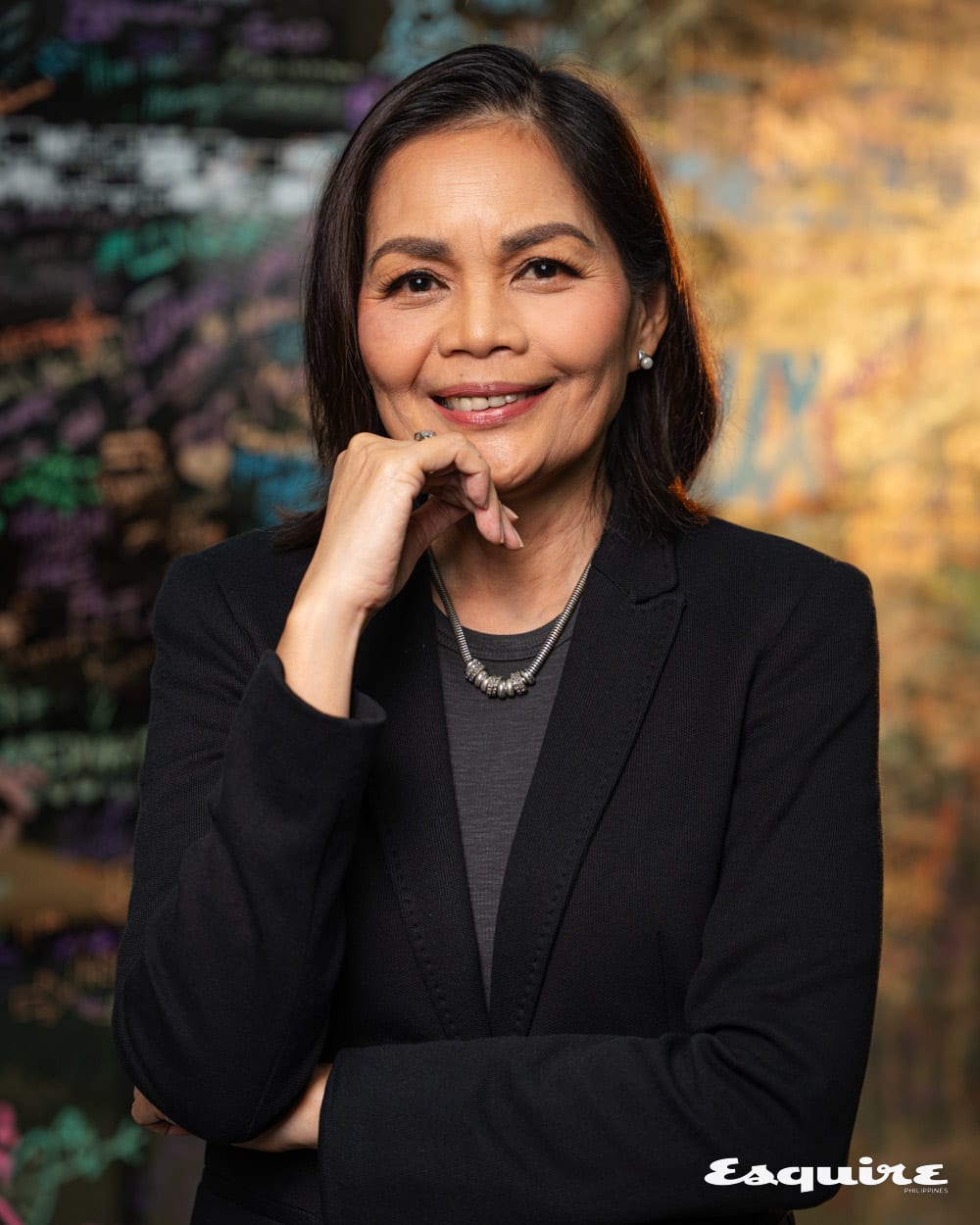
For Gloria, it is paramount for journalists to tell real stories from people by going out of their way to knock on doors and to scour for documents following money trails leading to the truth. "It's really the people who have seen the worst parts of this country,” she says about recruiting new journalists to join the team. “You know, it's grit. Who did not have it easy? I've always made that bet, never failed.”
The Southeast Asian country earlier this year landed its highest placement in more than two decades in the World Press Freedom Index, ranking 116th out of 180 countries, which was 18 places improved over its placement a year earlier. Despite this, the media watchdog said that while the legal situation has improved for Filipino journalists, the political environment and economy remain roadblocks for them. The index evaluates a country's state of press freedom based on its political, legal, economic, sociocultural, and safety landscape.
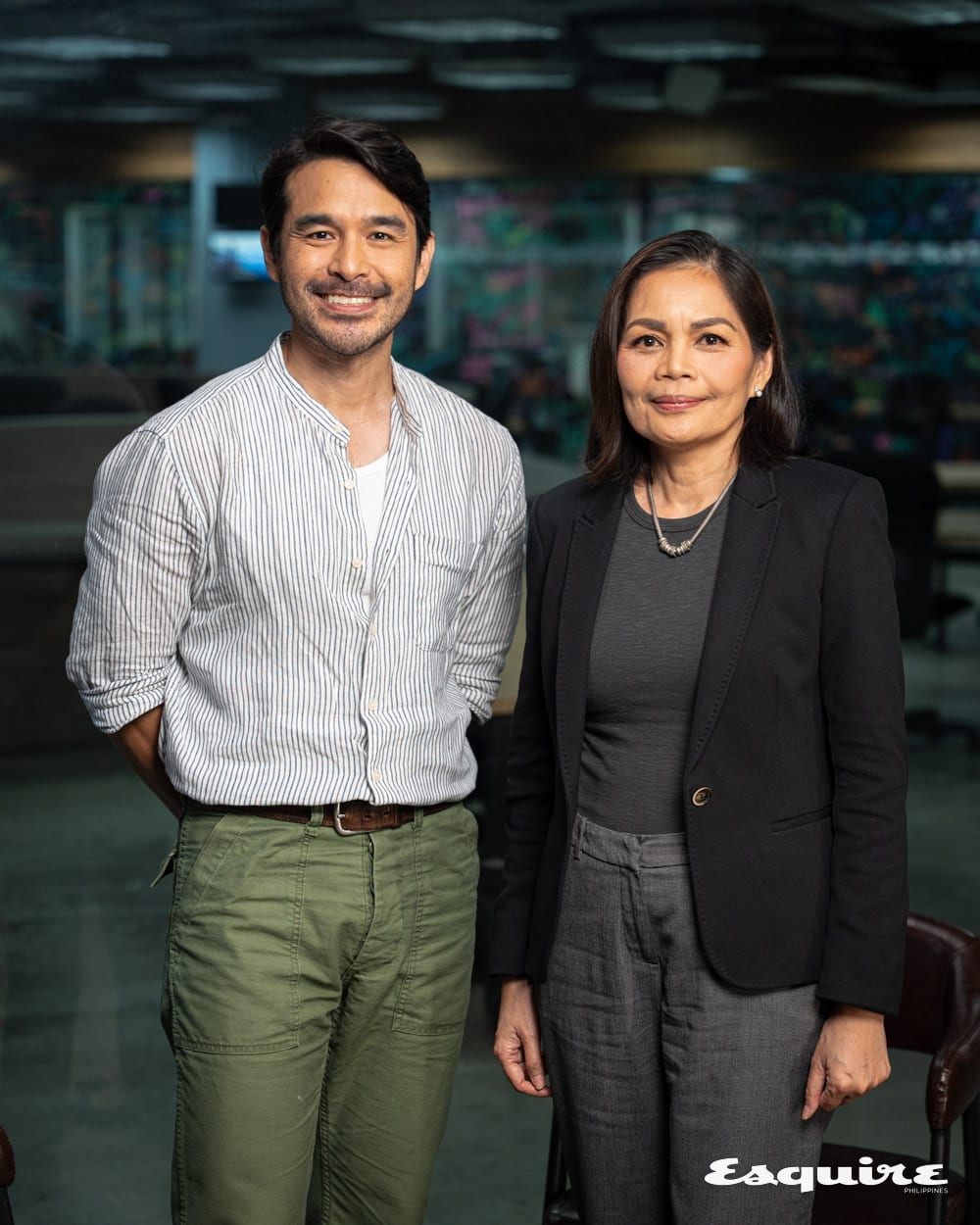
In this candid sit-down between Gloria and veteran broadcast journalist and documentarian Atom Araullo, the two exchange insights on what it's like covering corruption stories, disinformation, and when longtime sources shut their doors after relentless smear campaigns tagging Rappler as a peddler of fake news
This interview has been edited for clarity and length.
Atom Araullo: So you became a journalist before the EDSA revolution. Is that right?
Glenda Gloria: Actually, right a month before the revolution. Because I joined the Inquirer in January of 1986. And EDSA happened a month later.
AA : What was that time like? What was it like being a journalist during such a volatile and historic moment? And did that experience influence the way you saw journalism moving forward to this day?
GG : Yes. It was the best of times, Atom. It was really when you became a journalist because of this moment. You speak truth to power, right? And I was also an activist in college. I was an anti-Marcos activist. And even before the Inquirer, I joined. This is a little known fact. Immediately after graduation, I became a writer of the Philippine Human Rights Update, which was published by the Task Force Detainees of the Philippines, which really was an organization that was handling anti-Marcos activists who were detained under the dictatorship.
So it was a wonderful time. And I think EDSA shaped my view of journalism, which is what? It's really just demanding for accountability, transparency, and governance. It was not a vanity path. You become a journalist because you want to serve the public. So it's really journalism and public service were so intertwined in my concept of the profession. And so ever since, it's not like you're just there to tell stories. And I grant that journalists become journalists to tell stories. But I became a journalist to hold power to account, to make government more transparent, and if need be, to help bring down a dictator.
AA: Was journalism something that you always wanted to do? Or were you forced by circumstance?
GG: It was, I would say, my palusot. My mom wanted me to be a lawyer because she's a frustrated lawyer. She got married second year law school.
So there's that. I promised her that I would seriously consider it. But I also convinced her that they say that the easiest path to law school was to learn how to write. So I took up journalism
But of course, I graduated in 1985. It was a chaotic time, right? So really, journalism beckoned. And I told my mom, okay, I'll try to be a reporter and then I'll take up law after. Of course, I never looked back.
AA: Did you always know that journalism was more than just a job?
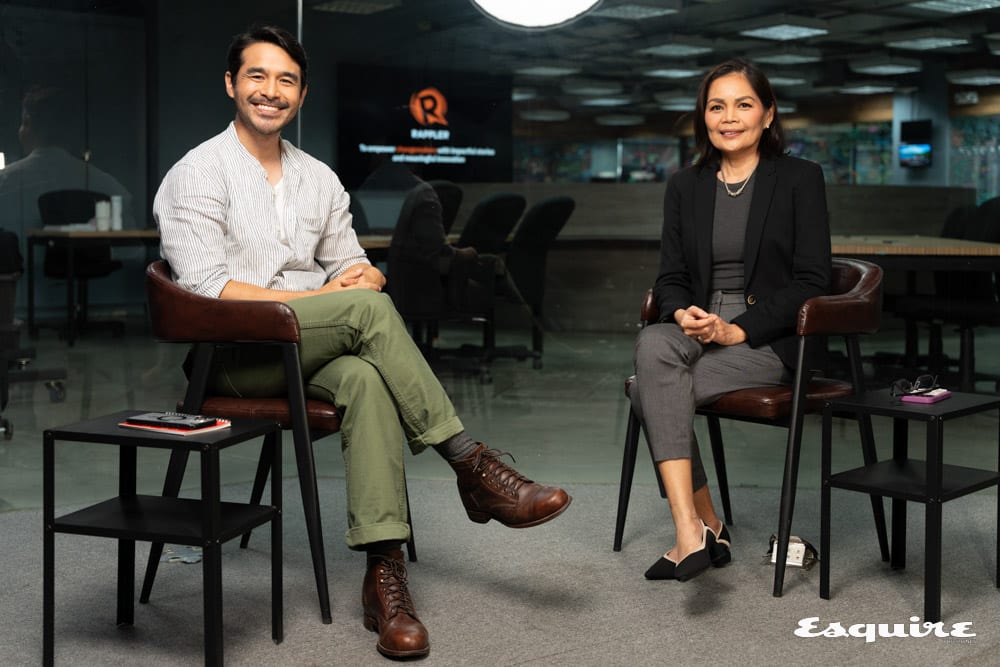
GG: Yes. I sometimes liken it to the priesthood. Low pay. But also public service. You deprive yourself of a lot of things. You deprive yourself of material success. You deprive yourself of time. I remember as a young reporter, I missed all family gatherings. I mean, you could relate to this, right?
Christmas, there's this earthquake, the July 1990 earthquake. Now I'm aging myself. It was July and my birthday is July 23. And my mom complained, you mean you're working? You're going to Baguio City, the center of the earthquake, and you're spending your birthday there?
AA : Yes. I mean, for reporters, that's the assignment of a lifetime, right? Anong birthday?
GG: Anong Christmas? What's that?
AA: Of course, you've worked across many very prominent and respected media organizations over the years. You mentioned being active during Edsa People Power and these big catastrophes or disasters. But is there any story that to this day you're most proud of? Sa dinami-dami. And you know, I've been asked this question before. I've only worked two decades.
GG: You've worked longer.
AA: I always find it hard to answer. But I was just wondering if there are two or three stories that stick out that you think define your career.
GG: I think there would be two. And I cite one that resonates to this day because it has been turned into a film. That's the Jonas Burgos story.
AA : Oh, yes.
GG: Because after we founded the Newsbreak magazine, I worked on the disappearance of Jonas Burgos. And that article won an award. But at that point, it was probably one of the toughest stories that I had to do because, of course, I was covering the military at that point. But I was trying to expose them.
AA: Yeah.
GG: But precisely because of my coverage of the military that I was able to connect the dots, so to speak, and really verified certain information. And that, to me, is my favorite story because eventually it reached the courts. And a lot of the pieces of evidence that were initially gathered, not just by me, but by the lawyers of the Burgos family, were brought to court. Officers were made to testify. Of course, eventually, these cases were dismissed. But at least it came close to actually holding the government to account. And then it was turned into a film. And that film won the FAMAS. I mean, I'm so personally proud of that.
AA: What a full circle moment.
GG: Yeah. It's just a little role that a journalist can play in opening doors and really just providing a sort of context to all of that. So, yeah, that would be my favorite story. My second would be the exposé, again, on the military of the Comptroller Mafia and the Armed Forces. I don't know if you remember. There was a time under PNoy that the two sons of a general were arrested at the U.S. Customs.
AA: Yes.
GG: Yes, General Garcia. I mean, this is like, so when I see the flood control corruption now, this is like, it's a replay. It's a rewind of everything. So, yeah.
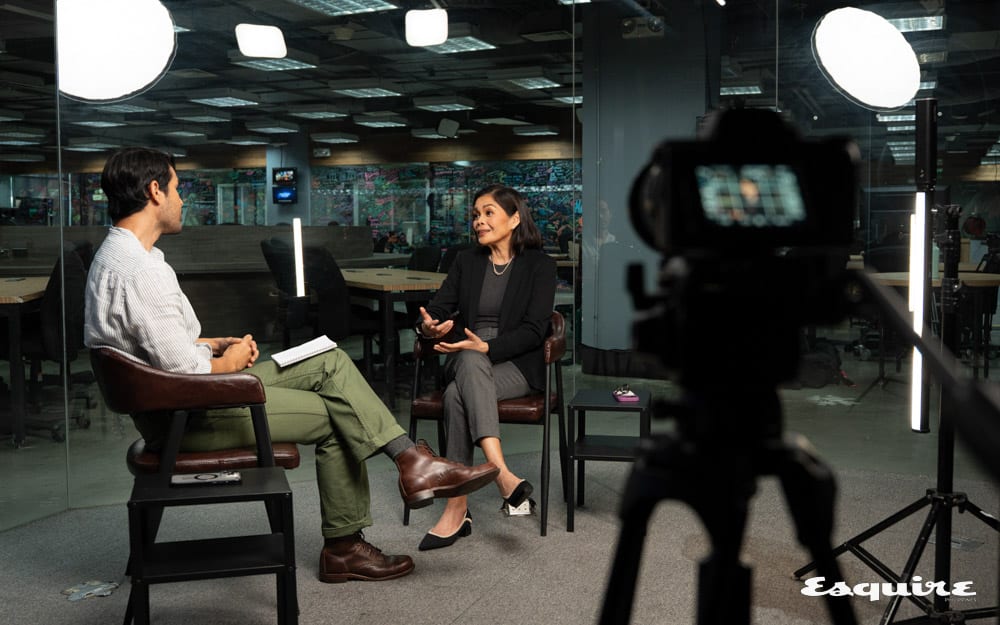
AA: I definitely want to hear your thoughts about what's happening today. But it's a good thing you brought it up. It's always a tricky situation for journalists when they get close to their sources because that's how you get access, right? But at the same time, as you get closer to your source, you learn all sorts of things. And a lot of these things are worth reporting about. And these are not so nice things. So, how do you strike that balance between getting that access but at the same time remaining independent and not losing your voice? Because I know that a lot of reporters nowadays, that's what they struggle with, especially if they work in a beat and they don't want to get ostracized, for example. So, how did you handle that?
GG: Yeah. You know, thanks for asking me that because I think that's the toughest point of journalism for a reporter in terms of navigating that kind of road, right? The way I tried to balance that was that I think there is no exchange for, for example, you have to be very professional in your beat. You have to still write stories and establish a good reputation among your sources. That leads to respect.
AA: There was a time that that's all that mattered, right? If your sources respect you, then you can expect them to kind of not basically ostracize you, you know? But that's a different thing now, right?
GG: Even so, I was also ostracized by the same sources who respected me. But I think it's also a matter of time. Like when the heat is on, of course your sources will hate you. People who respected you will say, oh my gosh, you're peddling lies. That's the defense, both of the corrupt and the innocent, right? So, there's that. But sometimes dadaanan mo yun, you just let things pass. Time will certainly address that. But the way to navigate that is really like trying to talk to them, explain to them where you're coming from and expect the worst.
I was ostracized, I was branded when I was covering the rebel movement in the military. I remember General Renato De Villa telling me, ‘You're the muse of the rebel leaders.’
AA: Oh no.
GG: And I say, no, I'm not. And you know, I remember Fidel Ramos, there was a press conference and he would just simply walk out from a press conference. But this toughens you as a reporter. And I think it did not discourage me as much as it made me more committed to make sure that I get my facts right. Because in the end, facts are not debatable. Well, in my time, anyway.
AA: Thanks for saying that. It's always tough to navigate, as you said. Many of your stories forced you to confront power directly. What did you learn about how power operates in the Philippines that you think the public still underestimates?
GG: Power, number one, will protect itself. Protect itself at all costs. Power also in terms of the institution, when an institution, a powerful institution is under siege, it protects itself. The House of Representatives, however diverse it is, the Senate, however diverse it is, when its power as an institution is threatened, they protect each other.
AA: They will close ranks.
GG: They will close ranks. So there's that. Number two, power does not yield easily. So my favorite quote is that, ‘You yield an inch to a tyrant and he will want more.’ And so in terms of power, power is so intimidating in the Philippines, especially presidential power, because we grant a lot of power to the President. So it's almost like it is protective of itself. It uses all the levers that it has against a critical voice. And the third would be really that power does not like critical thinking. It will always attempt to silence it.
But on the other hand, Atom, power is also for the greater good. I've seen public officials, elected officials, appointed officials who use power for the greater good. So it's not as if I'm completely averse to power, but we need power to make things work.
AA: Is truth enough to push back against power and power that wants to keep things the way they are?
GG: No, it's no longer enough in this world. Truth is only one aspect of pushing back power. You've got to have the narrative for it. You've got to be able to convey the truth in a way that is accessible to citizens who are inundated with a lot, you know, who are on TikTok or YouTube and get all sorts of information wherever they come from. So a lot of it is really how to convey the truth, how to maybe execute various forms of storytelling. And you could very well relate to that.
Back in the day, in my generation, you wrote a story. People bought newspapers. They watch television at an appointed time. That's no longer the case. If you're on TikTok, people are on TikTok. You have to be on TikTok. If they prefer verticals, then you tell the truth in verticals.
AA: And you have to be relatable. You have to be relatable.
GG: You know, it's tough to be a journalist at this time.
AA: As a woman reporting on corruption, on power, did you have to work twice as hard to be taken seriously?
GG: I did, but I think it also has its charms.
AA: There are advantages.
GG: I think, for example, covering the military, a lot of the senior officers would pander to women. You know, we're gentlemen, we open the doors, we talk to you, we sit down with you. And you take advantage of the fact that they give you that opportunity to sit down with them because they’re being an officer and a gentleman, so to speak. Or sometimes I would be treated like, oh, you're the age of my daughter. So there's that. Yeah, it has its advantages.
AA: Do you think in the Philippines, it's easier to be a woman journalist? Because this is something that a lot of women in other countries struggle with. It's a bigger discussion, I hear.
GG: That is so true. I have been asked that so many times. Because, of course, a lot of the newsrooms here are led by women.
AA: Exactly. You were my boss.
GG: And my bosses now are a lot of other women. And then we've had two women Presidents, right? So, is it easier? Maybe I will not say that it's easier. But I think the fact that it was a woman who brought down a dictator opened a huge space for female journalists. You have to remember in 1986, that was when press freedom was also on. And so all these newspapers were set up, ABS-CBN was reopened. And so there's a lot of open spaces for women, not just in government, but also in journalism. I think Cory Aquino, in a way, proved that Filipino women can.
AA: Maria has talked about this a lot. But what was your personal vision when you co-founded Rappler? And did that vision change over the past decade?
GG: Our personal vision when we put up Rappler was really to create an independent newsroom. Maria and I had worked in newsrooms that were run by big business. In my case also, a newsroom that was run by NGOs, etc. So really the vision is to establish an independent newsroom. Independent in all ways, in terms of its thinking, in terms of where its business is derived. And then to create the kind of journalism that really connects with the communities that it serves.
Because my generation of journalism, we figured we editors know it all. The journalist knows it all. We set the agenda. But when we put up Rappler, we knew that the communities we serve also should help us set the agenda. Otherwise, then you become detached. You just write stories that you think are needed by the public, but which probably the public doesn't need.
AA: During that time, I think social media was still (new).
GG: We drank the Kool-Aid.
AA: Green pastures all around. It's no longer the case. You know that more than me. Has that changed the way Rappler creates stories nowadays?
GG : There are two things that have changed as far as Rappler works in the last three years vis-à-vis social media. Realize that social media precisely has ceased to be the greener pasture. In fact, Facebook is now, I would call the gravesite for news. Because all the social media platforms depress news and serve whatever is entertaining and whatever is viral. So we're now moving to what we would call a reset of journalism wherein we bring back our readers and our watchers to a controlled space. Which is what?
Don't just doomscroll and be passive consumers of news. You really have to go to the news apps. You really have to go out of your way to visit news sites and actually read the news. So what has changed is really we're less reliant on social media now, even in terms of distribution.
That's why we're sending out newsletters. We're really building the users of the app. We're moving away from putting all our content on Facebook, on YouTube, etc. And really just creating the space that we have. Ultimately, what we want to envision, of course, is that the same sort of property, a shared platform for all newsrooms. That's the ambition. I think that's why we call it a reset because it's not just Rappler anymore, but it's really just for all the newsrooms. Because we should not be competing with each other now.
AA: I know.
GG: The competition is what? 200 million content creators.
AA: Exactly. I want to ask you about the future of journalism, I mean, 5 years, 10 years from now. But before I get into that, going back to your job as an editor in Rappler, what's the hardest part about being an editor nowadays, working with young journalists? And what qualities do you look for when you work with these Gen Z journalists?
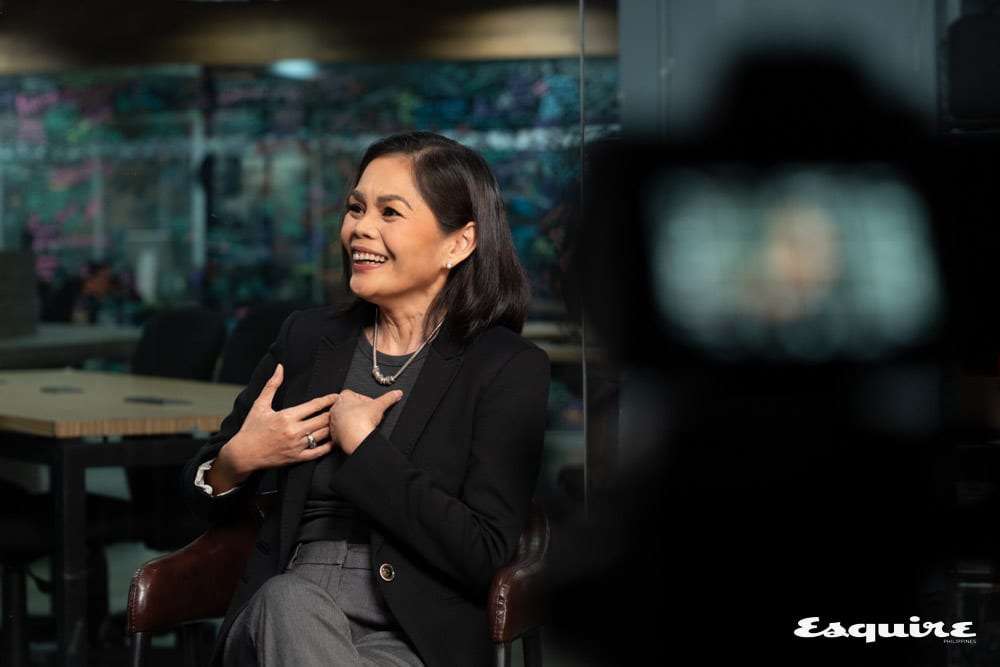
GG: I think the hardest part is still the fact that all of us are still on social media. And therefore, often the editorial agenda is set by what we see on Facebook, what people are sharing, etc. So the hardest part actually is just to pull them and convince them that real stories emanate from people, from the field, from going out of your way to knock on the doors of sources, from scouring documents, from going over documents.
But that's also the best part of it, that the Rappler reporter knows it and gets it. So it's really the paper trail, human trail, talking to people, reviewing documents, etc. Gen Z is a very skilled generation. I don't think I can be a reporter today, given the demands. Rappler demands its reporter not just to shoot video, but to be able to edit it. And at the same time, load that into the system and still gather news. That's a lot. That's really a lot. But they're multi-skilled. And that's one thing. And they're also very empathetic. I think this is a generation of journalists that is more empathetic than my generation. In that sense, they're very concerned about the environment. They're very concerned about mental health, which of course I think was caused by the pandemic largely. They're very concerned about the welfare of their peers, etc.
AA: We both admire young journalists and how skilled they are. But without generalizing, what do you see as their weakness that perhaps you didn't see from other generations of journalists that you worked with?
GG: I think the weakness is really that they're digital natives. And when you're a digital native, sometimes you think that the world you see online is the real world. My generation and partly your generation of reporters were born to the real world when we had to walk the mile literally to get a story. Now it's easy, right? All the information. There's information overload. So there's that. The weakness there is precisely that you think what you see online is the real thing. It's not.
And then when you spend a lot of time online, you lose time talking to people, going out there in the field and actually listening. Technology has in a way reduced our ability to stay and to listen and to actually reflect.
AA: In some ways, the pressure on them and the stimulus is much greater. Do you feel that in a way, this state of being constantly plugged in, does it make them more resilient or less resilient? Because we talked earlier about mental health. And I remember being kind of shocked when I was first asked about how I take care of my mental health. And I remember back then, what do you mean? I watch a movie or something. Maybe I will have a drink with some friends. Are you more cognizant of that pressure and that responsibility now as the leader of our new show?
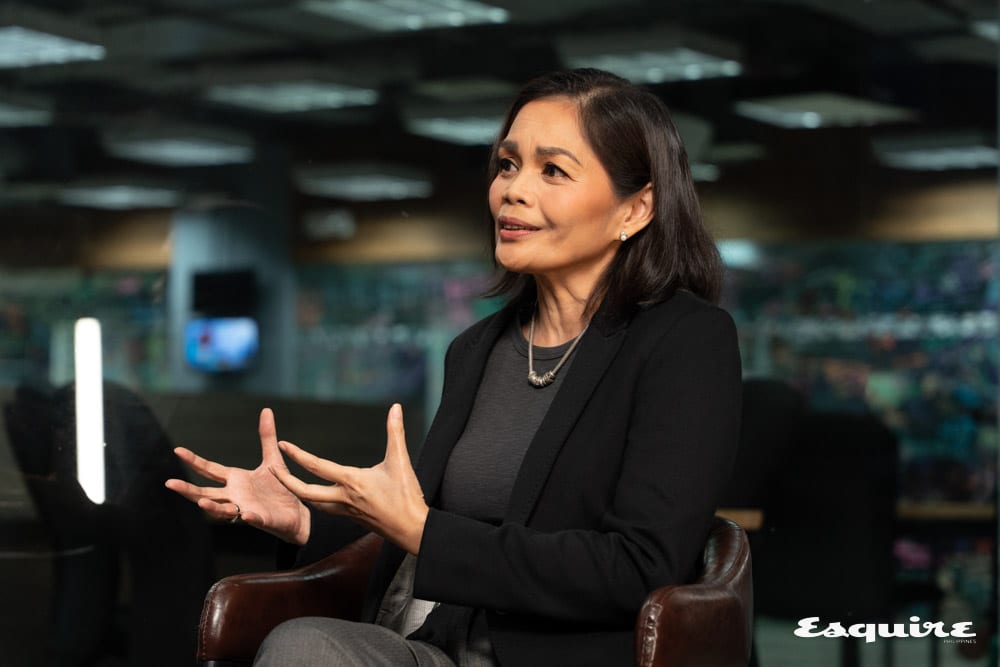
GG: Yes, definitely. We are cognizant of the fact that Rappler as it is known and also as it is made is so online all the time. It's such a demanding job that we are very cognizant of the fact that our reporters have to tune out.
AA: It can be overwhelming. Yes.
GG: But it's also part of how difficult it is to manage a newsroom like this. Because, of course, the stories never end, especially now. And even during the Duterte years, how could you just rest when there are killings every day? And then when the pandemic happened, it really affected the newsroom a lot. It's like a back-to-back trauma.
Six years of Duterte and then there's the pandemic, when you had to go online all the time. And so, we're very cognizant of, you know, you have to rest, you have to tune out. If it's your birthday, you go and take a leave. So, there's that. But, you know, it's easier said than done. Even myself, I tell myself I tune out, but I can't. I mean, it's tough. It's a tough ask.
AA: I was going to ask this towards the end of the interview. But now that it's been brought up, can journalists actually have days off? Can you actually tune out? Because when I'm on vacation, I'm still plugged into the news. I still monitor what's going on.
GG: You know, this is a generational issue. When I was a young reporter, we had no days off. No.
AA: Really?
GG: No.
AA: As in, file a story every day?
GG: Maybe. Sure, you can take a day off. But it's not expected. You have to remember, this was the revolutionary year. This was the time when we ousted the dictator, how can you even rest, right? So day off, never heard of. When you're a reporter, in truth, you don't take a day off mentally.
AA: You can never just turn it off a hundred percent.
GG: You can try, but then you'll feel so, if you're competitive, you'll feel lost, right?
AA: Was there ever a story that you regretted publishing?
GG: We always believe that apologies do not diminish you as a journalist. Precisely, it also helps you hold yourself accountable.
AA: Did you ever have to hold back on a story because of concerns about personal safety?
GG: After I exposed the involvement of the intelligence unit in the Hello Garci scandal, I received a funeral wreath as a death threat. There's no story worth dying for.
AA: Was there a time that you actually thought about just shutting the whole thing down?
GG: Actually, no. The tough question was, my gosh, has it reached a point when we have to lay off people? Maria said, we will not take it against you if you decide to leave because it's a very tough time.
AA: Did people leave?
GG: No. Very few people left, and so, wow, that was magic.
AA: What did that teach you?
GG: When people live in a climate of fear, they can forget you, even if you're friends. Sources, long-time sources never talk to you. But the flip side is that when pushed to a corner, journalists really value their freedom. When you're pushed to a corner, do not doubt for even a second that the Filipino is duwag. No, it's really courage.
AA: Where do you think journalism will be 5 to 10 years from now?
GG: I think journalism will stay in some other form. Investigative journalism will remain. Why? Because crisis will not go away. What we believe should be done is really a lot of citizen-supported newsrooms.
AA: Do you think Filipinos should pay for news in the future?
GG: People should pay for news because they used to. The citizen has to do his or her part. And that act of citizenship is to stop scrolling and just go to the sites and read the news.
AA: Should journalists take a stand on issues?
GG: Journalists should take a stand on issues. To me personally, journalism is activism. On all issues, no. Human rights, addressing the climate crisis, gender equality, transparency in governance. It's taking the side of humanity.
AA: But where do you draw the line?
GG: When I say journalists should take a stand, it's really on the focus of the story. Does that mean that you go to the rallies? No. Does that mean that you issue a statement? No. It only means that a newsroom's focus is to expose human rights violations, but do it in a way that only journalism can do.
AA: What gives you hope about this next generation of journalists?
GG: What gives me hope is precisely their skills. I'm very hopeful that they're more aware of the world's problems.
AA: Do you think that something different will happen this time around?
GG: We've heard this story before. Charged, jailed, acquitted, released. That's the pattern. But what gives me hope is the sheer magnitude of this (flood control) scandal should somehow lead to a pivot. Citizenship is really just a day-to-day thing of doing oversight of government. This country has seasonal watchdogs. And that's the problem.
AA: What's one thing that you wish the government would do?
GG: There's such a thing as truth-telling. There's got to be collective truth-telling here. The ICI has to be very specific in its timeline, in its desired outcome, and for it to be very transparent. Give it teeth. And give it the courage to actually open it to the public.
AA: How do you unwind?
GG: I'm a voracious reader. I walk my dog every day. Coffee and wine.
AA: If a young journalist would seek advice from you, what would you tell them?
GG: This is the best job in the world. It brings you to the corridors of power. But also mandates you to speak truth to power. You also have the mandate of the public to actually demolish that power if it does wrong.
AA: Have you had that moment when you're losing hope?
GG: News is its own drug. I'm a certified news junkie. There were moments during Duterte when the very public that you thought supported you is going against you. And people easily believe that you're fake news. You feel under siege. And that made me question, not just journalism, but this country.
AA: So you wonder, are they right? I'm holding on to that, that journalism is an indispensable part of democracy.
GG: In an attention economy, there is limited attention and unlimited information. If there's no crisis, there's no scandal, there's no disaster, will people go to you? Probably not.
.jpg)

Interview: Atom Araullo and Glenda Gloria
Production: Esquire Philippines Team
Editor-in-Chief: Paul John Caña
Photography: Paul Sugano
Videography: Greeko Junio and Jo Tamesis
Grooming: Xy Eugenio