Josh Boutwood, Michelin, and the Next Generation of Philippine Chefs
Stars, mentorship, and the industry that comes after recognition.
Published on Jul 6, 2026
"I am so proud of my teammates, who worked tirelessly to make sure that my vision is executed. I couldn't do what I do without the remarkable people who work with me. All of this is for them."
—Josh Boutwood, during the 2026 Michelin Ceremony
After Michelin
It is easy enough to dismiss comments like that as the expected generosity of someone accepting an award. Yet over the course of an afternoon at Helm, it becomes clear that Boutwood means it quite literally. The Michelin stars, the awards, the growing international attention—none of these occupy his thoughts for very long before the conversation turns elsewhere. He talks about cooks. About mentorship. About the people who will eventually leave his kitchens and build careers of their own.
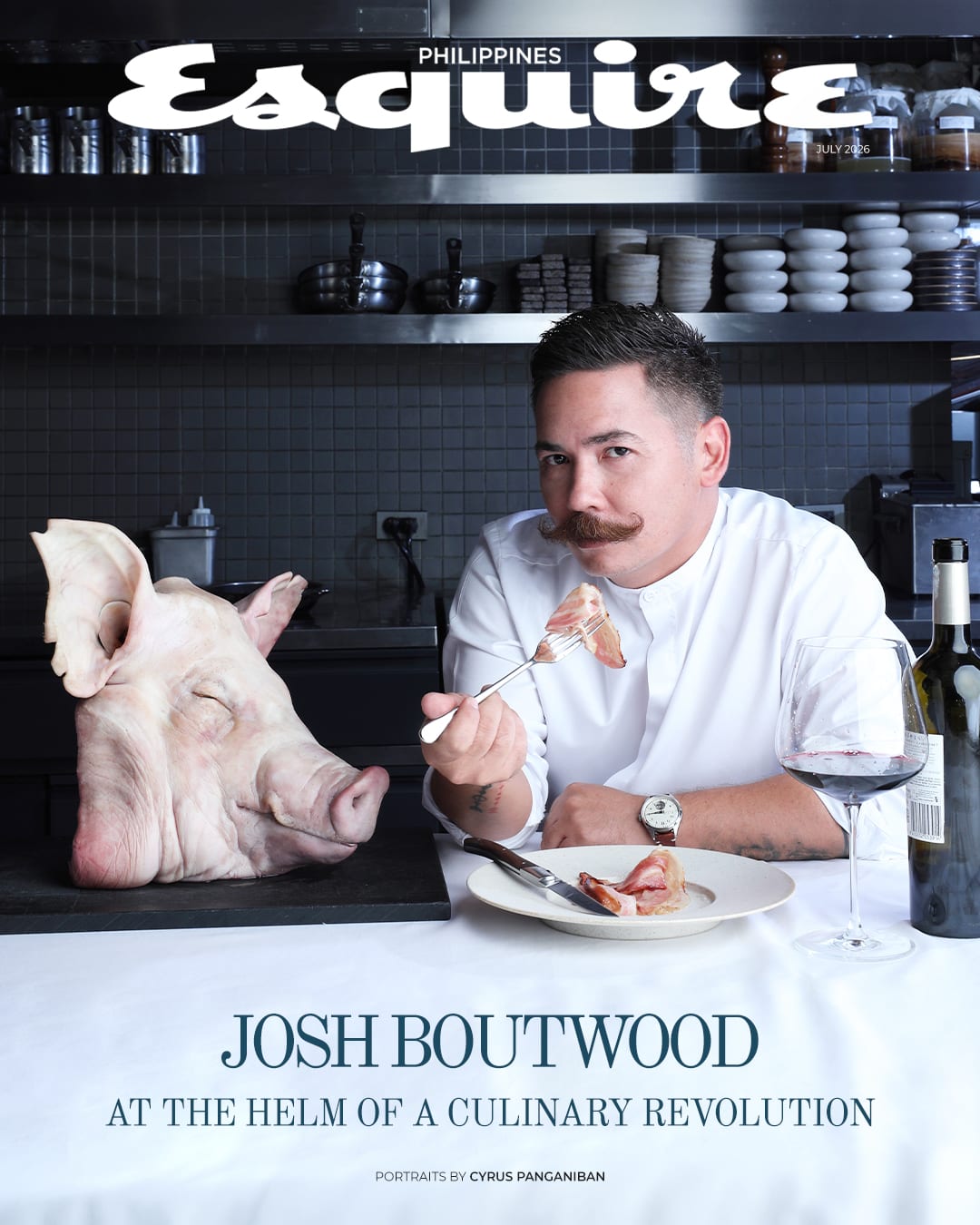
For someone who has reached a summit that many chefs spend their entire lives chasing, it is an unexpected fixation. Yet it is also the key to understanding how he thinks about success.
"I think success should never be measured in our industry," he says. "There are many milestones that we can accomplish, and for us in our position, we have accomplished. What's important for us is that we set new milestones and continue going to find what is the next thing that we can achieve."
Most people think of success as arrival. Boutwood talks about it as momentum. Achievements are useful, but only insofar as they create the conditions for the next challenge. The stars matter. The restaurants matter. The recognition matters. None of them seem to satisfy him for very long.
Perhaps that is why, when asked what success looks like today, he does not point toward Michelin.
Instead, he looks through the window.
Watching People Grow
Outside, members of his team are eating lunch.
"I would say watching my team outside now..." he says. "But seeing them grow, that is a major milestone for me."
The answer arrives so casually that it is easy to miss what it reveals.
For much of his career, Boutwood's ambitions were tangible. Restaurants to open. Concepts to develop. Techniques to refine. New ideas to test. Those ambitions have not disappeared. Anyone who has listened to him discuss future projects knows he remains addicted to the challenge of building something from nothing.
But somewhere along the way, the focus expanded.
The success he talks about most often now is measured in people.
A young cook taking on responsibility they once seemed incapable of carrying. A member of staff developing confidence. Someone discovering a voice of their own.
When the conversation turns to the future of Philippine dining, it is not difficult to see why.
"Our younger generation is the one that is going to spearhead where the Philippines will be in the future," he says. "It's not my generation. It's not the generation before me. It's the next one that we need to focus on."
The statement sounds less like optimism than conviction. He speaks about the next generation with the same certainty he speaks about ingredients or technique, as though their eventual importance is simply a fact.
That belief becomes even clearer when he begins talking about what happens when people leave.
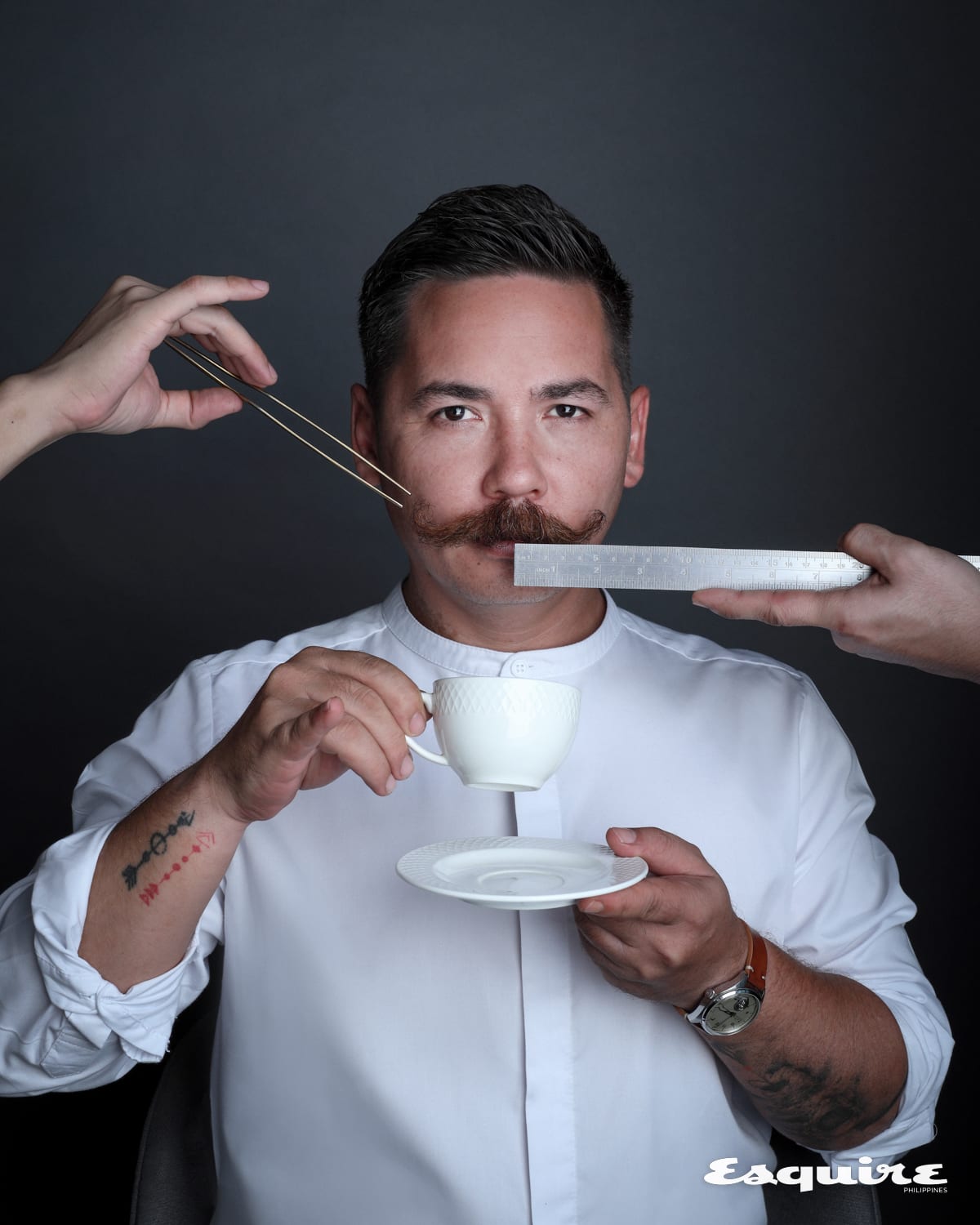
Most restaurant owners spend a considerable amount of time worrying about retention. Boutwood spends a surprising amount of time preparing people for departure.
"They themselves are the ones that need to come to me and say, 'Josh, I've learned as much as I can from you. It's time for me to spread my wings,'" he says. "And I would like them to spread their wings."
The phrase appears again later.
"To know that when they do finally decide to leave me, they'll be off to bigger and better places."
There is no trace of reluctance in the way he says it. If anything, there is pride.
For Boutwood, the purpose of mentorship is not loyalty. It is readiness. The measure of a kitchen is not how many people remain in it, but whether the people who pass through it emerge capable of building something of their own.
That philosophy may sound generous, but it is also deeply practical. It is the same logic that governs the way he talks about ingredients, restaurants, and the industry itself. Growth requires movement. Development requires change. Holding on too tightly becomes its own form of stagnation.
The goal is not to keep talent.
The goal is to produce it.
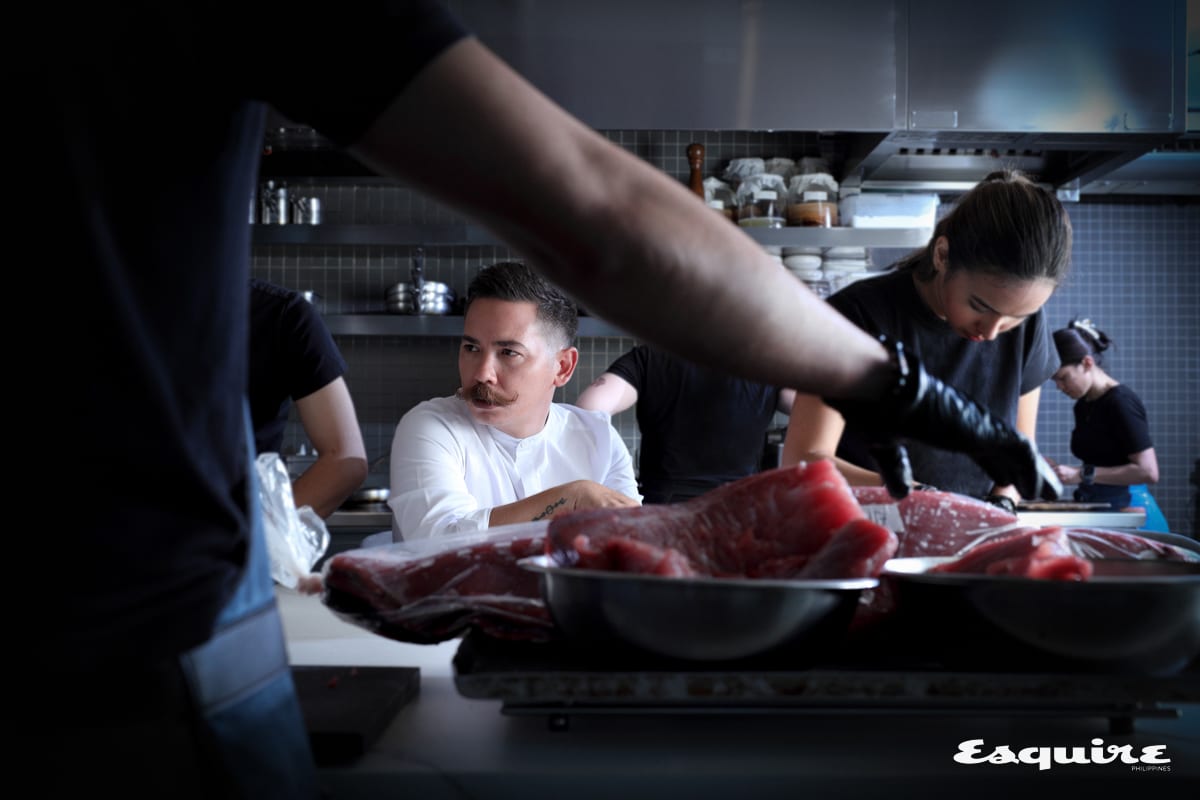
The Philippines Is the Project
The Michelin stars inevitably changed the conversation around Josh Boutwood. Before the guide arrived in the Philippines, he was already one of the country's most influential chefs, responsible for a string of restaurants that had helped define modern dining in Manila. After Helm became the country's first two-star Michelin restaurant, however, it became much harder to talk about his work without talking about Michelin.
Boutwood understands why. Recognition on that scale matters. It brings visibility not only to a restaurant, but to the people, ingredients, and ideas behind it. What is striking is how quickly he moves beyond the subject of his own achievement.
When asked how he hopes Helm will be remembered years from now, he doesn't describe it as a pinnacle or a culmination. Instead, he frames it as part of a larger story.
"I would like to think that Helm is looked back on as a moment where the world started to watch the Philippines from a culinary point of view."
It is a revealing answer because it shifts the focus away from Helm entirely. The restaurant becomes less important than the attention it attracts. The stars matter not because they validate a chef, but because they shine a brighter light on a country's dining culture at a moment when Filipino cuisine is beginning to command international interest.
Boutwood speaks about that opportunity in collective terms. "We as a collective, as an industry, need to share the knowledge that we know about," he says. The language is notable. He rarely talks about winning. He talks about building. About creating conditions where more restaurateurs, more chefs, and more diners can participate in raising standards across the industry.
"We can hopefully entice more business owners, more restaurateurs and more young chefs to push the boundaries just that little bit more to get even better."
For Boutwood, Michelin is not a finish line. It is a spotlight. The question is not what it says about Helm, but what can be done with the attention now that the world is looking.
No Disciples
Many influential chefs eventually find themselves surrounded by disciples. Their techniques are copied, their philosophies adopted, their restaurants treated as templates. Entire culinary lineages are often traced through these relationships, with younger chefs proudly identifying the kitchens that shaped them.
Boutwood seems almost suspicious of that idea.
When he speaks about the people whom he has worked for, he is careful not to describe them as extensions of himself. "I've never wanted to create a connection between myself and them," he says. "I've always had this protective barrier."
This passes forward to his own staff. Most mentors want their influence to be visible. Boutwood appears to prefer the opposite. What interests him is not whether a young chef carries his identity forward, but whether they discover an identity of their own.
The distinction sits at the center of how he thinks about succession. Legacy, in the traditional sense, is often imagined as preservation: a set of ideas surviving intact from one generation to the next. Boutwood is more interested in evolution. He wants younger chefs to take what they have learned and then move beyond it.
The strongest expression of that philosophy comes when he imagines the future of Philippine dining.
"If I go to a restaurant and see dishes we've been doing 20 years ago," he says, "I would be upset."
Not because the dishes are bad, but because their continued existence would suggest that nothing had changed. The industry he hopes to leave behind is one that is constantly moving forward, propelled by chefs who are willing to challenge conventions rather than inherit them unquestioningly. The future, in his mind, should not resemble Helm any more than Helm resembles the kitchens that shaped him.
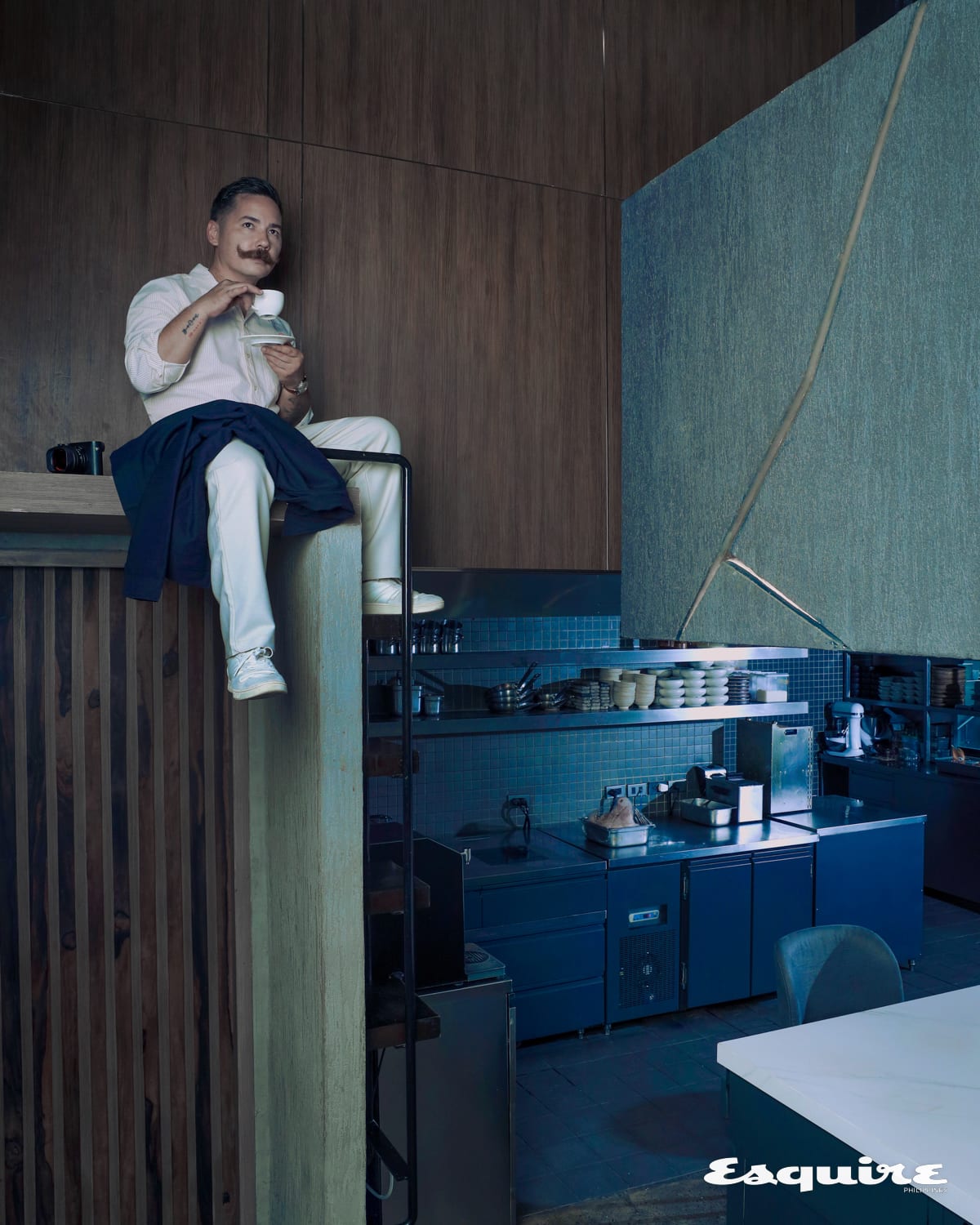
What He Learned Overseas
That attitude can be traced, in part, to the circuitous route that brought Boutwood to Manila in the first place. Long before Michelin stars and tasting menus, he was a young cook moving through kitchens in England, Spain, Denmark, and Sweden, absorbing lessons from very different culinary cultures.
Some of those lessons were technical. Others had to do with discipline, consistency, and standards. But the most enduring ones seem to concern people.
European kitchens, particularly during the years when Boutwood was coming up, were often structured around rigid hierarchies. The brigade system rewarded discipline and accountability, but it could also create distance between people. Rank mattered. Authority mattered. The chain of command mattered.
Boutwood absorbed much of that discipline, but he appears to have become increasingly selective about what else he carried forward.
Today he speaks less about hierarchy than collaboration. Less about authority than responsibility. The kitchens he leads are organized around the belief that every role contributes to the final experience, whether that person is washing dishes, preparing mise en place, or presenting food to guests. But there is also whimsy; there is joy.
It is perhaps the clearest example of how experience becomes philosophy. The goal was never to recreate the kitchens that trained him, nor to turn younger cooks into replicas of himself. Rather, it was to create an environment where they could become something else entirely.
Every generation inherits a set of practices from the one before it. Wisdom lies in knowing which ones deserve to survive and which ones should be left behind.
Does the Future Belong to Someone Else?
Ask Josh Boutwood about the future of Philippine dining and the conversation quickly drifts away from his own accomplishments. This is striking because there is no shortage of them. Over the last decade, he has built some of the country's most influential restaurants, earned the highest Michelin distinction awarded in the Philippines, and become one of the defining figures of contemporary Filipino dining. Yet when the subject turns to what comes next, he speaks less about restaurants than about the people who will eventually inherit them.
Boutwood clarifies much of what he has been describing throughout the afternoon. His interest in mentorship, his insistence on creating opportunities for younger cooks, even his willingness to see talented team members move on—all of it stems from the same conviction. Recognition only matters if it creates momentum. A restaurant can earn accolades, attract international attention, and elevate its chef's reputation, but those achievements have a limited lifespan if they remain concentrated in one place.
What lasts is the culture that forms around them.
This is why Boutwood speaks about Michelin not as a personal triumph but as an opportunity for Philippine dining. The stars matter because they draw attention. Attention attracts investment, curiosity, ambition, and talent. It encourages restaurateurs to take risks, chefs to aim higher, and diners to become more adventurous. Most importantly, it creates conditions in which a younger generation can imagine possibilities that may have seemed unattainable only a few years ago.
For Boutwood, that may be the real measure of progress. Not whether Helm remains successful, but whether the chefs coming after him inherit an industry that is more confident, more ambitious, and more visible than the one he entered.
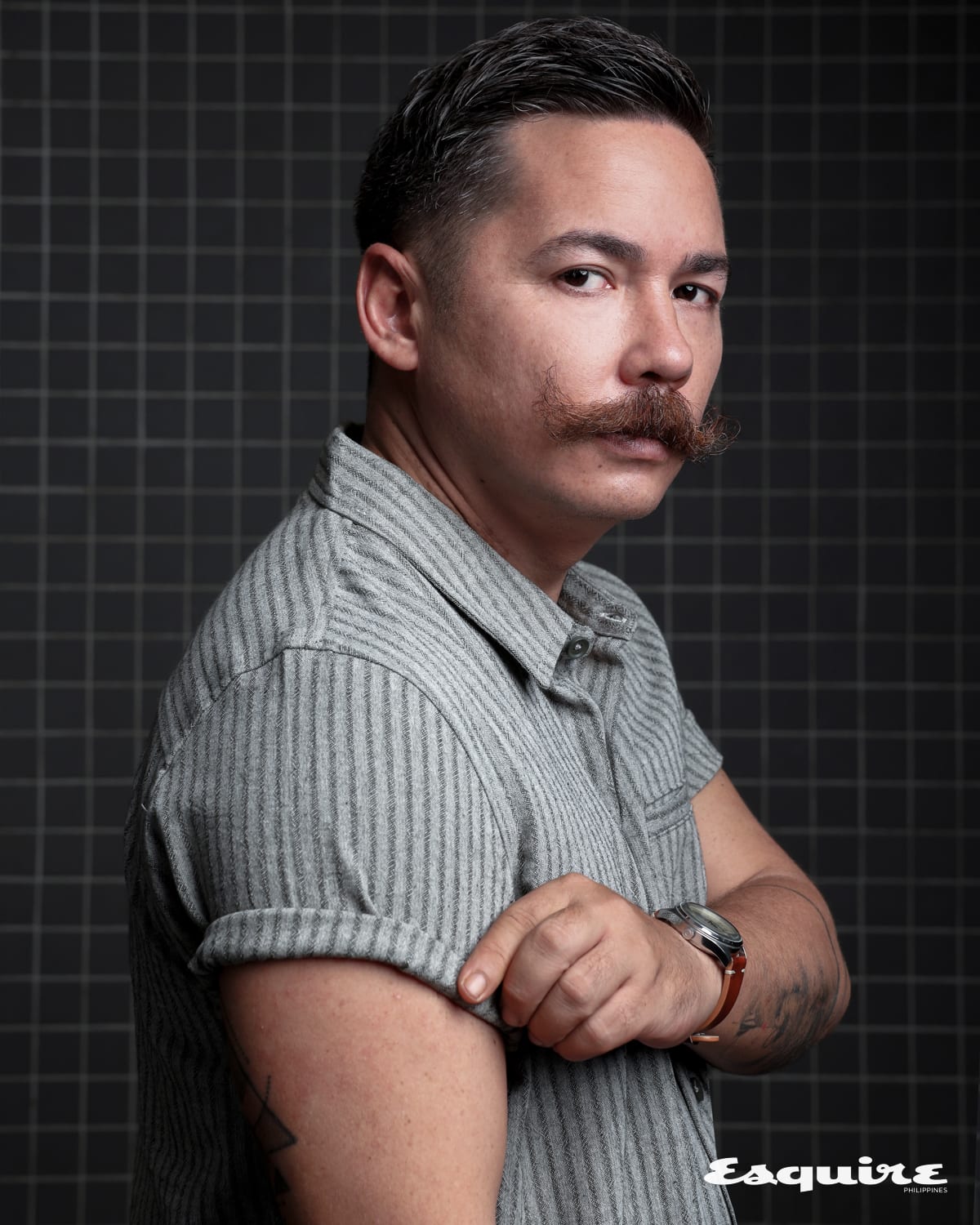
The Future Belongs to Everyone
Toward the end of the conversation, Boutwood is asked to imagine himself 20 years into the future. He walks into a restaurant run by a chef whose connection to him is almost genealogical: perhaps someone who trained under a former member of his team, who in turn trained under someone else before opening a place of their own.
What would he hope to find?
His answer is revealing because it runs counter to how many accomplished chefs think about legacy.
"I want to see their own personality," he says.
There is no desire to create a school of Boutwood disciples. No ambition to see future generations reproducing his dishes, preserving his techniques, or treating Helm as a template. If anything, he hopes for the opposite.
“I would like them to be balanced in terms of how they create their dishes. Texture, composition, the quantity of ingredients with the other ingredients. The flavor profiles, the way it hits the palate. Am I targeting three taste profiles, or am I just monotone? I want them to have that full encompassing flavor, which is the moment you taste it; the palate is invigorated. I wanna see their own sense of humor in the food; their personality comes through with it. And when it comes to the service style, I want it polished, you know. Almost perfect where nobody can find fault... I hope that they, when they do leave me and 20 years from now they have their own restaurants, that they've developed their own style of food and developed their way of showcasing what they're made of.”
He draws a distinction between influence and imitation. Influence creates new possibilities. Imitation simply preserves old ones. Boutwood's vision of succession is rooted in the belief that each generation should move the conversation forward rather than repeat it.
That philosophy explains much of what has made his approach to mentorship unusual. He wants people to leave. He wants them to develop their own ideas. He wants them to build restaurants that reflect their own experiences, tastes, and ambitions. The highest compliment is not a faithful reproduction of Helm somewhere else in the country. It is a restaurant so distinct, so fully realized in its own identity, that it could never be mistaken for one of his.
Menus will change. Restaurants will evolve. New chefs will emerge with different ideas about what Philippine dining can be. If Boutwood gets his wish, they will take what they learned from him and transform it into something he never could have imagined himself.
For a man who refuses to dwell on accomplishments for very long, that future seems to be the one achievement worth lingering on.
So when dining at Helm, or any of Boutwood’s other restaurants, watch that kitchen move. You are seeing the future of Philippine dining.

Story: Joel Donato Ching Jacob
Editor-in-Chief: Paul John Caña
Concept, Styling, and Creative Direction: Igi Talao
Styling Assistant: Matt Santino Arlos
Production: Rhia Grana
Photography: Cyrus Panganiban
Videography: Jino Del Mundo and Greeko Junio
Hair and Makeup: Lilian Yeung
Location: Helm by Josh Boutwood, Ayala Triangle Gardens, Makati City
Special thanks to Bocu.
ALSO READ:
Josh Boutwood's got a Few Screws Loose and Two Michelin Stars
Josh Boutwood: 'Even When I'm Sleeping, I'm Thinking About Food'
Craft cocktails, social justice, books, board games, and TTRPG. Chopsuey.
View More Articles About: