Martha Sazon of GCash: ‘You Can Always Surprise Yourself with What You Can Do’
Following GCash's blockbuster stock market debut, Sazon reflects on the decisions behind its growth, the challenges of leading a fintech company, and her ambitions for Filipino technology.
Published on Nov 18, 2026
Every year, Esquire Philippines presents Man at His Best, the local iteration of a global signature event, where we celebrate extraordinary Filipinos reshaping society as we know it. These are the dreamers and doers who are making a profound impact on our way of life, and who are using their talents and skills to make something of themselves and inspire the rest of us to become better versions of ourselves.
This year, in celebration of Esquire Philippines’ 15th anniversary, we’re honoring 10 heroes and mavericks in entertainment, journalism, culture, business, and advocacy, as well as five iconoclasts who exemplify what it means to be a Man at His Best.
Meet Esquire Philippines’ Businessswoman of the Year, Martha Sazon
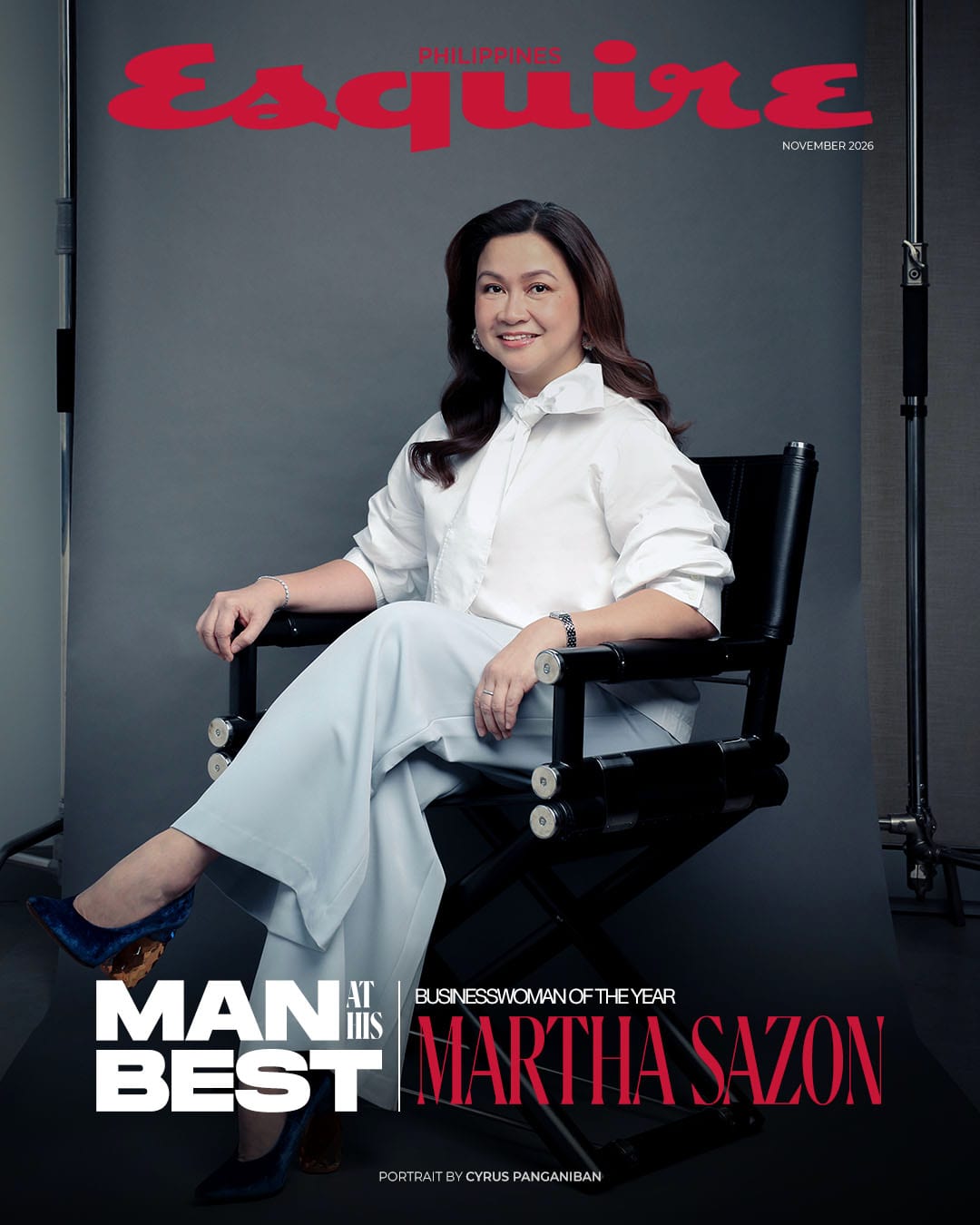
Few Philippine companies have changed daily life as completely as GCash. What began in 2004 as an SMS-based service for sending money became a mobile app in 2012 and a full super app by 2017. Yet for its first 16 years, mass adoption remained out of reach. That changed in 2020, when Martha Sazon, after 12 years at Globe where she led its broadband business, was asked to lead Mynt, GCash’s parent company, in the middle of the pandemic with no prior fintech experience.
What followed was a transformation inside and outside the company. Sazon broke down silos, pushed product and technology teams to learn each other's work, and confronted negative unit economics while millions of new users arrived. Under her leadership, GCash expanded from payments into savings, credit, insurance, and investments in pursuit of its founding promise of finance for all.
All of this has culminated in GCash’s much-anticipated debut in the Philippine Stock Exchange in October 2026. The company raised nearly P61 billion during its initial public offering with a market cap of P441.5 billion, making it the seventh largest company in the local bourse. Not bad for an enterprise that started out by sending money via SMS.
In this conversation, Esquire Philippines’ Businesswoman of the Year reflects on the difficult decisions behind that growth and what she hopes the next decade of Philippine tech will prove to the world.
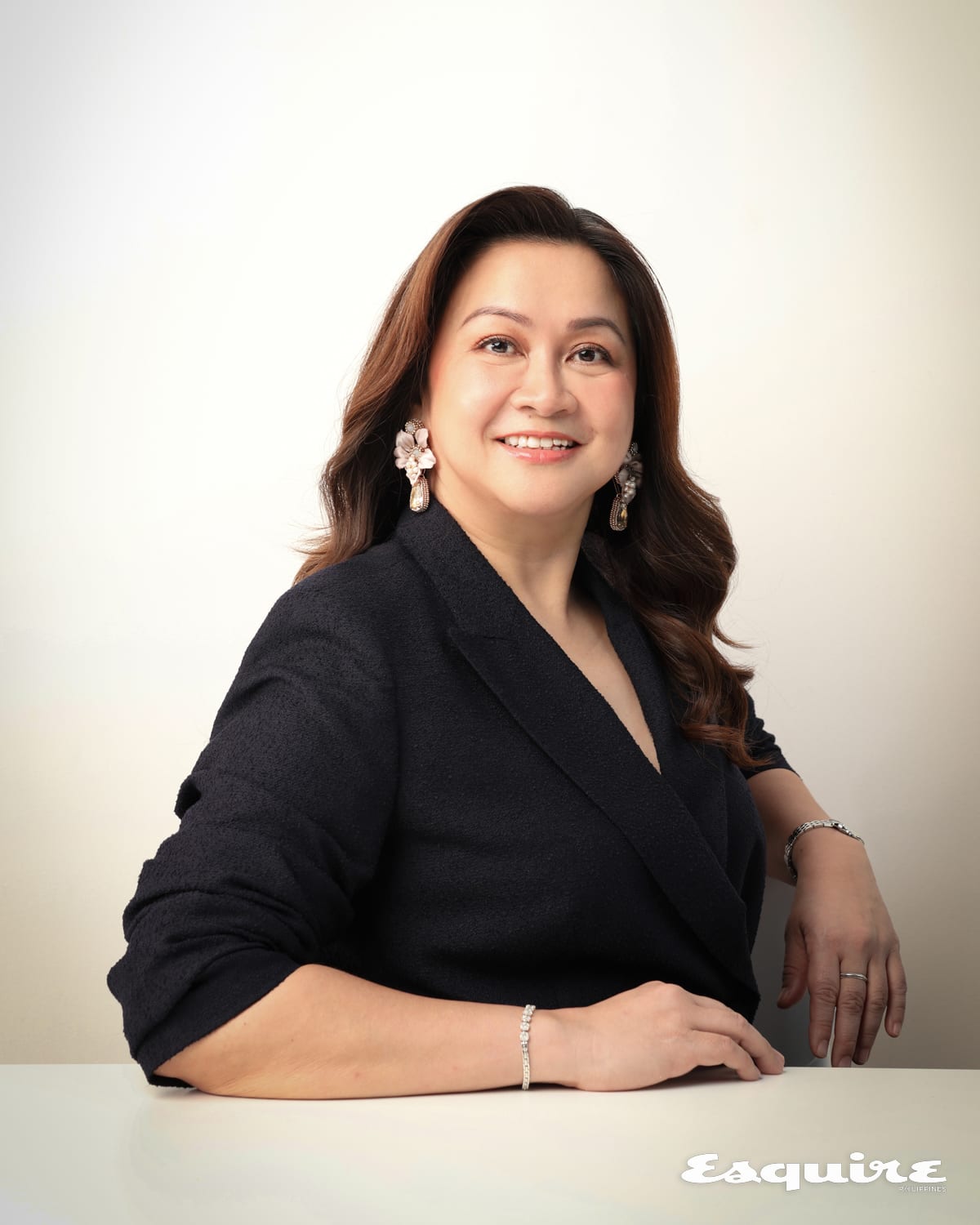
Esquire Philippines: Congratulations on being named Esquire’s Businesswoman of the year. There's a lot to talk about. We want to start with your story. You spent 12 years at Globe and eventually headed its broadband business. What made you decide that you were ready to leave a relatively established telecommunications company and take on Mynt in 2020?
Martha Sazon: Well, first of all, I didn't decide. I was asked to lead. But when I was asked to lead GCash, it was in the middle of the pandemic and there was a lot of uncertainty.
Naturally, I was somewhat apprehensive about taking on the role, especially since I had no previous experience in fintech. But afterwards I became excited. First, because it's a new and evolving space where we can shape financial services, and then the nature of fintech put me in a perfect position to make a positive difference in the lives of the underserved.
And it was a perfect time during the pandemic. You know, when you're so uncertain and so worried and anxious about so many things; it's the perfect assignment to get your mind out of yourself and be focused on others. And this was really the perfect company to really make an impact and change the lives of many people.
Third, in joining Mynt, I found a young, passionate, and highly purpose-driven team. As eager as I was to make a difference, they really impressed me. So that changed my mind in terms of handling a new team at the same time. It got me excited about leading them into making the vision of GCash really come to life.
In the middle of the pandemic, when the entire economy was being disrupted, what did you encounter when you first walked through the door, and what were the first things you felt needed to change?
Like I said, I encountered a dynamic young organization that was digitally savvy and working with the state-of-the-art technology. I remember I said back then in one of the interviews, it felt like I was given this super modern spaceship where they had all these features, and I can do everything I could. Like all the futuristic stuff I could do with it. So that's one.
However, people outside the organization didn’t understand yet what GCash was, and the first thing I needed to do was to bridge Filipinos and help them understand what the GCash app is, what the brand stands for, and ultimately, how our products can make their lives better internally. There were a lot of really good people, super fantastic, talented young people especially, but most of us were working in silos.
I think that was the setup we were in. People were encouraged to really do their thing. But there was not much alignment within the organization. So one of the first things I focused on was to build an agile and collaborative culture. We stressed the importance of collaboration and collaborating without sacrificing speed. We believe that greater collaboration could deliver more relevant products at a quicker pace.
Lastly, in the leadership team, we encouraged product teams to be familiar with tech and vice versa. That was one of the big changes we also introduced. This helped us unlock the full potential of technology that could address real needs of the Filipinos. And I think during this time, GCash was already growing.
When you came in before you became CEO, but the pandemic happened, and there was this huge inflection point that accelerated digital payments dramatically. How much would you say of what happened afterward was deliberate strategy, and how much was the company simply being in the right place at the right time?
Before the pandemic, (the company) wasn't exactly growing the way we wanted it to, and consumers didn't yet see the urgent need and relevance in digital. Imagine back then, in 2020, GCash was 16 years already. Sixteen years have gone by, and still we didn't get that mass adoption that we needed to have. The pandemic changed that. It convinced people to go digital. Actually, for some, it forced them to go digital.
At the same time, what we had going for us was that we were ready when the world was closing down. In particular, we were completing our migration to a new platform which prepared us for the influx of millions of users. At the same time, culturally inside GCash, we introduced collaboration, and people were getting more excited about things. In fact, that time, I remember when all other companies were cutting heads, reducing their workforce, we were hiring, and we were working 24-seven.
So we were just glad that we could be there as a silver lining for the Filipinos, enabling digital payments, helping small businesses survive, and partnering with the government for aid distribution.
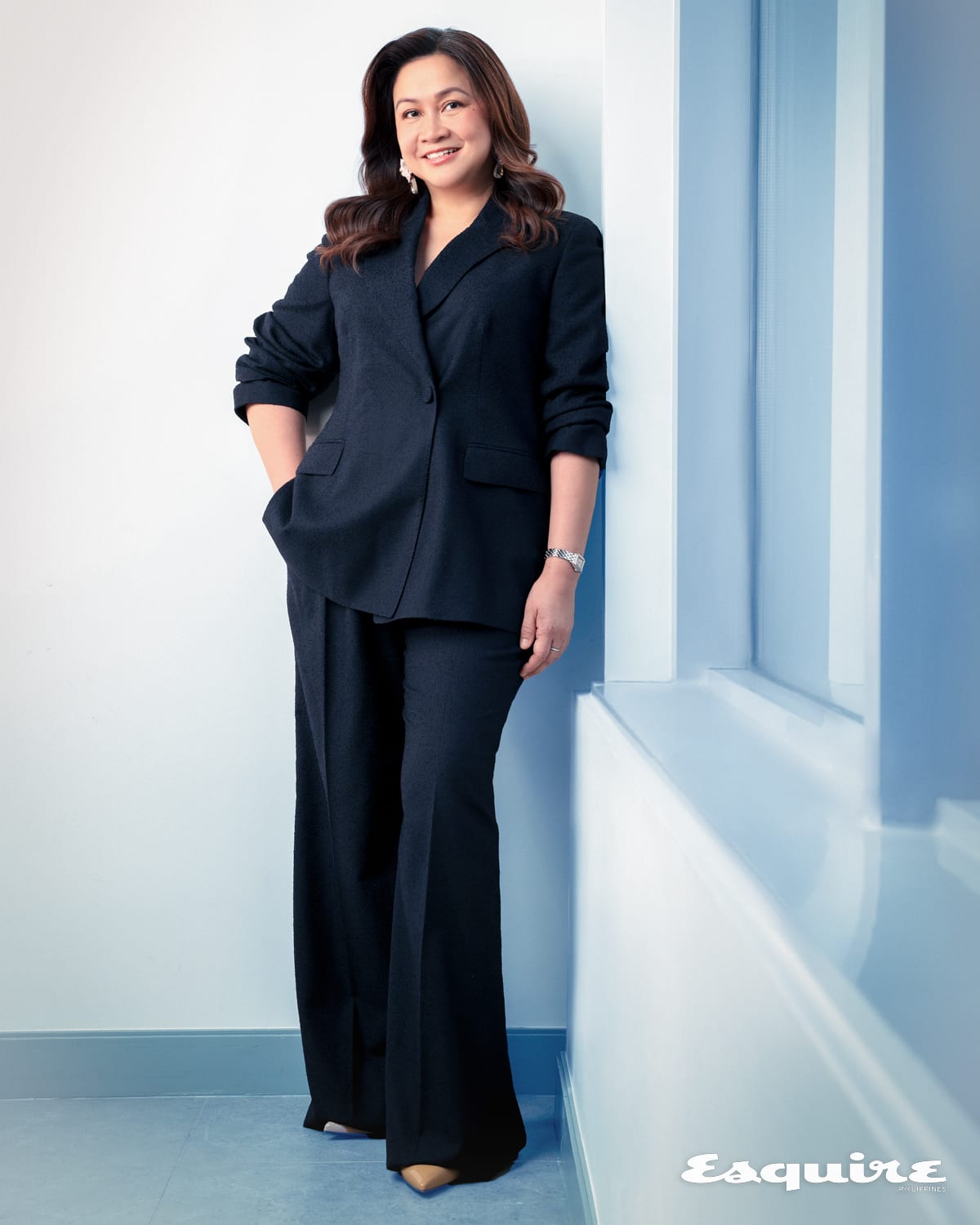
Talking about your journey, especially during the pandemic, what was the hardest decision you had to make in your first few years that people outside the company probably never saw?
Well, we needed to prepare it to scale rapidly and sustainably. Imagine we were growing so rapidly but our unit economics was negative. What does that mean? It means that as you grow, you lose more, right? So that required a total transformation in how you worked. Shifting the culture, upskilling the team, and creating greater accountability.
But most of all, it's clarifying the vision and the road towards it. The hardest part was accepting that not everyone would be comfortable with the direction we needed to take. Some good people chose to move on, but that transition also gave us the opportunity to rebuild the team for the future. We doubled down on hiring young management trainees as the next generation.
At the same time, we balanced this with seasoned leaders with experience in different industries. One example is Tony Isidro, who, despite having no prior lending background, has scaled Fuse, GCash’s financing company. By the way, Tony is the CEO of Fuse. While early years were tough, that change was necessary. Today, this organizational diversity keeps us open to new ideas and helps us serve Filipinos more meaningfully.
You've talked about Fuse also. Thanks for bringing that up. GCash has gone from being primarily a payments platform offering multiple services. You've also brought in multiple apps and companies within your foray. At what point did you realize that GCash could become something much bigger?
From the beginning we saw that access to payments was not the end goal. It was a way to bring Filipinos into digital tools for their everyday lifestyle needs. We really saw the potential of when GCash started showing up in real, everyday moments. Stories like Ate Alma, the beloved Ateneo photocopy operator. After a typhoon flooded her home, students rallied to send her donations via GCash.
Even Cocoy, this small business owner in Cagayan De Oro, who owns a coffee shop there, He lost his job, he used to be a bartender, but then he was able to take on a loan from GLoan from Fuse. And then that funded his business. And now he has like, more than 10 branches.
Those are some of the stories. In fact, I also have my own story to tell. During one of my trips to one of the beaches in Batangas, I didn't bring my cash with me, and I wanted to buy fresh catch from local fishermen on a beach. I said wala akong cash, but I found out that they were accepting GCash. ‘Ma’am, may GCash ako!’ That made me feel really good and I bought the entire fisherman's catch for the day.
Once people trusted us with their money, the natural question became, what else can we do to improve their financial lives? That led us into savings, credit, insurance and investments, all built to open up better opportunities for Filipinos.
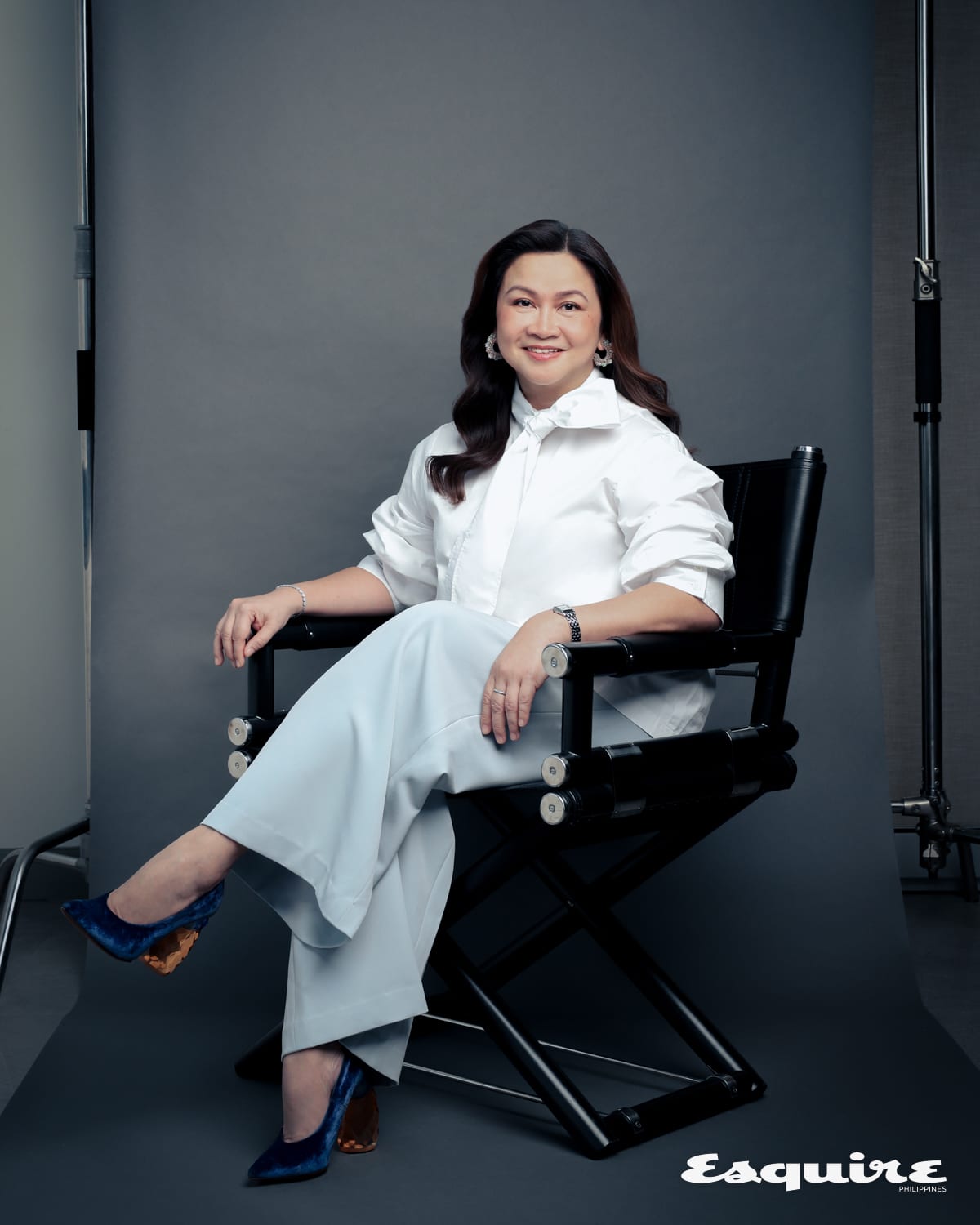
I'll segue. I'll share my GCash story as well. I was featured in Esquire a long time ago for my nonprofit called Waves for Water, and we provide clean water access all around the Philippines. We’re actually part of GBayanihan, and your payments platform has been great for donations. So I think past that, five to 10 years from now, what do you want Mynt to become that it isn't today? And what would you like people to say about your tenure as chief?
Over the next 10 years, success for GCash is bringing it to those who need it the most, wherever they are, whether they're abroad or even in remote regions. Personally, I've always believed that people are capable of more than they think inside the organization. That means pushing boundaries to take on bold challenges and prove that the Philippine tech company can be world class.
For customers, it's about giving them access to first world experiences and allowing them to take advantage of every opportunity, no matter the environment they're in or the challenges they face. We're trying to make it as one of the equalizers in lives so that even if they live in a challenged environment, they can still compete globally because they have the right tools.
It's all about realizing your full potential. You can always surprise yourself with what you can do. I'm proud of how GCash continues to make a difference in the lives of millions.
Ultimately, I want to be remembered as a leader who inspired the next generation of Filipino tech leaders and show how far Filipino talent can go.
Story and interview: Carlo Delantar
Editor-in-Chief: Paul John Caña
Creative Direction: Igi Talao
Photography: Cyrus Panganiban
Videography: Jino del Mundo
View More Articles About: