Today I Learned: Cebu Has a Garden and Gallery Dedicated to Butterfly Life and Art
An American novel, a German butterfly book, and decades of quiet observation turned a Cebuano artist into a pioneer of butterfly conservation.
Published on Jul 3, 2026
Since 1974, the Jumalon Butterfly Sanctuary and Art Gallery has been a breeding ground and shelter to more than 50 butterfly species situated in a 1,460 square-meter garden lot in Basak Pardo, Cebu City. But it is not just an ordinary, manicured garden. Established by the late visual artist Julian Jumalon, it has both nectar flowers for adult butterflies and host plants where they can safely lay eggs for their caterpillars until today.
“We admire butterflies without realizing that every butterfly depends on a very specific plant. Most butterflies cannot simply lay their eggs anywhere. Each has a food plant or host plant where the butterfly lays its eggs. When the eggs hatch, they become caterpillars, and they immediately begin feeding on the leaves of that plant. If the host plant disappears, the butterfly disappears as well,” Humaida Jumalon, president of the Julian N. Jumalon Foundation, told Esquire Philippines. She is the third of Julian’s eight children. Following the death of her father in 2000, she assumed the obligation of running the institution.
Humaida was a former sciences professor for 20 years at the University of San Carlos in Cebu City where she also earned degrees in zoology, botany, and a doctorate in education. She explained further about the symbiotic relationship between the insect’s life cycle and the environment. Thus, the main reason for running the sanctuary is to protect and conserve these insects.
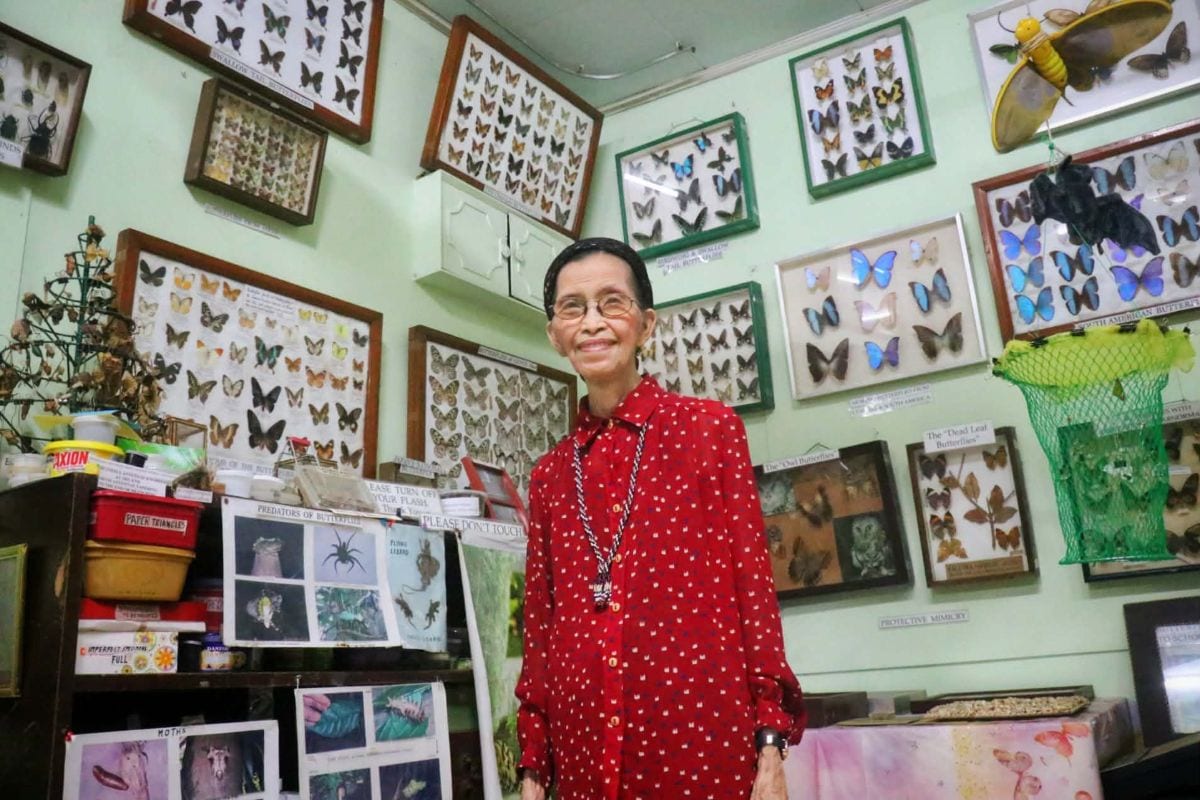
“My father knew exactly which plant belonged to which butterfly. If he wanted a particular species in the garden, he knew what to plant. Many people think conservation means saving beautiful things. I disagree. Conservation means protecting relationships. The relationship between a butterfly and a plant. The relationship between an insect and its habitat. The relationship between humans and nature. Once those relationships are broken, it becomes very difficult to restore them,” she explained.
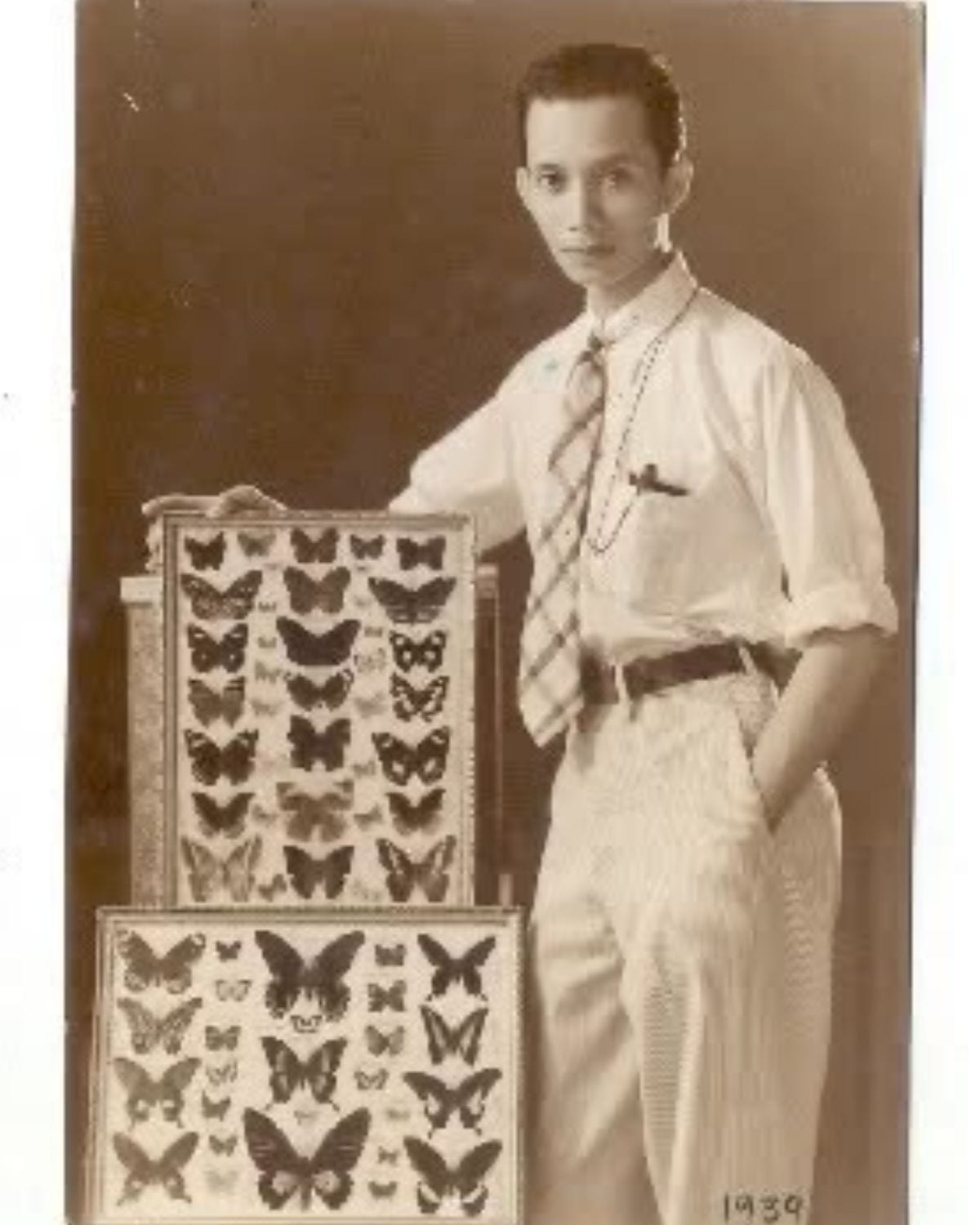
“Butterflies teach patience. You have to observe. You cannot rush nature. Many of the things my father discovered came from simple observation over many years, not expensive equipment, not laboratories—but observation. He never had any formal education in butterflies,” continued Humaida. Julian was a fine arts graduate of the University of the Philippines. She went on, saying, “He learned from books. He corresponded with people abroad. My grandfather gave him an old German butterfly book. That book helped him tremendously. Back then, there was no internet, no local experts. He learned and became an expert by studying on his own.
Butterflies enter a process called “complete metamorphosis” arranged in four distinct stages: egg, larva (caterpillar), pupa (chrysalis), and adult butterfly. It may endure from 30 days to several months, depending on the species.
“That is why we do not allow visitors to simply walk around without learning something. We always explain. We always teach. Because education is part of conservation. People protect what they understand. Otherwise, they destroy it without realizing what they are doing,” she said.
Later on, Julian expanded it into a mini museum of butterfly specimens dated back as early as 1933 when he started collecting them at age 14. He then was a student librarian when he came across a book entitled A Girl of the Limberlost written by American writer and naturalist Gene Stratton-Porter in 1909. Set in Limberlost Swamp in Indiana, the novel tells a story about the love triangle of Elnora Comstack, Philip Ammon, and Edith Carr. Elnora, the main protagonist, sold butterflies and moths to collectors for a living.
“My father never forgot that story because it was the reason he became interested in butterflies. And from that moment, he started collecting them. Years later, he asked my sisters to look for that book. I think they eventually found a copy in the United States,” she recalled.
On prominent display at the gallery are the butterflies that completed a full life cycle at the Jumalon garden such as the Jewel Blue, Yellow Gull, Mottled Emigrant, Peacock Pansy, and Common Grass Yellow. But the Emerald Swallowtail is the most recognizable for its color scheme. According to Humaida, the vivid green is composed not of pigments but of structural coloration, where the curved scales reflect light, making the wings appear green, blue, or yellow.
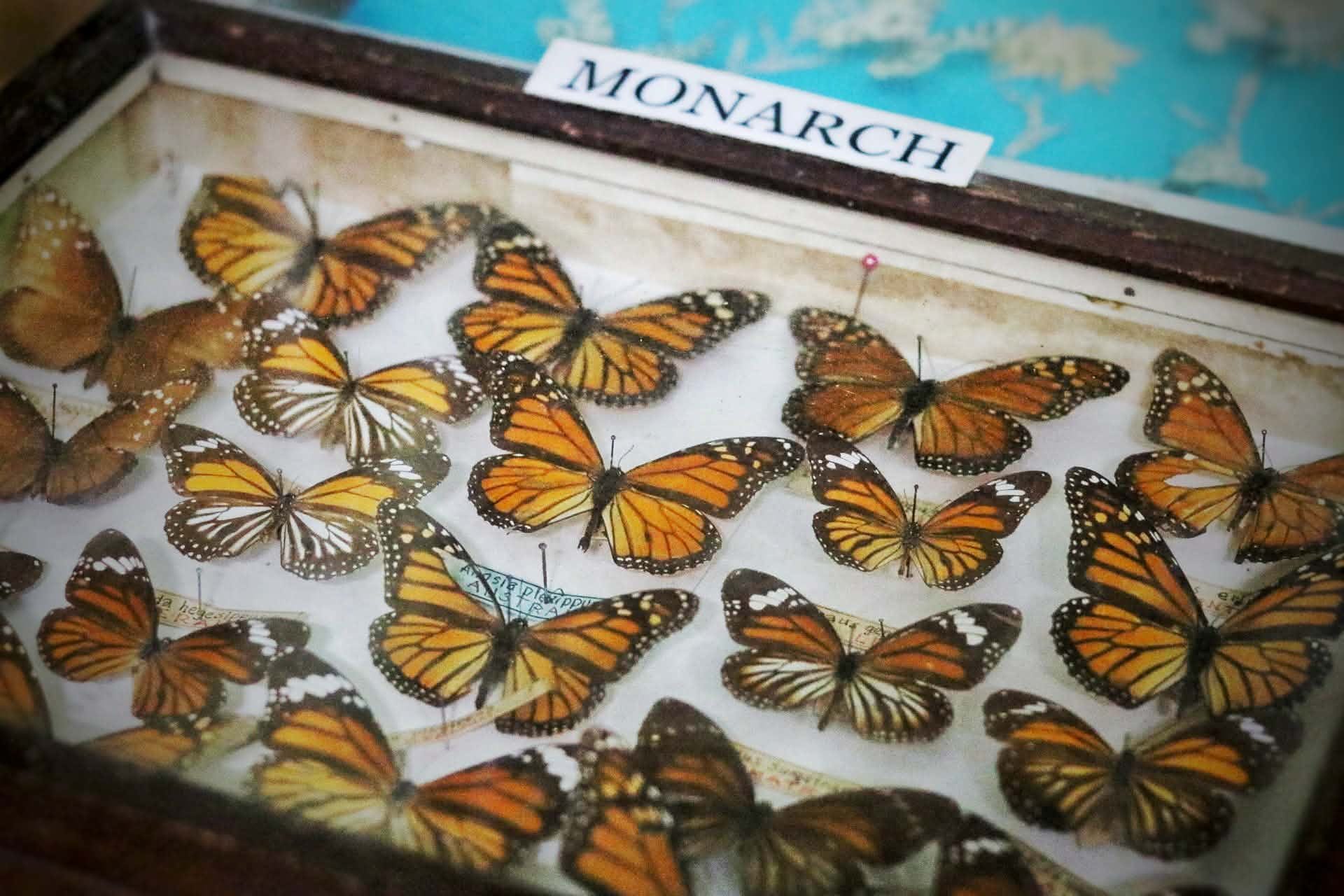
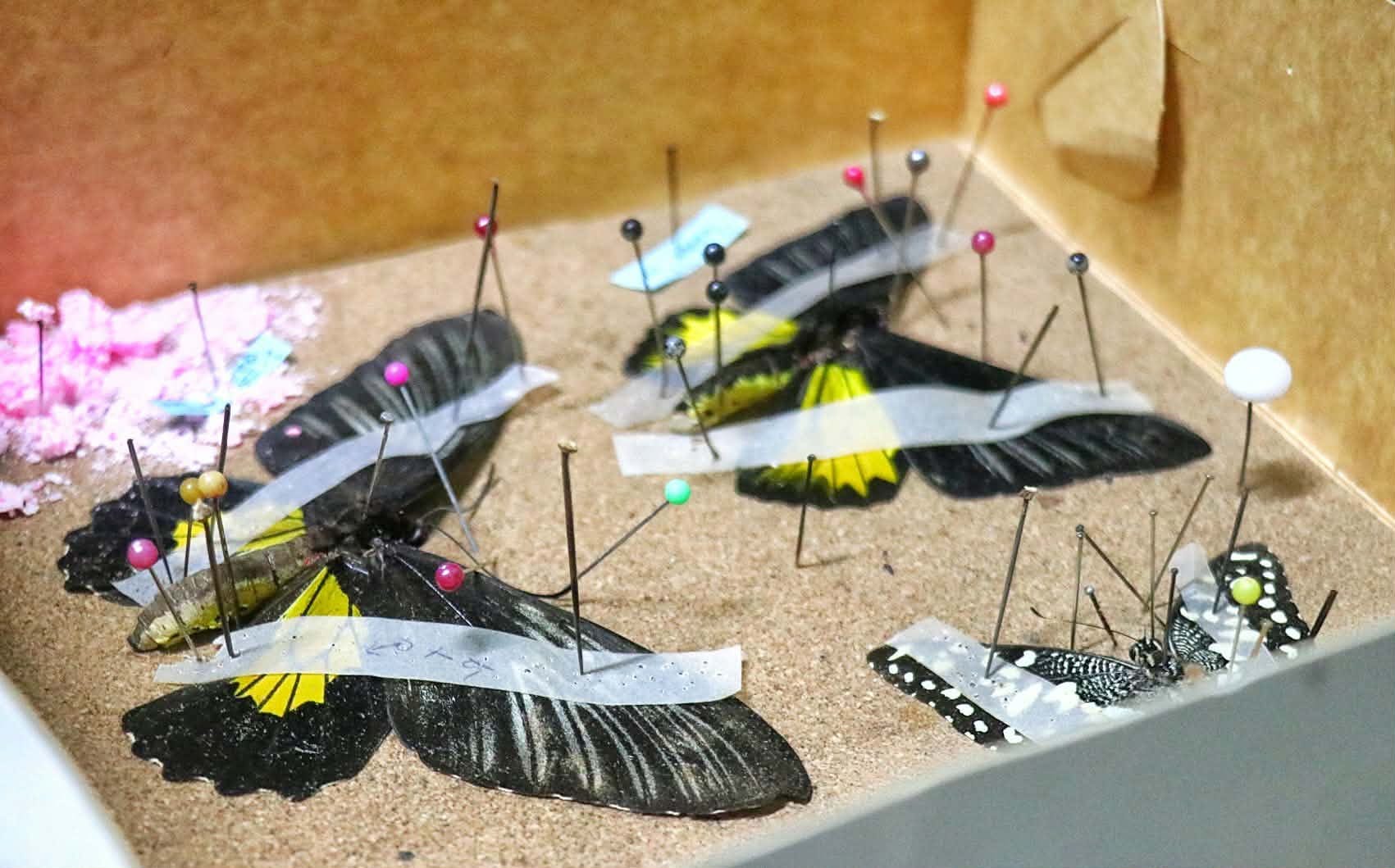
Another specimen that the exhibit highlights is the Magellan Birdwing, which has one of the widest wing size that could spread up to 18 centimeters. Named after Ferdinand Magellan, it is native to our country and unique for its striking black and bright yellow wings and iridescent hindwings. In addition, one can also view the Idea jumaloni or the Kawasan Paper Kite, the Moduza jumaloni or the Visayan Commander, and the Paroparu jumaloni—all named after Julian Jumalon to honor his legacy.
The Jumalons have developed a way of restoring physical remains. Each of them is carefully preserved in a frame that went through a procedure called butterfly or lepidoptera mounting. It is a step-by-step process of relaxing, pinning, and spreading a dead butterfly until it dries for display or study. Thus, it needs drying period on a specialized board before the specimen can be framed or stored in a collection.
“There is a proper way of doing it. You cannot simply fold it. The wings must remain protected. The body must be positioned correctly. Everything must be done carefully because the scales are very delicate,” added Humaida. “Years ago, we ran out of insect pins. At that time, we did not know there were alternatives available online, so we improvised. We experimented with thorns from local plants; some worked surprisingly well.”
Most of the featured butterflies are from the Philippines. Humaida said her father traveled around the country to study and discover local moths and butterflies. His exploration commenced in Western Leyte in 1933, then in Samar in 1940, and Oriental Mindoro in 1956, followed by Baguio, Quezon, Montalban, and Surigao. Moreover, the “Palawan expedition” was launched in 1959 and completed after a decade. It was also in the same era when he was commissioned by a Smithsonian museum in America to curate Philippine butterflies; for the same purpose, he went to Germany and Switzerland in 1972.
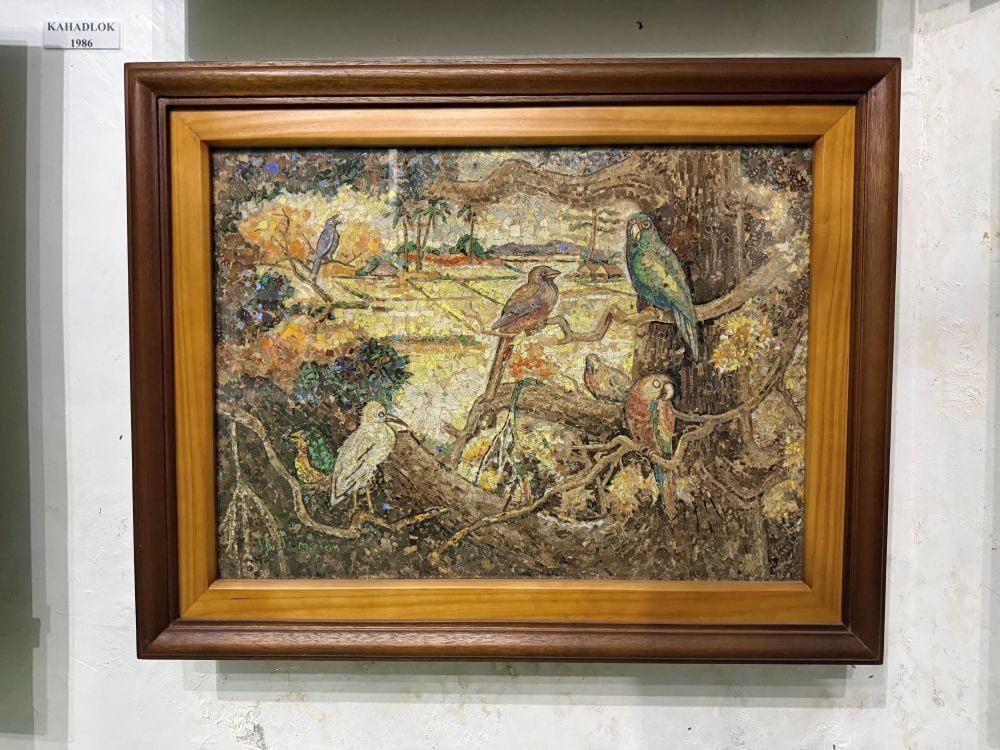
Meanwhile, the exhibition also features art works of Julian using dried butterfly wings called “lepido-mosaic.” A pioneer to the art form, he began the practice by preserving damaged wings from natural deaths and repurposing them. He completed about 60 lepido-mosaics. Among his celebrated works are “Lapu-Lapu” in 1967, “Sa Kabukiran” in 1988, and “Old Colon Street” in 1967. The collection also includes mosaics of the Black Madonna of Poland and a portrait of Pope John Paul II as official gifts of the Province of Cebu during his pastoral visit in February 1981.
View More Articles About: