Today I Learned: The Ad Campaign That Made Motorcycling ‘Respectable’
In the early 1960s, motorcycles carried a rough reputation in America. Honda didn’t fight it–it simply showed people another way to see it.
by Aries Santos
Published on Jul 16, 2026
In the early 1960s, riding a motorcycle—especially in America—came with certain assumptions. Most of them weren’t exactly positive.
Back then, most people looked at motorcyclists as troublemakers, delinquents, or just plain lower class—a reputation that had been building for quite some time, thanks in part to dramatic news coverage of biker gatherings and movies like The Wild One, which portrayed riders as leather-clad outsiders who brought trouble everywhere they went. By the early sixties, a lot of folks had come to associate motorcycles with violence and lawlessness—the kind of thing that didn’t really fit into what was generally considered normal, polite society. The overall sense was that men who rode bikes were rough around the edges and probably not the type you’d run into at your neighborhood barbecue.
So when Honda started selling their motorcycles in the United States, they ran into a unique problem that had nothing to do with the bikes themselves. By then, the image of motorcycling had already settled into something most regular guys—family men, young professionals—would rather steer clear of. Honda’s bike models were small, affordable, and simple enough for new riders to handle. It should have worked in their favor. The real issue was convincing people that motorcycles weren’t only for a certain kind of person, a reputation that was hard to shake.
Rather than trying to fight this outlaw image directly, Honda tried something else. In 1963, the brand’s American team brought in Grey Advertising and came up with a straightforward idea: show riders who didn’t look like the stereotype everyone had in their heads.
The slogan they landed on was simple: “You Meet the Nicest People on a Honda.”
The ads showed clean-cut students, young professionals, and families on small Hondas. Nothing rebellious or intimidating. Just ordinary people riding motorcycles like it was a normal, everyday thing to do.
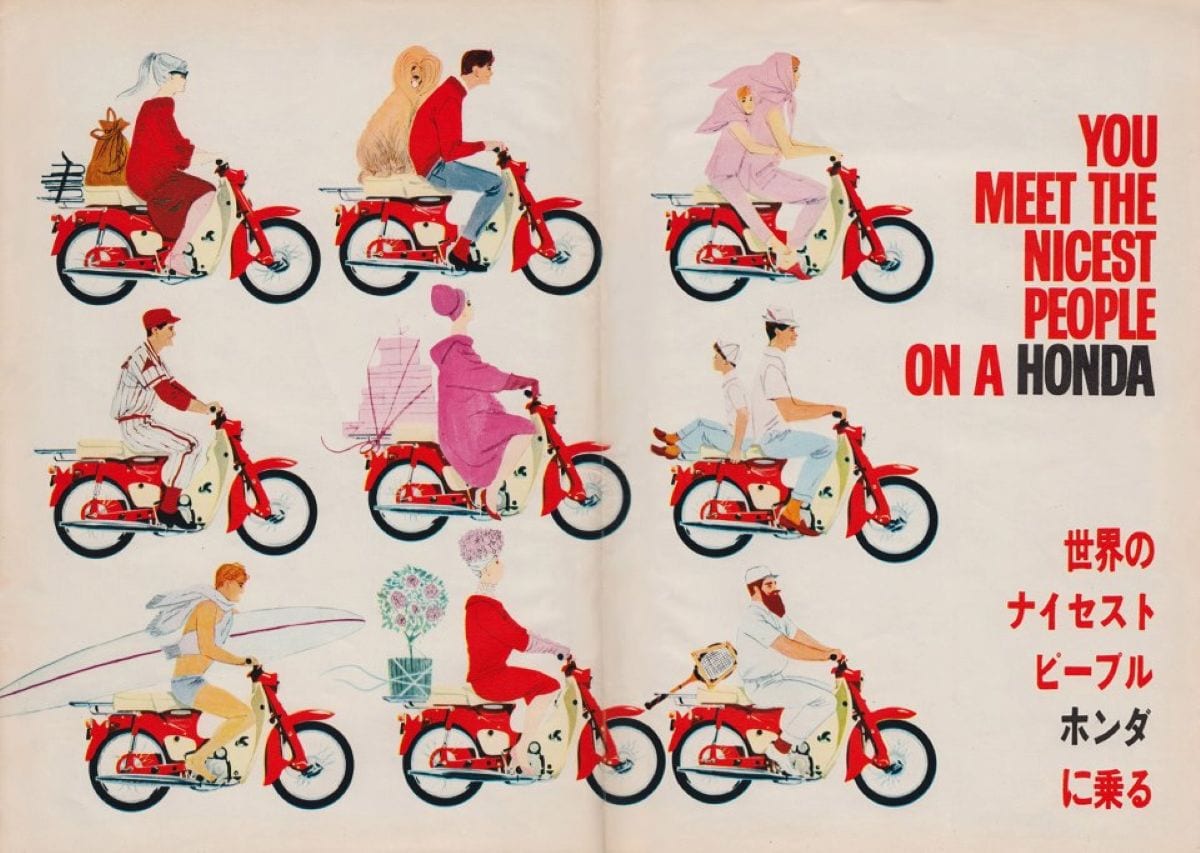
It was a calculated shift in framing. Honda didn’t try to argue that every motorcyclist was harmless. It just showed that the people riding its bikes were.
What made the campaign effective was its restraint. It didn’t try to glamorize speed or danger nor did it try to fight the existing image motorcycling already had. Instead, it simply showed people another way to look at it—one that felt a lot more approachable to regular folks.
The photos were warm and unthreatening. The riders looked like people you might actually know
—college kids, accountants, your next-door neighbor. Women showed up in the ads too, which was still pretty unusual for motorcycle advertising back then. The message came through clearly: this wasn’t about joining some subculture. It was just a way to get around with a little bit more freedom.
The results were significant. Honda’s sales grew quickly in the years that followed. More
importantly, the campaign changed what a lot of people thought about who actually belonged on a motorcycle. What once felt like it only belonged to a certain demographic started to seem more like an option your average middle-class guy might actually consider.
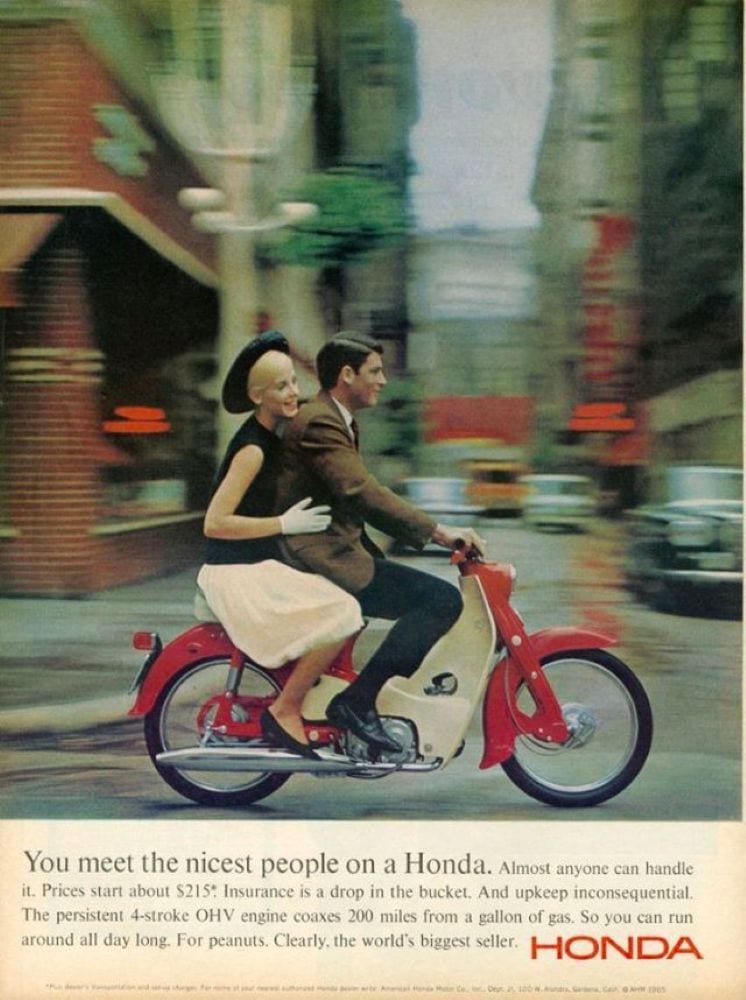
Honda’s slogan caught on. It became one of the most well-known lines in motorcycle advertising and ran for years. It also played a big part in making Honda the biggest name in the American market while the industry was still figuring itself out.
The deeper effect of the campaign was cultural. It didn’t just move units—it quietly rewrote part of the script around motorcycling. By showing motorcycles as something “normal,” Honda made it easier for its audience to imagine themselves riding one. Once that version was visible, it became harder to ignore.
Of course, the outlaw image never went away completely. It stuck around and found its own space. But the campaign showed that you could change how people saw something without trying to convince them otherwise. Sometimes the most effective move is to simply put a different picture in front of them.
Interestingly enough, Honda’s experience in the Philippines during the same period was quite different. Here, motorcycles—particularly small Japanese models—were largely embraced as practical and affordable transportation rather than carrying the rebellious image they had in the West. To this day, motorcycle use keeps growing steadily because bikes are generally perceived as reliable, economical, useful options for everyday mobility, without the need to overcome strong negative stereotypes.
In many ways, the “nicest people” campaign did something simple but lasting. It gave permission. It suggested that motorcycles weren’t only for those who wanted to stand apart from society. They could also belong to people who simply wanted to move through it on their own terms.
That shift in perception helped lay the groundwork for the more diverse motorcycle culture that exists today—one where the reasons for riding can be as varied as the people doing it.
View More Articles About: