Today I Learned: Toxic Lead Still Persists in Metro Manila Air, Study Finds
This is despite the phaseout of leaded gasoline decades ago.

Published on May 1, 2026
The last gallon of leaded gasoline was sold in Algeria in July 2021, marking the end of humanity's hand in spreading a toxic pollutant to the atmosphere in the last century. But the phaseout of the number one source of lead pollution, which started in the '70s, did not mean that the lead (chemical symbol Pb) problem has been solved. The world just started using other lead-containing products, with lead consumption even exceeding the levels of the leaded gasoline era.
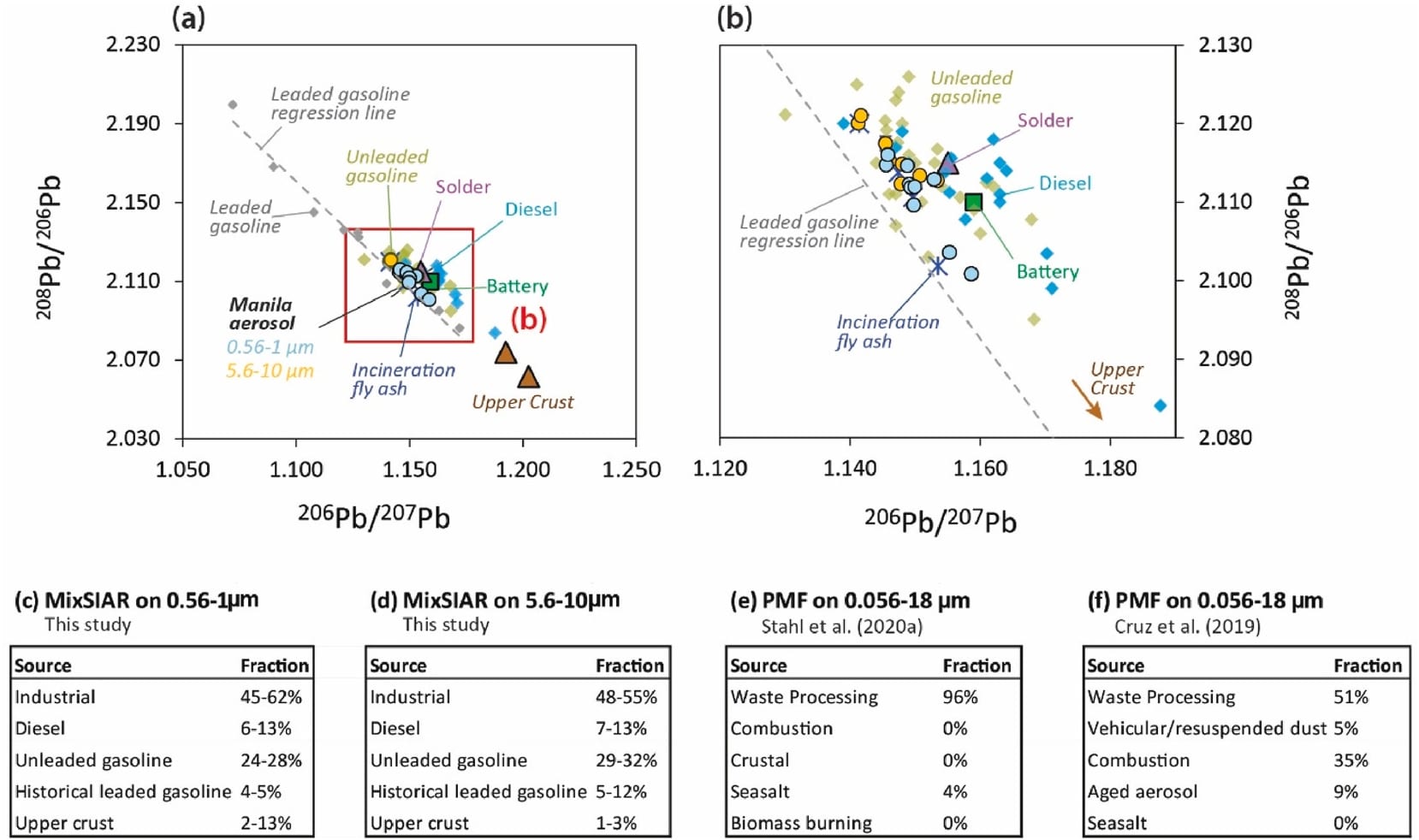
In a study published by an international team including researchers from the Ateneo de Manila University Department of Physics and the Manila Observatory, it was concluded that toxic lead still lingers in Metro Manila's air. Aerosol data from as far back as 2018 and 2019 were analyzed, pointing to modern industrial activities, fossil fuel combustion, and legacy pollution as key sources of lead pollution in the nation’s capital.
“While the data was collected in 2018 and 2019, the conclusions remain relevant today. This research highlights the importance of monitoring atmospheric lead to ensure that we do not undo the gains from phasing out leaded gasoline,” said Ateneo de Manila University physics professor and study co-author Dr. Maria Obiminda L. Cambaliza.
Industrial processes, such as e-waste recycling and smelting, account for up to 45 to 62 percent of atmospheric lead in Metro Manila's air. Then, 30 to 45 percent is contributed by fossil fuel use, particularly diesel and trace elements of Pb in unleaded gasoline.
It also doesn't help that even with seasonal shifts in wind patterns, pollution in Metro Manila's air persists and lingers due to local emissions. And with continuous urbanization and expansion to nearby regions, industries and energy systems reliant on fossil fuels build up as well.
Why is this a concern?
Lead is easily absorbed by the body. Even with relatively low amounts, prolonged exposure to lead can accumulate in our system, resulting in lead poisoning, primarily affecting the nervous system. Children younger than age six are especially vulnerable to lead poisoning, which can severely affect how a child's body grows and brain develops.
Aside from modern industrial processes that release lead into the air, day-to-day sources are also sometimes ignored: disposal of lead-acid batteries and e-waste, burning of coal, and even the use of lead paint and lead-containing products. Especially for low- and middle-income countries (LMIC) like the Philippines, environmental monitoring and lead use regulations are minimal.
In fact, this is the first time that a study presented the Pb isotopic fingerprinting of atmospheric aerosols in Metro Manila.
"Given that LMICs like the Philippines often lack regular monitoring of ambient Pb and human exposure, our findings make a strong case for strengthening environmental Pb surveillance, controlling emissions from informal recycling and combustion sources, and investing in tailpipe controls on vehicle emissions and waste management infrastructure. Isotopic monitoring can serve as a practical, powerful tool to guide evidence-based policies, protect vulnerable populations, and ensure that the global gains from phasing out leaded gasoline are not undone by unchecked new sources," the researchers recommended in policy making.
Mengli Chen, Jariya Kayee, Armin Sorooshian, Grace Betito, Paola Angela Bañaga, Rachel Braun, Maria Obiminda Cambaliza, Melliza Templonuevo Cruz, Alexander MacDonald, James Bernard Simpas, Connor Stahl, Iravati Ray, Reshmi Das, Zunya Wang, and Xianfeng Wang published their study, Lead sources detected in Manila’s air after the phase-out of leaded gasoline in February 2026 in the Atmospheric Environment journal.
ALSO READ:
Plastic Isn't the Only Problem, and Banning It Isn't the Solution
The Philippines' Air Quality Has Greatly Exceeded Safety Levels
View More Articles About: