Who Are the 10 New National Artists of the Philippines?
The roster includes Imelda Cajipe-Endaya, the first woman to be named a National Artist for Visual Arts.

Published on Sep 12, 2026
Every year since 1972, the Order of National Artists of the Philippines is conferred on individuals who have made an impact in their fields. This follows Section 15, Article XIV of the 1987 Constitution, which says that "arts and letters shall enjoy the patronage of the State, and that the State shall conserve, promote, and popularize the nation's historical and cultural heritage and resources, as well as artistic creations." The first award was posthumously conferred on Filipino painter Fernando Amorsolo, who was recognized for his "pioneering use of impressionistic technique" as well as his skill in the use of lighting and backlighting in his paintings, "significant not only in the development of Philippine art but also in the formation of Filipino notions of self and identity."
For 2025, through Proclamation No. 1414 signed by the President of the Philippines on September 1, 2026, 10 artists from various disciplines are conferred the Order of National Artists of the Philippines.
Gabriel P. Formoso (1915-1996)
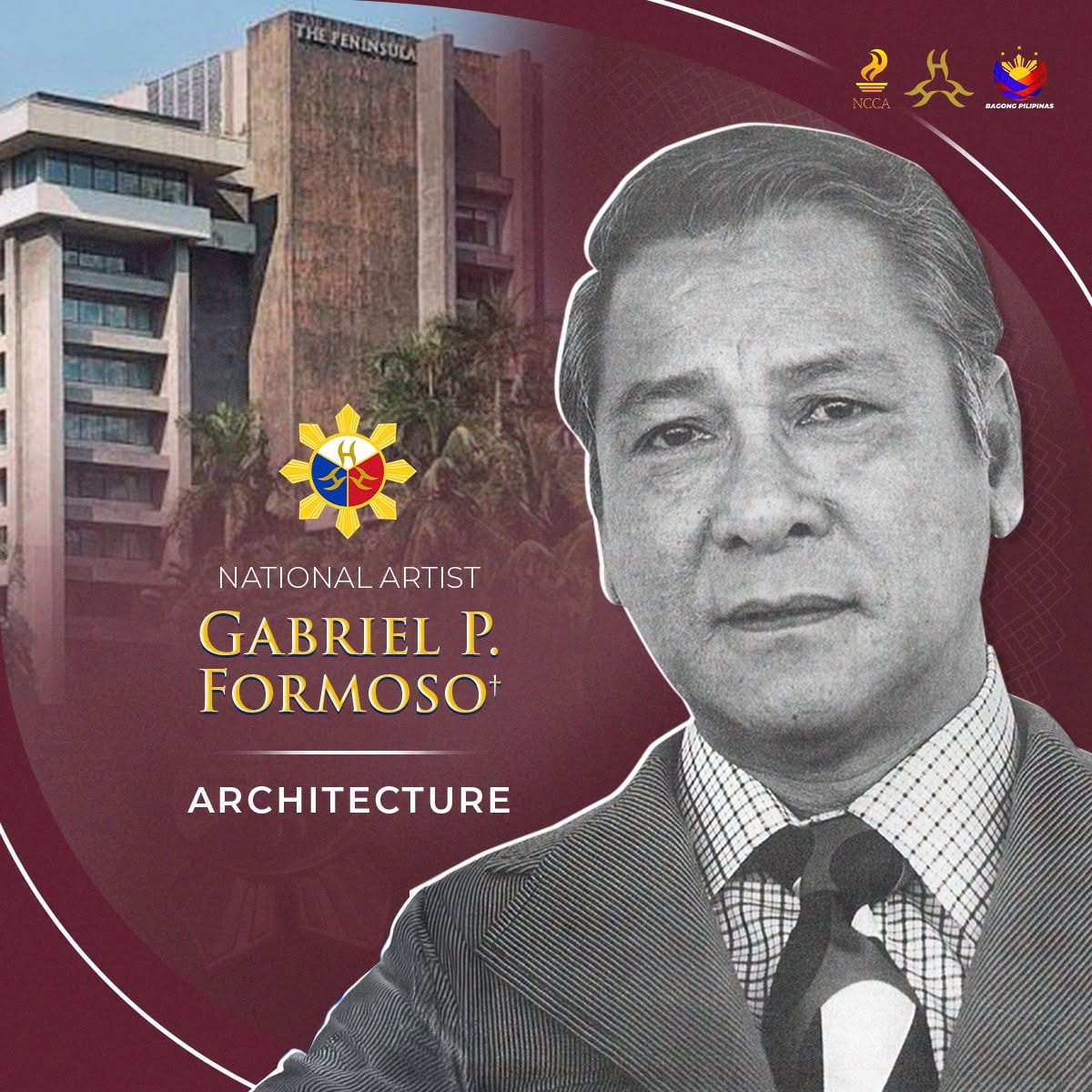
"Gabriel P. Formoso is recognized as a central figure in the development of postwar Philippine architecture and significantly contributed to the international recognition of Filipino architects through his advocacy for the architectural profession." —Proclamation No. 1414
Formoso, who was born in Makati, earned his high school education from Ateneo de Manila, then his Bachelor of Science degree in Architecture from the University of Santo Tomas. He became a licensed architect in 1939, then went on to become an apprentice at the offices of Architect Andres Luna De San Pedro and Architect Pablo Antonio Sr. He eventually partnered with Architect Luis Araneta at the start of his professional career. By 1973, he started his own firm, then called GF & Partners, now GFP Architects. Formoso was the preferred architect among the rich and famous in Forbes Park and Dasmariñas Village, and became the designer of the Asian Institute of Management Building, Doña Narcisa Building, Central Bank of the Philippines Building Complex on Roxas Boulevard, Manila, the BA-Lepanto Building in Paseo de Roxas, Makati City, and the Manila Garden Hotel (Now Dusit Thani), the Peninsula Manila, and the Regent of Manila.
Rafael "Nonoy" Catalino Froilan (b. 1950)
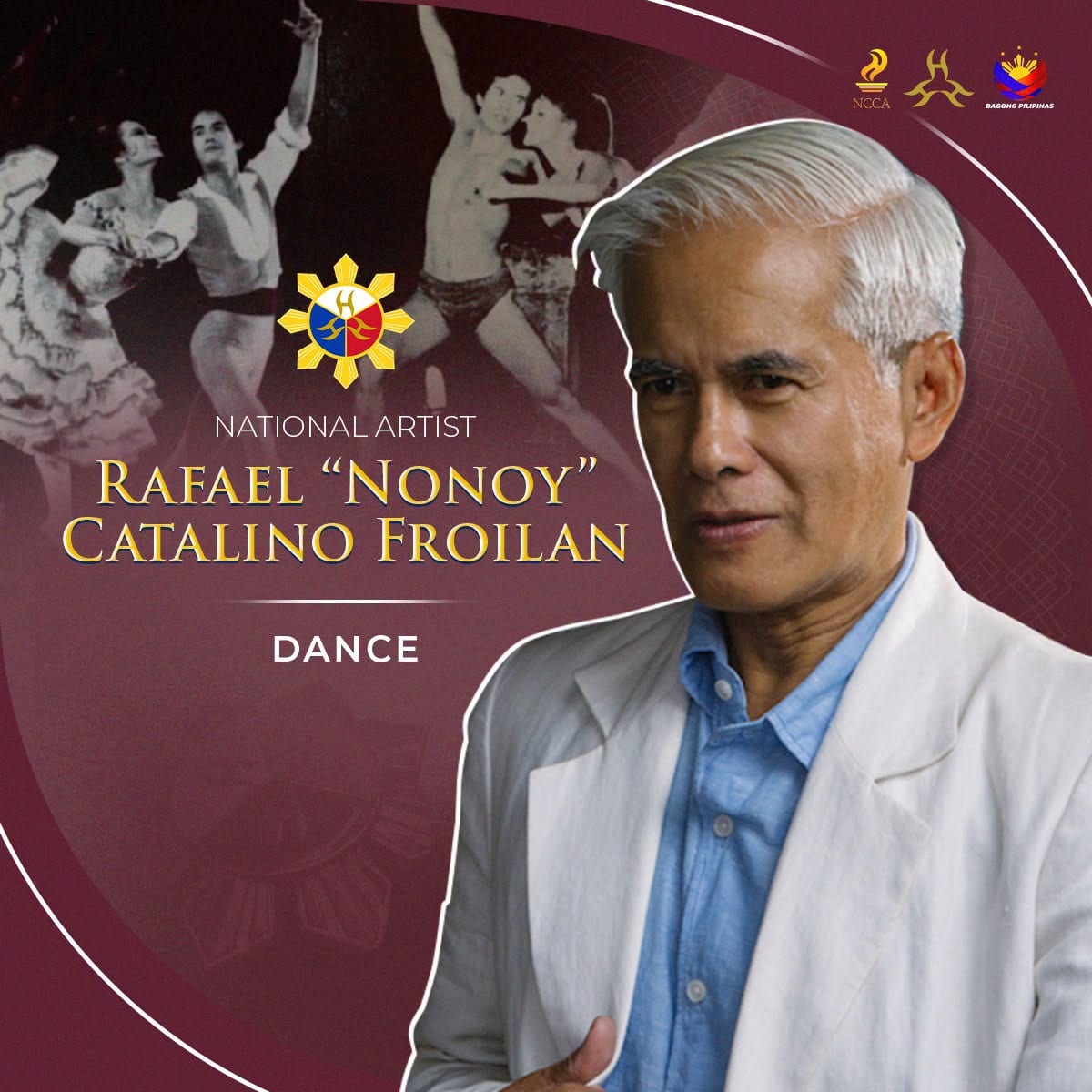
"The works and achievements of Rafael "Nonoy" Catalino Froilan in the field of dance have played a pivotal role in advancing the status of dance as a profession for Filipino men, thereby influencing and shaping new generations dancers and choreographers." —Proclamation No. 1414
Filipino dancer, choreographer, and actor Nonoy Froilan hails from Calbiga, Samar. While studying Business Administration at the University of the East, he joined the East Dance Troupe as a dancer from 1969 to 1970. He joined the Cultural Center of the Philippines Dance School in 1972 and became a principal dancer of Ballet Philippines by 1973. His repertoire includes major roles in Giselle, Swan Lake, Don Quixote, Carmen, Rama Hari, Itim Asu, Carmina Burana, and Ang Sultan, among many others. As a choreographer, he created original works for Ballet Philippines, Tanghalang Pilipino, and the Philippine High School for the Arts, and restaged both classical ballets and major Filipino dance works.
He is married to Edna Vida, an accomplished dancer and ballerina herself. Nonoy and Froilan posed for a statue by National Artist Napoleon Abueva at the Cultural Center of the Philippines called "Magkasintahan sa Sayaw at Sining."
Maria Beatriz "Patis" Fabella Pamintuan Tesoro (b. 1950)
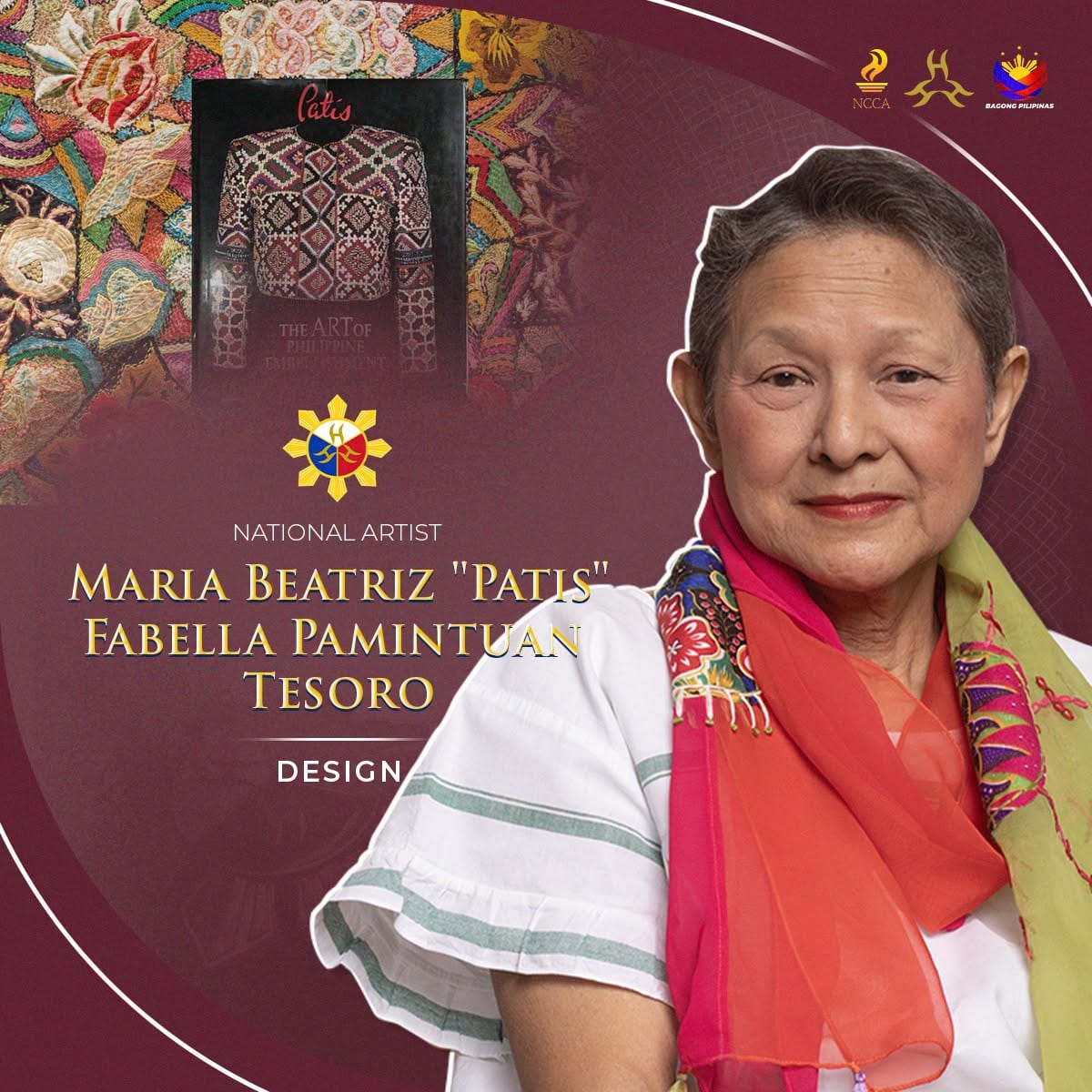
"Maria Beatriz "Patis" Fabella Pamintuan Tesoro is a pioneer of Filipiniana fashion, known for her innovative reinterpretations of the terno, Maria Clara gowns, and the barong Tagalog. Her work has preserved and enhanced the global visibility of Philippine fashion and textile heritage." —Proclamation No. 1414
Patis Tesoro, who's from Iloilo, grew up around her dressmaker mother's business, then learned embroidery while attending Assumption Iloilo. She studied art education at Marygrove College in Detroit and later attended Maryknoll College, now Miriam College, after returning to the Philippines. Her body of work has been presented in numerous local and international exhibitions and fashion shows in the Philippines, Europe, North America, and Asia. Notable publications documenting her work include The Art of Philippine Embellishment (1994), Postura (2008), and Patis Tesoro: Filipiniana Is Forever (2024).
Armando "Bing" Lao (1948–2024)
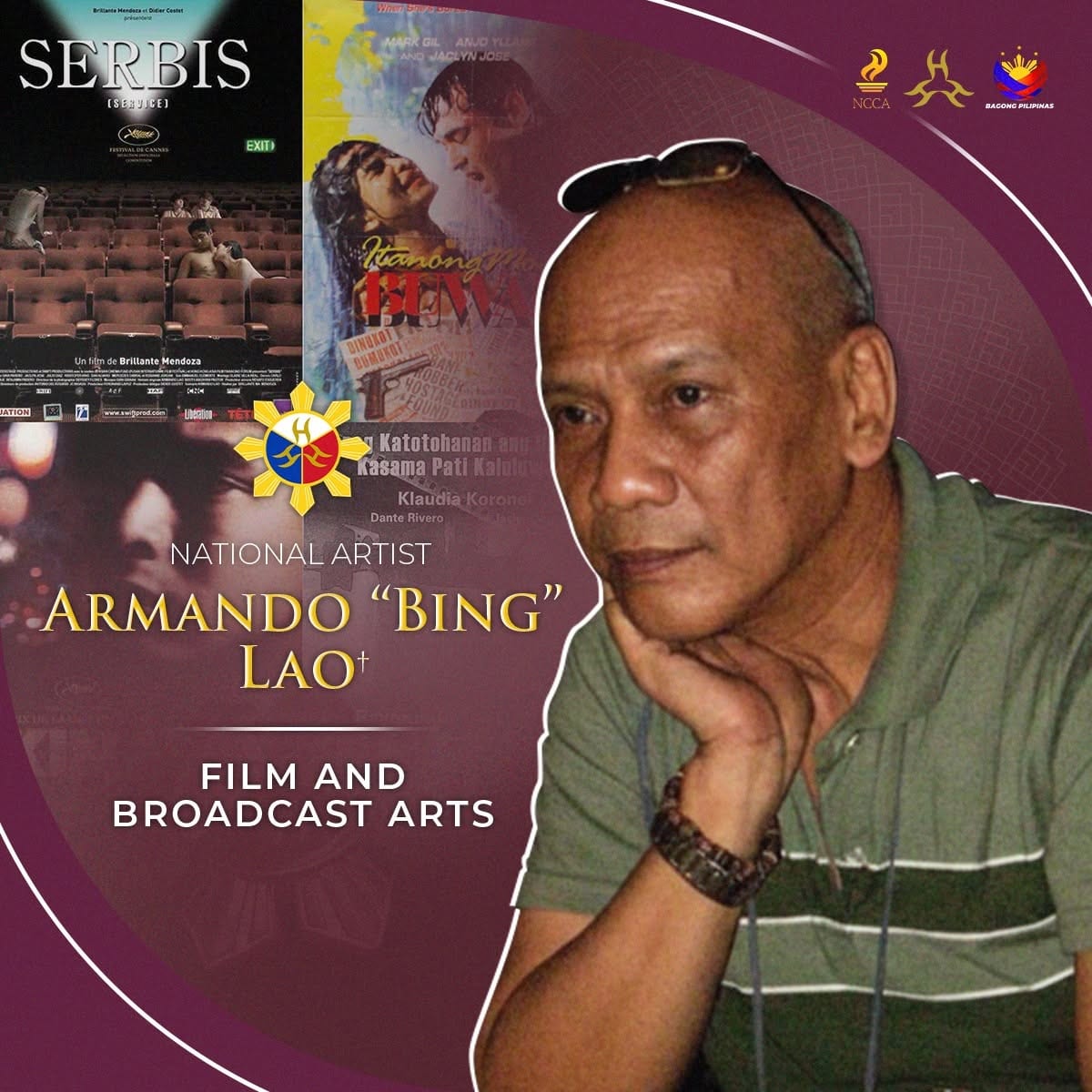
"Armando "Bing" Lao created and codified the influential "Found Story" approach, which emphasized stories discovered through fieldwork and immersion. This narrative paradigm revolutionized screenwriting in Philippine independent cinema." —Proclamation No. 1414
Filipino screenwriter and film director Bing Lao was best known for writing the screenplay for Brillante Mendoza's Kinatay, Jeffrey Jeturian's Kubrador and Pila Balde, and Chito S. Roño's Suntok sa Buwan. He also founded the Philippines' influential "Found Story Screenwriting Workshop."
Gregorio C. Brillantes (1932–2025)
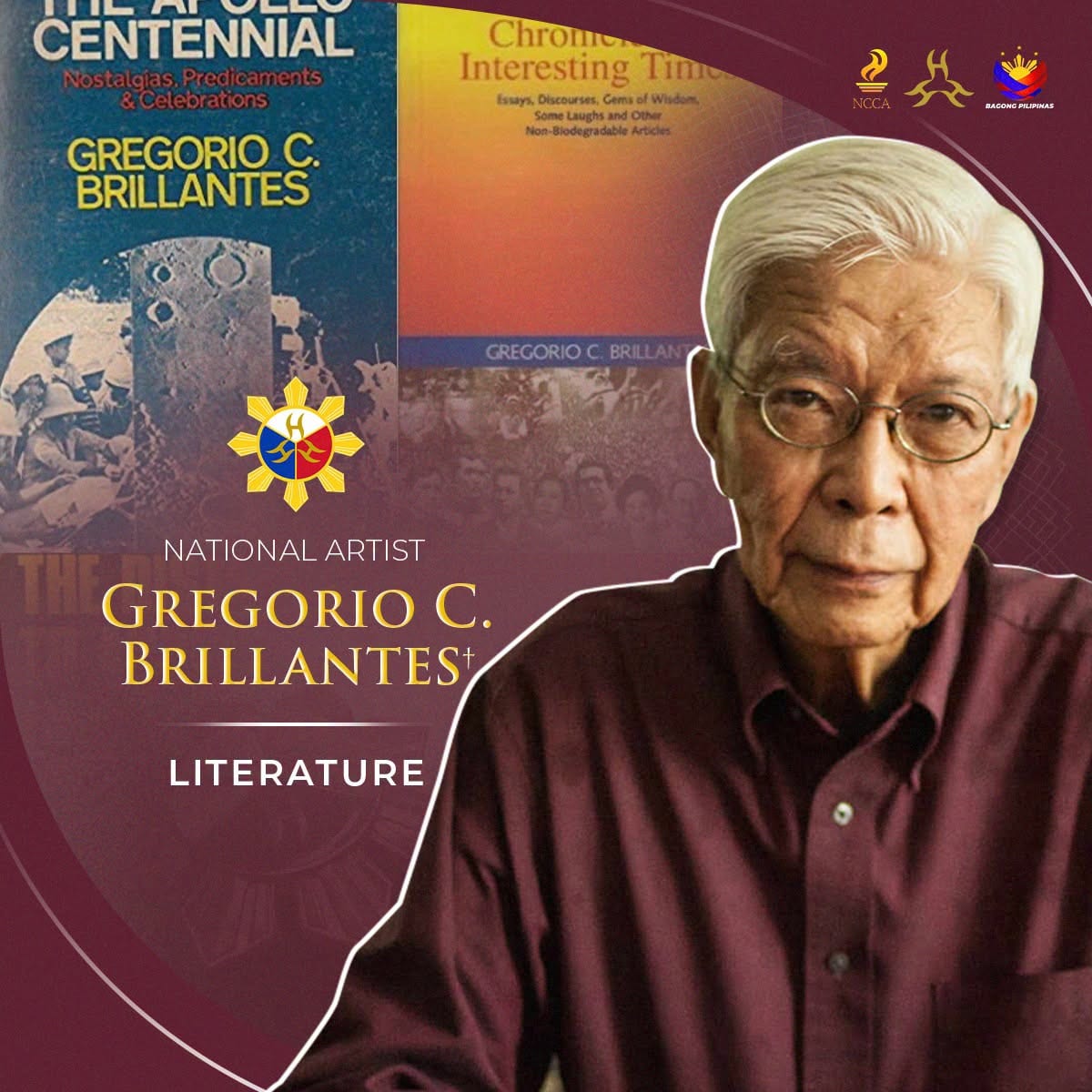
"Gregorio C. Brillantes is recognized as one of the most accomplished and influential Filipino writers in English, distinguished by his mastery of the classic short story form and his sustained engagement with Philippine social, cultural, and moral experiences." —Proclamation No. 1414
Brillantes, from Camiling, Tarlac, was best known for his English-language short stories, with his "The Apollo Centennial" (1980) considered a landmark work in Philippine science fiction. He studied Literature at Ateneo de Manila University, where he also later became a professor. He produced nearly 50 short stories and hundreds of essays over five decades. He received numerous awards during his lifetime, including the Free Press Literary Awards, the Cultural Center of the Philippines' Gawad CCP Para sa Sining, the Unyon ng mga Manunulat sa Pilipinas' Gawad Pambansang Alagad ni Balagtas, and the Ateneo De Manila University's Tanghal ng Lahi Award.
Nicanor G. Tiongson (b. 1946)
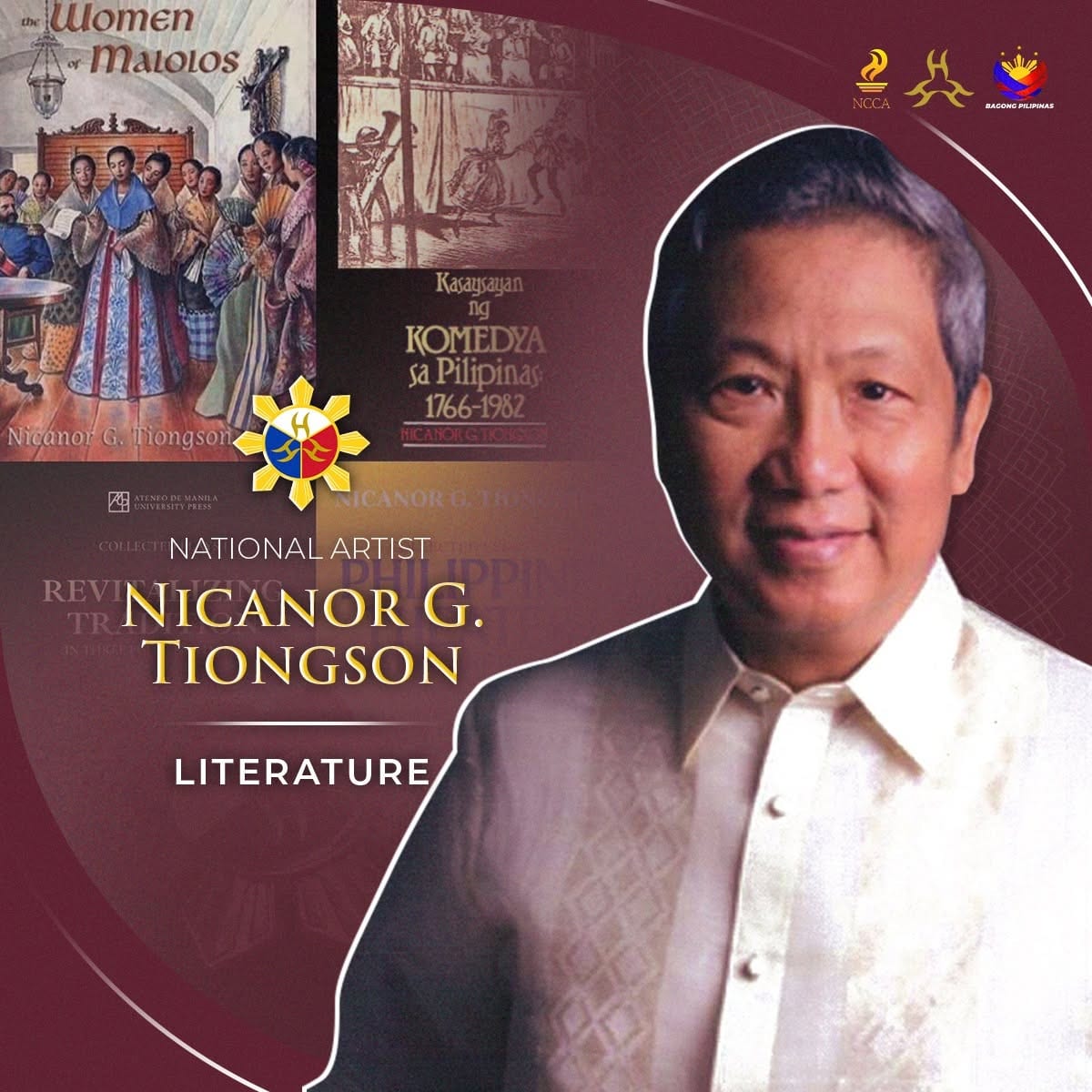
"As a writer, playwright, scholar, critic and cultural leader, the works of Nicanor G. Tiongson have profoundly shaped Philippine literature, theater and cultural studies. He adeptly reconciled traditional Philippine culture with modern artistic expression, revitalizing indigenous and Hispanic-influenced dramatic forms, particularly the sarsuwela, komedya, sinakulo and epic theater, while adapting them to contemporary concerns." —Proclamation No. 1414
Tiongson grew up in Malolos, Bulacan, where community performance traditions contributed to the cultural scholar's research and creative work. His scholarly career began in the late '60s, eventually publishing important works like Kasaysayan at Estetika ng Sinakulo at Ibang Dulang Panrelihiyon sa Malolos (1975) and Kasaysayan ng Komedya sa Pilipinas: 1766–1982 (1982). As a playwright, his landmark works include Realizing Rama (1998), a dance drama linking Philippine identity with Southeast Asian cultural roots; Labaw Donggon, Ang Banog ng Sanlibutan (2013), drawn from the Panay-Bukidnon epic; and Mabining Mandirigma (2015), a steampunk musical interrogating revolutionary history and collaboration.
He served as vice-president and artistic director of the Cultural Center of the Philippines (CCP) from 1986 to 1994 and as dean of the University of the Philippines College of Mass Communication from 2003 to 2006.
Alfredo S. Buenaventura (b. 1929)
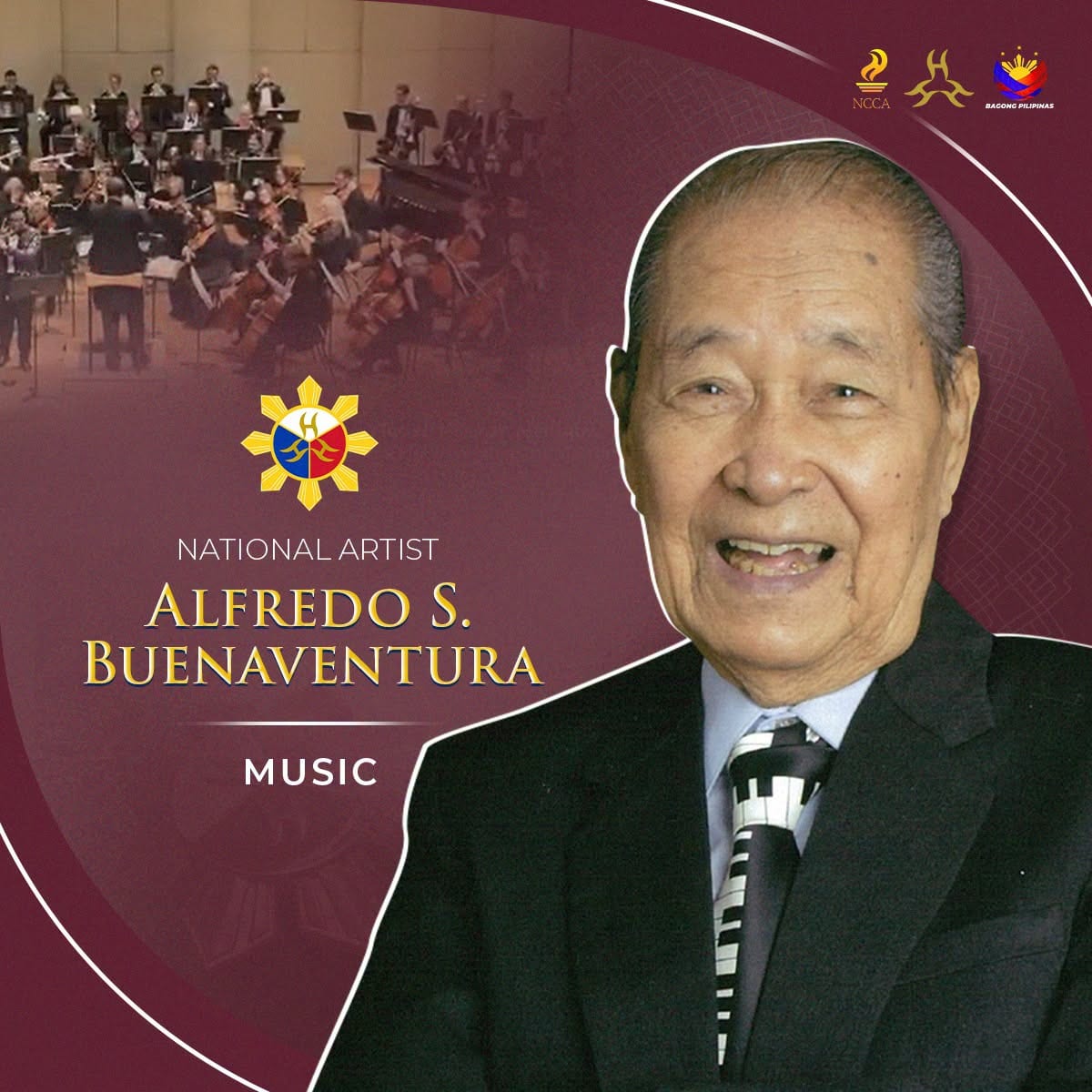
"The works of Alfredo S. Buenaventura have played a major role in shaping modern Philippine music through large-scale composition, education, and community-based musical practice. His dedicated work with rondalla music has a profound cultural impact, ensuring that the genre remains a vital force in enriching Filipino cultural life." —Proclamation No. 1414
Buenaventura, born in Bulacan and a graduate of the University of Santo Tomas, has composed over 1,000 works in different forms such as operas, choral works, and chamber music. Among his other known pieces are Bayan Kong Mahal, Mabuhay March, Maria Makiling, and Kayumanggi Symphony.
Teodoro L. Hilado (1938–2015)
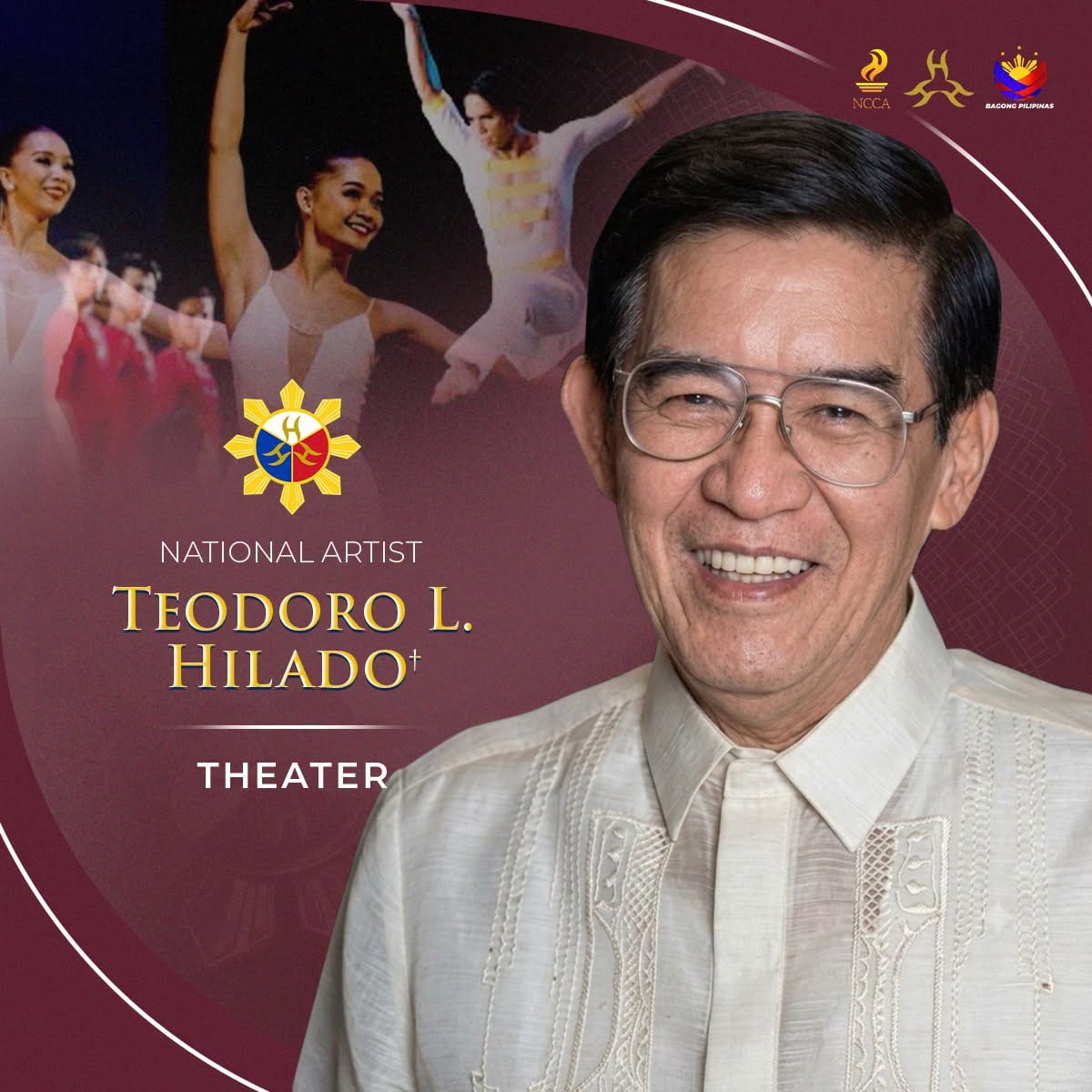
"Teodoro L. Hilado is recognized as the "Father of Theater Lighting in the Philippines," whose visionary approach elevated lighting from a purely functional element to a refined art form, combining technical mastery with artistic and aesthetic sensitivity." —Proclamation No. 1414
Silaynon lighting designer and technical director argued that lighting in the theater is more than illumination, but rather a balance of function, aesthetics, and even efficiency. He trained under Dom Bernardo “Bobby” Maria Perez and educated at Ateneo de Manila University.
Imelda Cajipe-Endaya (b. 1949)
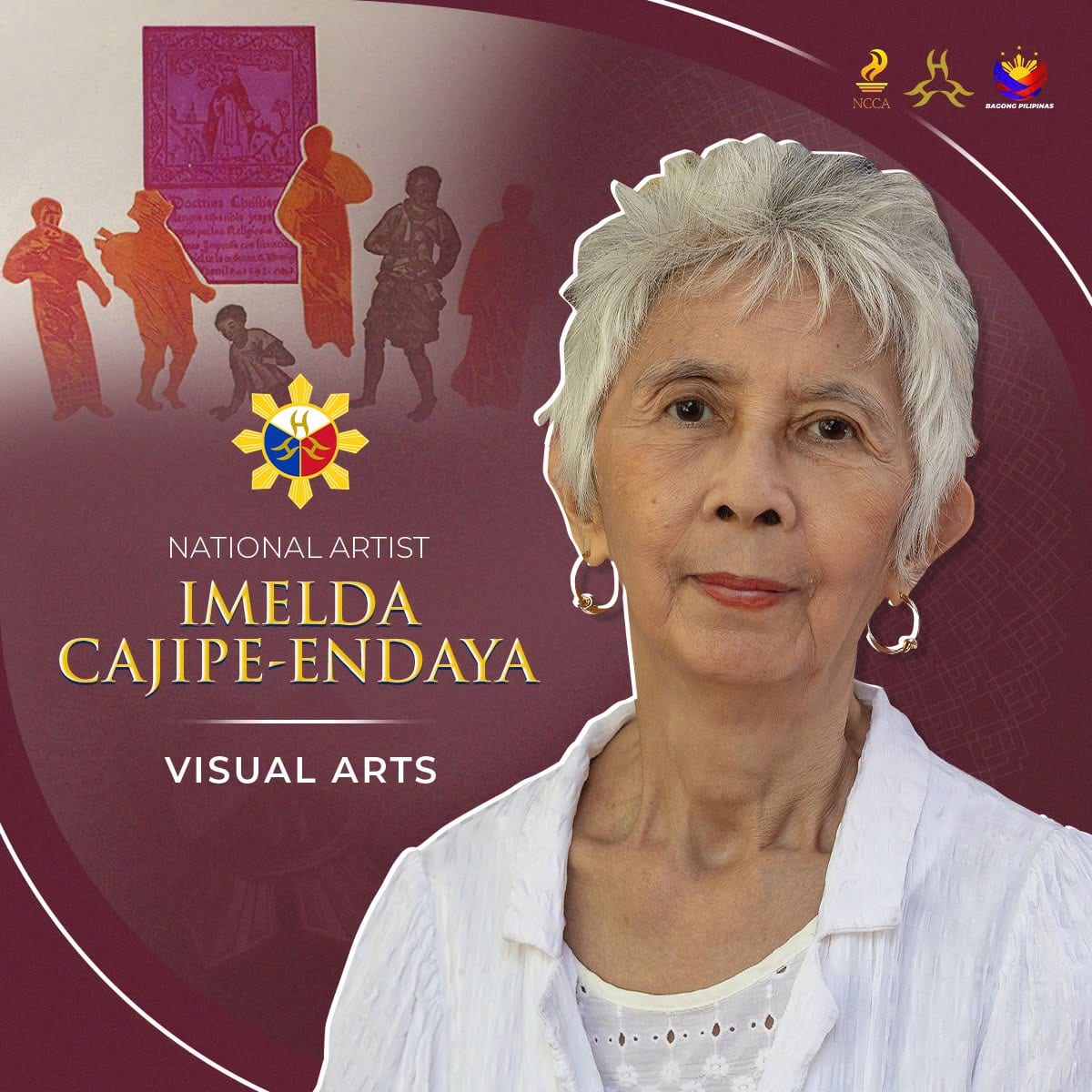
"As visual artist, writer, curator and cultural organizer, the works of Imelda Cajipe-Endaya have played a central role in shaping feminist discourse and socially engaged practices in Philippine contemporary art. Her foremost contribution to Philippine art lies in her pioneering work to advance the interests of women through her multifaceted practice, encompassing not only the concerns of women artists but also those of women from various sectors of society." —Proclamation No. 1414
Cajipe-Endaya trained in Fine Arts at the University of the Philippines Diliman. Her early works, including the print series Mga Ninuno (1976–1979), drew from historical sources such as nineteenth-century engravings, prayer books, and the Boxer Codex to interrogate layered constructions of Filipino identity. Over time, especially having started her career in the '70s amid political turmoil, women’s experiences became increasingly central to her practice, as she employed prints, paintings, assemblages, and installations to address labor, faith, resistance, and collective memory.
Nunelucio M. Alvarado (b. 1950)
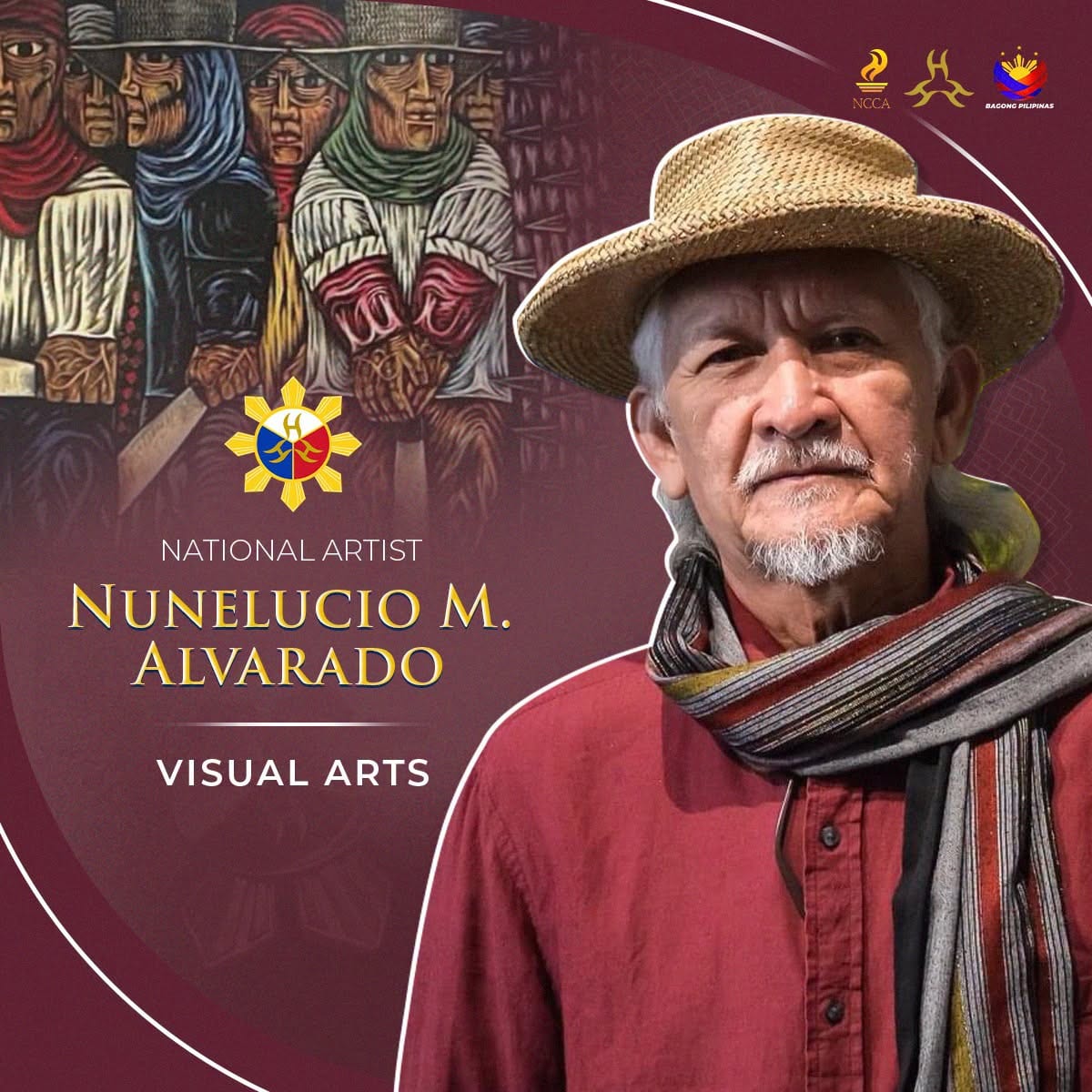
"Nunelucio M. Alvarado, referred to by the Sagaynons as "Master Nune," has made invaluable contributions to the development of socially engaged art in the Visayas, demonstrating a sustained commitment to regional representation, social critique and community development. His works affirm the centrality of Visayan experience within the national narrative of Philippine visual art." —Proclamation No. 1414
Born in 1950 in a farming community in Sagay City, Negros Occidental, Nunelucio Alvarado is known for his significant contributions to the art community, particularly in social activism through art. He is a founding member of Pamilya Pintura and the Black Artists of Asia, groups in the '80s that advocated social involvement among artists. He also founded the artist group Pintor Kulapol in 1988.
He has received numerous recognitions for his work, including the Thirteen Artists Awards of the Cultural Center of the Philippines (1992), a Grand Prize Award of the Philip Morris ASEAN Art Awards (1997 and 1999), the Patnubay ng Sining at Kalinangan sa Larangan ng Pintura by the City of Manila (2004), and Most Outstanding Negrense Visual Artist in 2010. Alvarado finished his bachelor’s degree in Advertising at the La Consolacion College School of Architecture and Fine Arts in Bacolod City in 1968 and went to Manila to pursue Fine Arts at the University of the Philippines the following year as a scholar of Purita Kalaw-Ledesma.
ALSO READ:
Get to Know All the National Artists of the Philippines
The Life and Career of Fernando Amorsolo, The Philippines' First National Artist
View More Articles About: