Why Comme des Garcons Refuses to Play the Fashion Rules
CDG opens a new chapter in Manila—and it's about more than a bigger store.
by Igi Talao
Published on Aug 6, 2026
Luxury fashion often measures success by scale. More stores. More markets. More growth. Comme des Garçons has always done the opposite.
The opening of its new Greenbelt store isn't simply an expansion of retail space. It's another step in a relationship that has grown deliberately between the Japanese fashion house and the Philippines for more than a decade.
For Adrian Joffe, president of Comme des Garçons International and Dover Street Market, Manila has always stood apart.
"When we first came here, I felt there was potential because of the individuality of the people," he tells Esquire Philippines. "They didn't seem to be following trends slavishly. They wanted to make up their own minds."
That independent spirit made the Philippines an interesting place for the brand long before luxury fashion became as accessible as it is today.
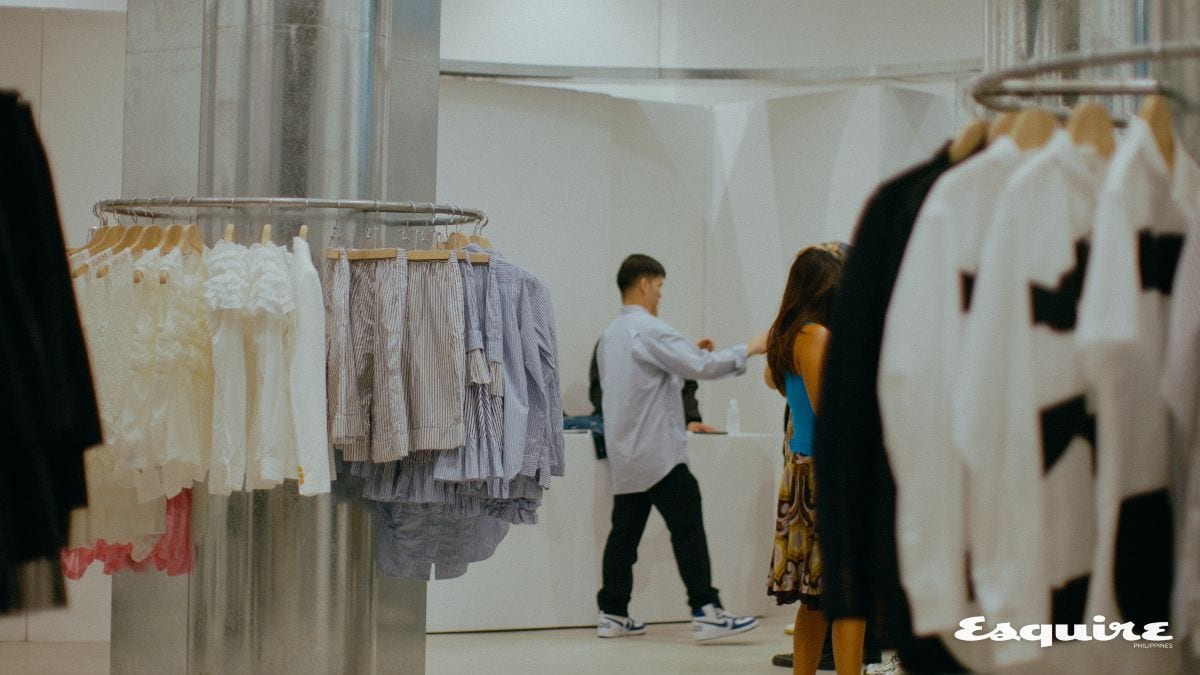
Protecting the Core Values
Rather than pursuing rapid expansion, Comme des Garçons has always preferred organic growth. Joffe credits the decision to open a larger Greenbelt store as much to timing as to trust—specifically in longtime local partner Jappy Gonzalez, who has guided the brand’s Philippine presence since 2012.
"We've always grown organically," Joffe says. "We don't have 20 percent growth targets every year."
The philosophy mirrors the one Rei Kawakubo established when she founded Comme des Garçons more than five decades ago. While fashion often moves according to trends and algorithms, the brand has built its identity around resisting convention.
"We have a very strong set of values that we've never wavered from," Joffe says. "My job is to protect those values."
That commitment extends beyond clothing. Asked how originality survives in an era dominated by social media and instant trends, Joffe points to conviction over novelty. Creativity, he says, comes from understanding those values deeply enough to express them in new ways rather than simply following what everyone else is doing.
"I still believe in the power of words," he says. "People writing and communicating through language."
The same thinking explains why physical retail remains essential to the Comme des Garçons universe.
While much of luxury shopping has moved online, Joffe believes stores still offer something the internet cannot. "Buying online is lonely," he says.
For him, the future of retail isn't about selling more products but creating experiences—spaces where people can touch, discover, and feel something unexpected. Even someone who leaves without making a purchase should leave with a new perspective.
"We hope they learn something they didn't know before," he says. "That they feel excited."
Fashion, in Joffe's view, becomes meaningful when it connects to culture, art, sociology, and everyday life rather than existing in isolation. "There should be no more borders," he says.
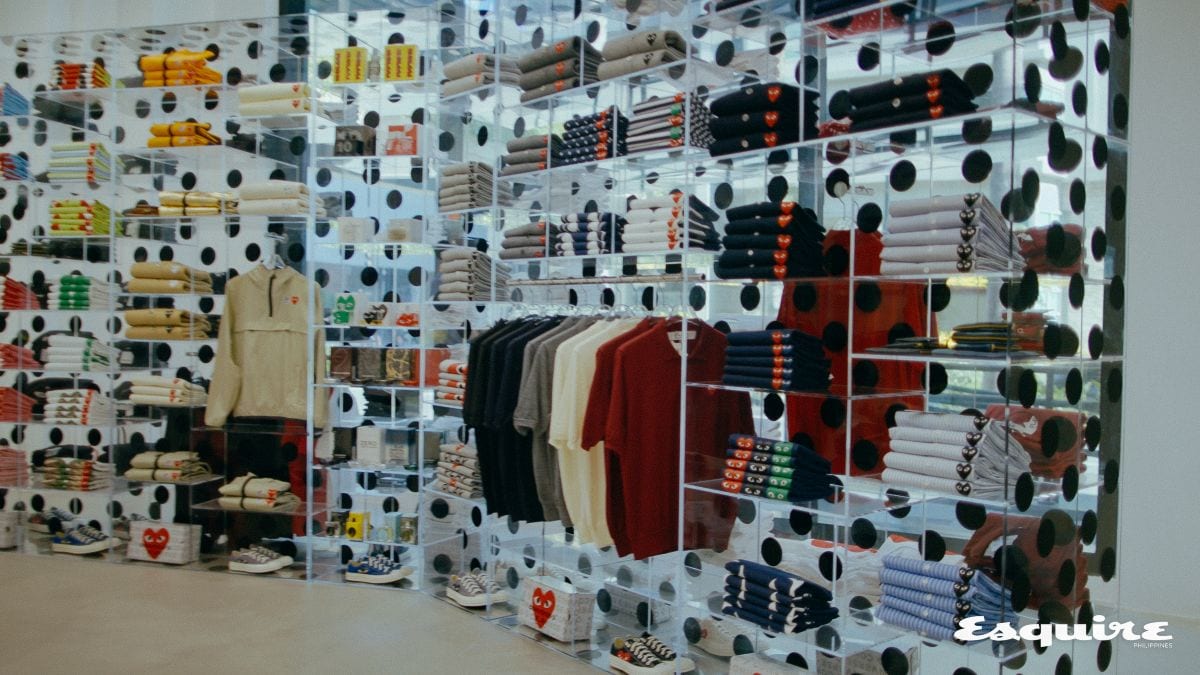
Emotion Over Aesthetics
That philosophy may have originated in Tokyo and evolved around the world, but in the Philippines, it has found someone who understands it instinctively.
For Gonzalez, Comme des Garçons appealed precisely because it chose to think independently.
"I don't think it stood outside the mainstream," he says. "I think it intended to be away from the mainstream.” That distinction is what made the partnership feel natural from the beginning.
If Joffe speaks about protecting the brand's values, Gonzalez speaks about recognizing them emotionally. An idea, he says, is only worth pursuing when it creates a genuine reaction.
"Something can be aesthetically interesting, but if it doesn't evoke emotion, then it's just curiosity. When something makes you feel something—whether it's anger, fear, or excitement—there's something bigger behind it."
That emotional connection also shapes how he thinks about dressing.
We asked whether there's one Comme des Garçons piece every newcomer should own, Gonzalez believes the answer depends entirely on the individual.
"If you open your mind, there's a Comme des Garçons piece for you. It just takes a little imagination," he says.
It's an approach that feels increasingly radical in an industry built around telling consumers what they should buy next.
Instead, Gonzalez advocates buying less—and buying better. In fact, the shirt he wore during our chat is around 15 years old. His trousers date back to the launch of Comme des Garçons Black in 2011. They're reminders that good clothing isn't defined by novelty but by longevity.
"I think every purchase I make now should last me a lifetime."
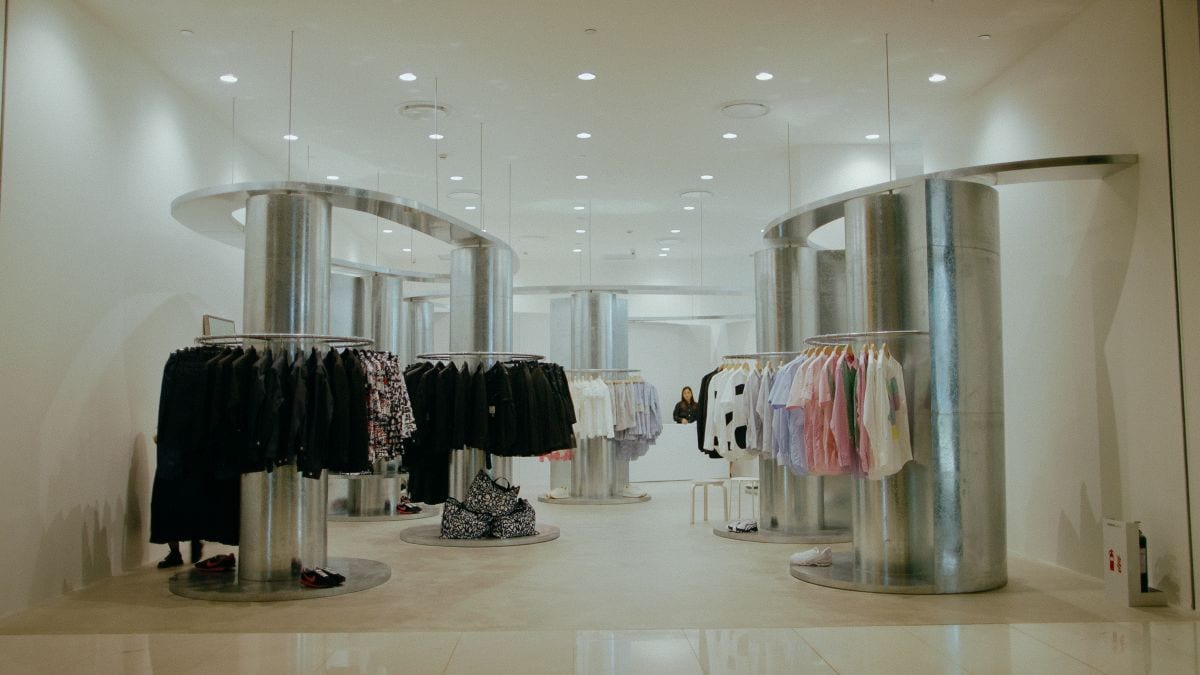
Fashion, after all, is cyclical. Silhouettes change. Trends return. What feels outdated today eventually finds its way back into relevance. "If you have a good piece, don't throw it," he advises.
Even as digital platforms continue to shape the way fashion is consumed, Gonzalez believes experience ultimately outweighs exposure.
"After years of all this, you begin to know what rises to the top. If you've trained your eye, you know what's real," he quips.
Taken together, Joffe and Gonzalez offer two perspectives on the same philosophy. One protects the global vision of Comme des Garçons. The other translates that vision for a Philippine audience that has increasingly embraced fashion not simply as luxury, but as a form of independent thinking.
The new Greenbelt store is, of course, a place to shop. But more importantly, it's a place to discover. To question. To slow down. To encounter ideas that don't ask to be understood immediately.
Because if Comme des Garçons has spent more than half a century proving anything, it's that the most enduring fashion isn't the kind that follows the moment. It's the kind that changes the way we see it.
ALSO READ
Stop Sleeping on the Cartier Roadster
How a Belgian Designer Pays Homage to His Filipino Roots
View More Articles About: