The Fortunate Son and the Return of the Well-Lived Life
All your curated menswear needs in one place, and in one box monthly.

by Alvin Uy
Published on Jun 14, 2026
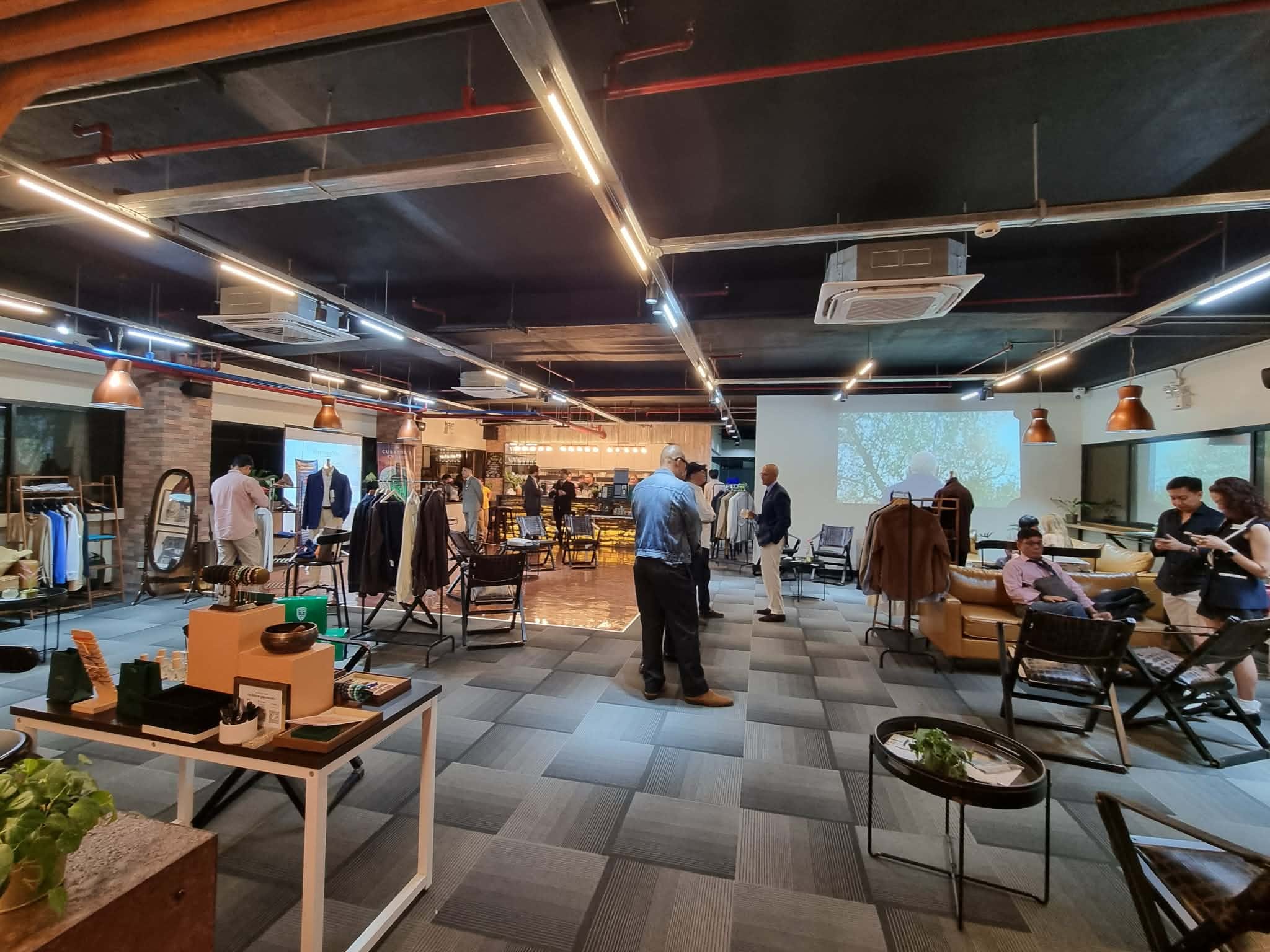
For one evening in May, a quiet corner of Makati seemed to travel back in time. Inside Flat Planet Workspace, an office-turned-creative space inside Salcedo Village carried an atmosphere that long-time Makati residents would instantly recognize.
Before the glass towers and corporate uniformity, Salcedo was a neighborhood of hidden ateliers, private clubs, intimate galleries, and conversations that stretched long into the evening. Its old-world charm set the perfect backdrop for The World of St. James, a gathering of sorts organized by The Fortunate Son that celebrated not only menswear, but the larger pursuit of a curated life.
The creative menswear space in question
Some of the world-class fabrics on display
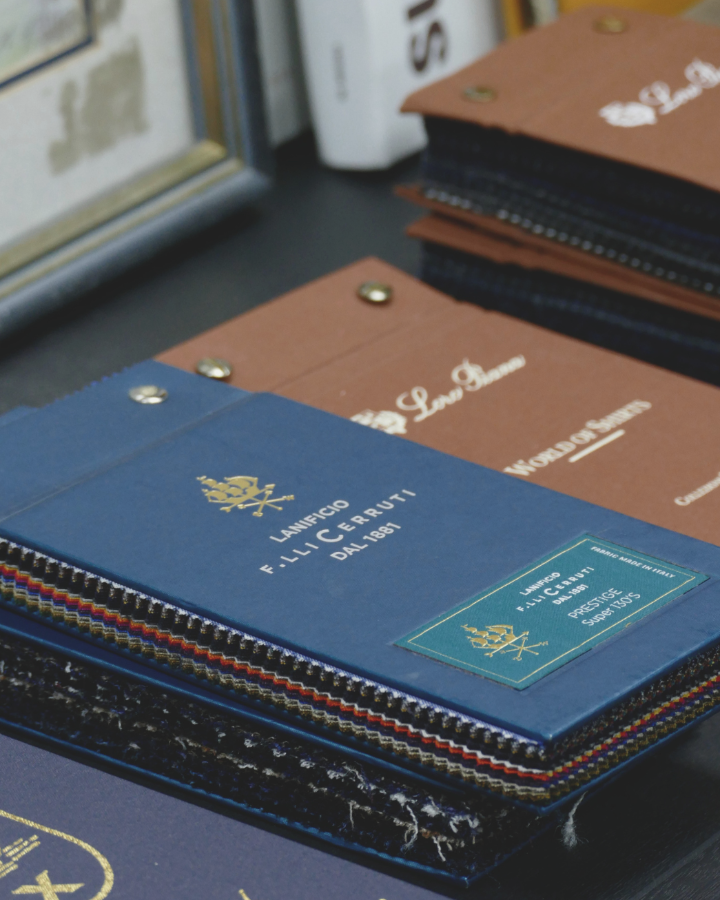
The evening resembled a traditional trunk show on the surface. There were fabrics to touch, garments to inspect, and style enthusiasts exchanging opinions on tailoring.
The evening marked the opening of St. James' new appointment space in Manila, introducing guests to the Scandinavian menswear label founded in Oslo by Filipino creative director AJ Dee. Inspired by the long twilight hours of Nordic summers, St. James presents a distinctly Scandinavian approach to tailoring with its clean lines, restrained elegance, and purposeful design. Rather than relying on bold statements, the brand's made-to-measure garments emphasize proportion, comfort, and quiet confidence. Its signature House Cut draws inspiration from the curves of Viking ships and the contours of Nordic fjords, translating those forms into lapels and silhouettes designed for Southeast Asian movement and tropical climates.
Dee started the brand right before the pandemic, after working at a made-to-measure tailor when he moved to Oslo in 2016. The founding logic was straightforward: Scandinavian men in suits as an appreciation for restraint, a refusal to shout in an era of loud, fast fashion. "The suiting speaks with intention," he said. "Structured yet relaxed." St. James recently formalized its Manila presence through a partnership with Tiño, a bespoke tailoring store in Makati, giving the label a local address for made-to-measure appointments. The garments themselves are produced in partnership with a sartorial workshop trusted by global brands working to Italian and French standards, not in the Philippines, but calibrated for them. Dee works closely with local tailors to adapt the cuts for Manila's climate, which is the practical side of what the brand markets under the tagline The Orient's Midnight Sun: suiting built for the tropics, designed in the cold.
What makes St. James particularly relevant to the Philippine market is its refusal to treat tailoring as formalwear alone. The brand's philosophy embraces the idea that a well-made jacket or suit should function naturally within daily life.
It is Scandinavian minimalism adapted for Manila, a refreshing alternative to the overly structured, heavily padded tailoring that often dominates traditional menswear.
The tailoring was the entry point. The real topic of the evening was The Fortunate Son.
The Fortunate Son is the premier menswear monthly subscription box that passes on as a curation service.
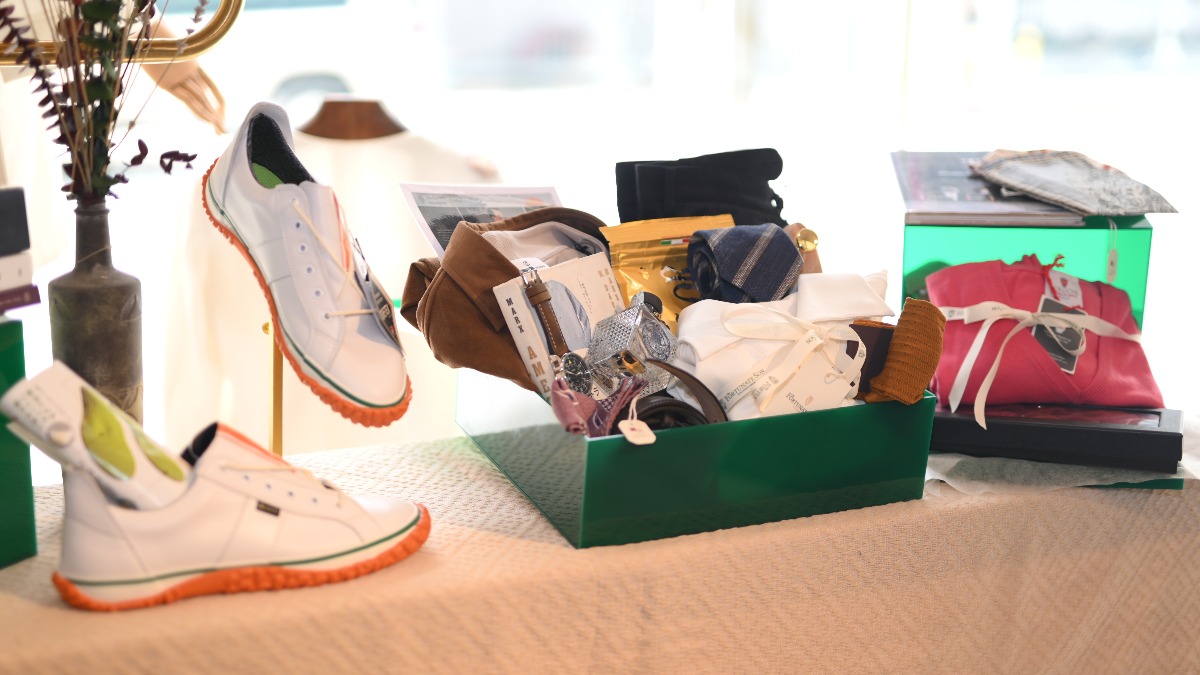
The Fortunate Son is a new lifestyle platform that curates its members’ interests, wardrobes, and pursuits through a highly personalized subscription experience. Instead of immediately shipping products, it starts with an in-depth onboarding process to learn about a member's tastes, lifestyle, and aspirations. It’s a quarterly delivery of curated apparel, accessories, footwear, and lifestyle items from an expanding roster of international and local partners. Members choose from tiers called Pioneer, Heirloom, and Legacy, each one signifying an ever-deeper plunge into a realm of craftsmanship and refinement. It’s not quite like a subscription box, more like having your own personal curator.
A particularly compelling partner on the platform is Singapore-based Colony Clothing, a menswear label started by Kozo Kawamura that has quietly built a cult following across Asia. Colony has a loyal following for a reason—the brand combines Japanese craftsmanship with mid-century American and European influences to create what it calls “New Colonial Style” clothing for men who travel between cities, climates, and cultures. Guests at the event were able to see Colony’s signature safari jackets, overshirts, tailored trousers, and relaxed tailoring.
Much of the focus was on the brand’s use of Ultrasuede, a material that is appreciated for its softness, durability, and adaptability. In a climate that ranges from humid afternoons to heavily air-conditioned interiors, the fabric’s versatility makes sense. It’s part of Colony’s larger philosophy: clothes that work as well as they look.
And then there was the food.
Kawamura has over 30 years of menswear knowledge spanning vintage American fashion, European vintage clothing, and innovative modern fabrication. At the trunk show, that range showed up in pieces like Japanese paper coveralls alongside the safari jackets and overshirts, stalwart pieces that work across functions without trying too hard. 'I have never seen a material as functional as this one while also being so luxurious and elegant,' he said of Ultrasuede.
Another side of The Fortunate Son’s vision was MONO, a collection of artisanal food and beverage products from family producers throughout Italy. Laudemio Frescobaldi olive oil, Tirrena Pasta, Acetaia La Bonissima balsamic vinegar, Mokaflor coffee, and Captain Santor's Southern Sea Gin. They all come from a family producer in Italy, the kind of operation that won’t scale because they don’t want to.
It was also the case with other partners, including Japanese footwear manufacturer Spingle and sock specialist Nishiguchi Kutsushita. Brands that may not be on the consumer's radar often fall into categories that share a common commitment to craftsmanship, longevity, and design.
Products on display included tailoring, footwear, and cured vinegar. The organizing logic was not a category. He had a bent for things made with care and meant to last.
Whether the subscription model of The Fortunate Son will survive contact with the Philippine market is another matter. What it got right that night was the room. The right room, the right partners, the right pace. It turns out Old Makati is still good at this sort of thing.
View More Articles About: