St. James Has Jackets You Can Hang Your Hat On
Esquire Philippines sat down with St. James Founder AJ Dee on his latest workwear jackets, and what makes something actually timeless.
by JV Ordoñez
Published on Sep 23, 2026
It's not hard to see why Filipino men are gravitating toward the style handbooks and archetypes of yesteryear in an age where individuality and self-expression are predicated on fleeting fads manufactured on vertical scrolling platforms like the dreaded TikTok and the Instagram Reel sections of the virtual world.
St. James menswear founder and a lifelong classic menswear enthusiast, AJ Dee, was among those who set the blueprint for Filipino men who mean business in all things sartorial.
He was the prototypical menswear "influencer" before the term was even conceptualized through his standalone blog The Filo Dapper circa 2015-2016, and even before that during the era of the now mythical Lookbook.nu.
Dee started the St. James brand right before the pandemic after working at a made-to-measure tailor when he moved to Oslo in 2016.
Last year, we took a look at how they make these sartorial grails more accessible to Filipinos seeking to revamp their wardrobe into something more upscale and dapper.
The cuts from Scandinavian-inspired brands pay homage to the stillness of fjords and the gentle contour of Nordic valleys, a departure from the conventional sharp and aggressive angles found on most sartorial wear.
The Oslo-based menswear brand held a trunk show earlier this month on their latest ideas come to life, namely a special collaboration with those from Thai heritage shoemaker Three and its latest jackets of varying shapes and silhouettes that pay homage to the fashion that defined generations and continue to inspire contemporary styles.
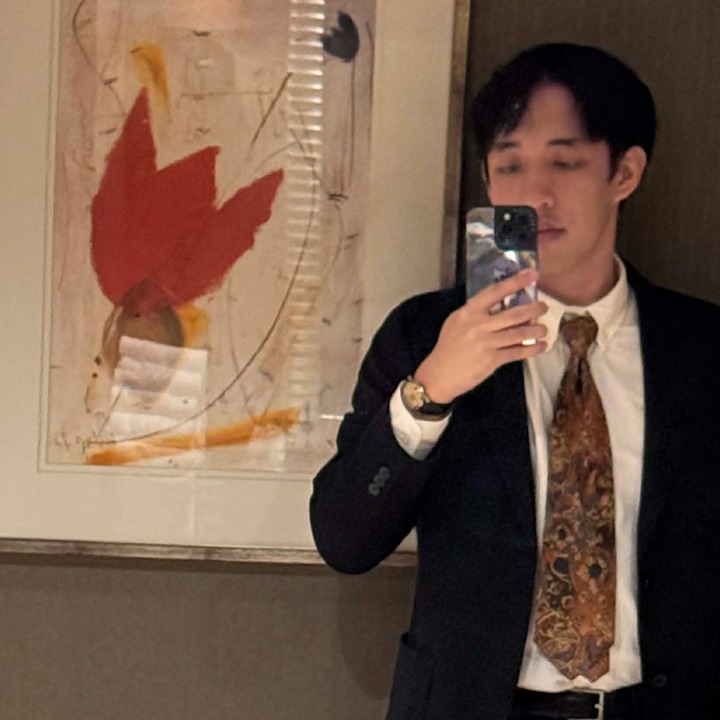
One such standout piece from their latest digs is the chore jacket that hinges on bridging the best of both worlds of relaxed and dapper.
"You have these two big pockets on the hip. Instead of buttons, which are usually visible in menswear garments, I used a zipper to make it more relaxed and casual. And to add to the casualness, I added an action back for mobility if you're moving. That's why it's a chore jacket, for when you're doing things. It's something you can wear, but not only for functionality, stylish as well," Dee said in an interview.
It's not really hard to imagine why all things workwear and the ruggedness and even the commodification of brands like Carhartt (which was originally intended just for blue-collar work rather than paying a pretty penny for work jackets) and the rise of the Japanese interpretation of American casual fashion with Amekaji.
Dee says it wasn't necessarily the trend that led him toward this style ethos, but rather just his fascination with how the most stylish men dressed in the 1950s.
"Now you see in all the other brands, they're all crop jackets, because they're high-waisted. It's meant for high-waisted trousers; if you have low-waist trousers, this would look off," the style aficionado said.
"But if you're into trends, or even classics, because high-waisted isn't because of trends, it's a classic thing; it would always work. My inspiration isn't because the trend goes that direction; it's because it's very common in the 50s."
St. James Founder AJ Dee wearing a "chore" jacket from his latest collection
.jpg)
Belgian Loafers Part of the FiloDapper x Three collection, which are available on a ready-to-wear or made-to-measure basis,
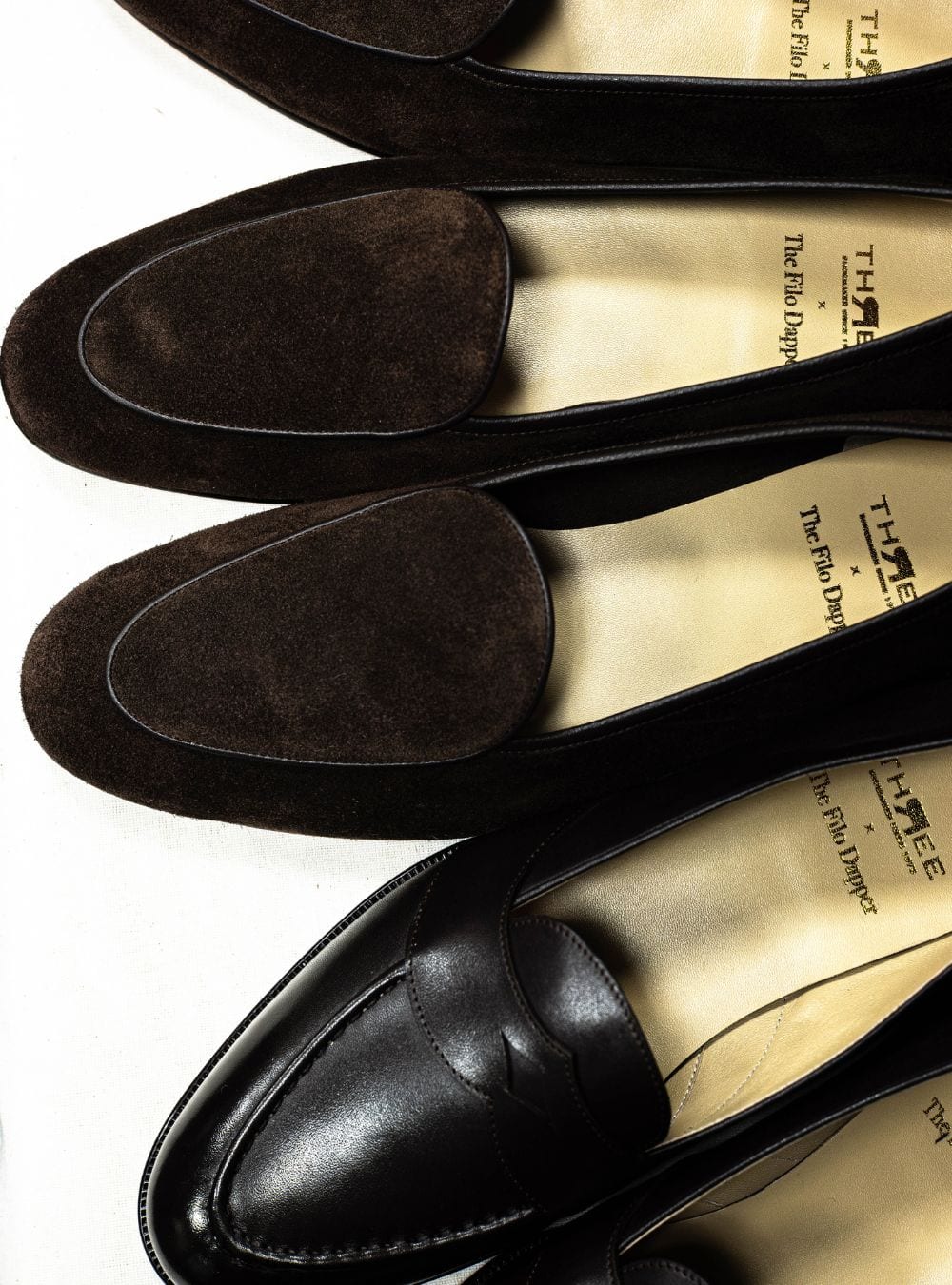
On the loafer side of things that we often find the need to elucidate on, Dee's collaboration with the Thai heritage bespoke brand Three has put together Ivy-style loafers that take in to account the often narrower feet of Asian clientele, with a trademark Nordic reference via a curved strap.
"The inspiration for the loafers, you have the penny. Normally penny loafers are a bit higher. I made this like an Ivy style, so it's a lower bump and shorter. You get to show more of the sock, and then there's a full strap."
"Since I'm a fan of the Belgian loafer, it has to be similar also, but the last is a bit different, and it's a bit lower. What I like about this one is even though it's ready to wear, you get a little bit of the fiddle waist."
He also explained why Japanese shoes are touted as among the best in the world because of how sleek the designs were required to be to cater to the narrowness and slimness of an Asian customer.
A snapshot of the new jackets
.jpg)
The Importance of Tradition and Classics
Oslo and Manila clearly have vastly different climates and client bases, which is why Dee finds it very exciting to craft pieces on account of what people seek in both markets.
"This is technically the first launch for the Filipino or Asian market," he said.
"Here, I feel like there are much fewer people into menswear. But it seems like it's growing more and more; we get more options. Here, it's still heavy into fashion, fast fashion. It's nice to incorporate classic menswear with inspiration and to have a background, because people would think these things are really new, but they have a history. It's a thing from the past."
There is always a reason behind every design and a reverence toward eras that molded a person's taste, the menswear connosieur turned designer pinpointed.
Recently, he's been fixated on the 1920s and 1950s during the days of Fred Astaire. Think of those suave Hollywood trousers that springboarded many other lookbooks and trends that endure to this day.
What the Modern Filipino Man Ought to Do to Acquire Taste
.jpg)
Dee zeroed in on a sensation that lets you know you're on your way to developing a sense of style at any age: discovering the marriage of confidence and comfort woven into the outfits you put together.
For the menswear maestro's rather unconventional piece of advice that now seems obvious to those getting into things beyond off-the-rack options, he left us with this:
"I always believe in knowing the tradition and the classics because once you know those foundations, it's easier to really find your own style. It's not a style if you just keep going for the latest trends; there's nothing special about it, it's just the brand's way to sell their stuff.
"But if you're able to really focus on the history and the functionality, the reason why those designs were made, then you get to educate people too. And they learn more, and they can build up their own style from that."
Esquire PH's resident music scribe, wristwatch disciple, and essayist fluent in niche internet subcultures and Philippine politics.