Mitsubishi's Outlander PHEV Finally Brings Its Plug-In Pedigree to the Philippines
Ten years, 60-plus countries, 310,000 units sold, and Mitsubishi's PHEV tech only now makes it to the Manila.

by Alvin Uy
Published on Aug 23, 2026
For Mitsubishi Motors Philippines Corporation (MMPC), the all-new Outlander PHEV isn't just another SUV joining an increasingly electrified market. It's the local debut of a technology the company has spent decades refining, one that helped define Mitsubishi as one of electrification's earliest pioneers.
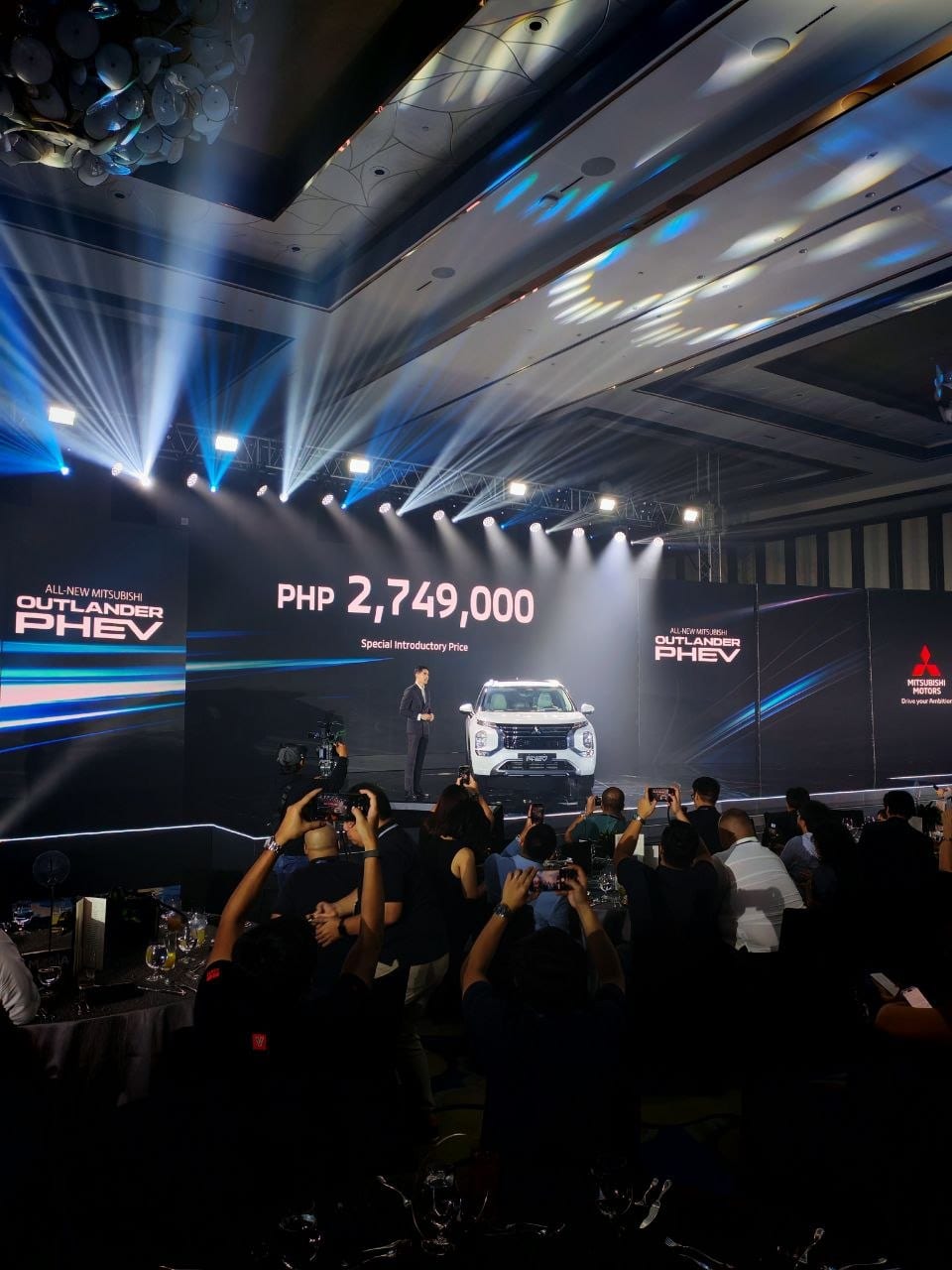
Introduced in the Philippines on August 20, the Outlander PHEV is MMPC's new SUV flagship and the brand's first plug-in hybrid in the local market. It's priced at P2.848 million, with an introductory rate of P2.749 million for reservations and releases between August 20 and September 30.
Filipino consumers are moving past conventional gasoline vehicles at an accelerating clip. Plug-in hybrids still make up a small slice of the market, but that slice is growing fast enough to signal where interest is headed. Mitsubishi may be a late arrival to the Philippine PHEV segment, but it's entering with far more experience than that timing suggests.
The company was tinkering with electric propulsion long before electrification became an industry buzzword. In 2009, it launched the i-MiEV, which Mitsubishi describes as the world's first mass-produced modern EV from a major automaker. That experience fed directly into the Outlander PHEV four years later.
Mitsubishi's claim to PHEV pioneering is unusually concrete. The original Outlander PHEV debuted at the 2012 Paris Motor Show and launched in Japan the following year as the world's first plug-in hybrid SUV. The formula was much the same as today's: blend an EV's driving character with the range flexibility of a combustion engine and the capability of an SUV.
By 2020, Mitsubishi said the Outlander PHEV had sold more than 260,000 units across 60-plus countries. By September 2022, cumulative sales of the previous and current generations had crossed 310,000.
.jpg)
That pedigree was on full display at the 2017 Tokyo Motor Show, where Mitsubishi parked two Outlander PHEVs next to its futuristic e-Evolution Concept, one of them wired up for an artificial-intelligence demo. The Outlander PHEV might be new to Philippine sales charts, but by the time it landed in Manila, the nameplate had already spent close to a decade proving itself worldwide.
For years, Mitsubishi Philippines built its reputation on practical SUVs, pickups, and commercial vehicles, with the Montero Sport, Xpander, and Triton carrying most of the brand's local weight. The Outlander PHEV puts electrification at the top of that lineup instead of treating it as a side option, and it fills a gap local observers had already flagged: Mitsubishi's conspicuous absence from the country's growing hybrid market. Now the brand has a flagship built to prove electrification doesn't mean giving up what's traditionally defined as a Mitsubishi SUV, an argument the company packages as "Power of Both Worlds."
The Outlander PHEV pairs a 2.4-liter MIVEC gasoline engine with electric motors front and rear. Combined output lands at 306 PS and 450 Nm of torque. MMPC says it can run purely as an EV for up to 100 kilometers, with a combined range of almost 1,000 kilometers.
That combination tackles one of the biggest hurdles to EV adoption here: range anxiety and patchy charging infrastructure. A driver with home charging can run the Outlander mostly as an EV for daily commuting. On longer provincial trips, there's no need to plan a route around charging stations. Once the battery runs down, the gasoline engine takes over.
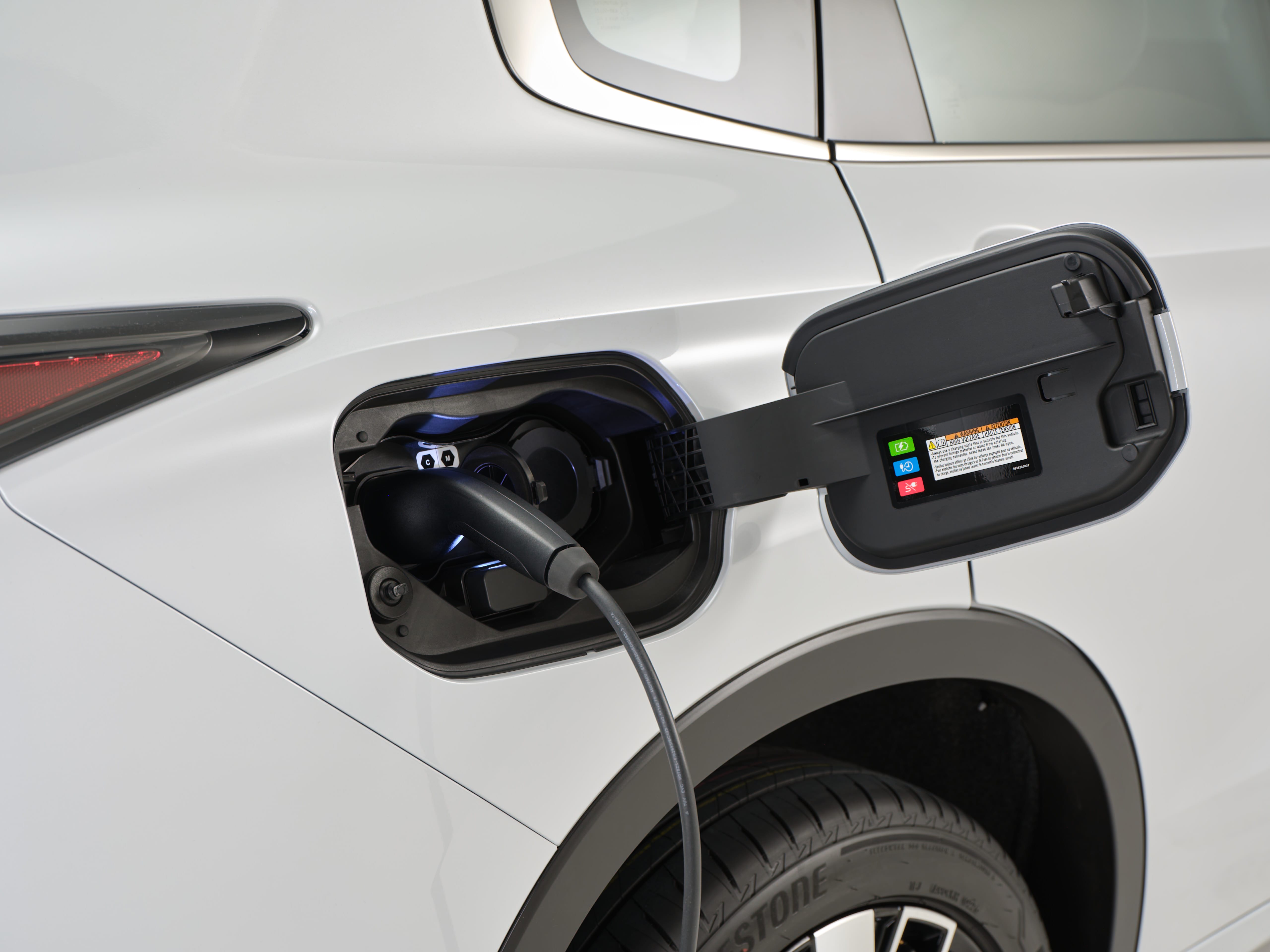
Drivers can also toggle between Normal, Save, Charge, and EV Priority modes for more control over how the vehicle splits its power sources. No charger nearby, no problem: the Outlander just runs as a hybrid. It charges via an AC Type 2 connection, compatible with the country's expanding charging network.
The more interesting part of the pitch is that Mitsubishi hasn't softened the Outlander's SUV credentials to make room for electrification. Anchoring the system is Super All-Wheel Control (S-AWC), which integrates the twin-motor four-wheel-drive setup with Active Yaw Control, ABS, Active Stability Control, and traction control to manage grip in real time.
Seven driving modes round out the package. Normal, Eco, and Power shift the vehicle's performance character, while Tarmac, Gravel, Snow, and Mud are built for different terrain. It's a lineup that reflects Mitsubishi's long four-wheel-drive history: the original PHEV philosophy was never just about efficiency; it was about marrying EV tech with SUV capability. The new Outlander drives like a Mitsubishi SUV that happens to carry sophisticated electric propulsion, not an EV stretched into SUV shape.
The flagship treatment extends to the exterior and cabin. A wide stance, muscular proportions and the Dynamic Shield front fascia give it road presence, backed by 20-inch two-tone alloy wheels and full-LED lighting. Inside: light-gray leather seats, soft-touch materials, a panoramic sunroof, triple-zone climate control, and a 12.3-inch Smartphone-Link Display Audio system with wireless Apple CarPlay and Android Auto. An eight-speaker Yamaha Premium sound system, head-up display, Smart Rear View Mirror, and power-adjustable front seats with heating, ventilation, memory, and lumbar support finish the job.
Safety tech is just as loaded, with Mitsubishi Motors Safety Sensing bundling Forward Collision Mitigation, Blind Spot Warning, Lane Change Assist, Rear Cross Traffic Alert, Lane Departure Warning, Automatic High Beam, and Driver Attention Alert.
.jpg)
.jpg)
Which puts that P2.749-million introductory price in context. Mitsubishi is doing a lot more than merely chasing the mass-market electrified crossover buyer here. It's positioning the Outlander PHEV as a premium, technically dense SUV built for long-distance usability, four-wheel-drive capability, and an electric range that can outlast a full day of errands and asking buyers to pay for the privilege of plugging in on weekdays while keeping a full tank on standby for the long haul.
For the Japanese auto giant, the pitch is simple: more than a decade after the original Outlander PHEV first plugged in, the technology has finally caught up to a Philippine market ready for it. Reservations at the introductory price close September 30.
View More Articles About: