On Marilaque, the Ride Is the Show
The line between mastering a machine and performing for the camera has become dangerously thin.
Published on Mar 21, 2026
The Marikina-Infanta Highway—known among riders as Marilaque or the Marikina-Rizal-Laguna-Quezon Road—winds east from Metro Manila through Rizal province toward the Pacific coast. It is a ribbon of asphalt that climbs through the forests and sharp mountain curves of the Sierra Madre. Certain bends, particularly Devil's Curve near Tanay, have become famous among riders and notorious among road safety officials.
On weekends, Marilaque transforms. Motorcycles line the roadside eateries with helmets resting on cafe tables. Groups compare lean angles, tire wear, and the day's ride. What was once a provincial mountain road has become, for a large and growing community of Filipino riders, something between a playground and a proving ground.
It is also, by most available measures, one of the most dangerous roads for motorcyclists in the region.
In 2024 alone, 158 accidents were recorded along the highway. Many of these cases were clustered around the same tight bends in the Palo-Alto and Mount Masungi area where riders push their machines the hardest. But accident counts alone do not explain why the danger persists, or why riders keep returning.
To understand that, one must look at the road's appeal and at the culture that has grown around it.
A road built for temptation
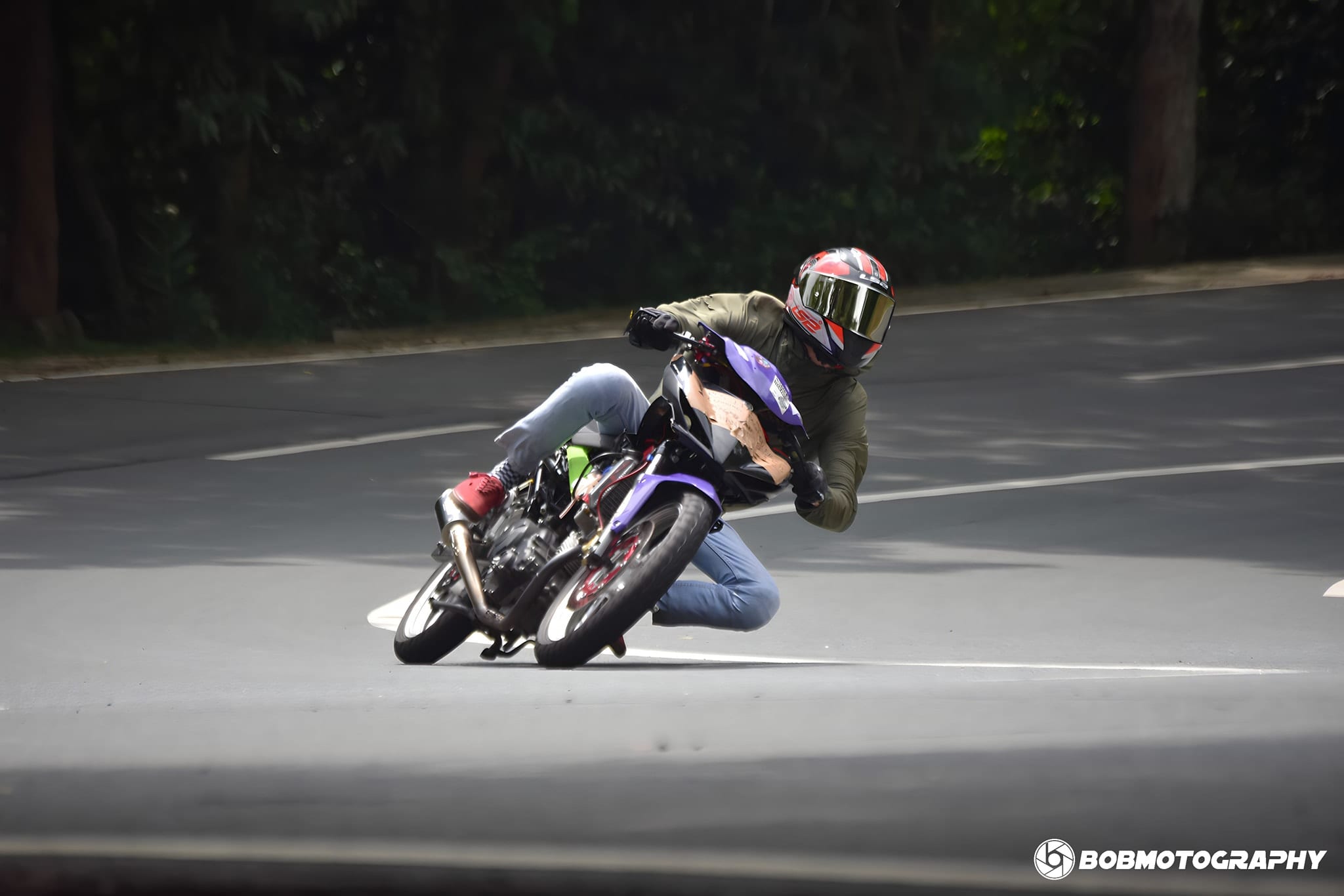
Bob Esperat has spent years watching that culture from the roadside. He is not a racer but a photographer. On weekends he used to ride to Marilaque with a camera and spend hours shooting motorcycles as they passed through the curves. He runs a Facebook page called Bob Motography, where riders search for photos of themselves leaning into corners.
"Marilaque is like a mini-Tagaytay," he says. "You get the same cold air, the same views, but it's only about 40 minutes from Marcos Highway."
That proximity is part of the road's appeal. You can wake up in Quezon City, grab breakfast in Boso Boso or Tanay, and be carving through mountain curves before the coffee wears off. But Esperat has also watched what happens when cameras arrive.
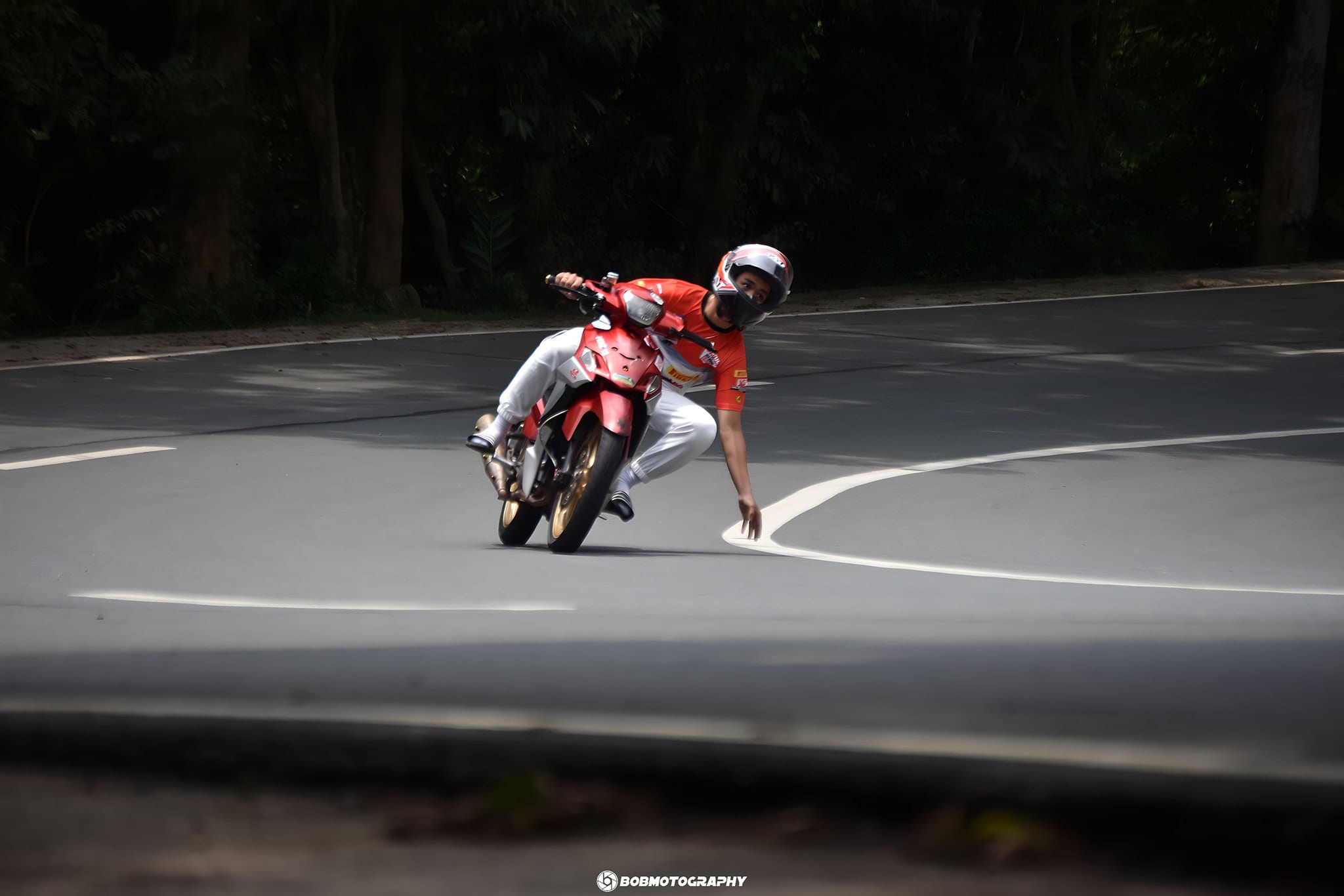
"There are areas—Devil's Corner, Big C—where riders know photographers will be," he says. "And when they know cameras are there, some of them perform."
The performance, he says, involves a visible change in body language: a rider who approaches a corner at a normal pace notices a photographer near the apex, straightens up, leans deeper, and rolls on the throttle. Sometimes it is subtle. Sometimes it is not. These performances do not always end well.
The scale of the problem
Motorcycle accidents are not unique to Marilaque. They represent a national crisis.
Approximately 12,000 people die each year in road crashes in the Philippines, according to the Department of Health. Road traffic deaths in the country rose 39 percent between 2011 and 2021. On average, more than 32 people die every day on the country's roads.
The scale of motorcycle crashes is striking. A Metro Manila Development Authority report found that 39,384 motorcycles were involved in road crashes in 2024, accounting for about 23.5 percent of all vehicular accidents nationwide.
Globally, the World Health Organization estimates that 1.19 million people die in road crashes each year, with motorcyclists among the most vulnerable users. In the Philippines, road traffic injuries are now among the leading causes of death among people aged 15 to 29.
These figures hang over places like Marilaque like a standing fact. They do not, however, explain why the road keeps drawing riders back.
The rider, the machine, and the road
For sociologist Randy David, what is happening on the curves of Marilaque cannot be understood purely as a traffic problem. It is also a cultural one.
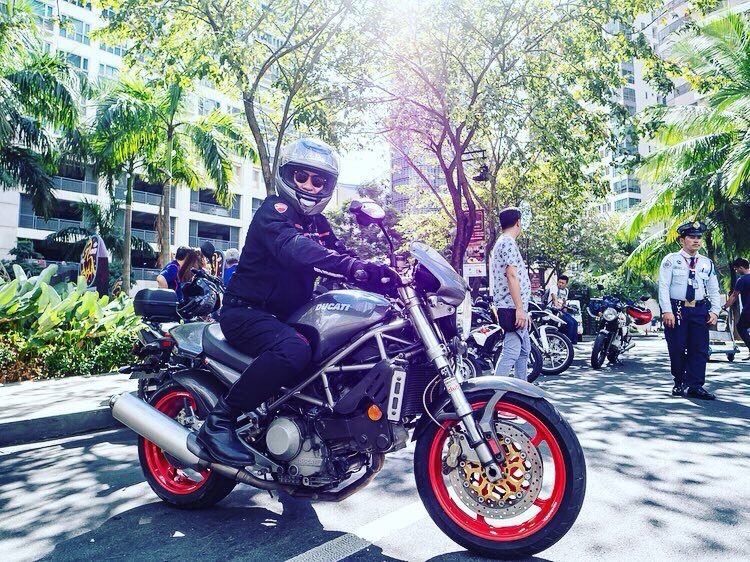
David speaks as both an academic observer and a rider himself. For decades, he says, motorcycling was largely a private ritual–a three-way conversation between rider, machine, and road. The experience was introspective: the hum of the engine, the rhythm of shifting gears, the quiet discipline of negotiating curves. Then social media added a fourth participant.
“The ride becomes content in search of viewers,” David says. “The lean angle becomes a spectacle.”
Once that happens, the logic of the ride changes. A twisty mountain road is no longer simply terrain to master; it becomes a stage. The rider is no longer just navigating a curve but performing it.
Psychologist Lex Ledesma sees the same transformation from a different angle: the human brain.
At the most basic level, aggressive riding triggers a biochemical reaction. High speed and tight cornering activate the body’s adrenaline response—the same physiological system that evolved to help humans survive danger. “It sharpens awareness,” Ledesma explains. “It can feel like a natural drug.”
For many riders, that rush is intoxicating. But the thrill alone does not explain why riders sometimes push beyond reasonable limits, especially on public roads. To understand that, Ledesma turns to decades of behavioral research.
Social Identity Theory suggests that individuals absorb the norms of the groups they belong to. In a riding community where disciplined riding is valued, safety becomes a shared standard: formations are maintained, hand signals are used, speed limits are respected, and riders hold each other accountable. But cultures can form around the opposite values.
“If a group celebrates speed, bravado, or rule-breaking, that culture spreads just as quickly,” David says, “risk-taking becomes a badge of honor. The crucial difference lies in whether the group normalizes restraint or glorifies excess. Culture, in short, rides with us all the time.”
Psychology shows how that culture spreads. The famous conformity experiments conducted by psychologist Solomon Asch demonstrated that people sometimes knowingly make the wrong decision simply because others around them do so. In the context of riding groups, this pressure can quietly reshape judgment.
“So when others drive recklessly, they do the same–even at detriment to their own safety,” Ledesma says. “In other words, peer pressure.”
Another layer comes from the work of psychologist Albert Bandura, whose research on observational learning shows that people replicate behaviors they see rewarded. Motorcycle culture provides plenty of those rewards.
When aggressive riding earns admiration—cheers from roadside spectators, praise in group chats, thousands of views on social media—it becomes a model for others to imitate. New riders learn not from watching experienced riders exercise restraint, but from watching them push harder into corners.
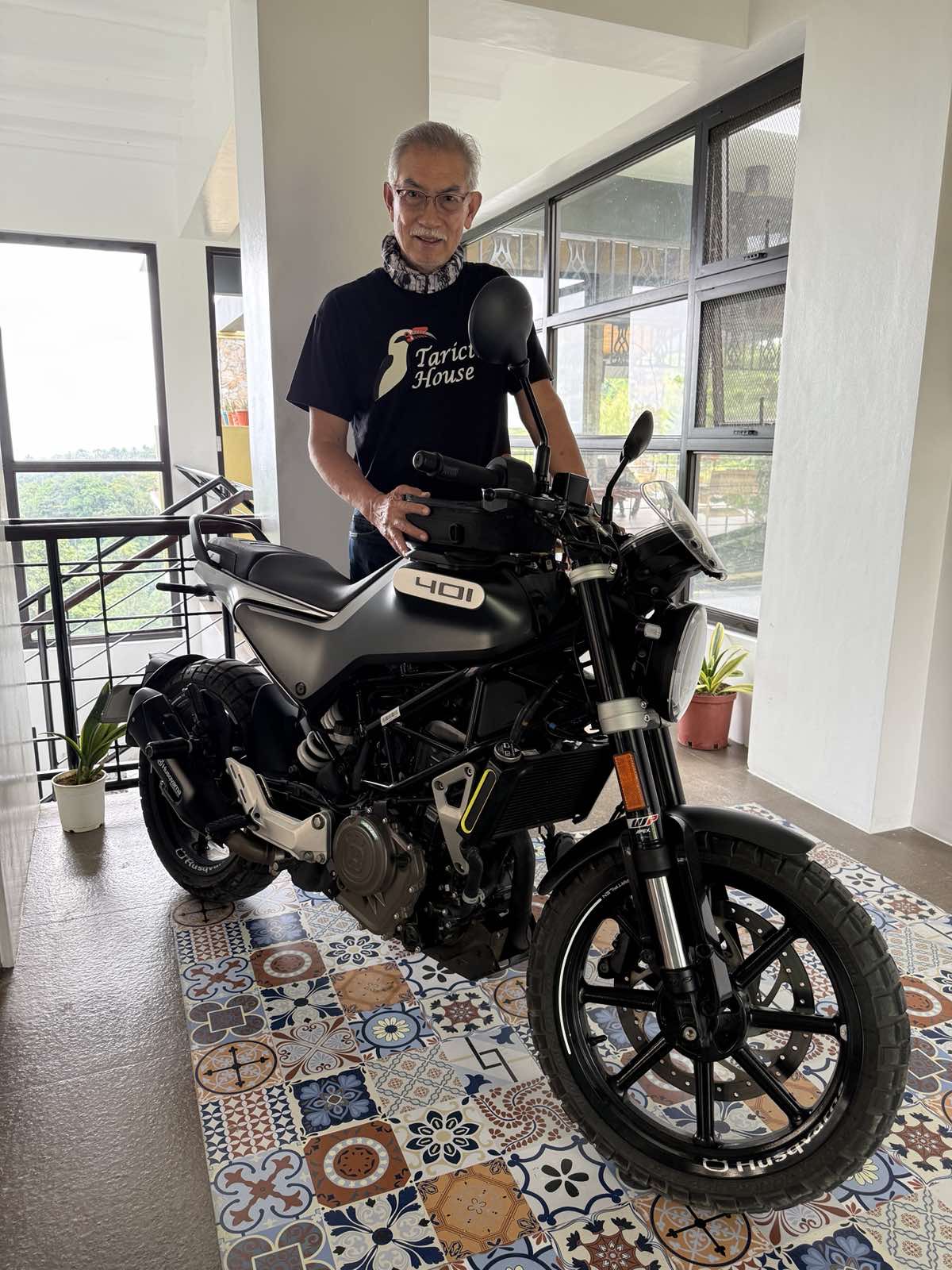
At Marilaque, the cameras amplify the effect.
Roadside photographers line the curves. Riders know exactly where they stand. Phones record every pass. What begins as documentation quickly becomes performance. Ledesma points to the psychological principle of social facilitation: people change their behavior when they know they are being observed. “Definitely, people feel the need to perform when put under a spotlight,” he says, “with cameras being our modern version of those bright lights.”
Even the gear can subtly influence behavior. Ledesma references the famous Stanford Prison Experiment to illustrate how costumes and roles shape identity. When individuals step into a role, they often begin to behave in ways associated with that role. Motorcycle gear can create a similar transformation.
“When you suit up in full battle gear to get on a big bike,” Ledesma says, “this transforms the rider in ways he or she is not aware of. Then, because of that feeling, the rider ends up doing things he or she wouldn’t normally do.”
For David, the deeper issue is not simply thrill-seeking but perspective. Public roads, he reminds riders, are shared spaces. “We do not own the road,” he says. “When we ride through towns and populated areas, we are guests.”
A motorcycle, in his view, is not a symbol of superiority. It is a machine that demands discipline, awareness, and humility. On a road like Marilaque, where crowds gather and cameras wait for the next dramatic lean angle, that humility can be easy to forget. Without it, the line between riding and performing grows dangerously thin.
The veteran rider
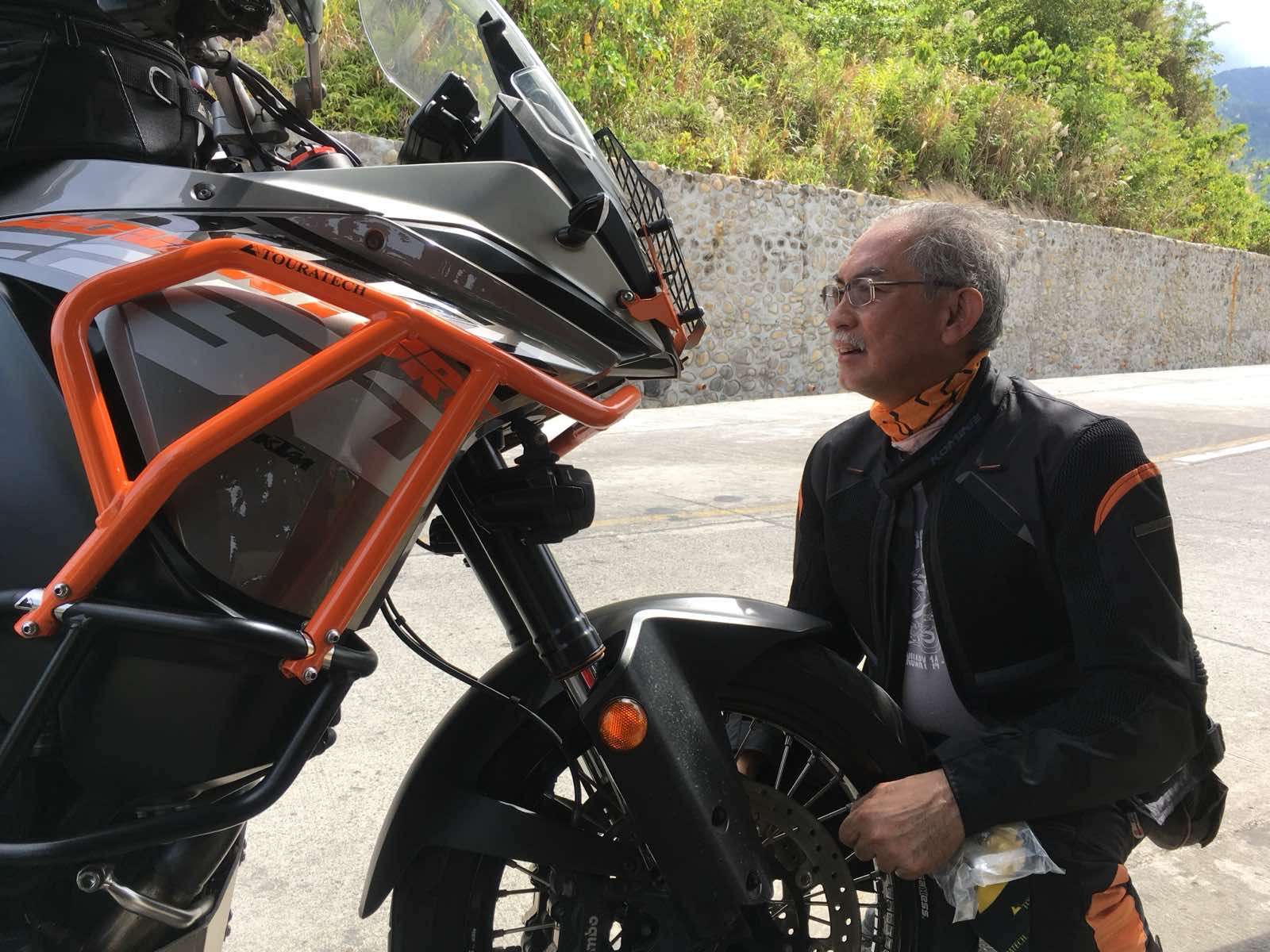
Jason Maligaya has been riding motorcycles for more than a quarter of a century. He started with a scrambler in 1999, graduated to a big bike by 2001, and has been upgrading ever since. He has ridden across the Philippines and abroad, survived close calls, and accumulated what he calls gulang sa kalsada—street wisdom that cannot be taught in a licensing school. He saw Marilaque transform from an unpaved road to what is now a haven for motorcycle riders.
His earliest teachers were veterans he met at the PICC in the early 2000s, older riders who taught him a specific way of reading the road: if a ball rolls into the street, a child will follow; if you are about to overtake a vehicle, look for feet at the gap between the wheel and the bumper before you can see the pedestrian themselves.
These are not things taught in Land Transportation Office (LTO) licensing exams, Maligaya says. They are learned slowly, through accumulated saddle time and, when a rider is lucky, through mentorship.
He identifies the most dangerous phase in a rider's development as what he calls the "gigil" period—the early stage when a rider has discovered how powerful his machine is but has not yet developed the reaction times and spatial awareness needed to manage emergencies. "That's the most dangerous period," he says.
Maligaya has watched Marilaque change significantly since he first rode those mountain roads in the early 2000s. Back then, the road was rough, quiet, and largely empty. You could ride fast for long stretches without encountering much traffic. Today, Marilaque is something different— what Maligaya calls "a pista," a festival. Crowded with riders, vloggers, photographers, and food stalls. What was once a solitary experience has become a spectacle.
Maligaya himself now prefers night rides, when the headlights of oncoming traffic are visible from far away and the daytime crowd has thinned.
The racer's perspective
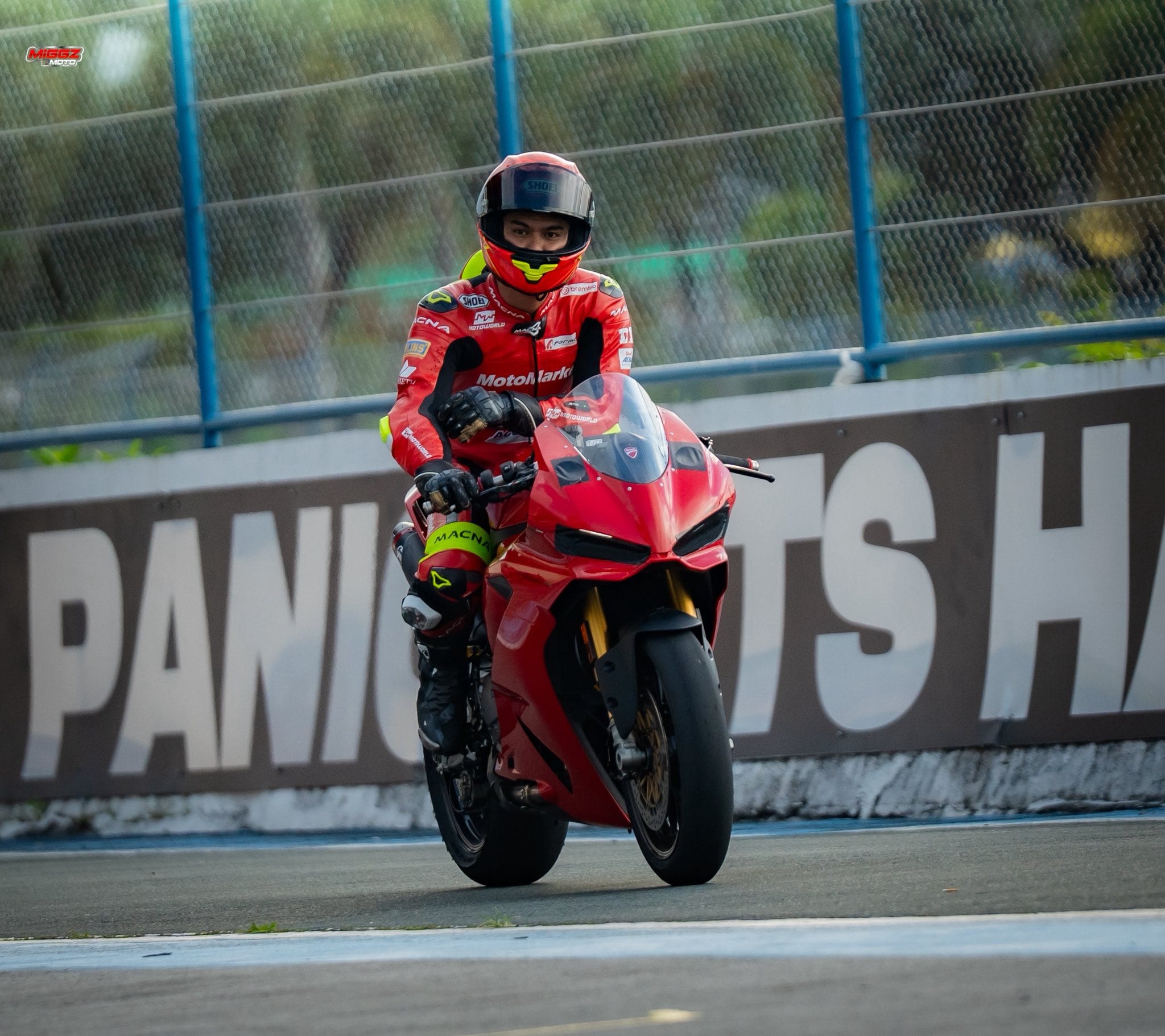
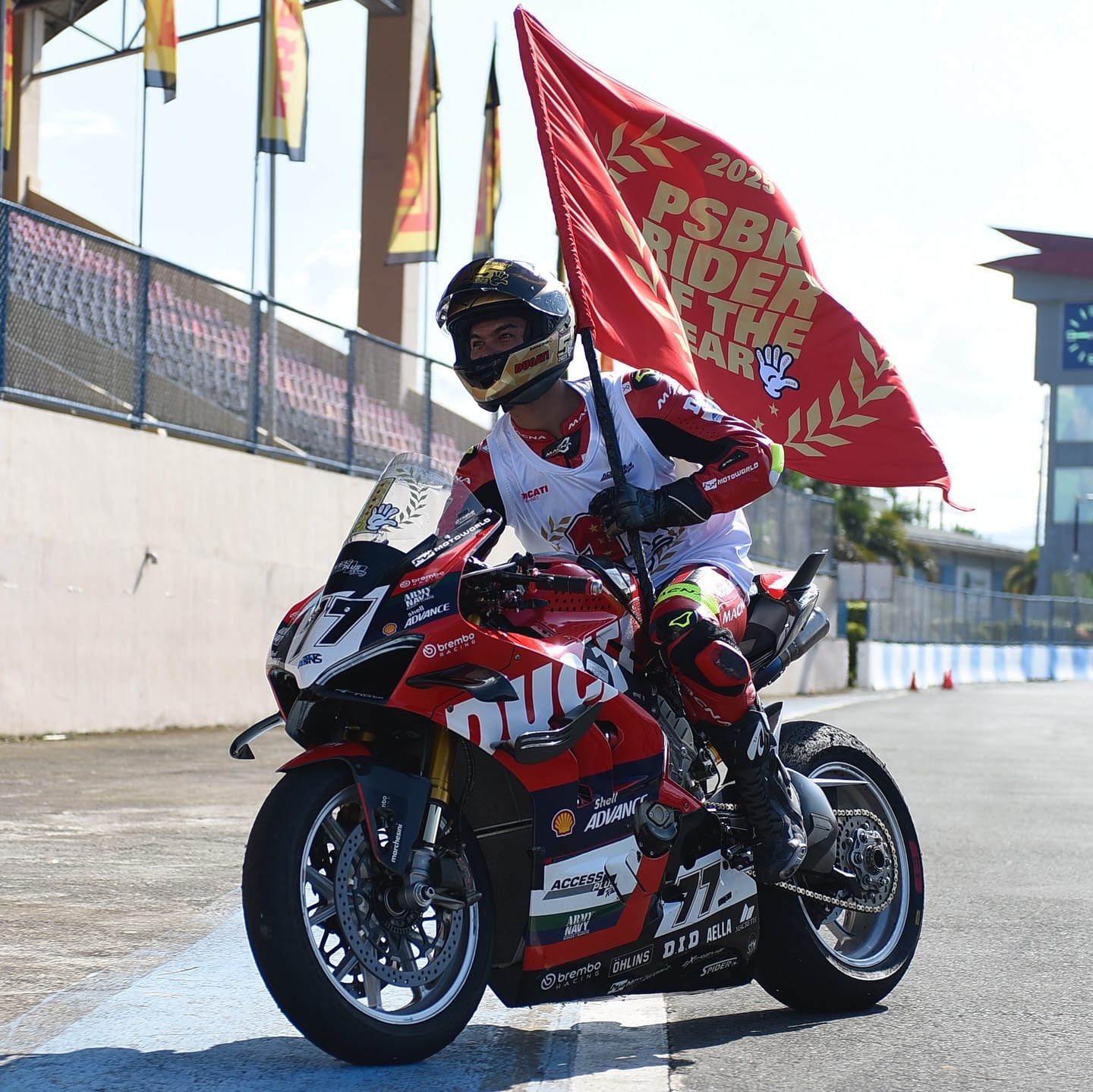
TJ Alberto started riding when he was four years old. Now at 28, he has national titles in superbike racing and is also a riding coach. Alberto draws a sharp line between what riding fast means on a racetrack and what it means on a public road.
"On the racetrack, you're there to test your limits," he says. "But when you're riding on the road, that's not necessarily the goal."
On a track, the infrastructure exists to absorb mistakes: run-off areas, safety marshals, medical teams. The consequences of an error, while serious, are largely contained. On a public road, they are not.
"If you crash on the track, it's really only you that will get hurt," Alberto says. "When you're riding on the road, you can hurt pedestrians, you can crash into cars, you can damage property."
He is honest about his own behavior. He enjoys his bike and can ride fast on the road. But he describes a distinction he tries to maintain between what he calls "spirited riding"—riding quickly while still accounting for road conditions and regulations and other vehicles—and reckless riding, which can disregard those variables entirely.
Group dynamics, he says, are one of the primary forces that push riders across that line. "When riders are together, they start riding faster and faster. It becomes a game of catch me if you can."
Alberto's concern is partly practical. If riders continue to treat public roads as racetracks, he says, the regulatory and public backlash will eventually restrict the community's freedom.
"If we keep acting like this, we will lose our right to ride on the road. We will lose our playground. We will lose everything that we're enjoying right now."
The regulator's dilemma
Assistant Secretary Marcus Lacanilao, current chief of the LTO, understands both sides of the equation.
"Ang Marilaque, very tempting sa mga motorista lalo na sa mga rider ng motor," he says, acknowledging his own experience as a rider before shifting into his regulatory role. "Yung kaliwa nyo, malapit sa Metro Manila, tapos twisty yung mga kalsada, so nagagawa nila."
That appeal is precisely what makes Marilaque difficult to regulate. It draws riders because of its qualities as a road—the curves, the scenery, the proximity to the capital.
In practice, the LTO's response has meant joint operations with the Highway Patrol Group and Local Government Units: checkpoints, enforcement drives, and education campaigns. The LTO has also begun scrutinizing organized rides more closely.
He is also direct about the mechanical dimension of the problem. Many accidents at Marilaque involve underbone motorcycles whose riders are unfamiliar with proper cornering technique. Compounding this is a pattern of illegal modifications: riders who increase engine displacement, alter pistons, or change wheel specifications in ways that reduce traction and make crashes more likely.
“Illegal modifications na ginagawa nila, hangga’t maari, i-avoid nila. Kasi itong motor kakargahan nila ng malakas na CC, na piston, tapos ipapasok sa curve, dumudulas,” he says.
Lacanilao's prescription is layered: stricter enforcement, coordination between the LTO, PNP, MMDA, barangays, and LGUs, and investment in driver education so that licensing actually produces riders with the skills the license implies they have. But he is candid about the limits of enforcement alone.
"Kailangan firm ka sa disciplina," he says. "Sumusunod naman ang Pinoy pero kailangan mo sila idisiplina."
When one passes through Marilaque, it’s easy to see what Lacanilao means—tarpaulins are all over and police visibility is abundant. But psychologist Ledesma notes that high-fear messaging —the kind typically used in road safety campaigns—has consistently failed to change rider behavior. Confronting riders with crash statistics or images of accidents simply triggers the same defensive rationalizations. What he proposes instead is a reframing of the culture itself, shifting group norms so that skill, discipline, and mutual responsibility become the markers of identity.
"Group norms have to change so that everyone agrees to certain modes of conduct," he says. "If, however, there already is a culture of rule-breaking, machismo, it is very hard or maybe even close to impossible to rewrite that script."
The road ahead
So why do riders keep coming back? The answer is not simple.
Ledesma frames part of it through cognitive dissonance. When a belief generates discomfort— as the knowledge that riding at high speed on a mountain road could result in death certainly does—the mind has several available strategies: change the behavior, change the belief, or add a new idea that resolves the tension.
Most riders, Ledesma says, resolve it through the third option: they acknowledge the risk but conclude that the value of riding outweighs it. Each successful run through Devil's Curve adds to a personal data set that says: I know what I'm doing.
That ambivalence, the sense of adventure that the road provides, coexisting with the danger it produces, is the condition that makes Marilaque difficult to address through any single intervention.
The road generates livelihoods for local communities. It gives riders a venue for a passion that, at its best, involves skill, self-knowledge, and camaraderie. It has become, for thousands of Filipino motorcyclists, a meaningful place. But it also produces accidents, injuries, and deaths at a rate that no amount of tarpaulins and checkpoints has yet resolved.
The photographer, the regulator, the sociologist, the racer, the veteran, and the psychologist are in broad agreement on one thing: the problem is not primarily mechanical. Better bikes, better roads, and more checkpoints can help at the margins. But the core of the problem is cultural— the set of norms, expectations, and identities that riders carry with them onto the mountain road.
Changing those norms is a longer and harder project than installing a speed camera. It requires the kind of sustained effort that David describes when he talks about riders earning the respect of the communities they pass through—slowing down, riding in formation, practicing visible courtesy.
"Freedom on two wheels survives only if it is matched by responsibility," David says. "Without that balance, the culture we value will eventually be curtailed—not by hostility toward motorcycles, but by the consequences of our own excess."
View More Articles About: