Predicting the Future: Why the Timing of 'anthropology' Makes it a 2026 Must-Watch
The Lauren Gunderson play is being staged by Barefoot Theatre Collaborative this March.
Published on Mar 3, 2026
These days, artificial intelligence or AI is no longer just the subject of movies, TV shows like Black Mirror, or sci-fi books, but a daily reality. And Barefoot Theatre Collaborative is hoping to tackle this issue by staging anthropology, a gripping psychological thriller by American playwright Lauren Gunderson. It asks a chilling, but deeply human question: If you could code a loved one back to life, would you?
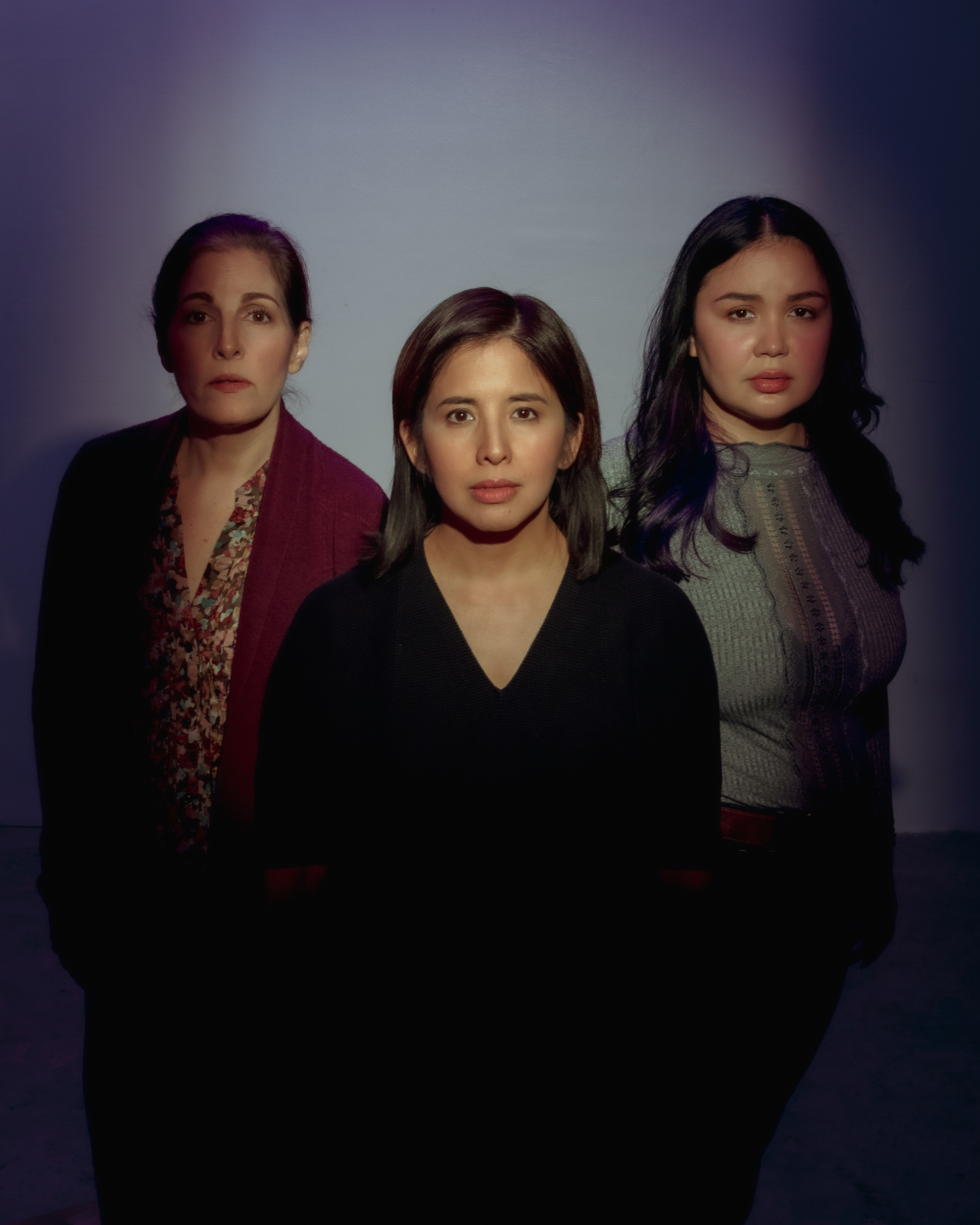
The story centers on Merril (Jenny Jamora), a brilliant AI programmer paralyzed by the disappearance and presumed death of her sister, Angie (Maronne Cruz). Using every digital footprint available, from text messages to social media posts, Merril builds an AI simulation to bring Angie back—a "digital ghost" that quickly spirals into a complex obsession. As the line between memory and machine blurs, Merril finds herself at odds with Raquel (Mikkie Bradshaw-Volante), her rational ex-girlfriend, and Brin (Jackie Lou Blanco), Merril and Angie’s estranged mother. Together, these four women navigate a web of secrets, high-tech ethics, and the raw reality of grief.
Female in Tech
For the four artists in the show, saying yes to do anthropology with Barefoot Theatre Collaborative was a no-brainer.
"I instantly get drawn towards stories about sisters, siblings, and family," said Caisa Borromeo, who's directing the show, during a presser for anthropology last February 22. "When I read this one, I loved the characters, and I love a good thriller. It’s a psychological thriller, and there are so many new things that I haven't seen in Philippine theater. It’s four women who are so flawed and lost and looking for connection, and they're so attached to each other and longing to be understood."
And it is exactly this fact that its all-women characters and cast that makes it a must-watch, especially in Women's Month. The tech world is typically male-dominated, and the production’s female-led perspective offers a unique counter-narrative to that norm.
"In my experience, when it's a mostly female cast, it goes very well," Jamora quipped.
"Usually, when you think of AI, it has a male identity attached to it. So it’s interesting to have four women in the face of this immense technology," Cruz pointed out. An all-female cast fundamentally shifts the story’s perspective because of how gender influences our relationship with technology, and this production focuses on AI as a vehicle for human connection.
Cruz further noted the difference in how the technology is typically discussed. "Statistically, exponentially more men use Gen AI than women. And we’ve already seen the ways through which men have used this technology to dominate or to make shortcuts. So yeah, this definitely makes a difference just by means of it being about four women trying to understand their relationships with one another."
The Generational Divide
Beyond gender, the production delves into how different generations perceive the digital takeover, especially with a cast of different ages.
"I am Gen X, so I reached the beginnings of dial-up," Jamora shared. "I feel very fortunate because it gave us a sort of adaptability to all the technologies that came our way. And we use it with caution."
"I also feel lucky to have been born ahead [of the rest of the cast] because it gives us a better balance. Technology is very important, but you will also realize the dangers if you take it too far. Human connection and relationships are still more important," Blanco echoed.
Bradshaw-Volante, who remembers a world of pagers and playing outside, gave the most millennial answer. "As a millennial, I was there for dial-up. I played outside. I came into this with an already negative idea of AI and now I’m just more confused about whether or not this is bad for us or if there’s some good in it. Personally, I get scared at the thought of if I were to create my AI sister—that can go very, very wrong."
Still, in the middle of the confusion, the play seeks to spark a cross-generational dialogue.
"What I like about this play is that it holds space for two different ideas, different world views, and allows space for logic and love. All the characters have different world views. As someone who had pagers, I am very grateful I grew up as a child without technology. I think my hope for the show is that people have conversations about how they can connect with humans, with their loved ones, and themselves more without technology," Borromeo said.
"I hope everyone comes to watch and talks more about it across generations. Communication really is best between people," Jamora added.
A Highly Technical Production
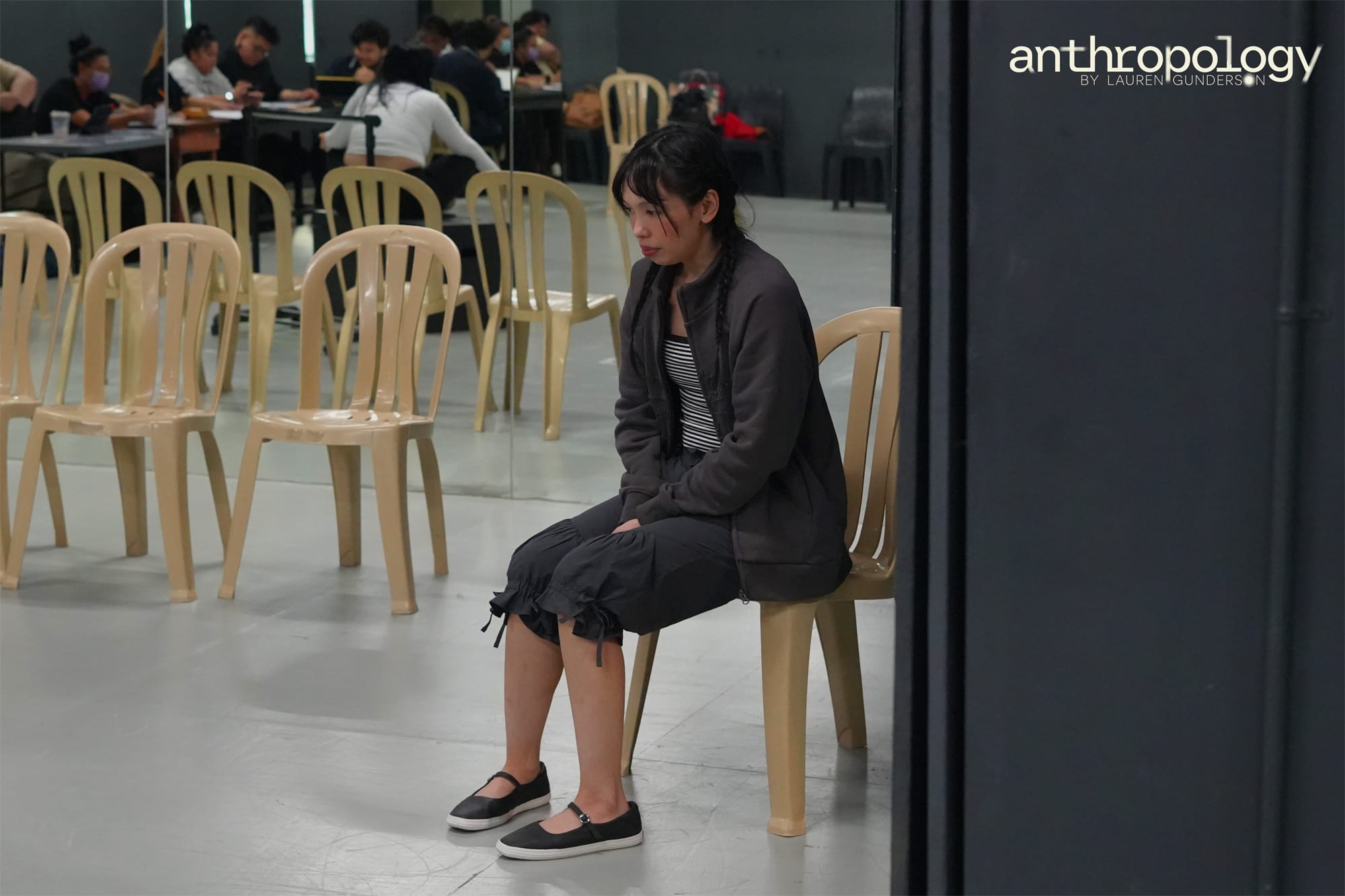
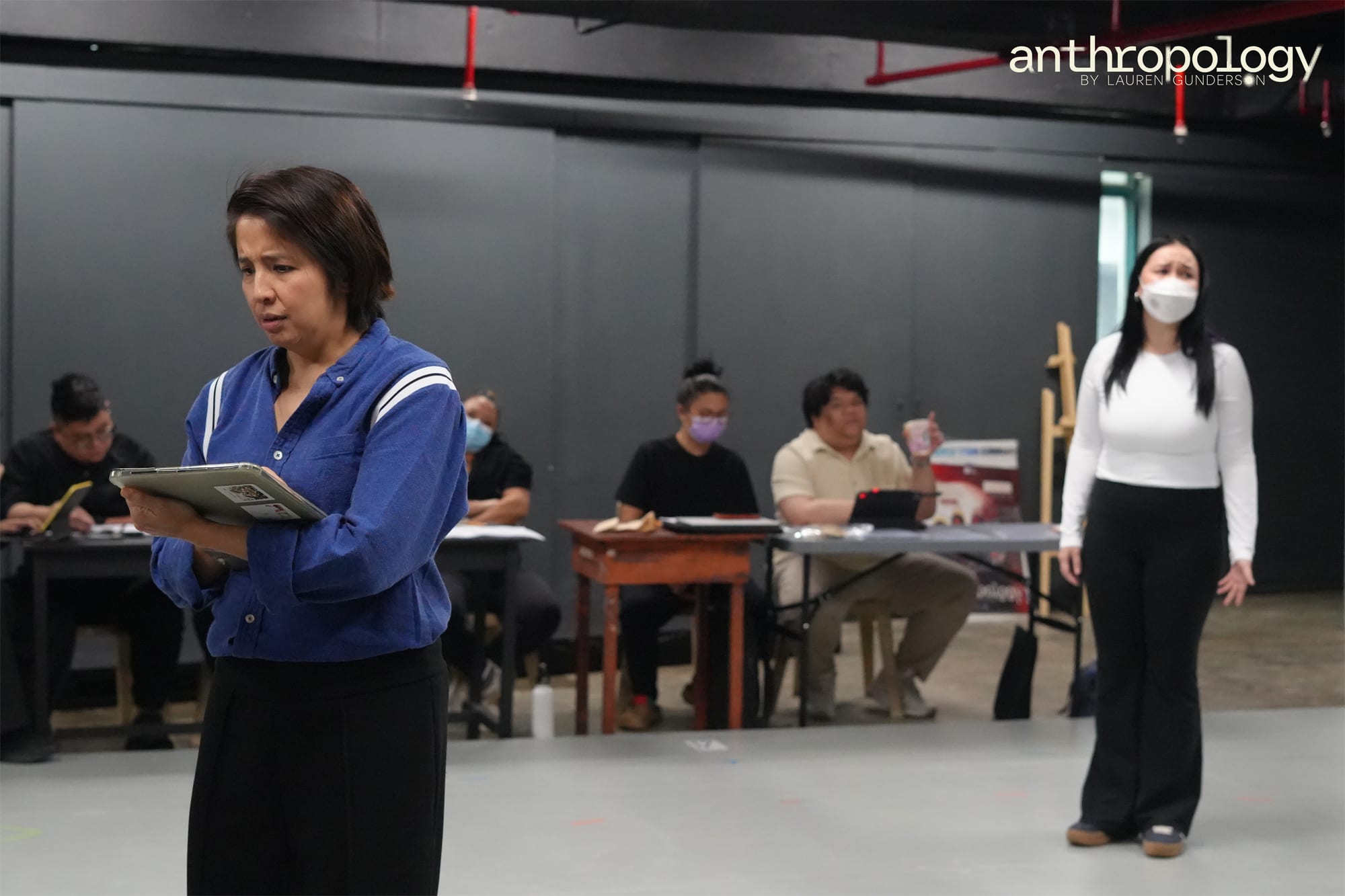
In an exclusive interview, Director Caisa Borromeo shared with Esquire Philippines that staging anthropology is as much a technical feat as it is an emotional one. She revealed that the show is "quite tech-heavy," involving a massive collaboration between set, projections, lights, and sound.
"There are so many challenges with this show," she admitted. "This is the first time I'm doing something this tech-heavy. A lot of the plays that I've directed are usually very simple, nothing elaborate with set or with lights or with anything really. So I try to think of the best, the simplest, but the clearest way of telling the story. I prioritize storytelling."
The challenge lies in the integration of the digital and the physical. "A lot of it ties together with my blocking. A lot of it ties together with the staging and with the movements of the actors. So it's something we'd had to have meetings and conversations with the creative team from the very beginning. I'm learning so many different ways of telling the story through all the devices, and I'm really enjoying that process," she explained, trying hard not to reveal much.
Staging anthropology in 2026
Though Lauren Gunderson wrote the play in 2019—before the current explosion of generative AI—the cast believes its arrival in Manila is perfectly timed.
"She didn’t even know it was going to take over the world," Borromeo said. "And I think it’s heading in that direction. So, I think it’s urgent because we do need to talk about how we are not connecting with each other. How we are not talking to each other. How we are not communicating with each other."
"Writers have been talking to us from ages ago, baka we're not listening," Jamora added, citing the likes of Ridley Scott's Blade Runner (1982) and even its original, Philip K. Dick's 1968 novel Do Androids Dream of Electric Sheep? "We’re listening now," the rest of the cast responded.
"As these writers have been telling us from time immemorial, we need to fight to really hold on to our humanity. These days, it’s becoming less and less valuable to all of these big, powerful corporations. This show helps us remind ourselves that we are human and that matters the most," Cruz said.
anthropology by Lauren Gunderson runs from March 13 to 29 (with strictly 15 performances) at the Doreen Black Box, Areté in Quezon City. Tickets are available through Ticket2Me and other ticketing channels, with prices ranging from P2,200 to P2,500.
This production of anthropology is licensed by Harmonia Holdings, Ltd. under special arrangement with Dramatists Play Service, Ltd.
ALSO READ:
Theater Review: Pain Is Silent in 'Spring Awakening'
Theater Review: Form Follows Content in 'Children of the Algo'
Christa I. De La Cruz is a Palanca Award-winning writer with over 15 years of experience in feature writing for print and digital media. She earned her Sertipiko sa Malikhaing Pagsulat sa Filipino from the University of the Philippines Diliman and holds an MFA in Creative Writing from De La Salle University.
View More Articles About: