Conrad Ricamora on His Manila Debut, Filipino Representation, and the Essential Truth of an Artist
The HTGAWM actor is playing Zach in the Philippine staging of 'A Chorus Line.'

Published on Nov 24, 2025
For Filipino-American actor Conrad Ricamora, coming to the Philippines for the Manila staging of A Chorus Line is not just any other theater gig; it is a deeply meaningful personal homecoming. His father, who was born in Manila, moved to the U.S. at the age of 10. "And then, because we didn't have any money, we just never went back," Ricamora tells us.
Ricamora is set to take on the role of Zach, the demanding director and choreographer in the highly anticipated show, which is scheduled to run from March 12 to 29, 2026, at the Samsung Performing Arts Theater in Circuit Makati. Zach is the musical’s driving force, running an audition that psychologically strips away the aspiring performers' defenses to reveal their deepest vulnerabilities and true motivations.
We connected with Ricamora via Zoom on a Monday morning to discuss the balance between his dynamic stage and screen careers, the vital significance of Filipino representation in his work, and what it means to come home.
This interview has been edited for clarity and length.
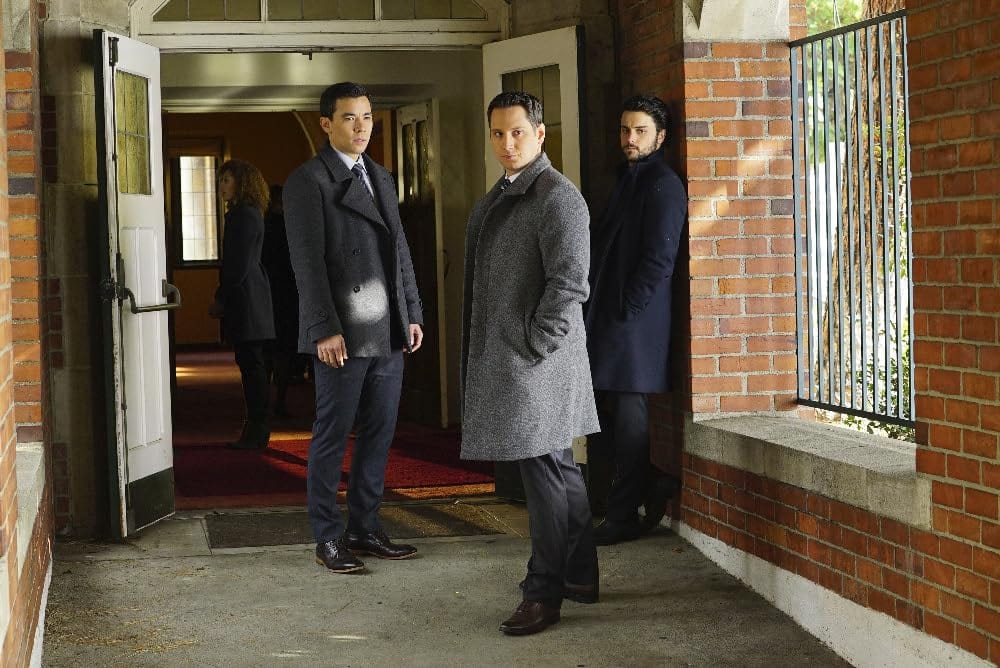
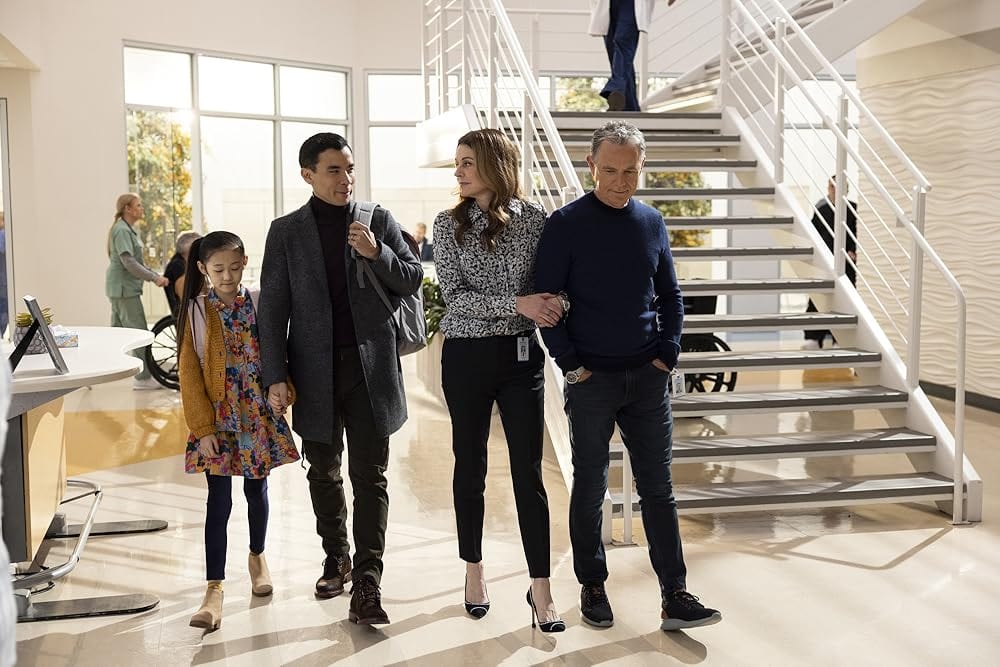
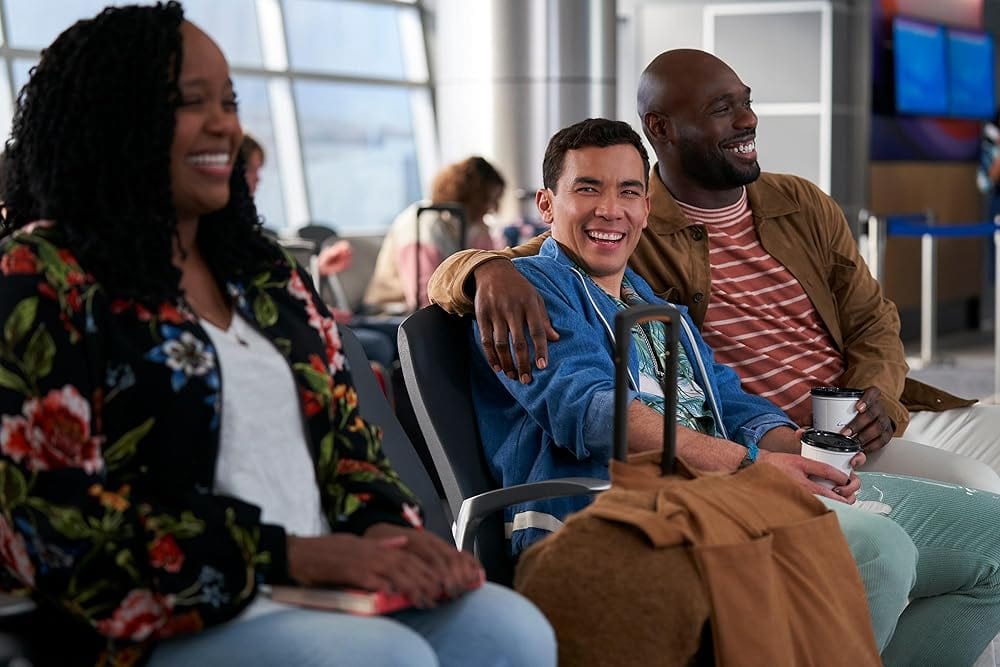
Esquire Philippines: I've seen you in How to Get Away With Murder (as Oliver), The Resident (as Dr. Jake Wong), and, most recently, in How to Die Alone (as Rory). You transition between the worlds of stage and screen. Could you share what you love most about theater that you can't really get from television, and vice versa?
Conrad Ricamora: Yeah, theater to me builds community in a way that TV and film don't. I just finished filming Devil Wears Prada 2 in August, and I've already forgotten everything about that experience—my lines, what I did in the movie. It comes out in May, and the world gets to watch it, but my experience of it is long past.
Whereas in the theater, I perform it, and the audience in the theater experiences it at that exact moment. We're all breathing the same air. There is this physical exchange of energy within the theater from the audience to the actor on stage. There's an exhilaration as a performer to feel all of that energy coming from an audience that I'll never get to experience with the people watching my TV or film work. I think there's something so heightened and alive about experiencing that with an audience live in a theater that makes you feel like you are a part of a community. Especially since the pandemic, I think we are more appreciative of that in-person experience.
And then TV and film, I like because you can get a close-up of your reaction right here [points to face]. There's a lot of subtlety that you can get through TV and film that you can't get in the theater. So, there are different things you get from each.
EP: Do you feel you gain an edge by actively working in both forms of media?
CR: Yes, yeah. Although sometimes, if I've been doing theater for a while and I go back to doing film, I have to remember, "Oh, I don't have to speak so loud because there's a microphone right here, and the camera's right here." So there's always an adjustment period. And if I've been doing just TV and film, and then I go to do theater, I'm used to having just this much of my face on a screen, but now in a theater, you have to use your whole body. So there's always a period of adjustment. But I find I like that. I think it's fun to exercise those different muscles.
EP: Now, to your origin story: Was acting always your passion and dream? You attended university on a tennis scholarship and majored in Psychology—how did acting figure into all of that?
CR: Well, I grew up on Air Force bases in the '80s and '90s, and I didn't even know theater existed. I didn't know Broadway existed. There was no theater on the Air Force bases that I was living on. It wasn't until I was 18 and went away to college that I actually saw theater for the first time. But I grew up playing competitive tennis and went to my undergrad degree on a tennis scholarship. Then, my junior year, I just took an acting class on a whim because I had to take an elective class. I just felt this electricity when I took that class, and I have been chasing that ever since. It was love at first sight.
EP: Wow. That was a happy accident.
CR: Yeah. I don't know what would've happened if I hadn't taken that class. I don't know if I would've ever found it. It's really crazy.
EP: You majored in Psychology, do you think that also figures in how you approach character development and narratives?
CR: Oh, 100 percent. In psychology, you learn about why humans behave the way that they behave. And as an actor, when you approach a character, you're always trying to learn why they do the things that they do, why they are saying the things that they're going to say. You always hear actors talking about, "What is my character's motivation?" And that's just psychology. That's all just psychology. Learning about different types of psychology helped me, and still helps me, approach characters in a script to this day. Besides also helping me keep my own sanity.
EP: You were raised by a single Filipino father who served in the Air Force. Can you describe how these aspects of your life shaped your work ethic and yourself as a performer?
CR: Growing up in the Air Force, we moved almost every two years, so I was constantly the new kid in every school. When you move to a new school, you constantly have to watch the new culture you're moving into and adapt the way that you're speaking, talking, moving, and dressing. So, I was constantly becoming a new character every time I moved to a new school, which prepared me to become an actor because I learned how to be flexible with how I spoke and how I walked through the world.
And then, being the child of a single parent and also growing up poor, you learn discipline. You learn to work hard. Nothing ever came easy to me. I had to work so much harder than a lot of other people in the industry, because so many people in the entertainment industry come from richer backgrounds and were able to pursue things like theater when they were young. I wasn't given that luxury, so I just had to work, and that meant practicing more to be better than everybody else so that I could get the job. But I also understood that hard work pays off because I could see that my dad had to work really hard, and that was instilled in me at a very young age.
EP: Did you grow up with a Filipino community in these places?
CR: No, I didn't grow up around any other [Filipinos], besides my dad and my brother. Those were the only Filipinos. Every now and then, there would be another Filipino person at the school. It was a pretty big high school; it had like over a thousand to maybe 2,000 people, but there was only one other Filipino person besides me.
But whenever we would find a community, my dad would take us to Fil-Am events. I remember doing the tinikling. And yeah, my dad would make pancit all the time, and I just loved it so much. Sometimes he would make lumpia and adobo. So I grew up with Filipino food at home, but there was no community around me that I could look to.
EP: As a Filipino-American actor, you belong to a diaspora community that is achieving more visibility than ever before. You've taken on powerful roles in this space—from playing the great Filipino patriot, Ninoy Aquino, in Here Lies Love, to having a Filipino mom as Oliver in How to Get Away With Murder. How important to you is this kind of representation, and has your personal commitment to your heritage evolved as your career has progressed?
CR: Oh, yes, 100 percent. I just finished a film where I played the father of a young Filipino actress, Sam Morales, and we played this Filipino family. I get to talk about sinigang like we're cooking at home. It's especially important to me because I didn't see any of that on TV or in films in the United States growing up. I never saw a Filipino family on TV or at the movies. So for that to be now incorporated into Hollywood and onto Broadway, I think it's really important for us to feel like we belong in these spaces, and also for younger Filipino and Asian American actors to feel like there is a place for them in this industry—and that they don't have to just be doing martial arts, for instance.
EP: This production marks your first time not only performing here in Manila but also coming to your father's homeland. Can you describe what this homecoming means to you as a Filipino and as an artist?
CR: Yeah. It’s my first time ever. My dad left when he was 10 years old, and because we didn't have any money, we just never went back. I'm excited to eat all of the things!
Being a Filipino-American actor, a lot of times you are just fighting to belong, to feel like you belong, because many shows don't have any other Filipinos. When you are always feeling like you don't belong, you have to fight to make a seat at the table for yourself and for other Filipinos. So to be able to go to the Philippines and feel like I'm now with my community and feel like I belong... I know I'm still very much American and I probably will stand out in a certain way, but to feel that sense of belonging and community that I haven't really felt... It's crazy to say that I was born in America and I've never fully felt like I belonged here just because I never saw other people like me.
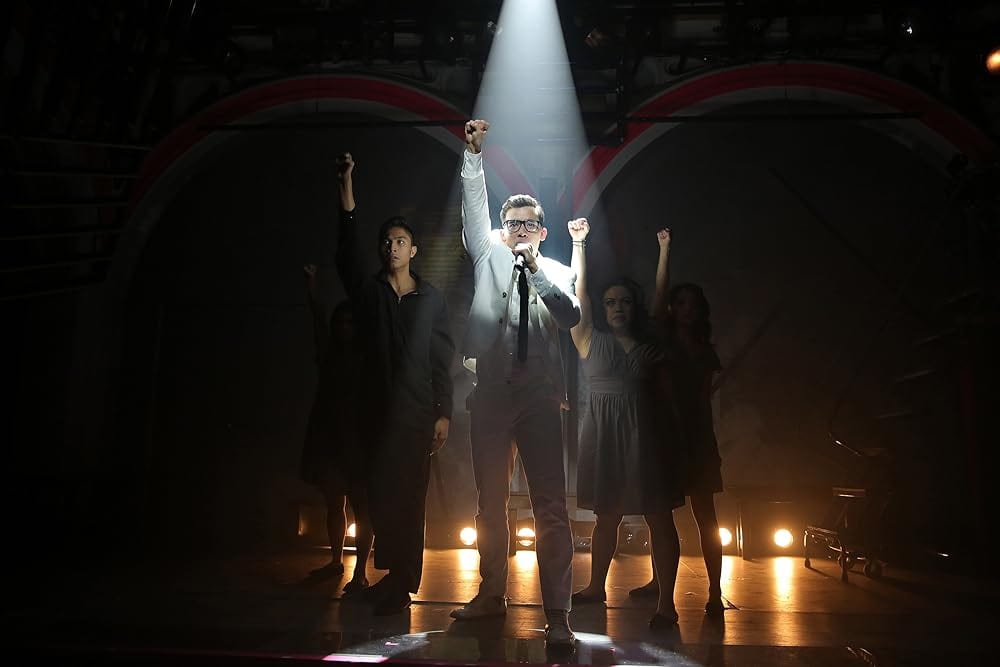
EP: Let's go to A Chorus Line. Can you walk us through your experience of this show—maybe the first time you saw it or first heard of it? What do you think makes it an enduring material?
CR: I first saw the film a couple of years ago, and the thing that blew me away was the dancing—it's just insane. But then to hear the story of these performers, to be able to hear why each character is fighting to get this job, is so moving and inspirational. It always reminds me that people become performers because of a very, very deep need in all of us who work in the arts—this deep need for connection and for expression—that I identified with immediately once I saw it. Also, my first show in New York City was at The Public Theater, and that's where they wrote and performed A Chorus Line for the first time ever, so I have that kind of shared history with it as well, which is really meaningful.
I think that everybody wants an inside look at the entertainment industry. Usually, we just see performers playing a character, like in Into the Woods, the witch or Little Red Riding Hood. A Chorus Line gives audiences a peek behind the curtain to see what our lives are actually like, what we go through emotionally, trying to make a living in this industry, and trying to get hired for jobs. Because even though these are characters that they wrote, they are based on real performers back in the '70s. The inner life of an actor and of a performer hasn't changed that much. You're still really seeing the emotional world and heart of every performer that exists today.
EP: How did you end up getting the role of Zach, and what was your reaction?
CR: Clint Ramos, whom I worked with on Here Lies Love 13 years ago and have known for a long time, emailed me and asked if I would be interested in playing this role. I'm turning 47 next year, and so my first reaction was, "Thank God I don't have to be one of the dancers because I'm too old!" And also, I never went through that kind of formal dance class. I've taken a little bit here and there, but the dancers in A Chorus Line have to really, really dance.
My second thought was a realization that I never would have been able to play Zach at any other time in my career previously because I didn't have enough experience. Just in the last three years, I've been noticing that every time I book a job, I am the oldest person in the room. Most of the time, I am the most experienced person in the room. So, playing Zach, I get to share this experience with these performers and try to pull their talent out of them and get them to show their talent. That's something that I feel qualified to do in my real life because I've been doing this as a profession for so long now. To be at this point in my career, it really makes me appreciate everything I've done so far because I really have done a lot.
EP: Aside from that connection, how are you approaching Zach's character?
CR: Right now, my whole process is that I wait until I meet the other actors. I feel like in order to create a true ensemble, you have to let your energy mix with everybody else in the cast. If I were to make decisions about what I'm going to do right now, it's not taking into account who I'm actually going to be acting opposite with. My performance will depend on what all the other actors are doing and how much I have to respond to, because so much of acting is just reacting. So I'm waiting to get into the room to react to the other actors. That's just my personal process of how I like to work—to wait and then collaborate with everyone else.
EP: Yeah. Theater is also very collaborative.
CR: Yeah.

EP: A Chorus Line features an ensemble of highly talented artists with Filipino heritage. What does this mean to you, sharing that space?
CR: My favorite theater experience so far has been Here Lies Love, and that was with an all-Filipino cast. It was my favorite experience because I felt this deep sense of belonging, this deep sense of shared struggle and experience. And especially now, with a show like A Chorus Line being all Filipino, we as Filipino performers trying to make it on Broadway and in Hollywood, we have the same struggles in a way that other types of performers don't have.
I feel like we'll be able to push each other in ways that only we will understand, as people who have tried to navigate the entertainment industry as Filipino performers. The passion and the struggle that these characters go through in A Chorus Line are just going to be heightened because we have this intimate shared experience with each other.
EP: I'm down to my last question. The musical is all about sacrifices and going on as an artist. What do you think is the one most essential thing an artist must hold onto, like a non-negotiable, and never let go of, for their work to truly matter?
CR: Ooh. That's such a good question. What is the one non-negotiable thing that an artist should never... I honestly think that it is... As an actor, you cannot judge the character that you're playing.
It's interesting thinking about playing Zach, because so many people have asked me, "Oh, he's so mean, he's the bad guy." I can't think of Zach as the bad guy because I have to be him. I have to fully understand and believe that I'm doing the right thing as this character. As an actor, you can't judge the character that you are playing. Otherwise, you shouldn't be playing them. They have to truly believe, even if other people think that they are a villain, the actor has to believe that they are actually the good guy, that they are the right guy in what they're doing.
A Chorus Line runs from March 12 to 29, 2026, at the Samsung Performing Arts Theater, Circuit Makati. Tickets are available through Ticketworld, with prices ranging from P900 to P5,500.
READ MORE:
From Chorus Line to Director's Chair: Karla Puno Garcia's Filipino Homecoming
Of 'Sold-out' Shows, a Ticket Scam, and the Into the Woods Lottery
More Shows, New Audiences: How Philippine Theater Is Experiencing a Renaissance
Christa I. De La Cruz is a Palanca Award-winning writer with over 15 years of experience in feature writing for print and digital media. She earned her Sertipiko sa Malikhaing Pagsulat sa Filipino from the University of the Philippines Diliman and holds an MFA in Creative Writing from De La Salle University.
View More Articles About: