Performing is Becoming: Langgam Performance Troupe's Within and Without End
Performance begins with costumes and props. It ends with transformation. Performance is becoming.
Published on Apr 21, 2026
The concept of "being performative" has been under fire in our culture. For example, the performative male has been dissected and parodied for feigning cultural savvy by drinking matcha, carrying tote bags, and reading progressive books—all as a bid for connecting with women or keeping in fashion. Pushing the concept further, Teehankee calls President Marcos a performative president for broadcasting anti-corruption reform without substantial results. Performativity has been equated with inauthenticity. To be called performative is often derogatory.
What about those that perform for a living? What about those that perform as a vocation?
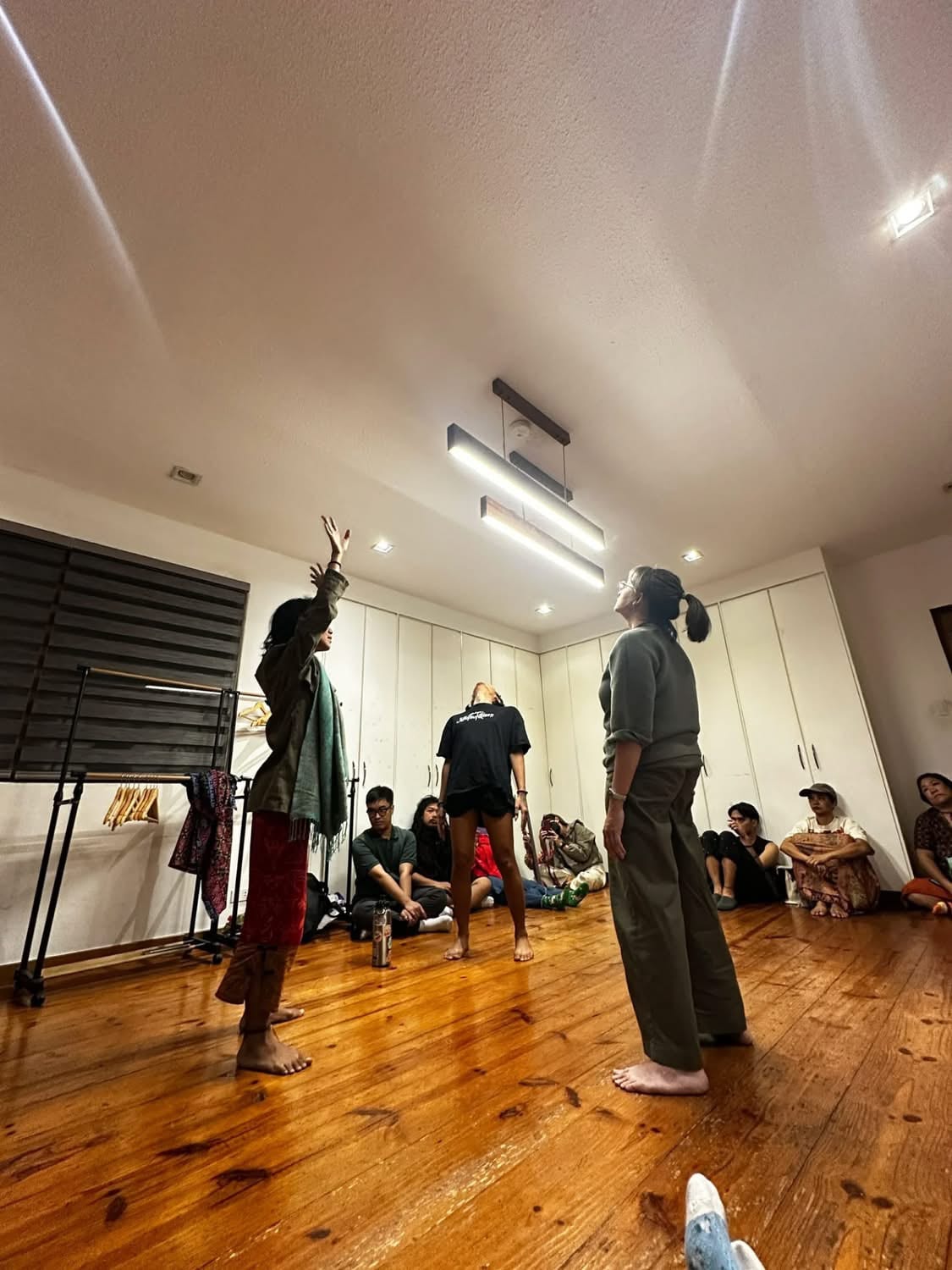
Director Jenny Logico-Cruz overseeing warm-ups for the cast
Performance has been a necessary life skill, profession, and deep part of human experience far before the trending discourse. Yes, performance can and has often been used for deception. Other times, it is meant for survival or fitting in with a community or organization. However, it can also be used to search for truth and to understand the reality of another.
Langgam Performance Troupe's Within and Without End explores the essence of performances and performers. Langgam is a theater group that produces experimental shows functioning as both an art form and a research project. The show is an open rehearsal where the audience sees the process of performers being directed and primed by Jenny Logico-Cruz and dramaturg Blonski Cruz. It is part behind-the-scenes documentary, part laboratory, and part interactive workshop while still being theater. It takes place in an intimate rehearsal space fitting a little more than a dozen audience members. The production does not strictly follow a script or story but demonstrates a method. Director Jenny warms up the actors and audience through physical exercises, then briefs everyone on the physiological effects of performance—such as changes in brain chemistry with increases in cortisol levels. Their past characters have marked and scarred the performers somehow. Each performance, they summon them again.
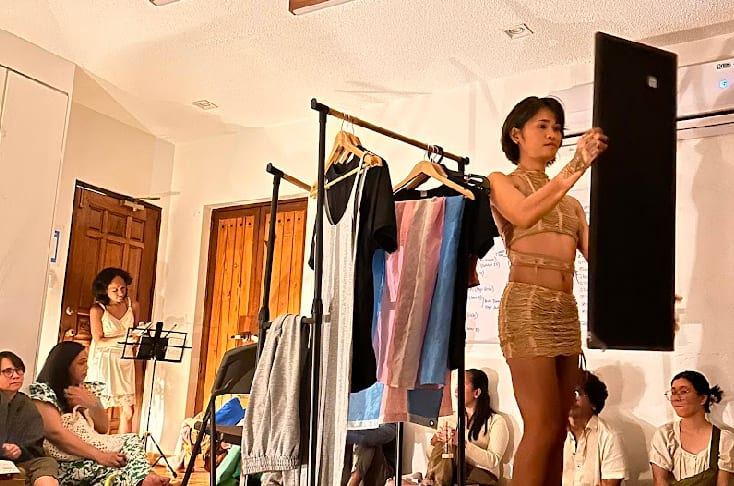
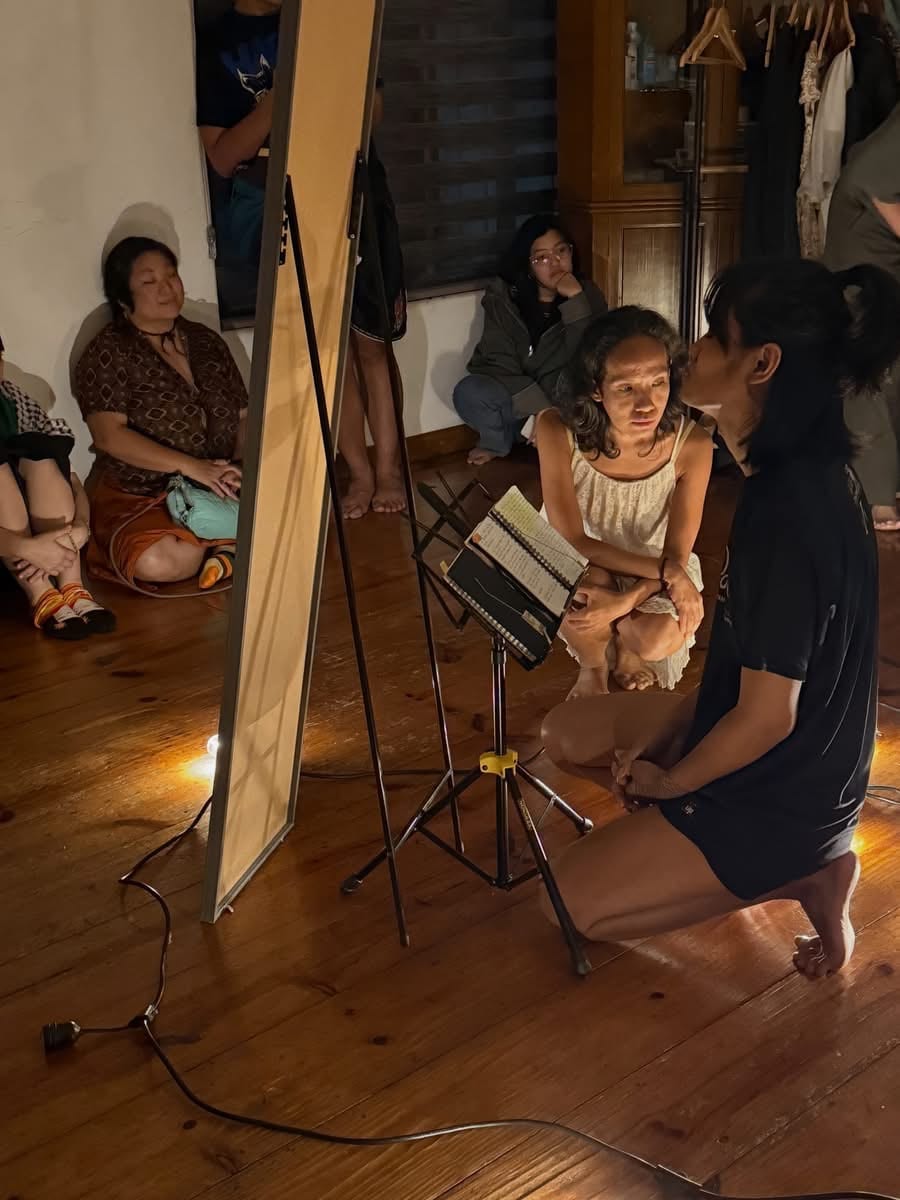
The cast, Opaline Santos and Serena Magiliw, both revisit their rich body of work across different characters. The performers read from their own journals as actors, revisiting their previous roles: first by retelling their history with the role, then putting on their old costumes as if re-inhabiting old skins. They return to their emotional and mental states while performing. They repeat their old journal entries, sometimes the lines of their characters, like incantations. Finally, their transformations go deeper as their characters re-inhabit their own bodies, as if the actors were breathing in old spirits like mediums. They are joined posthumously by Joel Garcia through his own journal, which highlights that even in death, performance and becoming are without end. As they perform, all three ask the purpose of the performance. Why are they investing their full beings into becoming someone or something else? Joel, in his entries, admits that creating art and performing isn't always sustainable or straightforward:
"What are you willing to risk? Isn't it possible to be successful without losing yourself in the process? What is the peak of success? How do you define success? Passion vs. work? How do you support your loved one's passion? Work? When do you stop creating? When do you stop doing what you love? Is it possible to stop? Is it possible to stop breathing? Is creating art synonymous to breathing for artists?... Where do we find the answers? Is there a right answer to the questions? Can an artist live without creating/doing art? Is being an artist a way of life? Can a person be called an artist even if he/she has already left the life of creating art? Shouldn't we just call him/her a 'former/dating' artist? Can a person funding artists be called an artist? Why do we create art? Why do we continue to perform?"
Opaline Santos and Serena Magiliw bringing their characters to life
His questions continue to haunt us for an answer. Why must we as audiences learn performance? The questions haunt because they are not only a performer's questions but also a human's. They are the questions of anyone who has ever been changed by the world and wondered whether they had any say in it. The play itself does not explicitly answer these questions, but it demonstrates enough for us to ponder.
People change many times throughout their lives. We change as the world does. But performance is asserting agency in how we change. Performers focus energy, body, and spirit when becoming a character. Performance begins with superficial changes—costumes and props—which then change the way the performer behaves: gestures, ticks, even voice. Until the way we feel and think becomes someone else entirely. Performative males and presidents are not wrong for performing their ideals. We malign them precisely because they remain surface level. It becomes wasted when it stops at props, costumes, and gestures. Simple repetition and rehearsal can seep into the performer and substantially transform them. When performance is taken seriously, to its limit, it becomes a radical exploration of what being a different character—a different human being—is. Performance is becoming. We become more than we are by first pretending we are until we become.
Performance always needs an audience. But who is the performance for? Why perform for an audience? What does the audience get from watching performances without a clear story or script?
Langgam's open rehearsal method demonstrates both the magical and the mechanical aspects of theater. From the outside, performers who become their characters can look esoteric, even enchanting. Yet performance can be broken down into the repetition of small rituals and gestures, with serious commitment. The rehearsal enchants the process of performing while demonstrating its replicability. Langgam's dramaturg Blonski Cruz says the show is heavily improvised while being structured around the actors' life experiences. In every performance, each performer becomes a different actor and gives a different performance. Langgam intends to teach the method through workshops around the country, through which the audience is educated in the potential of performance.
Performance is an expression of how we have been marked and changed by the world. It is also an opportunity to make a mark back on the world and change it as it has changed us. Even in death, Joel Garcia's inclusion in the play demonstrates that performances leave a legacy that continues to shape the world he "left" yet continues to inhabit. What an actor, citizen, or even a leader performs today will mark the country long after the performance ends.
This work would certainly challenge regular theater audiences by not only incorporating them in the rehearsal but showing that performing as becoming can be done. By showing the process, it also highlights that performers were audiences as well, that characters are versions of audience members in the world. The distance and hierarchy between stage and spectators disappear. Performers, characters, directors, and audiences come from the same place and inhabit the same world. In practical ways, in our everyday lives we can choose what we want to imitate and perform, then become. We must first understand what we are becoming and what we choose to become. From there, after understanding how we can change and how we inhabit the world, we may learn to change the world as well.
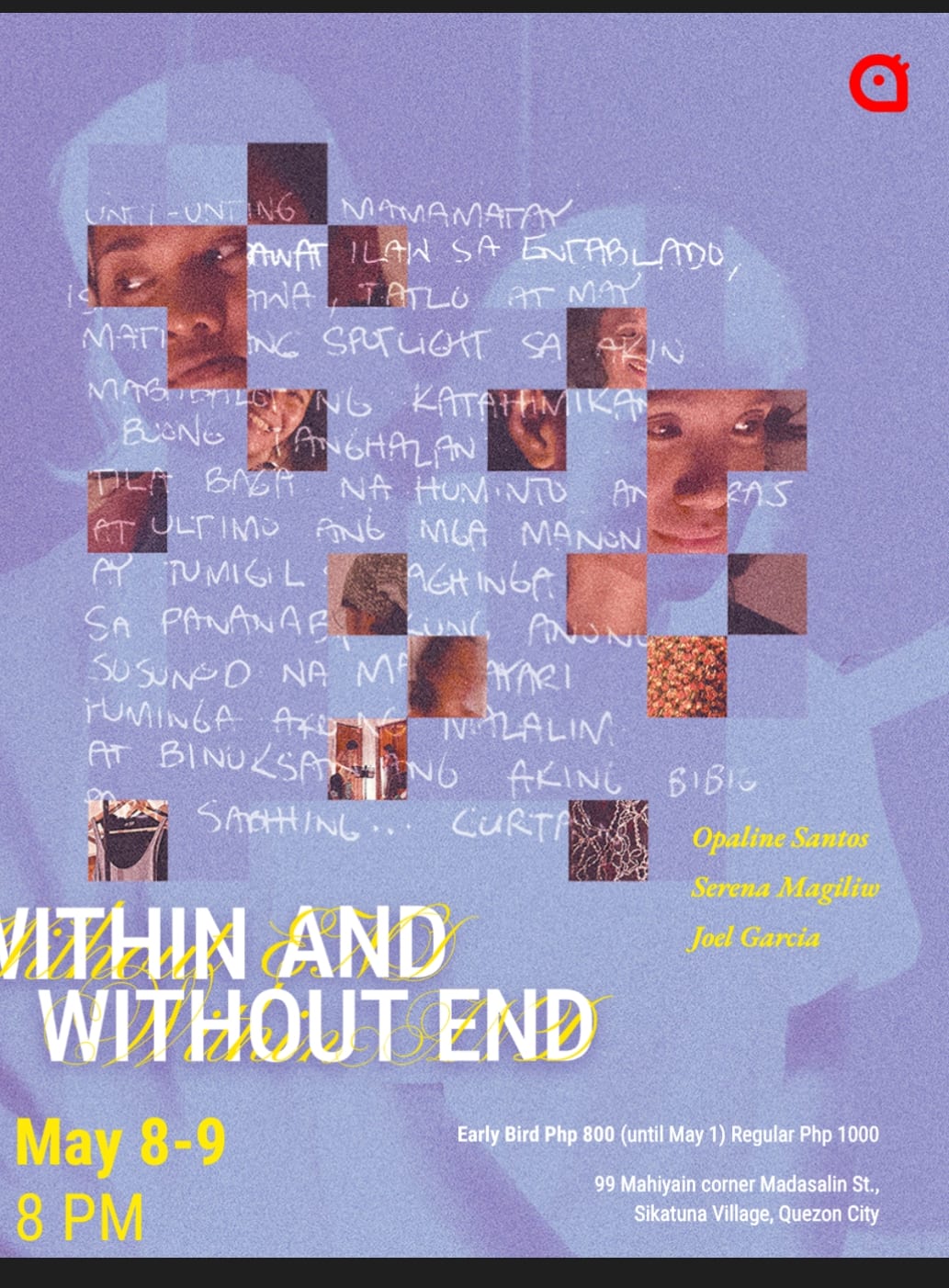
Within and Without End recently concluded its first run of the year last March 13 to 15. It will have another run on May 8 and 9 at Langgam's Studio at 99 Mahiyain, corner Madasalin St., Sikatuna Village, Quezon City. Buy your tickets here.
READ MORE:
The Bayaniverse Has Ended. What Now?
Matthew Ordoñez is a university lecturer at De LA Salle University-Manila. He teaches courses in Citizenship and Governance, Development Economics, and Cinema and Politics. He is a member of the Society of Filipino Film Reviewers and writes film reviews for Asian Movie Pulse.
View More Articles About: