Theater Review: Setting as Character, Found Space as Paid Actor in 'El Fuego del Alma'
The Porvenir production runs for one more weekend from August 21 to 23 at Sine Pop, Cubao.

Published on Aug 15, 2026
The first time I saw Porvenir's staging of El Fuego del Alma, a Filipino adaptation of Tennessee Williams' Summer and Smoke by Eljay Castro Deldoc, was through a staged reading one evening in May at Sine Pop. Even at night, the post-war house-turned-events space was at the mercy of Metro Manila's tropical heat, made worse by the exhaust fumes of tricycles passing through the inner roads of busy Cubao. It's literally "summer" and "smoke," matching Williams' central metaphor for sensuality and repression.
Fast forward to July and August, with El Fuego del Alma now a full staging, the weather is different. The air is thicker following an afternoon rainshower, the damp asphalt outside steaming with petrichor. It's not exactly "summer" and "smoke," but the same image resonates.
And that's the brilliance in Mark Mirando's direction of El Fuego del Alma, where the provincial setting functions as a living character, while Sine Pop—the production's found space—is a "paid actor" (as the kids call it, in the context of reels/memes where seemingly everyday things jokingly become hired performers).
The Setting as Character
Williams' setting is the fictional small town of Glorious Hill in Mississippi from the "turn of the century through 1916." Immediately, its place and time evoke strictness, deep religiosity, inescapable morality, and suffocating societal expectations. Deldoc brings this to a rural town in the Philippines, which isn’t too far off in terms of chastity, Catholic guilt, and the quiet violence of small-town gossip.
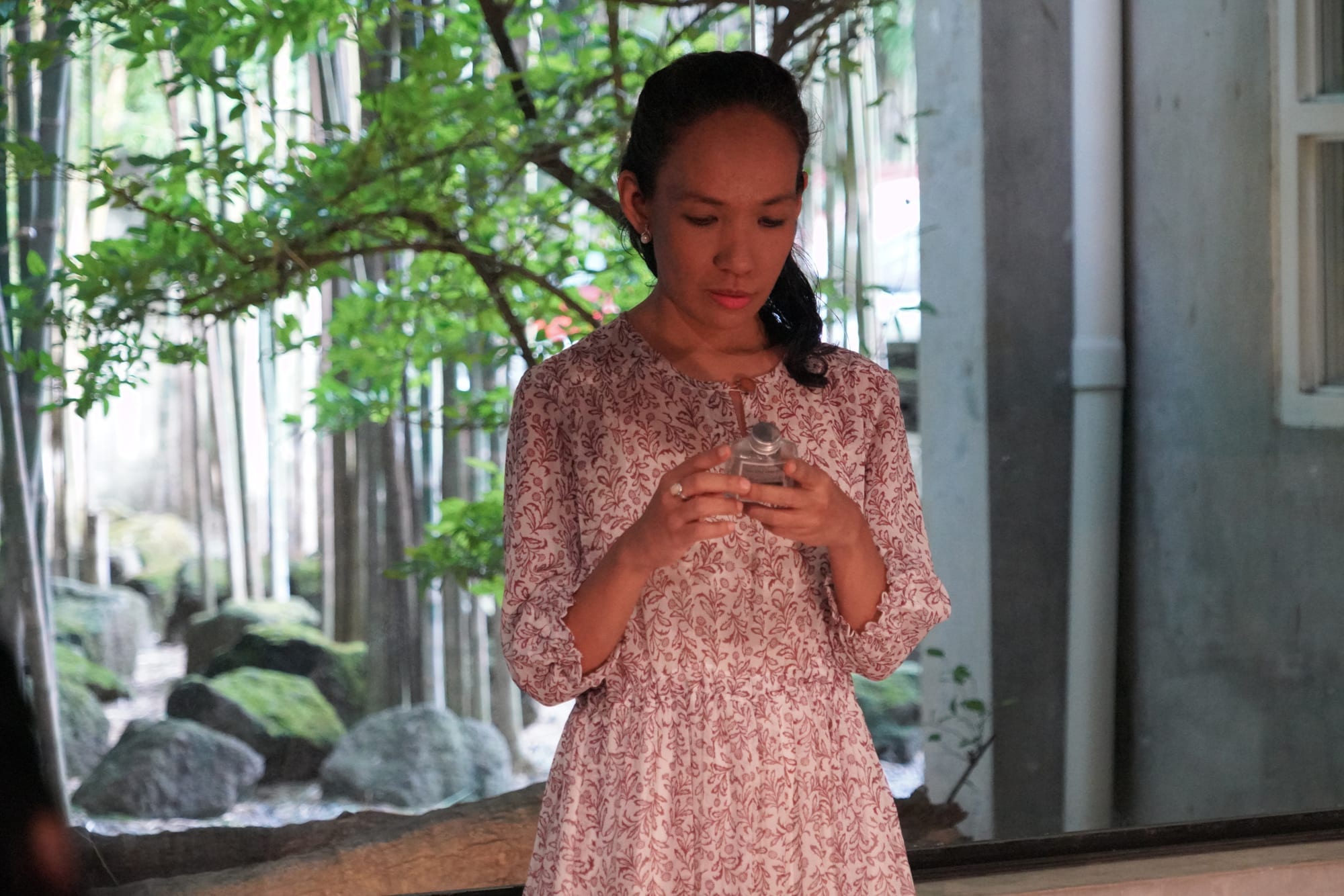
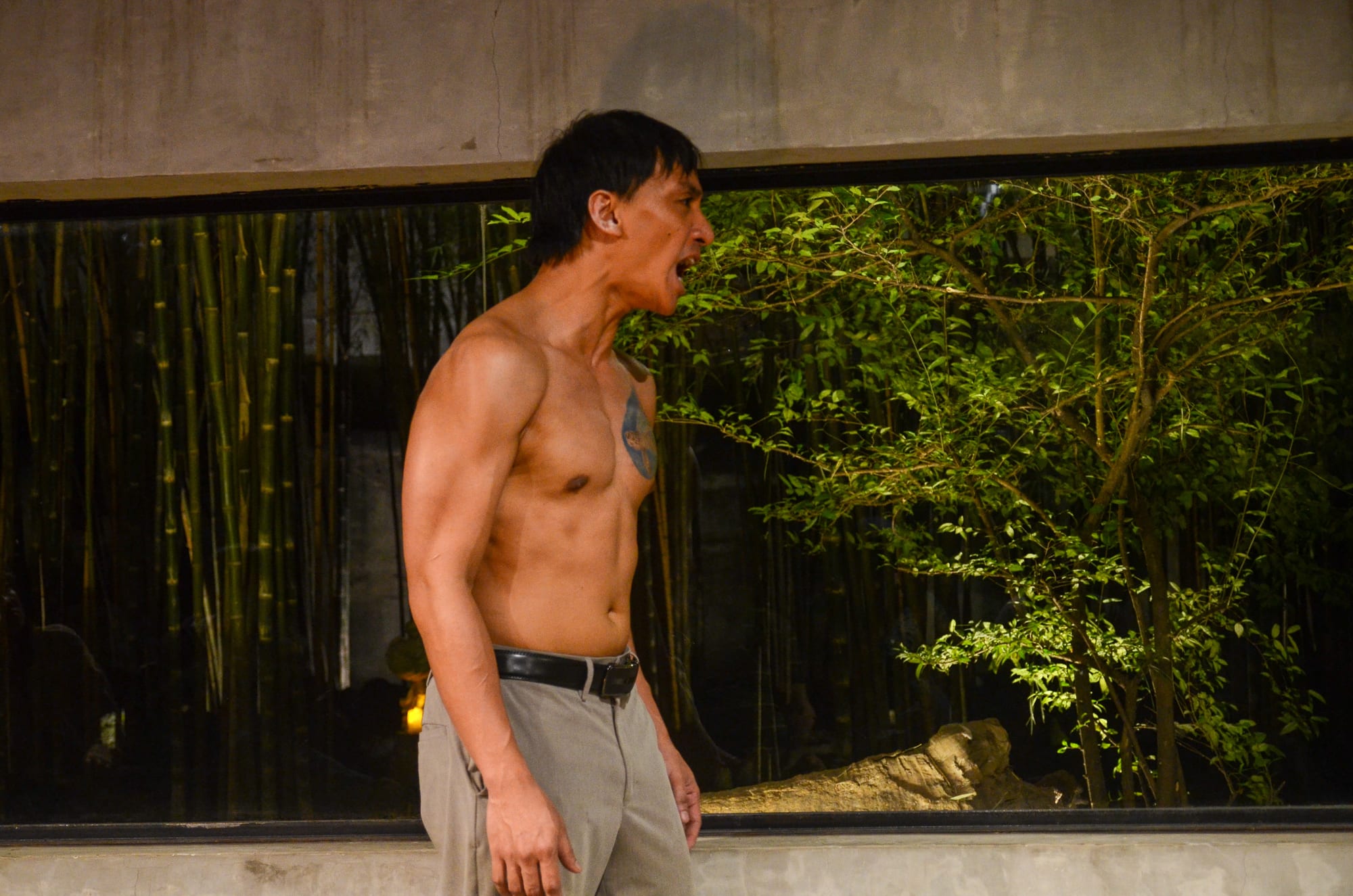
In this setting and space, the restless energy of Juanito, played by Vincent Pajara (alternating with Sandino Martin), clashes with the town's constraints and, consequently, with Alma, played by Opaline Santos (alternating with Hariette Mozelle and Nour Hooshmand). Their inner desires are in conflict with the setting, especially if we look at it as a character all on its own. Even the narrative’s spatiality, where Juanito’s and Alma’s homes are beside each other, forces an unavoidable intimacy.
Pajara brings impressive range to his role, following Juanito's evolution from an innocent boy to a reckless young adult, and finally to a more mature doctor and husband. Santos—whom I first saw playing the sensuous Rosa in the staged reading, an impression I couldn’t quite shake—captures Alma's simmering struggle with repression, making her final surrender to the world all the louder. While every performance should stand on its own, remembering her in that role opposite Martin's Juanito only adds an unexpected layer of tension. Rosa, in this viewing, is played by Mozelle. Her Rosa is quiet, but obviously cunning.
Sine Pop as Found Space
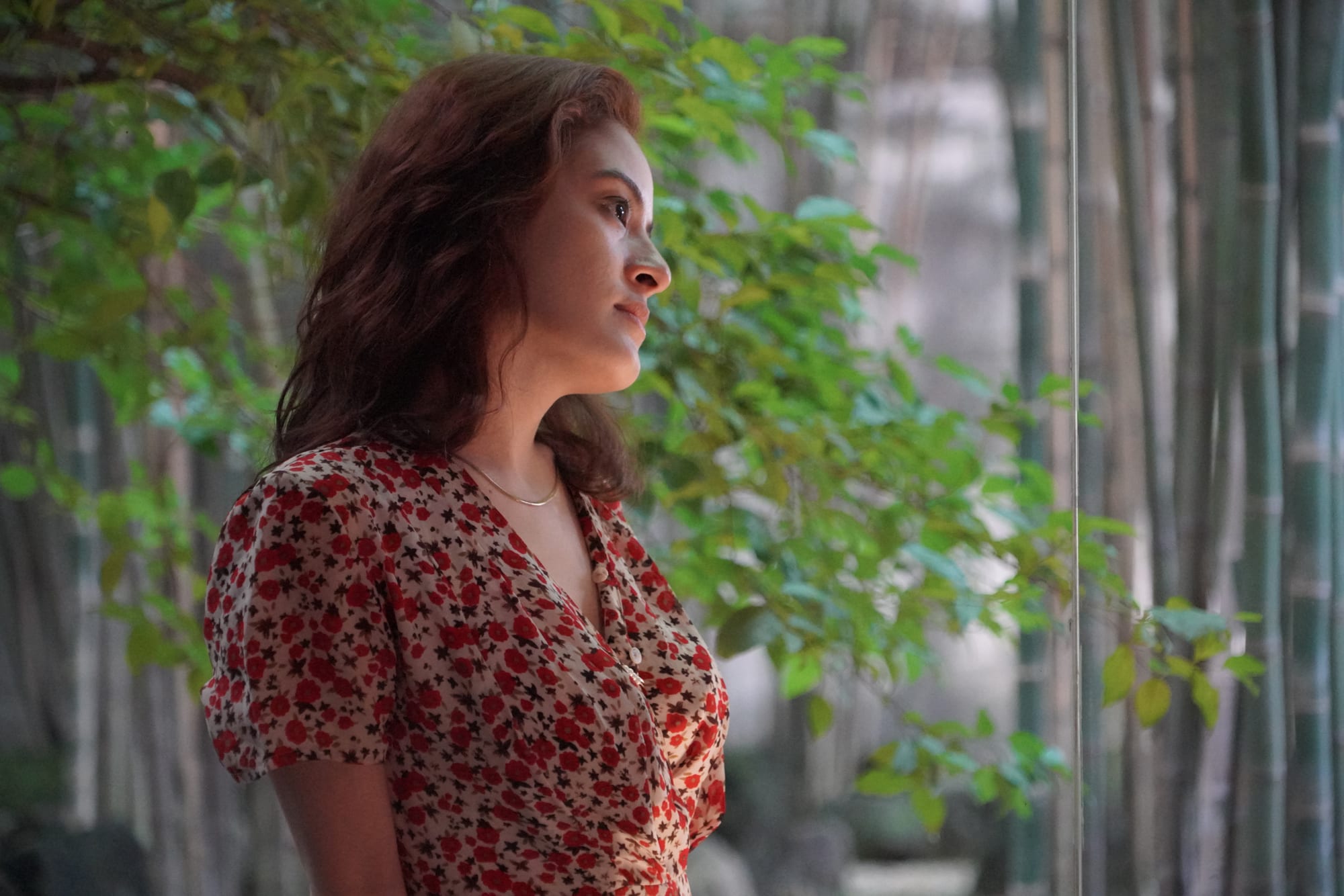
Sine Pop here does away with the rigidities of traditional theater venues: proscenium arches, raised stages, and the safe distance of traditional seating. And Mirando embraces the venue's origins as a house—specifically its structure as a post-war Filipino home with two floors, glass doors and walls, and a huge glass window opening to the bamboo garden outside.
The staging frequently relies on characters calling out to the second floor, which is made physical in the presence of an actual staircase at Sine Pop. A scene familiar in Filipino households, this physicality also visualizes an emotional distance. And yet, there are moments when every sound from upstairs is heard, from heavy footsteps to sexual encounters, owing to the paper-thin privacy and close-knit layout of the venue that matches the setting.
There are also several occasions when the characters run out of the glass doors on both the stage left and stage right, then run or chase each other in the perimeter, scenes the audience could also see behind the glass walls. This visualizes the entanglement of Alma, Juanito, Rosa, and, later, Nelia (played by Janna Cortes, alternating with Ingrid Villamarin).
Outside, the faint hum of passing tricycles, scattered neighborhood banter, and the rustle of street life root the play in a vivid sense of place, stitching Cubao’s living community directly into El Fuego's setting that's so tightly contained.
Whether Sine Pop was an intentional choice from the beginning or an inspired stroke of luck, Mirando’s use of this found space is just…chef’s kiss. The audience becomes curious, gossipy neighbors, eavesdropping on the domestic tragedy through glass walls and thin floors.
This is a review of the matinee performance on August 2, the production's second weekend, with mentions of the staged reading last May 3.
El Fuego del Alma runs for one more weekend from August 21 to 23 at Sine Pop, St. Mary Street, Cubao, Quezon City. Tickets are still available for the additional show on August 22, Saturday, 1 p.m.
ALSO READ:
Why Every Performance of El Fuego del Alma Is a Different Experience
Theater Review: Love, Mapanakit, and Knowing When to Stop
Christa I. De La Cruz is a Palanca Award-winning writer with over 15 years of experience in feature writing for print and digital media. She earned her Sertipiko sa Malikhaing Pagsulat sa Filipino from the University of the Philippines Diliman and holds an MFA in Creative Writing from De La Salle University. Her poetry collection, "Dáyo: Mga Tula" (2026), is published by the DLSU Publishing House and Grana Books.
View More Articles About: