Esquire Philippines' Best Visual Artists Awards 2026
We recognize the artists who define their generation, serving as the living chroniclers of our time.
Published on Feb 23, 2026
From featuring art exhibitions to supporting annual art events like Art Fair Philippines and ALT ART, Esquire Philippines has always championed local art and creativity. In 2023, we released a list of 25 visual artists we love, recognizing them as movers of Filipino contemporary art. This 2026, we continue to shine the spotlight on our makers and dreamers through the inaugural Esquire Best Visual Artists Awards.
The Esquire Best Visual Artists Awards recognize the artists who define their generation, serving as the living chroniclers of our time by confronting the evolving narratives and underlying plight of contemporary Filipino society.
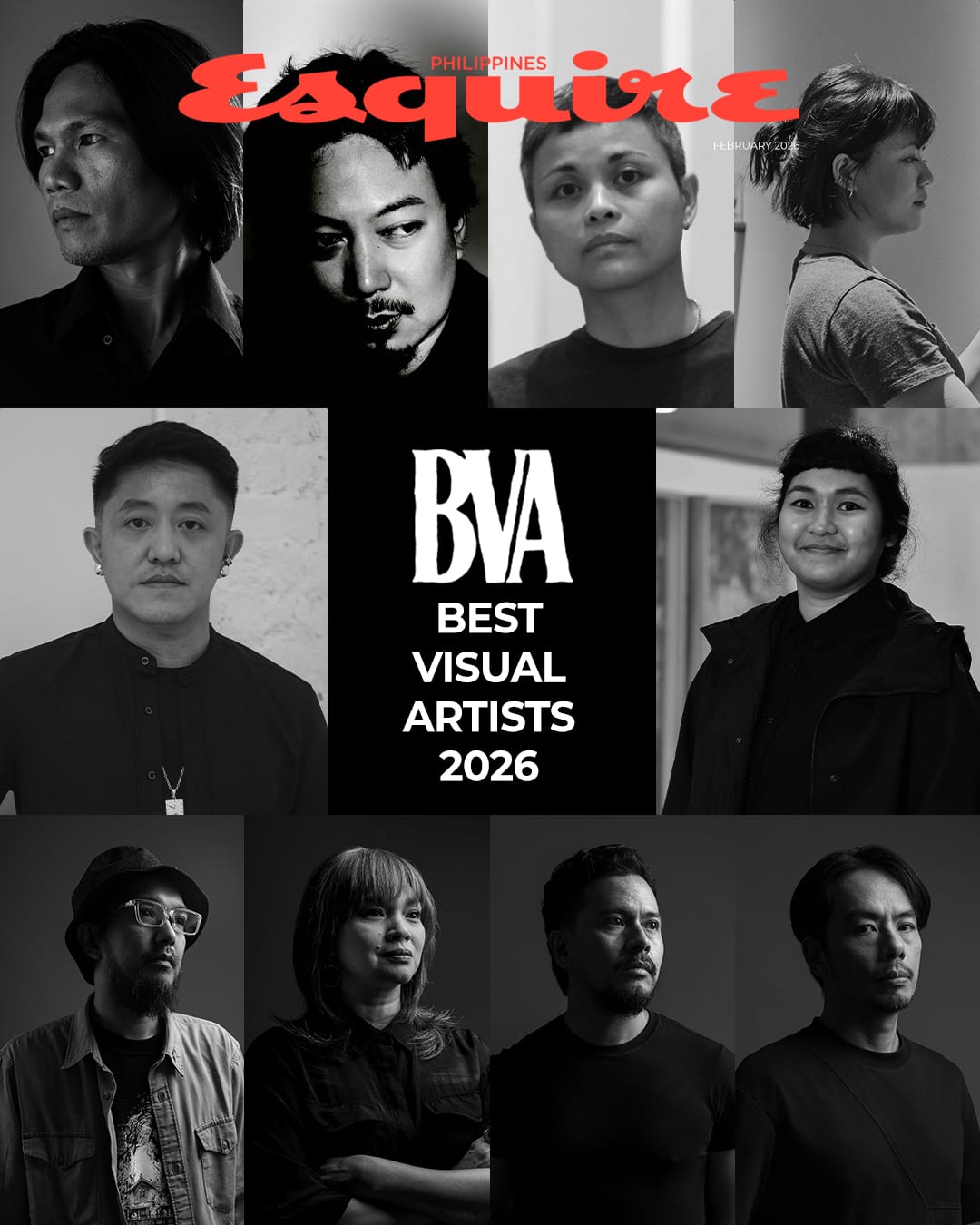
Spanning a diverse range of media, these creators have staged landmark exhibitions at major local galleries, represented the Philippines on the international stage over the past few years, and won awards for their creativity and skill both locally and abroad. They have also refined their practice through prestigious global residencies and grants, proving that for the true visionary, the process of discovery never ends.
Here are the 10 honorees of the first-ever Esquire Best Visual Artists Awards (in no particular order):
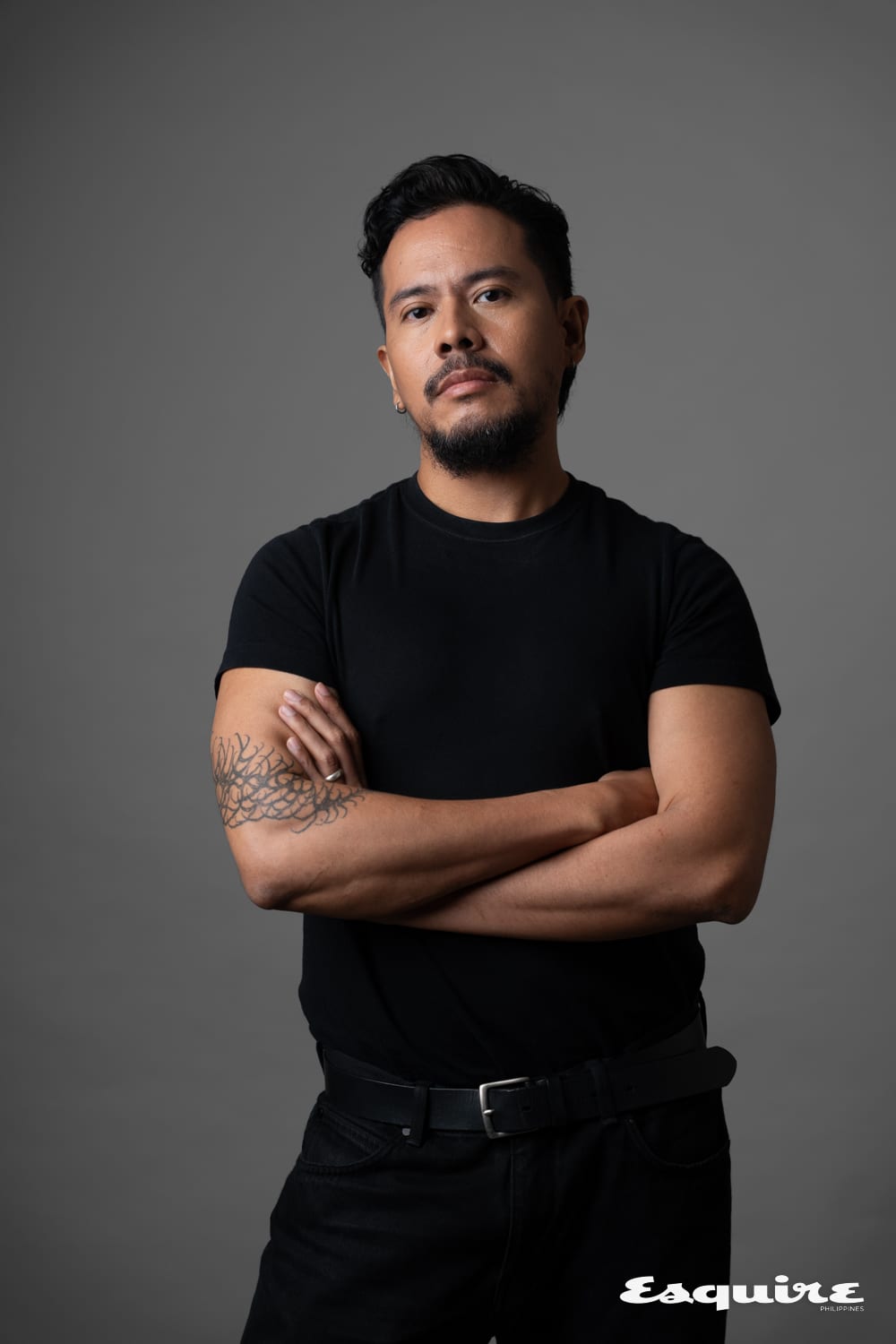
Mark Salvatus
Mark Salvatus, who hails from Lucban, Quezon, in the foothills of Mt. Banahaw, was inspired by the ethno-ecologies of the three-peaked forested mountain in what's possibly his biggest solo project to date. His Sa kabila ng tabing lamang sa panahong ito / Waiting just behind the curtain of this age, curated by Carlos Quijon, Jr., was front and center at the Philippine Pavilion during the Venice Biennale in Italy in 2024; it was later on exhibit at the National Museum of Anthropology in Manila from July 14, 2025, with a run date extended until March 23, 2026.
His creative practice often incorporates community engagement, exploring themes of urbanization, socio-economic issues, and site-specific discourse, through multimedia forms, such as installations, videos, and collage. He was a recipient of the Thirteen Artists Award from the Cultural Center of the Philippines (2012), the Sovereign-Schoeni Art Prize in Hong Kong (2012), and the Ateneo Art Awards (2010).

Can you describe the specific moment when you decided that you wanted to do art for the rest of your life?
I grew up in Lucban, Quezon, and we have a tradition called the Pahiyas Festival. When I was a child, I remember helping my parents and neighbors decorate our houses with vegetables, fruits, and anything that you can see in the environment. We didn’t have museums or galleries in Lucban at the time, but for me, it was a natural way of creativity. I thought it was a form of art—like an installation. Most of the people in Lucban are not artists, but they have this impulse to create and put things together. I thought this was something innate to us as Filipinos, and I decided I wanted to be an artist. Later, I took advertising in college; it’s not necessarily fine art, but I learned many ideas about communication and objects. It all connects from my childhood to moving to the city, informing how I work.
In an alternate universe where you're not an artist, what are you doing?
When I was a child, I had many wishes—to be a doctor or an architect—but I eventually went into art. Recently, I’ve wanted to become a singer. I had an experience in San Jose, Antique, where I saw a show band singing in the rain. Their voices really connected to the rain, and I wanted to be like them. I don’t have a musical talent, but I want to be in music. Singing comes from the body; it’s like an extension of the self. I like the idea of "extending" rather than "expanding" because it moves slowly from one point to another. It’s the idea of extending life, the breath, and the tone. I want to be in that line.
Who (or what) is your greatest inspiration?
I have many, but I don’t want to pinpoint one because it changes. I think the everyday context and experiences really influence how I work. I’m inspired by the serendipitous impulse of the everyday—how it’s sunny in the morning and raining in the afternoon. I am inspired by this circular motion of life that is unstable and not fixed. It’s like an installation; it’s always unstable, just like our society, government, and economy. That’s why the idea of "style" is not too important to me. The important concept is to have continuous changes that extend and prolong life.
What is your art saying that you find impossible to put into actual words?
As an artist, you want to voice out what you imagine through visuals, writing, or singing. For me, imagination is all about anger. You imagine in order to voice things out. There are many people who imagine the world but cannot realize it, and that imagination comes from desperation or frustration. My project for Venice is inspired by Hermano Pule, a local hero in Lucban. He imagined my town to be free from Spanish colonizers. That imagination wasn't romantic or utopic; it came from his anger. This imagination, for me, equals anger. It can describe or be undescribed; it is always changing.
What, for you, is the role of an artist?
That role is always changing. First, your role is to be a human—to be alive. I like the word "critical" because, in medical terms, it’s a matter of life and death. An artist should always be in this "critical condition." They need to be aware of everything around them and work to extend life. That is why we create; it’s a bodily impulse and an urge. The artwork is the manifestation of being alive, and it remains. It connects to your family, friends, and the community. Eventually, the audience can relate to this manifestation of being alive.
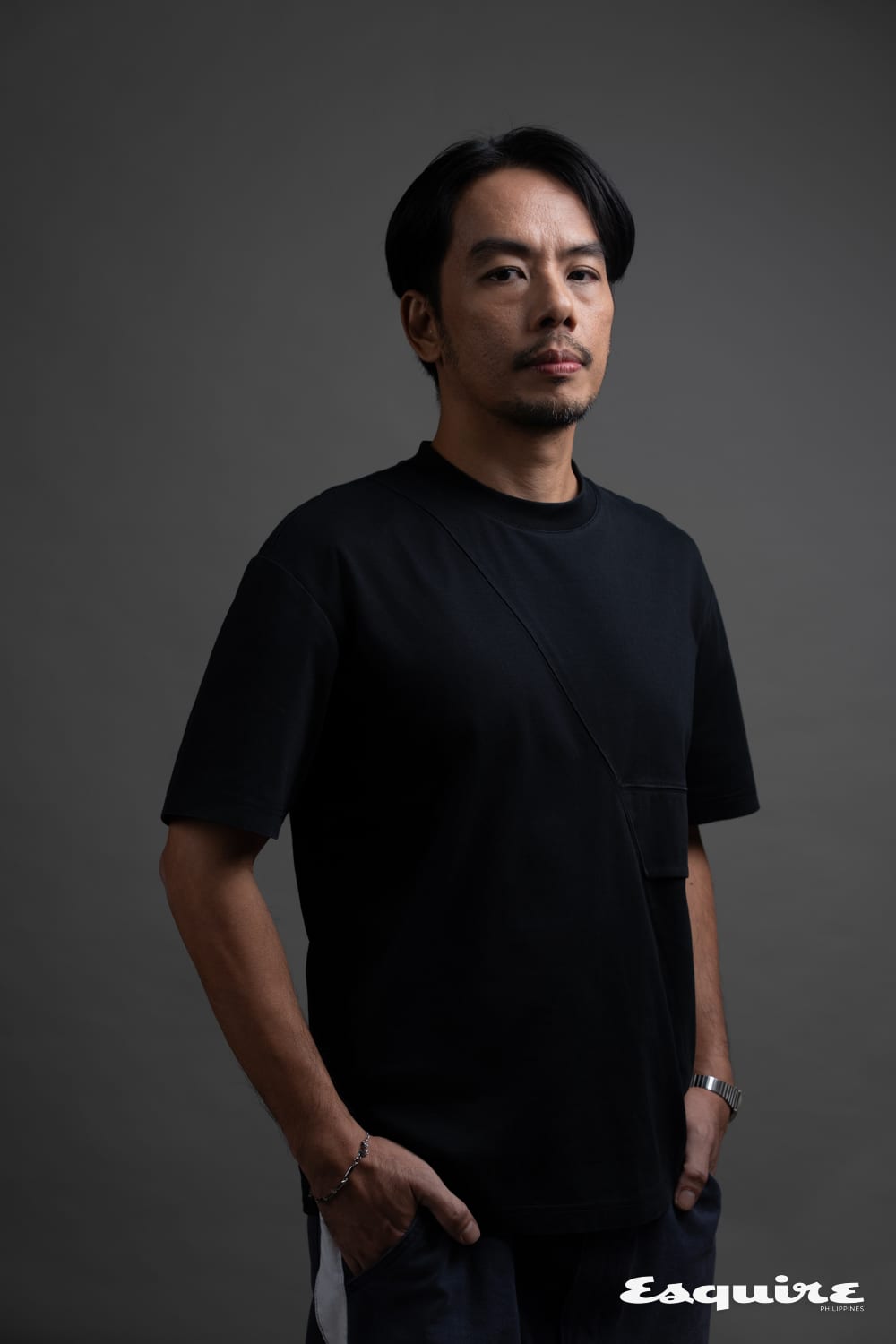
Derek Tumala
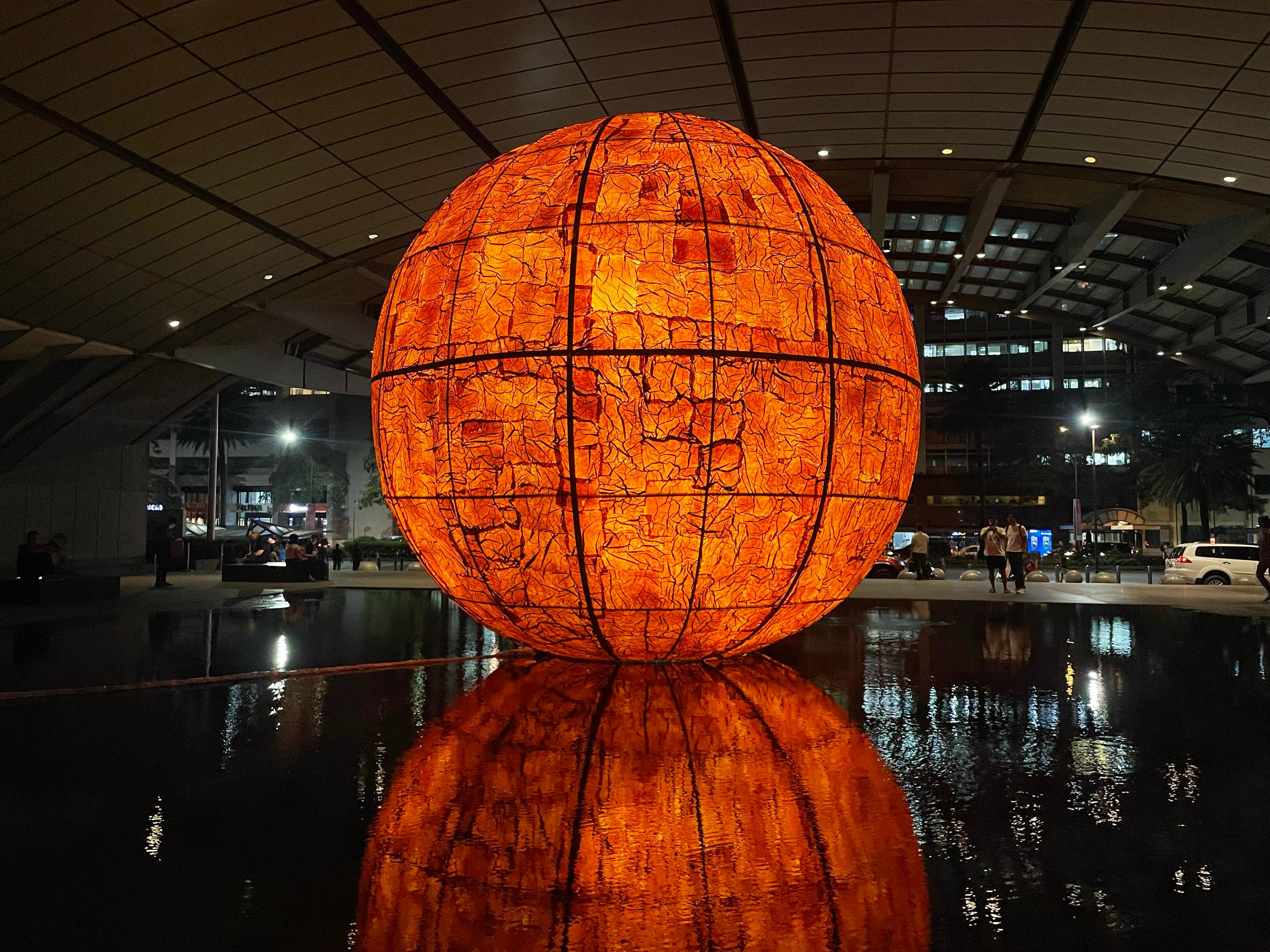
Derek Tumala explores the intersection of art, science, and technology through new media, installation, and objects. His artistic research on the Philippine climate crisis is presented in Tropical Climate Forensics, a gamified online diorama specific to the Philippines as a tropical site; while his creative practice on techno-ecological framework is evident in his public art pieces like "a warm orange colored liquid" (Art Fair Philippines 2024, Ayala Tower One Fountain Area) and "Kayamanan ng Pilipinas"(SM Mega Tower, 2022).
He has exhibited his works in Slovenia, Indonesia, Norwich, and Switzerland. Tumala is named as one of Cultural Center of the Philippines’s Thirteen Artists Award (2025) and a finalist for the exhibition Sacred Geometry at the Ateneo Art Awards Philippines (2015).
Can you describe the specific moment when you decided that you wanted to do art for the rest of your life?
When I was a kid, I really liked art and science projects. I always made sure that I made big works, and I've always been trying to create things. My mom makes clothes, so I always saw her creating and working with people; it kind of piqued my interest in what art is. Ever since I was a child, really, I was that kid who loves art projects, science projects, and decorating rooms. I did those poster-making and diorama-making projects, like those science projects where you try to create a volcano. That's why I decided to take up a Fine Arts course in college, and until now, I’m practicing.
In an alternate universe where you're not an artist, what are you doing?
I don't think I can imagine doing anything else, but it would still be related to creating objects, images, or structures. I also always wanted to be an architect somehow, so it’s still on that. I actually thought about it, and maybe something in science as well, but science for me also has a creative side to it. Maybe a scientist, but I’m very sure that I want to be an artist.
Who (or what) is your greatest inspiration?
My mom. Seeing her creating work and designing clothes—she always has this energy. And also being a mother; I think being a mother is the most amazing job to have. I learned how someone can be so selfless and really nurture people. Being able to do what I do now is also because of her; she’s been supportive and understood what nurturing someone is. I also try to resonate that with my work, to advocate for something and create beautiful things. My mom is totally my inspiration, really.
What is your art saying that you find impossible to put into actual words?
Most art is very passive—it just has to exist. For me, it’s a visual language, so there are really no words that can describe it. How do you convey in-betweens or something that’s not really there? That is what art offers: defining this in-between. These things are not conveyable through language because language is limiting. There are only a few words for certain things, but what about the other things that we can’t understand? Art can just exist, and people will interpret it or feel something about it. I can’t really say exact words about what the work can do; it’s really up to how the audience will receive it.
What, for you, is the role of an artist?
I feel like it’s too imposing to say what the roles of an artist could be. I think we just have to exist, most of all. It’s so hard to exist as an artist at this time because we live in a capitalist society, so our aspiration is not just on the creative; we have to survive as well. The role of an artist is not really just about the labor; it’s about existing and being able to say our truths—to imagine the world. That’s what I do. It’s rooted in curiosity. We should exist without being imposed to what we should be. We just have to be there.
Corinne de San Jose
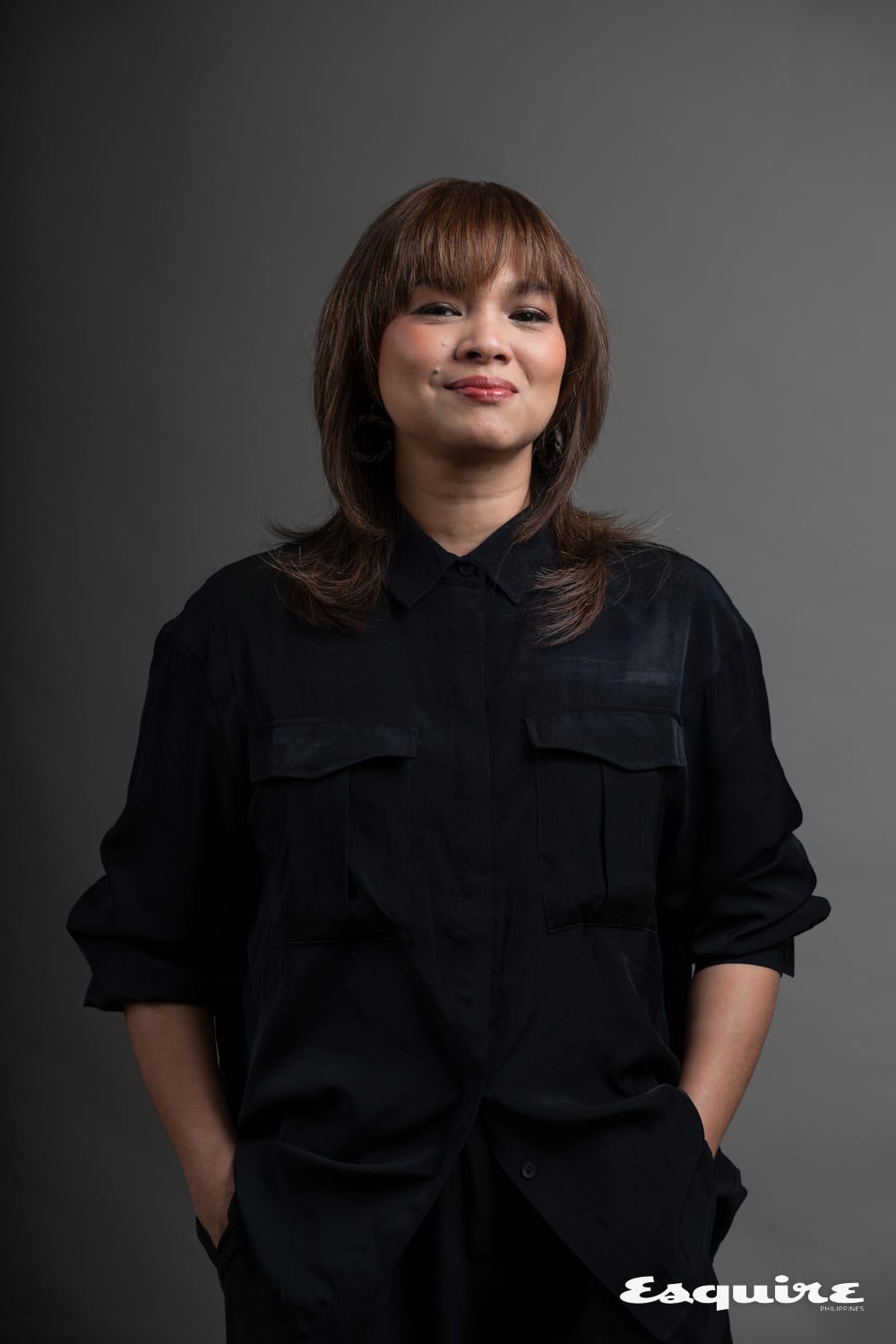
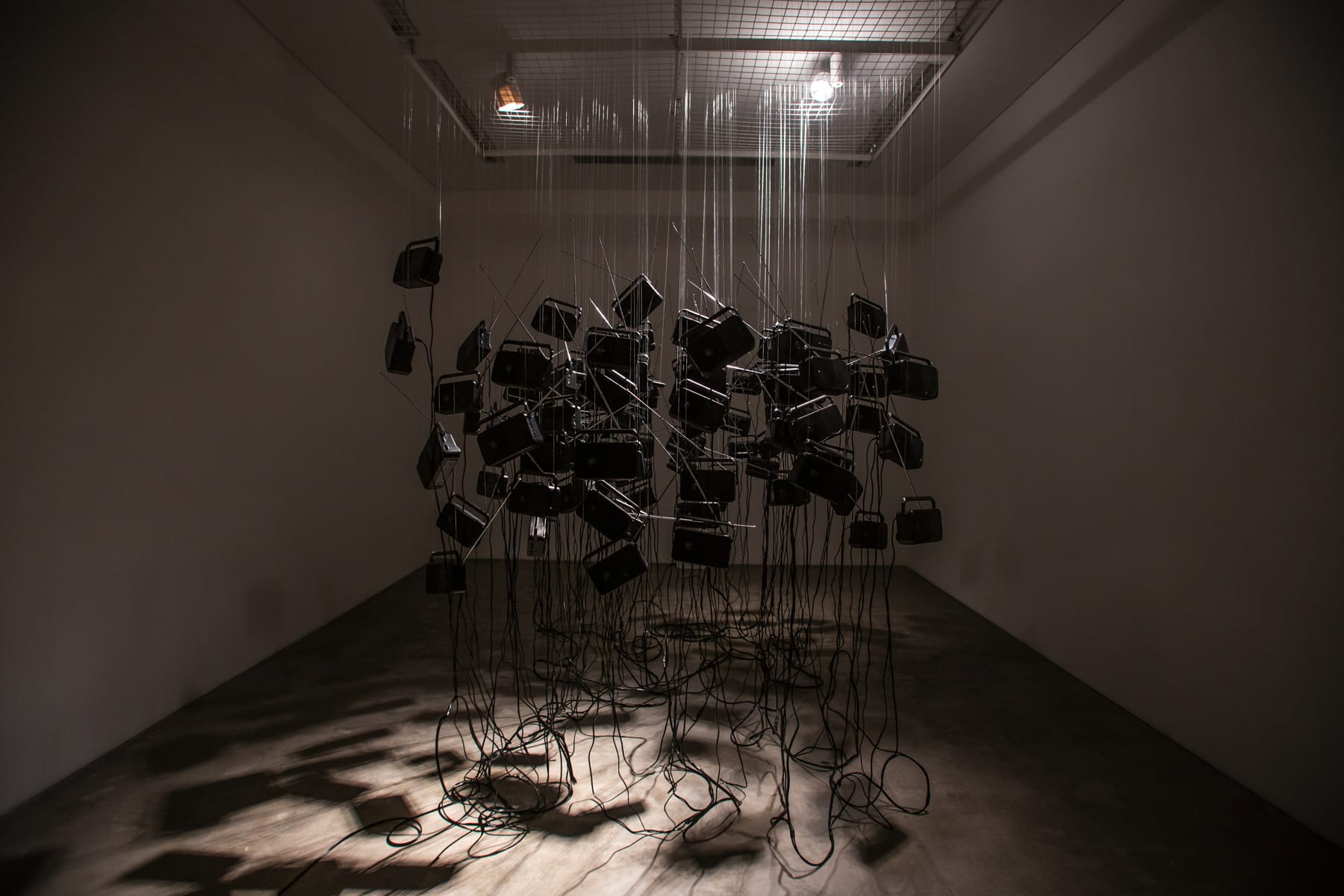
Corinne de San Jose, born in Bacolod, is a multidisciplinary artist and film sound designer working with installations, kinetic sculptures, and sound-generating pieces as well as photography-based processes like printmaking and video. She is currently represented by Silverlens in Manila, and her eighth solo exhibition with the gallery, Everyday is Like Sunday (2025), marked her homecoming after her fellowship in New York at the Asian Cultural Council and her residency at Civitella Ranieri Visual Arts Residency in Italy. As a film sound designer, she is a five-time Gawad Urian winner for Best Sound for On the Job 2: The Missing 8, Midnight in a Perfect World, Respeto, Violator, and On the Job.
Can you describe the specific moment when you decided that you wanted to do art for the rest of your life?
Ever since naman, I knew I had to do something creative. Pero, usually I just follow what's in front of me. But there was a point where I lost a loved one, and then it felt like a light was turned on. I was like, "Oh, okay. I guess I have to do this now." I think that was the moment.
In an alternate universe where you're not an artist, what are you doing?
I don't know. I think I would cook 'cause I like doing that. Or maybe I'll be like a researcher ganyan 'cause I'm very curious about a lot of things. I like information and learning things, so it would be that probably.
Who (or what) is your greatest inspiration?
I've been enjoying reading about history or finding gaps in our history. I like the stories na hindi siya accurate pero parang anecdotal—the ways we fill those gaps. Those things always make me want to make work or at least follow a rabbit hole of finding out more about those gaps. I just need a seed of information and then I'll follow that. The work doesn't usually end up about that, but I like following those things.
What is your art saying that you find impossible to put into actual words?
This is also why I started working on sound: I want to talk about silence. I want people to be more aware about silence or about how sound affects our bodies. I also care about us, lalo na now, our mental autonomy in relation to silence. It's hard to talk about that; it's better to experience it.
What, for you, is the role of an artist?
It's giving you alternative ways of thinking or seeing about things. For me kasi when I consume art, what it does to me is it makes me think that there are other possibilities apart from our reality. It makes me want to not just be here but like build worlds outside of what we normally live in.
Ronyel Compra
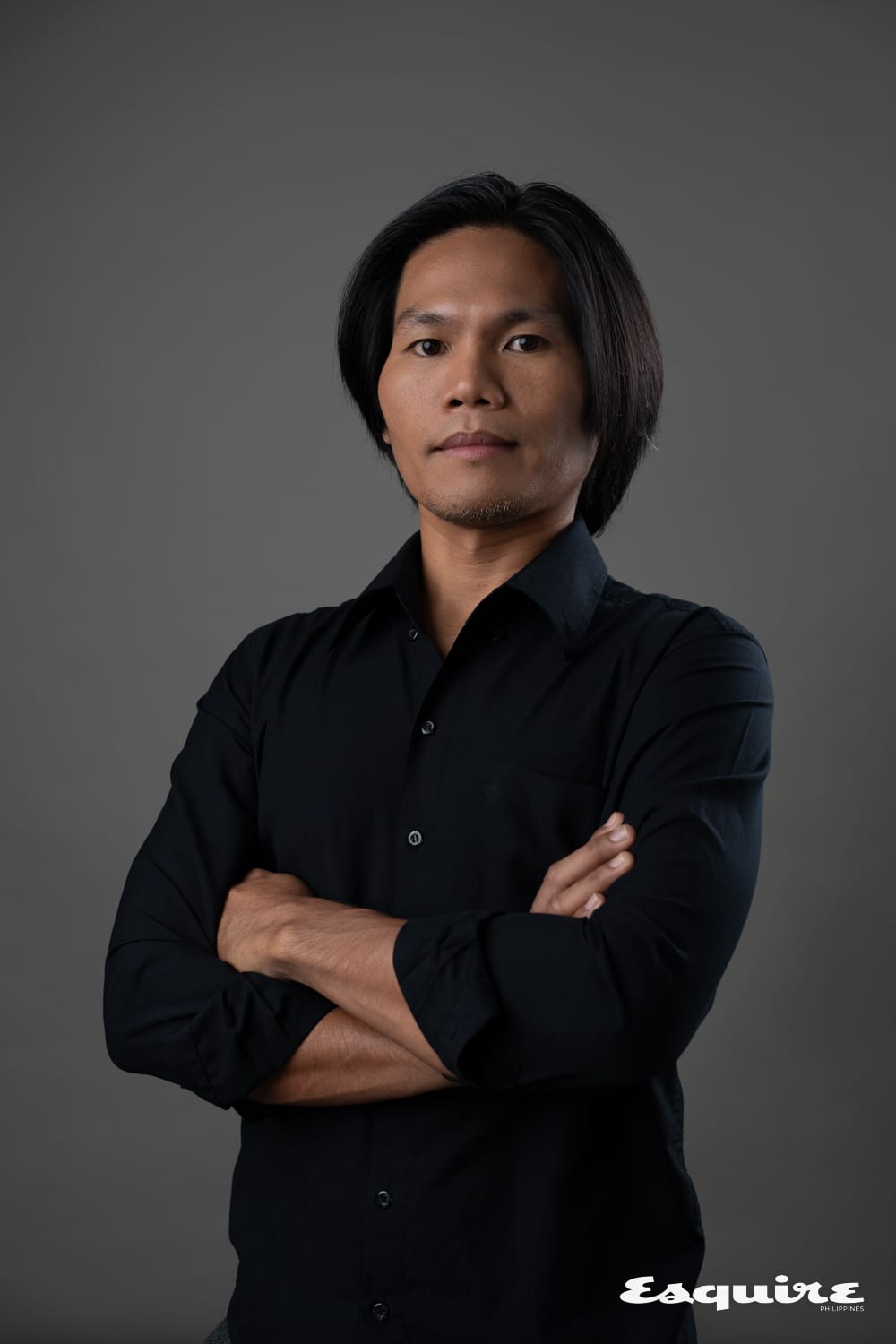
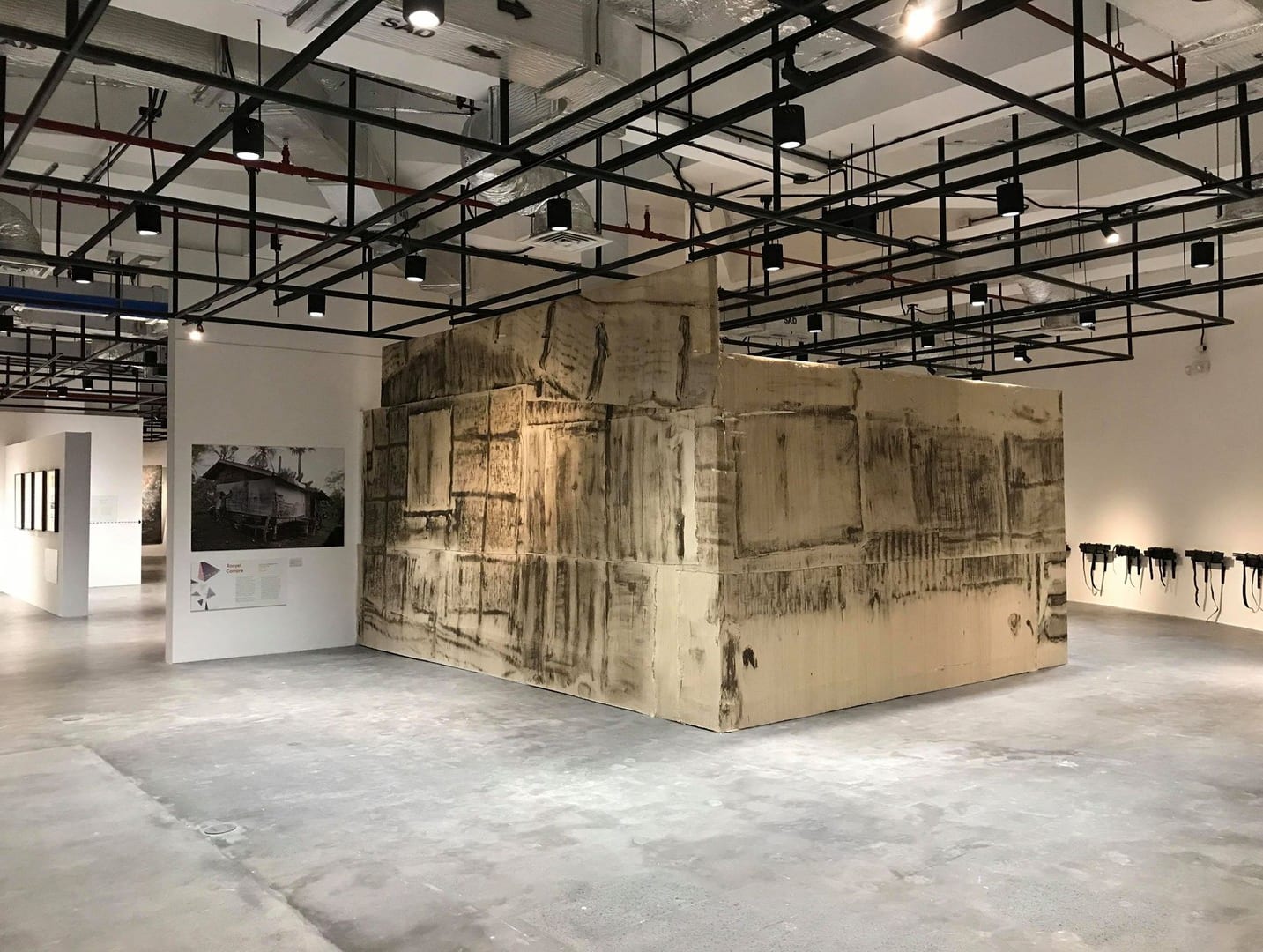
Ronyel Compra from Bogo City, Cebu, explores interactions between people and their environments by incorporating indigenous materials in his paintings, installations, and videos. In early 2025, he completed an artist residency at Gasworks in London, where his creative research focused on different kinds of urban infrastructure and communal meetings spaces in the city.
He has also completed residencies at the Bellas Artes Project in Bataan (2020) and AIR-H in Hachinohe City, Japan (2023). Compra was a finalist for the Ateneo Art Awards in 2019 and a recipient of the NoExit Grant for Unpaid Artistic Labour— Philippines through Para Site Hong Kong in 2021. He is currently represented by 125 Projects, a new gallery along Pioneer Street in Mandaluyong.
Can you describe the specific moment when you decided that you wanted to do art for the rest of your life?
Recently lang, like a few years back. Although it puts you in a very vulnerable place, it's a very freeing feeling that you have finally decided. You're in between the instability and stability na phase sa life mo when you started to realize that. It's more on the circumstances and progression ng mga decisions and things that you do before and current na state mo that pushed you towards that. Parang natural lang na dumating siya, and then eventually, konti-konting nabubuo yung decision mo. Although you're really not sure pa rin that it's gonna be for the rest of your life, currently it sets you na ito yung gagawin mo pala, and you're happy with it.
In an alternate universe where you're not an artist, what are you doing?
I was raised in this environment na fishing village; fishing yung work ng side ng father ko. My lolo is a fisherman, and then sa other side ko naman are mga farmers and gardeners. So I think I'm more into being a food producer, more on the survival na yung production of—maybe a gardener or a fisherman. Yung consciousness ko is towards the production of food.
Who (or what) is your greatest inspiration?
It's not a specific person, but more about looking at the overall nature and the vastness. You feel small looking into this vastness of the cosmos na you have this feeling na you just want to stay there as small as you are. To be inspired to contribute sa humanity, yung complexity ng relationship ng humanity and its history or the nature. Trying to look into that complexity.
What is your art saying that you find impossible to put into actual words?
Ito yung current phase of my art production: it's more on archiving or recording and documenting, and trying to process this life experience and itong after-effects of colonial legacies and overall effects na pinaprocess ng tao and me. Perhaps yun, more on documenting and trying to make sense of what's happening.
What, for you, is the role of an artist?
It's more on retelling the history, the past, and then recording that narrative. Telling that narrative as a narrative of your own na you are trying to absorb what is there because it gives you a different perspective. You're just trying to make a language of your own, retelling those to contribute to humanity. Personally, you're just trying to understand and make sense of these things that you are experiencing.
Allan Balisi
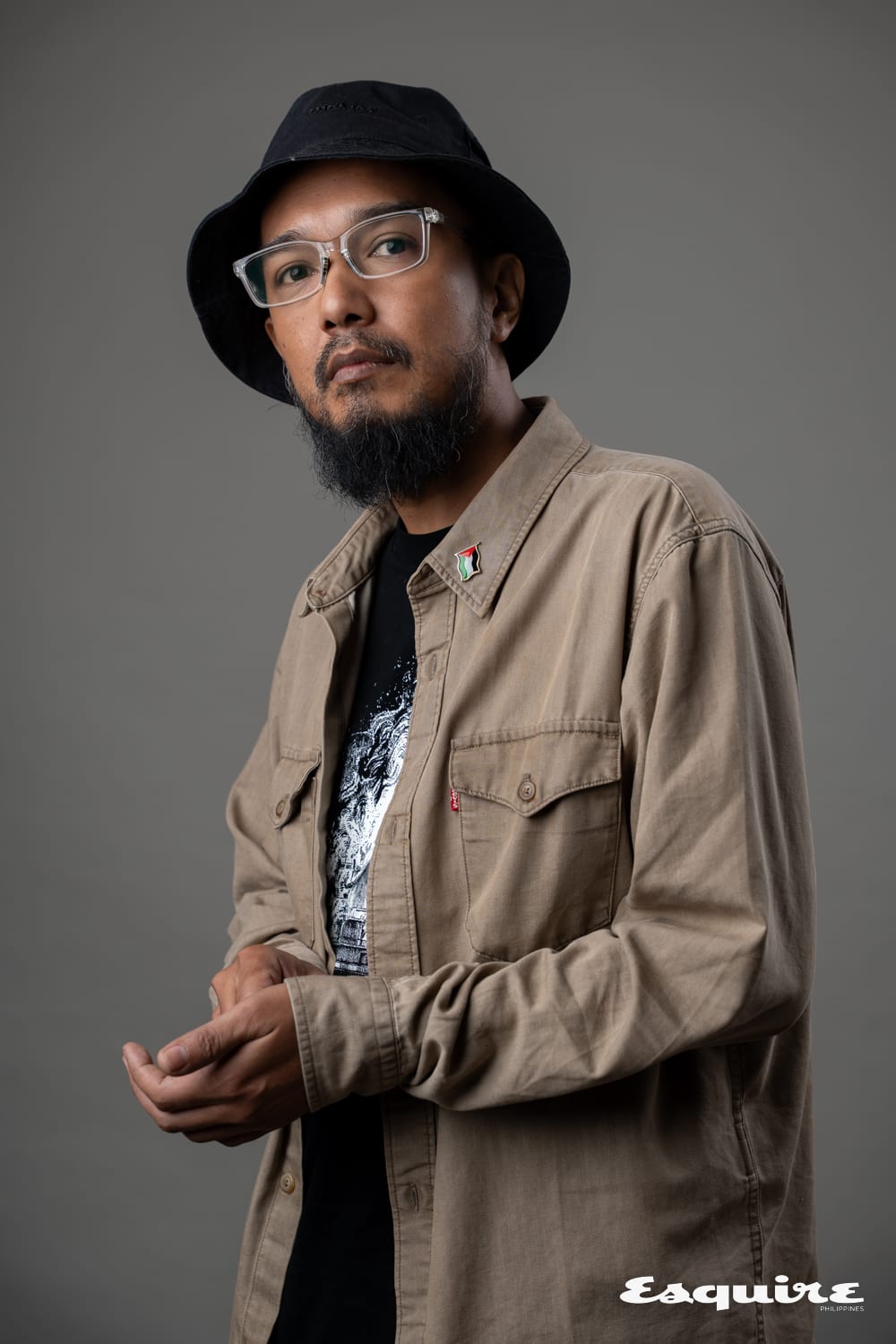
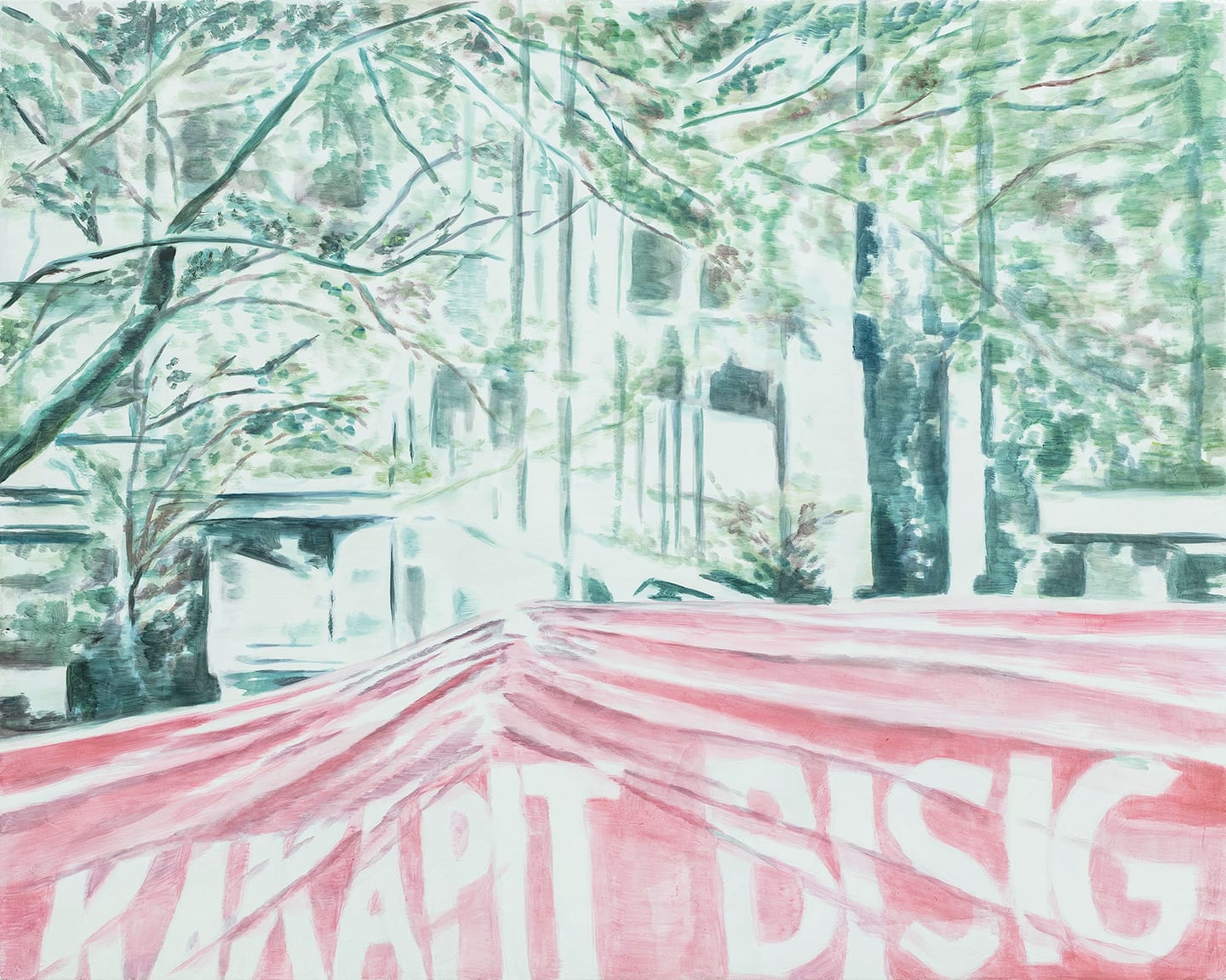
Allan Balisi from Isabela is primarily a painter, with his canvases often portraying photograph-like stills. Some of his recent solo shows include Dear, Inclined One (Sintang Nasa Bingit) at A Plus Art in Kuala Lumpur (2025), Kundiman (If It Were Not So) at Blanc Gallery in Quezon City (2025), and Among the good wishes at Silverlens in Makati. He was shortlisted for the Ateneo Art Awards in 2009 and 2013.
Can you describe the specific moment when you decided that you wanted to do art for the rest of your life?
Mid-2000s, may na-attend-an akong isang show sa Cubicle Art Gallery sa may Pasig, alternative space siya. Nakita ko yung mga works doon ng mga student ni Roberto Chabet. Nakita ko na parang madami pang pwedeng i-explore sa art.
In an alternate universe where you're not an artist, what are you doing?
Baka di ako naniniwala sa alternate universe, o kung sa ibang reality, baka pwedeng writer ako or filmmaker or comic artist. Pero 'yun at 'yun pa rin yung gagawin ko, parang nasa art pa din.din.
Who (or what) is your greatest inspiration?
Ang dogs ko at ang mga artist peers na nakapalibot sa akin. Sobrang daming artists para banggitin, ngayon mas inspired ako sa mga taong nasa paligid ko.
What is your art saying that you find impossible to put into actual words?
Sa tingin ko, parang wala e, kasi yung paintings ko naman guided siya ng words. Meron silang supporting title, so even the viewers, kaya naman nilang ilagay into words yung visual language. Dati kasi, for a decade nasa digital landscape ako—nasa film, vintage pictures, press photos. Medyo detached. Pero ngayon mas ini-explore ko yung nasa paligid ko.
What, for you, is the role of an artist?
Bukod sa pag-record ng history o pagiging vehicle ng universal emotion, role ng artist maging boses sa mga oppressed, kahit anumang platform ito. Kailangan natin maging "resibo" sa mga ginagawa natin.
Issay Rodriguez
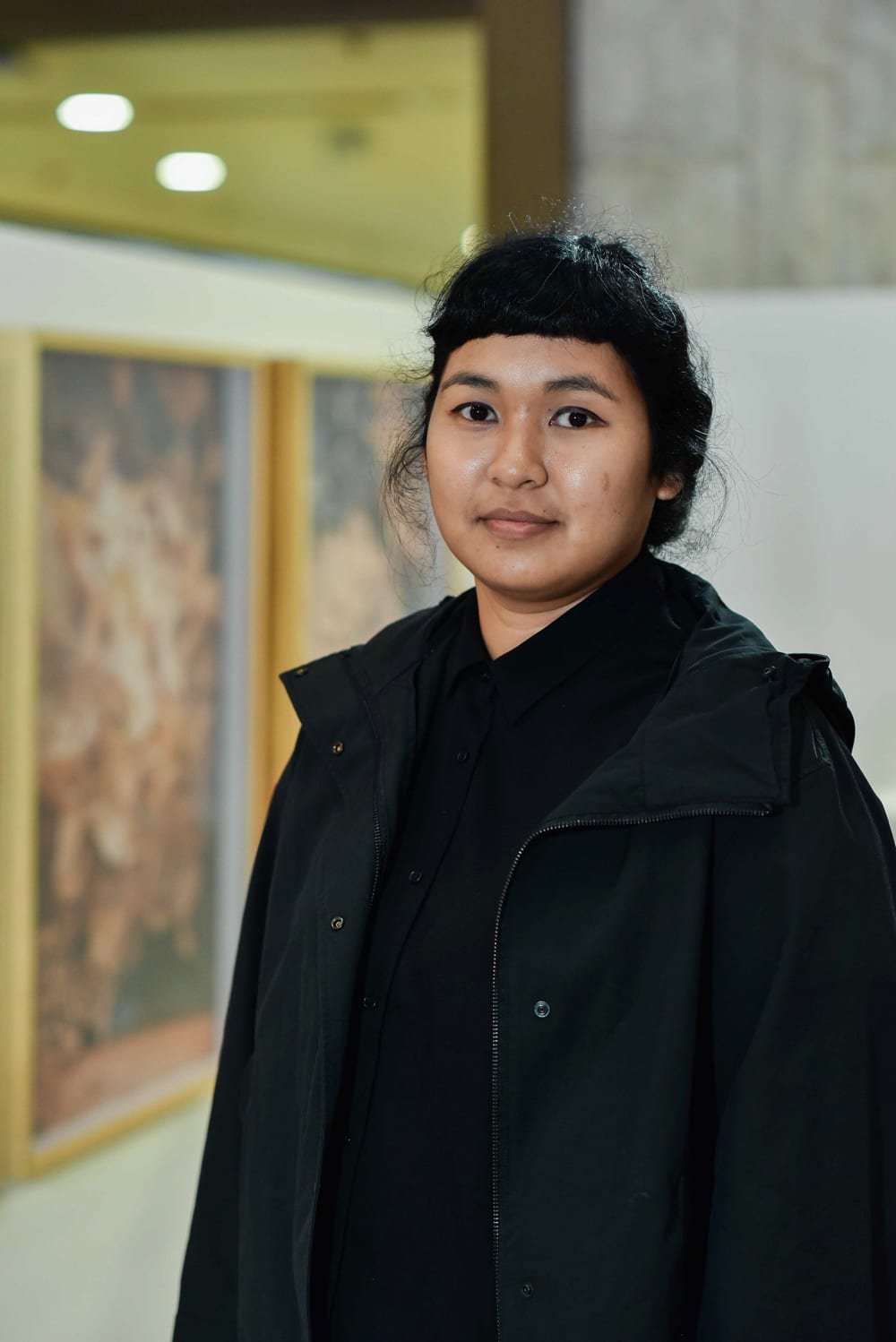
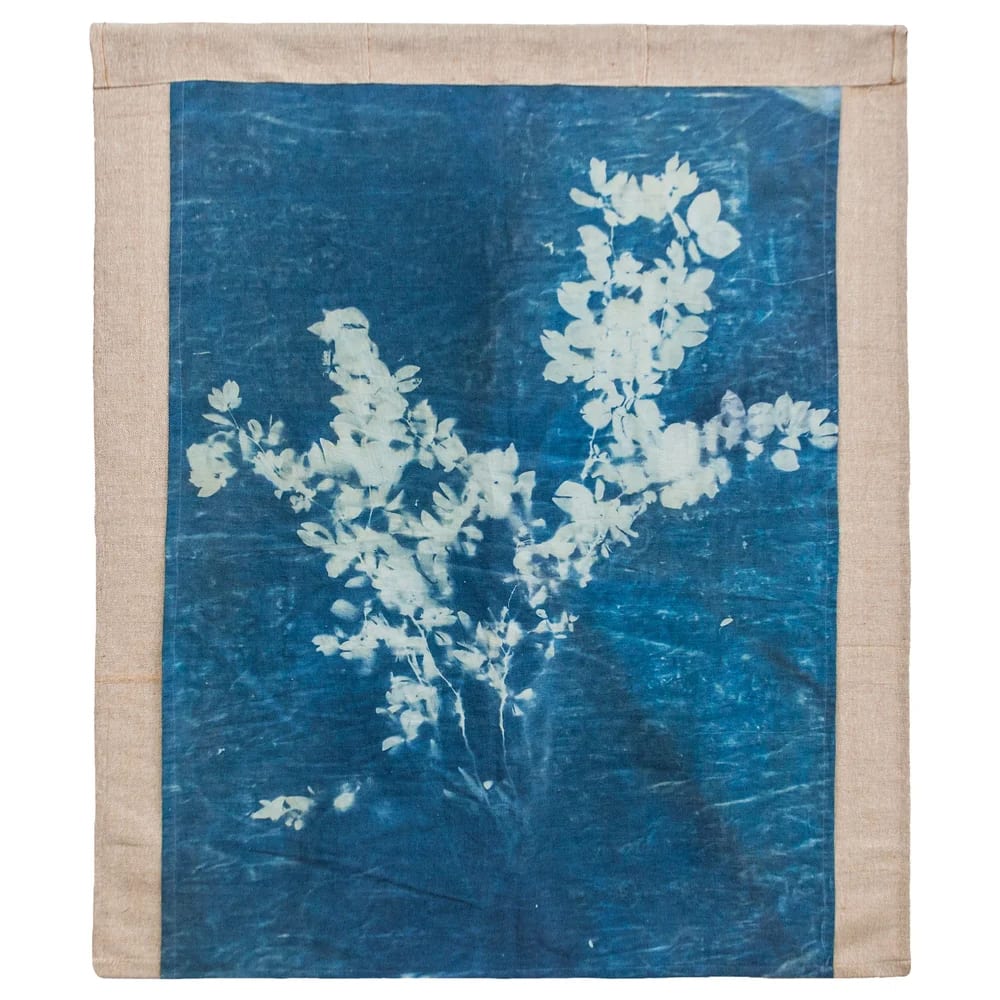
Issay Rodriguez is most known for her drawings, cyanotypes, and VR and AR formats that deal with themes of humanism and ecology. As she mentioned in her interview, her greatest inspiration are bees, with her long-term research focused on their life cycle and the archiving of botanical forms.
She was a recipient of the CCP Thirteen Artists Awards (2024) and finalist of the Ateneo Art Awards (2025) for gathering, collecting, ongoingness. Her works were presented at the main exhibition of the 57th Venice Biennial in 2017 (Italy), in A World, Anew curated by Joyce Toh at S.E.A. Focus 2023 (Singapore), and in Adaptation: A Reconnected Earth curated by Joselina Cruz and James Luigi Tana at the Museum of Contemporary Art and Design (2023, Manila). Selected artist residencies include Bellas Artes Projects (Bataan, Philippines), Gasworks (London, United Kingdom), and the Centre Intermondes (La Rochelle, France).
Can you describe the specific moment when you decided that you wanted to do art for the rest of your life?
There wasn’t a single moment of decision. For me, art is not a career choice so much as a way of moving through the world. It emerges from inquiry, from attention, from responding to shifting conditions. Sometimes it becomes an object, sometimes a process, sometimes a way of working with others. I grew up around educators who treated art as a way of embodying values, and that re-anchors me. What I’m committed to is not a medium, but the creative act itself.
In an alternate universe where you're not an artist, what are you doing?
I don’t really believe in a version of myself that isn’t creative. I think everyone is, in different forms. Maybe in another life I wouldn’t even be human—but I’d still be observing, shaping, and connecting things. That feels like part of my multiverse, where these roles overlap.
Who (or what) is your greatest inspiration?
Bees. The world of Apidae has been a long-standing source of thought and wonder for me. They quietly dismantle human ideas of importance and replace them with something more relational and collective. I often return to them when recalibrating the way I work—after all, nature is method, measure, and mentor.
What is your art saying that you find impossible to put into actual words?
It’s probably trying to speak about interdependence—about fragile systems, slow processes, and forms of care that don’t announce themselves. A lot of what I work with lives in the space between observation and responsibility, between science and poetics.
What, for you, is the role of an artist?
For me, the role of an artist is a quiet, but intentional and proactive way of being in the world. It’s about paying close attention, staying with complex questions, and working patiently with what is often overlooked or taken for granted. Rather than making loud declarations, it’s more about small, sustained actions.
Cian Dayrit
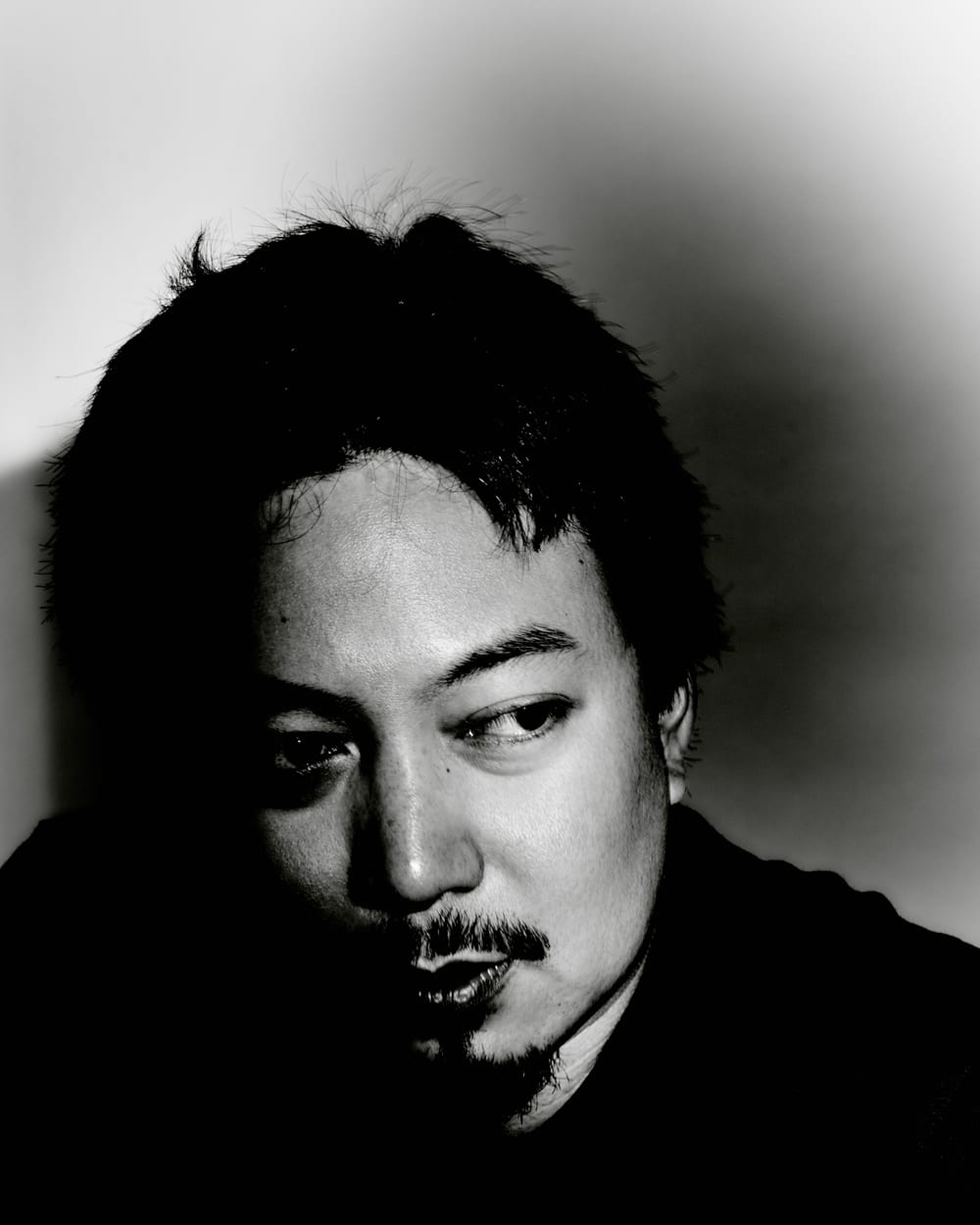
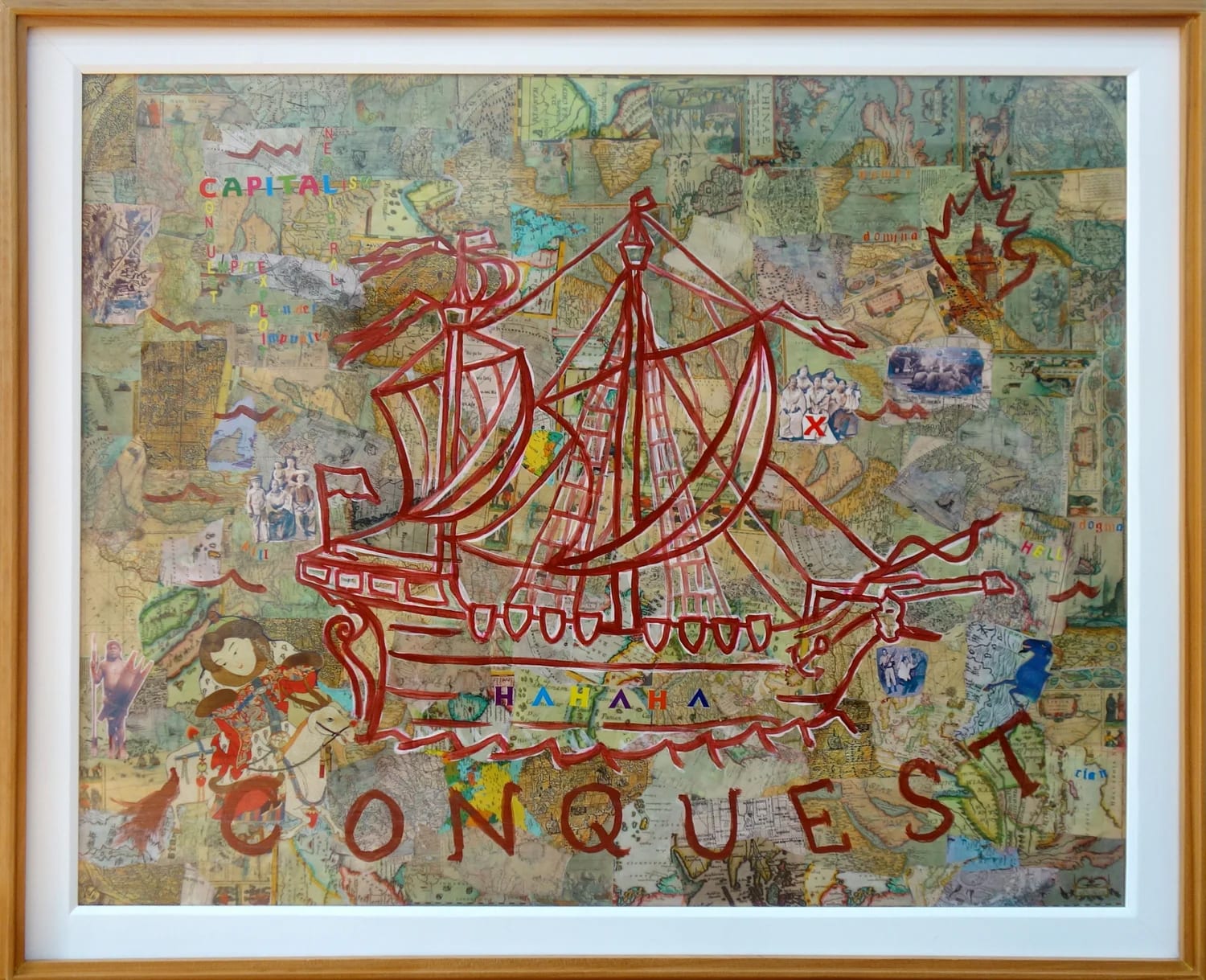
Cian Dayrit uses embroidery, textile, and mixed media to touch on themes of ethnography, archaeology, history, and mythology. He is most known for his cartographic artworks, which investigates notions of power and identity. From 2024 to 2025, his project "Frontiers of Struggle: A Working Atlas from the Ground at Mindanao" was presented at the 11th Asia Pacific Triennial of Contemporary Art in Australia. It contains a selection of maps hand-drawn by Lumad, Moro, and peasant communities in Mindanao, collected during counter-mapping workshops that Dayrit conducted from 2017 to 2024. These counter-maps serve as visual articulations of displacement, exploitation, and harassment from state forces.
Dayrit has completed residences at Gasworks in London, Aurora Artist FRFesidency Program and Space in the Philippines, and La Trobe Art Institute in Australia. He is a recipient of the CCP Thirteen Artists Award in 2018.
Can you describe the specific moment when you decided that you wanted to do art for the rest of your life?
That moment has yet to come.
In an alternate universe where you're not an artist, what are you doing?
Doing alternate universe interviews.
Who (or what) is your greatest inspiration?
Hahaha
What is your art saying that you find impossible to put into actual words?
There are no actual words for it
What, for you, is the role of an artist?
To question things. What is your role as editor?
Rocky Cajigan
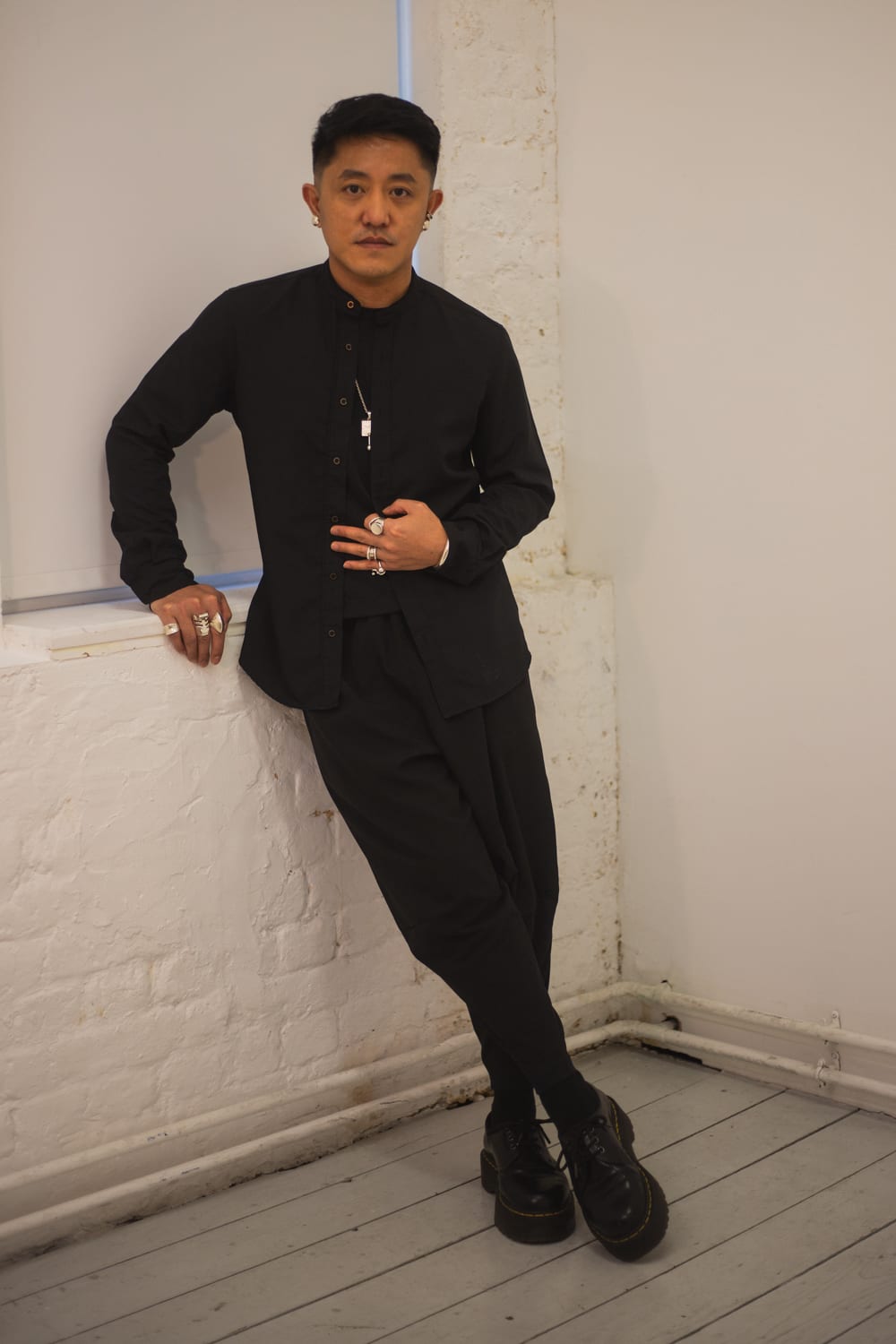
Rocky Acofo Cajigan, who is currently at Gasworks for an artist residency, is a Bontok-Kankanaey artist who explores material culture and indigenieity through painting, installation, and assemblage. He was a grantee of the Asian Cultural Council – New York Fellowship in 2023, won the Ateneo Art Awards Fernando Zobel Prize for Visual Art in 2016 and was shortlisted in 2023, and was a recipient of the CCP Thirteen Artists Awards in 2021.
Pieces of Life, which features his works and those of Jasmin Werner, is on view at the Ethnological Museum of Heidelberg until March 2026. Curated by Patrick Flores and Corazon Alvina, the exhibition highlights the material culture of Filipino communities in dialogue with contemporary art.
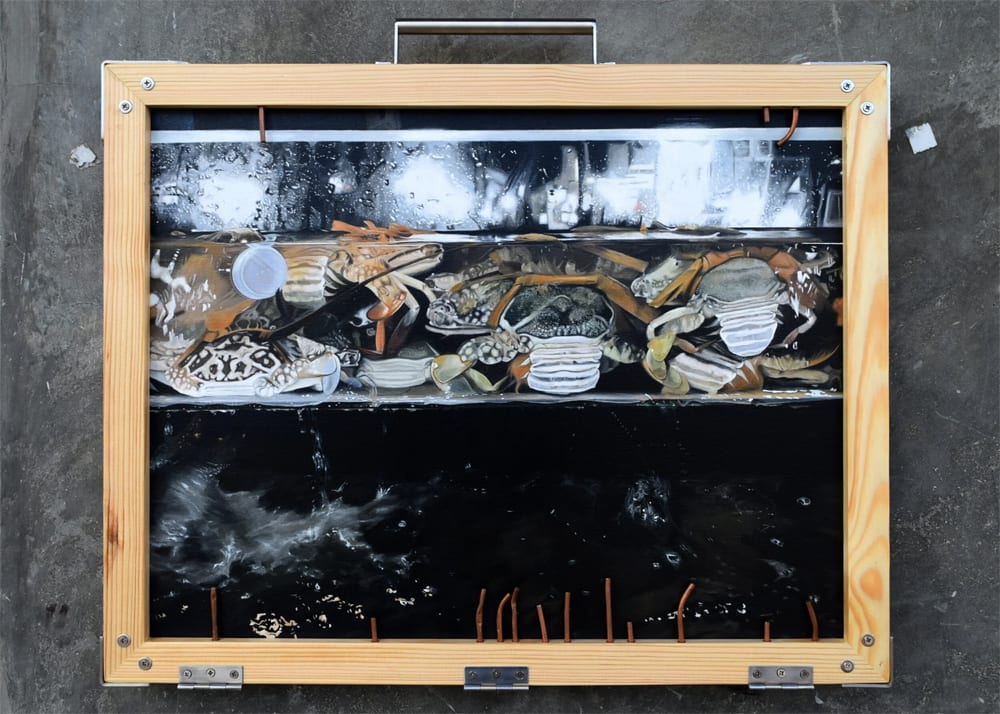
Can you describe the specific moment when you decided that you wanted to do art for the rest of your life?
I don’t think there was a single moment for me. As a child in the mountains, I had always loved making and unmaking things. I was always told that I could draw or make interesting things, and that sort of became my little corner against everything else that was difficult growing up. In my early twenties, there were many moments when the possibility of becoming an artist constantly and unbearably hit hard. They were intense primarily because my family always struggled with money. It takes a lot of delusion to not see the impracticality in it. But on the other hand, being raised in a remote mountain community, there seemed to always be a purity in what was possible. Ideas were not competing against each other. They were allowed to float a little bit longer in the air, always somewhat unfamiliar. Possibilities were not controlled, or polluted if you will. And then, when my family moved near Baguio City, where there was a lively art scene, the experience of becoming an artist—this after meeting a lot of them—didn’t seem at all monolithic or sacrificial. That really helped ground me in this journey of making.
In an alternate universe where you're not an artist, what are you doing?
Cooking.
Who (or what) is your greatest inspiration?
I admire people who have an intuitive understanding of being openly kind, funny, and honest when found in difficult situations.
What is your art saying that you find impossible to put into actual words?
More recently, I’ve been attracted to how open-endedness is articulated as a difficult conclusion. Important discussions around indigeneity, for example, revolve around concession, or a goal, or as a useful process. I like it when language implodes and other articulations, especially from different collective experiences, are about to be given space.
What, for you, is the role of an artist?
To translate without fear.
Liv Vinluan
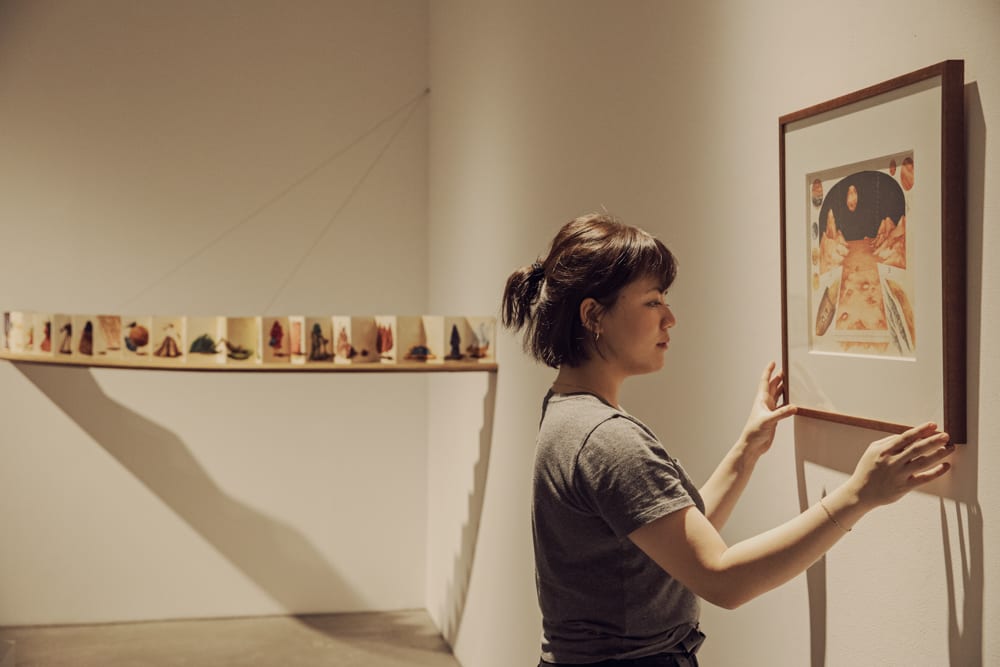
Liv Vinluan is known for installation works that involve paper in one form or another, creating historical narratives through images of fantasy and reality. She was a recipient of the CCP Thirteen Artists Awards in 2024, one of the featured artists (as the Karen H. Montinola Seletion) in Art Fair Philippines 2019, and an Ateneo Art Awards finalist in 2016 for Cariño Brutal.
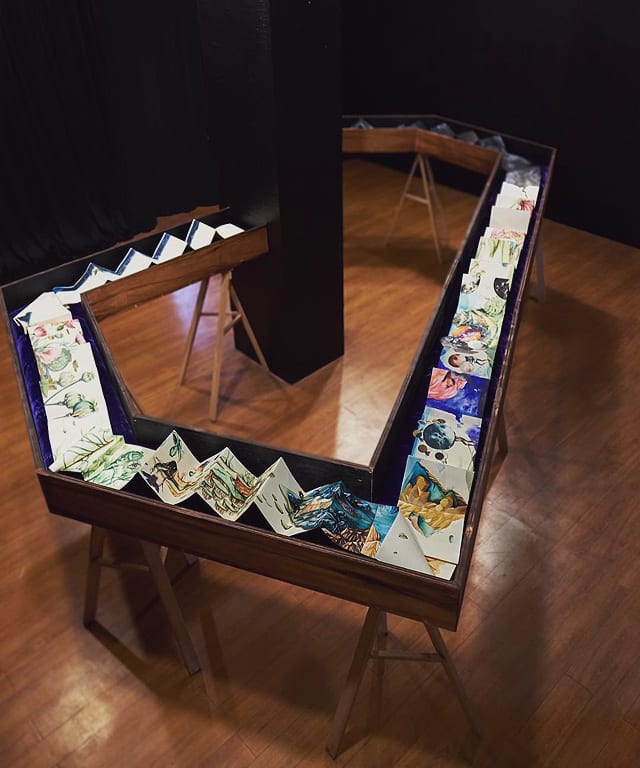
Can you describe the specific moment when you decided that you wanted to do art for the rest of your life?
To this day, I still flip-flop between various levels of uncertainty. It’s hard to have a relationship with something that hardly guarantees any return, and for that, an art practice—or a creative life—tests the idea of unconditional love and dances on the edge of the unrequited. I have no single moment I can attribute this to, but what happens is this: one project leads to another, an exhibit is followed by two more, you meet someone who encourages you, and then one day, a young artist tells you that one of your artworks impacted their life. You do this over and over again, and before you know it, you’ve been at it for years.
In an alternate universe where you're not an artist, what are you doing?
Very random, but maybe I’d be a seamstress for Chanel. I imagine working in that atelier along Rue Cambon, a mananahi in a white lab coat sewing impossible clothes all day. Sewing is my hobby, and I find magic in turning a flat sheet of textile into something that can clothe and move with the human body. Either that, or I’d own a small bookshop—although that’s still something I dream of doing when I’m older.
Who (or what) is your greatest inspiration?
I always say history, but recently I had a bit of an epiphany—the main motivation behind my work is actually death and mortality. If we are faced with impending doom, then how are we to live?
What is your art saying that you find impossible to put into actual words?
My work thrives on tension and contradiction. Sometimes, words annihilate the nuances, tremors, and quivers of this unstable, rhythmic line. The subtleties I chase tend to slip through the cracks of language and written text. In paint, in the work I do, this tension and nuanced anxiety live and take form. Moments are turned into sweeping panoramas, and the large and looming are miniaturized. In doing all this, I become both witness and participant in my own undoing.
What, for you, is the role of an artist?
To hold a mirror, not a lens, through which we can behold every scar and glimmer in the landscape of ourselves.
Maria Taniguchi
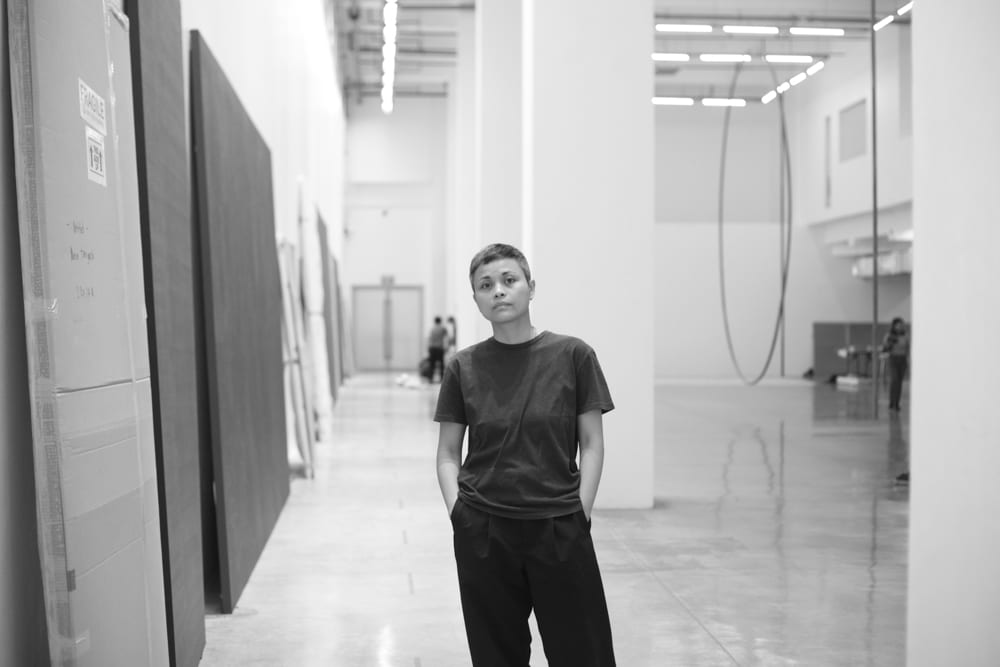
Maria Taniguchi from Dumaguete City works on concepts of composing, construction, and framing through installations, sculptures, and videos. Her series of brick paintings, which looks into concepts of systems, is an ongoing project that was initiated in 2008. Her first survey show, maria taniguchi: body of work, was on display at the Museum of Contemporary Art and Design in Manila from December 2024 to March 2025.
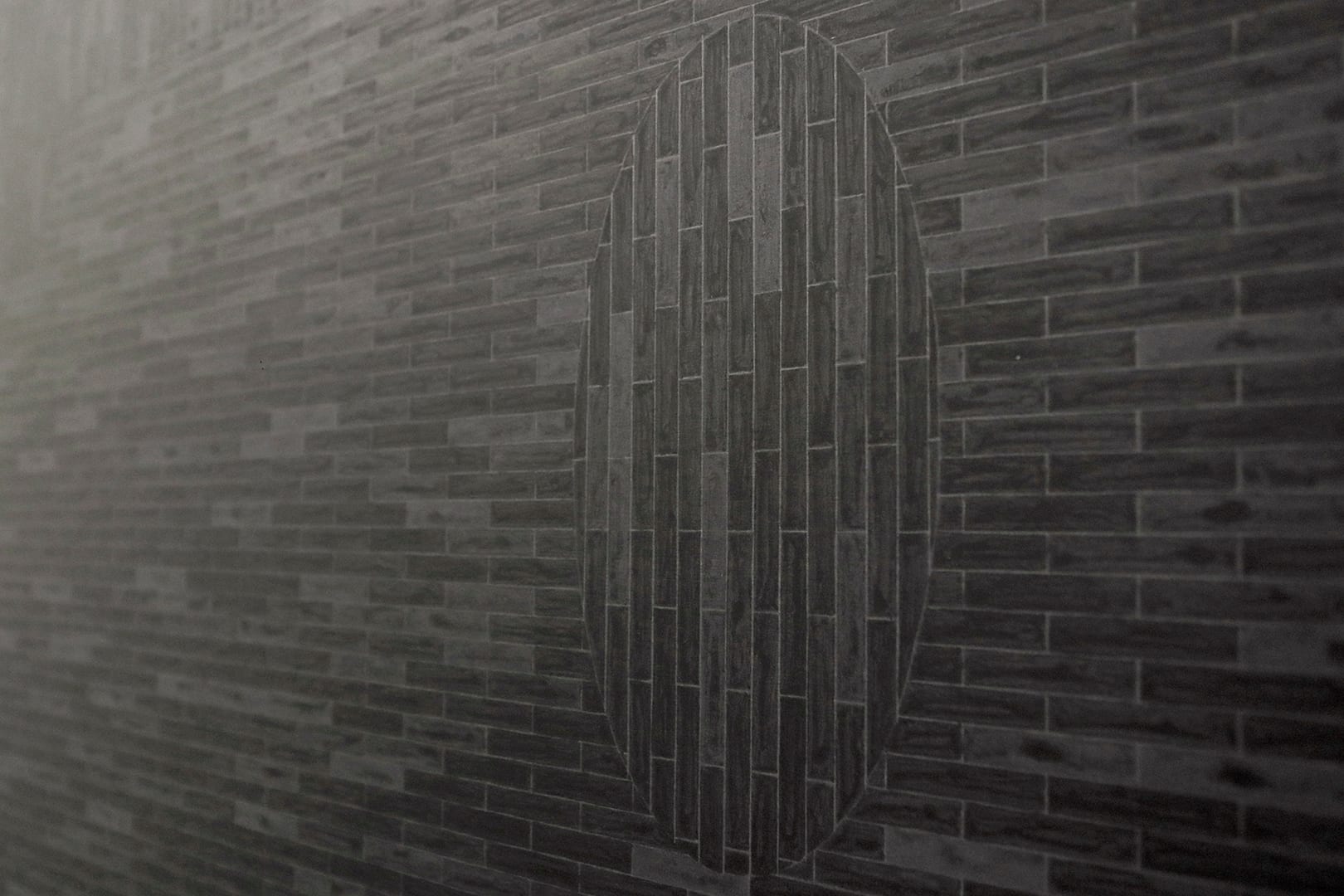
Can you describe the specific moment when you decided that you wanted to do art for the rest of your life?
It was natural. I come from a family of artists.
In an alternate universe where you're not an artist, what are you doing?
My second choice for college was architecture.
Who (or what) is your greatest inspiration?
Lately, fiction.
What is your art saying that you find impossible to put into actual words?
I can't cite an example, but I can agree that materiality often isn't easy to translate into language.
What, for you, is the role of an artist?
People tend to expect a lot from artists: to make work that meets the various definitions of 'good', to metabolize and express what it means to be living in our world. What I know for sure is that my job is to give everything to the work.

Story and Production: Christa I. De La Cruz
Editor-in-Chief: Paul John Caña
Creative Direction: Igi Talao
Photography: Paul Sugano (unless otherwise indicated)
Videography: Kieffer Carrascal
Hair and Make-up: Muriel Vega Perez using Dior Beauty
ALSO READ:
Movers of Filipino Contemporary Art: 25 Artists We Love
Movers of Filipino Contemporary Art: 30 Gallerists, Collectors, and Curators to Know
Christa I. De La Cruz is a Palanca Award-winning writer with over 15 years of experience in feature writing for print and digital media. She earned her Sertipiko sa Malikhaing Pagsulat sa Filipino from the University of the Philippines Diliman and holds an MFA in Creative Writing from De La Salle University.
View More Articles About: