The Business of Bulletpunk: 5 Lessons for Creative Entrepreneurs from Quiccs
Walang pera sa art? The graffiti artist, TEQ63 maker, and global toy designer disagrees.

Published on Jan 26, 2026
In most traditional societies, there's a general belief that there's no money in art. "Walang pera diyan," most parents would say when their kids think about taking up fine arts, creative writing, or theater in college. There's even a phrase for it: "starving artist," which brings to mind a grungy artist with disheveled hair, wearing a worn-down hoodie, and sleeping on the floor beside empty canvases lying around a make-shift studio.
But Juanito Marquez, more popularly known as Quiccs, is the living antithesis of the "starving artist" trope, but not without the challenges. His journey—from a five-year-old boy taking after his Kuya Mike to an international toy designer —is documented in his 10-year commemorative book titled One.Zero: The First Decade, published by Summit Books.
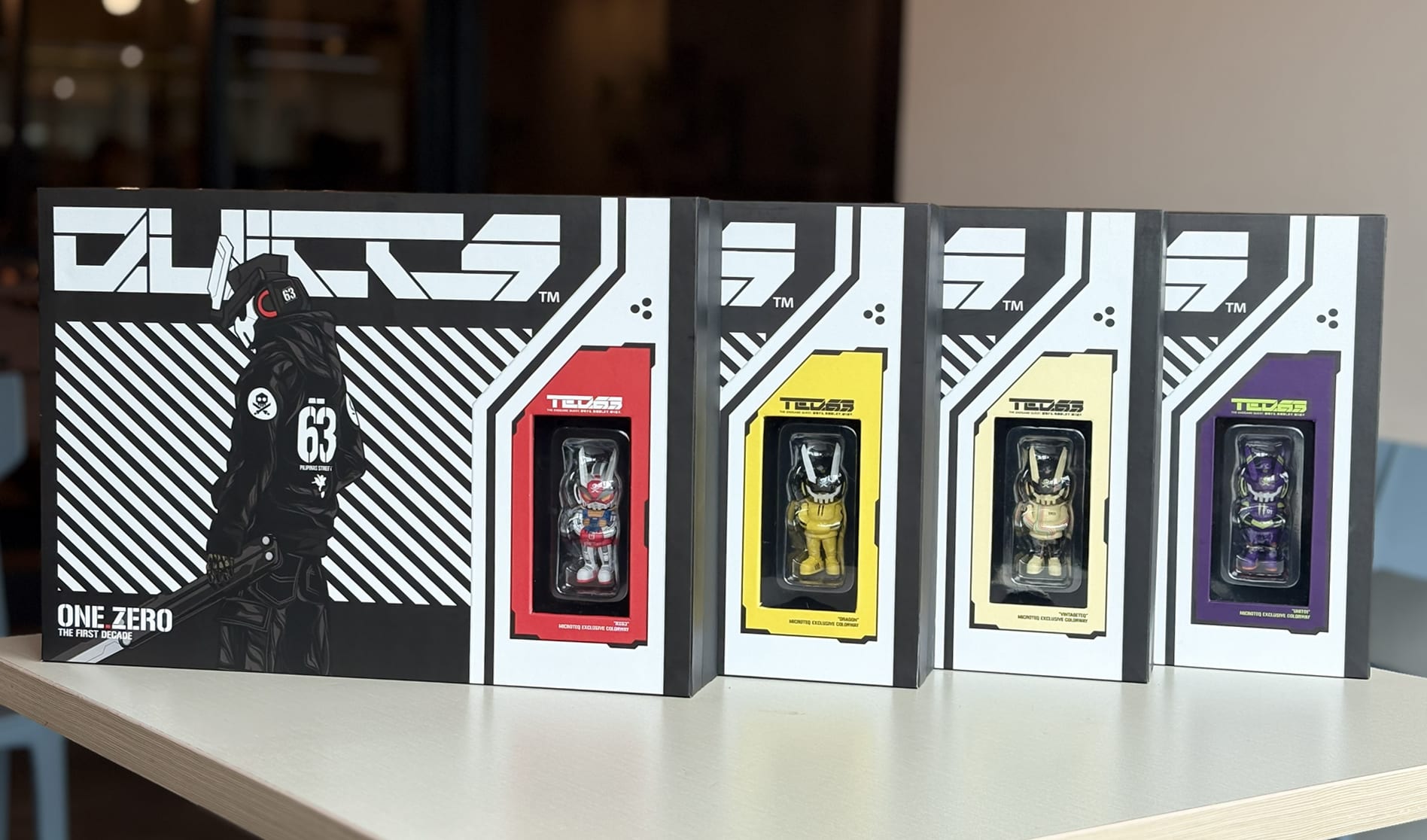
One.Zero, which retails for P1,699, has almost 200 glossy pages, showcasing Quiccs’ major artworks, including more than 450 art toys in his Bulletpunk universe. Collectors can also avail one (or all) of the three Premium Edition box sets, which contain a copy of the book and an exclusive MicroTEQ figure in four colorways—RX63, Unit01, Dragon, and VintageTEQ. Each Premium Edition box retails for P6,499.

A Decade of Creative and Business Evolution
Growing up in the '80s and '90s, Quiccs was heavily influenced by the Japanese mecha anime shown on IBC 13 and Channel 9, such as Astroboy, Daimos, and Voltes V, alongside the rise of American hip-hop. He started sketching at the age of five, copying his older brother, who was into drawing as well. By grade school and high school, he was often the class representative for art contests. Despite this knack for the arts growing up, he didn't take the traditional Fine Arts route in college.
"My dad told me baka masayang lang daw 'yung time ko sa Fine Arts kasi babatuhan lang nila 'ko ng plates, which you can basically do on your own naman. Practice ka nang practice lang. Sabi niya, 'Why don't you stay in that school [Ateneo de Manila University], get a business course tapos gawing mong business 'yung art mo?' This worked for me," he said during a roundtable interview with Summit Media editors back in December. It looked like he was following his dad's wishes as an obedient son, but the truth was also didn't want to leave his friends behind. He studied Communications Technology Management, which has units in graphic design, even at a time when digital art wasn't as popular.
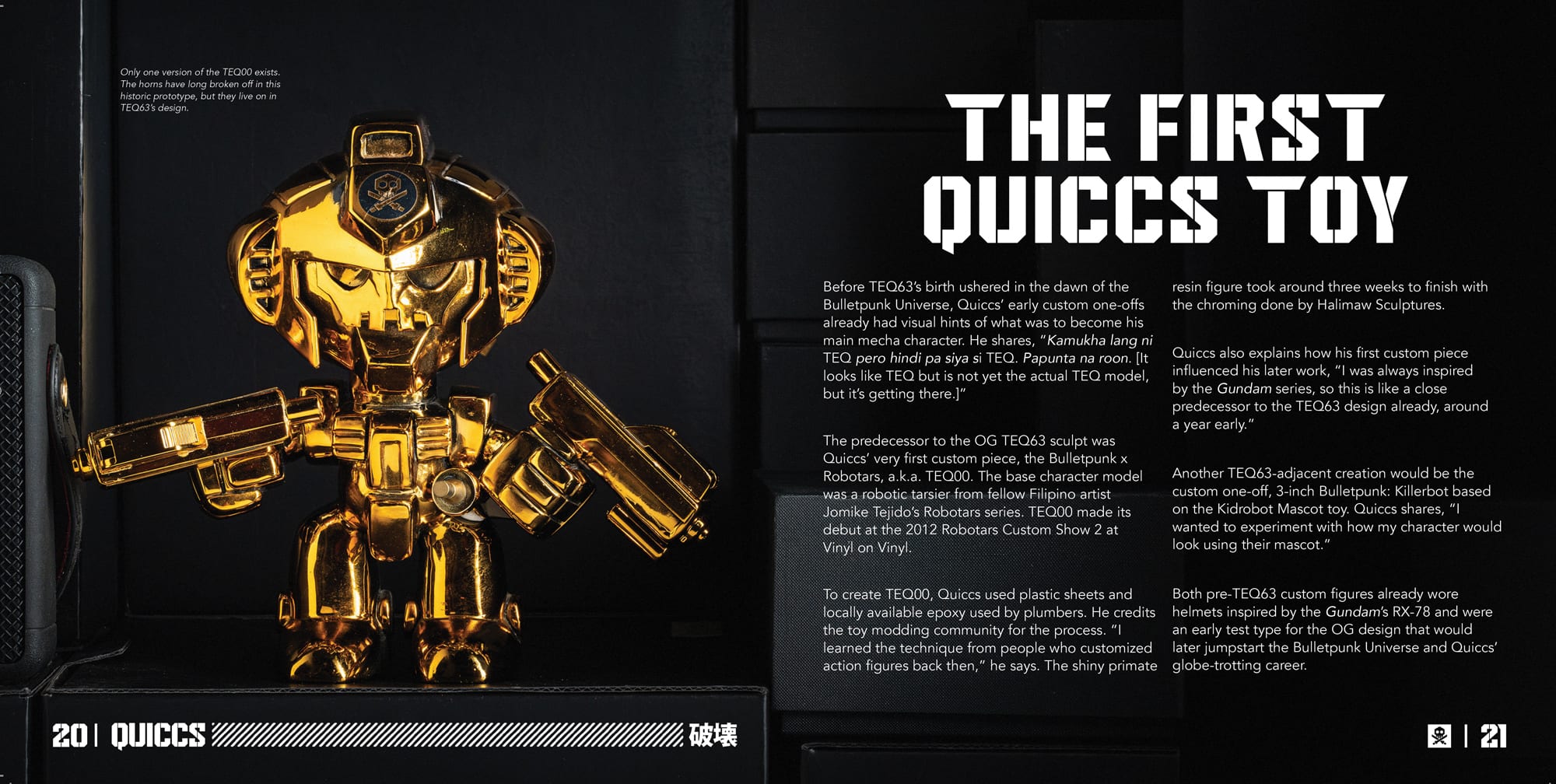
"I went through that knowing na gusto kong maging graphic designer after graduating." By his second year of college, he already had side hustles doing graphics design projects for one of his professors. "I realized that if I wanted to be part of an industry that makes money, it was graphic design in an ad agency setting." After graduation, Quiccs spent years as a graphic designer and creative director at Burn Water Design Studio, using his professional work to fund his exploration into designer toys.
"When I initially did it, wala lang e. Trip-trip lang nan. I wanted a specific toy in my head na wala pang gumagawa, na gusto ko na ando'n siya sa kwarto ko. 'Yun si TEQ 63."
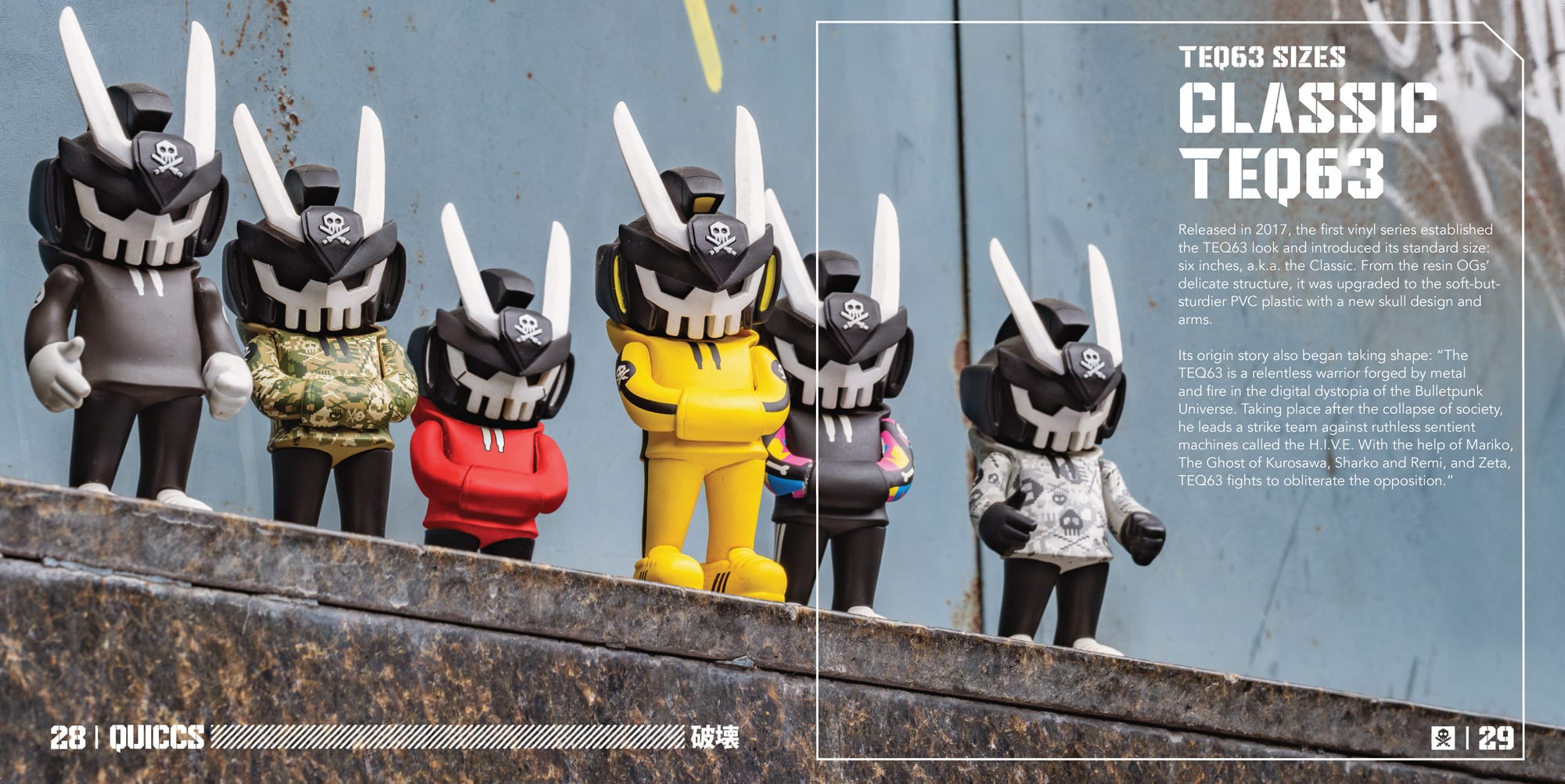
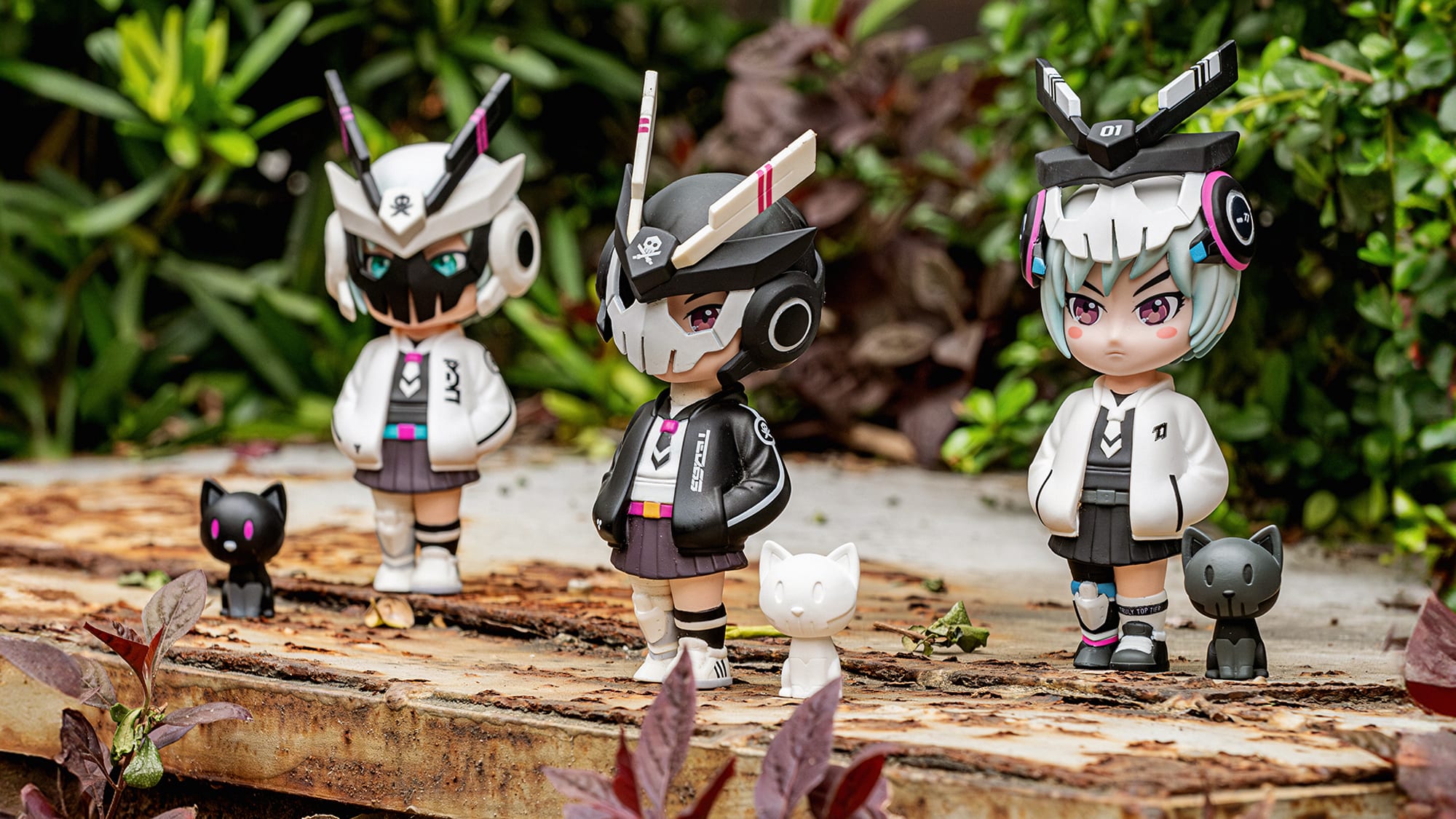
His iconic character, TEQ63, finally emerged in 2012 from a desire to see a specific mix of Japanese robots, hip-hop, and graffiti culture that didn't exist in the market. What began as a hobby soon exploded globally, leading to historic collaborations with brands like Adidas and Jollibee.
But this success wasn't a stroke of luck; it was the result of a business-first approach to his art. Here are the five essential lessons every creative entrepreneur can learn from Quiccs' decade of success:
1| Own a Niche, Don't Chase a Trend
"If you're following a trend, you're only eating someone else's table scraps. Parasite ka lang. And you can never grab the whole market kasi nga sumusunod ka lang e," Quiccs explained. This is especially evident in the modern marketplace, where there's plenty of duplicate ideas and content.
"Establish your own market kahit very niche lang 'yun. Eventually, lalaki siya enough hanggang ma-establish mo na 'yung sarili mo."
Quiccs, for example, chose to double down on his specific interests: graffiti, robots, and street culture. By creating a character (TEQ63) that perfectly blended these worlds, he became the pioneer in that space. "Kahit maliit 'yung kingdom namin, hari kami dito."
Lesson: If you follow a trend, you are always late to the party. If you create a niche, the world eventually comes to you.
2| Treat Art as a Profession
"I present myself as an artist, but there's actually a company behind it," he said. He credits his business education as his greatest advantage, seeing himself not only as a man with a sketchbook but also as a member of a structured company.
"May ibang artists kasi na they don't know how to pay for their taxes," he said, emphasizing that a creative entrepreneur must handle even the mundane aspects of the business—like accounting and legalities—with the same passion they bring to their art. He believes that ignoring professional infrastructure is a wall that most artists eventually hit.
Lesson: Professionalize your infrastructure from day one so that you can scale when the opportunity arises.
3| Protect Your Value Through Exclusivity
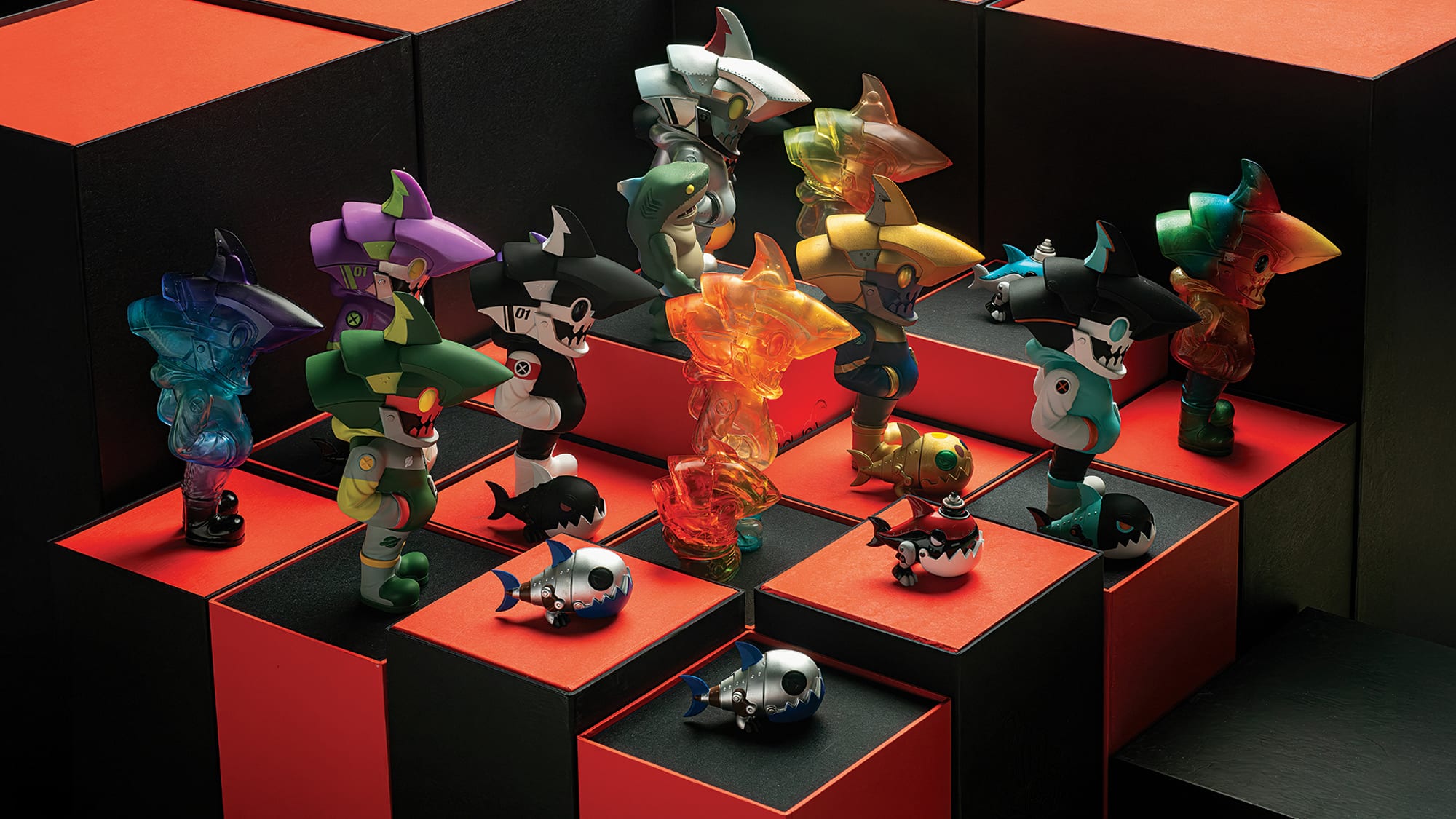
In this age of endless mass production, Quiccs treats his toys as "prized possessions." He ensures their value by limiting each edition to a fixed number of units, never to be reproduced. While many brands would cave to the temptation of "money grabs" by re-releasing popular colorways, Quiccs knows that doing so "waters down" that specific toy edition and, more importantly, the brand.
"Madi-disappoint yung collectors mo kasi people who bought it the first time, parang prized possession na kasi nila 'yun. So if we introduce it again, nagwp-waterdown yung value ng hawak nila."
Lesson: Protecting your brand's long-term value is more important than sales.
4| Know Your Worth
"That's one other rule na we make. We wait for these brands to approach us. Kasi pag kami 'yung mag-cold call or kami nag-propose, upper hand sila lagi," he explained.
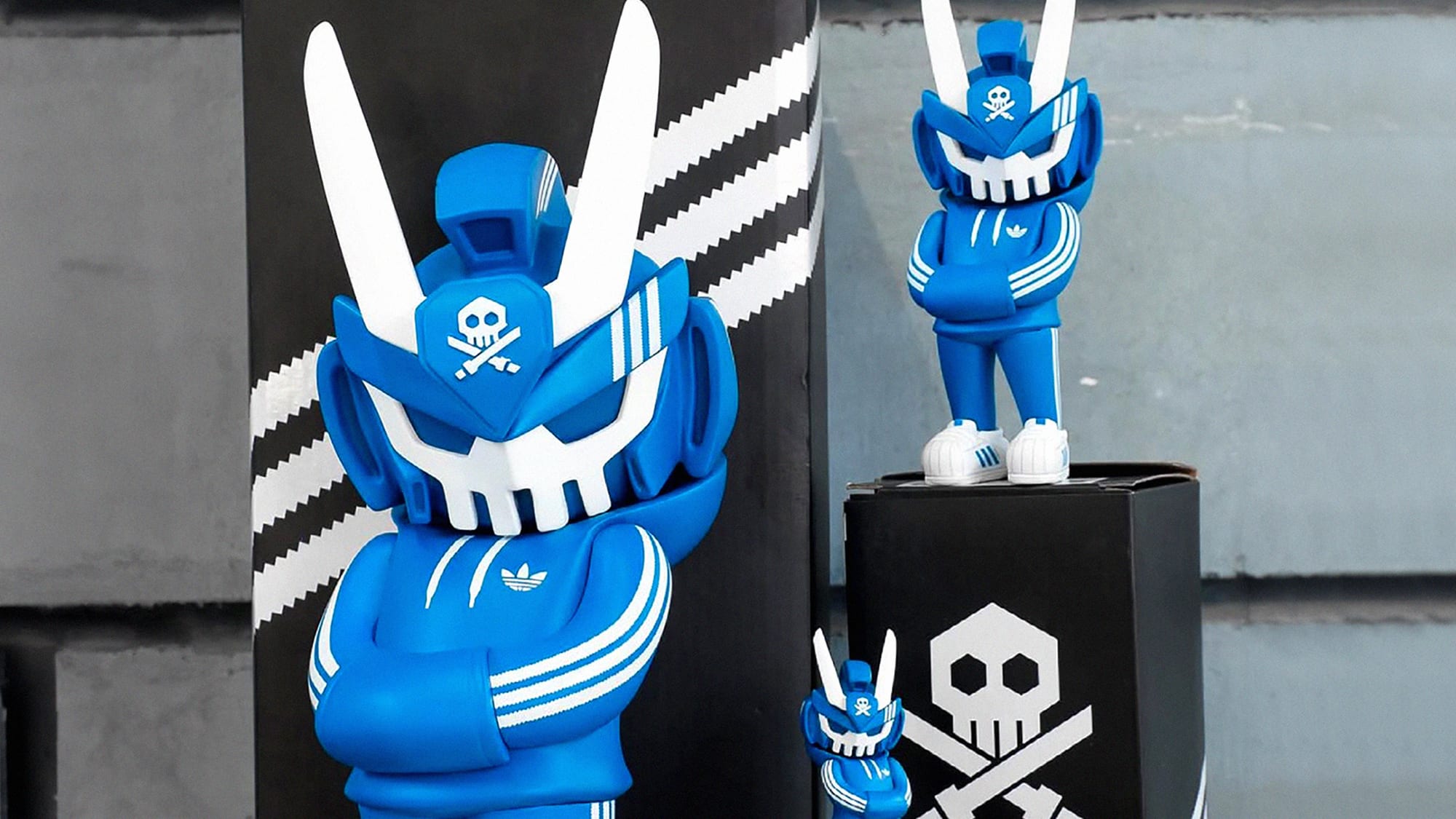
He was the first Filipino artist to be tapped by Adidas, but—as it turned out—Quiccs would just bootleg their merch early in his career, when he was still not as popular enough to be sued. Eventually, someone within the company recommended his designs to the sportswear brand.
"It was just supposed to be a t-shirt project na may TEQ63 illustration. Pero I think they liked or enjoyed the result enough, marketing side, so gumulong na siya. May ibang projects up until umabot na sa shoes."
A similar turn of events happened with Jollibee. He was approached by someone from the food brand during a toy convention, "Maybe we can discuss making something together."
Lesson: Build a brand so undeniable that your dream collaborators have to come to you.
5| Cultivate a "Net Positive" Mindset
"I know how to structure our business in a way na net positive lahat ng galaw namin," Quiccs said. Even if a trip abroad for a toy convention doesn't result in immediate sales, it is a success if it expands his network, builds brand awareness, or jumpstarts a future collaboration. "For any venture or any collab, find a way to make it net positive in the end."
This mindset is crucial for survival in the creative world. It shifts the focus from making money (short-term) to increasing the value of the brand (long-term).
Lesson: Success isn't always reflected in your daily bank balance.
One.Zero: The First Decade (Summit Books, 2025) by Quiccs is available on Lazada and the Summit Books website for P1,699. Collectors can also avail of one of the Premium Edition box sets, which contains a copy of the book and an exclusive MicroTEQ figure in four colorways—RX63, Unit01, Dragon, and VintageTEQ. Each Premium Edition box retails for P6,499.
ALSO READ:
Quiccs Is the First Official Filipino Creator with Adidas Originals
Quiccs Doesn't Give a Damn About Your Rules
Christa I. De La Cruz is a Palanca Award-winning writer with over 15 years of experience in feature writing for print and digital media. She earned her Sertipiko sa Malikhaing Pagsulat sa Filipino from the University of the Philippines Diliman and holds an MFA in Creative Writing from De La Salle University.
View More Articles About: