Translating Melancholy: In Conversation with the Translator of Genevieve Asenjo's 'Lumbay ng Dila'
Ana Margarita Nuñez talks about bridging the many languages and silences of the Filipino novel.
Published on Oct 5, 2026
The Filipino language has a long list of names for different emotions in varying degrees. Sadness is not just lungkot; we also have dalamhatì—masidhing kalungkutan na karaniwang nauugnay sa kamatayan ng isang minamahal, according to the KWF Diksiyonaryo ng Wikang Filipino. Hápis—damdáming dinaranas ng isang nalulungkot, karaniwang umiiyak, nanlalalim ang mga mata at nag-aanyong humpak ang mga pisngi. Lamlám—kalungkutan ng anyo ng mukha o mata ng isang tao. Lúnos—awà o lungkót. And we also have lumbáy—matinding kalungkutan, and synonymous with all the aforementioned words.
But how do you translate lumbáy into English?
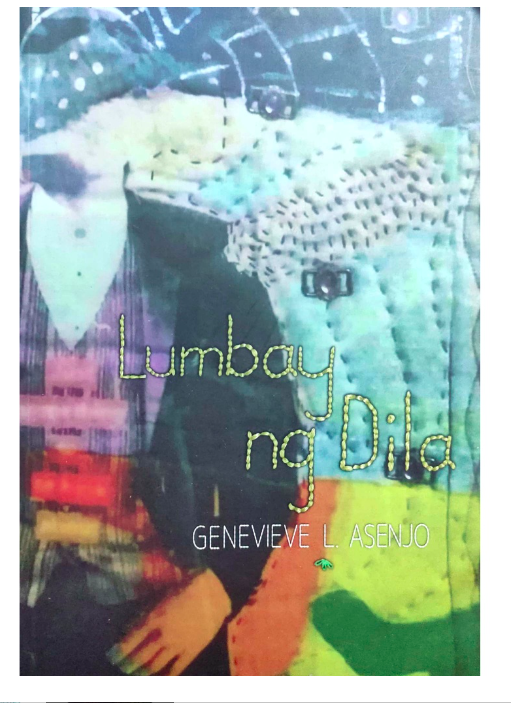
Lumbay ng Dila (2010) by Genevieve L. Asenjo was recently translated into English by fellow De La Salle University professor Ana Margarita Nuñez. That's 16 years after the Filipino novel was first published by C&E, 15 years since it received a special citation for the Juan C. Laya Prize for Excellence in Fiction in a Philippine Language at the 2011 Philippine National Book Awards, and six years since it was reissued by Balangay Books.
The Melancholy of the Tongue, as it is titled, is published by Fidessa Literary, an independent literary publisher and press based in The Hague, Netherlands. It was officially launched in June 2026 at The Philippine Club in Barcelona, Spain, and was followed by worldwide distribution through Amazon and other international booksellers.
This allows new readers to follow the story of Sadyah Zapanta–Lopez, a fictional DLSU professor who's originally from Antique and the granddaughter of Marcelo N. Lopez. She seeks closure about what really happened on the night of the Guinsang-an Bridge Massacre, for which Marcelo was accused as the mastermind. Woven into this narrative is Sadyah's search for love, happiness, and the weight of melancholy.
But how do you make melancholy Filipino?
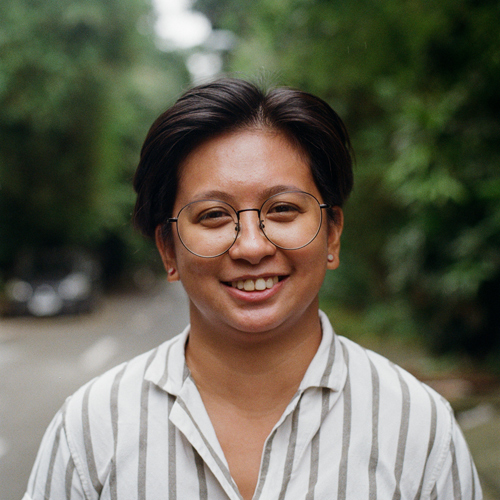
A few months ago, Esquire Philippines got the chance to talk online to Nuñez, who's based one time zone away, about the nuances of literary translation, bridging the many languages of the novel, and bringing Asenjo's Lumbay ng Dila to an English-speaking audience.
Esquire Philippines: Lumbay ng Dila was published in 2010. What was your first experience with the novel?
Ana Margarita R. Nuñez: When it came out in 2010, Dr. Asenjo did a reading of it, but I hadn't fully read the book yet. I was working my first stint at La Salle back then, doing my MA. I encountered it again during my PhD classes under Fiction Techniques, so I read it again that time.
Sadyah, the main character, is a probinsyana from this barrio in Antique, searching for her mom. Over the course of time, she becomes a professor in La Salle. There's something a little autobiographical about it, like many first novels.
When I was younger, I was really interested in how she copes with life in the big city because Sadyah is this probinsyana girl who's amazed by Starbucks and brands like Mango. Mango was really big back then. Mango was really big back then.
It sort of mirrors my experience. The adjustment to life in the big city and becoming a teacher when you're very young—I resonated with a lot of that. The main character moves in places familiar to you: Paco, Mall of Asia, 'yung mga condo na dikit-dikit. There's a scene where she meets this Indian guy na naging jowa niya kasi nilipad yung pantalon niya; I can totally see that happening. Pati 'yung ruta ng jeep, CCP, cafe sa Century Park, all of these things. Feeling ko alam ko kung anong Starbucks branch yung inupuan ng character. It's very much a world us Lasallians are familiar with.
When I was older, in this next iteration, a lot has happened between then and now. As a reader, you go back to a book and see things you didn't see before. What I liked when I came back to it: the mother part resonated with me more because I'm a mother now and my children are older. The dynamic of what it's like to not have a parent or search for something missing in your life made me think.
Strangely, because of the times we are in now with the prospect of ecological collapse, 'yung naubos na 'yung mga puno sa Metro Manila, the parts of the novel where the author describes fields, shucking corn, picking mongo plants. Those things you don't really notice at first because you're so caught up in the sexy parts, in the shopping parts, you know. And these are quieter parts, 'yung landscape, 'yung mga ibon, 'yung mga prutas, mga puno. I really enjoyed that because, again, they're familiar to me and I care about them, but they stand out more now because the first time I read that, we weren't facing the same issues we are now.
How did you become involved in the translation project?
Dr. Asenjo was my dissertation mentor, and she was my teacher, so she's familiar with my writing. Out of the blue, she called me and asked, "Pwede ba tayo mag-Zoom meeting?" At that time, I was on vacation in the province in a coffee shop na walang signal, pawala-wala. Big news pa yung binalita niya sa akin: she told me about this opportunity to do something international.
I was excited because I've always been translating. Lumaki ako sa probinsya in a non-Tagalog-speaking province—Bisaya yung language namin—so basically I have to translate everything. Early on, I learned the difference between a student not being good in class because they have problems with the language versus not studying. I saw people in the province who are sobrang talino in sports, math, and science, pero talo sa humanities, because the ones winning writing contests are those fluent in English or Tagalog.
I have multilingual children: my children speak English, know a little Bisaya, and had to learn Japanese here. The cacophony in my daily life, the many languages I use in one day—sabi ko, "Fun 'to, masayang gawin in an official capacity to be published." I was excited and happy to have the opportunity to do this.
What made you excited to do this?
I was excited at the prospect of translating. Kapal mukha ko, but I was not apprehensive at all because feeling ko, "Yeah, I can do this," because I've been doing this all my life, translating informally. I was excited about the opportunity to translate.
Lumbay ng Dila is noted for its layers of different languages: Kinaray-a, Hiligaynon, Filipino, and English. How did you approach the task of translating a text that is already multilingual and multicultural?
That's one of the wonderful things about the book. What makes it a very Filipino work is its linguistic and cultural diversity. It's not Rizal-esque; it's a wonderful mosaic of things that make it very Filipino.
In Mindanao, the languages of Luzon, Visayas, and Mindanao are spoken, so I am familiar with the major languages: English, Tagalog, or Filipino. Meron din kasing Hiligaynon sa Mindanao. Not Kinaray-a, but Hiligaynon and Kinaray-a are very close. I have a tita who married someone from Negros, so the sound of Hiligaynon is familiar to me and how they configure words and grammar.
Waray, Hiligaynon, and Cebuano are different languages, but if you know one of them, natutunugan mo na rin yung sa iba. If there was something I didn't know, I would go to a reliable dictionary to translate words. In terms of syntax, culture, and as a probinsyana—yung milieu, damo, ilog—I am quite familiar with those spaces.
How did you maintain these identities, and still make it accessible to the English reader?
Throughout the text, you'll notice there are many things in the English translation that I didn't translate; I kept them in the original. Lalo na pangalan ng halaman, gamit, or names of gods and goddesses. I did not use the English equivalent; I retained the original because sometimes, wala talagang equivalent.
You know how English makes everything less fun? You know how things are funnier in Tagalog or Bisaya? Mas may savor 'yung language when you retain it. This is where the practice of translating on a daily basis comes in useful. If there's a word left untranslated, I put a short contextual clue or repeat it in English, integrated into the text.
I don't like literal footnotes. Some writers are fond of doing that, but it disturbs the flow, especially for readers who are not academics. It's the kind of book that can be enjoyed by someone who isn't a lit major, just reading for fun.
Were there specific moments or passages in Lumbay ng Dila that felt particularly untranslatable, and how did you resolve them?
'Yung naghahalikan sila. It's a sexy scene. Hindi ko na lang tinranslate, sabi ko, "I'll just put this verbatim in Tagalog." It's the kiss. Nangangamoy mocha frappe. Pero hindi rin siya amoy e kasi pag hinalikan mo 'yung tao, hindi rin siya amoy. May lasa siya, may feels din siya, 'di ba? As opposed to kung 'yung hinalikan mo bagong toothbrush. That was super challenging.
Rhythm is inherent in Lumbay ng Dila. How did you translate the musicality, and even the silences?
If you read a lot, if you write a lot, parang intuitive din yan. I noticed the musicality. I did my best. Sometimes ginagaya ko 'yung length ng sentence na long, short, short. Pero most of the time it wasn't conscious or cerebral na. Ganito yung diagram ng sentence niya so ganito ita-translate, pero may flow. It also became easier the longer [I did it].
The translation project was from October 2025 to January 2026—around three months. Three-fourths of it was done in December and January once I established the rhythm.
What is the role of the translator in bridging the local and the universal, more than in terms of the words?
We have this idea kasi na 'yung local, mahirap intindihin kasi 'yung context nila iba. Pero ako, as a child in Northern Mindanao, how come ang dali kong naintindihan 'yung mga, let's say, I read something out of the American South or Caribbean patois, yung dialogue no'n? Because actually, a lot of our local experiences also contain universal human elements.
As a translator, I don't worry: "Maintindihan ba 'to ng hindi Pilipino?" Let's say, "binyag": Kung hindi alam yung practices natin sa binyag, I'm sure they have some kind of initiation in their culture, whatever that is. No American writer writes wondering, "Maintindihan ba 'to ng mga Pilipino?" Wala naman, 'di ba? Pero naiintindihan natin.
Stay true to it. Don't try to overexplain; don't be apologetic. Treat the reader as an equal, I suppose. They can rise to the challenge to make their own connections.
Should translation be the voice of the author or the voice of the translator, or how do you get the right mix for this?
I think what's useful for me...this is not a very scholarly answer, but I think in a craft sense. You kind of inhabit the character. Kasi pag nabasa mo na, alam mo nang ganito siya. The book is in third person pero limited to Sadyah's point of view. Pag medyo kilala mo na siya, kung anong klaseng tao siya, alam mo na kung paano siya humirit, halimbawa. Kung 'yung sentence na 'to, hahabaan ba niya, or is she more likely to reply in a monosyllable?
I try to mimic the original as much as possible. Let's say it's a dialogue. Doon sa consciousness or yung mga thoughts niya, it involves a lot of empathy. It's also interesting kasi hindi mo siya character 'di ba? It's someone else's character. So I think that part is where you have to be a little careful. It shouldn't sound like you, like with your authorial voice.
With Philippine literature increasingly reaching international audiences, what do you think is the biggest challenge or opportunity for Filipino translators today?
The biggest challenge is that Filipino writers don't have much of a Filipino audience to begin with. Maganda sana kung 'yung sarili nating mga kababayan will help spread the word or ikakalat 'yun. Kasi tingnan mo yung Jollibee, nakalat natin sa buong mundo, yun 'di natin magawa sa literature natin. But that is why I think it's important na there are other translations, like foreign texts to Filipino. Like what I mentioned before, hindi naman sa mahina or hindi or ayaw magbasa noong mga estudyante, it's linguistic hurdles. Ironically, feeling ko translating into English will also help Filipino readers because a lot of Filipino readers are not actually confident or familiar with literary Filipino, for example.
Let's say, mga kababayan kong Bisaya, mas magaling sila sa English. Especially 'yung mga hindi nag-aral sa Manila or hindi na nakatira sa Manila at any point. They can't finish a book in Filipino. Pero pag ginawa mong English 'yung Filipino, halimba itong Lumbay ng Dilaw. Like my mom, I'm sure she wouldn't read the original, but the English translation, she would read it. So strange, 'no? But yeah, even for our own market, translating into English might be very useful.
This interview took place on June 29, 2026. It has been edited for length and clarity.
ALSO READ:
The Book Has Already Lived Once: On the Finalists for Best Translated Book at the 43rd National Book Awards
Two Filipino Translators Among Inaugural Winners of a New International Literary Prize
Christa I. De La Cruz is a Palanca Award-winning writer with over 15 years of experience in feature writing for print and digital media. She earned her Sertipiko sa Malikhaing Pagsulat sa Filipino from the University of the Philippines Diliman and holds an MFA in Creative Writing from De La Salle University. Her poetry collection, "Dáyo: Mga Tula" (2026), is published by the DLSU Publishing House and Grana Books.
View More Articles About: