The Book Has Already Lived Once: On the Finalists for Best Translated Book at the 43rd National Book Awards
Every book has a life before the reader opens it, but translation makes that prior life unusually difficult to conceal.
Published on Aug 30, 2026
Disclosure: As with my previous essays on the finalists of the 43rd National Book Award, the criticism and opinions here are mine alone and do not represent the position of the Filipino Critics Circle. Two figures whose translation work I discuss are no longer with us. Telesforo S. Sungkit Jr. (1980–2022), whom I knew and called Jun, died on 19 July 2022, before the 2024 publication of his self-translation Ang Panginoon ng mga Alon. I had admired Jun’s writing long before this book. His first novel, Batbat hi Udan, was one of the works I discussed in Halos Isang Buhay: Ang Manananggal sa Pagsusulat ng Nobela, published in 2012 and awarded the Isagani R. Cruz Prize for Best Book of Literary Criticism or Literary History in a Philippine Language at the 32nd National Book Awards the following year. So I write about him here not only as a critic encountering another book but also as a grateful reader returning to the work of a writer I had already carried with me for years. Wystan de la Peña (1963–2025) died on 24 August 2025, after the new edition of his Doña Perfecta had appeared and before the 43rd National Book Awards were conferred. Their deaths do not require us to withhold criticism from the books they left behind, but they do ask for care in distinguishing what the published works allow us to say from what we can no longer ask their makers. Where I question choices or wonder about processes left unexplained by the paratexts, I am assessing the books before me rather than inventing intentions on their behalf. In Jun’s case especially, affection does not lessen the need for rigor; it makes that rigor feel more necessary, because admiration should be able to survive a difficult reading.

PAGE ONE comes too late in a translated book. By the time we reach it, something has already happened to the work. It has had readers we will never meet, acquired habits in a syntax not ours, perhaps survived a magazine run or a political regime, perhaps failed to survive either and had to be recovered later from a library catalogue, a family copy, a warehouse no one remembered to open. Every book has a life before the reader opens it, but translation makes that prior life unusually difficult to conceal. We are asked to receive something as newly arrived while knowing that it did not begin here.
The five books gathered as finalists for Best Translated Book at the 43rd National Book Awards, recognizing books published in 2024, make that condition especially visible. Telesforo S. Sungkit Jr.’s Ang Panginoon ng mga Alon is the author’s own Filipino version of his Cebuano novel Ang Agalon sa mga Balod, written by a Higaonon novelist whose Cebuano poetry also appears under the name Anijun Mudan-udan. Benito Pérez Galdós’s Doña Perfecta, translated from Spanish into Filipino by Wystan de la Peña, reaches us in a new edition more than two decades after de la Peña first finished the translation under the NCCA’s Panday-Salin program. Iñigo Ed. Regalado’s Love Without a Heart, Soledad S. Reyes’s English translation of May Pagsinta’y Walang Puso, moves from Filipino into the language that American colonial schooling installed as a principal medium of education and literary prestige. Santos Rubiano Herrera’s Memoirs of a Prisoner of the Tagalogs, translated and annotated by Renz Marion D. Katigbak and Manuel R. Pajarillo, returns a Spanish military doctor’s recollection of the Revolution to the country in which he became a prisoner, with the Spanish text beside the English translation. Sa Bagani Ubbog, edited by Junley L. Lazaga and translated from Ilokano into Filipino by Roy V. Aragon, Lazaga, and Ariel S. Tabag, gathers twenty-two stories Reynaldo A. Duque published in Bannawag from 1963 to 2012, making through selection, chronology, and translation a retrospective Duque who did not exist in exactly this form before.
Taken together, they complicate the comforting story in which translation simply opens what had been closed. Access has a direction, and directions have politics. A book translated from Ilokano into Filipino does not undergo the same social movement as a book translated from Filipino into English. Spanish entering Filipino carries a different historical charge from Spanish entering English. A self-translation from Cebuano into Filipino by a Higaonon writer is crossed by a language and a system of knowledge that neither source nor target can innocently claim to contain. In the Philippines, our languages do not meet on a level field. Moving a work into a language with greater institutional reach can rescue it from one kind of marginality while exposing it to another. The translated book becomes interesting not only as a new text, then, but as a record of this rearrangement: what was retained, who was imagined as reader, which language gained another work to call its own, and what had to happen materially for the book to arrive at all.
The Footnote That Would Not Stay Below
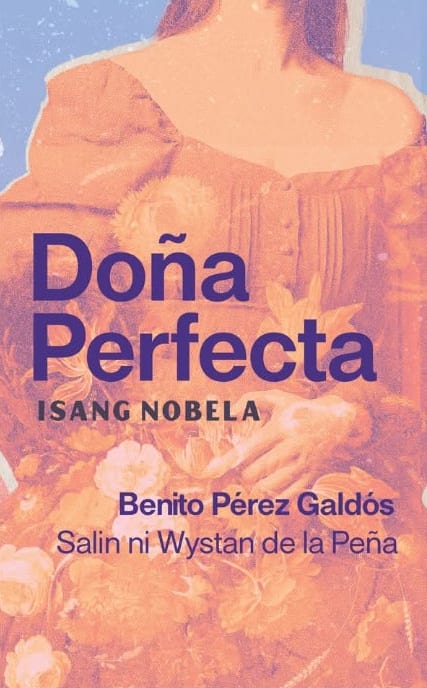
De la Peña’s Doña Perfecta is perhaps the most openly self-conscious of the five about the translated book’s second life because the translation itself has had a biography strange enough to compete with the novel. He recalls first reading Galdós while travelling through Europe, recognizing affinities with Noli Me Tangere, deciding he wanted to translate the book, then finally doing so around 2000 under Panday-Salin. He finished the manuscript after about a year. Chapters returned to him with editorial changes until, suddenly, communication stopped. By 2011, he had learned that copies had in fact been printed but never released because of an administrative lapse; much later came official permission for a new edition, after which he returned to the translation and added the extensive annotations that now accompany it. The 2024 volume therefore carries not only a nineteenth-century Spanish novel into Filipino but the history of a Filipino translation that once existed materially without being allowed a public life.
That history is worth dwelling on because it exposes the incompleteness of our ordinary picture of translation. The work is not finished when the last sentence has crossed languages. A translation may exist as manuscript, even as bound copies, and remain culturally absent if the institutions surrounding it fail. De la Peña’s account makes visible the budgets, permissions, editors, publishers, state agencies, and delayed acts of recovery that determine whether linguistic labor becomes literary circulation. In a country where translation programs are often project-based and continuity is fragile, this is not merely an anecdote about bureaucratic misfortune. It is part of what the translated book means: literature requires an infrastructure capable of remembering that the work was done.
De la Peña is equally explicit about method. He calls his principles pagbabanyaga or foreignization and translator visibility. Selected Spanish and Latin forms remain inside the Filipino, among them caballero, racionero, señor penitenciario, Cuerpo de Minas, and Guardia Civil. Invented place names such as Orbajosa and Villahorrenda are preserved because their meanings participate in Galdós’s irony. Orbajosa cannot simply become a Philippine town without losing the semantic joke by which a supposedly august city reveals its squalor and self-deception; Villahorrenda carries ugliness in the name itself. Here foreignization is not ornamental difficulty. It protects the novel’s machinery from the false convenience of making nineteenth-century Spain sound as though it had always spoken contemporary Filipino.
But Spanish is a peculiar language to foreignize inside Filipino because it is neither simply foreign nor simply ours. It is imperial and sedimented, increasingly unread by most Filipinos yet audible in thousands of words we use without necessarily hearing their ancestry. De la Peña recalls a genealogy in which foreignization could become cultural resistance, but the Philippine case unsettles any easy transfer of that politics. Leaving caballero visible may resist domestication; it may also awaken the old prestige attached to Spanish. The same word can announce historical distance and reproduce social glamour. What the book reveals, perhaps despite the neatness of its theoretical terms, is that our relation to Spanish cannot be purified into inheritance or injury. Translation works inside the contamination.
The annotations are where that ambition becomes most productive and most excessive. Many notes restore information a contemporary Filipino reader cannot reasonably be expected to possess: Latin expressions, clerical offices, the meanings hidden in place names, political and cultural references on which a joke or contradiction depends. Yet the footnote sometimes ceases to clarify a difficulty and begins interpreting ahead of us. When Pepe Rey mistakenly calls Tío Licurgo “Señor Solon,” the note usefully explains the classical allusion, then continues toward a symbolic decoding of Pepe Rey’s own name and his possible status as representative of the Spanish king. A note on alamillo begins in botany and wanders all the way to the Alamo in Texas and the Mexican-American War. These are not false associations; the question is whether the novel needs all of them at the moment the reader is asked to continue reading.
That is the book’s characteristic excess. Doña Perfecta wants to be translation, critical edition, introduction to Galdós, lesson in translation theory, intellectual autobiography, and historical bridge to the Filipino reader. Its abundance is generous, but generosity can become a form of advance occupation: the translator has already marked the paths before the reader decides where to walk. A stricter editorial hand might have distinguished more sharply between notes that restore a lost condition of understanding and notes that supply an interpretation. Still, the very excess forces a question Philippine translation needs to keep open: visibility is valuable, but how visible can a translator become before the source text begins to live inside the translator’s explanation of it?
The Defeated Empire Faces Its Translation
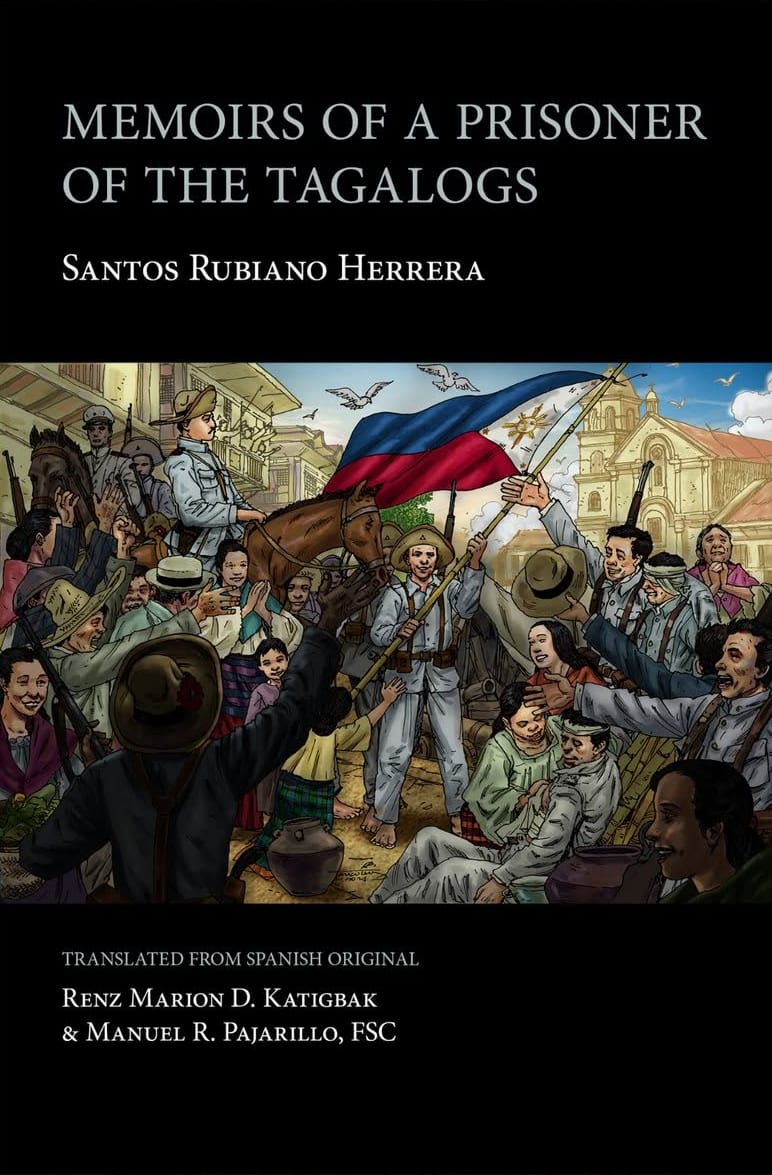
If Doña Perfecta makes the translator visible by letting him speak before, below, and around the novel, Memoirs of a Prisoner of the Tagalogs makes visibility architectural. The Spanish occupies one side of the page, the English the other. Rubiano cannot disappear completely behind the translation because the language in which he first wrote his recollections remains materially present, even for readers whose actual encounter with him will happen through English. This is a Spanish military doctor writing years after he was captured by the revolutionary forces in Lipa, remembering the collapse of colonial authority from the side that was losing it. Around that testimony, Renz Marion D. Katigbak and Manuel R. Pajarillo have built another jurisdiction: historical and biographical research, photographs and maps, annotations drawing from Philippine and Spanish records, and appendices that place Rubiano’s recollection beside evidence that does not depend on his memory. The colonial witness has been republished, but he no longer controls the conditions under which his testimony is received.
That reversal is more useful than the familiar promise that historical recovery allows us to hear “the other side.” Colonizer and colonized were not two equal parties to a misunderstanding, and the value of Rubiano’s testimony does not depend on pretending they were. What makes it worth recovering is precisely the asymmetry: here is a representative of a colonial military apparatus forced to observe Filipinos at the moment when that apparatus could no longer presume obedience. His astonishment tells us something. So does his admiration. Even “Tagalogs,” already there in the title, gathers under a colonial name a revolutionary population whose identities and political attachments were more various than the word can contain. A responsible edition need not repair that language into present-day virtue. There is value in allowing the distortion to remain visible because the distortion belongs to the history of the gaze itself.
Katigbak and Pajarillo understand much of this. Their introduction describes Rubiano looking back at defeat and captivity “at the hands of a people they colonized,” while their research repeatedly supplements his account with Filipino records. The bilingual design performs another kind of work. A reader who knows Spanish can move between the two columns, but the project exists precisely because the memoir had remained inaccessible to many readers who could not encounter it in that language. For much of its Philippine readership, then, the Spanish may function less as a second text continuously read than as the visible presence of an earlier text they know they are receiving through someone else. The two languages may occupy equal space on the page without being equally available to every reader. Instead of abolishing the distance that made translation necessary, the book makes that distance visible.
Which makes the English more consequential. There are long stretches where it carries the historical account clearly, but there are also sentences that seem to need another exacting editorial pass simply as English. The uprising after Manila Bay begins with “the breakup of the squadron,” soldiers spend a day “enjoying the urban landscape,” and elsewhere a sentence begins, “If cold reality were not to argue with us.” The strain is audible in the English itself. At such moments the translation draws attention to its mediation not because foreignness has been productively preserved but because the sentence has not quite settled into its new language. This matters especially because, for readers unable to follow Rubiano in Spanish, the translation is not an aid beside the memoir; it is the memoir they can read. The richness of the documentary apparatus cannot be asked to compensate for every sentence left insufficiently finished.
There is a different problem in the reconciliatory language surrounding the project. The foreword and the message from Rubiano’s family understandably speak of recognizing the “other” and appreciating a “common past.” These are humane intentions, but reconciliation can become too smooth when colonial violence begins to sound like an inheritance equally shared by everyone involved. Rubiano’s chapter “The Filipina Women,” for instance, is genuinely valuable for what it records about Doña Marcelina Solís and other women who protected and cared for Spanish prisoners. Yet even in the English translation, his admiration repeatedly arrives through a gendered vocabulary of piety, refinement, and hospitality; at one point women are generalized as “creatures of piety.” The women are actors in history, but praise can domesticate agency too, translating political and material action into the feminine virtues through which a Spanish officer knows how to admire them. It also matters that several of the women Rubiano could see most clearly belonged to families with enough social and material power to intervene on behalf of prisoners. A fuller critical apparatus might have asked not only what these women did, but why certain forms of Filipina agency became particularly legible to the colonial witness.
Still, Memoirs may be the most expansive of the five in its conception of what translation can make a book become. It does not merely transport one text from Spanish into English. It resembles a historical dossier reopened in the place whose people had originally appeared largely through a Spaniard’s eyes. The memoir remains, but so do records that interrupt it, notes that supplement or correct it, photographs that give faces to names, and an English translation that allows the document to enter a readership it could not previously reach. Even the Spanish that many readers may not be able to follow remains on the page as a reminder that access has been made rather than naturally given.
Its sentence-level unevenness keeps the achievement from being complete, and the language of shared history can occasionally soften relations that deserve to remain abrasive. But perhaps its larger contribution lies precisely in refusing to let recovery mean the restoration of the source’s old authority. Returning a colonial document to the formerly colonized is not the same thing as honoring the document. Rubiano returns to Lipa in another language, surrounded now by people who can supply what he omitted, question what he believed he saw, and decide what use can still be made of his testimony. He returns, but he does not get the final word.
A Woman Returns Through the Colonizer’s Language
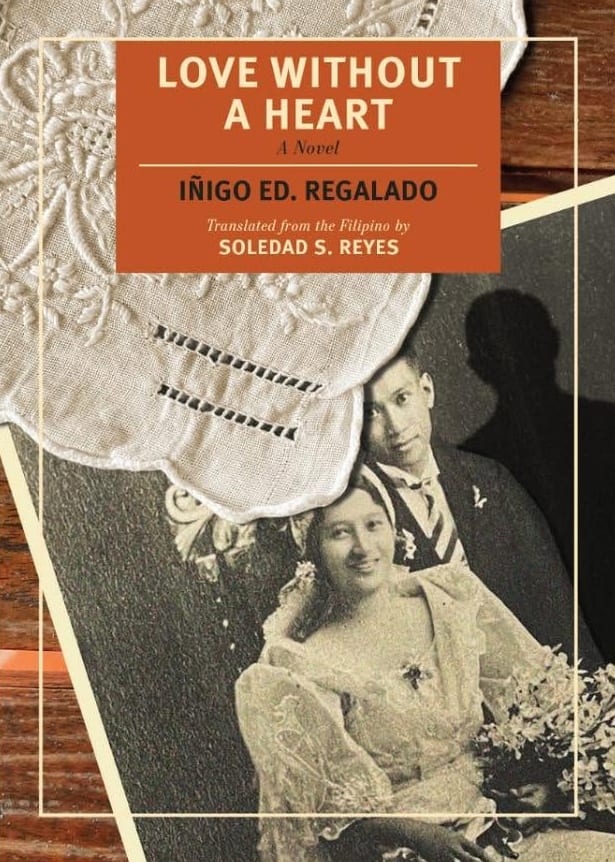
The direction changes in Love Without a Heart. Here the source is not Spanish entering a Philippine language but a 1921 Tagalog novel entering English. We often imagine translation into English as outward travel: the Filipino work becomes available to foreign readers, courses, publishers, prizes, and institutions. Reyes’s translation can of course travel that way. But English in the Philippines is not simply abroad. For some Filipino readers formed by a century of schooling and professional life in English, Regalado’s early Tagalog may be more difficult to enter than Reyes’s translation. The book therefore performs a historical loop. The language that helped reorder Philippine literary life under American rule becomes one means by which a work from that very period can return to readers shaped by its consequences.
There is a cruel appropriateness in this because May Pagsinta’y Walang Puso is itself a novel about the authority of language over a young woman’s life. Fidel, journalist and celebrated poet under the name Takip-Silim, meets Sela when she is still a student and already admires his poems. He reads her admiration as opportunity. He maneuvers her away from school and into a friend’s house; against the wishes of the frightened Sela, as Reyes’s own introduction puts it, he “had his way.” Only afterward does his discovery that she had been a virgin force him to revise the judgment by which he had treated her as an easy sexual conquest. The grotesque moral arithmetic is the point: the man commits the act, the woman inherits its social consequences.
The rest of the novel follows those consequences across years. Sela becomes the kalunya whom society can name more easily than it can name what Fidel did to her. She loses the future she had imagined for herself, yet she does not simply perish according to the punitive grammar available to the “fallen woman.” She works. Her embroidery and dressmaking become a means of supporting herself. She refuses Fidel’s attempt to convert his guilt into financial maintenance. Pura and Pakita give her access to women’s practical knowledge of respectability, sexuality, labor, and survival, knowledge unavailable in the moral vocabulary of the men who have judged her.
Reyes’s introduction is indispensable in restoring that social field. She places Sela among the women of earlier Tagalog popular fiction who are beaten, raped, abandoned, punished for sexual transgression, or made to die of the shame imposed upon them. Against that history, Sela’s survival acquires force. I am less convinced by the introduction’s eventual language of empowerment, healing, and victory. Sela’s final security is still organized through marriage to the wealthy Rufo Mondregal, whose confrontation with the rumor of her past includes the possibility of strangling her. Her defense succeeds partly because she can assure him of the legitimacy of their child and separate the past from the household he now considers his. Fidel, meanwhile, can imagine peace once Sela has been safely absorbed into another man’s domestic order. To call this uncomplicated victory risks allowing the institution that narrows Sela’s options to take credit for saving her.
The more interesting achievement is smaller and more difficult. Sela develops intelligence under constraint. She learns to earn, to withhold, to answer obliquely, to accept the help of women who understand that reputation is not virtue. At the decisive moment she does not deliver the confession Rufo expects; she tells enough truth to survive without granting him complete possession of her past. This is not emancipation in the sense a contemporary feminist reader might desire. It may be more historically revealing than emancipation retrofitted backward. The novel makes us inhabit how narrow the corridor is and how much skill is required to move through it.
Here Reyes’s authority as critic becomes both gift and pressure. She knows how to tell us why Regalado matters and how Sela differs from women constructed elsewhere in the tradition, but the book tells us comparatively little about Reyes’s own decisions as translator. We learn far more about her reading of the novel than about what she chose to do with Regalado’s period diction, Spanish residues, melodramatic repetition, or the tonal distance between 1921 Tagalog and contemporary English. That absence matters because the English sometimes leaves us uncertain whether its stiffness is deliberate period texture or simply insufficiently revised phrasing. At the same time, the translation is often most alive when it allows Philippine forms to remain unembarrassed inside English: Aling, Mang, tranvia, the names of newspapers such as Taliba and Mithi, the food, institutions, and habits of the city. A concise translator’s note could have made this historical English more intelligible as a set of choices rather than a transparent container.
The book’s contribution is therefore not that English makes Regalado universal. It is that Regalado makes English carry a Tagalog literary memory it once helped push from the center of national education. Translation into English need not be understood only as promotion outward. It can also be an act of return, although a return made possible by the very colonial history that produced the distance in the first place. That contradiction is more valuable than any easy celebration of access.
The Road to the Nation Is Not Level
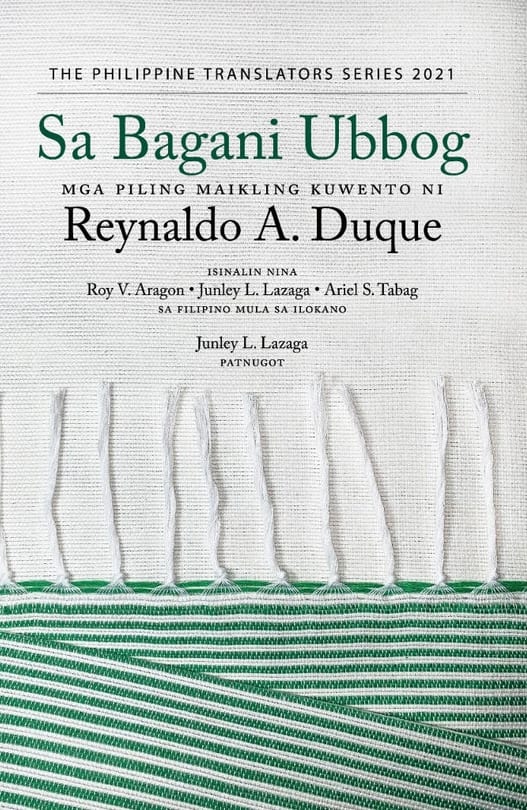
If English in Love Without a Heart turns out to be both foreign inheritance and domestic instrument, Sa Bagani Ubbog asks us to subject Filipino to the same suspicion. The national language is often imagined as a remedy for English dominance, which it can be, but Filipino becomes institutionally powerful in a different relation when it receives work from Ilokano. The histories are not equivalent: Filipino is not English colonial rule by another name. Still, an anti-colonial language can become a center in relation to another language with less reach in national schooling, publishing, broadcast media, and Manila-centered literary institutions. Translation into Filipino widens circulation, but widening is never politically empty.
The book is unusually conscious of translation as process. Its introduction compares translation to migration, describes the translator as inhabiting two cultural experiences, treats the target text as a work that must learn to live in a new world, and explicitly asks translators to remain aware of power relations between languages and cultures. It also admits that the Filipino telling may require altered methods and, at points, adjustments in narrative flow or arrangement. One member of the team speaks of the source as a point of departure from which a newly created work must acquire a life of its own; elsewhere the translators distinguish fidelity to the source from a kind of fidelity to the translation that must survive among new readers. This candor is a major strength. The Filipino text is presented as something made, not as an invisible equivalent discovered waiting inside Ilokano.
The first act of making occurs even before a sentence is translated. Duque wrote hundreds of stories; this book selects twenty-two pieces originally published in Bannawag, beginning in 1963 and ending in 2012, and arranges them across almost half a century. Translation is therefore joined to anthology-making. The volume does not merely give Filipino versions of individual stories. It constructs a career for a national readership: recurring returns to Bagani Ubbog, the long passage from rural memory and local history toward migration, insurgency, overseas work, family, and the unstable modernity that repeatedly enters the town from elsewhere. The chronology refuses the easy ethnographic freeze in which “Ilokano” becomes a set of permanent cultural traits. A community changes because the world has been changing through it.
The retrospective also allows us to see unevenness that should not be hidden by reverence. Duque can be didactic. Christian allegory sometimes arrives with an interpretive certainty that closes what the image might have left open. Political difficulty can be answered by exceptional intervention rather than collective transformation. “Ako, Juan Obrero: OFW” is particularly revealing. Juan’s contract is violated in Saudi Arabia; he is treated as an all-purpose subordinate, later imprisoned, and finally released after the editor who receives his recorded testimony remembers a high-school friend working on the President’s legal staff. That connection activates government offices and legal pressure. The story itself acknowledges the improbability: “One-in-a-million ang kaso mo,” the editor tells Juan. The admission keeps the rescue from pretending to be ordinary, yet also exposes the problem. A system that produces vulnerable migrant workers is answered by access to someone near Malacañang. The exception knows it is an exception, then becomes the vehicle of justice anyway.
The introduction occasionally gives Duque a more consoling vocabulary than the stories deserve, especially when it gathers them under claims about universality, redemption, and humanity’s “likas na kabutihan.” More productive is the friction the collection itself preserves, the contradictions of nation, class, religious symbolism, regional history, armed struggle, and migration that do not always resolve into shared human goodness. A translated retrospective need not make an older writer agree perfectly with the present. If it did, translation would become retrospective public relations rather than historical reading.
The sharpest contradiction appears in the introduction’s claim that translation confirms languages as equal and free, “walang dominante o higit na nakapangyayari.” As an ethical desire, the sentence is compelling. As a description of the Philippine linguistic field, it is difficult to sustain. Ilokano and Filipino do not possess equal institutional force. The very reason the translation can enlarge Duque’s national readership is that Filipino can travel through systems in which Ilokano has less power. The danger is not that the translation exists; the danger would be allowing its wider circulation to make the source newly dispensable. A Filipino Duque that becomes easier to teach, quote, and anthologize can unintentionally become the Duque through whom the nation decides it has already encountered Ilokano literature.
The book also leaves its own collaborative labor somewhat opaque. Aragon, Lazaga, and Tabag are credited collectively, and neither the contents nor the individual stories identify a principal translator. The introduction occasionally shifts from kami to “isa sa amin” and even “[ang] nakatatanda sa amin sa pangkat na ito ng mga tagasalin,” so we know distinct translatorial positions existed within the group. What we do not know is how the labor was divided, if it was divided at all, or how individual drafts became the collective Filipino of the volume. That information would not have made the translation more legitimate, but it would have deepened the very visibility of process the introduction otherwise values.
At its best, Sa Bagani Ubbog does not make Filipino the final home of these stories. It makes Filipino another place in which they can live. That distinction is crucial. National circulation is valuable when it enlarges the life of the Ilokano archive rather than replacing the need to know that the archive exists.
The Author Crosses His Own River
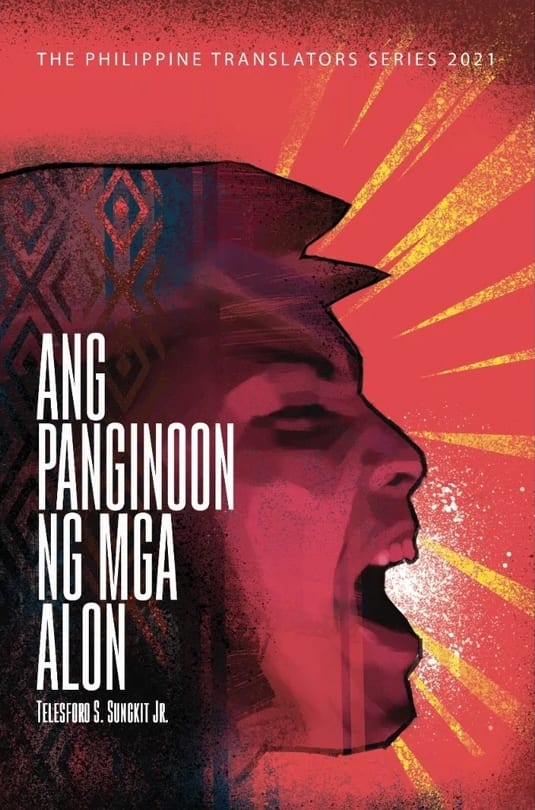
That distinction becomes stranger in Ang Panginoon ng mga Alon. The title page identifies Telesforo S. Sungkit Jr. as author and says the book was translated into Filipino from Cebuano by the author himself. The biographical note identifies Sungkit as a Higaonon farmer, poet, and novelist, and records that Ang Agalon sa mga Balod won the 2011 NCCA Writers’ Prize. It also notes Anijun Mudan-udan as the pen name under which his Cebuano poetry can be read. The ordinary diagram of translation has already broken down. Author and translator occupy the same body, but the languages do not collapse into one another, and neither Cebuano nor Filipino can fully claim the Higaonon knowledge sounding through both.
This linguistic layering is inseparable from the novel’s political problem. Vincenzo “Vincent” Makaindan Saluyong, later named Inolinan Bulalakaw Makaindan, grows into knowledge of a Higaonon political and cosmological inheritance involving the Walu Talugan, ancestral names, tumanud, tagbaya, ritual speech, prophecy, and the power associated with water. That inheritance is not preserved in a museum outside material struggle. Mining enters ancestral land; government power becomes entangled with dispossession; armed revolutionary politics offers another language for understanding exploitation. Vincent eventually enters the revolutionary left as Ka Mike, yet the novel refuses to let a general class analysis absorb the Indigenous question without remainder.
The tension becomes explicit when a party secretary assures him that the movement has plans for Indigenous peoples in its twelve-point agenda. Vincent listens, then wonders whether he should continue turning left or return to the road cut by his ancestors. The choice is not staged as enlightened politics versus backward superstition. It is a conflict between political forms: a revolutionary project that promises to include Indigenous peoples within a national program, and an Indigenous political memory whose institutions, land relations, cosmology, and names resist becoming merely one sector in somebody else’s agenda. The novel’s willingness to keep both traditions in argument is one of its most ambitious achievements.
Self-translation into Filipino intensifies that argument. Higaonon words do not disappear once Filipino arrives. Galamhan, for instance, is glossed as the part of the person where power resides and explicitly distinguished from isipan, whose corresponding term is hunahuna. Higaonon passages remain on the page and are followed by Filipino renderings. Talugan is explained as a great house where a datu resides and, elsewhere, as connected to the territory and political order over which authority extends. The effect is a Filipino repeatedly discovering that it is not the deepest language in the room. The national language becomes useful precisely when it is forced to acknowledge what it cannot simply absorb.
The same is true of the novel’s ecology. Water is not scenery. Forest, river, stars, ancestral beings, land, political authority, subsistence, and the sacred inhabit overlapping relations. Mining becomes violent not only because it damages an “environment” but because extraction attempts to detach mineral value from the relations that make the mountain a lived world. The novel therefore gives us something more difficult than the sentimental image of Indigenous people living harmoniously with nature. It stages a conflict between two ontologies of value: one in which gold can be separated, priced, and removed, and another in which the land cannot be understood apart from ancestry, governance, livelihood, and obligation.
Yet decolonial sympathy should not require us to baptize every roughness as resistance. Sungkit’s Filipino often leans on explanatory constructions such as sapagkat, walang kaalam-alam, and sa ibang banda; scenes can be followed by sentences that tell us what they mean before their implications have had time to settle. Political and mythic exposition sometimes thickens until characters carry information more than contradiction. Repetition can certainly belong to oral or epic patterning, and the book’s recurrent numbers, invocations, ritual speech, and ancestral names make that tradition formally important. But not every recurrence becomes incantation. Some passages would have benefited from firmer editing, not to make the Filipino more Tagalog or more metropolitan, but to make the pressure exerted by Cebuano and Higaonon feel more decisively shaped.
The most consequential absence is paratextual. Of all five books, this is the one whose translator’s account I most wanted. The title page tells us the author translated himself, but not what self-translation changed. Did Sungkit cut, expand, revise, or disagree with his earlier Cebuano text? Which Higaonon terms had already been present in the source? Did Filipino produce a different imagined reader, and did that reader alter how much had to be explained? Self-translation is not simply ordinary translation with perfect access to intention. Time can estrange an author from the person who wrote the earlier book. Another language can expose choices the first version made invisible.
This is why the ending gains a resonance beyond plot. Vincent finally understands that his power over water does not make him the sovereign figure everyone has been waiting for. “Kagaya lamang pala ako nitong tubig na hinuhubog ko ngayon,” he realizes: like the water he shapes, he too follows a command, and there is a “totoong Panginoon ng mga Alon” beyond him. The chosen-one narrative loosens at the moment it seems ready to harden into coronation. Authority moves elsewhere. For a novel whose author has returned to his own work through another language, that displacement offers an accidental theory of self-translation: returning to a text does not have to mean mastering it more completely. It may mean discovering that something in the work had always exceeded the author who first wrote it.
What the Second Life Makes Visible
The temptation after reading these five books is to turn their differences into a checklist for future translations: fewer notes here, more historical framing there, a translator’s note for this book, a bilingual format for that one, clearer attribution of collaborative labor. That would only replace one orthodoxy with another. What the books more usefully change is the object of criticism. Fidelity still matters at the sentence, but the sentence is no longer enough. We also have to ask what the second life of a work redistributes: attention, prestige, curricular presence, linguistic authority, access to archives, the right to explain a culture, even the likelihood that the source will continue to be sought once the translation becomes easier to obtain.
Translation in this sense resembles a transfer of literary property without ever becoming simple ownership. A work enters another language and gives that language something it did not previously possess, but the receiving language can become richer by making the source poorer if circulation turns substitution into disappearance. The opposite can also happen. A translation can send readers backward toward the language, magazine, archive, region, or historical conflict from which it came. The important distinction may therefore be less between faithful and unfaithful than between forms of literary circulation that multiply relations and forms that quietly terminate them. A translated book need not make the source unnecessary. Its more durable achievement may be to make the reader newly aware of how much remains outside the translation.
This is especially consequential in the Philippines because the ecology of our languages is also an ecology of institutions. A language survives not only because people can speak it but because there are magazines willing to print stories in it, schools willing to teach it beyond the elementary level, publishers willing to sustain books whose market is not already guaranteed, archives able to preserve what was printed, and translators compensated enough to work with care. Translation can redistribute attention toward a neglected language, but it cannot by itself substitute for the conditions under which writing in that language continues to be produced. One could imagine a vigorous culture of translation making the literary field more interconnected without requiring every road to lead toward only Filipino or English.
Perhaps this is the most demanding contribution of these finalists to the category that has gathered them. They make “translated book” harder to hear as the name of a derivative object. The book is a new social event in the life of an older work, one that may alter which readers can claim it, which histories become teachable, and which language is asked to stretch around something it could not previously say. Its failures matter for the same reason its achievements do: because translation does not merely describe relations among languages; it changes them.
Page one comes too late because the crossing has already begun before the book lets us enter. What follows should not erase that lateness. The second life is most valuable when it carries enough of the first to remain answerable to it, while becoming different enough to trouble the language that receives it. The book has already lived once. The question is not whether we can return it unchanged to that first life, which is impossible, but whether its next life enlarges the world in which both the work and its languages can continue to live.
Edgar Calabia Samar is Associate Professor at the Ateneo de Manila University, where he recently completed a term as Chair of the Department of Filipino. He is Head of the National Committee on Literary Arts of the National Commission for Culture and the Arts and a member of the Filipino Critics Circle. He is the author of the Janus Silang series and of several novels, including Teorya ng Unang Panahon, and in 2024 received the S.E.A. Write Award from the Royal Family of Thailand for his contributions to Southeast Asian literatures. He writes about reading, writing, and liberatory education and labor at Silid Santinakpan (patreon.com/ecsamar) and on TikTok and Instagram at @ecsamar.
READ MORE FROM EDGAR CALABIA SAMAR:
A Person Is Here: On the Finalists for the 43rd National Book Award for Best Book on Drama and Film
By the Spine, or by the Thought: On the Finalists for the 43rd National Book Award for Best Book of Literary History
By Whose Reckoning: On the Finalists for the 43rd National Book Award for Best Book of Literary Criticism or Cultural Studies
The Book Beside the Book: On the Finalists for the 43rd National Book Award for Best Anthology in English
At the Editor’s Own Table: On the Finalists for the 43rd National Book Award for Best Anthology in Filipino
Voices Shaped Beyond Retrieval: On the Finalists for the 43rd National Book Award for Best Book of Poetry in English
The Tongue and the Terrain: On the Finalists for the 43rd National Book Award for Best Book of Poetry in Filipino
Five Doors Into the Real: On the Finalists for the 43rd National Book Award for Best Nonfiction Prose in English
The Dwelling and the Drumbeat: On the Finalists for the 43rd National Book Award for Best Nonfiction Prose in Filipino
What the Novel Remembers When the Nation Forgets: On the Finalists for the 43rd National Book Award for Best Novel in Filipino
What the Novel Carries When It Leaves: On the Finalists for the 43rd National Book Award for Best Novel in English
What the Stories Hold When the Collection Gathers: On the Finalists for the 43rd National Book Award for Best Collection of Short Fiction in Filipino
The Gathered and the Gathered Against: On the Finalists for the 43rd National Book Award for Best Collection of Short Fiction in English
Edgar Calabia Samar is an award-winning poet, critic, and novelist, and an Associate Professor at Ateneo de Manila University. IG: @ecsamar.
View More Articles About: