By Whose Reckoning: On the Finalists for the 43rd National Book Award for Best Book of Literary Criticism or Cultural Studies
Through a reading of these five books, we ask: 'By what right, and for whom, does criticism decide what is worth its attention at all?'
Published on Jun 14, 2026
Disclosure: Like my previous essays about the finalists of the 43rd National Book Award, the criticism and opinions expressed here are my own and do not represent the views of the Filipino Critics Circle as a whole. Where I have a personal or professional connection to a book or its author, I note it within the relevant section.

ON THE COPYRIGHT PAGE of each of these five books, in the small print no casual reader is meant to read, sits a string of numbers and letters that decides where the book will live. It is called the Cataloging-in-Publication data, and it is the library’s way of telling a book where it belongs—which aisle, which shelf, which neighbors it will spend its life beside. Jerry C. Respeto’s study of devotion in Pakil is assigned to 264 and BV193, the call numbers for Christian public worship, so it will stand among missals and treatises on the liturgy. Louie Jon A. Sánchez’s history of the teleserye is filed under PN6120, collections of drama, where it keeps company with anthologies of plays. Eugene Y. Evasco’s essays on children’s literature go to 899.2114 and PL6058, Filipino literature, on the shelf of poems and stories and the criticism that attends them. Gerard Lico’s book on the mosque is 726 and NA4670, religious architecture, among studies of naves and domes and the engineering of sacred space. And Neferti X. M. Tadiar’s meditation on disposability is 330.122 and HB501, the numbers for capital, where it sits beside textbooks of political economy. Five books, five destinations, five different spaces of the same building. In any library in the country that owns all five, a reader who wished to hold them at once would have to walk the length of the place more than once, because the system that orders our knowledge has decided that these books answer to dissimilar jurisdictions of thought.
Perhaps the only room in which they meet and are treated as “similar” is this one: the National Book Award category called Best Book of Literary Criticism or Cultural Studies that imagines a book about a Lagunense procession beside a book about the soap operas that raised us beside a book about the naughtiness of children beside a book about the architecture of Filipino Islam beside a book about the bodies global capital uses up and discards. The strangeness of this repays a pause, because the strangeness is not incidental. The Dewey Decimal System and the Library of Congress classification that produce those call numbers are not neutral maps of what exists; they are inherited instruments, designed elsewhere, for ordering a world someone else imagined, and one of the quiet things a reader alert to our colonial formation might notice is how faithfully our libraries still obey a taxonomy that scatters our own thinking across its imported grid. The award performs a small act of insubordination against that grid. It collects what the catalog keeps apart and asks us to read these books as kin—to ask whether there is such a thing as the Filipino book of literary criticism or cultural studies, or whether the phrase names only an administrative folder into which we drop whatever does not fit the genres we are more certain about.
That little word in the category’s name—or—is where I want to begin, because it is doing more work than its size suggests. Literary criticism or cultural studies. The conjunction admits that we are not sure these are the same enterprise, and it declines to decide. It is the typographic shrug of a field that has not settled what it is. Rather than resolve the uncertainty, I have found these five books most useful for the way they refuse to settle it, and reading them together, I kept returning to three questions that each answers differently. The first is what a book of this kind chooses to think about—which is never innocent, because to single out a subject as deserving of sustained attention is also to assume the authority to decide such things, to stand, however briefly, where the sorting of the world into the significant and the negligible gets done. The second is where the writer places themselves in relation to what they study: how close, how implicated, how willing to let the line between the one who looks and the thing looked at dissolve or harden. The third, which I have come to think is the most consequential and the least often asked, is in what language and at what altitude of abstraction the thinking is done, and therefore for whom—because a book of criticism is also a wager about who is admitted to the conversation it begins.
I have arranged what follows so that the books move, roughly, from the nearest to the farthest: from a writer who lived inside his subject for two years to a writer who thinks about the most intimate thing in the world, the used-up body, from the great height of global theory. No one of these positions is better than another. And yet the arrangement lets a question accumulate as we go, and the question is not the comfortable one—whether these books are right to take seriously what others dismissed—but a harder one that the last of them will force into the open: by what right, and for whom, does criticism decide what is worth its attention at all.
A Town That Becomes Its Own Author
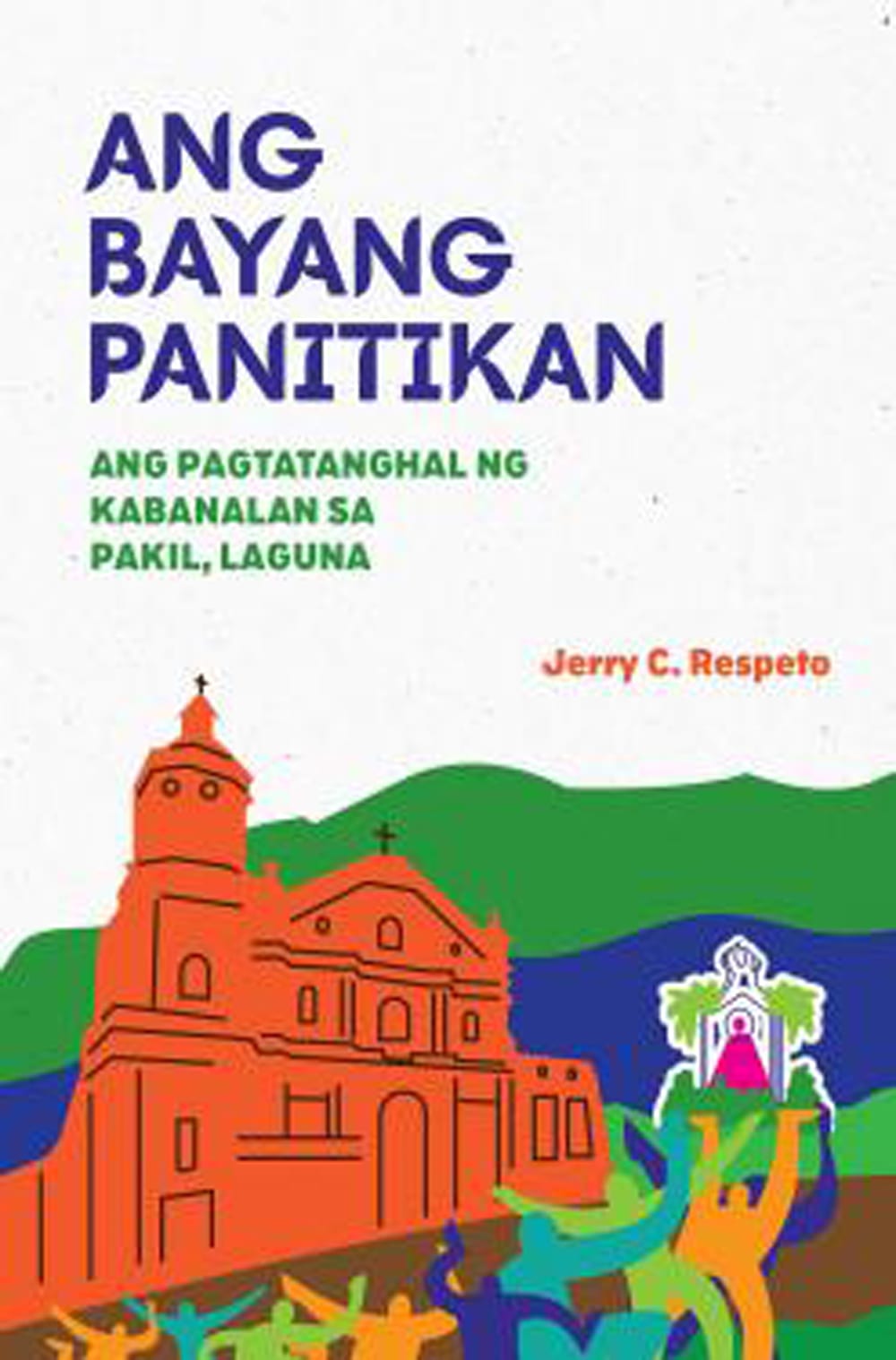
Jerry C. Respeto’s Ang Bayang Panitikan: Ang Pagtatanghal ng Kabanalan sa Pakil, Laguna opens with a researcher who did not visit Pakil so much as move into it. The fieldwork that grounds the book was carried out across the years 2000 to 2002 through what the discipline of Filipino studies calls pakikipamuhay, pakikilahok, and pakikipagkuwentuhan—living among, taking part, entering the unhurried exchange of stories—which are not techniques lifted from a manual but ways of being with people that refuse the cleanliness of the observer who arrives, extracts, and departs. I should say plainly that Respeto, whom I call Sir Jerry, is a mentor: he was my teacher in college, and later my colleague in the Department of Filipino at the Ateneo de Manila University, from which he retired two years ago, during my own term as its chair. I have tried to let the book surprise me, and it did.
What surprised me was the ambition concealed inside what could have been a modest local study. Respeto is documenting the devotional life of one town—the procession of the Birhen ng Turumba, the Lady of Sorrows whose framed image, by the legend, fell into Laguna de Bay from a missionary’s storm-struck boat and was recovered from the water by fishermen; the Reenactment in which the townsfolk dramatize that finding at the lakeshore; the Ahunan, the climb up the slopes of Mount Ping-as in penitential imitation of the Franciscan Padre Francisco Solier, who carried a heavy cross to the summit in 1671 and became a hermit there; the long ceremony of the dead Christ, the Senyor, with its smoke and its washing and its burial. He could have stopped at description, and the description alone would have earned its place, because this devotional world is specific and intricate and has not been recorded at this depth before. He reaches past it, however, for a concept, and the concept is the book’s wager: the bayang panitikan, the town that is its own literature, the community whose performances of holiness make up a body of authored work that shapes, and is shaped by, the identity of the place. The Pakilenyos, in this reading, are the may-akda, the authors—not the passive bearers of a tradition handed down to them but the active makers of the stories and rituals through which they know themselves. The argument runs against the long colonial reflex of treating folk practice as raw material awaiting the scholar who will convert it into knowledge, and it carries, almost without raising its voice, an ecological insistence as well: the holiness cannot be detached from the ground it rises out of, the plain and the lake of Laguna de Bay and the mountain, so that the procession is unintelligible without the water it skirts and the climb without the slope that demands it.
I want to press the concept where it is strongest, because it can bear the pressure. There is a difficulty the book does not quite turn to face, and it concerns the authorship the book so generously distributes. To say that the Pakilenyos author themselves is a gift, and yet the sentence that says so is Respeto’s, not theirs; the concept of the bayang panitikan, the framework for analyzing it, the elevation of a town’s worship into a category of literary thought—these are the scholar’s, and they arrive through the apparatus of a doctoral dissertation and a university press. The book gives authorship to the community with one hand and, with the other, reclaims the authority to certify that authorship, to name what the Pakilenyos are doing in a vocabulary the Pakilenyos did not choose and might not recognize. This is not hypocrisy; it may be unavoidable, the condition of any scholarship that loves its subject. It bears naming because the foreword frames the book’s hope as a movement it calls “ang pag-ahon mula bayan tungong bansa,” the rising from town toward nation—the lifting of Pakil’s local knowledge to the level of the national, where it can finally register. A reader formed by the same decolonial commitments the book honors might hesitate here, and ask whether the nation should be the destination that confers worth on the local at all, whether the structure of rising toward a center does not quietly restore the hierarchy it set out to undo, leaving Pakil significant insofar as Manila and the academy can be made to see it. The bayang panitikan is a strong idea precisely because it locates authorship in the town. I wished the book trusted that location further—wished it would let Pakil be a sufficient world rather than a case awaiting promotion. There is also the plainer matter of time: the present the book inhabits is the year 2000, and the two decades between the living and the publishing pass largely unremarked, so that a devotion shaped by phones, departures, the streamed Mass, and the years of plague is preserved as though it had stood still. Even with these reservations, the concept is a contribution, and a concept is not a small thing to give a field that did not have the word before.
The Pleasure That Did Not Need Forgiving
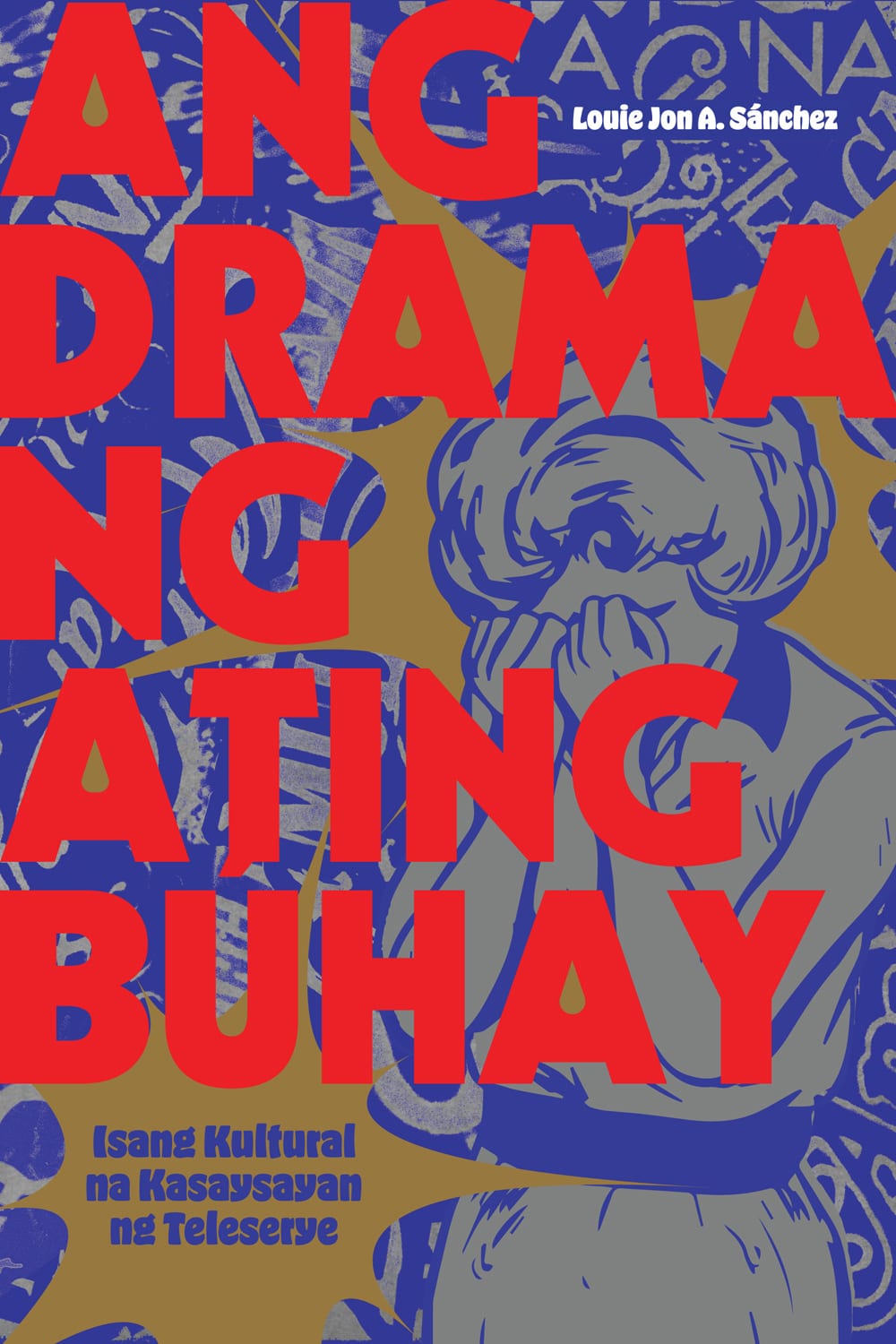
Louie Jon A. Sánchez’s Ang Drama ng Ating Búhay: Isang Kultural na Kasaysayan ng Teleserye sets out to write the history of the soap opera as a serious cultural form, from the radio dramas of the late 1930s through the decades of television soap opera that ran across the dictatorship and the democracy that followed it, to the birth of the teleserye proper at the turn of the millennium. I should disclose that Sánchez and I are contemporaries who first knew each other as young writers, co-fellows at the national writers’ workshops more than two decades ago, and that he names me, among many others, in his acknowledgments. I note it so the reader can weigh my account, and I have tried to let the book argue with me rather than simply nod it through.
Its deepest achievement is a recovery, and the recovery is conducted against shame. Sánchez understands that the teleserye reaches us already condemned, that we were trained—by the convent, by the school, by an imported standard of cool restraint—to find it embarrassing, excessive, beneath the dignity of thought, and he traces this training to its sources with real precision: to a moralizing Christianity suspicious of pleasure, and to an American formalism that prized understatement and sneered at the loud and the openly didactic. Against this inheritance, he defends two values the soap opera has always carried and our criticism has always been too embarrassed to honor: aliw, the pleasure of being entertained, and áral, the lesson the story means to impart. His most penetrating concept is salimuot, at once complexity and entanglement, the dense interweaving of fates in which the orphan turns out to be the heiress and the stranger turns out to be the brother. He sees that this contrivance is the engine of the form rather than its embarrassment: the soap opera shrinks the world on purpose, draws everyone into secret relation with everyone, and the world made small becomes a world in which all are implicated in all—which is, on reflection, an oddly exact portrait of a society bound by kinship and debt and the long memory of injury. His formulation of why the entanglement holds us earns its keep: Kung walang tunggalian, walang kuwento. Kung walang kuwento, walang kuwenta. No conflict, no story; no story, no worth. The play on kuwento and kuwenta, story and worth, carries the argument the surrounding prose unfolds—that the relentless complication is the form’s way of insisting that lives signify, that they merit being followed to their end.
And here I find the book caught in a bind it does not name, and the bind is more interesting than any flaw of execution. To rescue the soap opera, Sánchez argues, in the end, that it is rational and just beneath its excess, that its true subject is the choosing of katwiran, of reason and right, that its melodrama is moral instruction in disguise. The defense is moving, and yet it concedes the prosecution’s terms: it agrees that a form must improve us to deserve our respect, that aliw must be redeemed by áral before it can be admitted to the company of serious things. The bolder book latent inside this one would let pleasure stand without the alibi of the lesson—would defend the soap opera’s tears not because they teach us to choose justice but because the capacity to be moved is itself a form of knowledge our criticism has been too ashamed to grant. By recuperating melodrama as secretly didactic, the book half-smuggles the improving frame back through the side door it opened to expel it. The history also bears the shape of the dissertation that produced it. Its periodization stops at 2016, and though it gestures, near the end, at the franchise crisis that silenced the country’s largest network in 2020, it treats that silencing as an event befalling the form rather than as the close of the form’s classical age—an age remade since by streaming, by the pandemic’s rearrangement of when and how we watch, by the very shutdown the book notes in passing. A history arriving just after its subject has begun to change is not thereby disqualified; it becomes the record of a form at the threshold of its transformation, though the book does not claim that value for itself. And it pays for its cultural history in long stretches of plot summary, affectionate and exact, in which the retelling of a teleserye’s turns crowds out the analysis the retelling was meant to enable. The recognition this stirs in a reader who lived through these shows is a real pleasure, and not a lesser one: before the book can explain the teleserye, it does the rarer thing of making us unashamed to have loved it.
The Naughtiness That Outlives Its Own Triumph
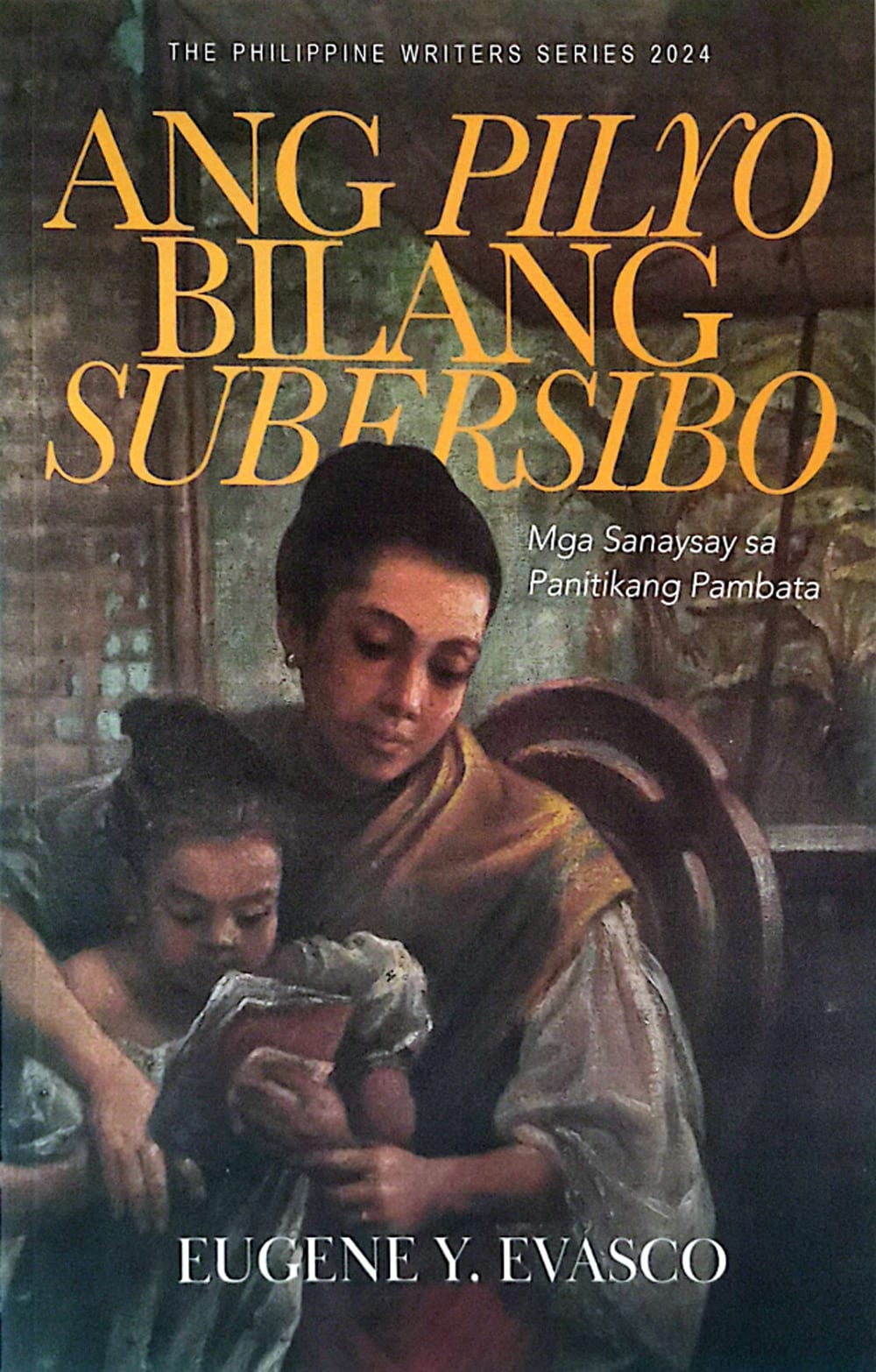
Eugene Y. Evasco’s Ang Pilyo Bilang Subersibo: Mga Sanaysay sa Panitikang Pambata is the work of a writer who has spent a life inside children’s literature from both sides at once—as one of its most decorated authors and as one of its few sustained scholars—and its title essay advances the proposition the collection flies as its banner: that the pilyo, the naughty or mischievous child, is a subversive figure, and that children’s literature, far from being the docile instrument of obedience the school takes it for, harbors within it the seeds of refusal. Jose Monfred C. Sy’s introduction sharpens this into a claim about childhood itself as a cultural and political construction, a stage that can be used to drill the child into the existing order or to cultivate in the child the spirit that questions it. The range of the essays is large and the learning behind them is deep: Evasco reads the trickster Pilandok as a native figure handed across generations and media, finds in the Filipino Cinderellas—Abadeja and her kin—a question about what the folk imagination did with a borrowed shape, exposes the imperial ideology lodged in the turn-of-the-century American children’s novels of the Old Glory series, traces the meanings of hair across the illustrations of picture books, and considers how a children’s book might shield the very reader it addresses from sexual abuse. The political stakes are not abstract, and Sy’s introduction makes them concrete by recalling the 2022 red-tagging of Adarna House, accused of subversion for a set of children’s books on the history of the Marcos dictatorship—an episode that reads almost as proof of the thesis, since power does not trouble to fear what it believes harmless.
That proof, however, cuts in a direction the book does not follow, and following it is where the more demanding reading begins. If the subversive child is real, what are we to make of the fact that this subversion now wins prizes, enters syllabi, is gathered into a handsome university-press volume, and is shortlisted for a national award? The pilyo Evasco champions has become, in the decades his essays span, something close to the orthodoxy of progressive Filipino children’s literature—celebrated, awarded, taught—and a refusal that the institutions have learned to honor is no longer quite a refusal. The book would be braver if it turned its own argument on the apparatus that now embraces it, and asked whether the canonization of the subversive child has domesticated him, whether the naughtiness survives its own triumph or merely supplies the field with a flattering self-image. This is bound up with the harder question the book raises about its own form. These essays were written across roughly two decades, for different journals and occasions, and they do not all belong to the same moment of thought. Several are surveys pinned to spans now receded—the situation of children’s literature from 2000 to 2009, from 2010 to 2012—and these read less as arguments than as documents, sitting uneasily beside close readings whose interpretive ambition is of another order. The thesis named on the cover is elaborated in one essay and framed, generously, by the introduction; it is not the spine that runs through every chapter.
The volume confronts us, then, with the question of what holds a body of criticism together: whether what we have is one sustained argument or the archive of a working life, and whether it is fair to ask it to be the former when it offers so much as the latter. I lean toward reading it as the archive a field needed and lacked. I also think it would have been the stronger book had it owned its seams—told us where each essay came from and when, let the long arc of a critic’s thinking show as an arc—rather than presenting the assembled work as though it had always been a single design.
The House of Prayer Behind Glass
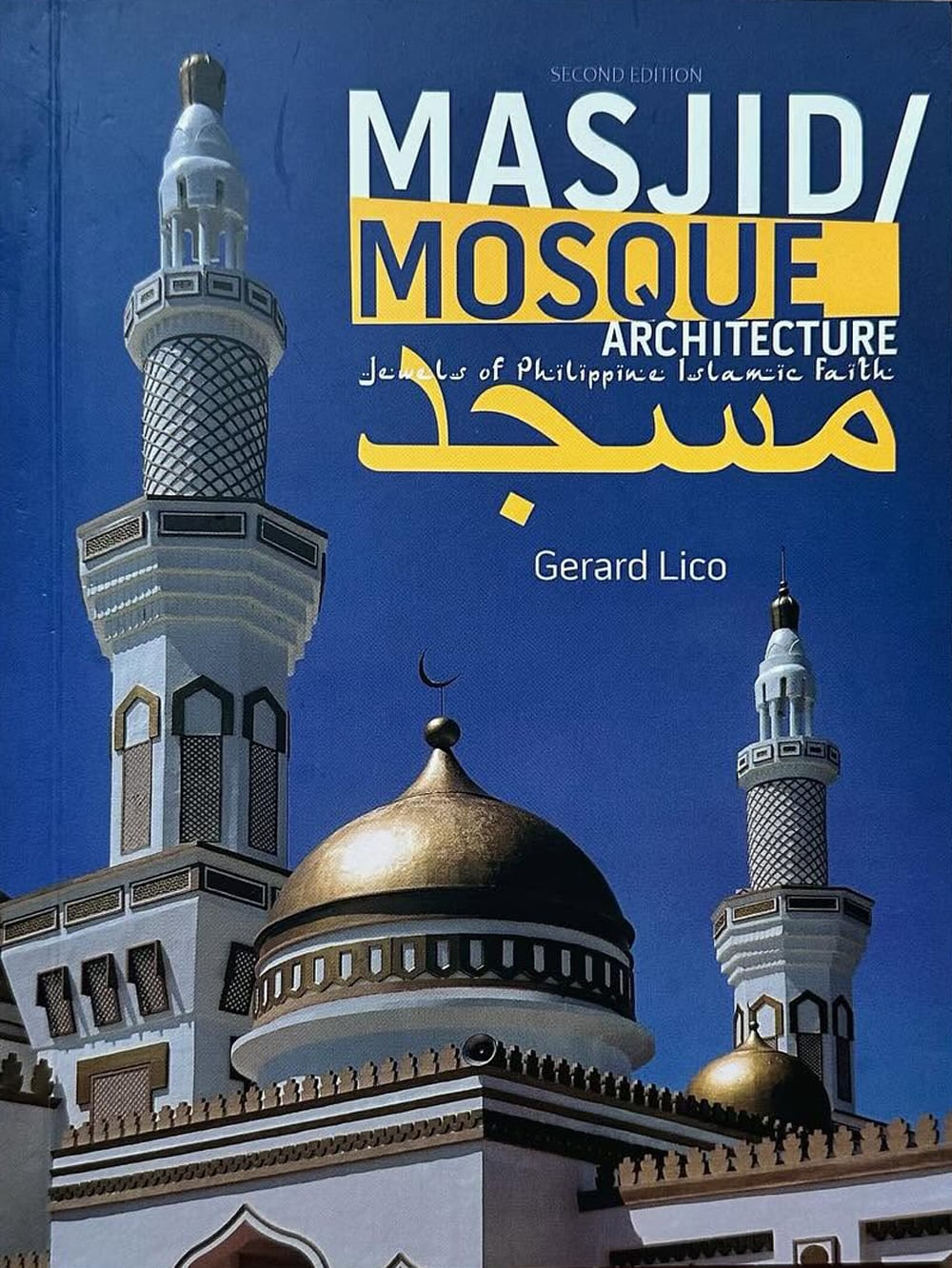
Gerard Lico’s Masjid/Mosque Architecture: Jewels of Philippine Islamic Faith, now in a second edition under the imprint of the University of the Philippines College of Architecture, is lavishly illustrated, and its argument lives most deeply inside its images. At its center is an insight stated early and given less room than it can carry: that the Filipino mosque was not always the onion-domed, minaret-crowned silhouette we now take to be self-evidently Islamic. Before the Second World War, Lico shows, the mosques of Lanao and Maguindanao were multi-tiered structures of bamboo and wood, their stacked roofs recalling the Javanese temple and the pagoda, kin to the mosque forms of the wider Nusantara world that arcs across the Malay archipelago. The dome and the tall minaret, styled after Middle Eastern models, came later and largely supplanted the older shape. To notice this is to notice something well past architecture: that the visual language of Filipino Islam has itself been the site of a long negotiation between an indigenous Southeast Asian inheritance and an imported Arabized aesthetic, and that the buildings carry, in their very rooflines, a record of how a faith was localized and then, in part, made foreign to itself again. The book is also, after the fact, an archive of loss, since some of the mosques it documents were destroyed in the 2017 siege of Marawi, and the photographs become a record of what war unmade and what the people then resolved to raise once more.
The documentary impulse behind this deserves respect, and the conservation argument that drives the book is urgent. Read as a book of literary criticism or cultural studies, however—the shelf the award asks us to imagine it on—it is the one whose thinking remains the most embedded in its images and the least carried through into sustained argument. The insight about the tiers and the dome is introduced and then largely set down, as the book turns to its folio, its catalogue of more than thirty mosques in description and photograph. The folio is handsome and useful. I kept wishing, though, that the analytical thread had been pulled the whole length of the book, that it had pressed the questions its own premise opens: who decides which form is the authentic mosque, and what is at stake in naming one indigenous and the other foreign; what agency the Muslim communities themselves exercised in choosing the dome rather than suffering it; whether the title’s own word, jewel, does not quietly perform the very thing a wary reading would want to resist, converting a living house of prayer into a precious object arranged for the admiration of those outside the faith.
This is the question of position, and it bears on this book more heavily than on the others, because a Manila-based scholar is recording the sacred architecture of the Muslim south for a largely non-Muslim readership, and the work, however reverent, is conducted from a distance and framed for that readership’s appreciation. I raise it not to charge the book with a fault it could have sidestepped, but because the book is at its most alive exactly where it grazes these questions and stops. There is a more argumentative book latent in this one, and its images are so eloquent that they leave you wanting to hear it think aloud.
The Hardest Book, the Closest Subject
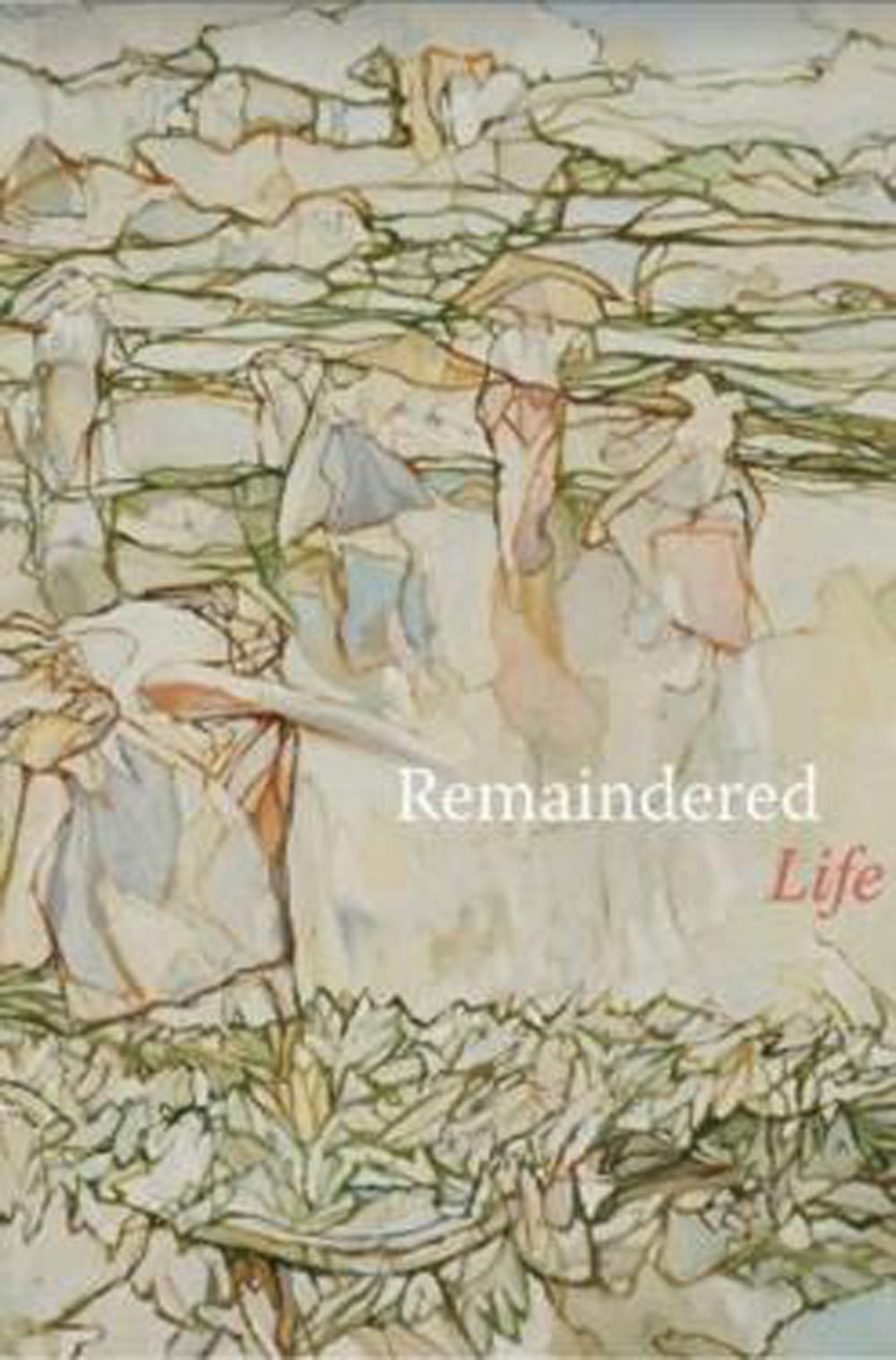
Neferti X. M. Tadiar’s Remaindered Life enters this category as a Philippine edition—issued by the Ateneo de Manila University Press in 2024, with a foreword by Walden Bello—of a book that first appeared from Duke University Press in 2022. It is the most theoretically ambitious work on the shortlist, and it names its own method without apology: Tadiar calls the book a theoretical fiction, an analytical and political tale about the global present. Her argument recasts the world not as the story of capitalist restructuring radiating outward from the Global North but as the unfinished aftermath of decolonization—an ongoing war waged by the heirs of colonial power to keep the right to a valued life, a right paid for by the manufacture of disposable life elsewhere. She calls this war the war to be human, and around it she builds a vocabulary of formidable density: value and waste, the remainder, disposability, life-times, the globopolis of the city that is everywhere. Her anchoring insistence is that the inventive practices by which the poor make a living out of the very means of living—their sociality, their time, their bodies—are not merely consumed by capital but are the hidden engines capital depends upon and never pays for. The dispossessed, in her telling, are not the residue of the global economy; they are its concealed ground.
What I most want to honor is that the book takes Filipino disposable life as the ground of theory rather than as a case fetched in to illustrate a frame imported from abroad. The dead of Rodrigo Duterte’s drug war, the artists of RESBAK and the photographers called the Nightcrawlers who committed themselves to recording each killing, the overseas worker whose life-time is parceled out and sold, the settlement that shores up the city disowning it—these are where the thinking starts, not where it is applied. The Philippine edition, with Bello’s foreword and a cover that answers Fernando Amorsolo’s idealized canvas of rice-planting with a contemporary reworking by Lyra Garcellano, performs a quiet repatriation, bringing a book written in the dialect of the transnational academy home to the readers whose lives are its matter.
And it is here that the third question—language, altitude, audience—becomes unavoidable, and deference to the book’s seriousness is no reason to set it aside. Remaindered Life is the most demanding of the five to read, and its difficulty is woven into its sentences, which pile abstraction on abstraction, clause within clause, until a reader not already fluent in the dialect of critical theory may feel the prose close over them. The easy complaint would be that theory is hard, and the easy complaint is a populist reflex I have no use for; some thinking is difficult because the world it tracks is, and to wish the prose simpler than its argument requires would be to ask it to betray its own precision. The harder and more honest observation is the one the book’s argument hands us about itself. A study of how capital extracts value from disposable life-times is also, unavoidably, a high-value intellectual object accumulating prestige in an academic economy structured by the very logic it indicts—legible to the credentialed, illegible to the people on its cover, circulating in rooms the disposable cannot enter. The tension between the book’s subject and the book’s language is one it does not resolve and, I suspect, cannot; to name it is not to ask for less rigor but to ask the question Tadiar’s own ethics force upon the reader, the question of who is admitted to the conversation a book of this kind begins, and to admit that the answer, for now, is not those it most concerns. The achievement and the difficulty are not separable, and I would distrust any account that handed you one without the other.
The Operation That Sorts the World
So: is there a Filipino book of literary criticism or cultural studies, or only the five separate bookshelves to which the catalog consigns these books? The tempting answer—the one a reader schooled in cultural studies arrives already holding—is that the five are kin because each takes seriously what the official culture discarded, each training its attention on a procession, a soap opera, a child’s book, a mosque, a used-up life that the academy had filed under the negligible. I distrust this answer, not because it is false but because it is too comfortable, the kind of conclusion that confirms what we believed before opening a single cover. The rescue of the overlooked has become the reflex of the field, very nearly its piety, and a reflex explains nothing.
What is harder to sit with is that the gesture these books share is not only generous but proprietary. To declare that a thing deserves the weight of thought is to assume the authority to decide what deserves it—to occupy, however briefly, the position of the one who parts the world into what merits attention and what does not. This is precisely the operation Tadiar’s book anatomizes from the inside: the sorting of life into value and waste is not a fact of nature, but the labor of power, and the same logic that consigns a body to disposability consigns a subject to the minor. The category that collects these five books performs, in miniature, an act of valuation—this book worthy of the award, this subject worthy of study—and it is the strangest and most useful feature of this shortlist that one of its members reads the operation that contains it. Tadiar’s is the book the catalog would shelve farthest from the others, filed under capital rather than culture; it is also the one that hands us the lens for seeing the category’s own appetite to confer worth. The book about disposability turns out to be a book about the award that judges it.
I do not think this disqualifies the gesture, or that a criticism frightened of the power in valuing would have anything left to say. The more exacting task the shortlist sets is not to elevate the minor—elevation keeps the critic on the height, doing the sorting—but to share the authority to mean, and here the five divide in ways more telling than any ranking. Respeto reaches for it and half-recovers it, granting his Pakilenyos the name of authors in a language he keeps the right to author. Sánchez extends it to the audiences of melodrama and then asks them to be reasonable before he will let them be moved. Evasco hands it to the naughty child and lets the institutions quietly take it back as a prize. Lico offers his mosques the dignity of the monograph and arranges them, in the same breath, as jewels for an outside eye. Tadiar holds the authority at the greatest distance from those she writes about and is the only one to make that distance her subject. None resolves the problem, because the problem may not be the kind that resolves. The interest lies in watching five serious minds approach it from five incompatible positions the catalog would never have let stand in the same room.
The catalog will go on filing them apart, and it is not wrong to; the procession is worship and the theory is economics, and the call numbers tell a kind of truth. What the award proposes is only that we read across the partitions long enough to turn the books’ own question back on the books—and on ourselves. Each of these volumes asks, of its chosen subject, by what right it has been judged minor and beneath thought. The category invites the same question one level up, addressed now to the act of criticism itself: by what right, and for whom, do any of us decide what is worth thinking about. What these five books finally offer is not a definition of the Filipino book of criticism but five different things a writer is willing to risk in order to think—and the harder, unfinished recognition that to confer worth on what the world threw away is to take up, however gently, the same instrument that did the throwing.
Edgar Calabia Samar is Associate Professor at Ateneo de Manila University. He is the Head of the National Committee on Literary Arts of the National Commission for Culture and the Arts and a member of the Filipino Critics Circle. In 2024, he received the S.E.A. Write Award from the Royal Family of Thailand for his contributions to Southeast Asian literatures. He also creates online content on reading, writing, and liberatory work and education on patreon.com/ecsamar and Instagram at @ecsamar.
READ MORE FROM EDGAR CALABIA SAMAR:
The Book Beside the Book: On the Finalists for the 43rd National Book Award for Best Anthology in English
At the Editor’s Own Table: On the Finalists for the 43rd National Book Award for Best Anthology in Filipino
Voices Shaped Beyond Retrieval: On the Finalists for the 43rd National Book Award for Best Book of Poetry in English
The Tongue and the Terrain: On the Finalists for the 43rd National Book Award for Best Book of Poetry in Filipino
Five Doors Into the Real: On the Finalists for the 43rd National Book Award for Best Nonfiction Prose in English
The Dwelling and the Drumbeat: On the Finalists for the 43rd National Book Award for Best Nonfiction Prose in Filipino
What the Novel Remembers When the Nation Forgets: On the Finalists for the 43rd National Book Award for Best Novel in Filipino
What the Novel Carries When It Leaves: On the Finalists for the 43rd National Book Award for Best Novel in English
What the Stories Hold When the Collection Gathers: On the Finalists for the 43rd National Book Award for Best Collection of Short Fiction in Filipino
The Gathered and the Gathered Against: On the Finalists for the 43rd National Book Award for Best Collection of Short Fiction in English
Edgar Calabia Samar is an award-winning poet, critic, and novelist, and an Associate Professor at Ateneo de Manila University. IG: @ecsamar.
View More Articles About: