What the Stories Hold When the Collection Gathers
On the four finalists for the 43rd National Book Award for Best Collection of Short Fiction in Filipino.
Published on Feb 21, 2026
Disclosure: Luna Sicat Cleto wrote a blurb for my latest novel, Teorya ng Unang Panahon. I first read her novel Makinilyang Altar in my twenties, before she became my classmate in some of my PhD classes—classes I had to wait for her to finish so that she could then become my professor for Malikhaing Pagsulat, when Lilia Quindoza Santiago, who was the only one teaching MP then, had to leave UP. Like in everything I read, I try not to let these histories affect my assessment of people’s works, but I can only account for what I can consciously be aware of. Like both my previous essays about the finalists of the National Book Award, the criticism and opinions expressed here are my own and do not represent the views of the Filipino Critics Circle as a whole.

CONSIDER the journey each of these books made before arriving on the same shortlist. One collection began as Facebook posts—status updates, notes, comic observations tapped out on a phone and offered to friends who responded with reacts and shares and the particular kind of laughter that social media produces, which is laughter witnessed by others, laughter that is itself a form of publication. Another was published by the University of the Philippines Press as part of a series dedicated to emerging writers, carrying the institutional weight of the country’s premier state university and the careful editorial apparatus that academic publishing provides, complete with a series editor’s introduction and the implicit claim that what is contained between these covers has been vetted, has passed through the gates that separate writing from literature. A third was written by a poet moving into fiction for the first time, carrying the poet’s ear into a form that demands the poet learn patience, learn to sustain a voice across pages rather than stanzas, learn that the story requires a different kind of compression than the poem. And the fourth was assembled by a writer whose formal range—allegory, speculative fiction, realism, institutional satire, forbidden love story, supernatural encounter—suggests a restlessness with the very idea that a short story collection should be one thing, should cohere around a single mode or method, should present the reader with a consistent surface rather than a terrain that shifts underfoot.
Four books, four sites of production, four different answers to the question of where Filipino short fiction lives in 2024—and it is this question, the question of where, that strikes me as the most urgent one these finalists pose, because it is a question that precedes the question of quality, precedes even the question of what the stories are about, and instead asks something more fundamental: what are the material conditions under which short fiction in Filipino is written, published, circulated, and read, and how do these conditions shape what the fiction can be? The Facebook post and the UP Press volume are not merely different containers for the same kind of writing; they are different ecosystems that produce different kinds of writing, that reward different virtues, that reach different readers, that operate according to different logics of value—and any honest assessment of these four finalists must begin by acknowledging that they are not competing on the same field so much as they are demonstrating that Filipino short fiction now occupies multiple fields simultaneously, fields that overlap in places and diverge in others, fields whose coexistence is itself the most significant fact about the form’s current vitality.
This brings me to the question that will organize my reading of all four collections, a question that is specific to the short story collection as a form and that distinguishes this assessment from my earlier essays on the novel finalists: what makes a collection more than an anthology, more than a gathering of discrete texts between covers? A short story is one thing; a collection of short stories is another thing entirely, and the difference lies in whether the whole achieves something that the parts alone cannot, whether arrangement and accumulation produce meaning that no individual story contains, whether the book, as a book, proposes a way of understanding the world that emerges only through the reader’s experience of moving from one story to the next, discovering in the spaces between stories a kind of knowledge that is structural rather than thematic, relational rather than propositional, cumulative rather than singular. This is the first question I bring to these four finalists: not only whether they contain good stories—they do, all four of them, to varying degrees—but whether they achieve the more difficult ambition of being good collections, whether they understand that the book is not a container but a form, not a box for stories but an architecture that shapes how the stories mean.
The four finalists under consideration are Emi at Iba Pang Kuwento by Lean Borlongan, Tatlong Proposisyon ng Puting Hangin by Luna Sicat Cleto, Menarki: Mga Kuwento by Abby Pariente, and Saanman, Sigurado: Samot-Saring Pagkaadik sa ‘Yo by Carlo Hornilla. That these four collections represent profoundly different understandings of what the short story is, what it can do, who it is for, and how it might be gathered into a book is itself the most important thing about Filipino short fiction right now—it means the form has not settled, has not calcified into a single dominant mode, has not yet decided whether it belongs primarily to the literary establishment or to the social media feed, to the academy or to the street, to the tradition of Mga Agos sa Disyerto and Sigwa or to the emerging tradition of writing that lives first on Facebook and only later, if at all, migrates to the printed page. This plurality is not merely interesting; it is, I want to suggest, evidence that the form is still being contested, still being reimagined, still capable of surprise.
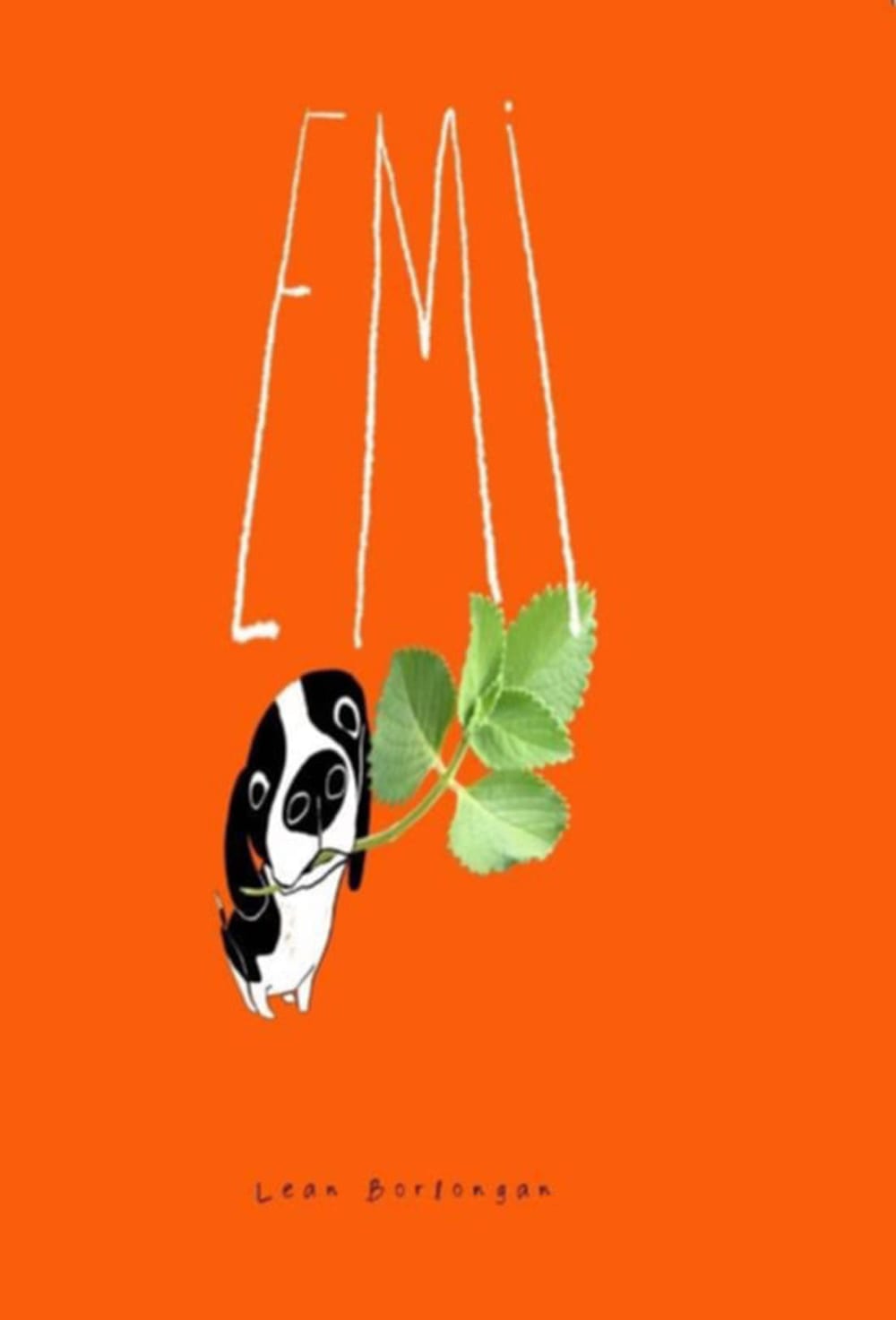
The Wit That Holds the Wound: Emi at Iba Pang Kuwento
Lean Borlongan’s Emi at Iba Pang Kuwento arrives as the work of a writer known primarily as a poet, and the collection carries the poet’s attentiveness to language—to register, to rhythm, to the exact weight of a word in a sentence—into the domain of narrative fiction. The book opens with “Shit,” a story whose title functions simultaneously as expletive, description, and social commentary, and what strikes me about this opening is the confidence of its commitment to the scatological as entry point into the political. Jomar, a college student from Mindoro who has come to Bulacan for a birthday celebration, spends Easter Sunday vomiting oysters and experiencing explosive diarrhea, and the story follows his body through the rituals of expulsion with the kind of precise, unsparing attention that dignifies rather than degrades, that insists the poor body and its humiliations are worthy of literature’s sustained regard. When Jomar’s friend Regi takes him to a hospital and the emergency room is a circus of bureaucratic absurdity—the water tank is broken, the nurse asks the janitor to fetch a bucket of water from the Jollibee next door, and the janitor, bewildered by the request, returns instead with a bucket of Chickenjoy—the story reveals that the shit is not merely physiological but structural, that the body’s distress is produced by the same systems of neglect and extraction that determine who eats oysters and who cleans up afterward.
This is what Borlongan does consistently across the collection: deploys humor—often ribald, always precise—as the vehicle for critique that would become preachy if delivered straight. In “How to Make Sambal,” a story set during the pandemic lockdown, the narrator recounts the slow dissolution of a friendship with Joel, a high school classmate whose dismissive comments on the narrator’s political posts—criticism is useless, he suggests, mere posturing with no discipline behind it—expose a rift that the pandemic’s enforced proximity to social media has made unbridgeable, and the narrative unfolds through the language of social media—FB stories, comments, unfriending—with the attentiveness of someone who understands that political alienation in the twenty-first-century Philippines happens not in street protests or underground meetings but in the small, daily accumulations of liked and unliked posts, of comments that sting precisely because they come from someone who once shared your table and your beer. The story’s devastating final gesture—the narrator searches not for his friend but for a sambal recipe—is a compression that only a poet could achieve, a single image that holds both the grief of lost connection and the stubborn persistence of appetite, of the desire to make something flavorful from something that burns.
The title story, “Emi,” is perhaps the collection’s most fully realized achievement, a sustained meditation on the relationship between a poet and his dog that becomes, without ever declaring itself as such, an investigation of loneliness, artistic ambition, and the failure of human connection in urban Manila. Pablo, the poet, is a figure Borlongan renders with a kind of merciless tenderness—a man who reads poems aloud to improve his craft, who dreams of winning Palanca Awards, who cannot connect with other human beings but who has taught his dog to come, sit, stay, down, and play dead, and who does not recognize that these commands enact the very dynamics of control and submission that make his human relationships impossible. The dog Emi understands something the poet does not: that the rhythm of language is itself a form of companionship, that words do not need to win prizes to matter, that the poem read aloud in a locked room changes the quality of the silence even if no human hears it. When Pablo falls for Matilde, a woman he has met through coworkers, and writes love poems on playing cards to present to her, Emi feels the poet’s “pananabik” and brings him a leaf of oregano from among the potted plants in the yard—an offering the dog has composed, in its way, from the same vocabulary of natural imagery the poet deploys in his verses. And when Matilde blocks Pablo and the Palanca results arrive without his name on the list, it is Emi who registers the full weight of the failure: “nagkahugis ang lungkot sa mga mata ni Emi dahil ang amo niya hindi nanalo sa Palanca.” The story’s genius lies in this displacement—the dog becomes the emotional archive of the poet’s defeats, absorbing what Pablo cannot articulate, and the reader understands that the most profound literary criticism in the collection comes not from any human character but from an animal whose sadness is the truest measure of what it costs to want to be a writer and to fail.
As a collection, Emi coheres through its consistent attention to the lives of urban working-class and lower-middle-class Filipinos navigating the absurdities of contemporary existence—the broken healthcare system, the pandemic, the dissolution of friendships along political lines, the impossible economics of being a writer in a country that does not pay its writers. Borlongan’s language moves between registers with the ease of someone who has listened carefully to how Filipinos actually talk—the code-switching, the social media patois, the street slang that carries its own poetry—and this linguistic range gives the collection a texture of authenticity that more literary fiction sometimes sacrifices in pursuit of elegance. The book understands that comedy is not the opposite of seriousness but its most effective delivery system, that the reader who laughs is the reader whose defenses are down, and that the wound can enter through the gap that laughter opens.
Where the collection struggles, perhaps, is in the question of what it adds up to as a book—whether the accumulation of stories, each individually accomplished, produces a larger architecture of meaning or simply a gathering of separate satisfactions. The stories share a sensibility, a tonal register, a class position, but they do not always speak to each other in ways that generate the structural meaning I described earlier. This is not a failing so much as a choice, or perhaps a limitation of the collection form as Borlongan understands it: the book is a showcase for a distinctive voice rather than a machine for producing meaning through arrangement. Whether this is enough depends on what we ask of a collection, and reasonable critics may disagree.
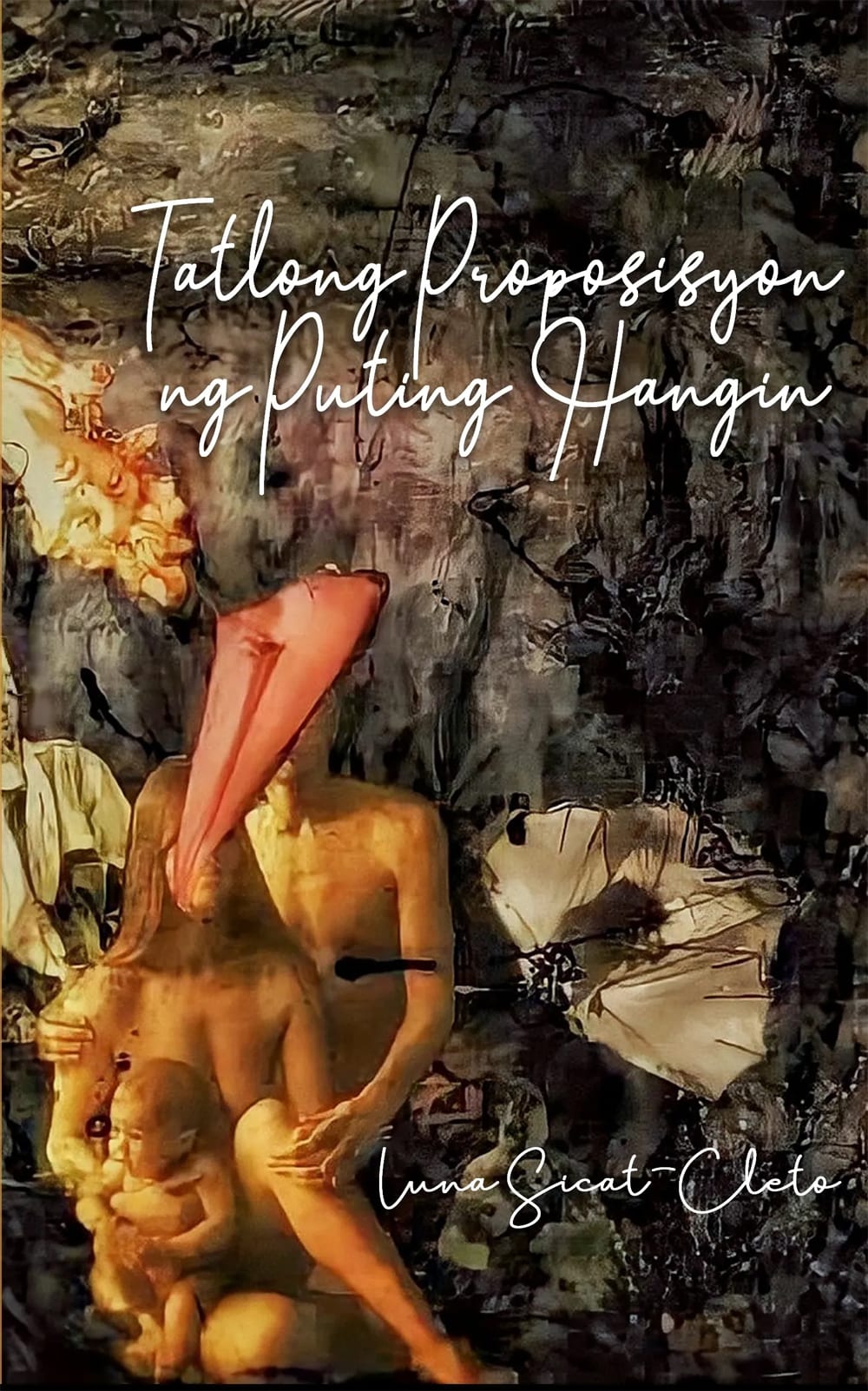
The Architecture of Ambition: Tatlong Proposisyon ng Puting Hangin
Luna Sicat Cleto’s Tatlong Proposisyon ng Puting Hangin is the most formally ambitious of the four finalists, and its ambition is visible from the table of contents, which presents fifteen stories spanning allegory, speculative fiction, realist narrative, institutional satire, forbidden love story, and something that might be called mythological encounter—all gathered under a title that names three propositions about white wind, a phrase that suggests both the ethereal and the systematic, both the breath that moves through bodies and the theoretical framework that organizes understanding. This is a collection that wants to do many things, that wants to demonstrate the range of what short fiction in Filipino can be, and the question it poses to the critic is whether range itself constitutes achievement or whether the attempt to contain multitudes risks losing the coherence that makes a collection more than the sum of its parts.
The opening story, “Alakdan,” is a political fable about scorpions that reads like a parable addressed simultaneously to children and to adults who have lived under authoritarianism, and its deployment of the fantastic—scorpions who have their own schools, their own religion, their own dictator named Brutus—functions as what the Filipino novel has long used the supernatural to accomplish: making visible what realism cannot render, naming the structures of power in language that evades censorship while remaining legible to those who live under that power. The scorpion Jaime, who prefers the songs of crickets to the art of stinging, who fails his examinations in “Matematika ng Lason at Lohika ng Tuklaw,” is every artist who has lived in a society organized around violence and found himself temperamentally unsuited to participate, and the fable’s clarity of purpose—its insistence that the scorpions who sting are not exercising natural instinct but enforcing political order—gives it the kind of moral precision that fables require.
But the collection’s most remarkable achievements lie elsewhere. “Ang Bayan ng Kosmopolit” constructs an entire speculative world—a town wrapped in “slow glass” that produces contentment by filtering reality, where an inventor named Fausto creates the technology that becomes the instrument of the town’s subjugation, and a novelist named Zink—himself a painter, writer, and philosopher—writes a book that is both a mirror and an indictment of the town’s willful blindness—and the story achieves what the best speculative fiction achieves: it makes the metaphor material, transforms the abstract into the architectural, gives us a world that is recognizably our own precisely because it is not our own. The slow glass is social media, is the entertainment industry, is the entire apparatus of what Lauren Berlant might call cruel optimism—the attachment to fantasies of the good life that keep people docile while the structures that produce their suffering remain intact—but Cleto never reduces the metaphor to a single referent, never closes the interpretive space by explaining what the slow glass “really” means, and this openness is the story’s greatest strength.
“Pool” is perhaps the collection’s masterwork—a long, sprawling narrative set in a school for the arts, told in a voice that circles and digresses and accumulates detail with the patience of someone who knows that institutional life reveals itself not in dramatic confrontations but in the daily textures of who eats with whom at breakfast, who controls the keys to the music room, who gets expelled and whose expulsion is reframed as voluntary departure. The swimming pool at the center of the story functions as the collection’s most potent spatial metaphor—a shared body of water in which all the school’s hierarchies, desires, cruelties, and tenderness are reflected and dissolved, a space of pleasure and surveillance simultaneously, a place where bodies are displayed and judged and desired and disciplined. The story’s undercurrents of forbidden desire—the teacher Finn and his relationship with Bayang, conducted under the surveillance of administrators and colleagues who police faculty intimacy with patriarchal injunctions about a woman’s puri—emerge not through declaration but through the accumulated weight of detail, through the way the narrative attends to bodies and spaces and the politics of who is permitted to occupy which space in which way.
“Finn” and “Tatlong Proposisyon ng Puting Hangin,” the stories that close the collection, extend this attention to desire and surveillance and to the supernatural, respectively, and together they suggest that the collection’s deepest commitment is to the idea that reality is layered, that beneath the visible surface of institutional life and quotidian routine there exist other registers of experience—desire that cannot be named in official language, spiritual presences that manifest in a voice that follows Finn through MRT rides and city streets asking “Kailan ka ba uuwi?”, in doors that open by themselves in abandoned buildings, in a wordless Hymn that makes workers’ hands move as if possessed—and that the short story is the form best suited to capturing these moments of permeability, these instants when the boundary between worlds becomes thin enough to cross.
As a collection, Tatlong Proposisyon is the strongest of the four finalists in its formal ambition and its understanding of the book as architecture. The fifteen stories are arranged not chronologically or thematically but according to a logic that might be called tonal—the fable gives way to the speculative, the speculative to the realist, the realist to the institutional, the institutional to the mythological—and this arrangement produces a reading experience that is itself propositional, that argues through structure rather than statement that the world is layered, that reality operates at multiple registers simultaneously, that the same attention that reads a political fable can read a forbidden love story can read a supernatural encounter, and that the reader who moves through all fifteen stories emerges with a changed understanding not of any single theme but of the range of what Filipino fiction can hold.
Where the collection falters—and it does falter, in places—is in the unevenness that ambition produces. Not all fifteen stories achieve the density and control of “Pool” or “Ang Bayan ng Kosmopolit”; some of the shorter pieces (“Sayaw,” “Lumbay”) feel like sketches rather than fully realized stories, gestures toward meaning rather than its embodiment, and in a collection that has trained the reader to expect sustained attention, these thinner moments register as lapses rather than as strategic variation. The allegory in “Alakdan,” while effective, operates at a level of transparency that sits uneasily beside the collection’s more complex stories—the fable’s moral clarity, which is its strength in isolation, becomes a kind of simplicity when read alongside the layered opacity of “Pool” or the speculative ambiguity of “Kosmopolit.” But these are the unevennesses of ambition, and I prefer them to the evenness of modest ambition consistently achieved.
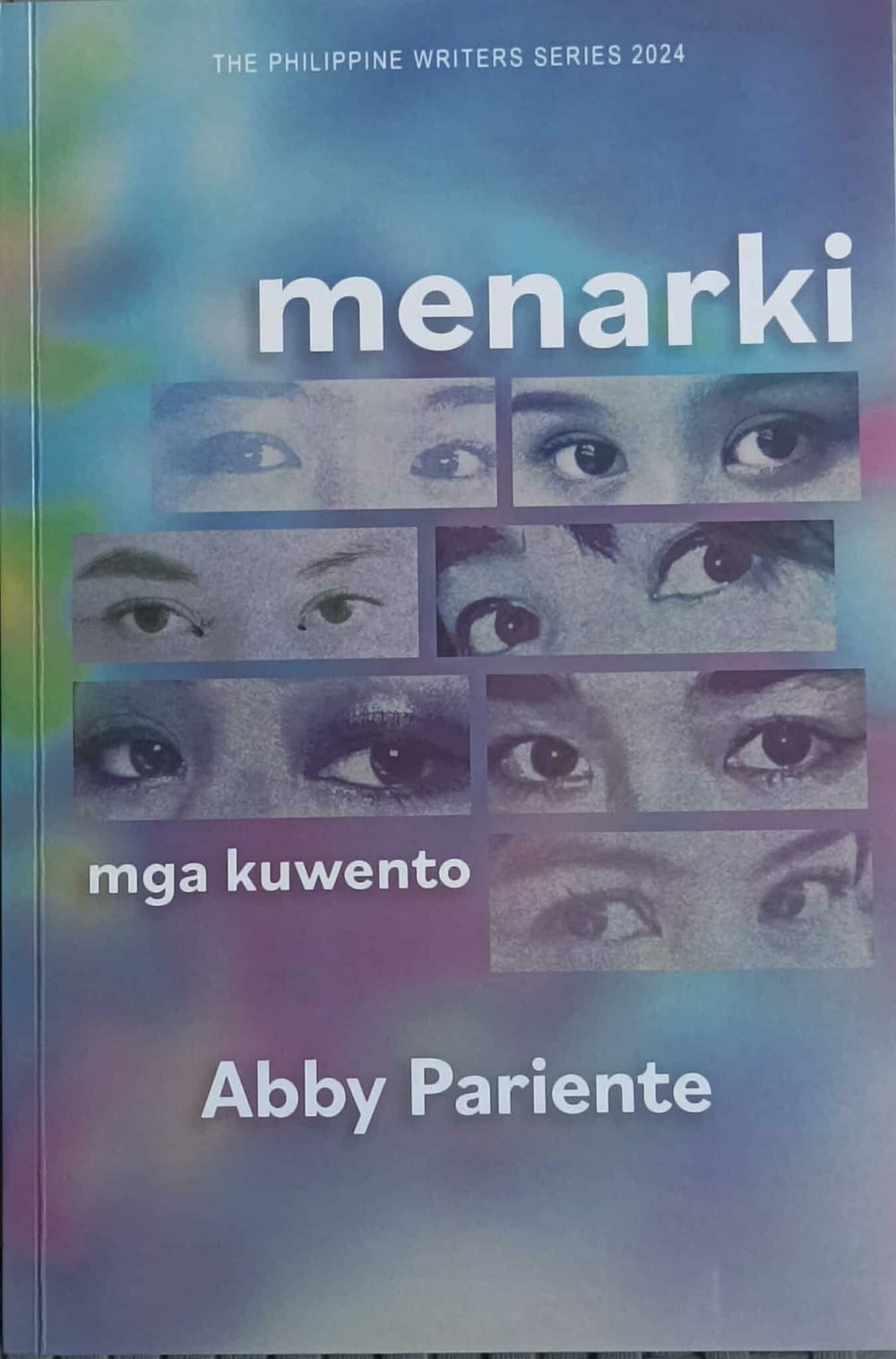
The Body as Archive: Menarki: Mga Kuwento
Abby Pariente’s Menarki announces its concerns in its title—menarche, the first menstruation, the bodily event that marks the beginning of a woman’s reproductive life and that in the Philippine context initiates not just biological maturity but a regime of prohibitions, expectations, and surveillances that will continue until menopause and beyond. Published by the University of the Philippines Press as part of the Philippine Writers Series, with an introduction by Luna Sicat Cleto—the same writer whose Tatlong Proposisyon I have just discussed, and one of the series editors—the collection carries the institutional weight of academic legitimacy but also the risk that accompanies such legitimacy: that the work might be received as a pedagogical exercise rather than as literature, that the earnestness of its feminist commitments might substitute for the formal complexity that transforms commitment into art. That Cleto, a writer of considerable formal sophistication, chose to introduce this collection is itself a form of endorsement worth noting—it suggests that the literary establishment recognizes in Pariente’s work something worth ushering into print, even as the work itself sometimes strains against the polish that institutional publication implies.
The title story follows Ada, a girl on the cusp of high school who is waiting for her first period, and Pariente’s decision to narrate from the consciousness of a child who does not yet fully understand what she is waiting for—who imagines menstruation as a visitor arriving at the house, who feels left behind because her friends Jill and Lian have already begun to bleed—produces a kind of doubled vision in which the reader sees both the innocence of the child’s anticipation and the structures of gendered surveillance that will reorganize her life once the blood arrives. The story opens in rain, in the sensual pleasure of a child bathing in the first rains of May, playing with friends in the street, experiencing her body as a source of joy and motion—and this opening freedom makes what follows more devastating, because the reader understands that Ada’s body is about to become a different kind of thing, a body measured by the clock of fertility, a body subject to prohibitions (“bawal”) that Pariente’s autobiographical introduction has already enumerated with painful specificity: no running, no jumping, no playing with boys, no asking why these prohibitions exist.
The collection’s autobiographical introduction is itself a remarkable document—Pariente describes growing up in a household organized around prohibition, where a fundamentalist religious practice determined what could be celebrated (nothing), what could be read (very little), what could be questioned (nothing at all), and she traces the lineage from these childhood prohibitions to her adult practice as a writer, understanding that the decision to write—and specifically to write about women’s experience in Filipino—is itself a form of the rebellion that began with sneaking out to a friend’s birthday party and eating spaghetti on the floor of an abandoned house. This is menarche as metaphor: the bleeding that initiates you into a system of surveillance is also the bleeding that initiates you into the knowledge of your own body’s power, and writing is the practice through which that knowledge becomes articulate, becomes political, becomes something other than individual suffering and starts to resemble collective testimony.
The collection’s strongest stories are those that achieve this transformation from personal testimony to structural critique. “Barangay Alitaptap” is a long, patient narrative that chronicles the life of a barangay across decades—from the original settlers and their communal customs to the arrival of relocated families from Manila and the subsequent dissolution of community—and its attention to the specific women who hold the barangay together (Kapitan Nanay Salia with her karinderya and her red-dyed hair, Tita Tess who came back from Saudi talking to herself after being abused by her employer, Elsie whose love triangle with Mang David and Max the tricycle driver becomes the barangay’s running soap opera) produces a portrait of Filipino community life that is both celebratory and clear-eyed about the patriarchal structures that organize women’s lives within these communities. The story understands that the barangay is not a utopia disrupted by modernity but a site of ongoing negotiation between collective care and individual exploitation, between the warmth of shared celebrations and the coldness of the systems—OFW labor, relocation housing, political corruption—that determine who prospers and who suffers.
“XES Transit: Pa-Fairview, Isang Gabi” and “Room for Rent” explore the spatial politics of women’s lives in Metro Manila with a specificity that grounds the collection’s feminist commitments in material reality rather than abstract principle. The bus routes, the boarding houses, the rooms measured not by square meters but by what kind of life they permit—these are the geographies that Filipino women navigate daily, and Pariente’s attention to these spaces argues implicitly that feminism is not only a matter of ideology but of architecture, not only of consciousness but of who has access to which rooms and on whose terms.
Where the collection is less successful is in the consistency of its formal execution. Some stories achieve the density and layered attention that the best pieces demonstrate—“Barangay Alitaptap” and “Menarki” are both fully realized narratives—but others do not yet exert the kind of formal pressure on their material that would transform observation into discovery, that would make the reader feel that what has been said could not have been said any other way, regardless of whether the piece is long or short. A brief story can be as complete as a long one; what matters is not length but the sense that the form has been found, that the story has arrived at its own necessity. This is perhaps the risk of a first collection, where the desire to include everything that matters sometimes overwhelms the editorial discipline that would select only the pieces that have achieved the transformation from experience to art. The introduction, powerful as it is as a personal document, may inadvertently frame the stories that follow as autobiographical testimony rather than fiction, which reduces the imaginative space available to both writer and reader—the reader who knows the stories are “about” the author’s life may resist the invitation to inhabit the fictions fully, may read them as disclosure rather than as invention, and this is a loss, because the best of Pariente’s stories earn their emotional power not from their biographical truth but from their formal achievement, from the precise deployment of detail and rhythm that transforms experience into art.
Still, the collection achieves what it sets out to achieve: it places the female body—menstruating, desiring, laboring, surveilled—at the center of Filipino short fiction and insists that this body’s experience is not peripheral but foundational, not a special interest but the ground from which any honest account of Filipino life must begin. That Pariente writes in Filipino is itself a meaningful positioning—she inherits a tradition of feminist writing in Filipino that includes Lualhati Bautista’s novels of domestic and political resistance, Fanny Garcia’s fiction, and the documentary impulse of Bebang Siy’s creative nonfiction, and she extends that tradition into a younger generation’s experience, a generation whose Filipino is also a Taglish that code-switches as naturally as breathing. This is audible in stories like “Faculty Club,” where the Taglish of the motivational speaker Brother Hero—performative, slippery, deployed to mask institutional violence behind the language of self-help—becomes itself an object of critique, and the story’s ear for how English functions as a class marker within Filipino institutions gives it a sharpness that a monolingual narrative could not achieve. Pariente’s linguistic range, moving between the intimate Filipino of “Menarki” and the satirical Taglish of “Faculty Club,” suggests a writer attentive to the fact that Filipino women do not inhabit a single register but move between languages as they move between the domestic, the institutional, and the public.
The Scroll as Collection: Saanman, Sigurado
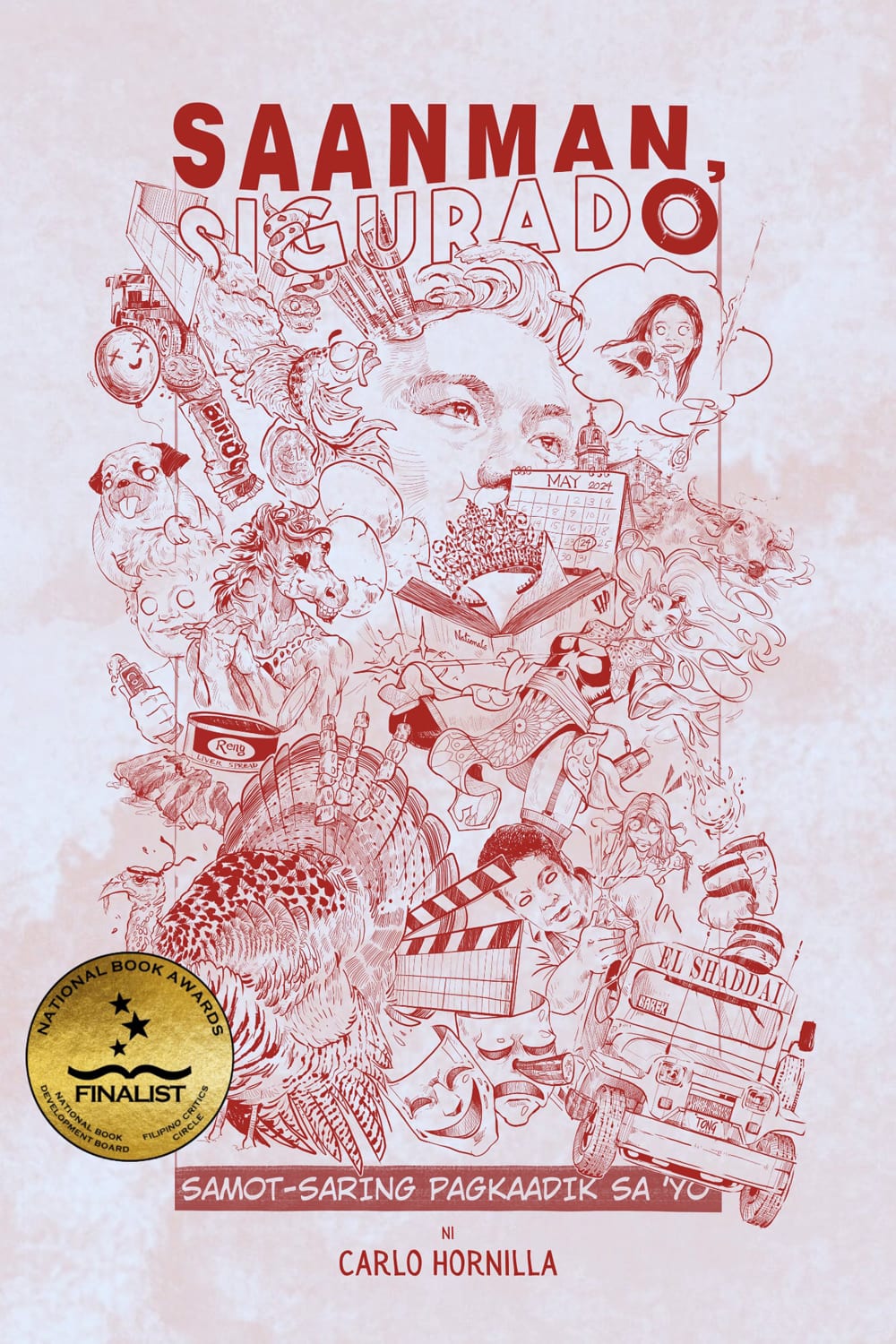
Carlo Hornilla’s Saanman, Sigurado: Samot-Saring Pagkaadik sa ‘Yo arrives from a fundamentally different place than the other three finalists—from social media, specifically from Facebook, where many of its pieces first appeared as status updates, notes, and posts. The foreword by Jade Mark Capiñanes invokes Calvino’s Six Memos for the Next Millennium—lightness and quickness as literary virtues—and frames Hornilla’s work as proof that social media is a legitimate literary medium, that the Facebook status can achieve what the literary journal achieves, that the speed and intimacy of online writing produces its own formal possibilities. The Calvino invocation is suggestive but worth pressing on: Capiñanes glosses lightness as the quality of being easy to read (“magaan basahin”) and quickness as the quality of being fast to read (“mabilis din basahin”), but Calvino’s concepts are more exacting than this. Calvino’s lightness is not accessibility but precision—the subtraction of weight from narrative structure, the way Lucretius dissolves the world into atoms, the way Ovid’s metamorphoses make heaviness navigable by refusing to let anything solidify. And Calvino’s quickness is not brevity but economy—the folktale’s ability to leap between points, the digression that circles back and arrives somewhere unexpected, the control of narrative time that makes a short passage feel like it contains years. Capiñanes gets closer to Calvino when he observes that Hornilla “binibigyan din ng akmang bigat ang mga bagay na akala mong magaan”—gives proper weight to things you thought were light—and when he notes Hornilla’s ability to control “narrative and psychological time,” but the overall framing risks domesticating Calvino’s aesthetic program into a description of readability. The question the collection must answer, then, is whether its lightness is Calvino’s lightness—the lightness of precision—or merely the lightness of the quickly consumed.
The claim that social media writing can achieve Calvino’s lightness is a serious one, and the collection’s best pieces support it. “Dalawampung Taon at Pito”—which Capiñanes himself identifies as a “CNF,” creative nonfiction, a genre designation that will become important shortly—is a devastating piece that moves between numbered sections with the efficiency of someone who has learned that the internet reader’s attention is precious and must be earned sentence by sentence—the narrator counts the years of poverty his family has endured, recounts the theory that it takes twenty years of nothing going wrong to escape poverty, remembers the night he begged two pieces of banana from a friend’s house, and arrives at a conclusion that is both hopeful and terrified, both celebration and prayer, a voice that says bakasakali—maybe, if we’re lucky—and that single (singled?) word carries more political weight than entire manifestos because it names the specific quality of Filipino hope, which is hope that knows itself to be precarious, hope that understands it depends on the absence of catastrophe in a country where catastrophe is structural. “Take Me to Your Lebanon,” a comic piece about mishearing Ed Sheeran lyrics as a reference to the Middle East, achieves something that comedy at its best achieves: it makes the reader laugh and in the same motion reveals the distance between the world the song imagines (romantic, English-speaking, globally mobile) and the world the narrator inhabits (a jeepney, a provincial town, the internet as the only portal to the international), and this distance is political even when—especially when—it is funny.
But as a collection, Saanman, Sigurado presents the critic with a category problem that is more fundamental than the question of whether social media writing is literature. The book is entered for Best Collection of Short Fiction in Filipino, but it is not, strictly speaking, a collection of short fiction. Capiñanes himself identifies “Dalawampung Taon at Pito” as a “CNF”—creative nonfiction—and calls “Barya” a “tula,” a poem. And indeed, the collection contains numerous poems (“lobo,” “lindol,” “the poet suffers,”), advice columns in epistolary form (“Dear Adviseeng Di Makaamin,” “Dear Adviseeng Na-fall sa Bespren”), love letters (“Dear Haerin,” “Kay D”), personal essays, and prose pieces that resist generic classification altogether. This is not a collection of short fiction that occasionally bends genre; it is a miscellany that includes short fiction among other forms, and to assess it as though it were the former is to misrecognize what it is.
The book contains over seventy pieces, many of them very short—a paragraph, a few sentences, a poem—and the cumulative effect is less that of a curated collection than of a social media feed compiled into a book, a scroll rather than an architecture, an accumulation rather than an arrangement. This is not necessarily a flaw; the scroll is its own form, has its own pleasures, produces its own kind of meaning through the rapid succession of tones and registers and subjects. But it does mean that the book resists the kind of reading that the other three collections invite—the sustained attention to individual stories, the appreciation of how one story speaks to the next, the discovery of structural meaning in the arrangement of parts—and it raises the prior question of whether the award category itself is adequate to the book, or whether the book might be better served by a category that recognizes the hybrid, multi-genre nature of what social media writing actually produces.
The subtitle—“Samot-Saring Pagkaadik sa ‘Yo”—names the collection’s organizing principle as variety, as miscellany, as the addictive scroll through heterogeneous content that social media has trained us to perform, and there is something honest about this self-description, something that refuses the pretension of a collection that claims more unity than it possesses. The range I have described—from poems to personal essays to advice columns to prose fiction to creative nonfiction—reflects the actual texture of contemporary Filipino life as it is lived online, which is to say, as a constant alternation between the trivial and the devastating, between the meme and the testimony, between the laughter that keeps you scrolling and the paragraph that stops you cold.
What the collection does well—and this should not be dismissed—is capture a register of Filipino experience that more literary fiction often misses: the experience of the young, urban, digitally fluent, working-class Filipino for whom social media is not a secondary space but the primary arena of self-expression, community formation, and cultural participation. Hornilla writes from this position without condescension or irony, without the distance that a more conventionally literary writer might impose on this material, and the result is writing that feels inhabited rather than observed, that comes from inside the experience rather than commenting on it from outside.
But the critic must also ask what is lost when the social media post becomes the unit of literary composition, and what is lost, I think, is precisely the kind of lightness Calvino was describing—not the lightness of the easily consumed but the lightness of the meticulously crafted, the lightness that comes from having removed everything that is not essential, the lightness that is the product of sustained labor rather than spontaneous expression. Many of the pieces in Saanman, Sigurado are clever, are funny, are moving—but they achieve these effects at the surface level, through wit and timing and the precise calibration of tone that Hornilla has clearly mastered, rather than through the deeper engagement with language and structure that produces the kind of writing that rewards rereading, that reveals new dimensions with each encounter, that continues to mean after the initial pleasure of recognition has faded. What Calvino called quickness—the narrative leap that compresses years into a sentence—is genuinely present in a piece like “Dalawampung Taon at Pito,” where the numbered sections accumulate biographical time with devastating economy. But this achievement is not consistent across the collection, and many of the shorter pieces achieve quickness in the simpler sense of being quickly read and quickly forgotten. There is, perhaps, a version of this collection that would be more powerful with thirty pieces instead of seventy, where editorial selection performs the work of pressurization that revision performs in individual pieces, where the strongest work—and the strongest work is very strong—is not diluted by the weaker pieces that surround it. The scroll, for all its pleasures, sometimes scrolls past what deserves lingering.
There is also the question—and it is a genuine question, not a rhetorical one—of what it means for a collection that originated on social media to be assessed as a book, to be entered into the National Book Awards alongside collections that were conceived as books from the beginning. This is not an argument for exclusion; if the pieces work as literature, they work as literature regardless of their origin. But the translation from feed to codex is not transparent, and the choices that shape that translation—what to include, what to omit, how to arrange, whether to revise—are themselves creative decisions that determine whether the book achieves the formal coherence that the book form, as distinct from the feed, makes possible. Saanman, Sigurado sometimes reads as if this translation was additive rather than selective, as if the principle of inclusion was comprehensiveness rather than curation, and a book that includes everything risks becoming a book that emphasizes nothing.
What the Collection Remembers
What, then, do these four finalists tell us about the state of short fiction in Filipino in 2024? They tell us, first, that the form is plural—that there is no consensus about what a short story collection should be, that writers are pursuing radically different projects with radically different formal commitments, that the tradition inaugurated by the Liwayway writers and continued through the UP workshops and the Palanca competitions coexists now with a tradition that lives on social media and measures its success in shares rather than prizes, and that both of these traditions coexist with the kind of formally ambitious, internationally inflected fiction that Cleto’s collection represents. This plurality, as I argued in my earlier essays on the novel finalists, is a sign of health rather than fragmentation, evidence that Filipino literature is still developing, still being contested, still open to multiple possibilities.
They tell us, second, that the question of audience has become unavoidable. Borlongan and Hornilla write for readers who live in the language of the street and the screen—readers who code-switch, who consume content on their phones, who recognize the rhythms of social media and the textures of urban working-class life. Pariente writes for readers who share the experience of Filipino womanhood—who know what it means to be the daughter who does the housework while her brothers rest, who understand the weight of the word “bawal” in a household organized around prohibition. Cleto writes for readers willing to be challenged, to follow a story through multiple registers and modes, to inhabit the discomfort of not knowing where a narrative is going or what genre it belongs to. None of these audiences is the wrong audience, but the question of who reads Filipino fiction—and who might read it if the fiction addressed them more directly—is a question that the literary community cannot afford to ignore, because a literature that speaks only to itself eventually stops speaking altogether.
They tell us, third, that the relationship between the personal and the political remains the central productive tension in Filipino fiction. Borlongan finds the political in the quotidian—in shit and sambal and the dissolution of friendships over Facebook posts. Pariente finds the political in the body—in menstruation, in domestic labor, in the architecture of rooms that women are permitted to occupy. Hornilla finds the political in precarity—in the twenty years without catastrophe that it takes to escape poverty, in the pandemic that destroyed fragile economic gains. Cleto finds the political in institutions—in the school that polices desire, in the dystopian city that manufactures contentment, in the forces that discipline artists into silence or compliance. What unites these different approaches is the recognition that the political is not a separate category of experience but the structure that organizes all experience, that the personal is political not as a slogan but as a material fact, that the story of a dog named Emi is also a story about the economy of artistic labor, that the story of a girl waiting for her first period is also a story about patriarchal control of reproduction, that the story of a scorpion who prefers music to stinging is also a story about what authoritarianism does to those who refuse to participate in violence.
If I am pressed to say which of these collections most fully realizes its ambitions, I would say that Tatlong Proposisyon ng Puting Hangin and Emi at Iba Pang Kuwento emerge as the most accomplished, though for different reasons and with different qualifications. Cleto’s collection achieves the most as a book—its formal range, its structural intelligence, its willingness to take risks that the other collections do not attempt, its understanding that a collection can propose a way of reading the world rather than merely presenting stories for consumption. The stories in Tatlong Proposisyon are not all equally successful, but the failures are the failures of ambition, of reaching for something that has not yet been fully grasped, and these failures are more instructive and more generous than the consistent modesty of a collection that never overreaches. Borlongan’s collection achieves the most at the level of voice—its distinctive tonal register, its precise deployment of humor as a vehicle for critique, its attentiveness to the textures of contemporary Filipino life—and individual stories like “Emi” and “How to Make Sambal” are as fully realized as anything in the other three collections. What Emi lacks in structural ambition, it compensates for in the quality of its sentences, in the warmth and intelligence of its attention to the people it describes.
Menarki achieves something important in its placement of women’s experience at the center of Filipino short fiction and in its insistence that the female body is not a special topic but the ground from which any honest account of Filipino reality must begin, but the collection’s unevenness of execution suggests a writer whose commitments are clearer than her craft has yet fully matched, a writer who has something essential to say and who is still developing the formal means to say it with the pressure and complexity it deserves. This is not a dismissal; it is a recognition that first collections often contain the seeds of stronger work to come, and the seeds in Menarki are genuine.
Saanman, Sigurado presents the most difficult case, because its virtues and its limitations are inseparable—the lightness that makes it accessible is also the lightness that sometimes prevents it from achieving the depth that literary fiction, at its best, provides, and the comprehensiveness that captures the texture of a social media life is also the comprehensiveness that dilutes the strongest pieces. Beyond this, the collection’s genre hybridity—its inclusion of poems, creative nonfiction, advice columns, and epistolary pieces alongside prose fiction—means that it is not, in the strict sense, competing on the same terms as the other three finalists, which are collections of short fiction in a way that Saanman, Sigurado is a collection of writing. The collection is important as a document—as evidence that Filipino literary culture is broader than the academy and the workshops, that social media has produced its own forms and its own practitioners of real ability—but its importance as a document is not quite the same as its achievement as a book of short fiction, and the National Book Award for Best Collection of Short Fiction, whatever its capaciousness, is finally an award for books of short fiction.
But these assessments should be held as proposals rather than verdicts, as one reader’s necessarily partial account of works that will continue to mean differently to different readers across time. The allegiance of criticism, as I have said before and will say again because it bears repeating, is to the betterment of literature, but literature is not bettered by the critic who pretends to certainty or who imagines that ranking texts is the same as understanding them. What matters is that these four collections exist, that writers are still committed to short fiction in Filipino, that the form continues to attract writers of different generations and sensibilities and backgrounds, that the conversation about what Filipino short fiction can be and should become continues through works like these.
What I want to end with is not a ranking but an observation, or perhaps a hope. In my earlier essays on the novel finalists, I argued that the novel remembers what the nation forgets—that the present is not natural or inevitable—and that the novel carries what it carries when it leaves—the weight of experience that demands formal innovation to hold. The short story collection, I want to suggest, does something different from the novel, something the novel cannot do: it holds multiplicity without resolving it, presents the world as a series of encounters rather than a continuous narrative, insists that the fragment is not a failure of wholeness but a form of knowledge adequate to a reality that is itself fragmentary, interrupted, composed of episodes rather than arcs, of moments rather than movements. A dog lies beside a poet in a locked room. A girl bleeds for the first time. A man remembers the night he was too hungry to admit he was hungry. An artist sits by a mountain stream with a lover he is about to lose. These are not elements of a single story but separate stories that, gathered together, propose that the world is wider than any single narrative can hold, that meaning accumulates laterally rather than linearly, that the collection, if it is honest, contains contradictions it does not resolve—contains humor and grief, allegory and realism, the social media post and the UP Press publication, the scroll and the book, the scorpion and the dog, the wind and the blood—and that this refusal to resolve is itself a form of fidelity to the world as it is, a world that does not arrange itself into coherent narratives but offers instead these moments, these encounters, these stories that gather themselves into books and wait for readers who will hold them, briefly, before the world resumes its insistence that there is no time for reading, no time for stories, no time for the patient work of attention that literature requires and that these four collections, in their different ways and with their different limitations, have committed themselves to providing.
Edgar Calabia Samar is Associate Professor and Chair of the Department of Filipino at Ateneo de Manila University. He is the author of the award-winning Janus Silang series and of several other novels, including Teorya ng Unang Panahon, a Palanca and National Book Award winner currently being translated into English as Theory of a Long Time Ago by PEN Presents x International Booker Prize winner Christian Benitez, under a National Book Development Board translation grant. His first novel, Walong Diwata ng Pagkahulog, received the NCCA Writer’s Prize in 2005, and its English translation, Eight Muses of the Fall, was longlisted for the 2009 Man Asian Literary Prize. He previously served as Visiting Professor at Osaka University from 2017 to 2022 and as Writer in Residence at the University of Iowa in 2010. He is the current Head of the National Committee on Literary Arts of the National Commission for Culture and the Arts and a member of the Filipino Critics Circle, formerly the Manila Critics Circle, the Filipinas Institute of Translation, and LIRA, where he served as President from 2001 to 2003. In 2024, he received the S.E.A. Write Award from the Royal Family of Thailand for his contributions to Southeast Asian literatures. He develops literature and novel-writing guides and maintains a growing Filipino komiks archive through Santinakpan Otherwise on patreon.com/ecsamar.
READ MORE:
What the Novel Carries When It Leaves: On the five finalists for the 43rd National Book Award for Best Novel in English
What the Novel Remembers When the Nation Forgets: On the five finalists for the 43rd National Book Award for Best Novel in Filipino
Edgar Calabia Samar is an award-winning poet, critic, and novelist, and an Associate Professor at Ateneo de Manila University. IG: @ecsamar.
View More Articles About: