What the Novel Remembers When the Nation Forgets
On the five finalists for the 43rd National Book Award for Best Novel in Filipino.
Published on Jan 23, 2026
Disclosure: I served as a judge for the Don Carlos Palanca Memorial Awards when Erik Guzman Pingol’s Agaw-Anino won the Grand Prize for the Novel in 2019. I also wrote a blurb for Khavn’s Antimarcos, which won the Palanca Grand Prize for the Novel in 2023, the same year my own novel Teorya ng Unang Panahon was awarded the Special Prize. I note these connections in the interest of transparency, though I have endeavored to assess all five finalists with equal rigor and honesty. I should also clarify that the criticism and opinions expressed here are my own and do not represent the views of the Filipino Critics Circle as a whole. We were not always unanimous in our votes, and disagreement surfaced and was allowed to remain disagreement rather than being smoothed over into false consensus, because unanimity in aesthetic judgment often feels suspicious to me, except when a work’s excellence is so unmistakable that unanimity feels earned.

TO ASSESS a year’s finalists for the 43rd Philippine National Book Award—an award that spans two major divisions, literary and non-literary, the former encompassing anthology, short fiction, poetry, nonfiction, novel, and graphic fiction and comics in both English and Filipino, as well as literary history, literary criticism and cultural studies, media studies, drama and film, and translation, with a special award this year for poetry in Kinaray-a—is not simply to rank texts or to arbitrate taste but to ask what Filipino literature is becoming, what pressures and possibilities shape it, what it remembers that we have been trained to forget, and perhaps more urgently, what it forgets that we desperately need to remember. I begin here with the finalists for Best Novel in Filipino, and this task arrives with its own burden of uncertainty, its own recognition that any assessment is partial, is situated, is itself a form of storytelling about what literature should be and do, and so before I proceed to discuss the five novels that constitute this year’s finalists in this category, I must acknowledge that my reading is not the only possible reading, that these works exceed any single interpretation, that the very act of criticism is an invitation to further conversation rather than a verdict that closes the case, and yet criticism must also be willing to say what works and what does not, what achieves its ambitions and what falls short, what contributes to the ongoing project of Filipino literature and what merely repeats what has already been said, because to withhold such judgment in the name of politeness is to fail both the writers who deserve genuine engagement and the readers who deserve guidance about where they might invest their attention, and so I will attempt here something that might seem contradictory but is in fact the only ethical practice available to the critic: to read with love and to read with rigor, to appreciate what these novels attempt and to be clear-eyed about where they succeed and where they struggle, to assess their contribution to Filipino literature without pretending that my assessment is anything other than one reader’s necessarily limited perspective on works that will continue to mean differently to different readers across time.
The year 2024 offers us five novels that, taken together, suggest something about where Filipino fiction is headed: Si Maria Makiling sa Sinapupunan ng Hukluban by Will P. Ortiz, the fourth and final installment in a series that reimagines Philippine mythology as both historical intervention and contemporary critique; Antimarcos by Khavn, a maximalist experiment in form that attempts to contain multiple centuries of colonial and postcolonial violence in a single sprawling text; Ang Suklam sa Ating Naaagnas na Balat by Ronaldo S. Vivo, Jr., the final volume of the Dreamland trilogy that traces structural violence through the bodies it destroys; Ang Nawawalang Barangay by Chuckberry J. Pascual, a mystery novel that uses the genre’s conventions to investigate not just individual disappearances but the systematic erasure of communities; and Agaw-Anino by Erik Guzman Pingol, a coming-of-age narrative set against the backdrop of provincial supernatural encounters. These five novels share certain preoccupations—with violence, with memory, with the supernatural, with the question of what it means to be Filipino in a moment of ongoing crisis—but they differ dramatically in their formal approaches, their political commitments, their assumptions about what the novel can and should do, and perhaps most significantly, in their understanding of who reads Filipino novels and what those readers need.
What strikes me first about this year’s finalists, taken as a collective, is the persistence of the supernatural as a structuring presence in Filipino fiction, not as escapism but as methodology, as a way of making visible what realism cannot render, as a form of knowledge that colonialism attempted to destroy and that contemporary writers are working to recover—and yet the supernatural functions differently in each of these novels, serves different political purposes, carries different risks of romanticization or mystification, and this difference matters because the supernatural is never neutral, is always doing ideological work whether or not the writer consciously intends it, and so the first question a critic must ask of any Filipino novel that employs the supernatural is: what does the fantastic make possible here that realism could not, and what does the fantastic obscure that realism would have forced us to confront?
ALSO READ:
To Novel the Dream Is to World the Write: Twenty Years After Writing Walong Diwata ng Pagkahulog
Again, You Are Not Ready—Begin: Writing Sa Kasunod ng 909
Writing Continues What Living Interrupts: Finishing a Trilogy with Teorya ng Unang Panahon
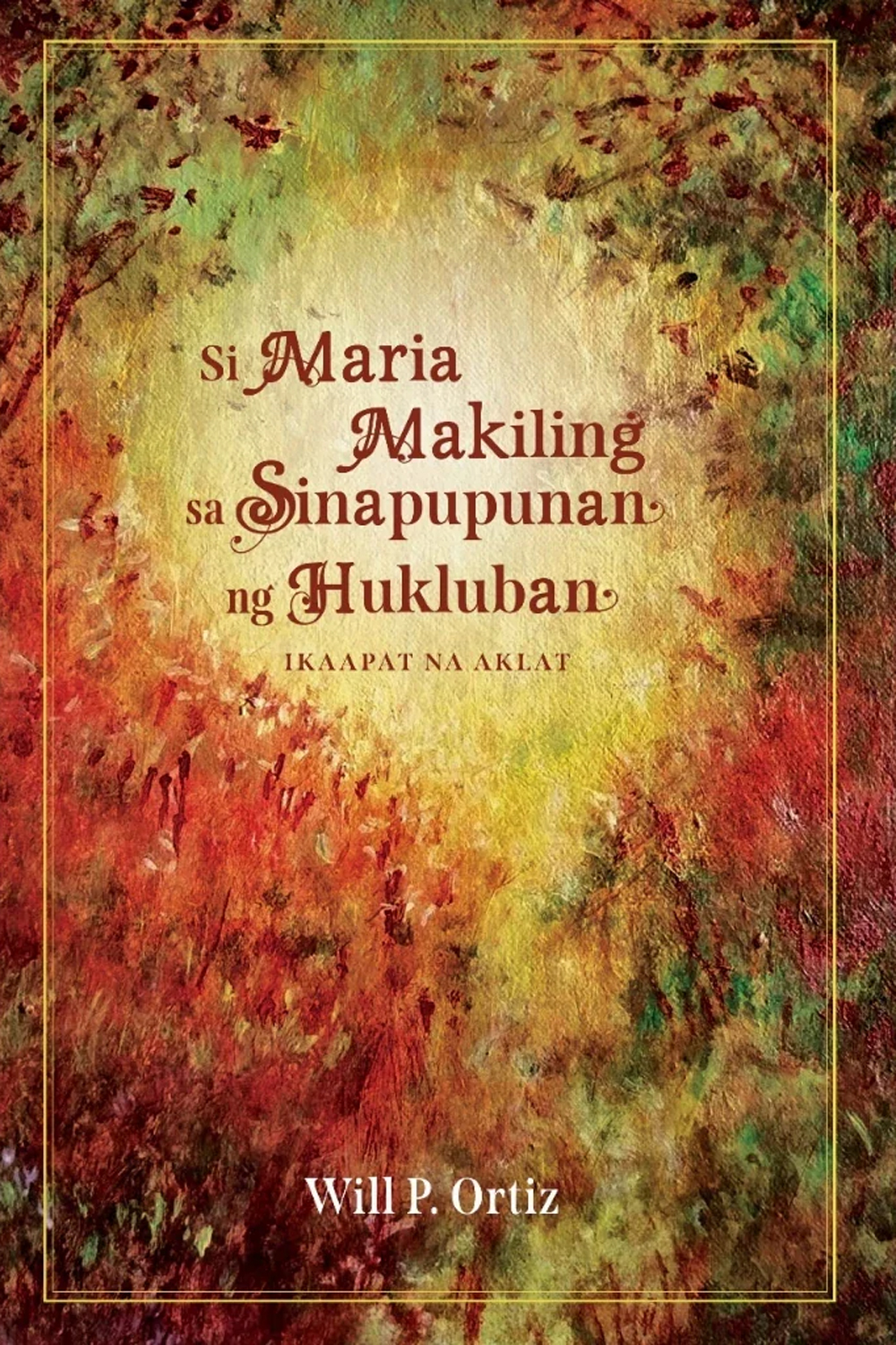
Si Maria Makiling sa Sinapupunan ng Hukluban and the Revolutionary Diwata
Will P. Ortiz’s Si Maria Makiling sa Sinapupunan ng Hukluban arrives as the fourth and final volume in a series that has progressively deepened its engagement with Philippine mythology and history, and what becomes clear in this installment is that the series has always been less interested in Maria Makiling as individual character than in Maria Makiling as principle, as embodiment of a relationship between land and people that colonialism ruptured and that must be restored if the Philippines is to become something other than what colonial modernity has made it. The novel’s central conceit—the use of time travel to allow contemporary characters to intervene in historical moments, particularly the American colonial period and the Marcos era—is neither new nor particularly innovative in itself, but what Ortiz does with this conceit reveals a sophisticated understanding of how the past continues to structure the present, how the violences of one century echo through subsequent centuries, how what seems like history is in fact ongoing.
The title names what the novel is ultimately about: the sinapupunan, the womb or interior, of the hukluban, a term that Ortiz uses to name the interconnected web of diwata consciousness that underlies and sustains the visible world. This is decolonial metaphysics, an insistence that the pre-Hispanic understanding of the world as alive, as conscious, as composed of beings who are neither simply human nor simply divine but something that Western categories cannot quite capture, is not superstition to be abandoned but knowledge to be recovered, and the novel’s plot—which involves battles between diwata and American colonial forces, negotiations with Magwayen, the transformation of diwata into paruparo at the moment of their physical death—serves this metaphysical project. The diwata do not die; they transform. The struggle is not between life and death but between different ways of understanding what life and death mean. The scene where the diwata transform into butterflies achieves a genuine lyricism that transcends mere allegory, becomes something more than a symbol of transformation, becomes an actual image that lodges in the reader’s consciousness and refuses to leave.
The novel’s central insight—that the colonizer’s theory of knowledge requires destruction, requires dissection, requires reducing the whole to analyzable parts, and that against this theory we must propose other ways of knowing based in attention, in care, in dreaming—carries genuine philosophical weight, offers something that readers can take with them beyond the novel’s pages. But Ortiz’s commitment to this insight sometimes overwhelms the novel’s literary texture, produces passages that feel more like manifesto than fiction, more like the author telling us what to think than the novel showing us what to feel. The climactic sequence, in which the people rise up against Apo (a thinly veiled Marcos figure) after witnessing the American bombing of Pinaglahuan, resolves too neatly, too triumphantly, as if the mere exposure of violence is sufficient to generate revolutionary consciousness, as if the path from witnessing to organizing to overthrowing were straightforward rather than agonizingly difficult. The novel imagines what we wish would happen—that the masses would recognize their oppressors and act collectively to remove them—but does not fully grapple with why this so rarely happens, with the mechanisms of consent and coercion that sustain systems of domination even when their violence is perfectly visible. This is a common problem in politically committed fiction, and it is not fatal—Ortiz’s novel succeeds in its patient construction of the diwata world, its attention to the relationships among Aya, Dasig, Saro, Aman, Dian, and the others, its willingness to let characters die, to transform, to sacrifice themselves for something larger than individual survival.
What the novel contributes to Filipino literature in 2024 is a model for how mythology might function not as decoration or local color but as epistemology, as an alternative way of understanding reality that challenges rather than merely supplements the worldview that colonialism installed. Whether this model succeeds depends on whether readers can receive it as invitation rather than imposition, whether the novel’s didacticism can be forgiven in light of its genuine achievements in world-building and in its insistence that the pre-Hispanic is not past but present, not dead but waiting to be reactivated.

Antimarcos and the Maximalist Gambit
Khavn’s Antimarcos is, before anything else, an experience—514 pages of relentless textual density, stream-of-consciousness collage, the deliberate refusal of narrative coherence in favor of something closer to accumulation, to assemblage, to what might be called literary maximalism in the tradition of Pynchon or Gaddis or, perhaps more accurately, in the tradition of Khavn’s own filmmaking practice, which has long embraced excess as method. To open Antimarcos is to be immediately confronted with a prose that resists easy consumption, that refuses to tell you where you are or what is happening or why you should care, that demands instead that you submit to its rhythms, its juxtapositions, its seemingly arbitrary movements between historical periods and narrative registers, and this demand is itself a political act, a refusal of the commodity logic that requires novels to be easily digestible, easily summarized, easily translated into reading experience that can be consumed and discarded. For readers trained in conventional narrative expectations, this can be maddening, can feel like the author is playing games rather than telling stories, prioritizing cleverness over communication—and this response is not entirely wrong. There is something willfully difficult about Antimarcos, something that seems almost to dare the reader to give up, to put the book down, to admit defeat.
The novel begins with first lines from world literature—from García Márquez, from Nabokov, from Tolstoy, from Camus—woven together with references to Philippine revolutionary history, creating a texture that is simultaneously derivative and original, that acknowledges its debts to global modernism while insisting on its local specificity. This technique runs throughout the novel: the appropriation and transformation of borrowed material, the refusal to distinguish clearly between what Khavn has written and what Khavn has stolen and repurposed, the implicit argument that originality is a bourgeois fiction and that all writing is rewriting, all creation is recreation, all text is intertext. The novel’s difficulty is not arbitrary, or not entirely arbitrary, but serves as an argument about what the Marcos legacy requires of literature. If Marcos represented the reduction of Philippine politics to spectacle, the transformation of governance into performance, the subordination of truth to image, then Antimarcos proposes an opposite strategy: the refusal of spectacle through the proliferation of text, the insistence on complexity that cannot be reduced to sound bite or slogan, the overwhelming of the reader with more information, more voices, more history than any single consciousness can process.
The novel’s engagement with the Katipunan, with Bonifacio, with Rizal, with the revolutionary period, places the contemporary critique of the Marcoses within a longer history of anti-colonial struggle, suggesting that the fight against dictatorship is continuous with the fight against colonialism, that Marcos was not an aberration but a continuation of colonial logic by other means, and that the resistance to Marcos must therefore be rooted in the same revolutionary tradition that resisted Spain and America. This is historically sophisticated, ideologically coherent, and formally enacted through the novel’s refusal to distinguish past from present, its treatment of all Philippine history as simultaneous, as accumulated in the present moment, as available for appropriation and transformation. Whether or not it succeeds as art, it succeeds as provocation, as an insistence that we cannot respond to Marcos through the same media logic that Marcos mastered.
The question that haunts my reading of Antimarcos, though, is whether provocation is enough—whether the novel’s maximalism sometimes tips into self-indulgence, whether the difficulty is always productive or sometimes merely obscuring, whether the novel’s length represents necessary accumulation or refusal to edit, refusal to distinguish between what serves the novel’s purposes and what merely adds bulk. There are stretches that seem to exist only because Khavn could not bring himself to cut them, passages that might have been powerful in shorter form but become tedious through repetition. This is a different problem than the problem of a conventional novel that is merely boring—this is the problem of a novel that asks something extraordinary of its reader and then does not always reward that ask with equivalent insight or beauty.
What Antimarcos contributes to Filipino literature is a demonstration of what the Filipino novel might become if it fully abandoned the conventions of realist narrative, if it embraced the experimental energies that have long animated avant-garde traditions elsewhere but that have been relatively rare in Philippine fiction. Whether this is a direction that other writers will follow, whether Antimarcos opens doors that others will walk through or remains a singular monument to its own excess, only time will tell—but its presence among this year’s finalists reminds us that the Filipino novel is not a fixed form, that what counts as a novel is itself contested, that the boundaries of the genre are drawn not by nature but by convention and can therefore be redrawn.
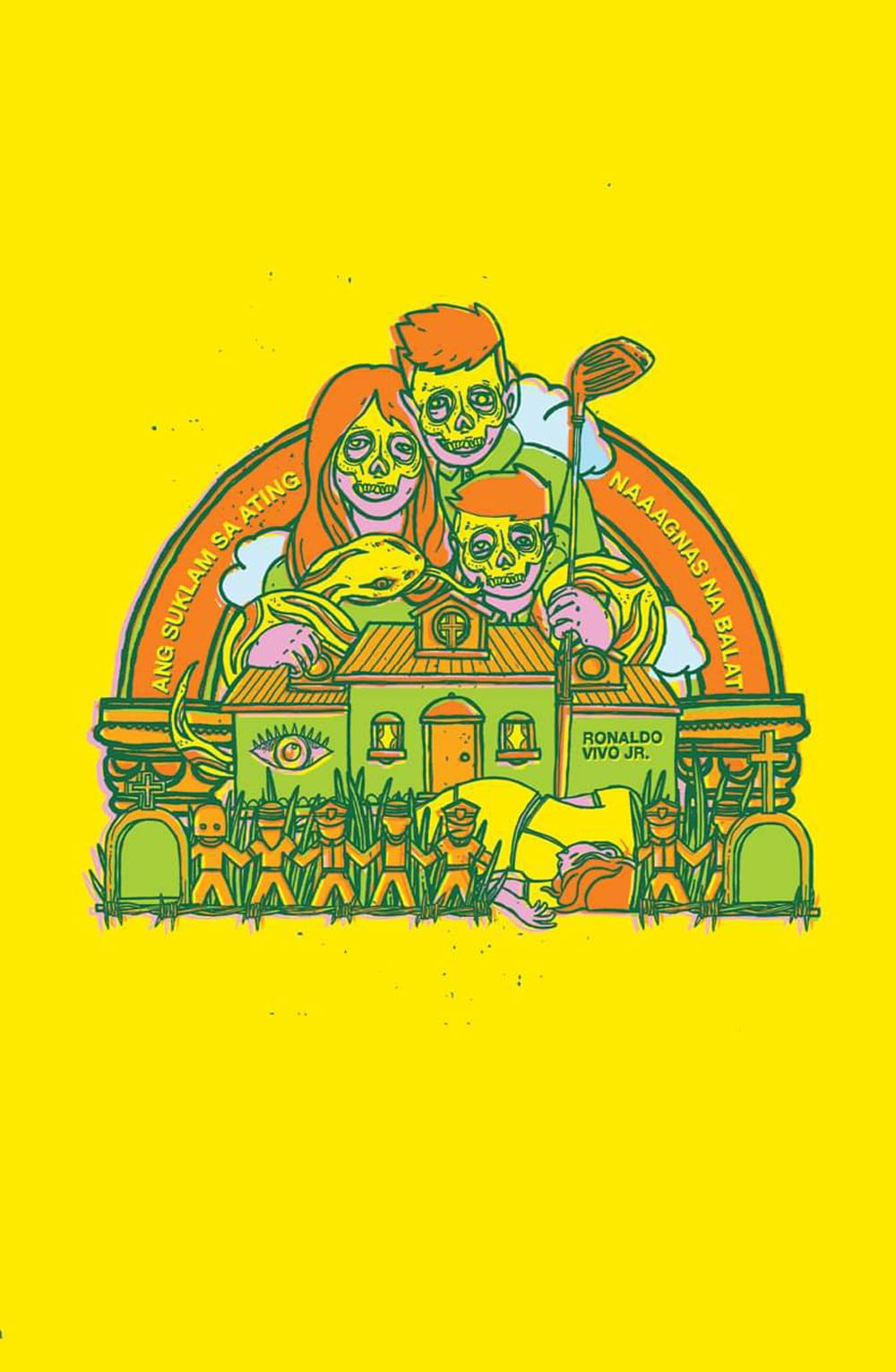
Ang Suklam sa Ating Naaagnas na Balat and the Body Under Siege
How does a novel depict systemic violence without either sanitizing it or fetishizing it? This is the question that Ronaldo S. Vivo, Jr.’s Ang Suklam sa Ating Naaagnas na Balat must navigate, and the difficulty of the question is inseparable from the novel’s achievements and its struggles. If Antimarcos refuses conventional narrative, Vivo embraces it, tells story with the urgency of a writer who believes that story matters, that narrative can do something in the world, that the careful construction of character and plot is not mere entertainment but a form of knowledge production that rivals any academic analysis. This is the final volume of the Dreamland trilogy, and it arrives with the weight of what has come before—the accumulated violence, the accumulated loss, the accumulated rage that the trilogy has been building across its three volumes—and it pays off that weight with a narrative that is simultaneously intimate and systemic, that traces structural violence through the particular bodies it destroys while never losing sight of the structures themselves.
The novel follows multiple characters—Boni and Dondi, searching for missing loved ones; Sol and Panch, journalists whose pursuit of the truth puts them in danger—and, through their intersecting stories, builds a picture of contemporary Philippine society as a killing machine, as a system organized around the production of corpses, around the elimination of those who are deemed disposable. This is not allegory; it is realism pushed to its extreme, the recognition that what seems like sensational violence in fiction is actually less violent than the reality it depicts, that the drug war, the extrajudicial killings, the systematic elimination of the poor and the marginal, exceeds anything that fiction can adequately represent. And Vivo does not flinch from this reality but confronts it directly, shows us bodies in states of decomposition, shows us the mechanisms by which death is produced and disposed of, shows us the journalists and investigators who try to document what is happening, and the forces that try to silence them. The novel’s strengths are considerable: its command of Manila’s geography, its ear for how different classes speak and think and move through the world, its willingness to follow its characters into the darkest places without offering false hope or cheap redemption.
The title—Ang Suklam sa Ating Naaagnas na Balat, roughly “the loathing/hatred in our decaying skin”—names what the novel understands as the affective core of contemporary Filipino existence: we are rotting, literally and figuratively, and the appropriate response to this rotting is not acceptance but suklam, a word that carries connotations of disgust, aversion, loathing, the bodily rejection of what is intolerable. This is not a novel that counsels resignation or hope but one that insists on the legitimacy of rage, on the necessity of refusing what has been done to us, on the requirement that we name our enemies and understand the systems that produce our suffering if we are ever to organize effectively against them. The introduction by Tilde Acuña and the afterword by Benjo Gutierrez both situate the novel within a framework of complicity—the recognition that under capitalism there is no ethical consumption, no clean hands, no position outside the system from which one might critique it—but this recognition does not produce paralysis; instead, it produces the question that drives the novel: given that we are all implicated, given that our hands are already stained, how do we act anyway, how do we resist anyway, how do we maintain the capacity for outrage when outrage itself has been commodified and absorbed by the very system it opposes?
And yet the novel does not always successfully navigate the line it must walk. There is a tendency toward spectacle, toward the proliferation of violence that risks becoming numbing rather than illuminating, toward the accumulation of atrocity that can begin to feel less like testimony than like the exploitation of suffering for narrative effect. There are passages where the violence seems to exist for its own sake, where the bodies pile up without the accompanying analysis that would make their piling politically legible. The novel’s Marxist commitments—its insistence that the violence it depicts is not random but systematic, not aberrational but structural—sometimes get lost in the sheer visceral impact of the scenes themselves, and a reader could finish the novel feeling disgusted and horrified without having developed a clearer understanding of how the system works and how it might be opposed. Vivo is a writer who respects his readers enough to show them the worst and to trust that they can handle it, can metabolize it, can transform their own horror into something politically useful. Whether readers actually do this—whether the novel succeeds in producing not just affect but analysis, not just feeling but understanding—is beyond the novelist’s control, but the attempt itself is necessary, is what political fiction must do if it is to be more than entertainment.
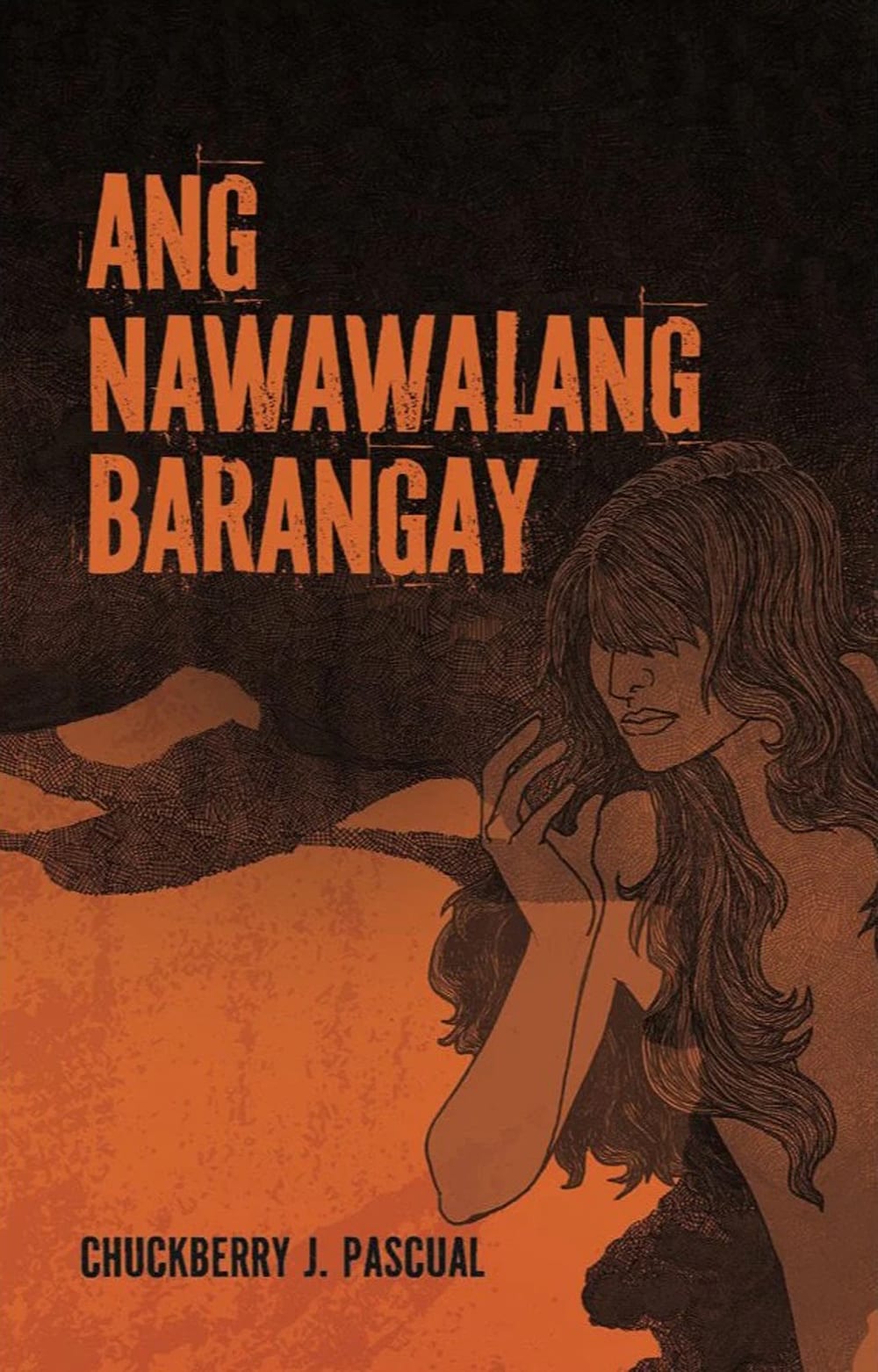
Ang Nawawalang Barangay and the Genre as Method
Chuckberry J. Pascual’s Ang Nawawalang Barangay takes a different approach to the representation of systemic violence: rather than depicting it directly, as Vivo does, Pascual uses the conventions of the mystery genre to investigate it, to trace its patterns, to allow the detective’s pursuit of answers to stand in for the reader’s own desire to understand what is happening and why. This choice—to work within genre rather than against it—is both the novel’s distinction and its limitation, and the two cannot be separated. The novel’s protagonist, Brigido “Bree” Macaspac, is not a professional detective but an amateur investigator, someone whose personal history of loss—her parents disappeared when she was six, her grandmother died two years later, and she has been navigating the world alone ever since—has given her both the skills and the compulsion to search for missing persons, to try to find what has been taken, to refuse the consolation that some disappearances simply cannot be explained.
The character of Bree herself is one of the novel’s genuine achievements—a queer protagonist whose queerness is present but not totalized, not the only thing about her, not a problem to be solved or a lesson to be taught but simply an aspect of who she is and how she moves through the world. The scenes in Mamita’s Magixalon, the salon that serves as Bree’s home base and found family, are among the novel’s most affecting, depicting queer community not as utopia but as a survival strategy, as the creation of kinship networks where biological kinship has failed, as the accumulation of chosen relationships that might catch you when you fall. If there is a politics of care in the novel, it is located here, in the recognition that we must create our own structures of support because the official structures—the police, the barangay government, the church—have failed us, have been captured by the very forces that produce disappearance.
The mystery at the novel’s center—a series of disappearances in and around Barangay Talong Punay and the surrounding areas of Malabon—turns out to involve not simply individual crimes but systematic predation, a network of exploitation that operates through religious manipulation, through the cult led by “Baby Gerl” whose doctrine of “Swalla” (from nothingness we come, to nothingness we return) recruits the desperate and the dispossessed into a community that ultimately consumes them. This is genre fiction deployed as social criticism, the detective story’s commitment to explanation and resolution repurposed to expose the mechanisms by which people are made to disappear not despite but because of the systems that claim to protect them. Pascual’s prose is more accessible than the other novels in this year’s finalists, more willing to meet the reader halfway, to provide the narrative satisfactions that genre fiction conventionally provides—the rising tension, the gradual accumulation of clues, the confrontation with the antagonist, the revelation of truth. This accessibility makes the novel’s critique available to readers who might not engage with more formally experimental work.
But genre’s requirements also constrain what the novel can say, force it toward resolutions that the material resists, toward conclusions that are perhaps neater than the reality of disappearance and impunity warrants. There is a certain predictability in the plot machinery, a tendency to give us the confrontation with the villain and the resolution of at least some of the mystery when a more radical novel might have refused resolution entirely, might have left Bree still searching, still failing to find, still confronting the fundamental unknowability of what happens to the disappeared. The ending—in which Bree survives the chaos of the “Swalla Big Night” and continues, battered but not broken, to search for the missing—is satisfying in the way that genre endings are satisfying, but it is also perhaps too satisfying, too willing to let us leave the novel with hope rather than with the more difficult recognition that most disappearances are never solved, most bodies never found, most families never given the closure that Bree herself is still seeking for her own lost parents. What Ang Nawawalang Barangay contributes to Filipino literature is a demonstration that genre fiction need not be intellectually or politically vacant, that the mystery’s commitment to investigation and explanation can serve critical purposes, that accessibility is not the same as superficiality. Whether the novel fully realizes this potential or remains somewhat constrained by genre expectation is perhaps a matter of taste—some readers will appreciate the narrative satisfaction it provides, while others will wish it had pushed further, demanded more, refused the consolations it offers.
Agaw-Anino and the Weight of the Past
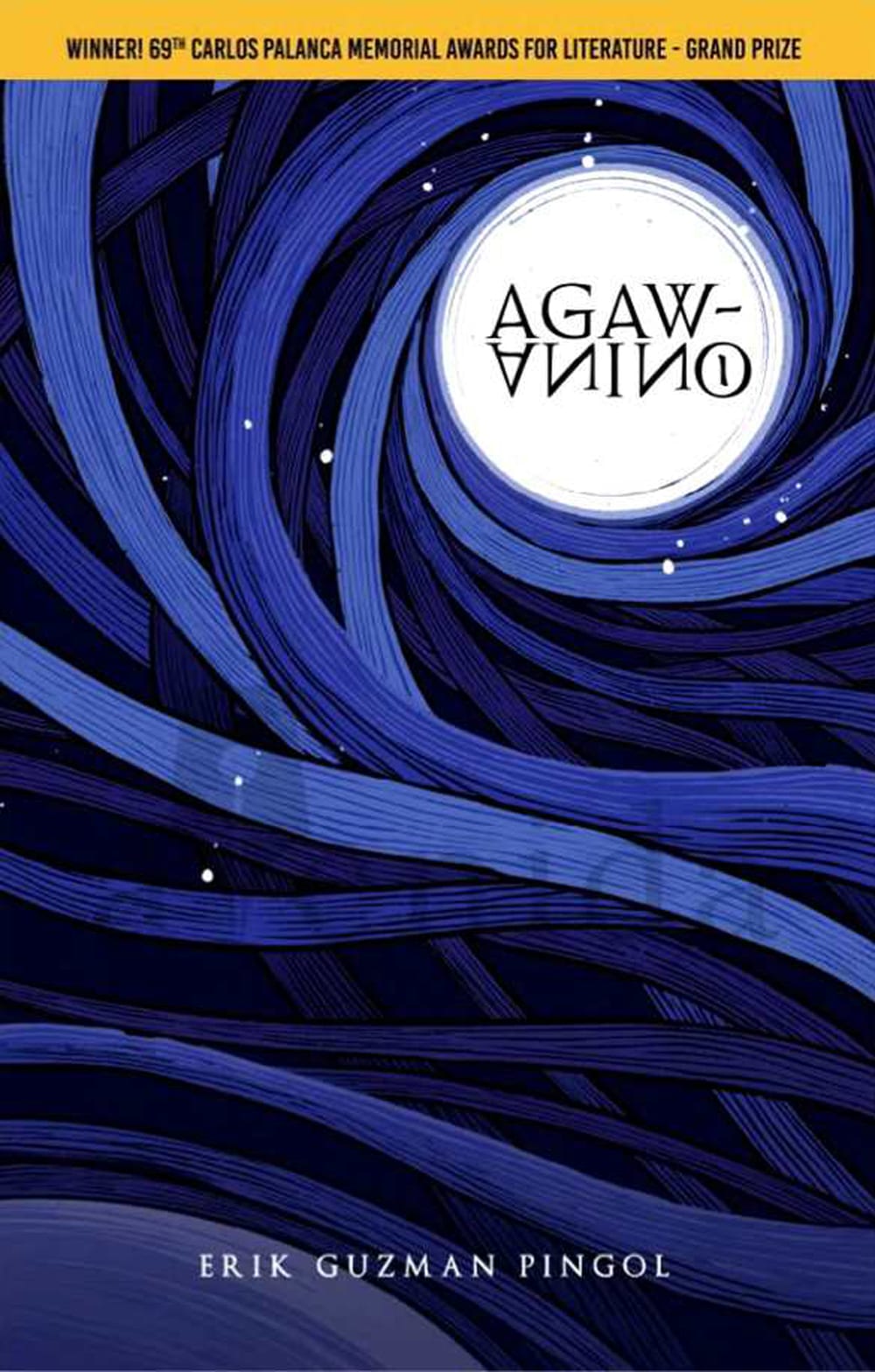
Erik Guzman Pingol’s Agaw-Anino arrives in 2024 having already won the Palanca Grand Prize in 2019, its publication delayed by the pandemic and the closure of its original publisher, and this delay creates an odd temporal situation: we are reading in 2024 a novel that was written and recognized years earlier, assessing its contribution to contemporary Filipino literature while knowing that its composition belongs to a different moment. This is not the novel’s fault, and it would be unfair to judge it by standards that did not exist when it was written, but it does create a certain distance, a recognition that the novel we are reading is not quite of this moment even as it arrives in this moment. The novel’s structure—labeled as “Unang Bahagi” (First Part), suggesting that this is the first volume of a larger work—compounds this difficulty: what we have is incomplete, is a beginning without a corresponding ending, is a promise of more to come rather than a finished statement. How do we evaluate a first volume without knowing where the series will go, what the accumulated parts will add up to, whether the promise of the opening will be fulfilled or betrayed by subsequent installments?
The novel opens with a group of teenagers—Art, Den, Maykel, Ron, and Peklat—sneaking up on a house rumored to belong to an aswang, and this opening establishes the novel’s central concerns: the encounter between young people and the supernatural, the way that folklore structures how communities understand their world, the terrors and excitements of adolescence lived in proximity to forces that exceed human comprehension. The title, Agaw-Anino (roughly, “shadow-seizing” or “stealing shadows”), names the mysterious organization that the protagonists will eventually encounter, a “Lihim na Samahan ng mga Anak ng Dilim” (Secret Society of the Children of Darkness) that operates according to logics the young protagonists must struggle to understand. What Pingol does well is evoke the texture of provincial adolescence, the boredom and intensity that characterize growing up in places where nothing seems to happen and yet everything seems charged with significance, where the supernatural is not exotic but familiar, where ghosts and aswang are part of the shared cultural vocabulary rather than objects of skepticism.
The prose is propulsive, moves quickly from scene to scene, carries the reader forward through the accumulating complications of the plot, and this readability is both achievement and limitation—achievement because it makes the novel genuinely entertaining, limitation because entertainment can sometimes substitute for depth, can provide the satisfactions of story without the challenges of thought. The friendship among the five protagonists is rendered with affection and specificity, each character distinguished not just by name but by personality, by the way they speak and move and relate to one another. The supernatural elements are deployed with restraint, hinted at rather than explained, allowed to retain their mystery rather than being reduced to system or allegory. And the author’s note, which describes the novel’s long journey from dream to completion, from workshop to Palanca to the delays of pandemic and publishing difficulties, adds a layer of pathos to the reading, reminds us that behind every novel is a writer who struggled and doubted and persisted, who kept believing in the work even when circumstances conspired against it.
What I can say is that Agaw-Anino succeeds as an opening, creates a world and a set of characters that I would be willing to follow into subsequent volumes, establishes stakes that feel genuine and conflicts that feel generative. Its limitations are perhaps the limitations of the coming-of-age genre itself: a certain predictability in the structure, a certain reliance on the patterns that readers of such fiction have come to expect. The young protagonists will face dangers, will be tested, will grow through their encounters with the supernatural, will learn something about themselves and one another, and while this is not a failure—genre provides pleasure precisely because it delivers on expectations—it is also not an innovation, not a reimagining of what the genre might do or be. For readers who love this kind of fiction, Agaw-Anino will provide exactly what they’re looking for; for readers who want to be challenged, who want fiction that resists and unsettles, the novel may feel too comfortable, too familiar, too willing to be what such novels have always been.
What These Novels Ask of Us
What, then, does the Filipino novel look like in 2024, at least as represented by these five finalists? It looks, first of all, plural—no single style or approach dominates, no single vision of what the novel should be and do has achieved consensus. This plurality is healthy, suggests a literary culture that is still developing, still contested, still open to multiple possibilities rather than hardened into orthodoxy. The experimental maximalism of Antimarcos coexists with the genre satisfactions of Ang Nawawalang Barangay; the mythological revisionism of Si Maria Makiling coexists with the gritty realism of Ang Suklam; the coming-of-age adventure of Agaw-Anino finds its place alongside novels that refuse adventure in favor of accumulated horror. This is a literature that has not yet decided what it is, and this is perhaps its greatest strength.
What the novels share, beyond their superficial differences, is a commitment to making visible what official discourse obscures, to remembering what the nation is trained to forget, to naming violences that power prefers to leave unnamed. Whether through the diwata who insist on their reality despite colonial attempts to dismiss them as superstition, or through the maximalist accumulation of historical atrocity that refuses to let any single crime be forgotten, or through the visceral depiction of bodies destroyed by systematic violence, or through the detective’s pursuit of answers that the system prefers to remain buried, or through the teenagers’ encounter with supernatural forces that adults dismiss but that are nonetheless real—all five novels are engaged in projects of counter-memory, of resistance to the official narratives that would have us believe that things are fine, that the violence is exceptional rather than structural, that the past is past and need not trouble the present.
But commitment is not achievement, good intentions do not guarantee good fiction, and these novels, for all their political seriousness, are not all equally successful as works of art. If I am forced to distinguish, to say which of these novels achieves the most complete realization of its ambitions, I would say that Ang Suklam sa Ating Naaagnas na Balat and Si Maria Makiling sa Sinapupunan ng Hukluban, for all their imperfections, come closest to accomplishing what they set out to do—Vivo’s novel because it refuses to flinch from the violence it depicts while maintaining novelistic control over its materials, Ortiz’s novel because it successfully constructs an alternative metaphysics that is not merely decorative but genuinely challenges how we understand reality. Antimarcos is perhaps the most ambitious but also the most uneven, its maximalism sometimes productive and sometimes merely excessive. Ang Nawawalang Barangay is perhaps the most accessible but also the most constrained by its genre expectations. Agaw-Anino is charming and readable but has not yet had the chance to develop beyond its opening promises.
But these distinctions should be held lightly, should be understood as invitations to further reading rather than verdicts that close the case. Each of these novels offers something that the others do not; each contributes to Filipino literature in ways that cannot be fully captured by comparative ranking. What matters most, perhaps, is that these novels exist, that writers are still committed to the novel form in Filipino, that readers can find in these works mirrors for their own experiences and windows into experiences they have not had, that the conversation about what the Filipino novel is and should become continues through the creation and reception of works like these.
The allegiance of criticism must be to the betterment of literature, but literature is not bettered by flattery or by the refusal to distinguish between success and failure. It is bettered by genuine engagement, by reading that takes the work seriously enough to praise what deserves praise and to criticize what deserves criticism, by the creation of a community of discourse in which writers and readers and critics together work out what this strange enterprise of fiction-making is for, what it can accomplish, what we need from it in this moment of ongoing crisis. These five novels, whatever their individual achievements and limitations, contribute to that discourse, remind us that Filipino writers are still dreaming worlds, still constructing alternatives, still insisting that things could be otherwise. This is what the novel remembers when the nation forgets: that the present is not natural or inevitable, that it was made by decisions that could have been made differently, that the future remains unwritten and might yet be written differently, and that the act of writing fiction—of imagining other worlds, other possibilities, other ways of being—is itself a form of political work, is itself a contribution to the struggle for a Philippines that does not yet exist but that might, through our collective effort, come into being.
And so I end not with a verdict but with a question, or rather with a set of questions that these novels, taken together, force us to ask: What do we want from the Filipino novel? What should it do that other forms of discourse cannot do? Who is it for, and who does it exclude? How might it more fully embody the commitments that would make it genuinely liberatory—attending to the violences of empire and capital, to the erasure of women’s labor and queer existence, to the boundaries we have drawn between human and more-than-human, to the land that sustains us and that we continue to destroy—without collapsing into the jargon that makes such commitments merely academic rather than lived? These are questions that cannot be answered in the abstract, that can only be addressed through the ongoing practice of writing and reading and arguing about what we have written and read. The five finalists for Best Novel in Filipino 2024 are contributions to that ongoing argument, are proposals about what the Filipino novel might become, are invitations to agree or disagree, to take up the work where these writers have left it, to dream further, to write otherwise, to insist that the novel—this strange, old, capacious form—still has something to teach us about who we are and who we might become.
Edgar Calabia Samar is Associate Professor and Chair of the Department of Filipino at Ateneo de Manila University. He is the author of the award-winning Janus Silang series and of several other novels, including Teorya ng Unang Panahon, a Palanca and National Book Award winner currently being translated into English as Theory of a Long Time Ago by PEN Presents x International Booker Prize winner Christian Benitez, under a National Book Development Board translation grant. His first novel, Walong Diwata ng Pagkahulog, received the NCCA Writer’s Prize in 2005, and its English translation, Eight Muses of the Fall, was longlisted for the 2009 Man Asian Literary Prize. He previously served as Visiting Professor at Osaka University from 2017 to 2022 and as Writer in Residence at the University of Iowa in 2010. He is the incoming Head of the National Committee on Literary Arts of the National Commission for Culture and the Arts and a member of the Filipino Critics Circle, formerly the Manila Critics Circle, the Filipinas Institute of Translation, and LIRA, where he served as President from 2001 to 2003. In 2024, he received the S.E.A. Write Award from the Royal Family of Thailand for his contributions to Southeast Asian literatures. He develops literature and novel-writing guides and maintains a growing Filipino komiks archive through Santinakpan Otherwise on patreon.com/ecsamar.
READ MORE:
The Doorway That Speaks Both Ways: 'Potiki' and the Threshold as Resistance
The Road That Only Descends: 'Pedro Páramo' and the Threshold You Cannot Uncross
Edgar Calabia Samar is an award-winning poet, critic, and novelist, and an Associate Professor at Ateneo de Manila University. IG: @ecsamar.
View More Articles About: