The Doorway That Speaks Both Ways: 'Potiki' and the Threshold as Resistance
In the next installment of his series on novel writing, Edgar Calabia Samar examines Patricia Grace’s Potiki and its lessons on thresholds, resistance, and passages of loss.
Published on Jan 10, 2026
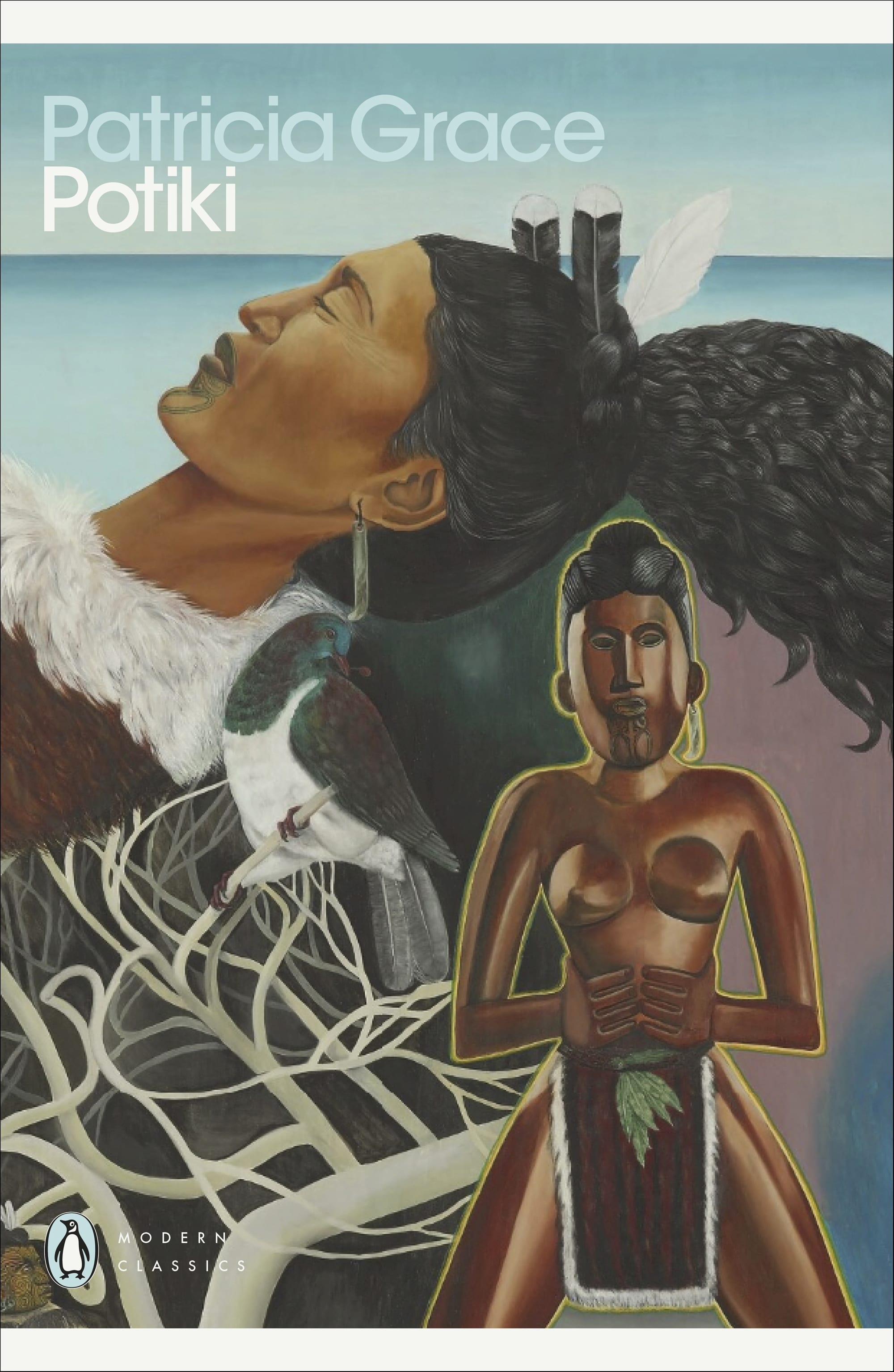
IF JUAN RULFO’S Pedro Páramo teaches us that some thresholds consume those who cross them, that certain crossings are irreversible and the one who crosses may not survive to return, then Patricia Grace’s Potiki teaches something else: that thresholds can be held, can be maintained, can become sites of resistance rather than only passages of loss. The wharenui—the carved meeting house at the center of this Māori community’s life—is a threshold between the living and the ancestors, a space where the dead are present not as ghosts who trap the living but as guides who watch over them, speak to them, tell them who they are and where they come from. The doorway of the wharenui is the toothed aperture through which all must pass, but this passing is not death alone; it is also birth, also return, also the ongoing conversation between generations that makes community possible. Perhaps what the novel offers is a way of dreaming thresholds that does not require the one who crosses to be destroyed, a way of understanding the space between worlds as something that can be inhabited, defended, and made generative rather than only fatal.
The prologue establishes the carver as the one who works the threshold. There was once a carver who spent a lifetime with wood, seeking out and exposing the figures that were hidden there—“eccentric or brave, dour, whimsical, crafty, beguiling, tormenting, tormented or loving figures” that developed first in the forests, in the tree wombs, but depended on the master with his karakia and his tools to bring them to other birth. The tree, after a lifetime of fruiting, has, after its first death, a further fruiting at the hands of a master. This is threshold work: taking what has died (the tree) and bringing forth from it new life (the ancestor figures), not through creation from nothing but through revelation of what was already waiting, already present, already formed in the wood’s own womb. The carver does not master the tree; he is master only of the skills that bring forward what was already there. And what he brings forward is older than he is, is already ancient. “It is as though a child brings about the birth of a parent,” Grace writes, “because that which comes from under the master’s hand is older than he is, is already ancient.” The threshold here works in both directions at once: the carver gives birth to ancestors, brings the old ones forward into the present, makes the ancient newly visible. This is not the unidirectional threshold of Comala, where one can only descend, only die, only become trapped among the dead. This is a threshold that allows passage both ways, that connects generations in an ongoing relationship of reciprocity and care.
The carved ancestors have large heads that may be round or square, pointed or egg-shaped, gaping mouths with protruding tongues. Sometimes the tongue is a hand or tail coming through from behind the head, or it is formed into a funnel or divided in two, the two parts pointing in different directions. There will be a reason for the type of head or tongue the figures have been given. The bodies are broad-shouldered but short in trunk and legs, firm-standing on three-toed feet, or else long and twisting and scaly, swimmers shaped for river or sea. After the shaping out of heads, bodies, and limbs, the carver smooths the figures and enhances them with fine decoration. The final touch is the giving of eyes—spinning, dancing eyes that are the gift from both the carver and the sea. Before this final touch, the figure waited eyeless in the tree womb, already browed, tongued, shouldered, fingered, sexed, footed, toed, waiting to be shown as such but not yet seeing. The eyes are what complete the crossing, what bring the ancestor fully into presence, what allow them to look back at the living who look at them. The threshold is a place of seeing and being seen, a relationship of mutual regard across the boundary between times.
When all is finished, the people have their ancestors. “They sleep at their feet, listen to their stories, call them by name, put them in songs and dances, joke with them, become their children, their slaves, their enemies, their friends.” This is not the relationship of haunting that defines Comala, where the dead press in on the living with their murmuring until the living can no longer breathe. This is a relationship of cohabitation, of intimacy, of daily life shared between generations. The ancestors are not feared but welcomed, not escaped but embraced. The threshold is not a trap but a home—the wharenui itself, the house the carver leaves behind for the people, where the ancestors stand along the walls and the living gather beneath them. Perhaps this is what the novel teaches about thresholds that Pedro Páramo cannot: that crossing does not have to mean annihilation, that the space between worlds can be inhabited rather than merely passed through, that communities can build structures—physical, spiritual, narrative—that hold the threshold open for passage in both directions.
ALSO READ:
The Road That Only Descends: 'Pedro Páramo' and the Threshold You Cannot Uncross
Land Remembers What Bodies Forget: 'Beauty Is a Wound' and the Geography of Colonial Haunting
Let the Apartment Dream Itself: 'Territory of Light' and the Cartography of Containment
The family at the novel’s center lives close to the wharenui, close to the urupa where the dead are buried, close to the sea that feeds them. Roimata is the mother, Hemi the father, and their children include James, Tangimoana, Manu, and Toko—the potiki, the youngest, the special one born with physical disabilities but also with prophetic sight. Toko’s birth mother, Mary, is part of the household too, and so is Granny Tamihana, the eldest, who remembers what the younger ones cannot, who carries the stories that connect the present to the deeper past. This extended family, this whānau, exists in a threshold condition: between the old ways and the new, between the land that sustains them and the developers who want to take it, between the ancestors who watch from the walls and the children who will become ancestors in turn. The novel’s structure—moving between voices, between times, between the living and the dead—enacts the threshold existence that the community inhabits.
Toko, the potiki, is the threshold figure at the novel’s center. Born with a heart growing too big for his body, with twisted limbs that will never straighten, he exists between life and death from the moment of his birth. He was born on the beach stones on a day with no colour, and his birth mother, Mary, carried him into the water—she would have left him there for the birds, or kept walking until the sea closed over them both. But Tangimoana, in her red shirt, snatched him away from his first drowning and hurried home with him. Roimata peeled the skin from his two-colour eyes so that he could see, turned him up to let the stone fall from his throat, shook breath into him. His old self—some membrane or caul—went to the stomach of a fish, and for a long time after there could be no fishing, no shellfishing, no swimming. “Toko is a gift that we have been given, and he has gifts,” Roimata reflects. “He has a special knowing.” He is the one who sees what is coming, who senses the stories changing, who asks questions the adults cannot answer: “When are they coming? … Will their eyes shine green, yellow, and silver? Will they be sore-footed with bands on their heads? What will they hold in their hands?” His knowing is a threshold knowing, the perception of one who was pulled back from death at the very moment of his birth and can therefore see into both worlds.
The developers who want the community’s land represent another kind of threshold—the border between indigenous geography and colonial extraction, between the land as living relation and the land as commodity. The company wants the urupa and wharenui site because it would provide access for their development, would allow them to build more, extract more, profit more. They offer money, increasing sums that shock the community with their desperation, that reveal how much the developers need this particular piece of land. But the community refuses. “We did not reconsider, and did not give permission for the use of our road.” The threshold here is not one to be crossed but one to be defended, a boundary to be maintained against those who would dissolve it in the name of progress, development, economic growth. The community’s refusal is a refusal to let the threshold be destroyed, a refusal to let the space between their world and the developers’ world collapse into a single landscape of extraction.
This struggle echoes another story the novel contains—the story of Te Ope, where land was taken during the war for “purposes of war,” and the people quietly packed and went to state houses that had been rented to them, only to discover later that their houses had been demolished, their meeting house declared unfit, their family scattered everywhere. “They did not have anything that belonged to them any more except that they had each other, scattered as they were, and they had their stories.” The threshold between having land and being landless, between community and scattering, was crossed not by the people’s choice but by the power that forced them to move, that renamed their displacement as improvement, that called their loss a gift. But the stories persisted, and in the novel’s present, the people of Te Ope are resisting, are sitting on roads to block bulldozers, are refusing to let another threshold be imposed on them. The threshold that colonial power creates—between before and after, between rooted and displaced, between whole and scattered—is also the threshold that resistance tries to hold open, that storytelling tries to keep navigable.
The novel is saturated with stories: stories told by Roimata about her childhood in the railway house, stories James brings home from school about the earth and the universe, stories Tangimoana writes down in old exercise books, stories Hemi tells about his work, stories Mary tells about talking-man and angry-wife, stories Granny Tamihana tells of sorrow and joy, of land and tides. “Gradually the stories were built upon, or they changed,” Roimata reflects, and this building and changing is itself threshold work—the ongoing construction of the space between past and present, between the generations, between the world as it is and the world as it might become. The stories are not merely told; they are lived, enacted, woven into the fabric of daily existence. And through this weaving, the threshold between the living and the dead remains open, remains navigable, remains a place of passage rather than a wall.
The destruction of the wharenui comes not through purchase but through fire. Someone—the novel strongly implies it is an agent of the developers—burns the meeting house, destroys the ancestors who had stood along its walls since the carver brought them forward from the wood. Toko sees a figure running from the wharenui into the shadowed hills, “not one of my uncles or cousins running quickly and darkly into the night with scarcely a sound.” This is threshold violence: the attempt to sever the community from its past, to cut the living off from the dead, to destroy the physical structure that held the space between worlds open for passage. And in the fire, Toko dies. He has wheeled himself to the wharenui in the night, following his brother Manu, and as he backs his chair through the doorway—the special doorway that had been built for him, the ramp that accommodated his wheelchair—the arsonist runs past, the fire explodes, and the doorway becomes “the toothed aperture through which all must pass.” This is the crossing that cannot be reversed, the threshold that takes everything.
But here is where Potiki offers something that Pedro Páramo cannot. Toko’s death is not the end of his presence; it is the beginning of a different kind of presence, a presence from within the wall of the rebuilt wharenui, from within the wood where he now stands as a carved figure among the ancestors. The novel’s final chapter is narrated by Toko from this position: “There is one more story to tell which I tell while the house sleeps. And yet the house does not sleep as the eyes of green and indigo brighten the edges of the world. There is one more story to tell, but it is a retelling. I tell it to the people and the house. I tell it from the wall, from where yesterday and tomorrow are as now.” He has crossed the threshold into death but has not disappeared; he has become one of the ancestors who watch over the living, who speak to them, who are present with them in the wharenui that the community rebuilds after the fire. The threshold has taken him, yes, but the threshold has also returned him, transformed him, made him present in a new way. “I know the story of my death,” he says. “I tell it from the tree.”
The rebuilding itself becomes a threshold practice. The community, joined by those from Te Ope and by young carvers from other areas, works from daybreak until dark and then after dark, weaving panels, painting patterns, carving new ancestor figures. “Build something, and it builds you,” Hoani says, and this reciprocity is the essence of threshold work: you are transformed by what you create, just as the dead are transformed by being carved into presence, just as the community is transformed by holding itself together against those who would scatter it. The patterns and designs follow the old ones, “these being already part of ourselves,” but there are new patterns too, “of flooding and fire, roads and machines, oneness and strength, and work and growth.” The threshold is not static; it absorbs what happens, incorporates the violence that was done, makes even destruction part of what connects the generations.
The carver who made the original poupou—the carved wall panels—had left one unfinished, an empty space at the elbow of the master carver figure, a gap that he said must be left to a future time, “for when it is known.” He had carved the top figure, the master carver himself, but the lower figure remained to be completed, waiting for the one who would fill that space when the right time came. Toko is that lower figure, the one whose existence was anticipated but not yet known, the space that remained open until the threshold claimed him and returned him in new form. The novel suggests that thresholds can work this way: not as simple passages from one state to another but as spaces of anticipation, of waiting, of futures that are already prepared for even before they arrive. The carver knew someone would fill that empty place; he did not know who. The community knows someone will cross the threshold; they do not know when or how. But the structure is ready, the space is held open, the ancestors wait to receive whoever comes.
What the novel teaches, then, is that the threshold can be a practice rather than merely an event. The community maintains its relationship to the ancestors through daily life in proximity to the wharenui, through the care they give to the carved figures, through the stories they tell and the stories they receive. Mary, Toko’s birth mother, goes to the wharenui every afternoon to dust and polish, to converse with the tipuna, to sing in the house of the people. This is threshold maintenance: the ongoing work of keeping the space between worlds open, of honoring the ancestors who stand there, of refusing to let the relationship lapse into neglect or forgetting. The developers cannot understand this kind of relationship because they see land only as resource, only as commodity, only as something to be bought and sold. They cannot see that the land is also a threshold, is also the place where the living meet the dead, is also the ground in which the urupa holds the bodies that will one day return as ancestors themselves.
The children go to the urupa to weed the graves, to fill the jars with water, to put the same number of flowers in each jar to be fair. Then they go from grave to grave, squatting and putting an ear to each place, listening carefully. They hear nothing—no one calls to them, no baby cries, no one whispers to them the secrets of under the ground. But they keep listening, keep attending, keep maintaining the practice of threshold attention. And when Manu asks, “What colour are their kitchens?”—a question that makes sense only in the logic of children imagining the afterlife—Tangimoana answers with a whole cosmology: yellow kitchens without windows, skinny passages where the dead crawl and bump their heads, free places where they throw down their blankets and dance, underwater wharenui where they talk all day long. This imaginative work is also threshold work: the construction of possibilities for what lies on the other side, the making-present of those who have crossed over. The dead in Potiki are not abandoned to their fate; they are imagined, addressed, invited into ongoing relationship with the living who remember them.
Perhaps this is what the novel offers to those of us dreaming our own novels: the possibility of thresholds that work in both directions, that allow reciprocity between the living and the dead, that can be maintained and defended against those who would destroy them. Not every crossing has to be fatal. Not every threshold has to trap those who pass through. The community in Potiki loses people to the threshold—loses Toko, loses the original wharenui, loses years of labor and hope to the developers’ violence—but they do not lose the threshold itself. They rebuild. They carve new ancestors, including Toko, who now stands among them. They continue the practices of maintenance and attention that keep the space between worlds open. And from his place in the wall, Toko watches: “The people work and watch and wait. They pace the tides and turn the earth. They stand, listening on the shores.”
The shores are the silent places that take no seed, that long ago were left devoid when anger and fear sent some of life to the protecting belly of the sea, and some of life to the protecting arms of the land. The threshold space is this empty place, this margin, this shore where sea and land meet and neither dominates. And the people stand there, listening, working, watching. They do not see clearly “the big logs being rolled into position” or see themselves “crouching down behind.” They do not quite see “the stones nesting in their own cupped palms” or see themselves “fingering the white sticks, taking the white sticks in their hands.” They do not hear distinctly “the footfalls, some of them their own,” or see “the shadowless forms, forms of which they themselves may be the shadows.” But the tekoteko are coming, the carved ancestor figures, taking up the bones, moving in silently beside them. The living and the dead are converging, the threshold is becoming a gathering place, and the resistance continues across generations.
What Potiki teaches about thresholds, then, is the opposite of what Pedro Páramo teaches, and both teachings are necessary. Rulfo shows us the threshold that destroys, the crossing that cannot be undone, the geography of death that swallows the living and will not let them go. Grace shows us the threshold that sustains, the crossing that transforms into presence, the geography of ancestral relationship that makes survival possible even in the face of colonial violence. Perhaps every novel needs both kinds of threshold: the one that threatens annihilation and the one that promises continuity, the one that the character fears to cross and the one that the character learns to maintain. The tension between these possibilities—between the threshold as trap and the threshold as home—may be what gives the space between worlds its narrative power. Your character approaches the doorway. Will they be consumed or will they be transformed? Will they lose themselves or will they find new ways of being present? Will the crossing cut them off from everything they knew or will it connect them to generations they did not know they belonged to?
The answer, the novel suggests, depends on whether anyone is maintaining the threshold, whether the practices of care and attention and storytelling continue, whether the community holds the space open for passage in both directions. Juan Preciado descends into Comala alone, sent by a dead mother’s promise to find a dead father’s ghost. He has no one to maintain the threshold for him, no community to hold the space open, no ancestors who speak to him with love rather than with the murmur that fills the air until he cannot breathe. But Toko, even in his death, is received by a community that has been practicing threshold maintenance for generations, that knows how to carve the dead into presence, that will rebuild the wharenui and install him in his proper place among the ancestors. His crossing is terrible—the fire, the explosion, the falling stars—but it is not the end. It is a transformation into a different kind of presence, a presence that can watch over the living, that can tell the story of its own death, that can speak from the place where yesterday and tomorrow are as now.
Let it begin with this: the understanding that thresholds can be held, can be maintained, can become sites of resistance and relation rather than only passages of loss. Your character approaches the doorway between worlds. Someone is there to receive them—or no one is there, and they cross alone into what will consume them. The community has been practicing threshold maintenance for generations—or the community has been destroyed, scattered, and the threshold stands unattended, ready to trap whoever enters. The ancestors speak from the walls—or the ancestors are silent, their voices lost, their eyes never given. The choice is not only the character’s; it is the community’s, the family’s, the generations’ that have come before. Dream the threshold your character must cross. And dream who is there to hold the space open, to maintain the practices of attention, to ensure that crossing does not mean annihilation but transformation into a new kind of presence. Dream the shore where the living and the dead converge. Dream the tekoteko taking up the bones, moving in silently beside them. Dream the rebuilt house where the potiki speaks from the wall, telling stories from the place where time itself has become a threshold, where yesterday and tomorrow and now are all one moment, all one crossing, all one community holding the space between worlds open for whoever needs to pass.

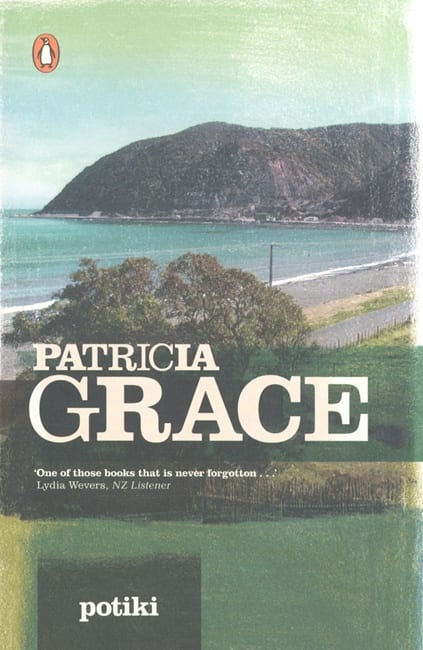
I am writing a series on Santinakpan Otherwise at patreon.com/ecsamar called “100 Steps to Writing a Novel,” and for each step, I recommend eight works—literary and otherwise—to help beginning writers work on that step. Two of those eight are novels. In a series of essays here at Esquire, I’ll explore how each of the 200 novels I recommend beginning writers to read will help shape their consciousness, if not their novel. This essay is about the second of two novels for my second step to writing a novel: Walk the Threshold Between Worlds, and it focuses on Patricia Grace’s Potiki, published in 1986. Grace, of Ngāti Raukawa, Ngāti Toa, and Te Āti Awa descent, is one of the foundational figures of Māori literature in English. Potiki tells the story of a coastal community resisting developers who want their land, and at the novel’s center stands the wharenui—the carved meeting house—which is both the physical heart of the community and the threshold between the living and their ancestors.
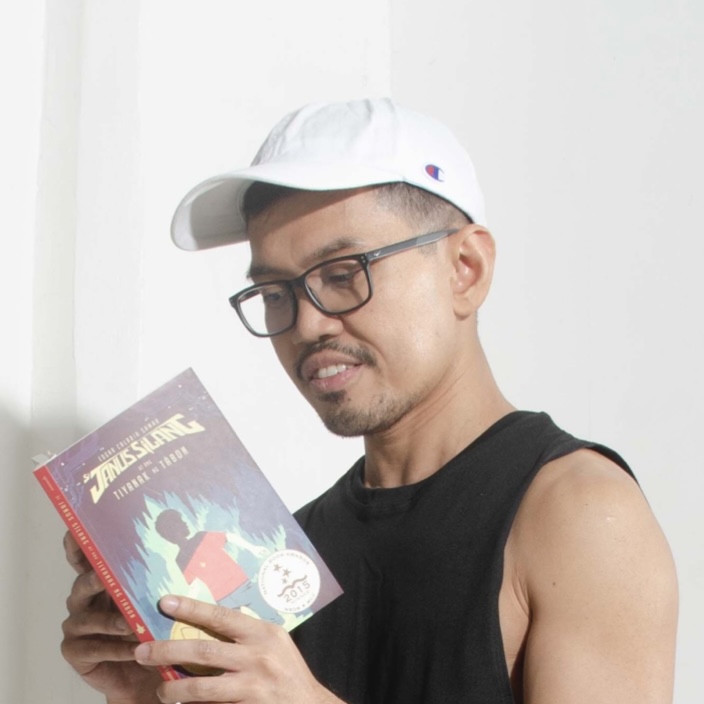
Edgar Calabia Samar is Associate Professor and Chair of the Department of Filipino at Ateneo de Manila University. He is the author of the award-winning Janus Silang series and has received multiple Palanca Awards, National Book Awards, and the S.E.A. Write Award from the Royal Family of Thailand (2024). He served as Visiting Professor at Osaka University (2017-2022) and Writer in Residence at the University of Iowa (2010). He is the incoming Head of the National Committee on Literary Arts of the National Commission for Culture and the Arts and a member of the Filipino Critics Circle, LIRA, and Filipinas Institute of Translation. He develops literature and novel-writing guides and maintains a growing Filipino komiks archive through Santinakpan Otherwise on patreon.com/ecsamar.
READ MORE FROM EDGAR CALABIA SAMAR:
To Novel the Dream Is to World the Write: Twenty Years After Writing Walong Diwata ng Pagkahulog
Again, You Are Not Ready—Begin: Writing Sa Kasunod ng 909
Writing Continues What Living Interrupts: Finishing a Trilogy with Teorya ng Unang Panahon
Edgar Calabia Samar is an award-winning poet, critic, and novelist, and an Associate Professor at Ateneo de Manila University. IG: @ecsamar.
View More Articles About: