Let the Apartment Dream Itself: 'Territory of Light' and the Cartography of Containment
How reading novels, beginning with Yuko Tsushima's 'Territory of Light', reshapes the writer's consciousness.
Published on Nov 28, 2025
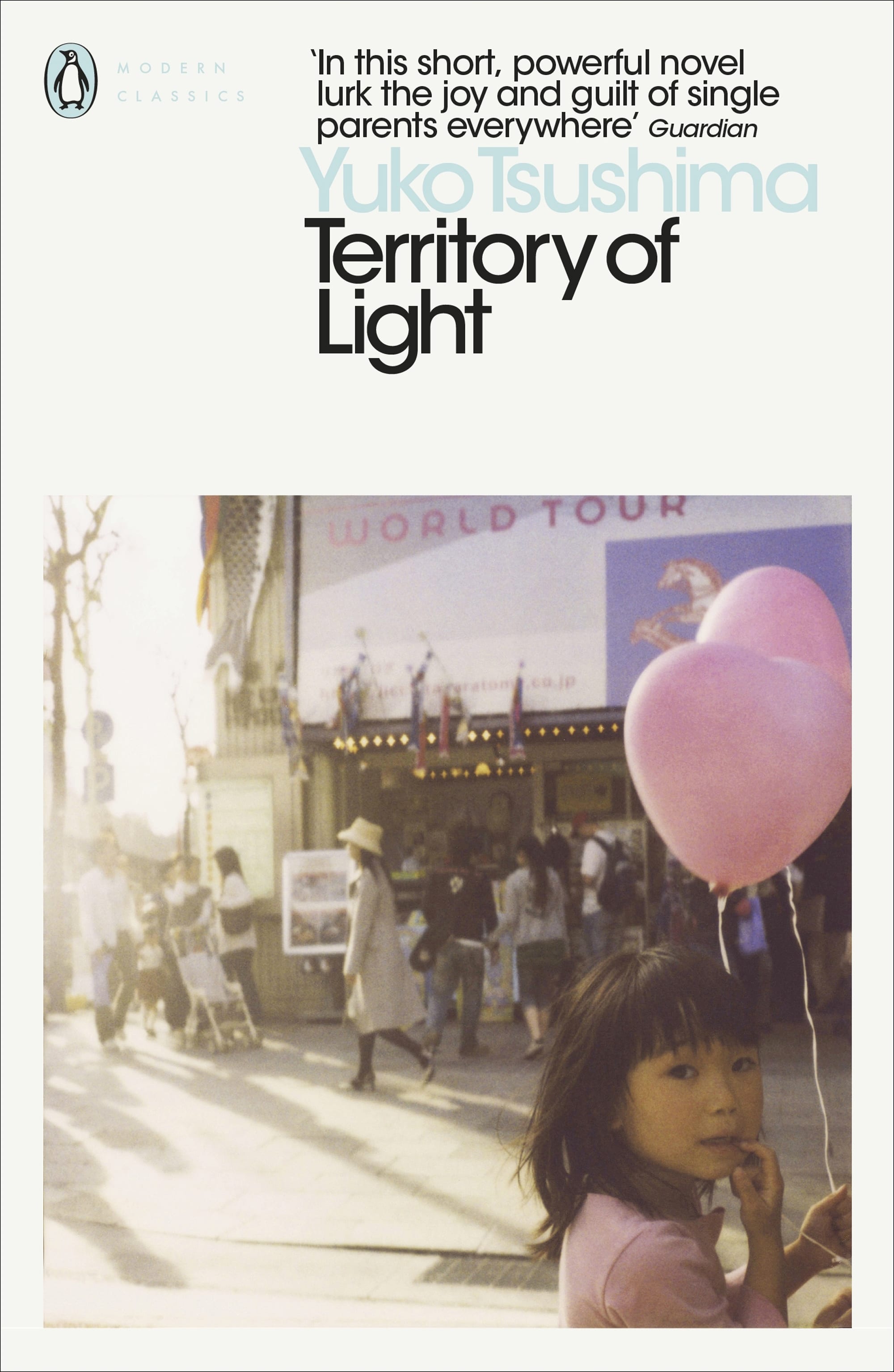
I am writing a series on Santinakpan Otherwise at patreon.com/ecsamar called "100 Steps to Writing a Novel," and for each step, I recommend eight works—literary and otherwise—to help beginning writers work on that step. Two of those eight are novels. In a series of essays here at Esquire Philippines, I’ll explore how each of the 200 novels I recommend beginning writers to read will help shape their consciousness, if not their novel. This essay is about the first of two novels for my first step to writing a novel: Map the Unseen Cartography, and it focuses on Yuko Tsushima’s Territory of Light, originally serialized in the Japanese literary monthly Gunzō from July 1978 to June 1979, translated into English by Geraldine Harcourt and published by Penguin Classics in 2017. Tsushima, the daughter of the celebrated novelist Osamu Dazai, is one of the most significant figures in contemporary Japanese literature, and Territory of Light stands as her most intimate exploration of single motherhood, solitude, and the relationship between domestic space and consciousness, a slender novel of twelve chapters that chronicles one year in the life of a woman and her young daughter living in an apartment flooded with light from every direction.

There is an apartment in Tokyo that existed for only twelve months in the life of a woman and her daughter, an apartment that sits on the fourth floor of an office building at a three-way intersection, an apartment with windows on all sides so that light enters from every direction at every hour, and this apartment, which Yuko Tsushima conjures in Territory of Light, might offer one way to understand the work that happens before writing begins: how to dream a single space so thoroughly that it becomes not backdrop but the breathing architecture of consciousness itself, not setting but the very substance from which story emerges. What if the apartment is not where things happen but rather what happens, and what if learning to dream space this way—as active force rather than passive container—reveals that the novel does not take place in space but rather space takes place in the novel? Which is to suggest that place might precede plot. That the texture of walls could determine the shape of thoughts. That crossing from one room to another becomes not merely spatial movement but a transformation of what becomes possible to feel, to remember, to become.
Tsushima’s narrator, a woman recently separated from her husband, moves into this fourth-floor apartment with her daughter who is about to turn three, and what follows is not the story of this separation—not exactly—but rather the story of how this apartment with its windows on all sides teaches both mother and daughter how to inhabit their new lives, or perhaps more accurately, what follows is the discovery that the quality of light at different hours makes different memories accessible, that the apartment’s unusual position at the top of an office building means their daily life includes not just domestic space but also the empty offices on the third floor where the narrator sometimes goes at night to walk in the darkness and look at the city from different angles. Perhaps Tsushima did not begin with a plot and then choose an apartment for her characters to live in; perhaps she began with the apartment itself, with its excessive light, its windows facing every direction, its position above commercial spaces, and from this place the story emerged, the way water finds its course not by deciding but by following the shape of land.

The apartment has windows on all sides, though not symmetrically arranged. Perhaps begin here, with this fact that seems to determine everything else: morning light enters through the east-facing window in the small room beside the entrance, the room less than two tatami mats in area that the narrator decides to make their bedroom, so that every morning she and her daughter wake to eastern light falling across their faces, the kind of light that carries with it the optimism of beginnings even when you wake to the same difficulties you fell asleep with. South-facing windows run along the straight line of rooms—the two-mat, the dining-kitchen, and the six-mat—looking over the roof of an old low house and onto a lane of bars and eateries where horns constantly blare, where the noise of the world conducting its business enters the apartment without filter, reminding them that they are not isolated but connected, however tenuously, to the city’s nervous system. The west-facing window at the far end of the apartment admits the late sun and the street noise without mercy, directly below which the narrator can see the black heads of pedestrians streaming toward the station in the morning and back again in the evening, and to the left of this window, just visible, are the trees of a wood that belongs to a large traditional garden, the site of a former daimyo’s manor, and this glimpse of greenery becomes precious to her, becomes what she calls the Bois de Boulogne, a fairy-tale name that makes the distant trees into something more than trees, makes them into the promise of elsewhere, into the knowledge that even in the densest urban fabric there are pockets of green memory, places where another kind of time persists. Even the toilet has its own window on the northern wall, with a view of the station and the trains, a window that becomes the daughter’s favorite, proving that every opening matters, that even the most private spaces look out onto the city’s movements.
Call it cartography rather than description, which means the mapping of relationships, the notation of how moving from one window to another changes what you can see and therefore what you can think. How standing at the eastern window in the morning makes you remember different things than standing at the western window in the evening. How the apartment’s position at the intersection of three streets means that it exists at a point of convergence, a place where multiple flows meet, and this convergence shapes the consciousness of the people who live there. When Tsushima writes that entering the apartment from the dimness of the stairwell means you practically have to squint, she is teaching us that space is not neutral, that crossing the threshold from dark to light is a crossing that demands physical adjustment, that asks your body to change the way it perceives, and this is the work of dreaming place: to know that your characters’ bodies will respond to space, that architecture acts upon consciousness, that the red floor of the dining-kitchen makes the light brighter, makes the aura more intense, so that the daughter, bathed in this light for the first time, shouts with delight, “Ooh, it’s warm! It’s pretty!”
The daughter is three years old, which means she is at the age when the world is still being assembled, when the categories that adults take for granted—inside and outside, public and private, home and not-home—are still forming. She learns not as abstract knowledge but as embodied experience: the apartment is warm because light enters from every direction, the apartment is pretty because its red floor amplifies the brightness, and these are not separate facts but aspects of a single way of being in the world that this specific place makes possible. When she falls ill after the move and spends nearly a week in bed, the apartment holds her in its light, and when she recovers and tells her daycare teacher and friends, “We can see the station and the trains! And the house shakes!” she is not describing the apartment but declaring what makes it precious, what makes it home despite its strangeness. A place becomes precious not through symbolism but through what it does—how it shapes daily rhythms, what it makes possible or impossible.

The narrator works at a library attached to a radio station, archiving broadcast-related documents and tapes, issuing them on loan. When her daughter falls ill with fever after the move and must spend nearly a week in bed, the narrator leaves her with her mother during work hours, then stops by at the end of each day to stay with her daughter till past nine before returning alone to the apartment building, descending into the stairwell after the office tenants have all gone home to lower the rolling security shutter, a task that had been the previous owner’s and now becomes hers by default because she lives on the top floor. The routes between work and her mother’s house and back to the apartment structure her days, create the rhythm within which thoughts can form or fail to form, and it might be in the spaces between these fixed points—in the train, in the walk from the station, in the moments of transition—that something else becomes possible, some other kind of thinking that cannot happen in the office or at her mother’s house or even in the apartment itself. She is afraid of any renewed contact with her husband, so afraid it leaves her surprised at herself, and this fear is not abstract but spatial: she is afraid he will set foot in her new life, will enter the apartment, will contaminate this space she has carved out, and perhaps place is always political in this way, always about power and autonomy, about who has the right to enter which spaces, whose presence transforms a room from sanctuary to threat.
There is another terrain here, one harder to map because it operates in shadow, in the spaces outside the territory of light. Fujino—her husband—has been inept, irresponsible, absent in the ways that matter, yet she finds herself almost gaslighting herself about this ineptitude, almost convincing herself that perhaps she is the one who failed, perhaps she is the one who should have tried harder, should have been better. Shame, she discovers, means not being seen by your husband anymore, means that his gaze has moved elsewhere and you have become invisible, and this invisibility creates its own territory, a realm where you exist but are not witnessed, where your presence does not register, where you occupy space but that space does not count.
When Sugiyama—a student of Fujino’s whom she has known since he was in high school, who has been spending Sundays with her and her daughter, playing and cooking and lying around the apartment in perfectly relaxed sync—when this young man rejects her desperate phone proposal that he come live with them, rent the little eastern room, help form what she calls “communal living,” he simply says “I’m sorry, the idea doesn’t interest me” and hangs up, and she feels the rejection as expulsion, as proof that she has no right to ask, no right to propose alternative arrangements, that the proper landscape of her life should not include young men, should not include anything that looks like desire or need beyond the narrow territory assigned to her as mother, as woman, as person who should not want.
Sometimes at night, after her daughter has finally gone to sleep, the narrator slips into the empty offices on the third floor, rooms that face the main street and happen to remain vacant all the time she lives above them. She opens the windows a fraction and enjoys a different take on the view, or walks up and down in the empty space, and she feels as if she is in a secret chamber, unknown to anyone. The apartment is not her only terrain—there are the empty offices below, which belong to the same building but exist in a different register, a different emotional key, because they are commercial rather than domestic, because they are supposed to be occupied but aren’t, because entering them at night makes her feel like a trespasser even though she lives in the same building, even though technically she has more right to be there than anyone. The empty offices teach her something about her own apartment, about how the same building can contain multiple worlds, multiple ways of inhabiting space, and by moving between the fourth floor and the third floor she learns that place is not fixed but multiple, that the same physical structure can be lived in different ways, can mean different things depending on the hour, the light, the purpose.
Beyond the physical apartment, other territories shape her consciousness, spaces that are not material at all but that nonetheless determine the boundaries of thought. There are the words she heard on a tape, a line that haunts her: “Give up this idle pondering”—which the copyright page identifies as from Goethe’s Faust, though the novel itself leaves it unattributed, lets it exist simply as words on a tape, disembodied voice entering her mind—and this becomes its own kind of terrain, a mental landscape where she must confront what it means to think, to ponder, to refuse to give up the pondering that others call idle. There is Fujino’s desire to start a small theater company, an ambition that exists only in imagination, that will never materialize but that nonetheless occupies space in their conversations, in their arguments, in the distance that grows between them. There is his passion for “new cinema,” which he had stayed on at university to study and to which he wanted to dedicate his life, and which she finds herself explaining to her coworker Kobayashi, regaling him with what amounts to a lecture on Fujino’s aesthetic obsessions, and this too becomes part of the cartography—not her own aesthetic space but his, carried in her mind, occupying her lunch hours, shaping her identity even as she separates from him. These cultural spaces, these aesthetic territories, complicate the apartment’s material boundaries, make visible that to dream a place thoroughly means dreaming not just walls and windows but also the words heard on tapes, the ambitions harbored there, the borrowed passions you carry with you, the way that art creates its own kind of space that interpenetrates with physical space and cannot be separated from it.
The apartment exists because of chance, because the building went up for sale and was bought by a businesswoman named Fujino who, being new to residential property, proposed a low rent to see if there would be any takers for an apartment with an unusual layout in a dilapidated office building. The narrator’s husband, at the time still her husband, has the same name as the building, which means she is constantly mistaken for the proprietor, which means her daily life is entangled with this coincidence, this accident of naming that makes strangers assume she owns the very space she barely affords. Dreaming a place might mean knowing not just the physical facts but also its history, its economics, the circumstances that make it available to certain people and not others, the ways that chance and necessity intersect to determine who lives where. The narrator finds this apartment not because she was looking for a place with windows on all sides but because she was looking for any place she could afford, and what she discovers is that this accident produces an architecture that shapes her consciousness in ways a more conventional apartment would not have, that the excessive light and the constant noise and the view of the distant trees all become part of how she learns to live without her husband, how she learns to be alone with her daughter, how she becomes something other than what she was.
There is a rooftop terrace that they have sole access to, and there is a spacious bathroom that has been built up there, which sounds luxurious until you realize it means going up stairs every time you need to bathe, means that bathing is not a private retreat within the apartment but a journey to the roof, an excursion that changes the meaning of what it is to wash your body, to care for your daughter’s body. Spatial arrangements might determine ritual in this way, which means they determine how you understand the basic acts of living: eating, sleeping, washing, looking out the window. These are not background details; they are the substance of consciousness, the texture of daily life, and when you dream a place before you write, you are dreaming these textures, these rhythms, the way that having to climb to the roof to bathe means that bathing becomes an event rather than routine, becomes something you must prepare for, something that requires more intention.
But light from every direction creates its own dangers when you live above other people’s lives, when what falls from your windows lands on their roof, when a three-year-old discovers that colored paper released into air becomes a flock of bright birds floating downward. The old couple who run the sweet shop below—the one with the weathered tiles and unmended breaks—appear at the door one evening in rage. They have suffered noise above their heads, leaks in their ceiling, the thundering of objects dropped by a child who cannot yet grasp consequence. They accuse the narrator not just of negligence but of conspiracy, suggest that no decent woman could afford such a place on her own, imply that the falling objects must be her doing too. Within days, workmen install blue wire mesh over every window. The daughter runs through the apartment announcing “Our house has gone blue. I can’t see outside,” and the narrator, looking through the new barrier, sees everything now appears in thick fog, as if the apartment has aged overnight, has learned enclosure, has been taught its place.
What blue mesh over windows teaches: that the openness you inhabit can be revoked, that light flooding from all directions exists only by permission, that the territory you thought was yours was always provisional, always subject to complaint, always one accusation away from transformation into something darker, more contained. The mesh does not block the light entirely but changes its quality, makes visibility conditional, turns windows from openings into screens. The apartment remains the same in dimension and arrangement, yet it has become a different place, has learned what the novel’s subtitle has known all along: that even territories of light exist inside cartographies of containment.

But there is another kind of shaping happening, one that comes from outside the apartment, from shadow spaces where men move and judge and disappear without consequence. The narrator remembers a man from years earlier, remembers asking him—begging him—to make love to her in a park where other couples were already entwined in the darkness, and remembers his disgust, his revulsion, his insistence that he is “a normal human being” and she is something else, something shameful in her desire, something disgusting. She remembers her father, though the novel gives us only fragments of this memory, only the sense that he too belongs to this landscape of men who are present and then absent, who shape by their presence and their absence both, who cast shadows that the narrator must navigate even when they are gone. And she carries the knowledge that if her daughter becomes “a monster”—as people whisper, as she herself sometimes fears—it will be blamed on her bad mothering, on her failures, on her inability to provide what a child needs, even though Fujino has been absent and irresponsible all along, even though he chose to leave, even though his failure to father is so complete that it has become invisible, has been absorbed into the expected terrain of masculinity where men are allowed to leave and women are required to stay, to cope, to somehow make up for the absence, to be blamed when the child suffers from that absence. The apartment’s territory of light, with its windows on all sides, cannot reach into these shadows, cannot illuminate what exists in spaces of patriarchal permission, where men move freely and women’s movement is always already suspect, always already shameful, always already insufficient.
The apartment teaches them that place is not permanent. They will live there for only one year, twelve months that the novel parcels into twelve chapters, chapters that follow the rhythms of season and transformation rather than the linear progression of time. By structuring the novel this way, Tsushima suggests that to dream a place is to dream it in time, to understand that a room in summer is not the same room in winter, that light changes with the seasons, that space is always becoming, always transforming, and that what we call “setting” might actually be a process, a continuous interaction between consciousness and the world. The narrator does not describe the apartment the way a real estate listing would describe it; she notices what the apartment does to her, how it changes her relationship to light, to noise, to solitude, to her daughter, to the city that surrounds them.
You cannot write scenes of departure—cannot make them carry the weight they need to carry—unless you have first dreamed the apartment, unless you have first established the terrain of the narrator’s current life so thoroughly that when she leaves it, even briefly, you and your reader feel the leaving, feel the difference between the apartment’s contained brightness and open air. In a park, the narrator sees a woman asleep on a bench, and this sleeping woman opens onto yet another kind of space: the public place where a private unconsciousness unfolds, where dreaming happens in daylight, in view of others, but remains utterly inaccessible. The woman may not even be dreaming, but the narrator cannot know, can only witness the closed eyes, the sleeping body, the mystery of another mind that remains a mystery even when it is right there, visible, occupying the same physical space. And this makes visible that the world includes not just the spaces we can enter but also the spaces we cannot, the interior territories of other people’s consciousness, the dreams that happen in public but belong to no one but the dreamer.
The narrator has her own dreams that populate the novel, dreams that create their own landscapes, their own worlds that exist nowhere but in sleep. She dreams that her daughter is dead, and in the dream she feels relief, and then upon waking she feels guilt about the relief, and then relief that it was only a dream, that her daughter is alive, and this complicated layering of emotion—relief at death, guilt at relief, relief at life—reveals that even her own interior landscape is not unified, is not consistent, contains territories of feeling that shame her, that she cannot reconcile with her waking self. To dream a place means to dream these interior spaces too, to recognize that your characters’ minds are themselves landscapes, are themselves territories with their own hidden valleys and forbidden zones, their own places where shame accumulates and guilt presses upward like groundwater.
Then the apartment also exists in a particular kind of urban fabric. It is in a shopping district around a station on the main loop line, which means it exists in a place where residential and commercial uses intermingle, where the boundaries between home and work are permeable, where the noise of commerce never stops. This is Tokyo, but it could be Manila, could be Jakarta, could be any city where density creates a different relationship to privacy, where windows on all sides mean you see into other people’s lives and they see into yours, where the rooftops become platforms for laundry and potted plants because ground-level gardens are impossible, where the view from above has a homey feeling because you see elderly people in their yukata sitting in deckchairs, making the rooftops into a kind of shared commons, an architecture of intimate exposure. This dreaming attends to relationships, entanglements, the ways that your characters’ space is never fully their own but always connected to other spaces, other lives, the larger systems that determine who lives where and under what conditions of personal need, chance and desperation, and you might know this even if you never mention it explicitly in the novel.
There is a moment late in the year when the narrator stands in the entrance of the apartment, flooded with reddish late-afternoon light so bright it is almost suffocating, and she takes it all in as if she has already been gone for years and can no longer call a clear image to mind. What the apartment seems to have taught her: that place is not permanent, that the spaces we inhabit leave their mark on us but we cannot keep them, that the novel you write is the only way that place will continue to exist, that the apartment with windows on all sides will dissolve back into the city when the lease ends, will become offices again or will be torn down, will be lost unless you write it, unless you dream it into permanence through the alchemy of fiction. The narrator and her daughter will move to a different apartment, a more conventional place in a residential building, and this move will mark the end not just of their time in this unusual space but of a certain way of being in the world. They will move from exposure to enclosure, to a place where place recedes into background, becomes what we usually mean when we say “setting.”
Below their apartment, on the third floor, there is an empty studio with a “To Let” sign in the window, and this vacant room becomes another kind of space, a shadow-territory that accompanies their entire year. The narrator discovers this empty room and becomes attached to it, visits it secretly at night, walks through its darkness, looks at the city from its windows. The “To Let” sign stays there all year, yellowed by the sun, looking permanent, and she worries about someone renting it, about losing access to this parallel emptiness that has become essential to her sense of living in the building. What this empty room teaches: that the world includes not just the spaces we inhabit but also the spaces we do not inhabit, the rooms that remain available, that stay empty beside us, that offer a different kind of possibility. To let means to allow, to make available, to keep open. The vacant studio is not wasted space but necessary space, not absence but presence of a different kind, the room where nothing happens and therefore everything becomes possible in imagination. Unlike the apartment’s windows, which will be covered with blue mesh after the old couple below decide that openness requires regulation, the empty studio’s windows remain uncovered throughout, remain a space where she can still look out freely.
This is the first step, the first of a hundred steps toward writing a novel, and like that empty studio it requires holding space open, allowing blankness, resisting the pressure to fill every room, every hour, every page. To map the unseen cartography means first to let yourself see not just what is there but what remains vacant, what stays empty, what refuses occupation. The novel needs its empty studios, its uninhabited rooms, its spaces that stay available throughout, that never get rented, that remain open even as they yellow in the sun. Let the vacant room teach you. Let the “To Let” sign stay in the window. Let some spaces remain unfilled so that imagination has room to move, so that consciousness has room to wander at night through darkness, looking at the city from angles that are not your own. Let it begin with this: the understanding that what you inhabit is never the whole building, that below you or beside you or above you there are always other rooms, other possible lives, other territories you can visit but not possess. The novel you write will be like the apartment with its mesh-covered windows and like the empty studio with its clear glass both—some spaces transformed by complaint and containment, other spaces remaining open, available, refusing to be claimed. Let the dream be large enough to include what you do not write, the territories you do not claim, the light that enters rooms you will never live in, the windows that stay uncovered when your own have been screened. Let it.
Edgar Calabia Samar is Associate Professor and Chair of the Department of Filipino at Ateneo de Manila University. He is the author of the award-winning Janus Silang series and has received multiple Palanca Awards, National Book Awards, and the S.E.A. Write Award from the Royal Family of Thailand (2024). He served as Visiting Professor at Osaka University (2017-2022) and Writer in Residence at the University of Iowa (2010). He is Vice Head of the National Committee on Literary Arts of the National Commission for Culture and the Arts and a member of the Filipino Critics Circle, LIRA, and Filipinas Institute of Translation. He develops literature and novel-writing guides and maintains a growing Filipino komiks archive through Santinakpan Otherwise on patreon.com/ecsamar.
Edgar Calabia Samar is Associate Professor and Chair of the Department of Filipino at Ateneo de Manila University. He is the author of the award-winning Janus Silang series and has received multiple Palanca Awards, National Book Awards, and the S.E.A. Write Award from the Royal Family of Thailand (2024). He served as Visiting Professor at Osaka University (2017-2022) and Writer in Residence at the University of Iowa (2010). He is Vice Head of the National Committee on Literary Arts of the National Commission for Culture and the Arts and a member of the Filipino Critics Circle, LIRA, and Filipinas Institute of Translation.
View More Articles About: