When I sat down to write Sa Kasunod ng 909—and by “sat down” I mean that exact moment when evasion became impossible, when the five years of carrying Aaron’s death with me had accumulated into a pressure that could no longer be deferred, when I finally opened the notebook at a café table too small for what I was attempting—I was trying to begin for the second time, which is to say I was trying to begin knowing what beginning means, knowing what it costs, knowing that the first novel might have been luck or accident or a gift that arrives once and never again, and this knowledge, which should have made beginning easier because I had done it before, instead made it harder because now I understood what I was attempting, understood the years of uncertainty ahead, the months of writing sentences that would be deleted, the accumulation of pages that might lead nowhere, the possibility that this novel would never achieve the coherence that makes fiction fiction rather than merely accumulated words on accumulated pages, and yet I began anyway, not because I overcame these fears but because I had learned something from writing Walong Diwata ng Pagkahulog that I did not know when I began that first novel: that beginning is not about the absence of fear but about the decision to write through fear, to let your fingers move even while every nerve insists you should stop, to type the first sentence knowing it might be wrong and beginning anyway because wrong sentences can be revised but unwritten sentences cannot, because the novel exists only in the movement from possibility to actuality, from dream to words on pages, and this movement requires beginning, requires that exact moment when you say “now” and then actually do it, actually open the laptop or pick up the pen, actually write something rather than continuing to prepare to write, continuing to plan, continuing to wait for conditions that will never arrive because the only condition necessary for beginning is the decision to begin despite not being ready, despite not knowing where you’re going, despite understanding too clearly how difficult the journey ahead will be.
The curse of the second novel is really the curse of beginning again after you’ve already crossed the chasm once, after you’ve discovered that crossing is possible but also that crossing does not guarantee you’ll be able to cross again, that each novel requires its own crossing, its own leap of faith, its own years of accumulation and uncertainty, and this understanding removes the protective ignorance that makes first novels possible, the ignorance that allows you to begin without knowing what you’re attempting, that allows you to write with a kind of recklessness born from not understanding how many ways you might fail, and when I remember beginning Sa Kasunod ng 909 what I remember most vividly is not courage or confidence but the physical experience of that first day, the mythology of beginning often obscuring the actual trembling that accompanies it, making it seem as though inspiration arrives fully formed rather than extracted through bodily resistance, and what returns to me is how my body resisted even as my mind insisted this was what I wanted, the tightness in my chest and the acceleration of my heartbeat and the way I kept standing up to stretch my legs even though my legs did not need stretching, kept checking my phone even though I had nothing to check, kept doing anything except actually writing because once I wrote the first sentence I would know whether I could do this or not, would lose the comforting fiction that I could write this novel if I wanted to but I’m not ready yet, and what finally allowed me to begin was not the arrival of inspiration but something closer to exhaustion, to resignation, to the recognition that five years of carrying the material without writing it had become unsustainable, that I had run out of excuses, that I had exhausted all possibilities of avoidance, that the dream of the novel had become so present in my consciousness—the images of bodies on highways, the missing kilometer marker, the obsession with the number 909 that I could not explain—that continuing not to write felt more difficult than beginning to write, that at some point I would have to either begin or admit I was not going to write it, and between those two possibilities beginning felt slightly less terrifying, and so I typed the first word, and then the second, and then I was writing not because I had become ready but because I had learned to begin despite not being ready, had learned that readiness is not a state you achieve before beginning but a state that emerges through beginning, through the actual work of sitting down and writing even when every voice in your head says you’re not prepared for this, you don’t know enough, you haven’t planned sufficiently, you should wait for better conditions, clearer vision, stronger certainty about what the novel should be.
CONTINUE READING BELOW
watch now
"The curse of the second novel is really the curse of beginning again after you’ve already crossed the chasm once, after you’ve discovered that crossing is possible but also that crossing does not guarantee you’ll be able to cross again..."
The title itself became another entry point into the material: Sa Kasunod ng 909 was my translation of a relatively obscure Beatles song, “One After 909,” and this choice was both continuation and departure from Walong Diwata ng Pagkahulog, where the Beatles had been explicitly present, listened to by Daniel, part of the novel’s texture, but in this second novel I wanted the Beatles to exist only as absence, as echo, as something transformed into local material, and so I invented an obscure Filipino band called The Rests in Pieces who had mysteriously disappeared, made “sa kasunod ng 909” a line from their song “De-Numero,” which became the novel’s epigraph, and in one chapter I had a DJ play their songs on a local radio station, and this invention—this creation of a fictional band to replace the real band that had haunted my first novel—was itself a way of understanding what the second novel required, which was not repetition but transformation, not continuation but translation, and the influence here was Murakami’s Norwegian Wood and David Mitchell’s Number9Dream, both novelists who had shaped how I understood what novels could do, both writers who had titled novels after songs, who had understood that popular music and literary fiction could interpenetrate, and titling my novel after a song—a translated song, a song that existed in the novel only through its absence, only through its transformation into something local and invented—was a way of claiming that same territory, that same possibility of writing literary fiction that held popular culture not as reference but as structure, not as allusion but as foundation.
ADVERTISEMENT - CONTINUE READING BELOW
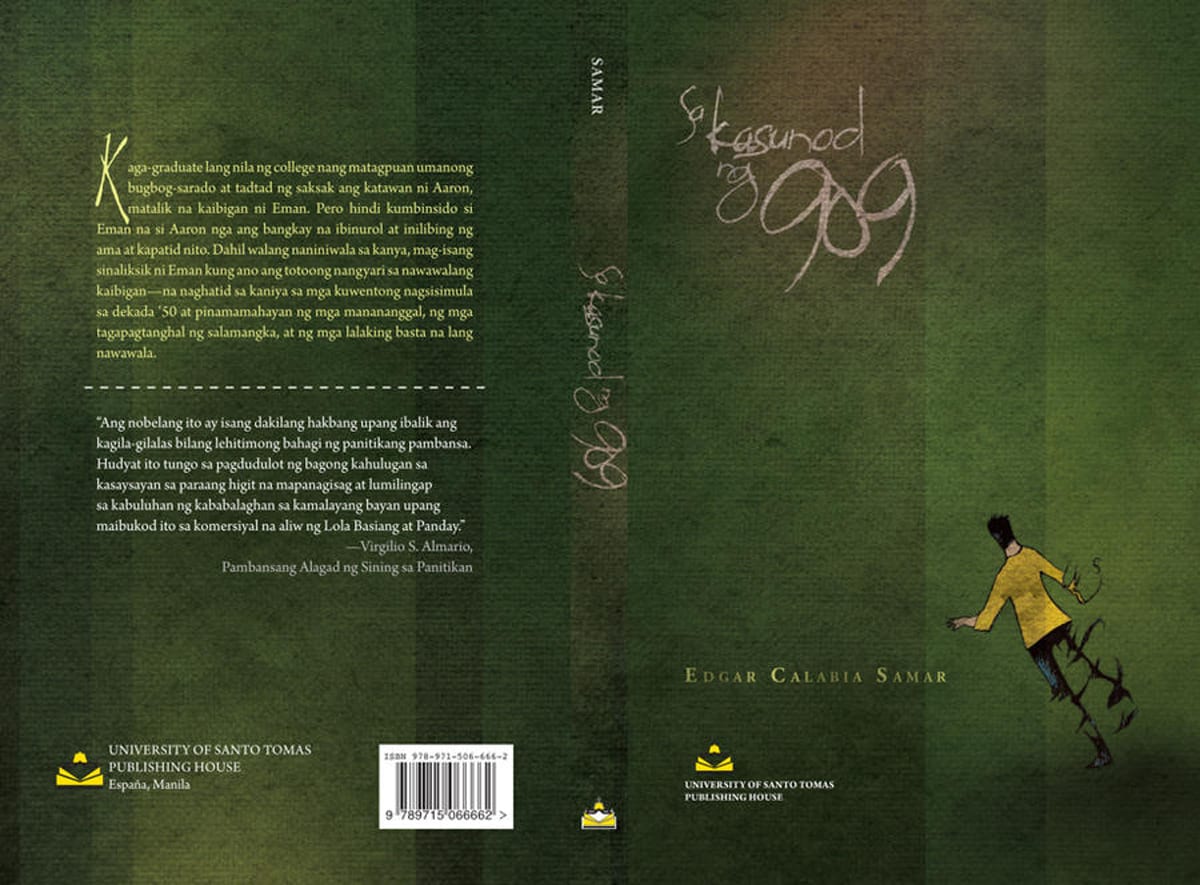
Sa Kasunod ng 909 (UST Publishing House, 2012) PHOTO: UST Publishing House
What I wrote that day was not the opening of the published novel, was not “Kaga-graduate lang namin ng college nang sabihin sa aking patay na si Aaron,” that sentence came much later, after I had written several chapters and discovered what the novel wanted to be, after I understood that the novel needed to begin not with investigation but with rupture, not with the search for the missing marker but with the phone call announcing death, with the moment when the world breaks open and nothing makes sense anymore, and this discovery—that the true beginning reveals itself only after you’ve begun, only after you’ve accumulated enough pages to understand what you’re making—is what beginning writers most need to understand: you cannot wait for the perfect first sentence before you begin because the perfect first sentence can only be written after you understand what it’s the beginning of, can only be found by writing other sentences first, by entering the material through whatever door is available, by beginning with whatever you can write rather than waiting to be able to write the ideal beginning, because the ideal beginning does not exist in advance of writing, exists only as discovery, only as recognition that arrives after you’ve lived with the material long enough to understand what it needs, and if you wait for this recognition before beginning you will wait forever because recognition only arrives through the work of writing, through the patient accumulation of pages, through the gradual discovery of patterns you didn’t plan and connections you didn’t anticipate.
When I think about the five years between Aaron’s supposed death in 2004 and when I finally began writing Sa Kasunod ng 909 as my dissertation in 2009, I recognize now that those years were both necessary and avoidant, were both the dream work that had to happen before I could write and the postponement that prevents writing, were both the accumulation of material and the fear that makes accumulation easier than transformation, that makes dreaming safer than writing, that allows you to preserve the perfect novel in imagination rather than risk the imperfect novel on pages. Those five years contained the obsession with the number 909 that I could not explain, the number that appeared in Aaron’s text messages and then in a photoblog he may or may not have created, the number that seemed to organize everything and nothing, that promised pattern where there might be only randomness, and I spent months trying to understand what 909 meant, what it signified, why it haunted me, consulting numerology and Pythagorean mysticism and arbitrary systems of meaning-making, as though understanding the number would unlock the novel, would give me the key I needed to begin, but of course there was no key, no explanation, only the obsession itself which was the material, was what needed to be written about, was the investigation that would become the novel’s structure. Those years also contained the bodies I saw on highways every time I traveled, the way I could not stop looking for the places where people had died, the missing kilometer markers that should have been there but weren’t, the gaps in the map that corresponded to gaps in memory, gaps in knowledge, gaps in the official record, and I understood that Aaron’s death was not singular but part of a pattern of deaths, of disappearances, of people who fell through the cracks of systems designed to protect them, and the novel would have to be not just about Aaron but about all of them, about the structure of abandonment itself, but understanding this made beginning feel impossible because how do you write about a structure that encompasses everything, that explains nothing, that simply repeats across time and space, and so I dreamed and postponed and accumulated more material, more images, more questions, not recognizing that understanding does not precede beginning but emerges from it, that I would need to write my way into comprehension rather than comprehend my way into writing.
ADVERTISEMENT - CONTINUE READING BELOW
"...you cannot wait for the perfect first sentence before you begin because the perfect first sentence can only be written after you understand what it’s the beginning of, can only be found by writing other sentences first..."
What finally forced me to begin was accepting I would never find the courage or clarity I thought I needed, that beginning would always feel premature, would always require more than I possessed, but that the alternative—letting the novel remain forever in the realm of possibility, forever deferred, forever perfect because never attempted—was worse than risking the imperfect novel on pages, and so I chose actuality over possibility, chose to risk failure rather than guarantee never trying, and in that choice I learned what readiness actually means: not the absence of uncertainty but the willingness to work through uncertainty, not the possession of answers but the commitment to seeking answers through writing, not the feeling of confidence but the decision to act despite its absence, and I repeat this formulation—readiness as emergence rather than prerequisite, beginning as practice rather than event—because this realization did not arrive once and stay arrived but had to be discovered again and again, each novel demanding I relearn what I thought I already knew, each beginning requiring I accept anew that I am not ready, will never be ready, must begin anyway, and this repetition is not failure of understanding but the actual structure of the work, is how beginning actually happens for writers, not as singular heroic moment but as repeated humble practice, again and again and again, the same lesson relearned, the same fear re-faced, the same decision to begin despite everything, and perhaps this is why I find myself circling these ideas in this essay, returning to readiness and fear and beginning from different angles, because I am trying to capture not just what I learned but how I learned it, which was through repetition, through the necessity of confronting the same paralyzing questions each time I sit down to write, and so when I repeat myself here I am not being redundant but truthful, not failing to progress but showing you what progress actually looks like in the work of beginning, which is spiral rather than linear, recursive rather than cumulative, always returning to the same essential questions from slightly different positions until you understand that the returning itself is the work.
The chapter I wrote first was “Km 13,” about Eman driving through unmarked roads following wrong directions, searching for a story lead for a newspaper feature he was working on, documenting every landmark meticulously—“gasolinahan, tulay, labî ng nasunog na bahay,” kilometer markers that should be there but aren’t—and I wrote this chapter because this was where I could enter the material, because I needed to find Eman’s voice, needed to understand how he moved through the world, how he documented obsessively even when documentation led nowhere, how he tried to verify stories that might not be true, and the chapter was about being lost, about the gap between map and territory, about the missing Km 13 marker that should be between Km 12 and Km 14 but simply isn’t, about how following directions doesn’t guarantee arrival, about how investigation might be impossible when the markers themselves have disappeared, and I wrote this chapter not because I planned for it to be first but because it was the only chapter I could write at that moment, the only entry point I could find into the vast material I had been dreaming for five years, and in writing it I discovered that I could write about this material at all, that the images and obsessions and questions that had been haunting me could be transformed into actual sentences on actual pages, that the novel existed not just as potential but as actuality, in the specific words I was typing, in the specific rhythms I was discovering, in the specific voice that was emerging sentence by sentence, and this discovery was liberation, was permission to continue, was proof that beginning was possible even when I didn’t feel ready, even when I didn’t know where I was going, even when every instinct told me to wait for better conditions, and the proof was not in the quality of what I wrote that first day—those pages would mostly be deleted later, would be replaced and revised and forgotten—but in the fact that I had written anything at all, had moved from dream into making, had crossed the threshold from imagination into composition, had begun.
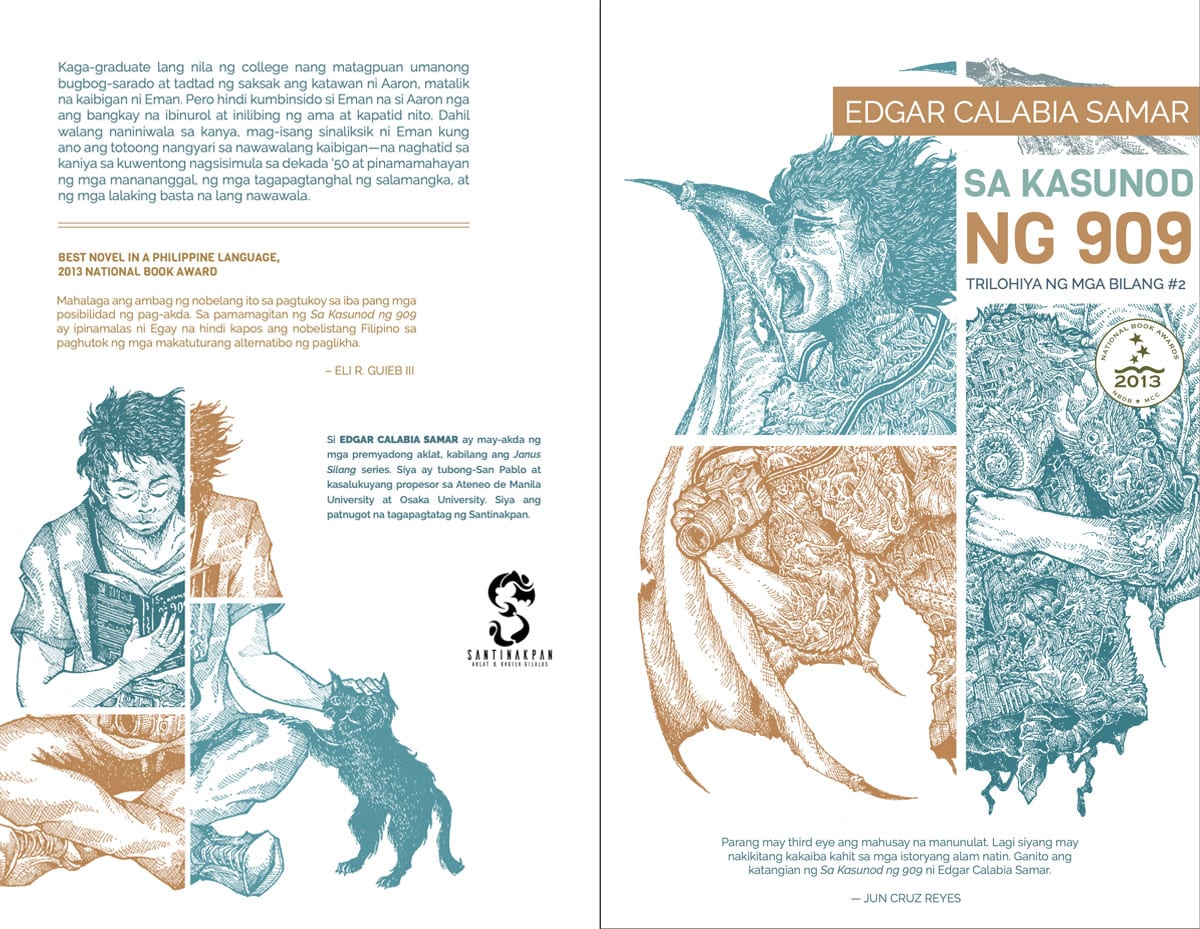
Sa Kasunod ng 909 (Santinakpan, 2020) PHOTO: Santinakpan
But beginning also meant confronting an ethical question I had been avoiding during all those years of dreaming: did I have the right to write about disappearance and death at all, to make fiction from the structural violence that takes young people before they can build the lives they were beginning to imagine, before friendships can deepen into the relationships that sustain us, and while Aaron was not based on any specific person—was a fictional character, invented, composite—the material I was drawing from was real: the desaparecidos, the disappeared, the young people who vanish not through accident or illness but through what seems like deliberate, structural erasure, and I was thinking about what it means to be the friend left behind, to be young and just beginning to build a life together with someone who then disappears, leaving you with questions that cannot be answered, with grief that cannot resolve because there is no body, no certainty, only absence and the terrible knowledge that this absence is not random but produced by systems, by structures of violence that make some lives disposable, and I was thinking, though I did not fully recognize it at the time, about my friend Vincent Jan Rubio, a writer who was killed in 2009, whose death arrived just as I was beginning to write this novel, and looking back now I understand that his death was what unconsciously pushed me to finally sit down and begin, was what made continuing to postpone impossible, was what transformed the abstract question of disappearance into immediate grief, into the recognition that writing about loss is not appropriation but responsibility, is not exploitation but testimony, is how we make visible what systems of violence want to keep invisible, how we insist that the disappeared matter, that the dead are not simply erased, that the friends left behind carry this grief and this rage and this need to understand what happened, and so I wrote knowing I was making fiction but also knowing that fiction about disappearance carries weight, carries the ethical obligation to honor the reality of what disappearance means—the families who grieve, the friends who search, the communities that are told to forget, to move on, to accept that some losses cannot be explained—and I felt this weight with every sentence, felt that I had to write in a way that made visible the structures that produce disappearance rather than simply aestheticizing individual loss, that had to investigate the system rather than merely documenting its effects, that had to rage against the normalized violence of disappearance rather than treating it as inevitable tragedy, and this ethical weight was not something I could resolve before beginning—there was no way to know if I was doing justice to the reality of disappearance, no way to ensure I was not inadvertently reproducing the very structures of erasure I was trying to expose—but I had to begin anyway, had to write through the ethical uncertainty, had to trust that the novel itself would find a way to honor rather than exploit, to remember rather than appropriate, to make visible rather than consume, and I wrote with VJ’s face in my mind, with the faces of all the young people who disappeared, asking myself with every sentence whether this honored their lives or betrayed them, whether this made visible the structures that kill or merely turned death into story, whether this investigation revealed truth or merely imposed narrative convenience, and I could not know the answers to these questions but I had to keep writing anyway, had to trust that the ethical questioning itself was part of the work, that writing with ethical consciousness was different from writing without it, that the novel could hold both the fiction and the ethical weight of what that fiction represents, and this has remained true through all my novels since, this recognition that writing about violence and loss and disappearance—even through invented characters, even through fictional scenarios—carries ethical responsibility, requires that you write with awareness of what you’re doing, with consciousness of power and representation, with humility about the limits of your knowledge and the partiality of your perspective, and that this responsibility does not paralyze you but guides you, does not prevent beginning but shapes how you begin, does not make fiction impossible but makes it ethically grounded, makes it answerable to the communities who live this violence, makes it responsive to the political realities you’re trying to expose, makes it accountable to the commitment to make visible what systems want to keep hidden, and so I wrote Sa Kasunod ng 909 knowing I was writing fiction but also knowing the novel had to be larger than fiction, had to be about structures that exceed any individual character, had to be investigation not just into one invented disappearance but into the system that produces disappearance, and this larger purpose gave me permission to begin despite not being able to resolve the ethical questions completely, gave me a framework for writing that honored both the particular invented character and the structural analysis, both the grief of fictional loss and the rage at actual systemic violence, both the story I was telling and the reality that story was trying to make visible.
But as I accumulated more chapters, as I wrote other sections and began to see the shape of what I was making, I realized that “Km 13” belonged later in the structure, that the novel needed to start not with the search but with the rupture, with Jan’s voice on the phone saying Aaron’s body had been found on Maharlika Highway at the edge of Tiaong, and so I wrote the chapter titled “22,” wrote “Kaga-graduate lang namin ng college nang sabihin sa aking patay na si Aaron,” and made it the opening chapter of the published novel, and this decision changed everything, changed the entire contract with the reader, changed what the novel was promising, because beginning with death meant beginning with loss, with grief, with the impossibility of recovering what has been lost, with the investigation as attempt to make sense of senselessness, and it established immediately why the search matters, why Eman needs to investigate, why the missing Km 13 marker will resonate with all the other absences and erasures in the novel.
"...writing about loss is not appropriation but responsibility, is not exploitation but testimony, is how we make visible what systems of violence want to keep invisible, how we insist that the disappeared matter, that the dead are not simply erased, that the friends left behind carry this grief and this rage and this need to understand what happened..."
And beginning in Filipino was itself a beginning, was itself a crossing of a threshold, was itself a decision that shaped everything that followed, because when I write “Kaga-graduate lang namin ng college nang sabihin sa aking patay na si Aaron,” I am writing in the language that is most immediate to me, the language my consciousness actually moves in, and what might appear to be code-switching between Tagalog and English—“kaga-graduate,” “college,” “sabihin sa akin,” “patay na”—is not switching at all but the seamless operation of Filipino itself, the third language that emerged from a mind shaped by multiple linguistic encounters, and this language’s power lies not in purity but in its capacity to hold fracture and contradiction as its natural state, to move between registers without marking the movement as transition, to contain the casualness and the devastation in a single sentence, to hold the way death arrives in ordinary moments, interrupting graduation, interrupting the transition to adulthood, arriving through a phone call that uses informal language—“patay na si Aaron,” not “pumanaw na si Aaron,” not the formal euphemistic construction but the colloquial one that carries the shock of sudden knowledge—and this fluidity, this refusal of boundaries between high and low, formal and informal, literary and vernacular, Tagalog and English, is not compromise but completeness, is not confusion but the actual texture of Filipino consciousness, is the language that mirrors how we think, how we feel, how we experience the world not as discrete categories but as simultaneous contradictions, and I needed this simultaneity because the novel was attempting to hold together so many different kinds of knowledge: Aaron’s stories about aswang and prostitutes, the investigation into his death, the number 909 and its obsessive recurrence, the photoblog that may or may not have been his, the missing markers on highways, the bodies that fall through the cracks of official records, the way grief and obsession become indistinguishable, the way investigation and invention blur into each other, and Filipino was my most immediate language precisely because it could move between documentary precision and lyrical meditation, between vernacular directness and literary complexity, between the language of the street and the language of philosophy, without marking these movements as departures from some imagined center, because Filipino has no pure center to depart from, is itself the space where all these registers meet and interpenetrate, where Tagalog syntax holds English words holds Spanish grammar holds Chinese inflections holds Arabic vocabularies, all of it simultaneously Filipino, all of it the natural inheritance of a consciousness shaped by archipelagic history, by colonial encounters that were also refusals, by the daily practice of living in multiple worlds at once, and so beginning in Filipino was not choosing one language over another but choosing the language that already contains multitudes, choosing to write from the actual complexity of Filipino experience rather than translating that experience into a language that would require me to explain what needs no explanation, to mark as unusual what is ordinary, to frame as hybrid what is simply how we speak, how we think, how we make sense of the world, and this is what I mean when I say beginning is never merely technical but always already political, is never just about finding the first sentence but about finding the language that sentence must be written in, about recognizing that the language you actually think in, the language that holds your contradictions without requiring you to resolve them, is already the language of literature, is already capable of investigation—philosophical investigation, literary investigation, detective investigation—and that claiming this language, writing in it without apology, without translation, without explaining its movements, is itself a refusal of the colonial fiction that some languages are more suitable for serious thought than others, is itself an insistence on beginning from where you actually are rather than from where you were taught you should be, and the irony that I am writing this essay in English is not lost on me, but I write this in my English, in this convolution that is my way of saying this is mine and also not mine but I am trying to find my way here, in these sentences that accumulate and circle and refuse the clean efficiency that English grammar prefers, in this syntax that carries the recursive movement of Filipino thought even as it uses English words, because even here, even in this borrowed language, I can make it hold what I need it to hold, can make it move the way I need it to move, can insist that this too is a beginning, this claiming of English on my terms rather than on the terms I was taught.
Yet even with this linguistic grounding, even with the decision about language made, I was not alone in my fear of the second novel, and I knew it even then, knew it from reading about other second novels, from the statistic that haunted me—that only 43 percent of debut novelists publish a second book within eight years—from thinking about writers whose second novels never came or came only after decades of silence: J.D. Salinger published The Catcher in the Rye in 1951 and then nothing, only stories and novellas and then silence; Harper Lee published To Kill a Mockingbird in 1960 and then nothing, decades of silence that seemed permanent, that seemed like a decision rather than a delay; Arundhati Roy published The God of Small Things in 1997 and by 2009 when I was writing Sa Kasunod ng 909 had turned to nonfiction and political essays, had declared in interviews that she might never write another novel, that fiction no longer felt adequate to the urgencies of the present, and these examples terrified me not because they were failures—these were among the most celebrated novels of their times—but because they suggested that beginning again after succeeding once might be harder than beginning when you have nothing to lose, that the pressure of the second novel can paralyze you into silence, can make the safe space of having-written more comfortable than the dangerous space of writing-again, can convince you to preserve your reputation by producing nothing rather than risk the little reputation you have by producing something that might fail, and I had no way of knowing in 2009 that Roy would eventually return to fiction with The Ministry of Utmost Happiness in 2017, or that Lee’s Go Set a Watchman would appear in 2015 under circumstances that remain contested, and so these writers stood for me as cautionary figures, as evidence that the second novel might never come, that silence after success might be permanent, and I did not want this, did not want to be a writer who wrote one novel and stopped, did not want the dream of being a novelist to end with a single book, and so I forced myself to begin even though beginning felt impossible, and fortunately there were Filipino novelists who had overcome this paralysis, who had written second novels despite the curse, and their examples sustained me even as they intimidated me: Jun Cruz Reyes, who would become my dissertation adviser, had published Tutubi, Tutubi... ’Wag Kang Magpahuli sa Mamang Salbahe in 1979 and then Etsa-puwera in 2000, more than two decades later, though this was not silence but a different kind of work—he had written criticism, mentored beginning writers like me, sustained the literary community through teaching and advocacy, proving that the gap between novels need not mean abandoning the work of literature; Gina Apostol published Bibliolepsy in 1997 and then The Revolution According to Raymundo Mata in 2009, the same year I was writing my dissertation novel; Luna Sicat-Cleto’s Makinilyang Altar came out in 2002 and Mga Prodigal in 2010, also shaped as a dissertation like mine, showing me that the university could be not just site of criticism but site of creation, that academic requirements need not constrain fiction but could provide the structure and deadline that makes completion possible, but there was also another model, another way of being a novelist that did not involve these long gaps between books, and that was the model of writers like Efren R. Abueg and Edgardo M. Reyes, who wrote novel after novel serialized in Liwayway magazine, who understood novel-writing not as occasional monumental achievement but as sustained practice, as work that continues year after year, decade after decade, and Abueg had been writing in Liwayway since the 1970s and continues even now in 2025 when I too have had my novels serialized in the magazine, and Reyes’s Laro sa Baga was the first Filipino novel I read in the 1980s when I was probably too young to understand what it was trying to do, but it taught me that novels could be vernacular, could be serialized, could be part of the texture of everyday reading rather than isolated literary events, and these two models—the novelist who waits years between books, and the novelist who writes continuously—both haunted me as I tried to begin my second novel, both seemed impossible in different ways, and writing this essay now in 2025, I recognize patterns I could not see then: that these Filipino novelists I admired had navigated their own relationships to the second novel, some waiting decades, others moving more quickly, but all of them proving that the second novel was possible, that the work of literature continues even when you’re not writing novels, that mentoring and teaching and criticism are themselves forms of literary practice that sustain you and others through the difficult years between books, and this recognition—that the dissertation requirement could force me to begin because it gave me no choice, because I had to produce a novel not someday but by a specific date, because the university demanded pages not promises—was what finally made beginning possible, was what transformed the abstract desire to write a second novel into the concrete requirement that I produce one, and while I sometimes resented this external pressure, felt that it contaminated the purity of literary ambition with institutional obligation, I came to understand that purity of ambition often prevents beginning, that waiting for the ideal conditions—no deadline, no requirements, no obligations except to art—means waiting forever, means never beginning because beginning always involves compromise, always involves less-than-ideal conditions, always requires that you write not when you’re ready but when circumstances force you to be ready, and the dissertation deadline was the circumstance that forced me, was the pressure that made beginning impossible to postpone further, and I am grateful now for that pressure, grateful that I did not have the luxury of waiting until I felt ready, grateful that I had to begin ready or not because ready never came and if I had waited for it I would still be waiting.
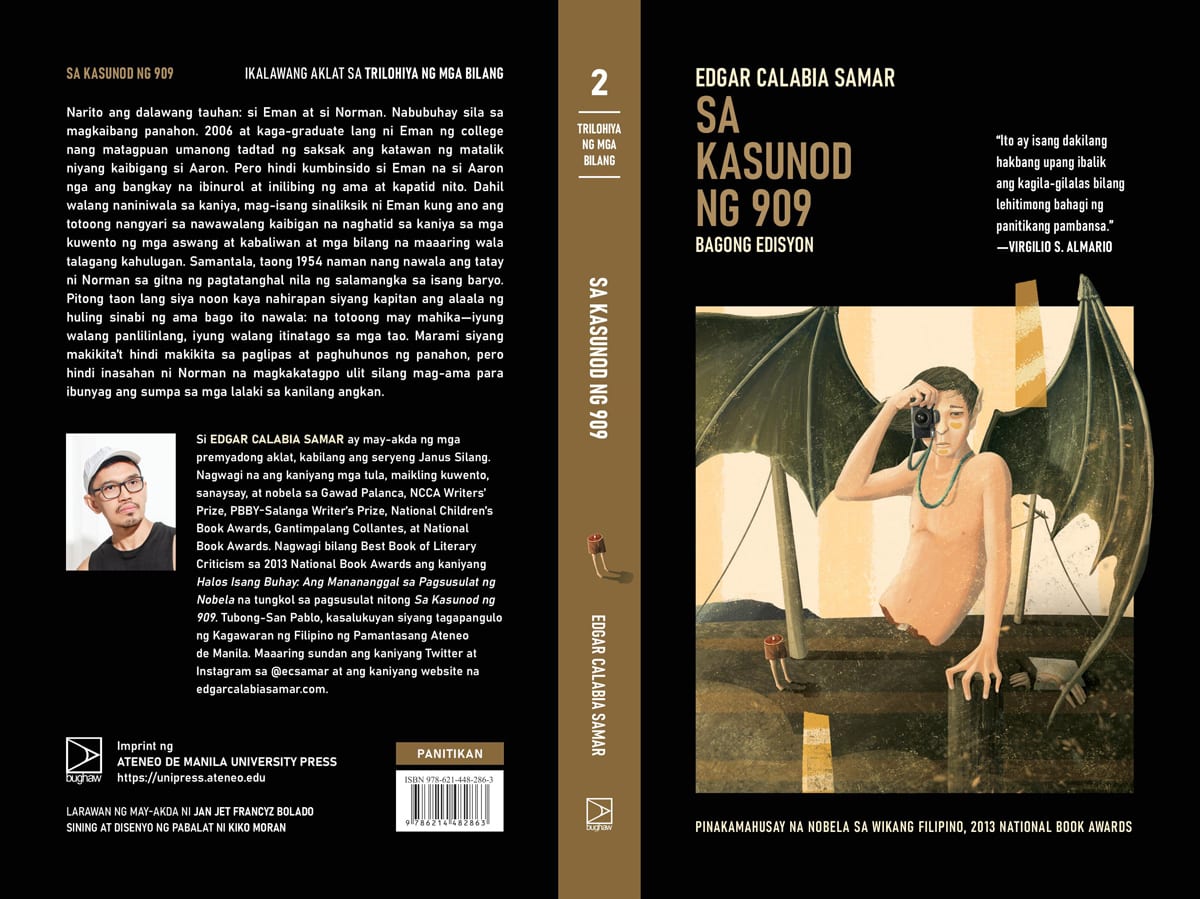
Sa Kasunod ng 909 (Ateneo Press, 2023) PHOTO: Ateneo Press
The physical work of beginning mattered too, mattered in ways I did not fully understand until years later when I looked back at the notebooks where I first wrote Sa Kasunod ng 909 in longhand, page after page of sentences in ballpoint pen, paragraphs crossed out and rewritten in margins, arrows indicating where sections should move, the tactile experience of paper and pen that preceded the typing on the computer, and I needed this physical engagement with the material, needed the slowness of handwriting that made every sentence feel consequential, needed the visible record of revision that notebooks preserve—the crossed-out lines, the alternative phrasings written above the original ones, the evidence of thinking and rethinking that happens when you write by hand rather than by keyboard where deletion erases all trace of what came before—and when I finally typed these handwritten pages into Pages I found myself paying attention not just to what I was typing but to how it looked on the screen, to the visual arrangement of paragraphs, to the white space between sections, to the way line breaks created rhythm and emphasis, and I became obsessive about this, began formatting the document with different fonts to represent different kinds of text—Adobe Garamond Pro for Eman’s investigation, Arial Narrow for Aaron’s stories, Bodoni MT Black for the sections about the past, Calibri for contemporary moments, Centaur for lyrical passages, Monotype Corsiva for handwritten notes, Stencil for newspaper clippings, Times New Roman for the dissertation’s required sections—eight different fonts that would not all appear in the published book but that mattered during composition because they helped me track different registers, different temporalities, different textualities, helped me see the novel not just as linear narrative but as assemblage of different kinds of writing, different ways of knowing, different attempts to make sense of what cannot be made sense of, and this attention to visual form was not separate from the work of composition but essential to it, was part of how I understood what I was making, was part of how the novel became itself, and while some might see this as excessive attention to surface, as distraction from the real work of writing, I understood it as the opposite, understood that form is never merely decorative but is always meaningful, always political, always part of what the work is saying, and that paying attention to how writing looks on the page, how it occupies space, how it creates rhythm through visual arrangement, is part of the writer’s responsibility, part of the work of making novels that don’t just tell stories but create experiences, that don’t just communicate information but construct worlds, that invite readers not just to follow plot but to inhabit consciousness, to experience the material as the protagonist experiences it, fragmented and obsessive and searching and never quite able to find what it’s looking for.
But what I also learned from writing Sa Kasunod ng 909—what revealed itself only after the novel was complete, only after I could see the whole architecture and understand what I had made—is that beginning is not singular but multiple, that a novel does not have one beginning but many beginnings, that the work of beginning happens not just when you write the first sentence but repeatedly throughout the composition, and that Sa Kasunod ng 909 became, without my planning it, a novel about beginning, a novel that contains within itself numerous attempts at beginning, numerous stories that start and stop and start again, numerous investigations into what it means to begin at all. Consider the komiks novel “Elvira Luna” that appears throughout the novel, serialized in Hiwaga Klasiks for over 200 issues across three years, written and illustrated by Rodrigo San Juan, about a manananggal who falls in love with a Japanese soldier during the Occupation and is cursed by her aswang family, and this komiks—which Norman and his cousin Miguel follow obsessively, which becomes a film starring Estrella Vida, which structures how they imagine the supernatural, which teaches them what it means to love across impossible boundaries—is itself a beginning that never completes, is a story that runs for years without resolution, is an attempt to make sense of collaboration and betrayal during wartime, of loving the enemy, of transformation that makes you unrecognizable to your own family, and when I wrote these sections I was not consciously thinking about beginning, was simply following the historical material, following Norman’s obsession with the komiks, but now I recognize that “Elvira Luna” functions in the novel as a meditation on serial narrative, on stories that continue issue after issue without knowing where they’re going, on beginning that extends across years, on the relationship between dreaming a story (Norman imagines Estrella Vida, dreams her face before he ever sees it) and encountering the story in reality (he follows a woman who looks like someone from his dream and witnesses her transformation into manananggal), and this embedded narrative about beginning—about starting to tell a story that might never end, about following a story across years, about the gap between serialization and completion—was the novel teaching me what I needed to understand about my own beginning, was the material showing me that I was writing about the impossibility of beginning perfectly, about the necessity of beginning anyway, about stories that start in uncertainty and continue in uncertainty and might never achieve the closure that conventional narrative promises.
"...Sa Kasunod ng 909 became, without my planning it, a novel about beginning, a novel that contains within itself numerous attempts at beginning, numerous stories that start and stop and start again, numerous investigations into what it means to begin at all..."
And there are other beginnings embedded in the novel, other texts-within-the-text that function as attempts to start telling stories: Miguel reads not just “Elvira Luna” but also “Lucindo” (about twins Lucy and Indoy, children of the fallen angel Lucifer), “Ang Tatlumpung Mukha ni Gregorio Santos” (about a man who can change his form to solve others’ problems), “Gamitan ng Puso” (about a woman who receives a heart transplant from a man and finds herself loving her ex-boyfriend’s sister), and each of these komiks represents different ways of beginning narrative, different entry points into the world of the supernatural, different investigations into transformation and identity and desire, and the fact that the novel mentions all these parallel narratives, all these simultaneous beginnings, suggests that beginning is never singular but always multiple, that every story contains within it other stories, other possible beginnings, other ways the narrative might have unfolded. And there is also the first issue of “Labindalawang Anak ng Aswang,” described as the first issue of a serial novel that was never continued, and this abandoned beginning—this story that started but could not continue, that promised a series but delivered only a single episode—haunted me as I wrote Sa Kasunod ng 909, haunted me because I feared this would be my own fate, that I would begin this second novel but not be able to continue it.
And then there is the section called “Bull in a China Shop,” set in some dystopian future where people have lost the capacity for metaphor, where everything is literal, where a couple named Shao Feng and Magdalena argue about the meaning of idioms while their son Wuqijin dies of sadness and lies in the kitchen for a week because no one can bring themselves to dispose of the body, and this section—which seems to belong to a completely different novel, which operates in a different register, which uses a different temporal frame—is itself a beginning that goes nowhere, is a story that appears once and then disappears, is an attempt to imagine what comes after the present investigation, after Aaron’s death, after all the searching and all the attempts to verify stories, and the story operates on multiple levels: it is my homage to and critique of Elpidio P. Kapulong and Alejandro G. Abadilla’s Pagkamulat ni Magdalena, one of the early Filipino futuristic novels, if not the earliest, in which the Philippines is occupied and controlled by the Chinese, and the name Magdalena connects these two texts across time, across visions of what the future might hold, and the Chinese element in “Bull in a China Shop” echoes this earlier novel’s anxieties about Chinese control while also complicating them through Shao Feng’s character; the title plays with the English idiom “bull in a china shop” meaning clumsy destruction, but also plays with “china” as object (the delicate wares that break), as nation (China as place, as geopolitical presence), as adjective (Chinese as identity, as Shao Feng’s heritage), and it was also the title of a song I was listening to at the time (by Barenaked Ladies that came out in 2010, when I was in the middle of writing the novel), one of those songs that lodge in your consciousness and demand to become part of the material you’re working with, and when I wrote this section I did not know why I was writing it, did not know how it connected to the rest of the novel, wrote it because the characters Shao Feng and Magdalena appeared in my imagination and demanded to be written, and only later did I understand that this section was the novel’s attempt to imagine its own future, to imagine what happens after the investigation ends, after the search concludes, after all the stories have been told, and that this future is a world where metaphor has died, where literal and figurative can no longer blur, where the interpretive freedom that makes narrative possible has been outlawed, and so “Bull in a China Shop” functions as a warning, as a vision of what we lose when we demand that everything be verifiable, when we insist that stories must be literally true rather than imaginatively true, when we forget that fiction’s power comes precisely from its refusal of literal correspondence, from its insistence that stories can be true in ways that facts cannot be true.
But the novel’s structure itself—its alternating chapters between Eman’s investigation in the present and the historical narrative of Norman and his family from the 1950s onward—represents two different beginnings that somehow must meet, two different ways of entering the material, two different starting points that eventually converge. The chapter “22” begins with Aaron’s death in 2004, with the phone call that announces the end, and from this ending Eman’s investigation begins, his attempt to verify Aaron’s stories, to find evidence that Aaron is still alive, to document the missing markers and the bodies on highways, to make sense of senselessness, and this is one beginning, the beginning of detective narrative, the beginning of investigation as obsession, the beginning of the search that might never conclude. But then the chapter “Ang Pagkawala ni Antonio, 1954” begins fifty years earlier, with Norman’s father Antonio disappearing during a magic show in a remote barrio, with the rupture that sets everything else in motion, with the original loss that all subsequent losses echo, and this is another beginning, the beginning of family history, the beginning of the cycle of disappearances and transformations, the beginning of the question that the novel will never fully answer: what happened to Antonio, where did he go, and why do people keep disappearing? These two beginnings—one in 2004, one in 1954—run parallel through the novel, alternating chapter by chapter, each one investigating different kinds of loss, each one following different characters through different historical moments, and they do not merge until the very end, until the final chapters when Eman discovers that the stories Aaron told him were connected to Norman’s stories, that the photoblog “Sa Kasunod ng 909” contains images from Aaron’s camera but also images that could only have come from Norman’s time, that past and present are not separate but interpenetrate, that beginning in 2004 was also beginning in 1954, that every investigation into the present is also an investigation into the past, and this discovery—that the two beginnings were always the same beginning, that the novel had been telling one story all along even though it seemed to be telling two stories—was not something I planned but something the novel taught me, was the structure revealing itself through the act of writing, was beginning showing me that it is always multiple and always singular simultaneously, always both divergent and convergent, always starting in many places and arriving at one place, or perhaps never arriving, perhaps continuing to circle, continuing to search, continuing to begin again and again without ever reaching the ending that would make all the beginnings make sense.
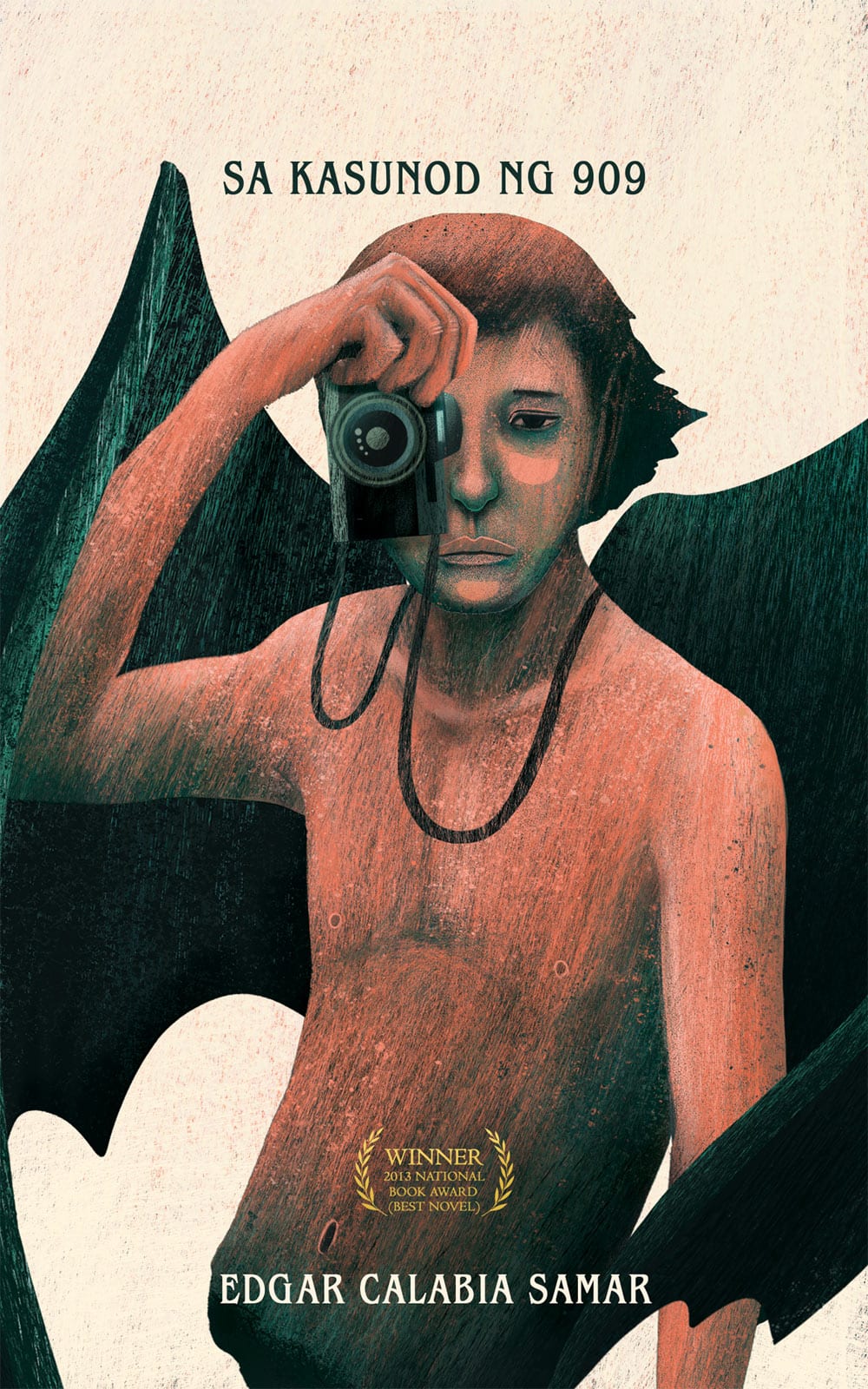
The latest edition of 'Sa Kasunod ng 909' by Ateneo University Press (2025), with cover design by Kiko Moran.
Ateneo Press
In the end, there is Teresa, who appears in Sa Kasunod ng 909 as the woman Eman meets and becomes involved with, the woman who works as a masseuse, whose photograph appears on a blog alongside Aaron’s comments, who might be the same Teresa who appears in Walong Diwata ng Pagkahulog as the woman who loves Daniel, who understands that she has lost parts of her soul, who tells Daniel that he will soon discover where the missing parts of his soul have gone, and whether these two Teresas are the same woman or different women with the same name I genuinely do not know, did not decide, left open because the question itself matters more than the answer, but what I recognize now is that Teresa’s appearance across both novels—this figure who moves between texts, who exists in both the first novel and the second novel, who seems to understand something about loss and searching that the protagonists do not yet understand—represents a different kind of beginning, represents the beginning that comes from repetition, from recurrence, from dreaming the same figure twice and discovering in the second dreaming something you did not see in the first dreaming. When Teresa appeared in Walong Diwata ng Pagkahulog I did not consciously think of her as someone who would return, did not plan for her to reappear in the next novel, but when I began writing Sa Kasunod ng 909 and needed a character who could help Eman understand that his investigation was also a form of being lost, that his documentation was also a form of obsession, that his search for Aaron was also a search for himself, Teresa appeared again, announced herself, insisted on being written, and in writing her the second time I understood something I had not understood the first time, which is that she represents the possibility of beginning again after loss, the possibility of encountering someone new who might help you understand what you lost, the possibility that love—even temporary love, even love that lasts only for six meetings or seven meetings before someone disappears—can still matter, can still change you, can still teach you something about what it means to be human in a world organized around abandonment, and so Teresa became, without my planning it, the figure who connects the two novels, who suggests that every ending contains a beginning, that every loss creates the possibility of new encounter, that dreaming the same figure twice allows you to see what you could not see the first time, and that beginning a second novel means returning to the figures you dreamed in the first novel and discovering they have more to teach you, have dimensions you did not explore the first time, have lives that extend beyond the boundaries of any single book, and this recognition—that the first novel had only begun to dream her, and that the second novel could begin by returning to her, by dreaming her more fully, by allowing her to become more complicated, more mysterious, more present—meant understanding that beginning the second novel also meant returning to the first novel’s dream work, meant recognizing that the dreaming never stops, that every novel opens possibilities that subsequent novels can explore, that your work as a novelist is not to write discrete separate books but to write one continuous investigation that manifests across many books, many beginnings, many attempts to understand the material that haunts you, and so I say to you now what I wish someone had said to me: begin, just begin, begin now, begin imperfectly, begin uncertainly, begin anyway, and in beginning you will discover that you always had what you needed to begin, that readiness was never the point, that beginning itself is what makes the novel possible, and the novel is what makes everything else possible, everything else that matters, everything else that we’re here to do.
Edgar Calabia Samar is Associate Professor and Chair of the Department of Filipino at Ateneo de Manila University. He is the author of the award-winning Janus Silang series and has received multiple Palanca Awards, National Book Awards, and the S.E.A. Write Award from the Royal Family of Thailand (2024). He served as Visiting Professor at Osaka University (2017-2022) and Writer in Residence at the University of Iowa (2010). He is Vice Head of the National Committee on Literary Arts of the National Commission for Culture and the Arts and a member of the Filipino Critics Circle, LIRA, and Filipinas Institute of Translation. Ateneo Press is also releasing a new edition of his novel Sa Kasunod ng 909 this year.
We use cookies to ensure you get the best experience on Esquiremag.ph. By continued use, you agree to our privacy policy and accept our use of such cookies. Find out more here.