
What Can Poetry Teach Us about Natural Disasters?

In Davaoeño writer and historian Macario Tiu’s Binisaya poem “Bago Aplaya,” the persona watches a group of fisherfolk celebrate as a priest blesses their new motorboat. The persona shares in their joy until the poem takes a somber turn:
Apan hinay ang tapya sa balod
Ug nagsugod na ang taob.
Ug sama sa karaang magbabalak,
Akong nabati ang walay kataposang kasubo
Nga dala sa balod.
(But the waves break softly
And the high tide has begun.
And like the poet of old,
I feel the endless sorrow
Carried by the waves.)
The “poet of old” alluded to, of course, is Matthew Arnold, the English poet who wrote “Dover Beach” in 1851 while on his honeymoon with his wife, Frances Lucy, in the seaside town of Dover. In that poem, the “eternal note of sadness” drifts toward the shore, and Tiu’s verse echoes it a century and a half later in the “endless sorrow / Carried by the waves” along the coast of Bago Aplaya, Davao.
In both poems, the sea becomes a vast entity that reflects the turbulence of its time. For Arnold, the advancing tide evokes the slow withdrawal of faith and certainty in an industrial age, where progress has begun to sound like machinery grinding against the soul. For Tiu, the incoming tide signals something else: the swelling pressure of change in a fishing community learning the lesson of modernity, that every arrival already carries a leaving.
That tide, in both spiritual and literal senses, continues to rise. Both “Bago Aplaya” and “Dover Beach” depict a world where nature is imperiled not so much by progress itself as by our failure to see the environmental and existential costs of our relentless pursuit of it.
ALSO READ:
'Let Men Die to Make Us Rich': How Mark Twain Used Poetry to Oppose the Philippine-American War
To Novel the Dream Is to World the Write: Twenty Years After Writing Walong Diwata ng Pagkahulog
Why it’s so much worse now
Compared to Arnold’s time, the damage now feels irreversible. Data from the National Oceanic and Atmospheric Administration reveals that Earth’s surface has warmed by about 0.06 °C per decade since 1850, and more than three times that rate—0.20 °C per decade—since 1975. The trend shows no sign of slowing: the ten warmest years on record have all occurred between 2015 and 2024. In fact, 2024 has been confirmed as the warmest year since global records began.
If Arnold had written “Dover Beach” in 2024, he would have been far more distraught. If he had somehow written it in 2050, he might not have written it at all: by then, Dover itself could be underwater. (Ironically, a beach of the same name in Barbados—one of the nations most vulnerable to rising sea levels—could face the same fate.)
Now, in 2025, Arnold’s warnings echo louder than ever. The fears he articulated in 1851 have become our daily reality. Just this November, Typhoon Tino tore through the central Philippines, battering Cebu and nearby provinces with fierce winds that flooded towns and displaced over 400,000 people. Before recovery could even begin, meteorologists were already tracking Typhoon Uwan, an even stronger storm that barreled through parts of Visayas and Luzon.
Why poetry isn’t all about beauty
From William Wordsworth and Samuel Taylor Coleridge, who turned to mountains and tempests to glimpse the sublime, to Pablo Neruda, who rendered desire through the lush metaphors of the sea and the body, we’ve long associated poetry with beauty. But this romantic lens obscures something older and darker.
It’s no coincidence that the Epic of Gilgamesh, the world’s earliest surviving poem, begins by invoking the Great Flood, using catastrophe itself as the first measure of time and place. As the poet and critic Jay Parini observes in his introduction to Poems for a Small Planet: Contemporary American Nature Poetry, the natural world is no longer “the rustic retreat of the Wordsworthian poet” but “a pressing political question, a question of survival.”
Parini’s own poem, “Some Effects of Global Warming in Lackawanna County,” embodies that sense of urgency. The opening lines immediately plunge us into the instability of the modern climate. Winter has barely ended, yet the maples are already sweating “out of season.” Animal behavior falters, too: birds arrive “not having checked / the calendars or clocks,” while a bear wakes from hibernation “still groggy.”
Humans suffer from climate change as well, but like kids in “T-shirts run[ning] to school, unaware / that summer is a long way off,” we’ve grown disconnected from the world that sustains us. We enjoy the brief warmth without realizing what it signals. We fail to hear, as Parini writes, the roots and tubers “sobbing” underground.
The poem ends on a haunting image: the persona’s heart “leaps high” like a deer escaping danger, only to step on “barely frozen water / as the surface bends and splinters underfoot.” The line captures the precariousness of our condition: how easily what seems solid can give way beneath us. We are all moving on thin ice.
What makes the romantic view of poetry and nature problematic
What all this means is simple but difficult: we must stop treating nature as merely beautiful. The mindset that romanticizes the natural world is the same one that allows us to exploit it. It’s arrogant to build real estate projects atop mountains and call it beautification, as if concrete could improve on what was already whole. That same hubris drives large-scale mining ventures, often forged through collusion between wealthy investors and powerful politicians, that strip forests bare and poison rivers in the name of development.
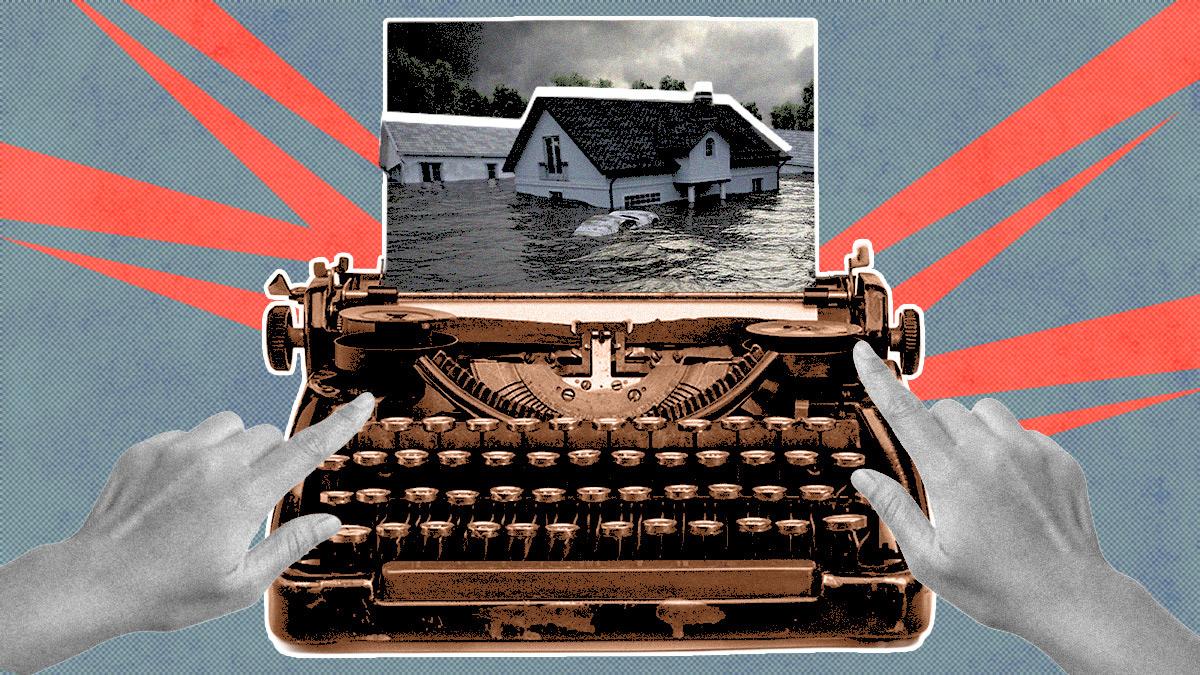
In poetry, as in politics, we have to reconsider how we speak about disaster. Language matters: even the phrase “natural disaster” rings false, almost absurd. After witnessing the devastation left by recent typhoons, it’s clear there’s nothing natural about any of this. The scale of the infrastructural damage and human toll are the direct result of our own infrastructural and human failures. Never forget: from 2023 to 2025 alone, we lost P118.5 billion to ghost flood control projects.
For Filipinos, this also means questioning our instinct to read every storm as proof of “Filipino resilience.” We have to resist the urge to proudly declare we don’t need help, especially from a president we dislike, as a way of mocking those who once demanded accountability from the politicians we support. To romanticize suffering is to accept it. A more progressive vision requires something harder: accountability and the courage to demand change—from our leaders, yes, even from those we chose ourselves.
And perhaps this is what Macario Tiu’s “Bago Aplaya” leaves us with in its ending:
Ugma, mobiya ka na sa hangtod
Samtang hinay ang balod
Ug magsugod na ang taob.
(Tomorrow, you will leave forever
While the waves move softly
And the high tide begins.)
The farewell sounds gentle, yet beneath it lies a warning. The tide is rising, and the world we know is changing, slowly but surely. Unless we learn to listen—to the waves, to the sobbing roots, to the sorrow that still binds us to the earth—we may one day find ourselves swept away, too, by that same turning tide, forever.
