• Man at His Best 2025
  • Long Reads
  • Style
  • Money
  • Wheels
  • Culture
  • Opinion
  • CORNER OFFICE
Search
Menu
Close
Close
  • Man at His Best 2025
  • Long Reads
  • Style
  • Money
  • Wheels
  • Culture
  • Opinion
  • Style
    • Fashion
    • Grooming
    • Watches
  • The Good Life
    • Pursuits
    • What She Wants
    • Mavericks
    • The Directory
    • The Noble Man
  • Culture
    • Food & Drink
    • Arts & Entertainment
    • Lifestyle
    • Tech
    • Movies & TV
    • Music
    • Books & Art
    • Design
  • Wheels
    • Cars
    • Motorcycles
    • Drive
  • Money
    • Industry
    • Wealth
    • Capital
    • Movers
  • Long Reads
    • Notes & Essays
    • ESQ&A
    • What I've Learned
    • Fiction
    • Features
  • Life
    • Sports
    • Health & Fitness
    • Women
    • Sex & Relationships
    • Travel
  • Politics
    • Opinion
    • News
  • COUPONS
  • About Us
  • Terms of Use
  • Privacy Policy

NPC Seal of Registration

Esquire has been granted the NPC Seal of Registration in recognition of the successful registration of its DPO and DPS

© 2026 EsquireMag.ph, All Rights Reserved
Culture

To Novel the Dream Is to World the Write: Twenty Years After Writing Walong Diwata ng Pagkahulog

By Edgar Calabia Samar
Oct 19, 2025

There is a theory of knowledge that says we know a thing by destroying it, that understanding requires dissection, and Daniel, in my first novel Walong Diwata ng Pagkahulog, learns this theory first as a child taking apart his uncle’s gift—a Game & Watch that never works again once he pries it open to see what’s inside—and then formally in Biology class, where he slices open the frog’s belly until blood spurts and intestines spill and he finds himself marveling, despite his nausea, at the elegant design of the internal organs, and this education teaches him that knowledge requires the knife, that to understand any body you must open it, dissect it, reduce it to parts that can be labeled and categorized, and he begins to understand that this same logic extends beyond the laboratory, that this theory of knowledge through possession and destruction is what makes the world as it is, the world where bodies fall and no one catches them, where goddesses are forgotten, and against this theory the novel proposes another way of knowing, proposes that we might understand through sustained attention rather than vivisection, through dreaming rather than dissecting, through building worlds in imagination that demonstrate how different this world could be if we organized it according to other principles, principles that begin not with possession but with care, not with extraction but with reciprocity, not with the individual who stands apart from the world but with the embedded person who knows herself to be continuous with what she observes, and this is why to write a novel—to write it with consciousness of what you are doing—requires first that you learn to dream differently, to dream against everything you have been taught about what is possible, to dream worlds where the diwata are not metaphors but actors in actual history, where falling bodies are caught not by individual heroes but by communities organized around collective responsibility, where the opposition between human and more-than-human dissolves and we recognize that we have never been separate from the rivers and the mountains and the ghosts who watch us, never been other than earth watching earth, water remembering water.

ADVERTISEMENT - CONTINUE READING BELOW

ALSO READ:

How I Wrote It: The Age of Umbrage

Lives Remembered, Histories Regained

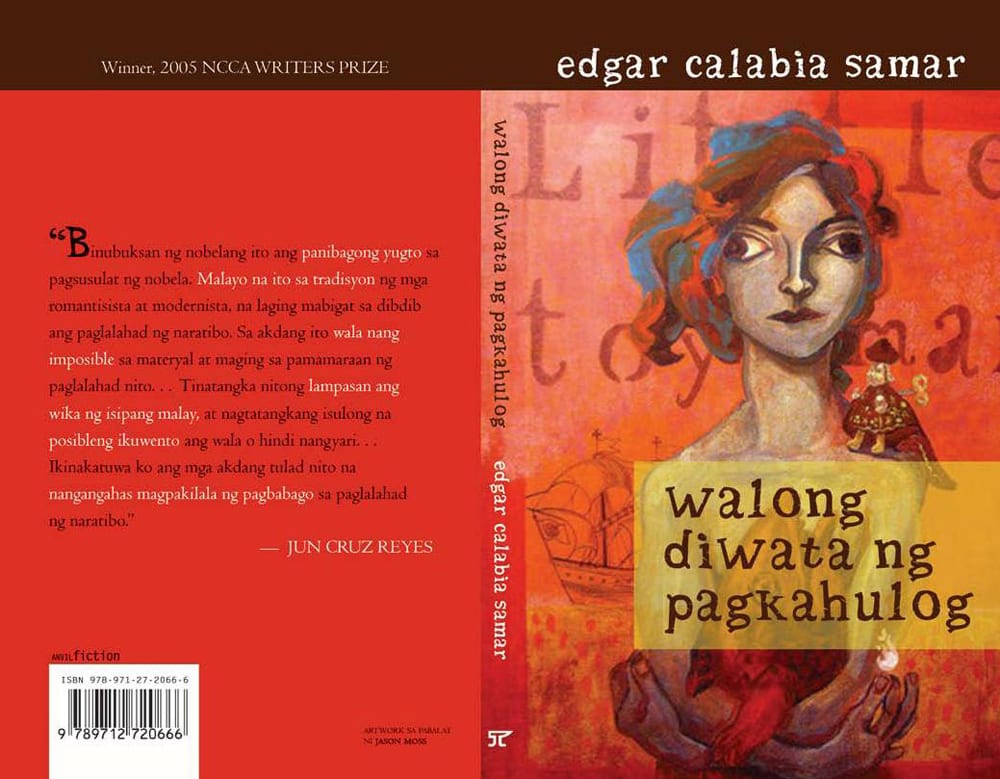
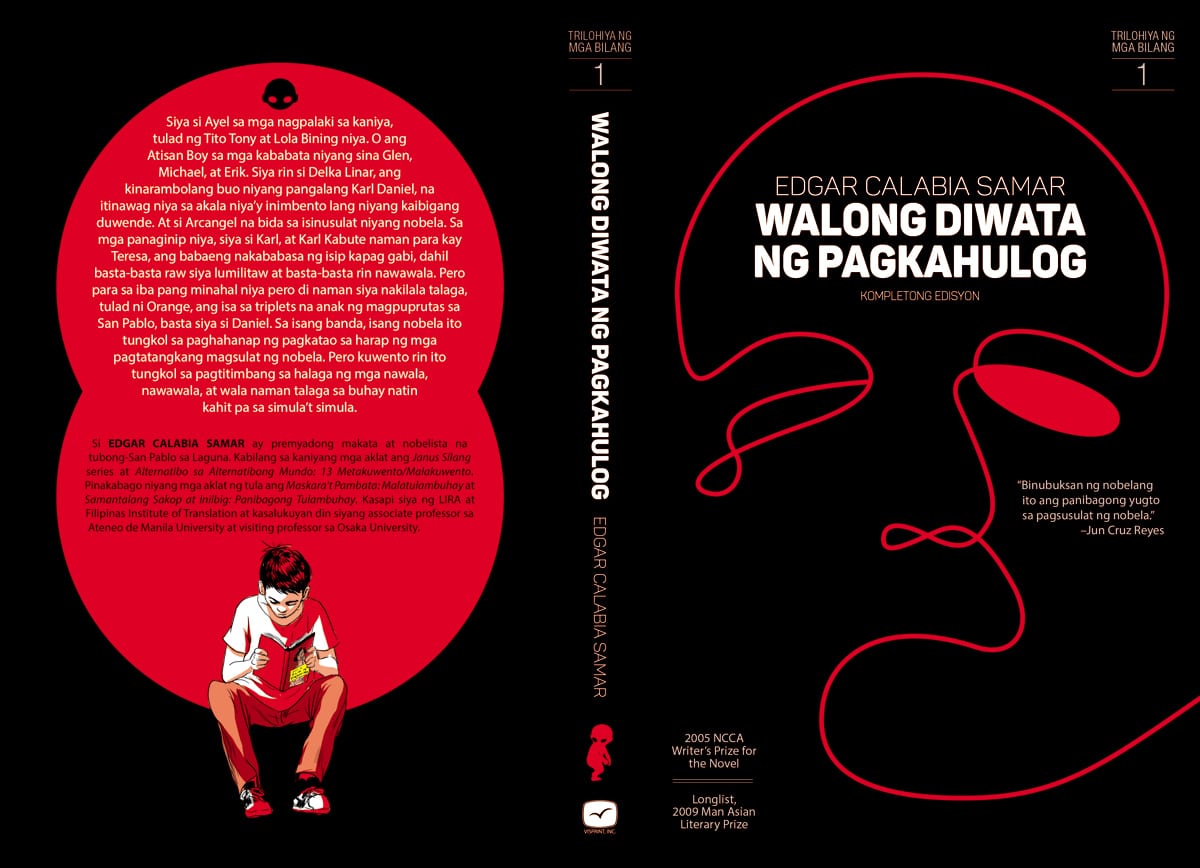
'Walong Diwata ng Pagkahulog' was first published by Anvil in 2009. It has since had four other editions by Visprint in 2016, Santinakpan in 2021, Ateneo in 2023, and another by Ateneo this 2025. 'Eight Muses of the Fall,' an English translation by Mikael de Lara Co and Sasha Martinez, was published by Anvil in 2013.
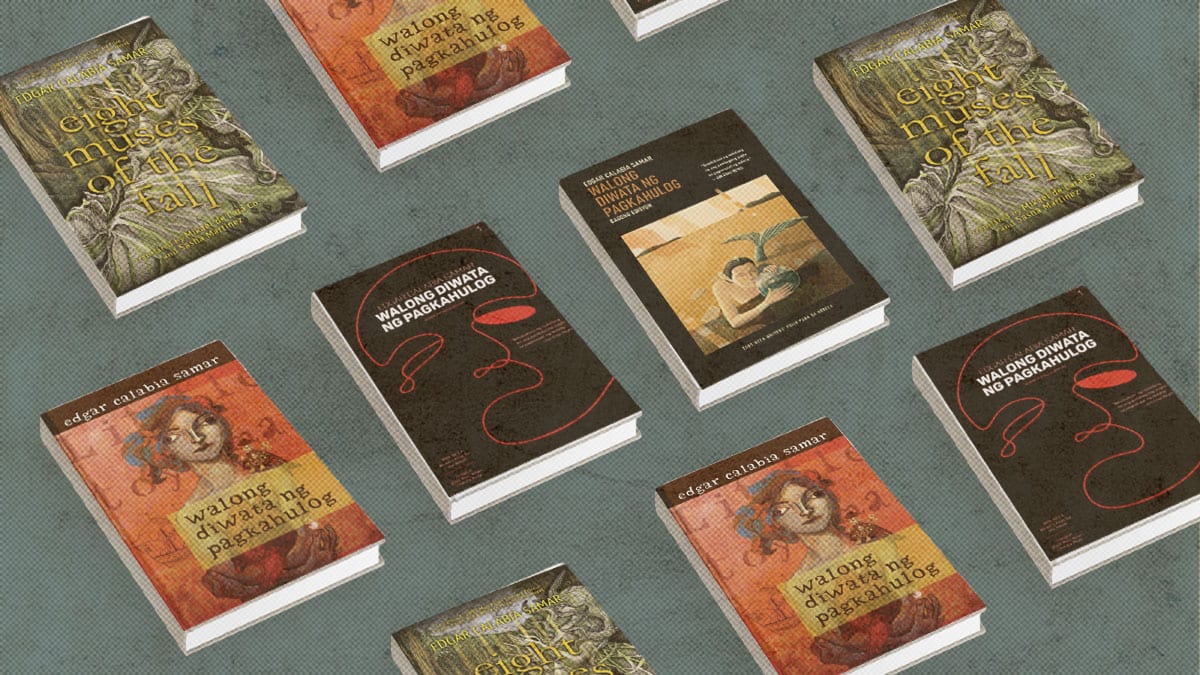
Walong Diwata ng Pagkahulog
Igi Talao
CONTINUE READING BELOW
watch now

When I began dreaming Walong Diwata ng Pagkahulog I did not yet know that I was attempting something that would resist every narrative form I had learned in the university, knew only that the materials of my novel—the people, the goddesses, the barrio that was both real place and imagined deity—refused to fit the realist conventions that wanted me to explain the marvelous, to make the diwata symbolic, to treat Atisan as backdrop rather than agent, and this resistance, which I experienced first as frustration and only later understood as pedagogy, was the novel teaching me that certain materials cannot be contained by certain forms, that if you want to write a Philippines that includes rather than excludes the ways of knowing that colonialism attempted to destroy—the folk knowledge, the mythological understanding, the recognition that places have consciousness and spirits are real—you must find or invent forms that can hold these ways of knowing without translating them into the colonizer’s language, without rendering them legible only by making them symbolic, only by explaining them away. My grandmother believed in the nuno sa punso, believed that you must say “tabi tabi po” when passing certain places or risk offending beings you cannot see, and I was taught to call this superstition, taught that educated people know better, that modernity means abandoning these primitive beliefs, and what I understood only years after completing the novel is that this education was itself colonial violence, was the continuation by other means of the same project that burned our pre-Hispanic texts, that forced our ancestors to forget their gods and worship the Christian God, that insisted our languages were dialects and our knowledge was ignorance, and that the diwata function in my novel as presences that refuse this violence, that insist they are real whether or not they are officially recognized, that demand we develop other ways of attending, other modes of recognition that do not require we destroy what we seek to understand, that do not require we translate consciousness into human terms before we acknowledge it exists.

ADVERTISEMENT - CONTINUE READING BELOW

"...to write a novel—to write it with consciousness of what you are doing—requires first that you learn to dream differently..."

The dreaming of a novel is material practice, not mystical escape, and I want to be precise about this because there exists a romantic tradition that treats dreaming as the opposite of work, as the province of genius or inspiration or the unconscious, and this tradition obscures the actual work that dreaming requires. To dream Walong Diwata ng Pagkahulog I had to read Isabelo de los Reyes’s pioneering folklore studies, Maximo Ramos’s accounts of Philippine lower mythology, and Damiana Eugenio’s systematic collections, had to return physically to San Pablo and walk the dirt roads of Atisan, had to spend years thinking about how language works in Filipino, how the shift from wala to walo carries entire universes in its single-vowel transformation, had to sit with books about indigenous Filipino spirituality and understand how concepts like loob and butas refuse the Western separation of inner and outer, how Filipino grammar embeds relationality in its verb structure, how the language itself resists the autonomous individual that English grammar takes for granted. None of this was inspiration in the mystified sense; all of it was work, was the necessary preparation that allows imagination to operate not as fantasy but as rigorous engagement with materials that resist you, that demand you change your thinking to accommodate them. I spent two years just dreaming before I wrote a single sentence, two years living with Daniel and Teresa and Erik and Glen and Michael and the eight goddesses, two years watching them move through spaces I could see more clearly than I could see the bedroom I shared in a dorm-type apartment in Xavierville, two years listening to voices speak in rhythms I did not yet understand, and people who do not write novels think this sounds like madness or laziness, think that real work means putting words on pages, but anyone who has written knows that writing without sufficient dreaming produces work that feels constructed rather than inhabited, feels like you are describing rather than witnessing, like you are inventing rather than discovering what was already there, waiting for you to notice it.
ADVERTISEMENT - CONTINUE READING BELOW

article big image
Walong Diwata ng Pagkahulog (Anvil, 2009)
PHOTO: Anvil

Consider what it means that the novel’s title transformed from Walang Diyosa ng Pagkahulog (the title when it won the NCCA Writer’s Prize in 2005) to Walong Diwata ng Pagkahulog (published by Anvil in 2009), and consider that this transformation was not decision but discovery, not imposition but recognition, was the novel teaching me through years of dreaming that critique without imagination of alternatives reproduces the hopelessness it attempts to challenge. The first title named the problem, made explicit the theological-political arrangement that leaves bodies to fall alone, but it did so from within the logic of that arrangement, from within a worldview where the only options are presence or absence, catching or not-catching, where power operates through binary inclusion or exclusion, and what the transformation to the second title represented was the novel’s insistence that we cannot challenge structures of abandonment by remaining within the frameworks that produce abandonment, that we must instead shift registers entirely, must move from the logic of lack (wala) to the logic of multiplicity (walo), must imagine not the restoration of a single goddess who would simply replicate the hierarchical logic of rescue-by-authority but rather the proliferation of diwata who operate according to different principles. These diwata can be forgotten and transform into plants, they love mortal men who betray them, they are vulnerable precisely because they depend on human memory for their continued existence, and this vulnerability is what distinguishes them from the colonial God whose power is His indifference to human acknowledgment, His transcendence of the material world, His demand that we orient all our desires toward reproduction of His kingdom, toward futurity that requires we sacrifice the present to serve what will come after, toward the logic that says love is only legitimate if it produces children who will inherit the earth and continue the cycle of production and consumption that capital requires. What the novel proposes is that we need not gods who rule from outside but diwata who live inside the web of mutual dependence, who suffer and transform and might dissolve, who love without reference to what their love will produce, who teach us that divinity is not power over but participation in, not transcendence but deep immanence, not the king on his throne but the grass that grows from the forgotten goddess’s body, grass you might walk on without knowing you are walking on what used to be divine, what is still divine, what has simply changed its form, what demonstrates that consciousness is not restricted to the human skull but permeates the world, that the boundary between person and plant is not as firm as we have been taught, that what we call death might be transformation rather than ending.

ADVERTISEMENT - CONTINUE READING BELOW

And if the novel insists on this understanding of consciousness as distributed, of divinity as immanent rather than transcendent, this insistence necessarily required dreaming a language adequate to these claims, required confronting the colonial wound that shapes every linguistic choice available to Filipino writers. The work of dreaming a novel is also, necessarily, the work of dreaming a language adequate to what you need to say, and this is where the colonial wound becomes most visible, where all Filipino writers—regardless of which language we choose, regardless of whether we write in English, Filipino, other Philippine languages, or code-switch among them—must confront what it means that our linguistic options are themselves products of colonization, that there is no pure or innocent choice available to us, that every language we might use carries within it the histories of violence and resistance, of imposition and adaptation, of loss and transformation. When I write in English I must use the word “other” to speak of other people, a word that inherently positions them as external, separate, fundamentally different from the self, while Filipino offers kapwa, a word that contains within it the recognition that the other person is not other at all but is shared self, is fellow being, is part of the same fundamental identity, and this difference is not merely vocabulary but is ontology, is a different understanding of what it means to be human, of where the boundaries of the self are located, of whether those boundaries even exist. Filipino grammar embeds relationality in ways that English grammar cannot easily accommodate, and when I write in Filipino I am writing in a language that emerged from Tagalog’s encounter with Spanish, with English, with dozens of other Philippine languages, a language that is itself a hybrid, itself a product of colonial encounter, itself marked by what we have lost and what we have had to invent to survive the loss. There is no language that will return us to precolonial innocence because there is no such innocence to return to, no pure indigenous tongue unshaped by centuries of contact and conflict and adaptation, and so the question is not which language is more authentic or more decolonial but rather what each language enables us to say, what forms of knowledge each language can hold, what resistance each language makes possible. When I wrote my novel I wrote entirely in Filipino because these materials—the diwata, the tiyanak, the barrio that was both place and goddess—needed a language that could hold them without explaining them away, and I found that Filipino’s grammar and vocabulary, precisely because of its hybridity, precisely because it carries traces of Sanskrit and Spanish and English and Kapampangan and Ilokano, enabled forms of knowledge that felt adequate to what I needed to say, enabled me to write about consciousness that is not restricted to human form without having to justify this writing, without having to translate it into metaphor that would make it legible to colonial frameworks of understanding. The word diwata itself demonstrates this: scholars trace it to Sanskrit devata, evidence of pre-Hispanic contact with Hindu-Buddhist kingdoms, but the diwata of Philippine folklore are nothing like Hindu gods, are instead beings whose characteristics emerged from the specific ecology and social organization of our communities, who embody knowledge about reciprocity and place and seasonal cycles that arrived not from translation of Hindu texts but from centuries of observation and practice, from attention to how rivers move and rice grows and rain comes, from recognition that these processes involve agency that is not human but is nonetheless real, that the land has memory and consciousness distributed throughout its soil and water and air, and that when we treat the land as resource rather than relation we are doing violence not only to ourselves but to the beings—plant, animal, spirit, goddess—who share this world with us and who will transform into other forms when we forget them but who will never entirely disappear, who will persist as grass and stone and the scent of flowers that reminds you of someone you loved who is dead but not gone, transformed but not annihilated.

ADVERTISEMENT - CONTINUE READING BELOW

"The work of dreaming a novel is also, necessarily, the work of dreaming a language adequate to what you need to say..."

I want to talk about falling, about what it means that Walong Diwata ng Pagkahulog is organized around eight versions of the same descent, eight attempts to narrate what happens when a body loses its support and begins to drop, when the ground that seemed solid reveals itself to be not ground at all but temporary platform, when you discover that your standing was always conditional, always dependent on structures you did not build and cannot see and that have now withdrawn their support, and I want to talk about why this image of falling became, for me, the only image adequate to name what it means to live in a body in the Philippines at the end of the twentieth century and the beginning of the twenty-first, to live in a body anywhere under late capitalism, to live in a body at all in a world that has organized itself around the principle that some bodies matter and others do not, that some will be caught and others will fall alone, that your value is determined by your productivity, by what you can extract from the earth and your own flesh to feed into the machine of accumulation, by whether you reproduce the labor force that capital requires or whether you love in ways that refuse this reproduction, that insist love needs no justification beyond itself, that turn away from futurity to embrace the present moment even knowing this moment will not last, will transform into grass or stone or memory, will disappear but not without having existed, not without having mattered to those who loved and were loved. I was five years old the first time I understood falling, was stuck between the roots of a kalamyas tree after playing too long past sunset, neck sticky with sweat, promising myself never to do this again, and that memory of being lost, of waiting in the dark for rescue that might not come, of time stretching until seconds felt like hours, of the terror that is not the terror of pain but the terror of abandonment, of being alone with your fear—that memory became Daniel’s memory in the novel, became the memory he recalls in the moments before being pushed into the ravine, and what I discovered in returning to that memory obsessively, in feeling it from every angle, in letting it expand until those few moments contained an entire life, is that falling and being lost are the same experience, are both forms of abandonment where the body waits alone, where the mind runs through every possible outcome and settles on none, where you understand that you are on your own, that no goddess is coming, that if you survive it will be accident not intervention, and that this knowledge changes you, marks you, makes you understand something about the world that those who have never fallen do not understand, something about how falling follows lines of power, how Daniel’s poverty is not accident or personal failure but structural position, how Atisan’s abandonment by the state is not neglect but policy, how the distribution of who falls and who is caught follows precisely the lines of class power, follows the map of who owns land and who works it, who extracts profit and who provides labor, who lives in Manila and who lives in provinces that exist only to send their children to the cities where they will work as maids and drivers and construction workers, will send remittances home that will never be enough, will fall from scaffolding or be beaten by employers or simply disappear and their families will never know what happened, will wait for news that never comes, will wait for the goddess who never arrives.

ADVERTISEMENT - CONTINUE READING BELOW

article big image
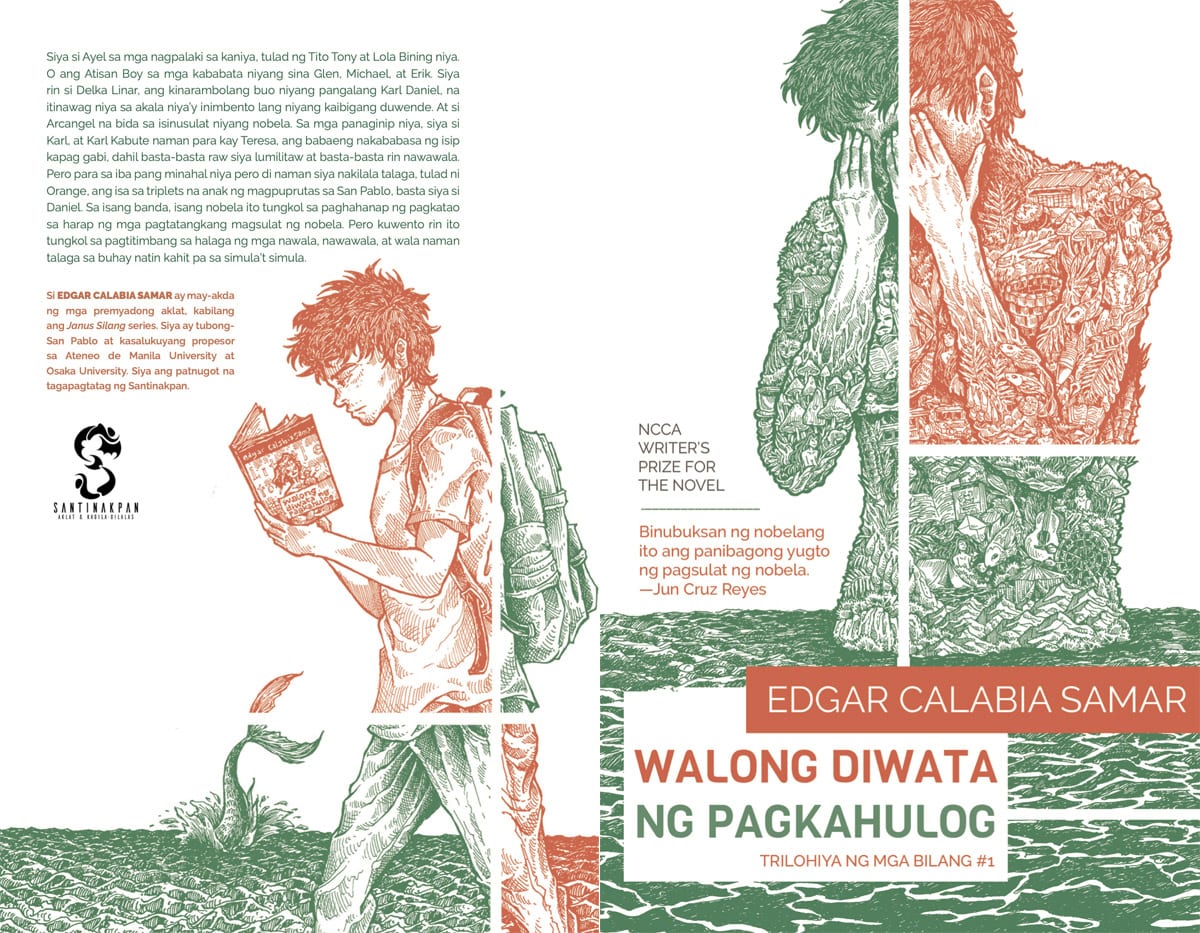
Walong Diwata ng Pagkahulog (Visprint, 2016)
PHOTO: Visprint

This is what I mean when I say the novel is organized around eight falls: not eight different events but eight versions of the same event, eight attempts to tell what cannot be told in one telling, because falling is not experience that can be narrated once and understood, because testimony must be plural if it is to approach truth, because the only way to make falling visible is to return to it again and again until it stops being event and becomes consciousness, until you understand that falling is not something that happened to you but something you are always already doing, that we are all doing, that the Philippines has been doing since Magellan/Legazpi arrived and claimed these islands for Spain, since the Spanish friars declared our gods to be demons and our ancestors to be savages, since the Americans promised democracy and delivered massacre, since Marcos declared martial law and his regime disappeared thousands, since democracy returned and we discovered that democracy without economic justice is just another name for abandonment, that elections without structural change mean simply that we get to choose which elite families will ignore us, that independence without decolonization means we have internalized the colonizer, made his contempt for us into our contempt for ourselves, learned to see our own faces as ugly, our own languages as embarrassing, our own provinces as backwards, our own bodies as disposable, our own knowledge as superstition that educated people must abandon, our own ways of knowing as primitive beliefs that modernity must erase, and now we fall alone because we have been taught that falling is what we deserve, that poverty is personal failure, that if we cannot catch ourselves we should not be caught, that the goddess does not come because we are not worth coming for, that our falling does not matter because we have not reproduced, have not contributed to the future, have loved in ways that do not serve the nation or capital or the family line, have refused to justify our existence through our utility, and therefore deserve to fall, deserve to be forgotten, deserve to transform into grass that no one will remember was once divine.

ADVERTISEMENT - CONTINUE READING BELOW

But what the novel also understands, what the transformation from walang diyosa to walong diwata makes possible, is that the same structures that produce falling also produce resistance, that abandonment creates conditions for solidarity, that when the state withdraws its promises to catch you, you must organize to catch each other, that the eight diwata represent not eight individual goddesses but rather the multiplicity of relations that constitute a catching network, that the novel's answer to abandonment is not restoration of the benevolent state or the return of the omnipotent God but rather the patient work of building mutual aid, of remembering each other, of refusing to let each other dissolve into forgetting, of organizing our communities around the principle that catching is what we do for each other, that we are all falling together and that catching is what we owe each other regardless of whether we will reproduce or be productive or justify our existence through any measure except that we exist, that we are here, that we are falling and we refuse to fall alone. The eight diwata exist because we need them, the novel insists, and they exist only as long as we remember they exist, which means we must keep telling their stories, must keep dreaming worlds where goddesses catch falling bodies, must keep refusing the logic that says some bodies are meant to fall, must keep imagining alternatives until those alternatives become blueprints for action, until the dream becomes plan becomes material transformation, until to novel the dream truly does world the write, and this is what Erik’s death taught me about falling, what his absence revealed about the structures that fail to catch, because Erik, Daniel’s closest friend and perhaps his truest love, who searched for truth in esoteric knowledge, who took his police officer father’s gun—his father who was a former soldier, someone who should represent the state’s promise to protect—and used it to end his own searching, to escape finally the questions that consumed him, demonstrated with terrible clarity that when the structures meant to catch us fail, when family fails and friendship fails and the available languages for articulating who we are and who we love prove insufficient, falling becomes the only language left, becomes the final testimony to a world organized around abandonment rather than care, and what made Erik's death even more unbearable was how it revealed the poverty of available narratives in the early 2000s, how there were templates for being a loud gay—harsh templates, yes, but at least visible ones—but no adequate language yet for the quiet complexity of loving another male when you were supposed to be something else, for being bisexual Daniel who loved Erik but could not name that love, could not find forms adequate to what he felt, could only watch his friend search for truths that the world refused to make speakable, and this failure of language, this inability to articulate the full range of human attachment and desire, is itself a form of structural violence, is itself a way the world refuses to catch falling bodies, and so Erik falls and Daniel survives to tell the story but carries forever the knowledge that language failed them both, that the world’s refusal to provide adequate forms for their love was a kind of murder, was complicity in the abandonment that makes falling seem like choice when it is actually the only option left after all other possibilities have been foreclosed, and it is Michael, the friend who stayed, who remains with Daniel at Erik’s wake, Michael who asks in the darkness whether Erik found the truth he was searching for, whether the death instinct that consumed him was really a search for something or simply the final recognition that there was nothing left to find in a world organized around the principle that some bodies matter and others don’t, and Michael and Daniel stand together in that darkness making promises to each other—“magkikita-kita pa tayo nina Erik, ulit,” they say, “at matatanong natin siya”—knowing that these promises are probably empty, that Erik is gone and will not return, that the only catching available now is the catching they must do for each other, the refusal to let grief isolate them completely, the insistence on staying present even in the face of unbearable loss, and this staying-with, this refusing to abandon each other even when abandonment seems easiest, is what the novel ultimately argues for, is what the eight diwata make possible when we remember them, when we become them, when we organize our lives around the principle that no one should fall alone, though the novel understands too that promises made in grief’s darkness are not always kept, that Daniel and Michael would lead lives that never quite allowed them to find each other again until that encounter in Boracay years later, an encounter the novel leaves suspended in uncertainty—was it reunion or visitation, memory or ghost, Michael alive or Michael already fallen, another body the world refused to catch?—so that we can never be sure whether what saved Daniel in that moment was his friend’s actual presence or the memory of friendship strong enough to manifest as presence, and perhaps the distinction doesn’t matter, perhaps what matters is only that in the moment of Daniel’s own falling he remembered he was not alone, that someone had once stayed with him in darkness, that the promise to catch each other transcends even death if we remember it fiercely enough.

ADVERTISEMENT - CONTINUE READING BELOW

"...when family fails and friendship fails and the available languages for articulating who we are and who we love prove insufficient, falling becomes the only language left..."

This work of remembering takes a particular form in the novel through Teresa, who reads minds only after sunset, who asks Daniel if he wants to know how he will die, who tells him the story of Atisan the diwata who loved a mortal man and was forgotten by him and transformed into a plant whose fragrance still carries her memory. I wrote this scene—Daniel and Teresa in bed after sex, Teresa asking if he wants to know the manner of their death—many times before I understood what it needed to do, before I recognized that Teresa’s knowledge is precisely the knowledge the novel insists we must remember, the knowledge that has been systematically dismissed as superstition or storytelling or feminine irrationality, the knowledge that Daniel refuses because acknowledging it would require him to change, would require him to recognize that the world operates according to principles he has been taught to deny, that goddesses are real and places have consciousness and death is transformation rather than ending, whether we remember each other or let each other dissolve into forgetting, whether we organize to catch each other or accept the logic of abandonment that says catching is not our responsibility, that the state will catch us or God will catch us or the market will catch us, and when none of these catch us it is our own fault, we should have worked harder or prayed more or been more productive or reproduced more successfully or oriented ourselves toward the future more completely, should have done whatever was necessary to earn the catching that others receive without having to earn it, without having to justify their existence, without having to prove they are worth saving. What Teresa knows and Daniel refuses to acknowledge is that the world operates according to logics larger than what the university teaches, that consciousness exceeds the human, that catching requires first this recognition of our vulnerability, and when Daniel finally falls he understands too late that Teresa was right, that everything she told him was true, that his refusal was not rationality but fear, not skepticism but the internalized colonial education that taught him to dismiss what women know, what provinces know, what bodies know that our academic fields deny, and the novel refuses to punish Teresa for Daniel’s disbelief, refuses to suggest that her knowledge is less real because he cannot recognize it, insists instead that she is right and he is wrong, and this insistence does more than validate one woman’s knowledge—it challenges the entire structure of epistemic violence through which power reproduces itself, through which the scientific knowledge counts as knowledge and the grandmother’s knowledge counts as superstition, through which men's skepticism is called rationality and women’s certainty is called faith, through which those who have been educated to know through destruction look at those who know through attention and call them primitive, call them backwards, call them obstacles to progress that must be overcome, through which abstract rational knowledge that happens in the mind separate from matter, in the classroom separate from the street, in Manila separate from Atisan, in the colonizer’s language separate from the languages of the colonized, is elevated above the embodied knowledge that recognizes consciousness distributed throughout the world, that understands we are not separate from what we observe, that insists the diwata are real because reality is larger than what our miseducation has taught us to see.

ADVERTISEMENT - CONTINUE READING BELOW

article big image
Walong Diwata ng Pagkahulog (Santinakpan, 2021)
PHOTO: Santinakpan

This miseducation that teaches Daniel to dismiss Teresa’s knowledge is the same logic that has marked places like Atisan for abandonment, and every scene set in Atisan contrasts implicitly with metropolitan Manila, every description of provincial life reminds you that the provinces must be abandoned so that capital can accumulate in the cities, that the falling spaces must exist so that others can stand safely, that Daniel’s provinciality is not cultural marker but economic position, that to be from Atisan means to be from a place marked for abandonment, from a falling space where the goddesses have already forgotten you, where falling is ordinary, where everyone knows someone who has fallen and everyone fears they will be next, and this fear—this knowledge that you are in a falling space, that you have been positioned for descent—is what capital requires to keep you desperate enough to accept whatever wages, whatever conditions, whatever violations are offered in exchange for the temporary promise that you will not fall today, that your falling is deferred, that you have earned one more day of standing. I wrote this novel in 2004, before the jueteng scandal would expose how deeply corruption ran through Malacañang, before drought-stricken farmers in Kidapawan would beg for rice and receive bullets instead, before Duterte’s drug war would make murder ordinary and falling literal and frequent, before the pandemic would make it impossible even for the comfortable to deny that the state’s promises to catch us were always lies, before the Marcoses would return to power as though nothing had been learned from those who fell during martial law, before billions in flood control funds would disappear while communities drown, and when I read the novel now, two decades after I began writing it, what strikes me is not how much the world has changed but how little, how the Philippines in 2004 and the Philippines in 2025 are the same Philippines, the same falling space, the same abandoned archipelago where bodies drop and no one catches them, and the only thing that has changed is that more people now recognize what has always been true, that the goddesses are not coming, that we must become the goddesses for each other, that catching is not divine intervention but human work, collective work, work that requires we remember each other, that we refuse to let each other be forgotten, that we organize our communities around the principle that falling is not individual failure but structural violence and that resistance to this violence is possible, is necessary, looks like the slow patient work of mutual aid and collective care, looks like organizing your community around the principle that we must catch each other because no one else will catch us.

ADVERTISEMENT - CONTINUE READING BELOW

This arrangement of knowledge—this hierarchy that determines what counts as real, what deserves preservation, whose stories matter—reveals itself with particular clarity in how knowledge about places like Atisan circulates globally. What functions as the novel’s second beginning—the first voice to reach Daniel from beyond Atisan, the first witness that his birthplace exists in archives he cannot access—is Glen’s email, sent in response to Daniel’s searching for him on Friendster, that tells Daniel about finding a monograph about Atisan in a Canadian library: “I couldn't believe it myself... Dito pa talaga sa Canada.” This discovery exposes the logic by which our own histories travel away from us to become legible only when filtered through institutions that were never built to serve us, how stories about provincial Philippines end up preserved in archives abroad while Filipinos in Manila might never hear about these places, how the cosmopolitan and the local are entangled in ways that reproduce colonial hierarchies of what knowledge gets preserved and where and for whom, but Glen’s long email, despite telling Daniel about finding this monograph, concludes with a different kind of truth about what diaspora does to connection—“I have this weird feeling that the road somehow ends here,” Glen writes, “I tried it hard but I couldn’t even remember your face”—and this confession reveals how distance erodes even the most intense friendships, how diaspora doesn’t just separate bodies but dissolves the very images we carry of each other, how the economic arrangements that scatter us across continents also scatter our capacity to hold each other in memory, and yet Daniel’s persistence in searching for Glen represents the work of reaching across diaspora even when the response reveals forgetting rather than remembrance, demonstrates that catching networks require this willingness to reach out knowing we might grasp only absence, that the work of memory is work precisely because memory fails, and we must keep reaching anyway, must build networks knowing they are vulnerable to dissolution, must create structures of mutual aid that can survive when individual connections fray, must recognize that catching is collective work precisely because individual memory fails, and only organized, sustained effort can create the redundancy needed to hold each other across the distances that capitalism and colonialism impose, and when I wrote the scenes of Daniel and his friends climbing Banahaw, when I dreamed their ascent up the mystical mountain that looms over San Pablo, what I was trying to capture was the way that climbing together creates solidarity, the way that shared struggle produces the kind of knowledge that can’t be gained individually, and I was thinking about Erik who would die too young, about Glen who would leave for Canada before they could develop the photos from that climb, about Michael who would remain and remember, about Daniel who would carry all of them with him always, and I understood that the novel needed to show not just falling but also climbing, not just abandonment but also these moments of collective effort, these instances when four young men help each other up a mountain and stand together at the Durungawan watching the sun set over the ravines that surround them, and this memory of climbing together, this knowledge that they once helped each other reach the summit, is what makes Erik’s death so devastating, is what makes the failure to catch him feel like a betrayal of everything they had promised each other without words, and yet the novel also insists that Erik’s death was not individual failure but structural abandonment, was the predictable outcome of a world that provides no adequate forms for certain kinds of love, no languages sufficient to certain kinds of desire, no catching networks strong enough to hold bodies that fall outside the narrow categories the world will recognize, and so we must build those networks ourselves, must create the languages we need, must organize the catching systems that the state refuses to provide, must become the eight diwata we have been waiting for, must recognize finally that rescue is not coming from elsewhere, that we are the rescue, that catching is what we do for each other or it doesn’t happen at all, and this recognition—that we must catch each other because structural abandonment persists across decades, because the Philippines in 2004 and the Philippines in 2025 are the same falling space—is what makes the work of remembering and organizing not optional but urgent, not idealistic but necessary for survival.

ADVERTISEMENT - CONTINUE READING BELOW

article big image
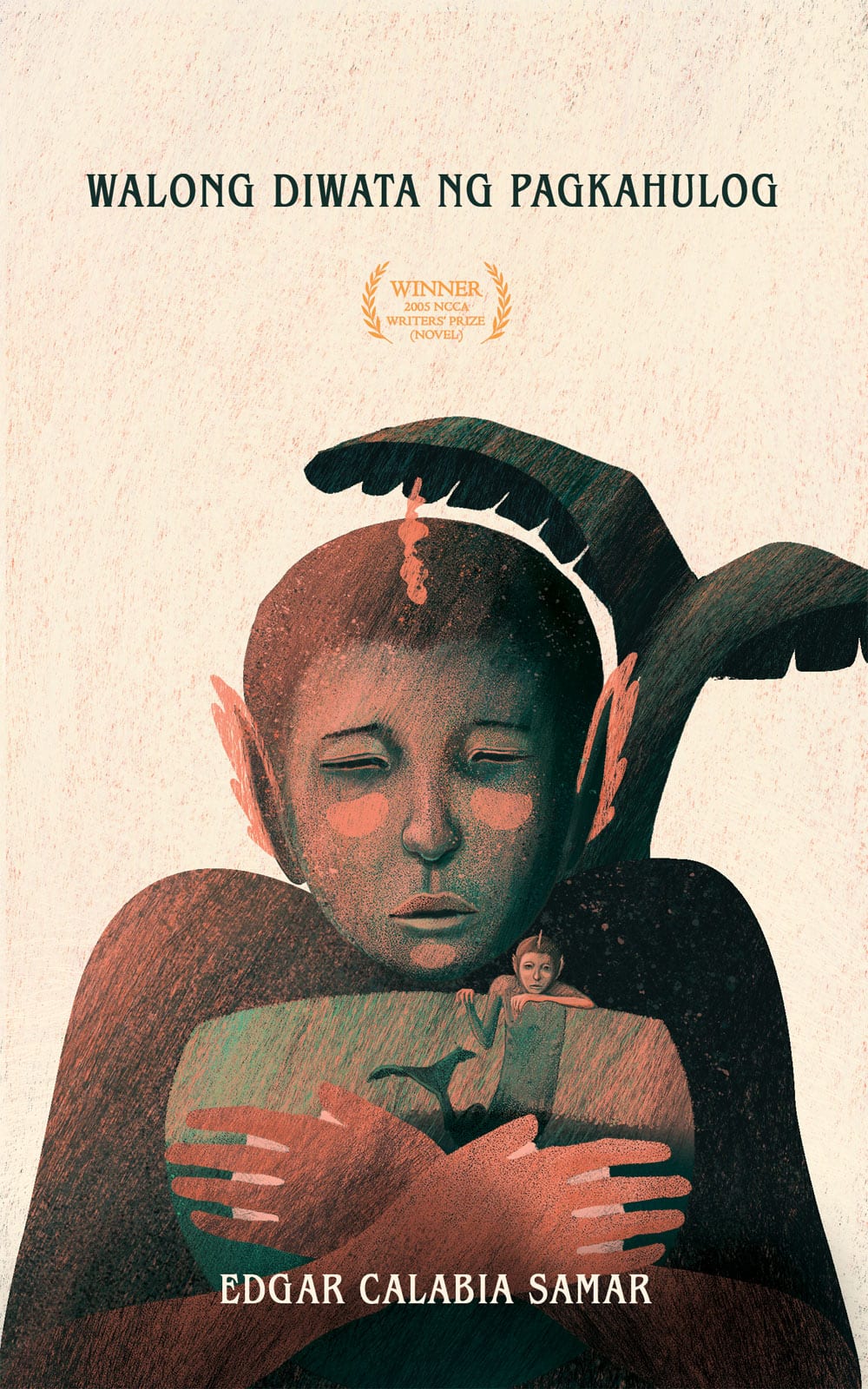
Walong Diwata ng Pagkahulog (Ateneo University Press, 2023)
PHOTO: Ateneo University Press

The novel opens with a sentence I wrote and rewrote probably fifty times: “Ilang saglit bago siya itinulak ng binatilyo sa bangin:—and what I was trying to achieve with this sentence, what took me months to understand I was trying to achieve, was the compression of time that happens in moments of crisis, the way consciousness expands so that seconds contain hours, so that “ilang saglit” can hold an entire life, can hold memory and regret and the sudden sharp awareness that comes when you realize you are about to die, and what follows in that opening section is not the fall itself but the memory of being lost, the memory of being five and stuck between tree roots, and then the recognition that it is probably midnight again, that Daniel is always stuck at midnight whether he is five or adult, whether he is between tree roots or falling through air, and then the crucial sentence that reveals what Daniel understands in those moments before falling: “Kumbakit ngayon pa siya mamamatay kung kailan mayroon na siyang totoong kuwento”—and this sentence, which arrived only after years of dreaming what it means to have a story and to lose the chance to tell it, contains the novel’s entire argument about narrative and survival, about the relationship between having lived and having the opportunity to transform living into telling, about the cruelty of death that comes just when meaning has clarified, just when the scattered incidents of a life have arranged themselves into pattern, just when you have something worth saying and someone you want to say it to, but also about the particular cruelty that Daniel has spent years extending his time in college, moving from course to course, unconsciously resisting entry into the workforce that he knows will devour whatever time he might have had for writing, and he has finally found creative writing, finally discovered what he wants to do, finally has a story worth telling, only to die before he can tell it, and the horror is not only that death arrives at this moment but that even if he had survived he would have had to enter a world organized around the principle that writing novels is what you do on the side if you can steal time from exhaustion, that most people who have stories never get to tell them because labor devours their days, because capitalism requires that you spend your life producing value for others and leaves you too tired, too depleted, too caught in the mechanics of survival to have time for the work of transforming experience into testimony, and so Daniel’s extended college years were not laziness or failure but resistance, were his attempt to stay in the only space where writing might be possible, and his dying now means he never has to face the choice between writing and eating, between narrative and survival, never has to learn what most writers learn, which is that to write novels under capitalism you must be willing to starve or you must be willing to write in stolen hours while your body breaks from the labor that pays your rent, and perhaps this is why he finally has a story, because he is about to escape both the choice and the world that demands you choose. This is what falling steals from you, not life in the biological sense but life in the narrative sense, not existence but meaning, not time but the chance to make something of time, to tell the story of what happened to you, to transform falling into testimony, to warn others, to insist that your falling was not natural or inevitable but was produced by specific structures that could be changed, that must be changed, that will be changed if enough of us refuse to accept that falling is simply how things are, if enough of us organize to catch each other, if enough of us remember the eight diwata and become them, become the grassroots network of mutual care that replaces the absent state, that makes the goddesses real by embodying them, by doing their work, by catching falling bodies not because we are divine but because we are human and humans are divine when we organize ourselves around care rather than extraction, around solidarity rather than competition, around the recognition that we are all falling together and that catching is what we owe each other, what we do for each other, what makes us something more than isolated individuals waiting alone in the dark for rescue that never comes.

ADVERTISEMENT - CONTINUE READING BELOW

"...perhaps this is why he finally has a story, because he is about to escape both the choice and the world that demands you choose."

This is what I learned from years of dreaming Walong Diwata ng Pagkahulog, what the novel taught me through the patient work of attending to Daniel and Teresa and Erik and Glen and Michael and the eight goddesses who catch and fail to catch, who exist and fail to exist, who are real and are forgotten and become grass and are real again when someone smells the grass and remembers: that to novel the dream is to world the write, that the work of imagination is not escape from reality but engagement with the structures that produce reality, that the novelist who sits down to write without understanding this, without recognizing that the novel is always already political, will produce work that inadvertently reproduces the arrangements of power that determine who flourishes and who suffers, and that the writer who wants to write otherwise must commit to years of sustained imagination, must construct worlds that operate according to other principles, must learn to see goddesses where others see only grass, must recognize falling not as individual tragedy but as structural violence, must imagine catching not as divine intervention but as collective human practice, must trust that fiction, if imagined deeply enough and shared widely enough and insisted upon persistently enough, can transform consciousness and thereby transform the material conditions that consciousness produces, and the choice before us is not whether to fall—we are already falling, we have always been falling—but whether we fall alone or together, whether we organize to catch each other or accept abandonment as inevitable, and this is why we must write novels, must make visible what has been rendered invisible, must insist that things could be otherwise, must imagine goddesses until they become as real as hunger, as real as fear, as real as the ground rushing up to meet us, as real as the hands that might catch us if we reach for each other, if we remember that catching is possible, if we understand finally that the goddesses are what we become when we refuse to let each other fall alone, when we commit ourselves to the work of dreaming and building and remembering, to the practice of collective care that makes real in the world what we have first made real in imagination, to the patient transformation of dream into structure, of fiction into blueprint, of eight goddesses into the actual networks of mutual aid that might finally catch us, into walong diwata ng pagkahulog.

ADVERTISEMENT - CONTINUE READING BELOW

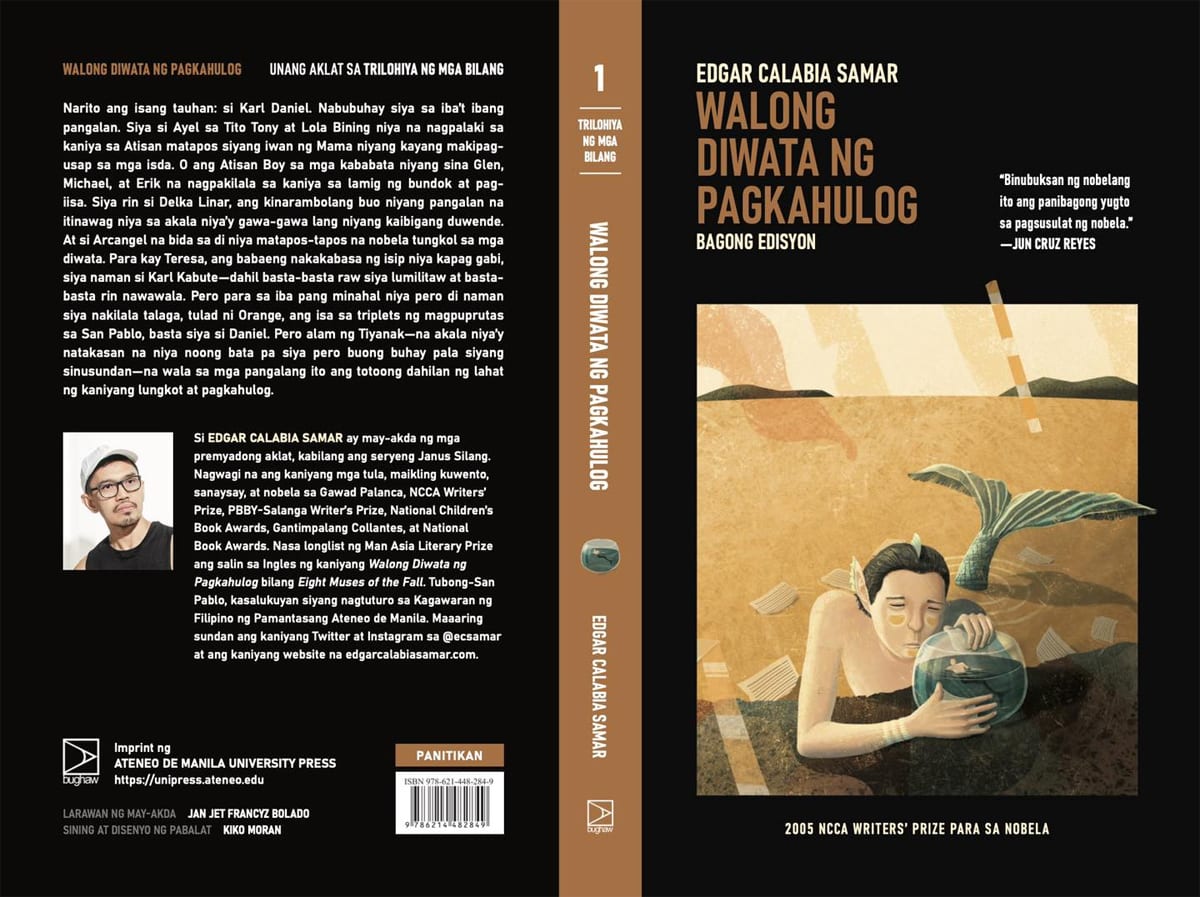
The latest edition of 'Walong Diwata ng Pagkahulog' by Ateneo University Press (2025), with cover design by Kiko Moran.

Walong Diwata ng Pagkahulog Ateneo University Press
Ateneo University Press


Edgar Calabia Samar is Associate Professor and Chair of the Department of Filipino at Ateneo de Manila University. He is the author of the award-winning Janus Silang series and has received multiple Palanca Awards, National Book Awards, and the S.E.A. Write Award from the Royal Family of Thailand (2024). He served as Visiting Professor at Osaka University (2017-2022) and Writer in Residence at the University of Iowa (2010). He is Vice Head of the National Committee on Literary Arts of the National Commission for Culture and the Arts and a member of the Filipino Critics Circle, LIRA, and Filipinas Institute of Translation. Ateneo University Press is releasing a new edition of his novel Walong Diwata ng Pagkahulog this 2025.

More from esquire

Read Next
Why Showing Up to the Philippine Cocktail Fiesta Means Something
Read more stories about
  • literature,
  • writing,
  • novel,
  • conlch-00171,
  • Edgar Calabia Samar,
  • Walong Diwata ng Pagkahulog,
  • Ateneo Press,
  • Novel Writing
Most Shared
by author
Esquire Money
Most Popular
Latest Feed
The New Dean of New York University's Faculty of Arts and Science Is a Filipino
Armscor CEO Martin O. Tuason Passes Away at 51
A Fond Farewell to Chocolate Lover Inc.
The 8-Ball of Greatness in Philippine Pool
Tom Cruise Wore an Extremely Rare £70,000 'President' Rolex Watch to Accept His First Oscar
What Can Poetry Teach Us about Natural Disasters?
#InTheLoop
  • Politics
  • Culture
  • MONEY
  • Style
  • Long Reads
© EsquireMag.ph, All Rights Reserved.
  • About Us
  • Contact Us
  • Terms of Use
  • Privacy Policy
  • Sitemap
Close

We use cookies to ensure you get the best experience on Esquiremag.ph. By continued use, you agree to our privacy policy and accept our use of such cookies. Find out more here.

Present
Read Cover Story
Read Cover Story
Catfish Image