
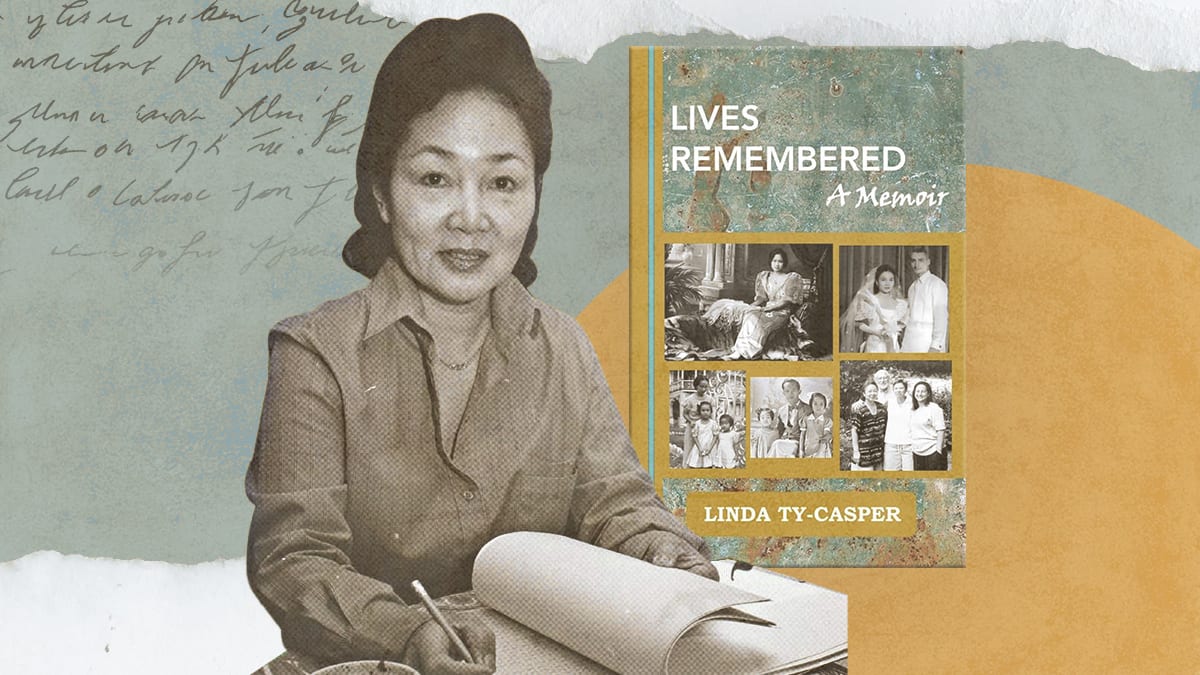
Lives Remembered, Histories Regained

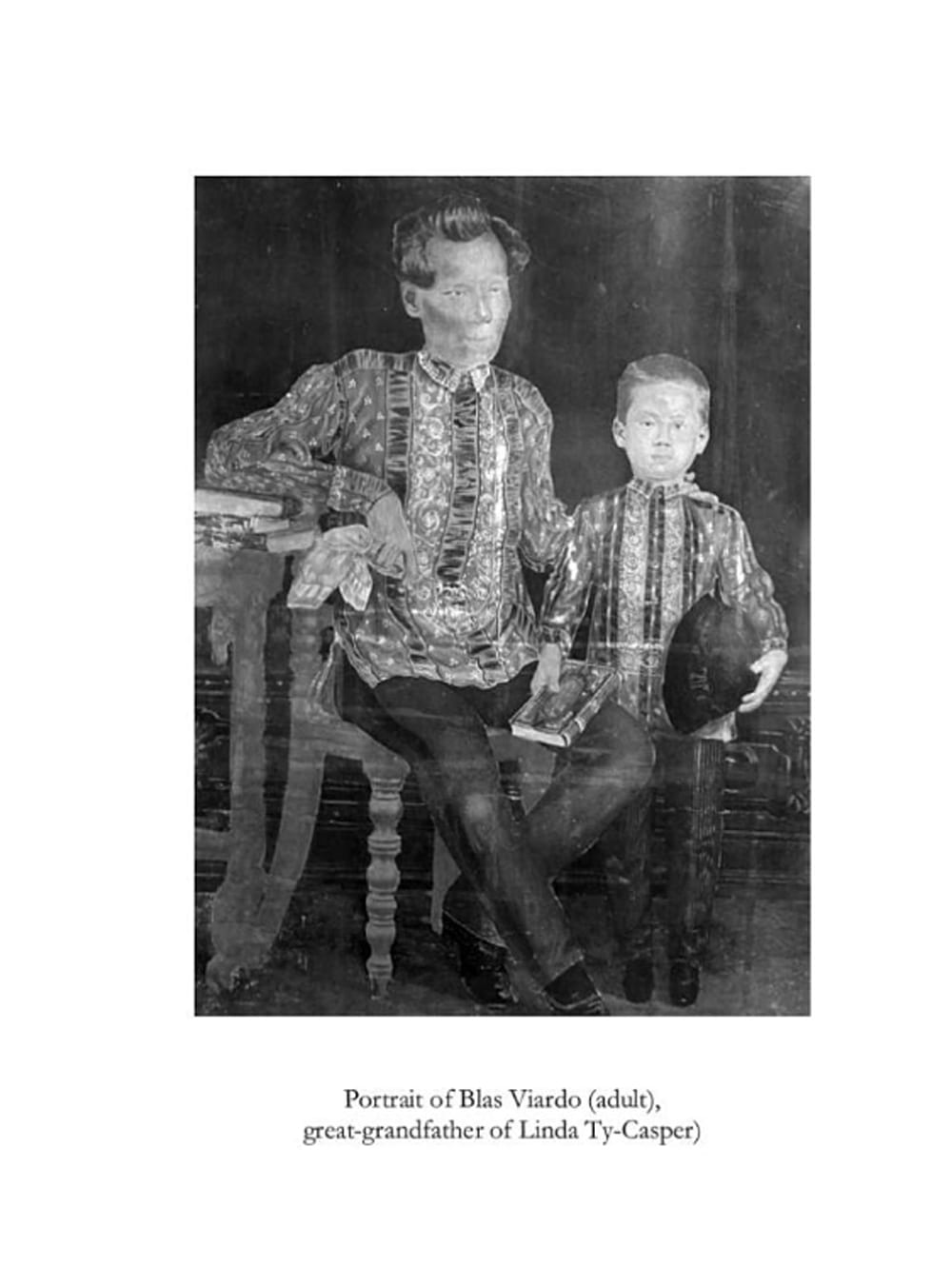
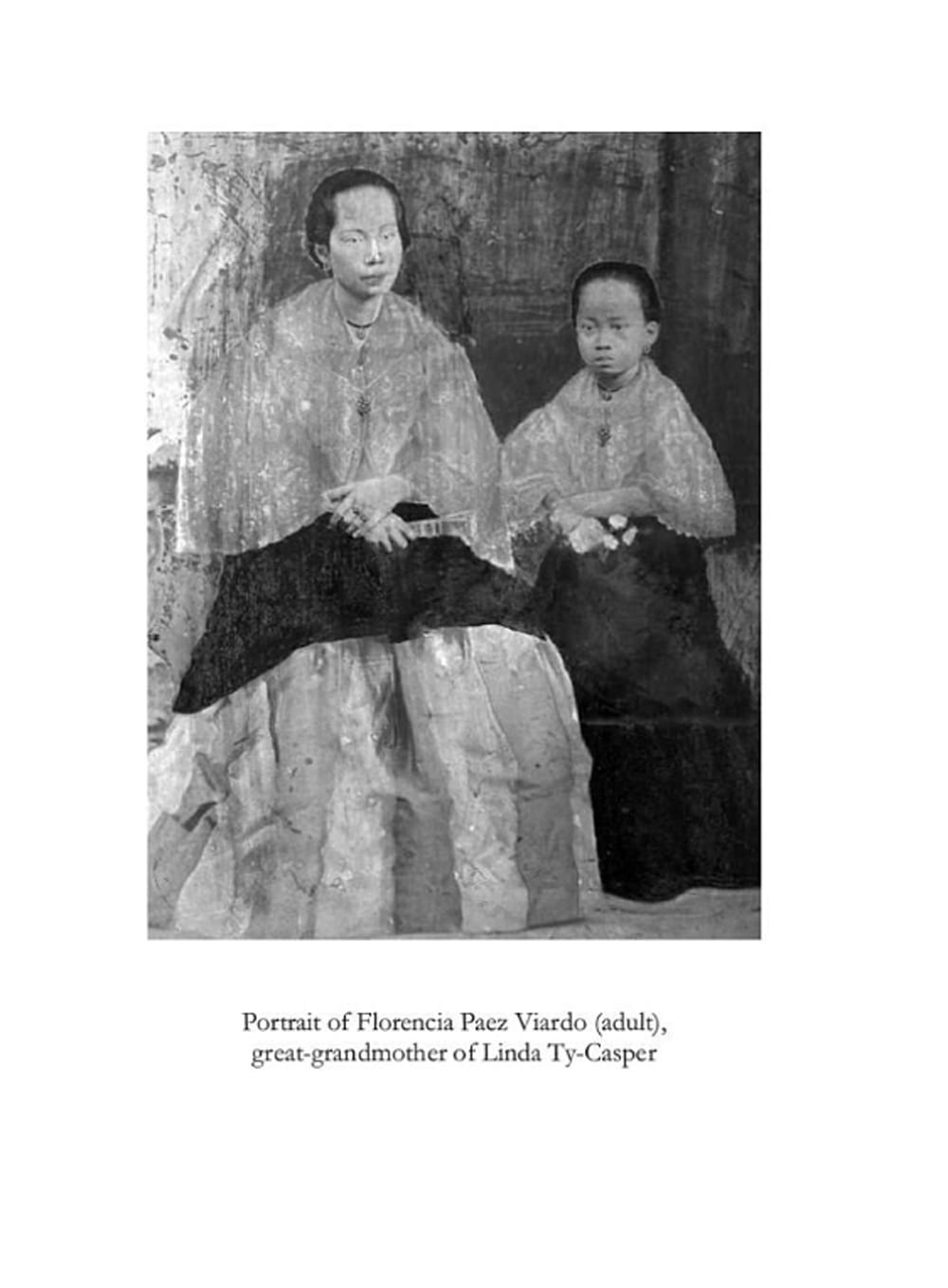
I asked her if I could enter the room, which was a personal library on the first floor that had been converted into a bedroom. At ninety-four, Linda Ty-Casper is losing her balance frequently. Taking the stairs to the second floor of her house on the banks of the Sudbury River in Massachusetts is not advisable. At night, with her caretaker gone, she is alone. To monitor her safety, a fall detection alarm had been attached to her body. Get in, she said, and I approached the two portraits that hung on her wall, looking over her bed.
The nineteenth-century portraits showed two pairs in their fineries. On the one hand, the father with a handkerchief and the son holding a book and a salakot are depicted; the former sits comfortably while the latter stands proudly. On the other hand, the mother and daughter pose similarly. But where the father holds a handkerchief, the mother is clutching a fan, the son’s book replaced with the daughter’s sprig of wildflowers.
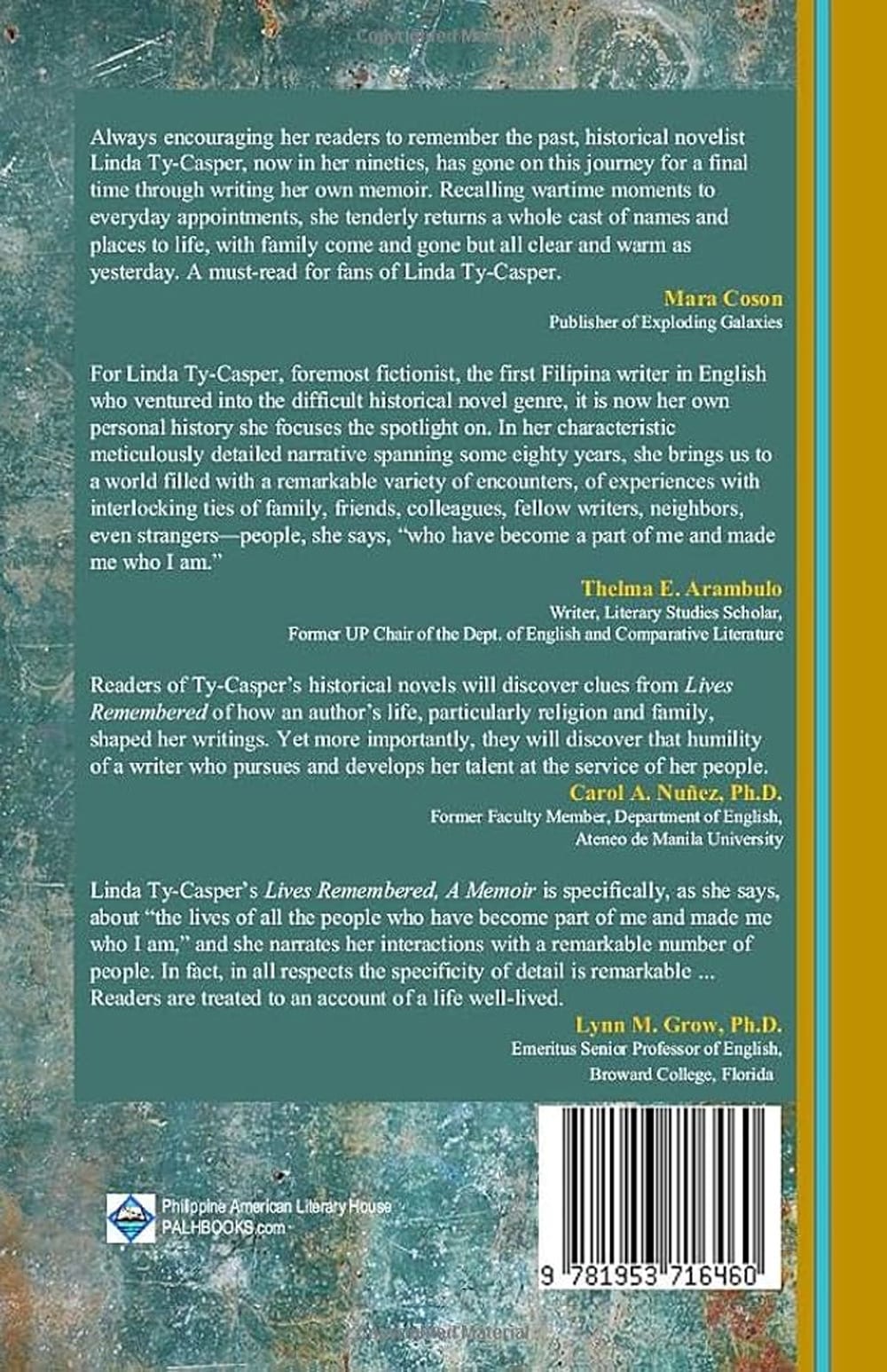
In Linda’s latest book, Lives Remembered, published by the Philippine American Literary House, the same portraits are reproduced, greeting the reader who picks up her book. In this memoir, she recalls how her aunt had discovered the portraits in the silong of their relative’s house in the Philippines, covered in chicken shit. The portraits eventually found their way to Linda in the US, where, as a fellow of the Radcliffe Institute, she took them for repair at the Fogg Museum in 1974, upon the suggestion of Rod Paras-Perez, who was the first Filipino to get a PhD in the history of art at Harvard.
Linda’s memoir came out in February 2025. In April of the same year, I was back in America to lecture at Brown, thanks to the invitation of Grace Talusan, who had previously brought her students to Manila for a summer exchange hosted by the Literary and Cultural Studies Program in July 2024 at the Ateneo. It took me almost fifteen years to return to the US following my graduation from Yale in 2011.
When Grace first proposed paying Linda a visit at her house in Framingham, I warmed up to the idea. Weeks before my American trip, Grace looped me in on an email to Linda. Prior to my formal introduction to Linda, my colleagues in Exploding Galaxies and I had organized a talk on her novel. At that time, I was also doing the groundwork for the Ateneo Archive of Philippine Literature in English, an initiative funded by Robby Kwan Laurel. Seeing the opportunity, I broached the possibility of getting Linda’s papers as well as her husband’s, the American critic and poet Leonard Casper, whom she fondly calls Len, to be part of the seed collection. Linda promised to look for her papers and Len’s in their basement. I could bring them with me back to Manila, I said.
Following my lecture on the American colonial origins of Filipinization at Brown in the spring of 2025, Grace and I went off gallivanting. After a leisurely drive, we arrived at Linda’s house with a box of pastries. Her house had a tropical vibe, the living room opening into a sunroom with a view of the river behind a clump of trees. Linda looked frail and used a walker to get around. A spread of nuts, marzipans, and chicharron awaited us. Seeing her condition, Grace and I took it upon ourselves to get what we needed—utensils, saucers, glasses. That was when I found her bedroom, where the portraits were hung.
Seated, Linda regaled us with her memories. She spoke slowly yet purposefully, punctuating her thoughts with hand gestures. Sometimes, she stopped in mid-sentence, looked out, and pointed at the statue of the Virgin in the garden that the Jesuit Miguel Bernad had blessed personally. “Len planted daylilies by the river,” she said. “The swans come on a good day.”
She spoke without being prompted, as if she could not wait to share her stories. I realized right there and then that I was in the presence of a formidable mind. I was witnessing someone who had lived under three flags from the time when the Philippines was an American colony, to the Japanese occupation, to the independence from the US, to the parade of tumultuous decades after 1946—from Martial Law to EDSA Revolution, the centennial of Philippine Independence to EDSA Dos, Typhoon Yolanda to the reign of Rodrigo Duterte, to finally the presidency of Ferdinand Marcos, Jr. There we were, having a conversation in the second age of Donald Trump.
Linda’s memory was sharp, filled with minute details that recall her style as a novelist. Linda spoke from deep memory. As her husband commented once, she presents characters “filled with detail, movement, and suspense.” Even more remarkably, her recollections, which I heard directly from her during our visit, were expressed in the same way in her memoir. She spoke of NVM Gonzalez, for instance, the way she wrote about him in her book. NVM and Linda were attending the Wheatland International Conference at Stanford, where European writers took center stage. Responding to their marginalization, NVM remarked, perhaps out of frustration or dogged assertion, that “[w]e write for noble ideas, not for recognition.” I first heard the sentence from our conversation; when I read it in her memoir, it felt like déjà vu.
The directness of style, the tautness of the image, and the distillation of thought mark Linda’s speech, as well as her memoir’s language. Her language is unadorned, reduced to its essence. It is straightforward, yet the forthrightness tugs at the heartstrings. She draws out the reader’s emotions without necessarily manipulating them. Moreover, the memoir’s publication comes very late in her life, signifying the peak of her narrative power and the far edge of her memory. This belatedness denotes the urgency with which the whole memoir was written. There is very little time left for her, yet as our conversations tried to reveal in April, there is so much to remember. “Kind of racing against time,” she notes in an email to me.
'Lives Remembered' (2025, Philippine American Literary House)
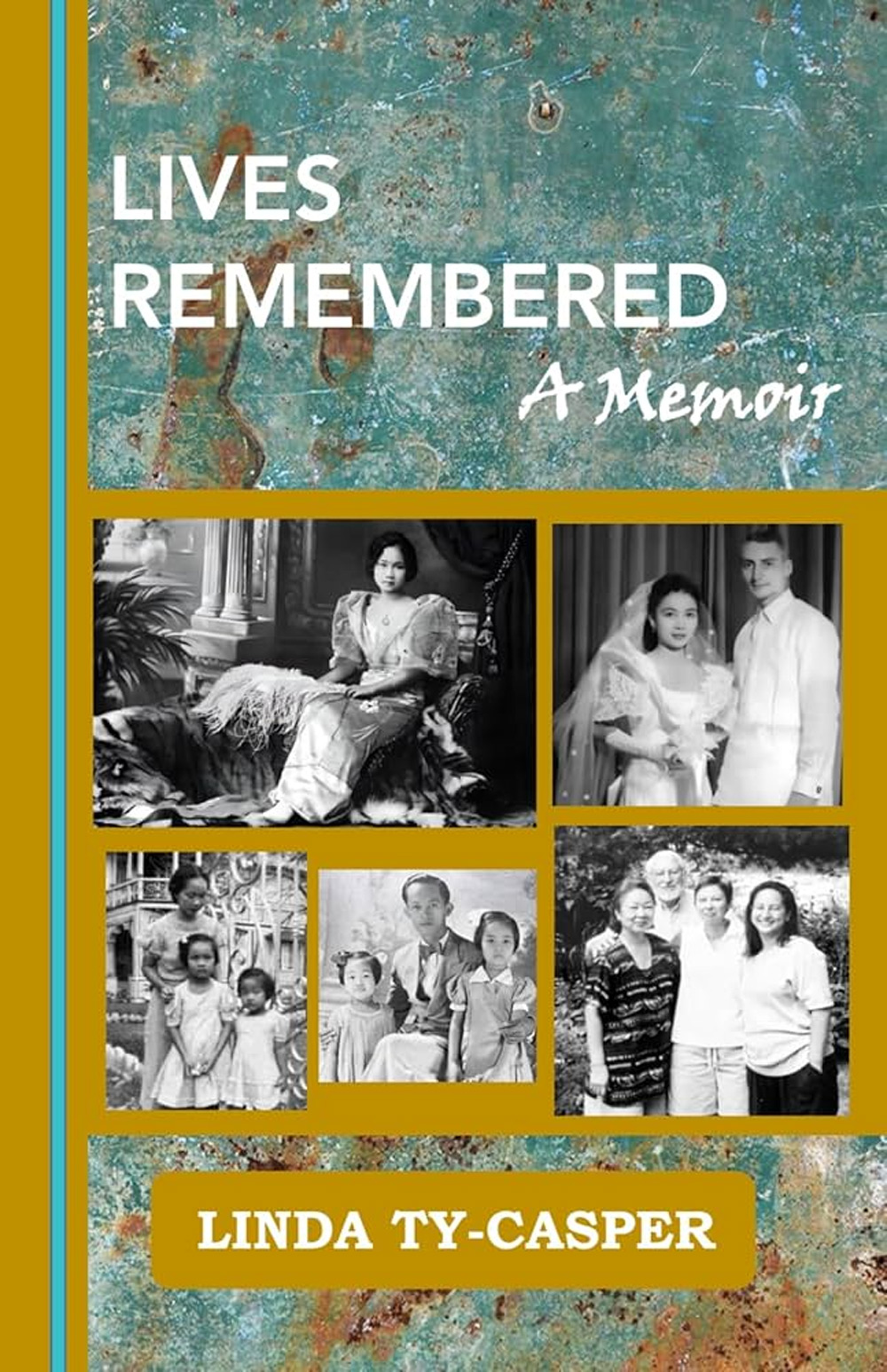
Divided into three parts, Lives Remembered is organized chronologically: from early childhood memories, to her education at UP (where she emerged as the class valedictorian at the Law School) and Harvard, to her time in Bellagio as a Rockefeller fellow, to the death of her beloved father whose suitcase she carried when she traveled for the first time to the US, to the trips to the doctor with her ailing husband, to the many birds that visited her as she looked out into the river as a fiercely independent widow in her twilight years. “[T]he good, happy years meant to last but are quickly gone,” she pines.
The memoir is mostly about the people who shaped Linda’s life as a child, student, wife, and novelist. In an email to me, Linda explains that the memoir’s “focus is on so many who made my life the way it turned out, rather than on me. I remembered many others, after it was ‘done.’” Tidbits from her past came back to her when she finished writing her memoir. But never did Linda attempt to remember more about herself. This self-effacing gesture marks the entirety of Lives Remembered, wherein the author intentionally creates autobiographical blind spots for the reader. She foregrounds others, and contents herself with being a narrator, as in a novel. In some instances, her self-erasure is consciously done. As she discloses in another email to me, “Lives Remembered can’t compare with Len’s memoir.” Linda believes that Len was a better writer. True to her self-effacing nature, Linda leaves out the details of how she met her husband. She goes to great lengths to reconstruct his life but willfully excludes her own inner universe. We learn that Len was a combatant during the Second World War. He taught at Cornell, earned a doctorate from the University of Wisconsin, turned his back on a Fulbright to London, and came instead to teach at the University of the Philippines. But nowhere do we find a description of how she met Len when the Cold War was raging in the Pacific.
Quite interestingly, Linda’s self-erasure comes in stark contrast to her conspicuous connections to the historical unfolding of the Philippines and its complex relations with the US as a colonial power. Her life, and the lives of those who surround her, are profoundly intertwined with the turnings of empire. Her father attended the Philippine Military Academy, an institution founded by the Americans. Her mother worked for the Bureau of Education, another American colonial structure. Linda herself attended the University of the Philippines, yet another colonial edifice. Moving to America for good to begin her married life with Len, she got into Harvard Law School, which became a pivotal point for her career as a writer. At Harvard, her past, present, and future collided, wherein colonial history compelled her consciousness to retell the story of the country she left behind, a task that would define the rest of her life.
The story goes that a hurricane was forecast to pass over Cambridge, which led to the suspension of classes, including Linda’s. On her way out, she dropped by Widener to get something to read before heading home. There, she came upon thousands of books on the Philippines, many of which had never been borrowed. The forging of the historical past became visible to her. Dismayed, she discovered that some of the books were peddling erroneous information. The history being produced was colonial, glorifying the imperial conquest of the islands in 1898. Out of this encounter with the distortion of the past, backed by no less than the oldest university in America, Linda opted to abandon law to become a fictionist, a decision that set her off on the path of the historical novel.
The epiphany fulfilled a primal wish. Growing up during the Japanese occupation, Linda used to hear stories from her mother about the revolution against Spain and the war against the Americans. At the end of each story was her mother’s command: “Someone should write about this.” “As it turned out,” Linda recalls, “writing historical novels became my life's work. Nanay’s wish to have her stories written, after many years, became realized.”
Taken together, her body of historical fiction spans the rise of the Philippines in the eighteenth century, which she takes up in The Peninsulars (1964), to the outbreak of the revolution against Spain in 1896, which she recounts in The Three-Cornered Sun (1979), to the war with the US in 1899, which she explores in Ten Thousand Seeds (1987), to the imposition of Martial Law in 1972, which she ponders in Awaiting Trespass (1985), to the downfall of Joseph Estrada in 2001, which she confronts in A River, One-Woman Deep (2018).
Considering her epic body of work spanning six decades, one that reimagines two hundred years of Philippine history on a global scale, Linda’s historical fiction not only responds to US colonial distortion but also strives to reconstruct the Filipino past itself. It is a remarkable confluence where the desire to correct historical falsehoods melds with the longing to make whole what is broken. This is Linda’s assertion of NVM’s battle cry: we write for noble ideas. But her work appears paradoxical in that the forces of historical suppression she confronts are, at the same time, the entities that enable her creative production. Namely, the US signifies the colonial power responsible for the distortion of the Filipino past, but so, too, it denotes the cultivation of postcolonial national memory at the imperial center. More to the point, the site of historical suppression is the same milieu that allows her to reimagine the past. This site is no other than the US that casts a long shadow in her life and in the lives of others. Thus, the US is a special boon and burden for her.
Consider how her writing life began at Harvard, but her real break came when she won a fellowship at the Radcliffe Institute. Len conceded that “some good came of it,” including other fellowships such as the Djerassi and Bellagio writing residencies, the latter funded by the Rockefeller Foundation. These opportunities launched her career and established her reputation as a writer. A self-taught novelist, Linda did not study creative writing formally. Her cultural capital and network consequently originated from the prestige of these fellowships, which gave her work an extra gloss. Yet such perks also presented a burden of the political kind—her work benefitted from US cultural largesse, the same target of her work. What complicated her career even more was the fact that it began at the height of the Cold War, wherein soft power was a prime tool deployed by the US to effect remote social engineering, particularly in the Third World. Writers were at the heart of that foreign policy.
Toward the end of my conversation with Linda in April, right before we turned, belatedly, to sorting the papers that she would turn over to me, she got to talking about Len. “They accused him of being a CIA agent,” she said. Her voice was firm. I do not know if she had read my book, Children of the Postcolony, where I first explored the connections between Filipino postcolonial intellectuals and institutions and their relationships to US Cold War instruments. Neither scheming nor feigning, I kept my silence; I thought that she spoke from a place of deep love. She is the wife, after all.
On the interstate back to Providence, Grace brought up what Linda said. It was late, the road alternating between forest patches and vistas of distant city lights. “Do you believe Len was a CIA agent?” she asked. I paused and thought about what to say. “It is a complicated story,” I said, “and I do not have the documents.” I spoke instead of Filipino intellectuals who worked hard for decolonization yet maintained links with Cold War interests. “Intentions must be considered alongside documents,” I said. In the back of the car, Linda and Len’s stacks of letters, notes, journals, photos, and drafts were tucked safely in an old luggage.
Back in the country, I think of the portraits in Linda’s room, of how, without the help of American conservationists, they would have been lost. What does it mean to keep one’s history? What is the freedom of the Filipino writer? Linda’s memoir throws these grand questions in stark relief. With her documents now repatriated, they invite us to illuminate, to ourselves, our nightmare, dream, and redemption.
