
How I Wrote It: The Age of Umbrage

1. I always knew I wanted to write novels, but it took me decades to figure out how. As an angry and miserable teenager I reread J.D. Salinger’s angry and miserable teenage classic The Catcher In The Rye so many times I can still recite chunks of it from memory. That novel gave my rage and sadness a point. I learned to write by imitating Salinger.
2. After high school I started freelancing. One day I went to the office of a new magazine called Woman Today with some writing samples, and the editor, Marita Pascual Nuque, gave me an assignment. (Nerve is everything. If you don’t feel like reading this to the end, just remember: Nerve.) Over the years Marita sent me to do dozens of interviews with movie folk, and I learned how to talk to famous people, and more importantly, to meet deadlines. Magazine work paid for my college tuition.
ALSO READ
Jessica Zafra's First Novel Is For Misfits and Outcasts
3. At the University of the Philippines I was an English major, and on my second year I had to choose a concentration. I just wanted to read everything, so Comparative Literature made sense, but I also wanted to write, so Creative Writing? One morning at the cafeteria (CASAA—gone) I ran into Prof. Butch Dalisay and had the nerve to consult him. He had also gone to Philippine Science High School so he knew where I was coming from, literally. I had attended the UP Writers’ Workshop the previous summer, so he knew I wrote fiction. He said, “You’re already writing, so why not take Comp Lit and read the great books?” Excellent, excellent advice.
4. I wrote my thesis on J.D. Salinger. My thesis adviser was Prof. Elmer Ordoñez, and he said, “J.D. Salinger who was all the rage in the 50s?” But he approved my topic, and I banged out my thesis on a manual typewriter. There’s nothing like banging out your thesis on a manual typewriter—you have to have conviction.
One of my favorite writers is Graham Greene (The End of the Affair, The Quiet American), and he said that if you write 1,000 words a day, the books will take care of themselves. I trained myself to write 1,000 words a day—it’s not so hard if you keep a journal. Later I found that Greene really said 500 words a day, which gives me an excuse to occasionally goof off.
5. After college I had to find a way to pay the rent and, later, to buy cat food, so I continued freelancing. Then I lucked out: the late Abe Florendo hired me to write a column in a daily newspaper. I called my column Twisted, and it appeared three times a week. It was valuable training in how to write 1,000 words even when I had absolutely no idea what to write. It was like Seinfeld, which prided itself on being a show about nothing. My publisher, Teodoro Locsin, Jr, gave me the freedom and encouragement to write whatever I wanted, and gave me so many books it was like taking Comp Lit all over again. If people know my name at all, it’s because of Twisted.
6. So the plan was to write columns (and magazine assignments and do radio and TV shows) for a living, and write my novel on my own time. But doing all that didn’t leave me a lot of energy to write for myself. Writing a novel requires momentum, and it was interrupted every other day when I had to meet a deadline.

7. One day I had to fill out a form. I had to do some subtraction to figure out my exact age, and I was shocked at how old I was. I had hit middle age and I still had not written a novel. A couple of collections of short stories, and way too many compilations of columns, but no novel. Shortly after that, I quit writing columns and got to work on my first novel.
8. Wait, I’d written a novel 10 years earlier, but it was crap so I cut out the good chapters and published them as stories and threw out the rest. I started writing a bildungsroman, which is the Comp Lit way of saying “coming of age story.” Thanks to the training from years of freelance and column-writing, I wrote fast. In cursive, by the way. I feel that fiction has to be written on ink and paper. (I have very nice penmanship, thank you St. Theresa’s College.)
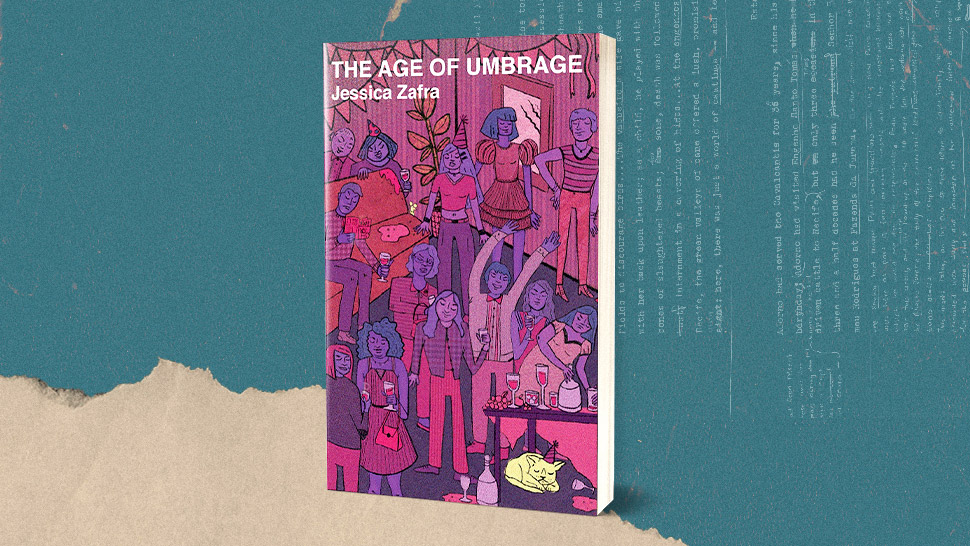
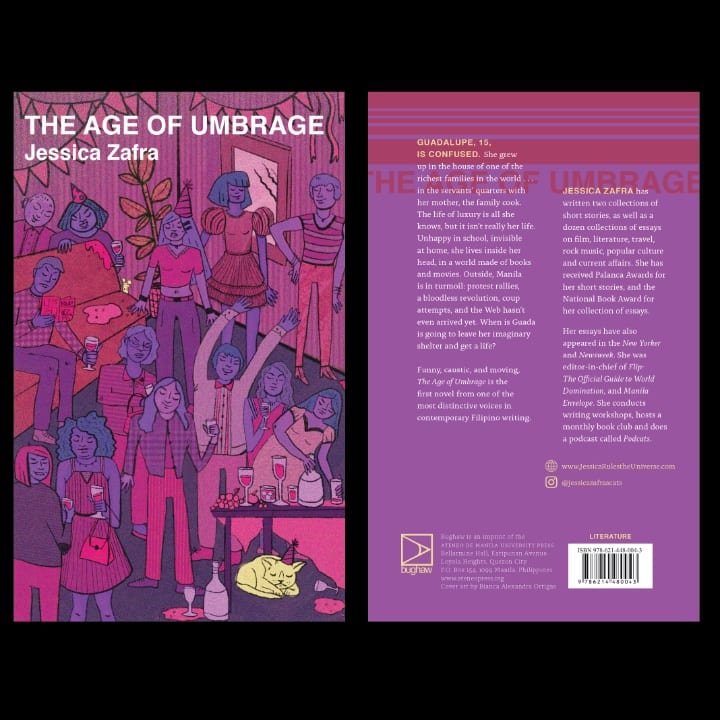
9. My novel in progress was a thinly veiled autobiography. I found it a little boring. I think you have to enjoy the writing process, or else the result reads like homework. It occurred to me to include the subjects I had covered in my column: my theory of world domination (Overseas Filipino Workers, the diaspora), class, cinema (Movies have influenced my writing as much as literature has). I finished writing The Age of Umbrage in three months. Then for three years I sat on it, and during the pandemic I submitted it to Karina Bolasco, who had published the Twisted books at Anvil, at Ateneo University Press.
10. This year the Philippines is the Guest of Honor at the Frankfurt Book Fair, and under the auspices of the National Book Development Board headed by Charisse Tugade, scores of Filipino books have been translated into German. The German rights to The Age of Umbrage were acquired by the independent publisher Transit Verlag, which also publishes Butch Dalisay. Ein Ziemlich Boses Madchen, the German translation by Niko Froba, was published earlier this year.
I finished my second novel in 2023, and I am now working on my third and fourth.
