The Road That Only Descends: 'Pedro Páramo' and the Threshold You Cannot Uncross
In another essay by Edgar Calabia Samar, he shows what Juan Rulfo’s Pedro Páramo teaches us about thresholds, and why that is important in dreaming our own novels.
Published on Dec 28, 2025
THE ROAD to Comala rises or falls depending on whether you are coming or going, and this is the first thing Juan Rulfo’s Pedro Páramo teaches us about thresholds: they are not neutral passages but directional transformations, and the direction you move through them determines what kind of crossing you are making, what kind of person you are becoming in the crossing. If you are leaving, the road rises, which is to say leaving requires effort, requires climbing upward and away from what holds you. But if you are arriving, the road descends, and Juan Preciado, the son who has promised his dying mother he will find his father Pedro Páramo, is arriving, is descending, is sinking into a geography that will swallow him so completely he will not notice when he has stopped being among the living. Perhaps this is what the novel offers to those of us who are dreaming our own novels before we write them: that thresholds are not symmetrical, that crossing in one direction is not the same as crossing in the other, that there are thresholds you can cross only once because the crossing itself transforms you into someone who can no longer go back. The road descends. You arrive. But where you arrive is not what you expected, and you yourself are not who you were when you began to descend.
Juan Preciado comes to Comala because his mother, Dolores, made him promise, on her deathbed, that he would find his father. She squeezed his hands, and he promised, and from promising so often, he kept repeating the promise even after he had pulled his hands free of her death grip. This is how thresholds begin: with promises made to the dying, with obligations that bind you to cross from one world into another. He did not mean to keep his promise, he tells us, but before he knew it, his head began to swim with dreams, and his imagination took flight, and little by little he began to build a world around a hope centered on the man called Pedro Páramo. Perhaps this is why we dream our characters to the threshold: because a promise has been made, because an obligation binds them, because someone dying or dead requires them to cross into a world they would not otherwise enter. The threshold does not simply exist; it calls, it summons, it requires. And the one who crosses does not cross freely but is pulled by the gravity of what the dead have asked of them.
The man with the burros who guides Juan Preciado toward Comala is the first threshold figure, the first character who exists in the space between worlds and whose function is to usher the living toward the dead. Abundio, as he is named, walks at Juan’s side, and when Juan tells him he has come to see his father, Pedro Páramo, Abundio says only “Umh!” and then, after a silence, reveals that Pedro Páramo is his father too. They are half-brothers, then, these two men descending toward Comala, both sons of the same father who scattered his seed across the land the way he scattered his power, without acknowledgment, without responsibility, without any recognition of the obligations that fatherhood should carry. “We’re Pedro Páramo’s sons, all right,” Abundio says, “but, for all that, our mothers brought us into the world on straw mats.” The threshold figure knows something the crosser does not yet know: that the father they seek is dead, that the town they are entering is dead, that everything Juan Preciado hopes to find has already disappeared. “Pedro Páramo died years ago,” Abundio finally says, and with this revelation, the nature of the threshold changes. Juan Preciado is not crossing into the world of his father; he is crossing into the world of his father’s death, into a geography saturated with the consequences of one man’s power and cruelty, into a place where the dead have not left because they have nowhere else to go.
When they reach Comala, Abundio goes on his way, leaving Juan to find his own lodging. “If you want to stay here, then stay,” Abundio says. “You got nothing to lose by taking a look around; you may find someone who’s still among the living.” The phrasing is precise: still among the living, as though being alive in Comala is a temporary condition, a state that will eventually give way to the dominant mode of existence here, which is death. Juan walks through empty streets, past abandoned houses with doorways overgrown with weeds—la gobernadora, creosote bush, “a plague that takes over a person’s house the minute he leaves.” This is geography shaped by departure, by the evacuation of the living, by the slow vegetable reclamation of human space. The houses stand, but no one lives in them. The streets exist, but no children play in them. The threshold Juan has crossed is not simply spatial but temporal: he has entered a time after life, a time when what was once a town has become something else, a holding place for those who have not yet finished with existence even though existence has finished with them.
The woman in the rebozo who gives him directions has human overtones in her voice, her mouth filled with teeth and a tongue that works as she speaks, her eyes the eyes of people who inhabit the earth. Juan notices these things because he is already beginning to sense that not everyone here possesses them, that the markers of ordinary embodied life are remarkable here precisely because they are not guaranteed. He finds the house by the bridge by following the sound of the river, but when he lifts his hand to knock, there is nothing there—his hand meets only empty space, as if the wind had blown open the door. A woman stands there and says simply, “Come in.” And he goes in. This is how thresholds work in the novel: they are not closed against you but terrifyingly open, they do not resist your crossing but invite it, and it is only afterward, sometimes long afterward, that you understand what you have crossed into and what you have become by crossing.
Eduviges Dyada, the woman who receives him, has been expecting him. His mother, Dolores, told her he would be coming—today, in fact. But Dolores is dead, has been dead for a week, and Eduviges knows this because she heard Dolores’s voice, weak and distant as though it had to travel a long way to get there. “So that was why her voice sounded so weak,” Eduviges says matter-of-factly. “Now I understand. And when did she die?” This is the first explicit evidence that the boundary between living and dead is permeable in Comala, that the dead speak to the living and the living receive their messages without surprise. Eduviges and Dolores had made each other a promise to die together, to go hand in hand on their last journey, but Dolores got a head start. “Well, you can be sure I’ll catch up with her,” Eduviges says. “No one knows better than I do how far heaven is, but I also know all the shortcuts. The secret is to die, God willing, when you want to, and not when He proposes.” The threshold between life and death is navigable for those who know the way, who have learned the shortcuts, who do not wait for God’s timing but impose their own. But this knowledge is itself a threshold, a crossing into a relationship with death that the living are not supposed to possess.
The novel’s structure enacts what thresholds do to narrative: it fragments, it dissolves chronology, it moves between voices without warning and between times without transition. Juan Preciado’s story alternates with the story of his father’s life—the young Pedro Páramo dreaming of Susana San Juan in the privy, the adult Pedro Páramo accumulating land and power through violence and manipulation, the old Pedro Páramo waiting to die after Susana’s death has drained the world of meaning. But these alternations are not clearly marked; the reader must navigate the fragments the way Juan navigates Comala, gradually realizing that the voices speaking do not all come from the same time, that the events narrated do not occur in sequence, that the novel itself has crossed a threshold out of linear time into something more like the simultaneity of the dead. Perhaps this is what the novel teaches about dreaming thresholds: that crossing transforms not just the character but the form of the telling, that a story about moving between worlds cannot be told as though it unfolds in a single world with a single time.
The young Pedro Páramo, sitting in the privy while his mother calls him to come out, is already thinking of Susana San Juan: “I was thinking of you, Susana. Of the times you were there looking at me with your aquamarine eyes.” He remembers flying kites with her in the windy season, high above the town on the green hills, her soft hands tightening on his as they played out the string to the wind. “Your lips were moist, as if kissed by the dew.” This is the other threshold the novel traces: the threshold of obsessive love, of desire that will shape an entire landscape, that will eventually destroy a town because one man cannot possess the woman he wants. Pedro Páramo’s love for Susana San Juan is not tender but consuming, not generative but annihilating. When she finally returns to Comala as an adult, he marries her, but she is already mad, already lost in her own interior world, already dwelling across a threshold he cannot follow her through. And when she dies, Pedro Páramo lets Comala die with her. He crosses his arms and does nothing while the town starves, while the rancheros leave, while the revolution sweeps through, and no one remains. The threshold he cannot cross—the threshold into Susana’s love, into her recognition, into her presence—becomes the threshold that destroys everything else.
The death of Miguel Páramo, Pedro’s son and the only one he ever acknowledged, offers another lesson about thresholds and their costs. Miguel was a rapist, a murderer, a man whose horse knew the way to all his victims’ houses. He killed Ana’s father and then raped Ana herself; he rode through the countryside taking what he wanted because his father’s power protected him from any consequence. But one night, he died at a crossing—the place where the main street meets the road to Contla—and his horse came back without him, its legs buckling as if about to roll head over hooves before it recovered and raced off with its head twisted back, frightened by something it had left behind. Miguel crossed the threshold into death, and the horse returned alone, bearing witness to a crossing it could not follow. Father Rentería, the priest who should refuse to bless such a man’s grave, accepts the gold coins Pedro Páramo places on the prie-dieu and says the words anyway. “These are Yours,” he says to God afterward, throwing the coins at the altar. “He can afford to buy salvation.” The threshold into grace, which should be opened by penitence and closed by sin, can be purchased by the wealthy; the threshold into damnation, which should await the wicked, can be avoided if you have enough gold. The novel teaches us that thresholds are not neutral, not only in their direction but in their accessibility: who can cross, who is blocked, who has the resources to force a passage that should be forbidden.
Juan Preciado hears a scream in the night, “a drawn-out cry, like the howl of a drunk”—the voice of Toribio Aldrete, who was hanged in the very room where Juan is sleeping and left to turn to leather behind a locked door. Damiana Cisneros comes to take him away to safety, but Damiana too is a ghost, has been dead since Juan was an infan,t though she looked after him when he was born. “Poor Eduviges,” Damiana says. “That must mean she’s still wandering like a lost soul.” The layers of death accumulate: Eduviges is dead, Damiana is dead, the man who screamed in the night has been dead for decades, and Juan is sleeping in rooms that are no longer rooms but archives of violence, spaces where murder has been committed and concealed and has left its mark in the form of sounds that repeat forever. Every room in Comala is a threshold into someone else’s death, and to enter is to cross into their afterlife, to share the space with whatever echo of their dying persists.
The brother and sister who give Juan shelter are perhaps the last of the living in Comala, though their condition is not quite life as the living understand it. They are incestuous, locked in a sin that has made the woman feel marked, covered in purplish spots like impetigo: “And that’s only on the outside; inside, I’m a sea of mud.” They cannot leave because their sin has made them unfit for the world, has transformed them into inhabitants of a threshold space, not quite dead but no longer fully alive, waiting for a resolution that will not come. The woman explains to Juan that there are still a few people around—Filomeno, Dorotea, Melquiades, old Prudencio—but they stay close to home, spend their nights locked indoors. “Nights around here are filled with ghosts. You should see all the spirits walking through the streets. As soon as it’s dark, they begin to come out. No one likes to see them. There’s so many of them and so few of us that we don’t even make the effort to pray for them anymore, to help them out of their purgatory.” The living are outnumbered by the dead, and the obligation to pray for souls—the work that should help the dead cross their final threshold into rest—has become impossible, the prayers insufficient, the living too few and too sinful to intercede.
And then Juan Preciado dies. The moment of his death is narrated retrospectively, from within the grave, where he lies beside a woman named Dorotea who has been his companion in death. “The murmuring killed me,” he explains to her. The accumulation of voices, of whispers, of the sounds of the dead pressing in from every direction, became unbearable, and the air itself became so thick with the dead that it became impossible to breathe. “The worst of it was when I began to feel the sounds fill up with sound, swelling with echoes… I couldn’t get in any air. Night after night, the sounds fell and fell on me. And so little air to breathe.” He died of the murmuring, of the density of the dead, of the way the threshold he crossed turned out to be not an entrance but a trap. Comala is a town you can enter but not leave, a threshold that works only in one direction, a door that closes behind you so quietly you do not hear it close until you realize you cannot open it again.
The revelation that Juan has been dead—has been narrating from within his grave—transforms everything that came before. The voices he heard, the figures he encountered, the rooms he slept in: all of these were encounters between the dying and the dead, a man walking through death before he recognized he was walking through death. The novel suggests that the threshold between living and dead is not a single line but a zone, a territory you can wander through without knowing you are wandering through it, a transition that happens gradually, imperceptibly, until at some point you look back and realize you have already crossed. This is perhaps the most difficult thing the novel teaches about thresholds: that they are not always marked, that you may not know when you cross them, that the transformation may be complete before you understand it has begun.
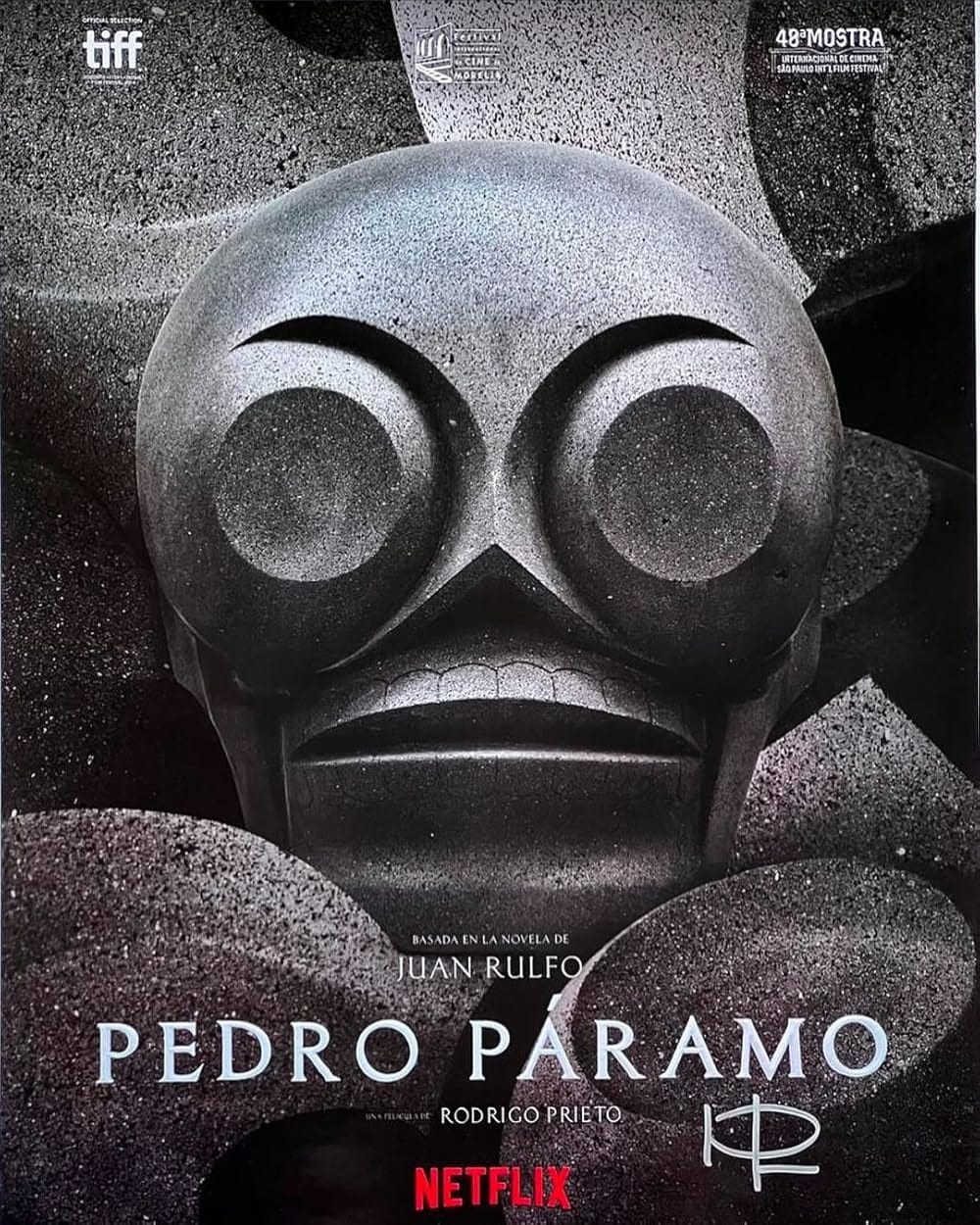
Pedro Páramo himself crosses his final threshold at the end of the novel, killed by his son Abundio—the same Abundio who guided Juan Preciado into Comala at the book’s beginning. Abundio comes drunk and grieving, his wife, Refugio, dead, seeking money to bury her, and when Pedro Páramo does not respond, Abundio stabs him. Pedro Páramo falls and then tries to walk, supported by Damiana Cisneros, but after a few steps, he falls again, “collapsed like a pile of rocks.” His last thought is of Susana San Juan, the woman he loved, the woman whose death made him allow Comala to starve, the woman whose grave he sits beside even as his own death approaches. “Susana,” he says. He closes his eyes. The body gives way, the breath stops, and the cacique who owned everything as far as the eye can see becomes another ghost in the town of ghosts he created through his cruelty.
What the novel offers, then, is a meditation on thresholds as transformation and as trap. To cross into Comala is to cross into death, whether you know it or not. The town itself is a threshold, a place between the world of the living and whatever comes after, a purgatory without the possibility of purgation because there are not enough prayers, not enough grace, not enough living people to intercede for the accumulated dead. And this threshold was created by power, by the violence of Pedro Páramo and the landowners before him, by the way that colonial extraction and feudal domination emptied the land of life until only death remained. Comala is not simply haunted; it is murdered, killed by the same forces that concentrated wealth and power in a single man’s hands while leaving everyone else on straw mats, without resources, without recourse, without even the prayers that might help their souls find rest.
The Media Luna, Pedro Páramo’s hacienda, represents the economic engine behind the threshold. When the young Pedro Páramo’s father dies and leaves the family in debt, Pedro asks his administrator, Fulgor Sedano, not how much they owe but to whom they owe it. “I’m not interested in how much, just who to,” he says. The debts will be managed not by payment but by acquisition—by marrying Dolores Preciado, Juan’s mother, whose family holds the largest debt, and thereby converting what is owed into what is owned. The threshold between debtor and creditor, between the dispossessed and the possessor, is crossed through marriage, through the absorption of other people’s land and labor into the single entity of the hacienda. Fulgor, who thought he would outsmart this young patron, discovers instead that Pedro Páramo understands power better than anyone: “I’m suspicious of my own shadow,” Pedro says. The Media Luna grows by swallowing the land around it, falsifying boundaries when necessary, killing those who resist, until it extends “as far as the eye can see.” And when the revolution comes, Pedro Páramo survives it too, buying off the revolutionaries, giving them weapons and horses to fight elsewhere, protecting his own through the violence that devastates everything around him.
The town of Comala is the waste product of this accumulation. The life that should sustain a community has been extracted, concentrated, owned by one man, and what remains is a husk, a geography of departure and death. The people who once lived there—the families whose land was absorbed, the workers whose labor was exploited, the women whose bodies were violated—have either left or died, and their deaths have accumulated in the very soil, in the walls of the houses, in the air itself until it becomes impossible to breathe. Juan Preciado suffocates on the density of the dead, but what killed those dead was not supernatural but economic: the same forces that operate everywhere land becomes commodity, labor becomes resource, and human beings become obstacles to profit or instruments of extraction.
Perhaps the novel teaches us that to dream the thresholds our characters must cross means dreaming the power that created those thresholds, the violence that made certain crossings necessary and others impossible. Juan Preciado crosses into death because his father’s cruelty created a geography of death, a landscape so saturated with the consequences of exploitation that it can sustain nothing living. The threshold is not natural but produced, not given but made by history, and to cross it is to encounter that history in its most condensed form. To dream a threshold means asking: Who made this boundary? Whose power does it serve? What violence holds it in place? What would it mean to survive the crossing, and what would survival cost?
For those of us writing from colonized spaces—from the Philippines, from Mexico, from anywhere the land has been extracted and the people dispersed—Pedro Páramo offers a model for dreaming thresholds that does not romanticize the supernatural but traces its origins in the material. The ghosts of Comala are not arbitrary; they are the ghosts of a specific history, a specific geography, a specific set of power relations that produced death in such quantities that death became the dominant mode of existence. To walk the threshold between worlds, the novel suggests, is to walk the threshold between the living present and the accumulated violence of the past, between what exists now and what was destroyed to make the present possible. The dead in Comala are not simply dead; they are the murdered, the exploited, the abandoned, and their murmuring is not simply noise but testimony, the endless recounting of what was done to them, what was taken from them, what threshold they were forced across without their consent.
The road that brought Juan Preciado to Comala rises or falls depending on whether you are coming or going. But the novel reveals that for some crossings, there is no going, only coming, only descent, only the slow sinking into a geography that will claim you whether you meant to be claimed or not. You cross the threshold with a promise on your lips—a promise to the dead, a promise you did not mean to keep—and the promise becomes the crossing, and the crossing becomes the death, and the death becomes the murmuring that continues forever in the grave where you lie beside the other dead, telling each other the stories of how you came to be there. Let it begin with this: the understanding that some thresholds demand everything, that crossing them means becoming someone who can never go back, that the road you descend may have no corresponding ascent, and that the novel you write may need to hold this knowledge, may need to show your character approaching a threshold that will transform them utterly, perhaps even destroy them, and still crossing, still descending, still following the promise that pulls them toward what they do not yet understand.

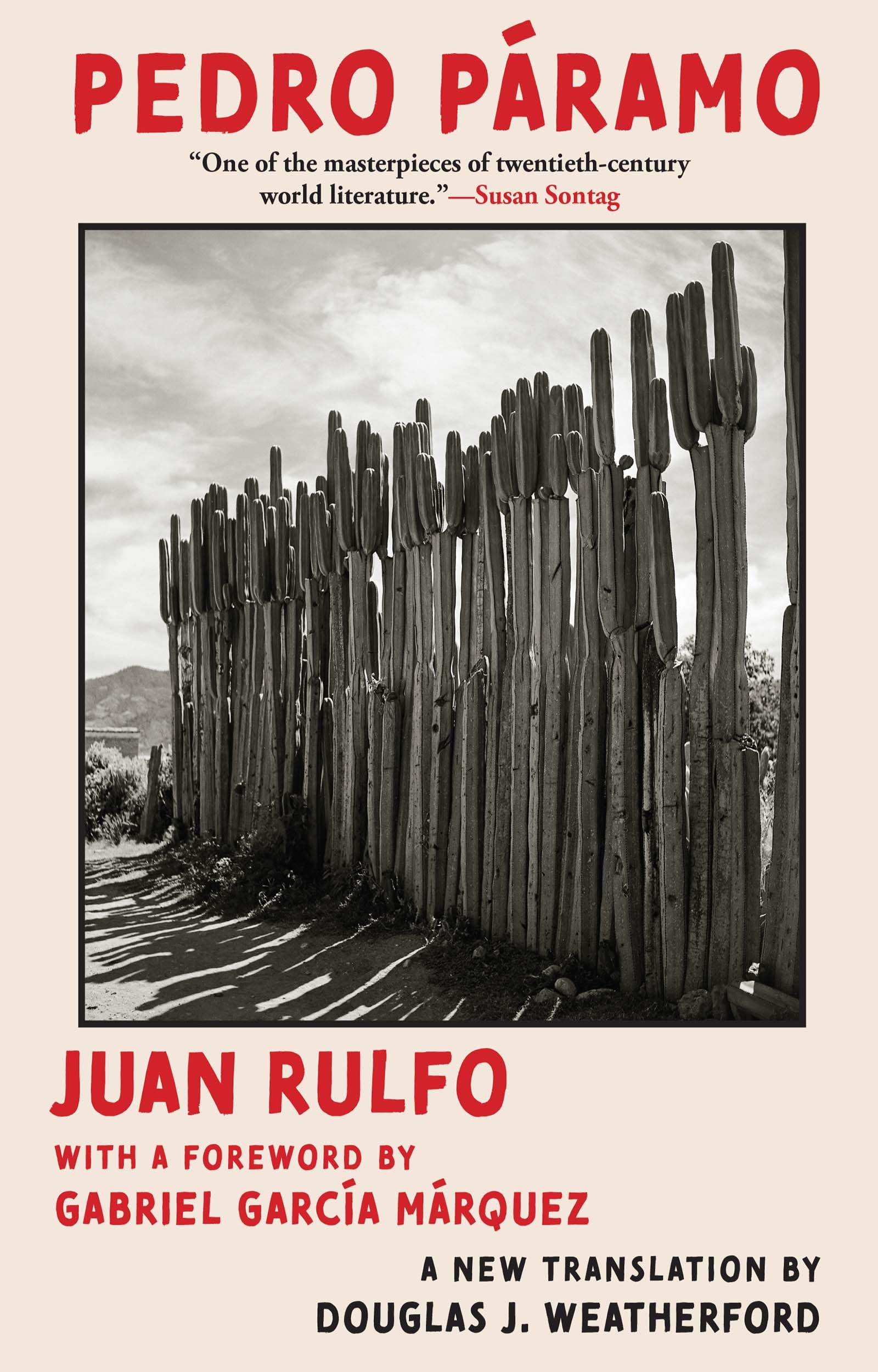
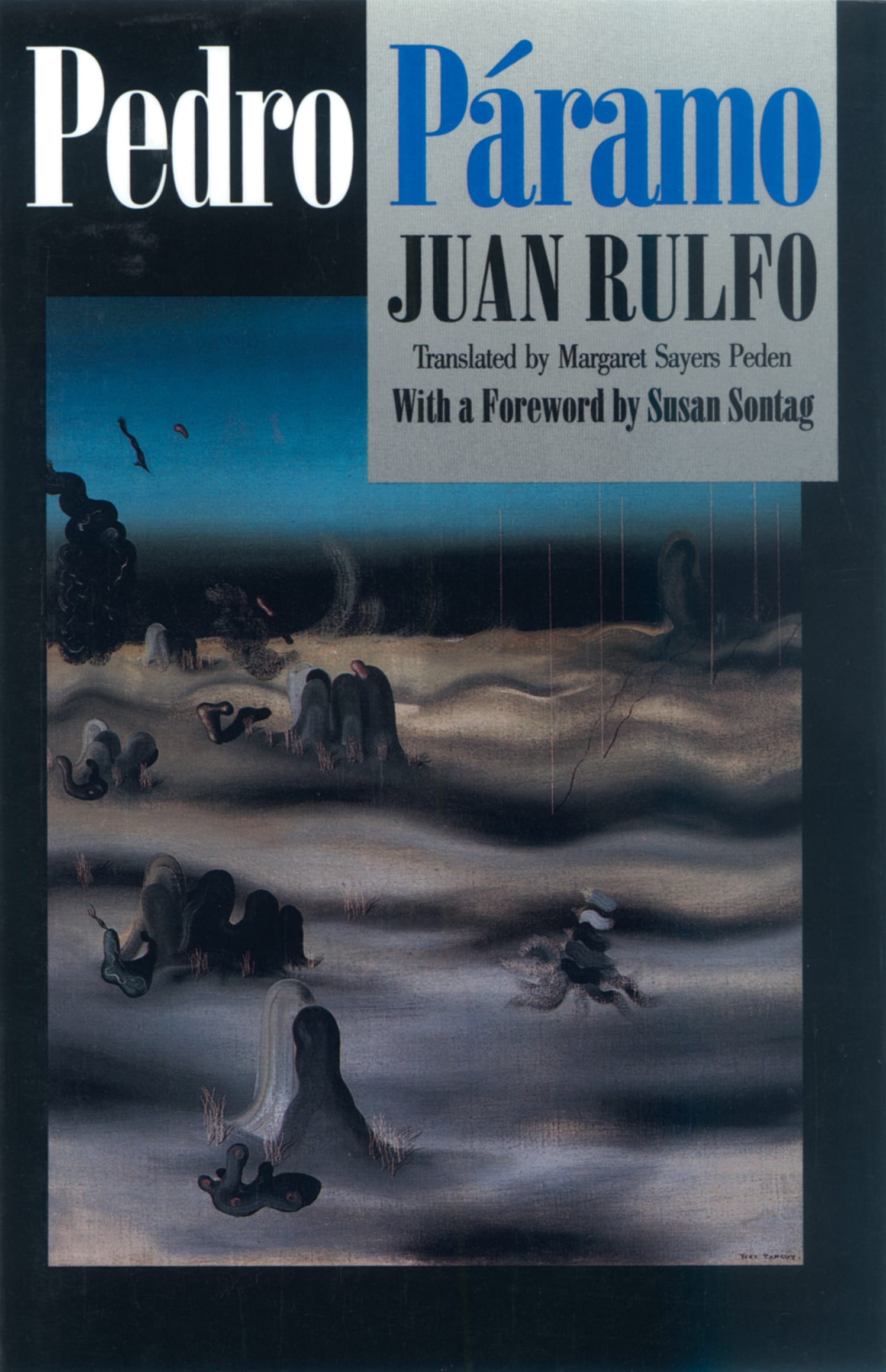
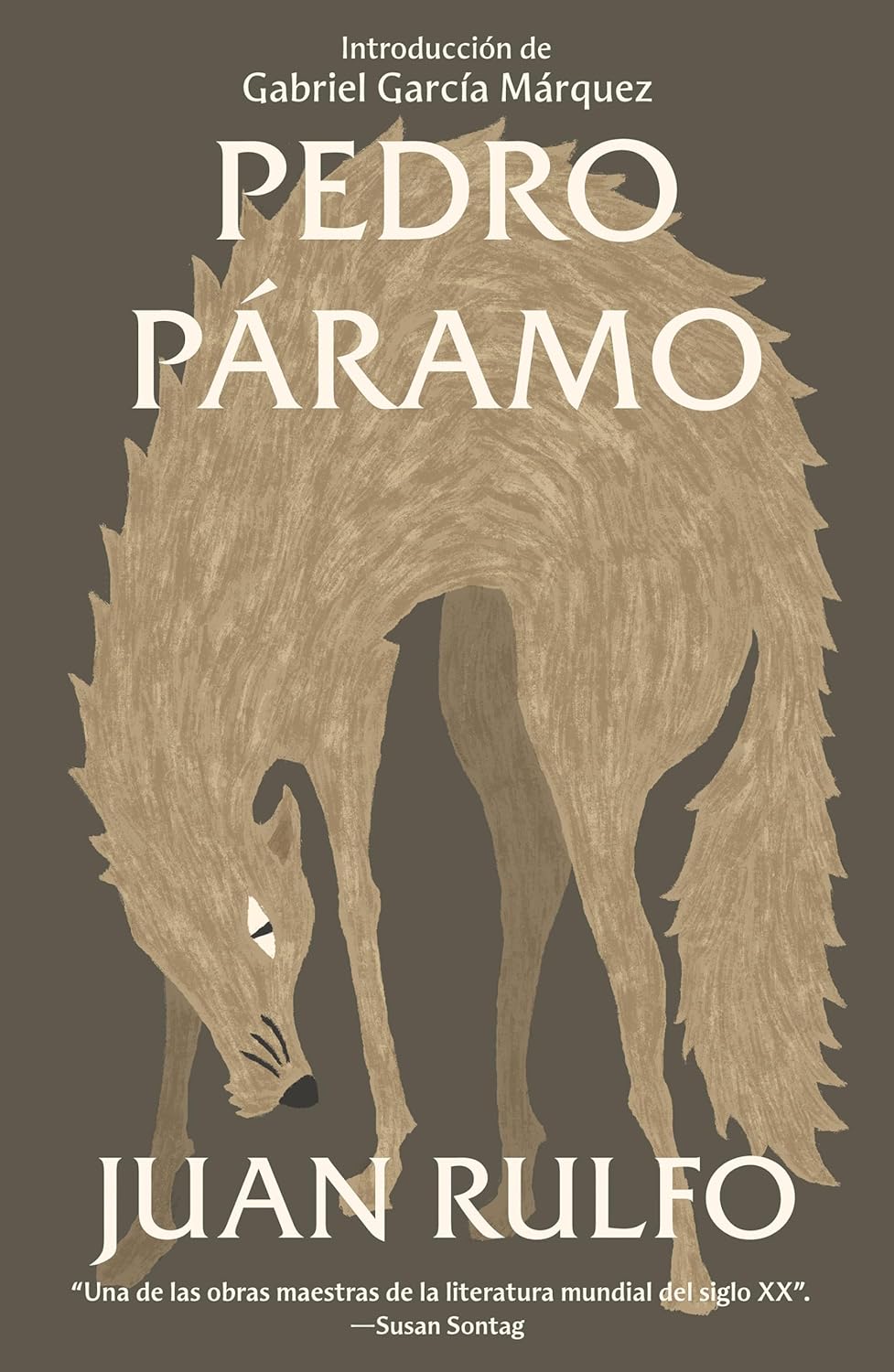
I am writing a series on Santinakpan Otherwise at patreon.com/ecsamar called “100 Steps to Writing a Novel,” and for each step, I recommend eight works—literary and otherwise—to help beginning writers work on that step. Two of those eight are novels. In a series of essays here at Esquire Philippines, I’ll explore how each of the 200 novels I recommend beginning writers to read will help shape their consciousness, if not their novel. This essay is about the first of two novels for my second step to writing a novel: Walk the Threshold Between Worlds, and it focuses on Juan Rulfo’s Pedro Páramo, published in 1955, translated into English by Margaret Sayers Peden. Rulfo, who published only this single novel and one collection of short stories in his lifetime, created what Gabriel García Márquez called the work that finally showed Latin American writers they could write any way they wanted. Pedro Páramo is a novel of ghosts and thresholds, of a son searching for a father in a town where everyone, including eventually the son himself, is dead.
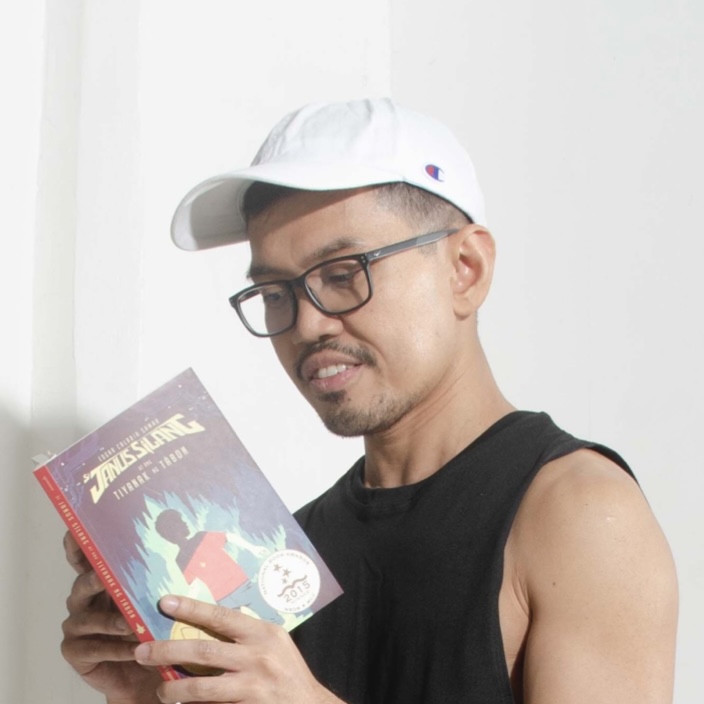
Edgar Calabia Samar is Associate Professor and Chair of the Department of Filipino at Ateneo de Manila University. He is the author of the award-winning Janus Silang series and has received multiple Palanca Awards, National Book Awards, and the S.E.A. Write Award from the Royal Family of Thailand (2024). He served as Visiting Professor at Osaka University (2017-2022) and Writer in Residence at the University of Iowa (2010). He is Vice Head of the National Committee on Literary Arts of the National Commission for Culture and the Arts and a member of the Filipino Critics Circle, LIRA, and Filipinas Institute of Translation. He develops literature and novel-writing guides and maintains a growing Filipino komiks archive through Santinakpan Otherwise on patreon.com/ecsamar.
ALSO READ:
Land Remembers What Bodies Forget: 'Beauty Is a Wound' and the Geography of Colonial Haunting
Let the Apartment Dream Itself: 'Territory of Light' and the Cartography of Containment
To Novel the Dream Is to World the Write: Twenty Years After Writing Walong Diwata ng Pagkahulog
Again, You Are Not Ready—Begin: Writing Sa Kasunod ng 909
Writing Continues What Living Interrupts: Finishing a Trilogy with Teorya ng Unang Panahon
Edgar Calabia Samar is an award-winning poet, critic, and novelist, and an Associate Professor at Ateneo de Manila University. IG: @ecsamar.
View More Articles About: