Flow's New Menu Is a Cultural Carousel of Peruvian Memory, Plated in Makati
Chef Kevin Uy stops arguing with fusion as a word and starts arguing with himself instead.
by JV Ordoñez
Published on Aug 16, 2026
So we finally got to round two at Flow, and the folks behind the stony Peruvian-inspired, well-oiled machine in Makati are leaning into their street food core memories.
The balancing act between the eccentric Kevin Uy and the purist Gato Ong translates into a second degustation that is a return trip to the Andes Mountains and the street carts of Peru for a story that is much tighter but not necessarily bigger.
"That (a tighter) narrative was one thing we felt was missing from the first menu," Uy told Esquire Philippines during a preview of their latest gastronomic statement.
He spoke of the technical rigor the new nine-course lineup demands from a kitchen, which, by Ong's own admission, treated last December's debut like trial by fire. This is the Flow kitchen fine-tuning a capacity to preent compelling memories from a country and cuisine that is underexposed and quite challenging to earnestly express.
Where the first menu sprawled across biomes, locations, and territories, this one narrows to dishes and cities. Think of this as a subtle distinction of this journey as more of his diary during his tenure in the vibrant Latin American nation.
Caldo de Gallina is the menu's opening salvo, tinigib pasta standing in for the noodles and poultry sliced thin enough to disappear into a broth built for comfort that effortlessly evokes homey nostalgia.
Parihuela follows, a nod to the port city of Callao done in blue swimmer crab and dried chilies, paired with a cevicheria sampler called Ronda Marina that Ong says the kitchen genuinely enjoyed building, clam shells and salt dough forming a vessel for a toast that nods at Almejas a la Chalaca, grilled octopus doing its best Anticuchos impression, and abalone sashimi accommodatingly drowning in yellow habanero.
Caldo de Gallina
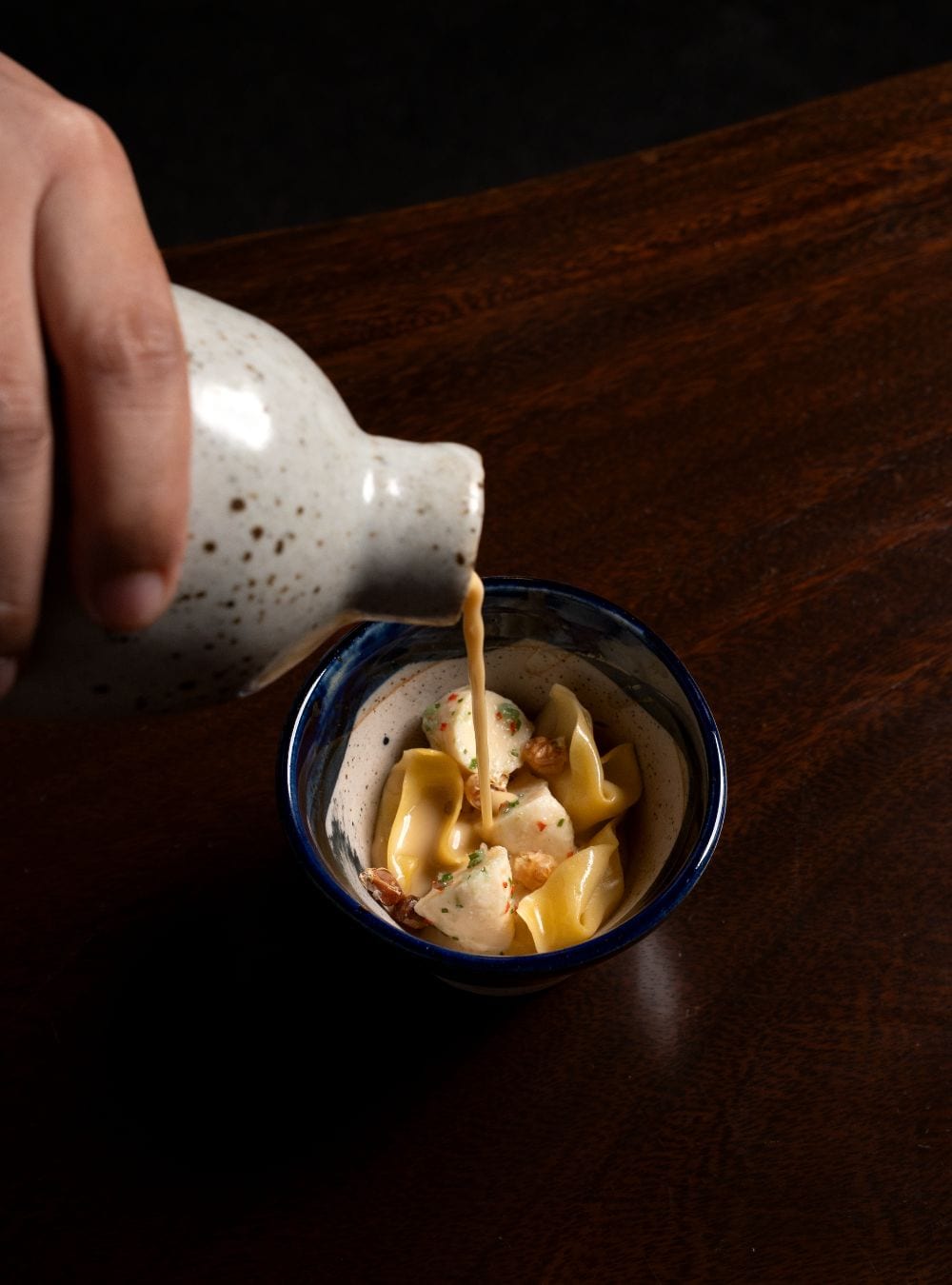
Parihuela
.jpg)
Ceviche
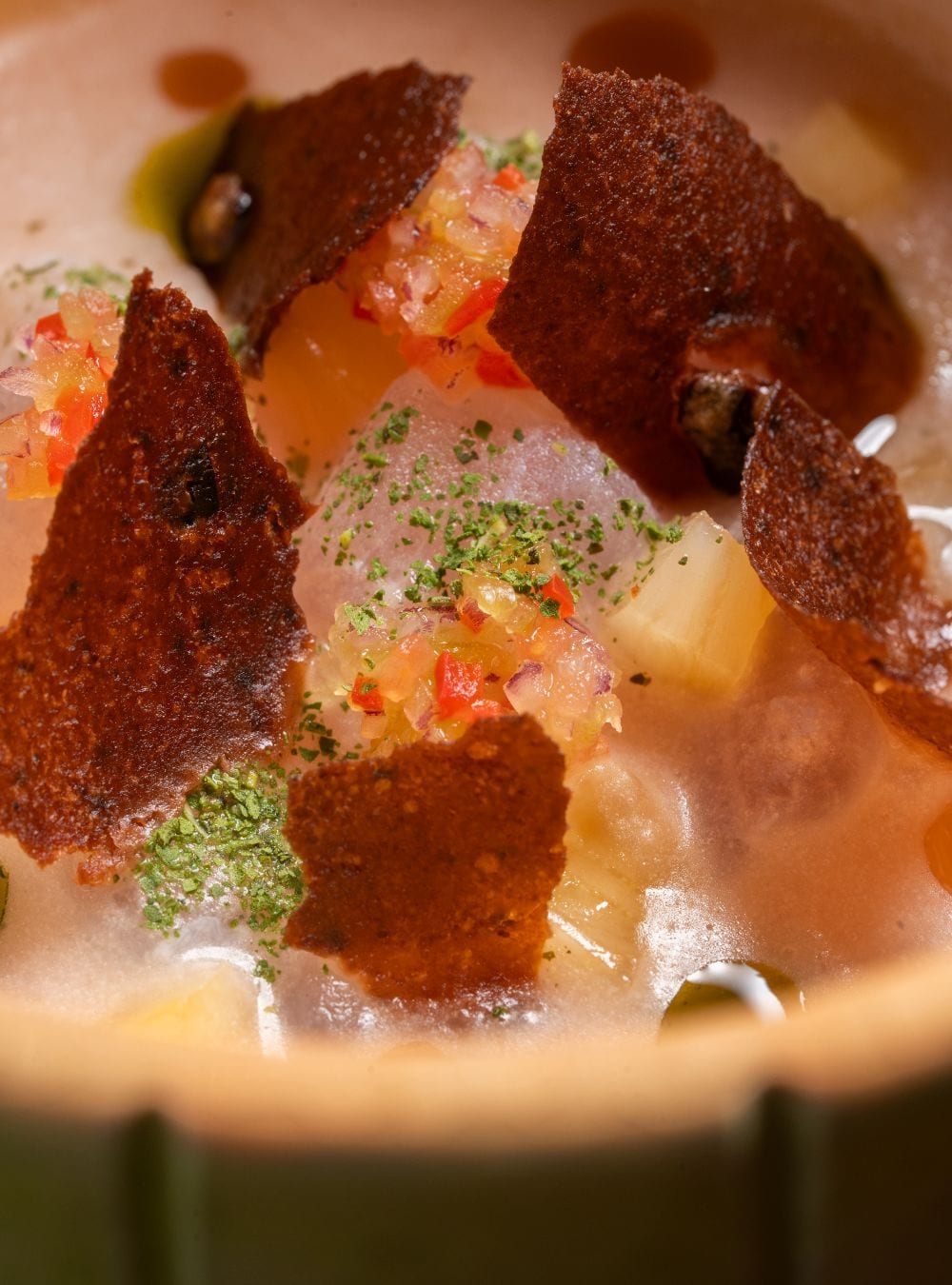
We then mosey along into the quintessential Peruvian dish and, simultaneously, its national dish, Ceviche, which will always be the climax of a Flow menu. And right on cue and in line with the restaurant's continuity, a taste of freshness sits on top of leche de tigre built from cacao and cacao juice instead of the straight citrus hit most kitchens lean on to firm up raw fish, and scattered through the bowl are nubs of fermented yacon, the same root that carried Flow's signature dessert on the first menu.
The citrus still does its job, curing the fish just enough without cooking it dead, but the cacao drags the whole plate toward something bitterer and darker than a leche de tigre usually goes, and the yacon answers with a sourness that comes from fermentation rather than the flat sweetness you'd get serving the root raw. Uy and gang clearly weren't finished with either ingredient once dessert ended. Here they turn up seasoning raw fish instead, carried over from one course category into a completely different one.
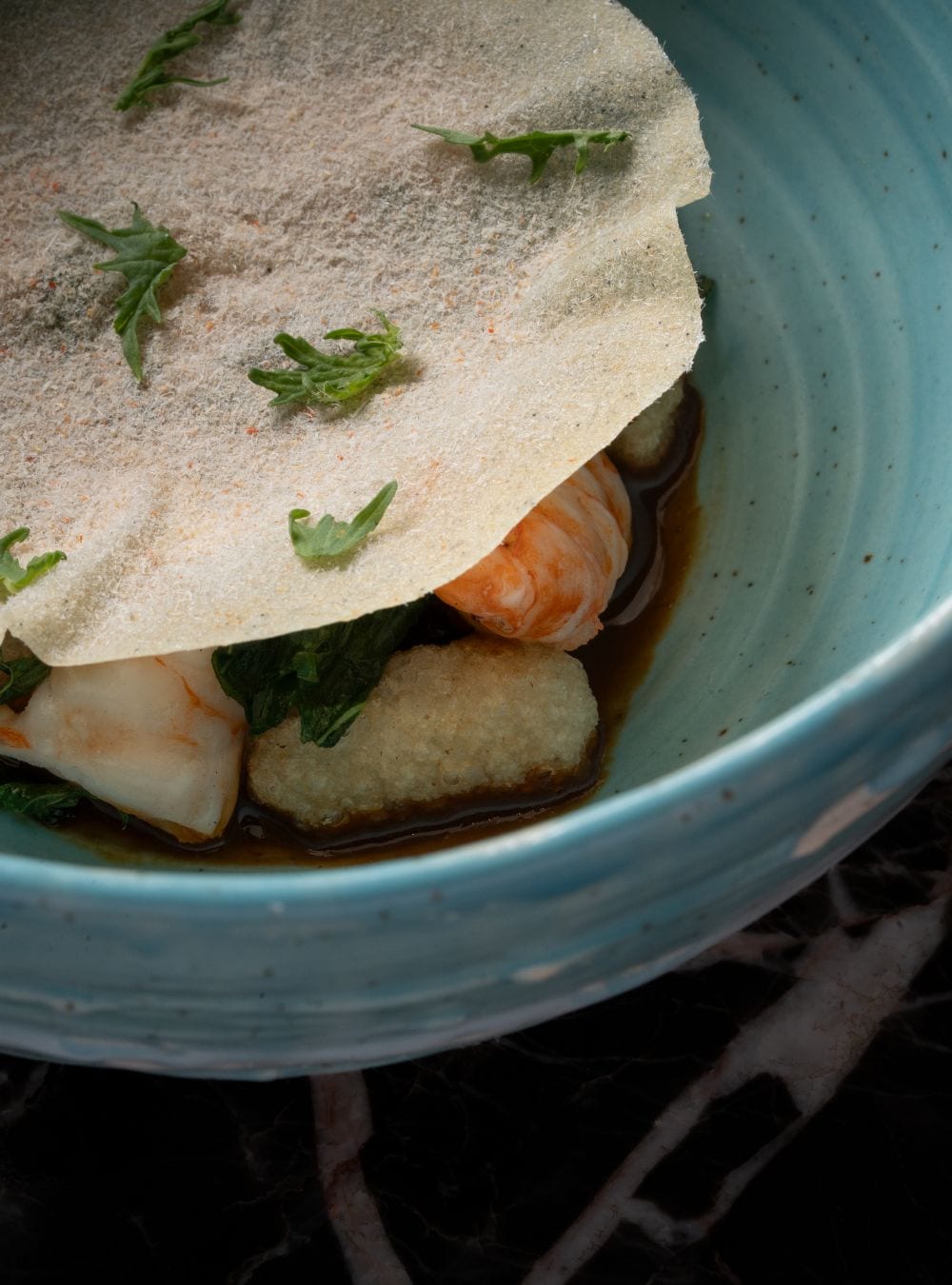
Chupe de Camaron gets a version of the same treatment, grilled ulang standing in for the shrimp Arequipa locals would actually use, its own head reduced down into the sauce it sits in, cassava balls for chew, and smoked greens underneath, with a crisp veil of cassava and prawn floss laid on top. A carnival for texture lovers out there.
But for Uy and Ong, it took a whole village to get the confit pigeon and pigeon breast (which depends on the rareness you request) dish to taste right.
Pachamanca, the fourth course, arrives on a slab of ceramic cut to look like a mountain range, glazed until the skin goes the color of an old peso coin, and Ong has a name for it: pure lollipop meat. The design ethos here is to be picked up and gnawed, a piece of fine dining that dares you to forget your cutlery somewhere between the honey glaze and the marigold.
"I would say that out of all of the courses, the pigeon gave the most wow," Uy said, then corrected himself. "Oh, that and the Ronda Marina. Those two gave the most wow because of the elaborate things behind that plate." The logic behind picking a fight like that hasn't moved since June. "Does it meet all the criteria?" he said, working through it out loud like he still runs the checklist every time. "Does it meet me? Like the story, how did this fit in the story? What can we do to improve it further? That's what our driving philosophy really was."
Chupe de Camaron
Pachamanca
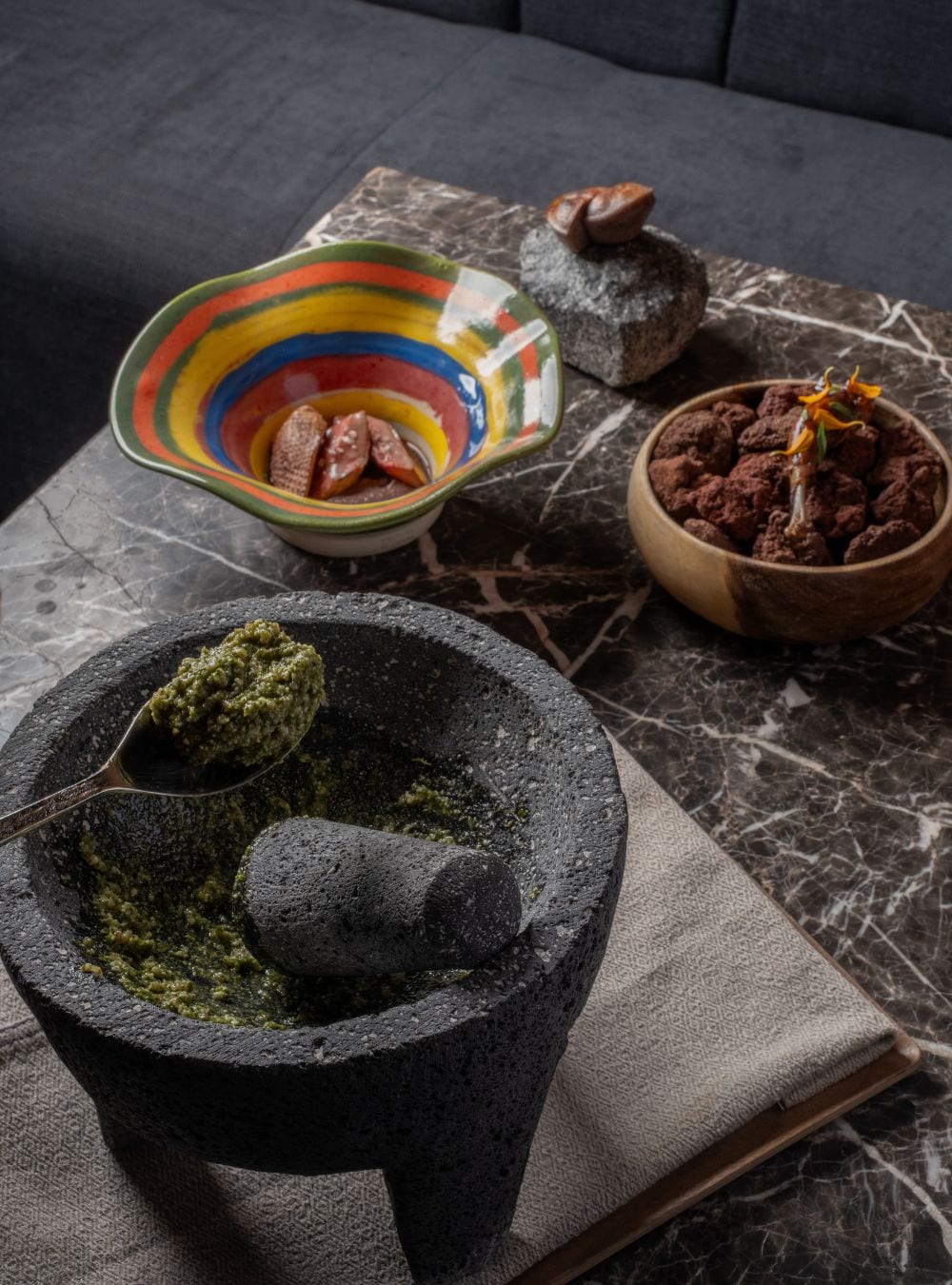
The meticulous and pedantic nature of picking out ingredients requires a certain level of stubbornness that doesn't accept sacrificing a meal's quality and purity.
He carries the same stubbornness into the parts of a tasting menu most kitchens treat as filler. The palate cleanser comes out hot instead of the usual sorbet, a jab at what he calls the "stick tradition." "We pair the red wine with ceviche," he said. "You don't really see that at all, because people think there are these secret rules." He doesn't drink wine himself, which makes his confidence about the list funny in a way he'd probably enjoy hearing out loud.
All of these dishes are rooted in cherished sensuous memories of Peruvian street food and culture during his tenure there, and none more are embodied in the brilliant Picarones dessert.
This is the course that closes the night with a scoop of carabao milk ice cream under three spiced kamote donuts, warm syrup running into candied sweet potato leaves. Uy traces the whole thing back to Kennedy Park in Miraflores, to a street cart he used to hit during his five years cooking under Virgilio Martínez and Pia León at Central, the kind of stand that sells root crop sweets to people with nowhere else to be that afternoon. "It's made from sweet potato and pumpkin, one of my favorite things," he said. "They pair it with a syrup that's basically a local tree sap and powdered sugar.
They really source a lot of their ingredients from plants; it's very herbal, very natural. I really like the way they source their ingredients; they take the land into consideration," he says, circling back to why it matters to him. "These are just my favorite dishes in Peru," he said. And me paying homage to that, Betina Carangan, Flow's sous chef, built the dessert lineup around memories like that one, Uy's included but not exclusively his, and it shows in how personal the closing stretch of the menu gets without ever turning precious about it.
He stressed that desserts should "finally feel like desserts," citing the need to change his own first menu's habit of ending a meal sideways instead of sweetly.
"I don't want people to think that they need to spend and spend and spend," the chef said.
"I want people to leave happy. I want people to leave like they were treated fairly."
Picarones
.jpg)
Esquire PH's resident music scribe, wristwatch disciple, and essayist fluent in niche internet subcultures and Philippine politics.
View More Articles About: