The Man Who Has Played Over 9,500 Board Games
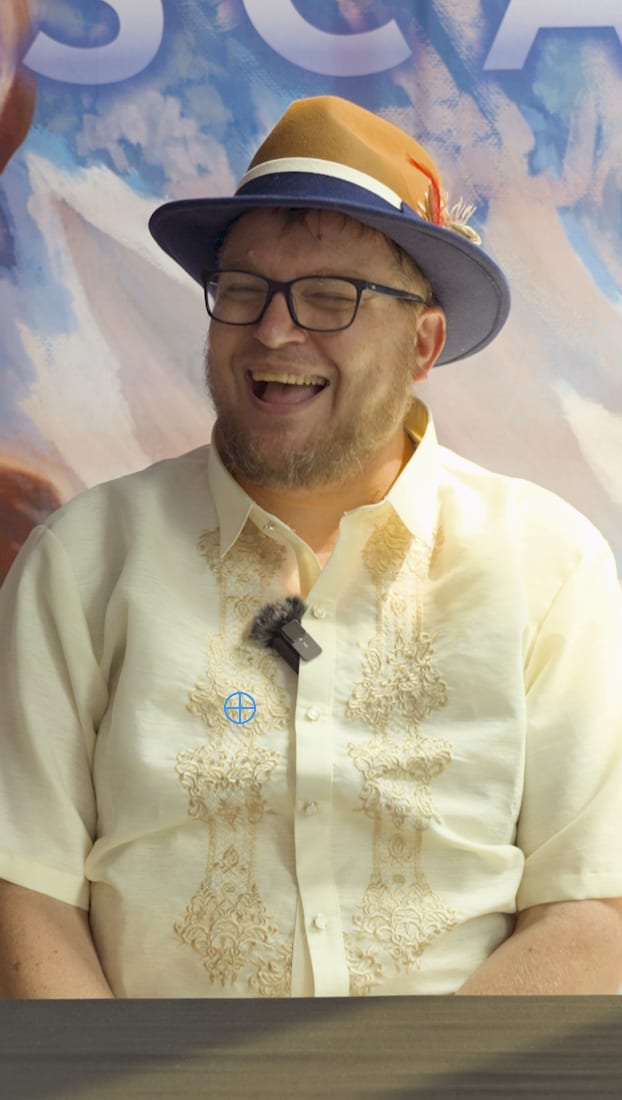
Esquire Philippines chats with Tom Vasel of the board game review channel The Dice Tower. He was recently in Manila for the All aBOARD Expo 2026, the biggest board game convention in Southeast Asia.

by Zach Yonzon
Published on Jun 2, 2026
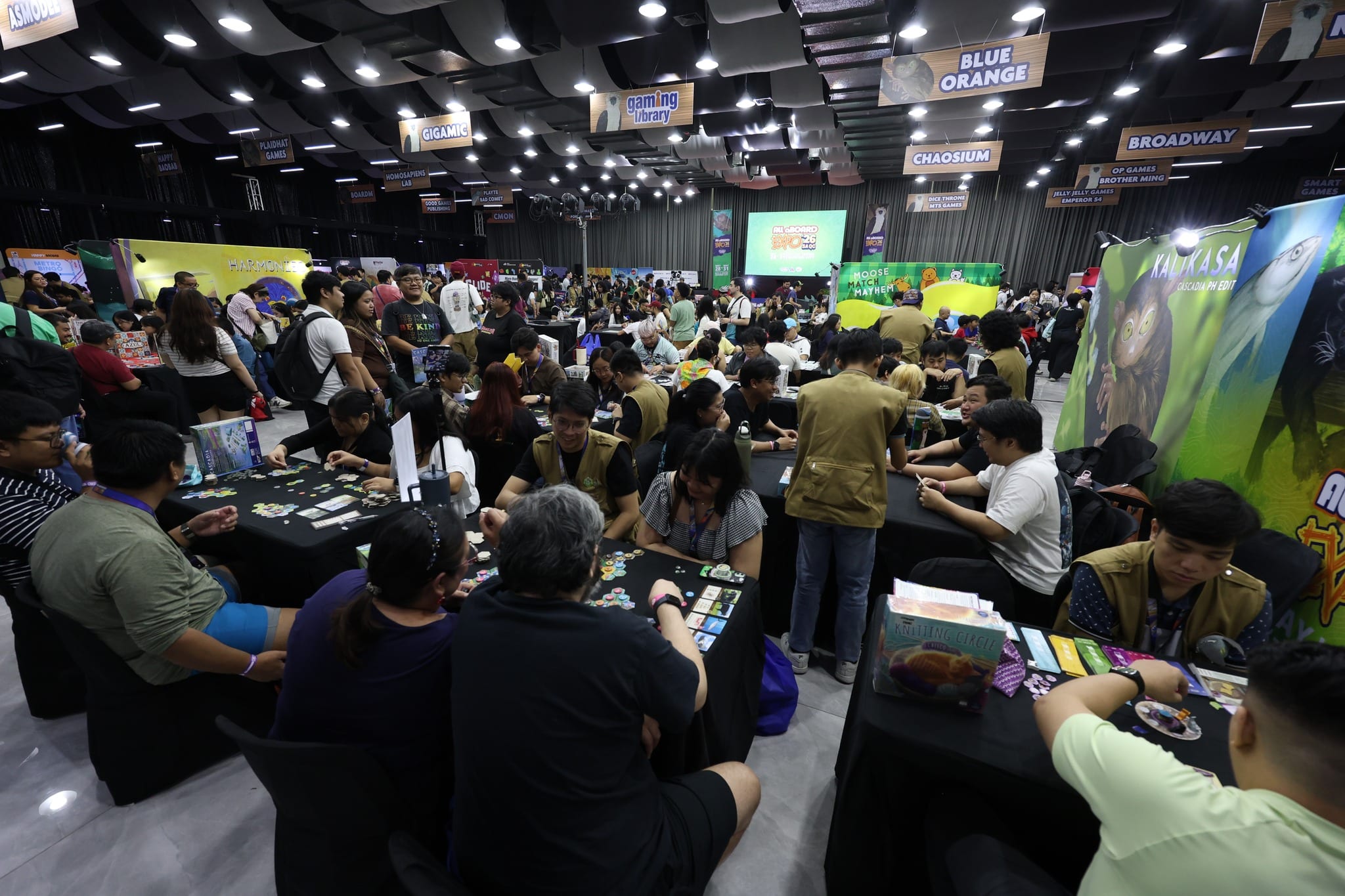
Tom Vasel, who's based in Homestead, Florida, was recently in Manila for the biggest board game convention in Southeast Asia: All aBOARD Expo '26. It ran from May 28 to 31 at the Quezon City M.I.C.E. Center.
Vasel is a podcaster, designer, and reviewer of board games. He hosted The Dice Tower podcast from 2003 to 2022, which has more than 300,000 subscribers; and publishes board game reviews through his Dice Tower website.

ESQUIRE PHILIPPINES: What got you into board games?
TOM VASEL: I was born. No, I mean, really, I played board games. So when I was a child, my parents, when I was three years old, they decided that TV was a bad thing for children. So we got rid of the TV from our house. So I did not have a TV from when I was three all the way ‘til I graduated (and then) they got a TV. After I went to college, I was like, "Are you kidding me?" But because we didn't have a TV, what was I supposed to do? I read books all the time, which was good for me. I read thousands of books, but we played games. Board games. So I really like that.
Now, we didn't play anything that people knew about. We played Uno and Monopoly, you know that’s (popular). But when I was 12, my parents bought me Stratego, and I also got Scotland Yard, and I was like, "Wow, these games are strategic." So I started playing those. I went to the neighborhood, I taught other kids (how to play these) games, and I just became known as the board game guy.
I was always playing board games, and I just kept doing it. I played board games in college. I started a board game club. I'm obviously a very manly man. And then for a brief time, I got waylaid playing collectible card games and miniature games. But when I got married and moved to Korea, my wife did not want to play Magic (the Gathering) or Warhammer. I was like, "Well, my whole life I played board games. I'll find some board games." So I went online and found a new website that had just started called Board Game Geek, and I said, I'll get the top-rated games. So I ordered them all, and I started playing them with her, and I said, "These are fantastic. I need to tell people about them." So I started writing reviews, and that was that. So that's how it happened.
So BoardGameGeek was first by a year.
Yeah, it's around the same time. Okay, so here's the thing. I love miniature games, and I still like them, but I just found a problem that my wife does not want to play them. And I wanted to do something. Like when I played Warhammer and moved to Korea, I was like, "Hey, who wants to play Warhammer with me?" Nobody. I mean, you'd have to find someone else who also plays Warhammer. I can't say I have two armies. Read this book. That's too much work, right? (But with) a board game, though, I can say I'll teach everybody. It was just so much easier. And I like the community better.
We can thank your wife for Dice Tower.
Well, sure! I just wanted … I love my wife, and I want to do things with her. And I thought that was fun. It’s funny because last night, or I guess in the morning, I called my wife, and she was board gaming without me. The board gaming event I run, and she went on her own! I was like, well, alright, she doesn't even need me anymore! But I think board gaming is a great way to bring people together. I really like it. One of the problems with miniatures, games, and collectible card games—at least when I played it, it's not always the case now—but it was 99.99 percent male. And there’s my wife. It's just uncomfortable, right? But now, when we have board game nights at our thing, lots of women show up, and it just makes it better overall. Men act better when women are around. It's definitely the case.
We hope so.
No. They do. You can watch it. It’s very obvious. And I like that. And I think we bring out the [best] in each other.
You have played more board games quite possibly than most anyone alive, right?
So I've played nine thousand five hundred games. I haven't hit ten thousand yet. I'm going to make a big deal when that happens. But that will probably be next year.
You actually keep count?
I do. I mean, I might be off and everything, but I try to keep track. Every time I play a game, I rank it. And so I keep the stats. So I think I'm at 9,580 or something. I'm like, oh, next year I can hit 10,000.
It would be crazy to ask you to rank your favorites, but we’ll throw it out there for you.
You know, I do that every year. I do my top 100 games. I love ranking games off the top. So you know that when most people ask me that question, I usually don't answer. So if someone comes up to me, because if, let's say, I'm at church or something and someone says, “Oh, you do board games. What's your favorite game?” I almost never answer because my favorite game will not be their favorite game. I'm like, “Well, what do you like?" And then I tell them a game I like a lot that they might like, but it's Cosmic Encounter right now. I love Cosmic Encounter. It's almost 50 years old, that game. It still works really well, but there are lots of games. And my favorite games, I do the top 100 every year, and people say it changes. I'm like, "Well, of course, that's how we are." My favorite food when I was a kid was different than my favorite food now. Sometimes they change a little bit, but I eat new things, and I'm like, "Well, now that's my number two favorite food." It's the same way with games.
What game mechanics are your favorite?
So there are a lot of things in gaming I like … I like negotiation, I love making a deal. It was pretty funny when Duane (of Gaming Library) and I went to buy these [custom barong Tagalog], and he's like, “Listen, you have to barter with these people," And I was like, "Yes!" I think that's so much fun.
My wife hates it because when we go out, like when we go to China or somewhere where they barter a lot, I'll say, "you need to go away." Because they'll say, "Here's the price …" And my wife will go, "That's pretty good." I'm like, “No! We need to act sad.” I would bring over my kids and be like, "I have seven children. You expect me to pay this price?!?" So I like that in games too. I also like revealing things at the same time. I like moving on tracks. I love deduction to figure something out. There are lots of things I like.
What do you think makes board games more appealing to people?
Well, number one, hands down art. Art is really important. Get a good artist. I mean, art is obviously subjective. But I mean, really good art and not just good art. Also, good graphic design. It matters a lot. A good artist and a graphic designer are two different people, so they usually have those together.
Other than that, I like the tangible feeling of things. It doesn't have to be. Nowadays, there are a lot of people who like miniatures in games. Miniatures are fine, I like them, but if there's like a good wooden piece, or for example, if you're moving a piece on the board and there's a track and it stays in that track, that just feels so good. Card quality, you know, Bicycle makes good card quality in their decks. But board games, you play a game of Uno, you accidentally look at the card, and it has a nick in it already. So I want my games to just feel quality. I like that a lot.
Have you played any games while you’ve been here in Manila?
I played some games today, but that was it. I played, but there were games I already knew. If I see some people, I'll be like, "Hey, I'll teach a game real quick." I like teaching games. So, usually at conventions, I tend to play games that are easy and quick to play because I can play with more people and finish, and then play with more people. Because a lot of times I go to a convention and someone says, “Oh, you're going to this convention, we should play a game.” And I was like, “I would love to, but maybe we won’t,” because let's say I play a game that's one hour with three people. That's three people per hour. I game for 12 hours. That's 36 people a day. There are four days. So it's 130, 140 people. But if 10,000 people come to the con and guys are like, "I will play with you." I'm like, "Maybe we won’t." Mathematically, it might not happen. So I try to make the math better. I'll be like, let's play a game for eight people, and it takes 15 minutes. It just makes it easier. So I try to do that at cons. Usually, the big, long games, I can play those at home.
What do you think of the board game scene here in the Philippines?
I'm very impressed with it. I mean, there's good leadership. I think that matters a lot. So most conventions and things, they tend to revolve around a few people. You need a couple of people who work hard, and then you need somebody who is bombastic and energetic. So you have Hans [Kenner Fernandez of Gaming Library], who's the bombastic one, but he also works hard. But he has a good team of people, and they care about people more than games and more than money. And I think that's important. It also blew my mind this morning to hear the mayor of the city [Joy Belmonte] mention Ticket to Ride, and the mayor of the city was here! GenCon is 80 times the size of this convention, and the mayor has never shown up! I don't think the mayor cares.
Mayor Joy Belmonte actually plays board games.
Yes, I was really neat to me! Well, not as much as the City Administrator [Michael Alimurong]. That guy lives board games, and I found that to be neat. So it's the same as anywhere else, though. There are people who love to play lots of very intense board games, and there are people who want to just play a fun, light party game, and that's it. It's the same way everywhere in the world. And what we need to realize everywhere is that that is okay.
And we often use this word, even in the board game stores here, they have "gateway." I don't ever say "gateway" anymore. If you play Ticket to Ride and you say, "That is a great game, do you want to play Twilight Imperium?" "No, I want to play Ticket to Ride." That's okay. [If people say], "My whole life, I just want to play these couple of games." That's okay.
That's not enough for me. I want to play new games. But for some people, they can play the same game every day, all year. And we have to accept that that's the way most people are. That's the way most people are about anything. Like when you go to a restaurant, do you order everything on the menu you like? Keep a record and say, I haven't tried this yet. Most people go, and they get the same thing they always get, or they have three or four things (they like), and they'll pick one. Most people do not say, I haven't tried this yet, so I need to try it. But some people do. And that's the way some people are about board games. They have to try them all. That's me.
Speaking of trying them all … 9,000 board games, that's a lot of rules! How do you manage to remember how to play each one?
Well, I don’t. I don't remember how to play all of them. I am very fortunate. Um, I am not good-looking. I am not strong. I am terrible at sports, but I can read about one thousand four hundred words a minute. I can read really fast, but I don't know how to explain. When I read, my eyes just scan the page, and I can get the ideas. So that helps me with rule books. And so I learn rule books pretty fast. I make mistakes because the way I read, I will. My mind says these are not important words. So sometimes I'll miss a rule, but that helps me. And then once you play a lot of games, you start reading rules, and you go, oh, got it. It's the same as these 80 other games.
What do you think is the best way to get people into playing board games?
I don’t, you know, I think my mind has changed on that. I used to say I was going to evangelize people. Oh, get everyone in the games. If I meet someone now and I say I play games, and they go, "I don't want to play games." I'm like, "Okay." So I don't know about that.
To me, the best way to play games—I make my children play games because they're my children, just like I make them do anything. I don't make them play it all the time, but sometimes. And also other people. So we ran a game night at our church last week, and these people came in, and one guy said, "Board games are boring. I'm just here because my wife is going to play." So I was like, "All right, you're missing out." You'll have no fun, but that's okay. And so then my wife was teaching some people Ticket to Ride, and my wife said, “Why aren't you going to play? Why don't you want to make your wife happy?” And he was like, “Fine.” So he sat down, and he had a good time. But for me, I was like, if he doesn't want to play, I'm not going to make him. So I get people to play games by introducing them to them. But I think the best way, if you want someone to play a game, is to find out what they love in real life and show them a game about that. If they're a big sports person, show them a racing game. If they love, you know, trains, [teach them] Ticket to Ride. Find something that they like doing. And that's what I do.
Where do you think the state of the board game industry is now?
We're in an interesting state right now. Um, on one hand, it's amazing because we're seeing Asia grow, and Asia is the most populated part of the world. Now we're seeing more people play games. So that's fantastic. The current global trade wars are not helping. I think consumerism has gotten out of control. At least I'm speaking from an American standpoint.
But the idea of so many people now collecting games, and they don't play them. They're like, I bought this game, the deluxe version, six expansions. I'm like, “Are you ever gonna play with that stuff?" And they're like, “100 percent, I am,” and they know they're lying. I know they're lying. Their wife knows they're lying. Everyone knows they're lying. But we pretend like, nope. And we pretend it's an investment. It's not an investment. You're not going to [sell]. Who are you going to sell that to? You know. Also, it's taking up [space]. You have to buy a new house to fit it in. And I'm exaggerating, obviously, but really, we are at the point where I know a lot of people, they just buy games, and that's fine. But I think we should want to play games more.
There are too many games out in the market. There are a gazillion of them. I'm not so worried about that. The market will correct itself. People say, "Oh, this game should have sold more." No, it shouldn't. It wasn't that good, you know. But at the same time, can you complain? You can go out right now and buy thousands of different games. Look how many games are here. This is a smaller convention. There's only, like, 20 publishers here and there are hundreds of games to buy. That part is great. I am always jealous of people who just start gaming now, because it's like going to a buffet and everything is good, but you've never had any of it, and you're like, “Ah, what do I do?” That's amazing. I always say this, and I mean it—if all the publishers in the world stop making games right now, I would still never be bored. We have so many games that exist that we could play for the rest of our lives. I might finish Gloomhaven.
There are Euro games and American games; do you think there’s an Asian board game style?
I think so. I mean, again, I’ve got to be careful. I want to be clear. I'm never lumping Japan and China and the Philippines and all that stuff together because I think when we say Euro game, we mean German game because French games are wild and Italian games are different and Polish games—Awaken Realms is Polish—and we call those American games that come from Poland.
So, if I'm looking at games from Asia, I notice that they're very much, they like to be more silly than not here. They will include a lot of people at the table. They care about space. The conservation of space. Japan's really big in this, you know, all these small, little games. And that's what I would [think] in my mind if I see a small card game that's weird and does some unusual things and makes everyone at the table laugh. I'm like, “That's from Asia, probably.” But again, you can find anything, anywhere. We use those terms. I wish we had better terms. Euro doesn't even mean anything, since some of the most "Euro" games I ever played were made in America, and the most American games come from Poland, you know? So who knows? I was just saying to someone else [that] I compare it to food. When I first went to Korea, I was at a board game cafe, and I ordered a piece of cake, and they brought me that cake with eight forks. And I was like, "I'm not sharing this with anybody. What are you talking about?" Because I'm from America. If I order a piece of cake, that cake is for me. But in Asia, meals are shared experiences. You have some food? Hey, I'll take some of that. You can have some of mine, whatever. And so that goes for gaming, too. Solo games are not so strong here because [Asians] want to—Asia likes to have groupings of people, a bunch of people having a blast at the table. So the games kind of permeate in that way.
ALSO READ:
A Filipino Twentysomething Entrepreneur Created This Board Game About the Byzantine Empire
'Kalikasan' Is the New Old Board Game You Need to Buy
Zach really, really, really loves films.
View More Articles About: