A Stellar Ryan Gosling Is Project Hail Mary’s Saving Grace
The big screen adaptation of Andy Weir’s 2021 novel is an otherworldly cinematic experience.

by Zach Yonzon
Published on Mar 18, 2026
The world is going to end. This is for certain. The law of entropy posits that at some point, in a future far further than any of us — or in likelihood all of humanity — will ever get to see, the universe will reach thermodynamic equilibrium and essentially die. That is, of course, assuming that the laws of physics as we know them apply to the entirety of the universe, which, according to data sent by the James Webb telescope hurtling through space, might not always be the case. So the Goldilocks zone, that range of orbits around a star which allows planets the right temperature and atmospheric pressure to support liquid water and therefore, theoretically, life, might be scientific hokum. At least that’s what eighth-grade teacher and doctor of molecular biology Ryland Grace (Ryan Gosling) thinks, which is why he’s become something of a pariah in the scientific community and is teaching middle schoolers instead of giving TED talks.
As it turns out, the second law of thermodynamics isn’t the only way stars can die in Project Hail Mary, because there are extraterrestrial lifeforms called astrophage, or star eaters, that treat the energy produced by stellar nucleosynthesis as hors d’oeuvres and aphrodisiacs. The astrophages have infected our sun, cooling it significantly and moving up our timeline for the end of the world. In what might be the most unrealistic part of a science fiction story, all of Earth's governments come together to figure out a solution to our impending extinction. The United States government under Donald J. Trump’s second term terminated or froze over 7,800 research grants and fired or suspended over 25,000 scientists and personnel from agencies overseeing research. The likelihood of any US participation in a science-led multi-governmental effort would be laughably low.
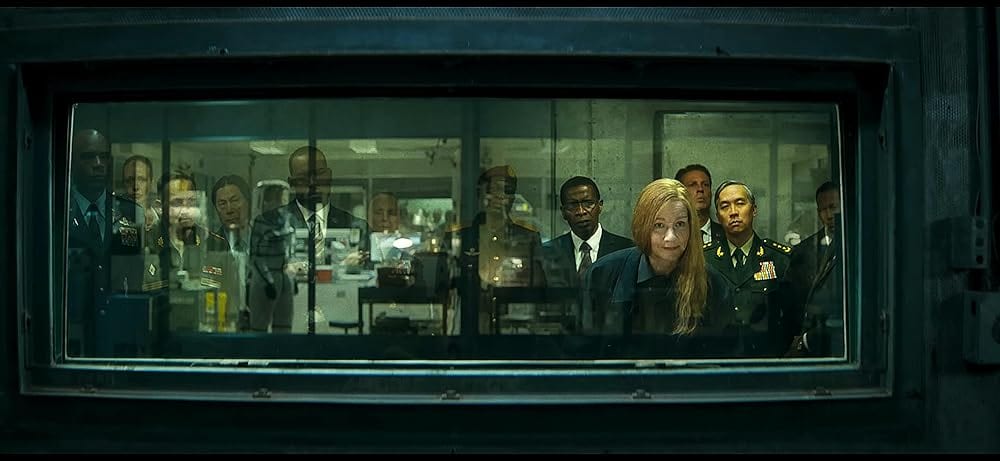
But Andy Weir published Project Hail Mary in 2021, when Joe Biden was President, and Trump hadn’t yet declared a full-on war against science (and pretty much everyone, for that matter) or let Elon Musk bring in poorly-educated twentysomethings to gut scientific research based on how ‘woke’ they seemed. Thankfully, Project Hail Mary is fiction, and Grace is brought in by team leader Eva Stratt (Sandra Hüller) to lend his expertise in molecular biology to figure out what makes the astrophages tick in a concerted effort to save humanity, not take advantage of it. The astrophages are cheap and abundant sources of energy that never get weaponized or monetized, despite their destructive capability being shown in one scene. Grace’s unorthodox ideas and rapid discoveries about the alien lifeforms put him at the forefront of the project, and we learn that our one shot at survival, our Hail Mary, is to travel to the nearby star of Tau Ceti and figure out why it hasn’t dimmed like other nearby stars in the galaxy.
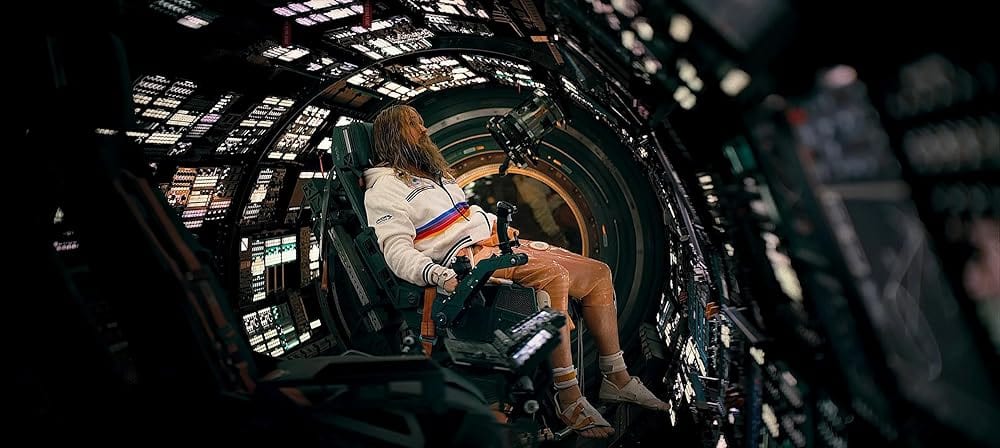
The story opens with Grace waking up from a medically induced coma inside a spaceship on its way to Tau Ceti with no memory of who he is, and the gaps are filled by flashbacks to his time as a teacher and his recruitment into the project. Drew Goddard, who also wrote the screenplay for the big screen adaptation of Weir’s 2011 novel The Martian, penned a faithful adaptation of Project Hail Mary that keeps most of the important story beats intact, including its most important reveal that gives us all pause and self-reflection. At the helm are powerhouse duo Phil Lord and Christopher Miller, who craft an arresting, awe-inspiring visual tapestry of loneliness, isolation, friendship, and hope that slowly unravels over 156 minutes of breathtaking cinema.
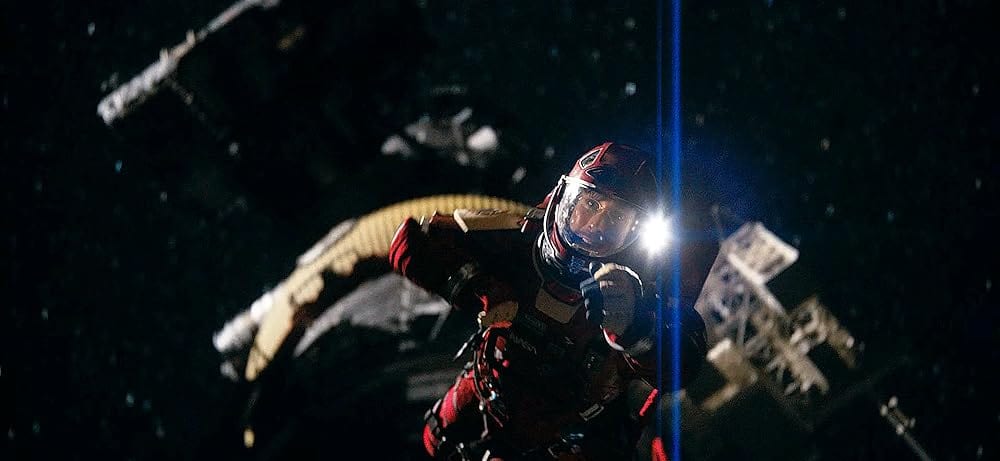
At Tau Ceti, Grace chances upon an alien lifeform who is also apparently on a mission to save his planet from the astrophages. He nicknames the alien, who appears to be a sentient, animated assemblage of rocks, Rocky (voiced by James Ortiz), and the two form a friendship based on cooperation, understanding, and discovery that’s an inarguable metaphor for embracing those who are different from us. Once again, fiction. Ryland Grace is an American. Many Americans’ response to aliens would be to deport or drop bombs on them. If the metaphor weren’t clear enough, Rocky’s species’ primary technology is the manipulation of a solid form of Xenon, a noble gas that derives its name from the Greek word ξένος ‘xenos’, which means ‘stranger’ or ‘foreigner’. Grace and Rocky work together to understand how Tau Ceti, a spectrally similar star to our Sun, doesn’t seem to be affected by the astrophages. In short, the key to saving humanity (and Rocky’s species, the Eridians) lies in cooperation with those who are unlike us.
Grace’s controversial contention about the existence of life not needing H2O stems from the non-controversial idea that not everything need be viewed from our narrow carbon-based perspective. It’s never directly addressed, but the walking, talking (or oscillating?) Rocky is proof that Grace was right all along and that man could benefit from a perspective not purely based on our own, limited experience.
Project Hail Mary also grapples with the concept of courage and our response to the call for sacrifice. The plot is somewhat reminiscent of Christopher Nolan’s Interstellar, where a world on the brink of starvation needs voyagers to find new habitable planets. One of the emotional cores of Interstellar was Joseph Cooper’s (Matthew McConaughey) sacrifice in leaving behind the world he knew and the family he loved in order to save humanity. Courage is essential to sacrifice, and although Tau Ceti is a mere 12 light-years away from Earth, it’s the kind of trip that demands a lot — even everything — from a person. Project Hail Mary tackles this conversation along the way, and it’s an inspiring reminder that, at the end of it all, there are those among us who are willing to put others before themselves. The story may be fiction, but we should all know this to be true.
Gosling is remarkable as Grace, captivating the audience almost all by himself for over two hours, and this should earn him his third Academy Award nomination for Best Actor. Rocky, despite being just a rock (without a face, at that), is genuinely endearing. Doubt and cynicism, least of all hate, have no place in a future where humanity’s existence is at stake, and Project Hail Mary showcases all of our best qualities as a species. It’s a sprawling, cinematic marvel that deserves to be seen on a big screen to help remind us of how small we are, how beautiful the universe is, and that, through the vastness and emptiness of space, all we have is each other.
ALSO READ:
Alien: Earth Is Must-Watch Sci-Fi and a Franchise Game Changer
The 10 Best Alien Movies Ever Made
Zach really, really, really loves films.
View More Articles About: