
Alien: Earth Is Must-Watch Sci-Fi and a Franchise Game Changer

Noah Hawley’s Alien: Earth premiered its first two episodes on Disney+ almost one year to the day after Fede Álvarez re-energized the sci-fi horror genre with Alien: Romulus, arguably one of the best films in the Alien franchise. Set in Alien Year 2120, about two years before the events in Alien, the pilot is prefaced with a text crawl that lays out one of the show’s core premises: several corporations are vying for dominance in the race to extend life and, consequently, control over the fate of the human race. Fans are familiar with synthetics, or synths, who have been present in almost every chapter in the franchise from Ridley Scott’s 1979 space trucker horror to last year’s Romulus. But Alien: Earth introduces new players into the mix: cyborgs, cybernetically-enhanced humans, and hybrids, synthetics uploaded with the consciousness of a human.
The introduction demonstrates right away Hawley’s complete understanding of the property. Beyond sci-fi horror, more than H.R. Giger’s slickly designed organism of beauty and terror, the Alien franchise has always been a pointed rebuke at the corporatization of society and an existential reflection on the nature of humanity. The xenomorph has always just been a plot device — an allegorical reflection and counterpoint to mankind’s own horrible nature. For all its malice, the titular alien in every Alien film was always simply just following its own malevolent design. On the other hand, the real villain in every Alien story has always been corporate greed and, to a lesser degree, man’s fickle and selfish nature.
Fans should be familiar with megacorporation Weyland-Utani’s corporate directive and its commodification of human life, from treating employees as expendable resources to indenturing them to a lifetime of servitude. But Alien: Earth introduces us to four other rival megacorporations that effectively governed Earth and other planetary territories with Weyland-Utani before its ostensible dominance (and presumptive victory) in the future. One of these is the Prodigy Corporation, founded by CEO Boy Kavalier (Samuel Blenkin), the ‘boy genius’ who developed the Hybrid technology that powers the series’ heroine Wendy (Sydney Chandler).
ALSO READ:
Here’s Why Alien: Romulus Might Just Be the Best Film in the Alien Franchise
Does Alien: Romulus Have a Post-Credits Scene?
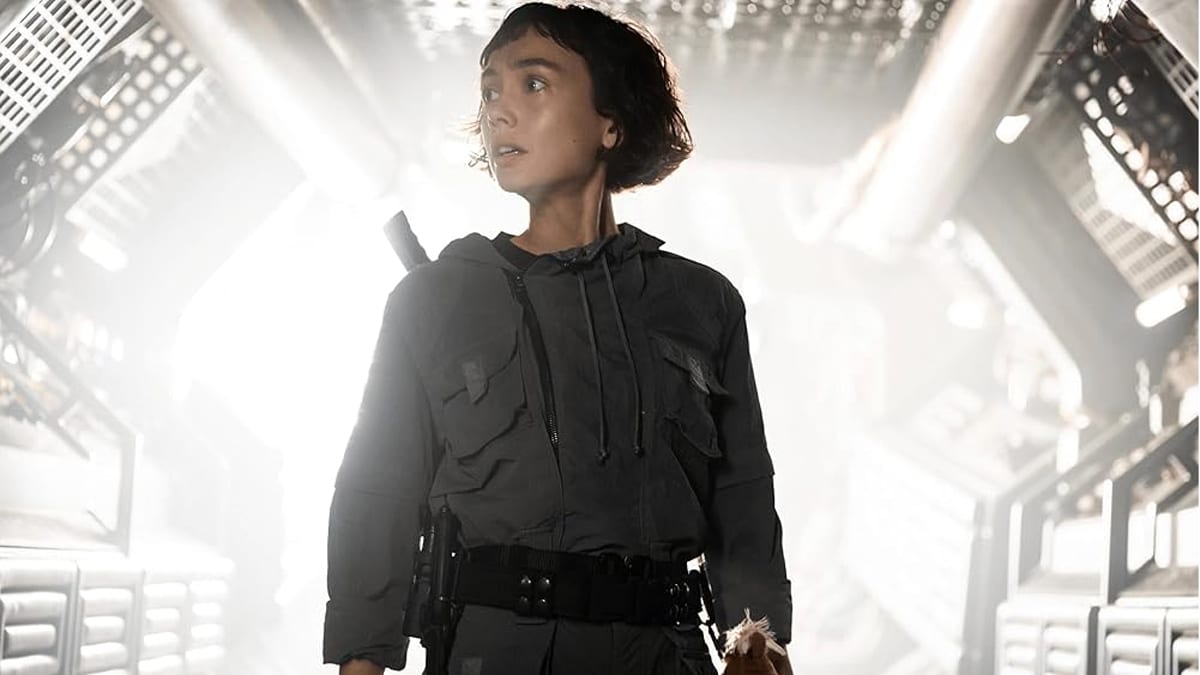
Sydney Chandler in 'Alien: Earth' (2025)
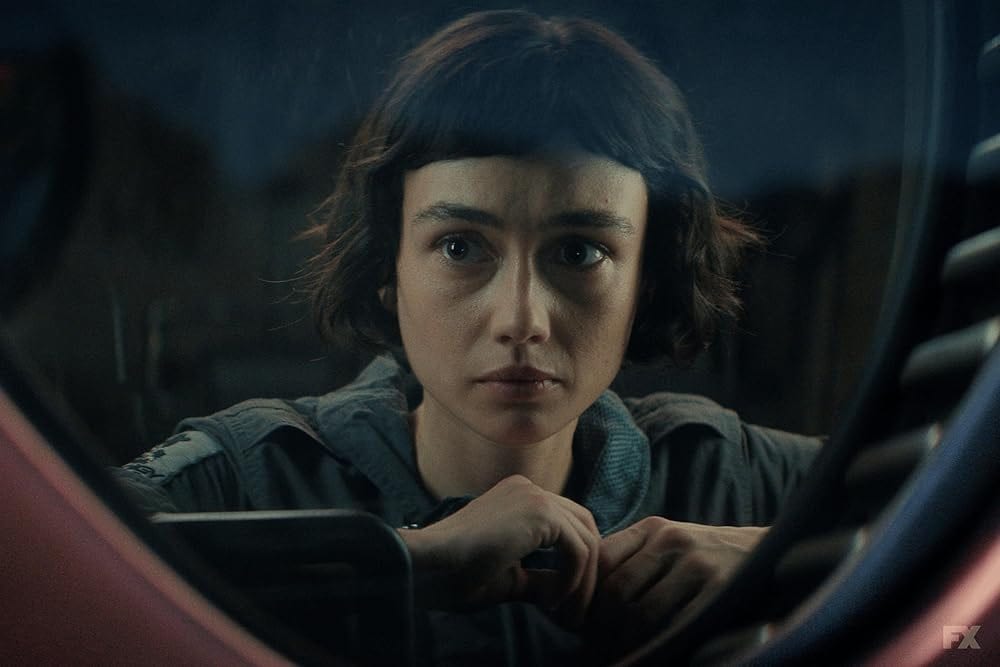
Boy Kavalier, the world’s youngest trillionaire, is an amalgamated caricature of every singular, charismatic tech bro visionary with an overinflated sense of self-importance and hubris. His research facility is named Neverland, making him analogous to Peter Pan, or the Boy Who Wouldn’t Grow Up. Chandler’s character was a moribund 11-year-old named Marcy whose consciousness was transferred to an adult body named Wendy after Peter Pan’s Wendy Darling. The other hybrids, terminally ill children whose personas were transferred to synthetic shells, are all named after characters in the book, such as Smee, Captain Hook’s boatswain, or Slightly and Nibs of the Lost Boys. It’s an insidious allegory considering the Lost Boys were never allowed to grow up or mature, in direct contradiction to Kavalier’s claim that he created the hybrids, who have supercomputers for brains, so that he just wants to talk to “somebody smarter than me,” or “debate with someone who blows my mind.”
The series kicks off when a Weyland-Yutani research vessel, the USCSS Maginot, which carries a menagerie of unsavory alien species headlined by the xenomorph, crashes into the Prodigy Corporation-controlled territory of New Siam. History nerds might understand the ship’s name as a reference to the Maginot Line, a series of concrete fortifications along France’s Eastern border intended to deter invasion from Nazi Germany that ultimately failed, rendering the term synonymous with expensive, ineffective efforts that give a false sense of security. The reference is a bonus, but ultimately unnecessary, as every Alien fan knows that anytime a Weyland-Yutani science vessel is involved, it never ends well.
The difference this time is that the xenomorph isn’t the only thing to worry about. Hawley understands that there’s only so much terror to be mined from a species that’s been featured in numerous films and various media over the past four decades. Eggs, facehuggers, and the different iterations of xenomorphs are great adversaries for feature films, but they’re known and almost predictable variables that might not have the proverbial legs for a long-running television series. So Hawley turns up the nope dial to 11 with a myriad of new and unknown alien terrors that are guaranteed to give even the most hardcore Alien fan the heebie-jeebies. Alien: Earth even breaks one of the prevailing, unwritten rules in the franchise involving xenomorphs and cats in the second episode just to let us know that all bets are off and that these new alien lifeforms are just as terrifying and infinitely more unpredictable than anything we’ve ever seen. This is Grade A ick, and Alien: Earth does not, in any way, disappoint on the horror front.
Alien: Earth pays homage to Ridley Scott’s original aesthetic, and the Maginot feels like the Nostromo’s older cousin, with an eerily similar mess hall, cryogenic chamber, and MU-TH-UR 6000 control room. Everything from the production design to the lighting is 1979 Alien-coded, and of course, it wouldn’t be an Alien story without the Weyland-Yutani agent, would it? This time, it’s the cyborg Morrow (Babou Ceesay) who is tasked with securing the vessel’s precious, proprietary cargo. Morrow is Alien: Earth’s Ash or Carter Burke, the corporate enforcer and stooge operating with the cruel and single-minded goal of safeguarding the megacorporation’s “investment”. From aliens that make your skin crawl to cold-blooded corporate henchmen to eccentric, manipulative trillionaires, Alien: Earth is well-stocked with high-quality villains.
But what elevates Alien: Earth into a stellar and promising series are its heroes, namely the newly minted hybrid Wendy, who uses her newfound agency and ability to find her brother Joe Hermit (Alex Lawther), who works as a medic for the Prodigy Corporation’s paramilitary arm. Joe’s team has been deployed in a search and rescue operation into the Maginot, which crashed into one of Prodigy’s residential towers, putting him in danger of encountering the vessel’s suddenly freed cargo. There are only a few but effective, scary, disturbing moments in the first two episodes, but what really matters are the quiet moments in between. Chandler’s portrayal of a 12-year-old in an adult body is tender and nuanced, and her interaction with Joe towards the end of the second episode cements Alien: Earth as must-watch television. The sibling dynamic that worked so well in Romulus is echoed here, and there’s never been a hero in the franchise that you can love so quickly and want to root for so badly as Wendy. She’s a combination of innocence and earnestness that has simply never existed before in the bleak, beaten-down corporation-owned future of the Alien universe. There’s never been as pure a hero as Wendy, who — if the story seeds hold — can actually hold her own against the worst that the universe has to offer.
Timothy Olyphant in 'Alien: Earth' (2025)
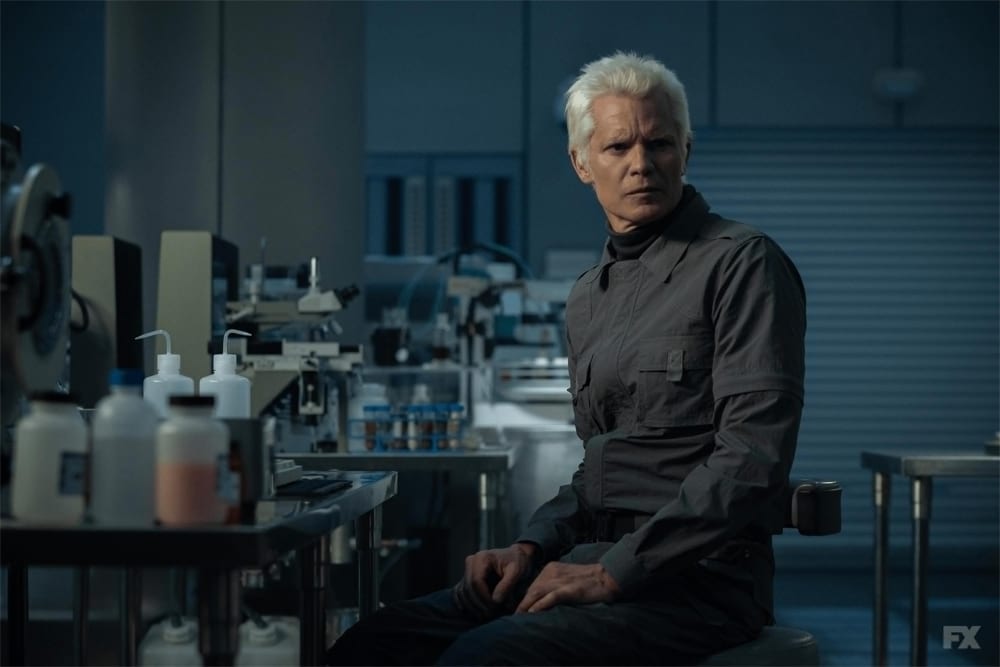
Instead, Wendy’s tougher struggle is in answering the question of what makes us human. In discussing Wendy, Prodigy’s synth chief scientist Kirsh (Timothy Olyphant in one of his most exquisite performances yet) repeatedly stresses that the hybrids are “not human”. He even somewhat mockingly recounts to Wendy in an ominous monologue how humanity used to be just food until man evolved, learned to use tools, and “built impossible machines” to go to space and stopped being food. But Kirsh reminds her that there will always be somebody bigger or smaller who would eat them if they had the chance. “That’s what it is to be an animal,” he concludes, “you’re born, you live, you die.” This is Kirsh’s dismissive estimation of humanity: animals who live short, fearful lives. Death is inevitable.
In a way, the xenomorph is humanity’s dark mirror. Its only purpose is to kill. And xenomorphs kill not even for sport or honor, the way the Yautja or Predators, the second pillar of Disney’s great sci-fi horror property, do. Xenomorphs are vessels of death at every stage of their life cycle, and they kill for the express purpose of killing, falling outside even of Kirsh’s understanding of the animal kingdom. Perhaps more accurately, Wendy is the bright mirror to the xenomorph because hybrids were created expressly to defeat death. With her declaration to save her brother, her defiant claim that “No. He’s not gonna die. I’m gonna save him,” at the end of episode 1, Wendy has put herself on a collision course with everything the xenomorph stands for. We’ve never had a hero quite like Wendy in over 40 years of Alien storytelling.
Hawley has frontloaded all the important questions that we can only hope will be answered over the course of an eight-episode season. “So, what am I?” Wendy asks Kirsh and her mother figure, Dame Sylvia (Essie Davis), “If I’m not human, what am I?” The question of humanity is a recurring concept in the franchise, most notably with Annalee Call (Winona Ryder) in Alien Resurrection and recently with Andy (David Jonsson) in Romulus. In both cases, the essence of humanity was explored through synthetics. In Alien: Earth, hybrids present a new variable in the argument by incorporating actual human consciousness. When she volunteers herself for a search and rescue operation in the hope of finding Joe, the fascinated Kavalier mocks her, “If I didn’t know any better, I’d say she was human.”
“I am human,” Wendy responds. Maybe. But maybe she’s more. The hybrids are repeatedly told they’re special. The sick children have been conditioned to think they’ve been selected for a special purpose in order for them to understand and accept leaving their dying bodies and moving into older, healthier, and seemingly ageless ones. In one telling slip, Wendy refers to hybrid bodies as ‘premium’, an indication that no matter how human she might feel, the Prodigy Corporation still views them as commodities.
In just two episodes, Alien: Earth has managed to expand the Alien franchise in ways no other film ever has. From world-building and setting up the corporation-controlled future to opening the door to an endless array of disgusting alien creepy-crawlies beyond the xenomorph to adding more branches to humanity’s evolution with cyborgs and hybrids. Just as Prey and Predator: Killer of Killers has opened up a vast world of possibilities for the Predator franchise, Alien: Romulus and Alien: Earth have only just begun to scratch the surface of potential for the Alien franchise, proving that Disney is sitting atop more sci-fi gold than just Star Wars. The next six weeks can’t come soon enough.
