‘Forgotten Island’ Is an Unforgettable Exultation of Filipino Culture
Hold tight: DreamWorks’ newest animated feature is a breathtaking rollercoaster ride through a brightly colored reimagination of Philippine folklore.

by Zach Yonzon
Published on Sep 25, 2026
The Filipino is often said to have a short memory. In politics, particularly, evidence of our short collective memory is the ouroboric cycle of electing disgraced or criminally charged politicians or political clans back into power. Memory and history aren’t interchangeable; memory is malleable, and history shouldn’t be. But for a people who, long before the Spaniards arrived, relied on oral tradition to pass on stories, memory and history are one and the same. While nearby Cambodia has the Angkor Wat and Indonesia has Borobudur, the Philippines has no precolonial megalithic structures, not even so much as menhirs or dolmens. Instead, we have poetry carved into bamboo and stories passed on from generation to generation in the form of song, dance, and the spoken word. Forgotten Island, DreamWorks’ 50th animated feature, is an ode to the Philippines and to memory, and it’s one of the most wonderful and precious gifts the Filipino people have ever been given.
Josephine “Jo” Yuson and Raissa Molina are childhood best friends at a crossroads in their relationship. The brainy and academically excellent Raissa (Liza Soberano) has just been accepted into Caltech in the United States and struggles to tell the artistic, chaotic Jo (H.E.R.) that their paths are diverging and will now be living on separate continents. Jo suffers from separation anxiety stemming from having been abandoned by her father as a young girl. Her lola, who’d raised her, passed away a few years earlier, and she fears venturing out into the world on her own. On their last night together, the two find themselves transported to the magical land of Nakali, short for Nakalimutan because even the island has a nickname in true Filipino fashion. Jo and Raissa wake up with no memories of the past twelve hours, and the rest of the film follows their wild adventure to recollect what happened, retracing their steps and (re)meeting the fantastical denizens of the forgotten island. It’s the PG-rated, animated equivalent of The Hangover, with two leads who have the same dynamic and core struggle as the main characters of Joyride.
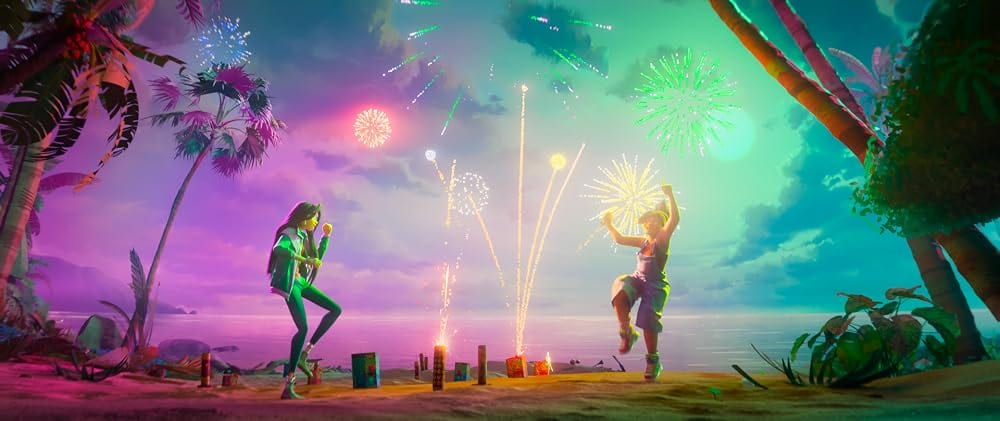
Nakali is home to the creatures of Filipino myth and folklore, but viewers in the Philippines might be a little surprised that Forgotten Island’s inhabitants aren’t quite what they expect. These aren’t the creatures Maximo D. Ramos told us about. Instead, DreamWorks delivers a fresh, iterative take on Filipino myths and folklore that reinvents the familiar. For example, batibat is a sleep paralysis demon also known as bangungot, but Forgotten Island’s Batiba (Jenny Slate) is a memory demon who collects memories in exchange for favors. The island’s most terrifying resident is a reenvisioned manananggal named Manang (Lea Salonga) who breathes fire and whose clawed lower half is just as monstrous as her winged upper body, only separating for convenience or combat advantage. The story draws a stark parallel between Jo and the reclusive Batiba, whose fear of venturing out into the world is a reflection of Jo’s own fear of navigating the future on her own.
Forgotten Island is loud and colorful, with an animation style that’s supercharged and over-the-top like a Filipino jeepney or the richest family’s house during the Pahiyas Festival. It’s a lot to take in. It’s also uniquely Filipino-American, a smattering of stereotypes and behaviors carried over by the Filipino diaspora, including the egregious use of ‘banana lumpia’ to describe turon that stems from the fact that lumpia is the most recognizable Filipino dish in America. It makes sense because Fil-Am Januel Mercado, who co-wrote and co-directed the film with Joel Crawford, was born and raised in Stockton, California, the city that’s home to Little Manila. From main characters with American accents to Westernized pronunciations — like the giant baby tiyanak (sounds like ‘chinook’) named Bungi (rhymes with ‘young he’) because of his missing teeth — Forgotten Island isn’t as concerned with representing Filipino culture accurately as it is with celebrating its potential. It’s an explosion of creativity rooted in Filipino identity. Just as oral traditions change over time, like a multigenerational game of telephone, Forgotten Island is a quantum leap in Filipino storytelling.
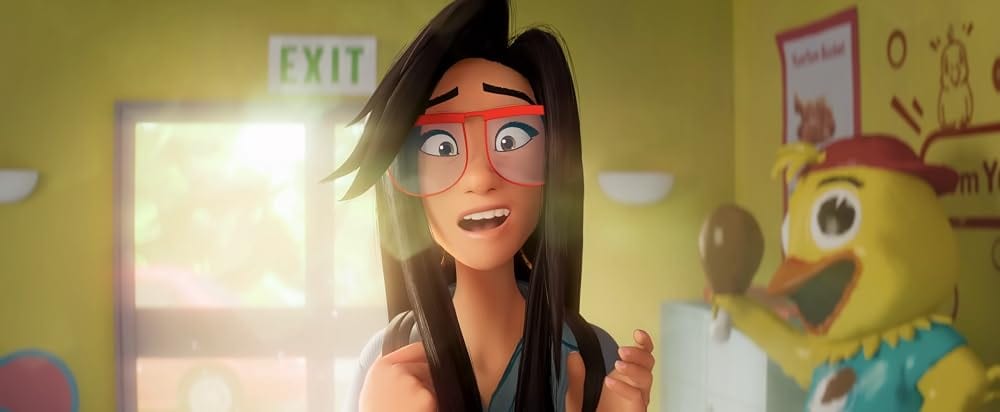
For Mercado and many immigrant Filipinos abroad, celebrating Philippine culture is an act of remembering. Forgotten Island’s core message about the power of memory takes on additional significance for a people who often forget, and our collective amnesia may well be the result of a deal made with Batiba. In a way, the Filipino’s short memory gives them strength to endure; the ephemerality of our culture is borne from the focus on surviving the present, our legacies preserved in story and song instead of structures of stone.
Mercado and Crawford focus on memory because memory is critical to identity. Our memories and experiences make us who we are, and for the people of an archipelago of over 7,000 islands, there’s magic in finding a shared identity. For a people with about 10 percent of its population working and living abroad, remembering our roots is essential. But while there’s a need to remember, there’s also room for reinvention. Forgotten Island is a liberal interpretation of Filipino folklore, with duwendes imagined as mushroom people, kapres as double-nosed tree-like beings, and tianaks as three-eyed giant babies. Jo and Raissa encounter funny, family-friendly versions of creatures ordinarily meant to frighten Filipino children on their non-stop rollercoaster of hijinks and hilarity. Nakali is a boisterous, neon-colored glitter bomb of a fantasy world that’s over-the-top by necessity because the Filipino is already loud and colorful by default.
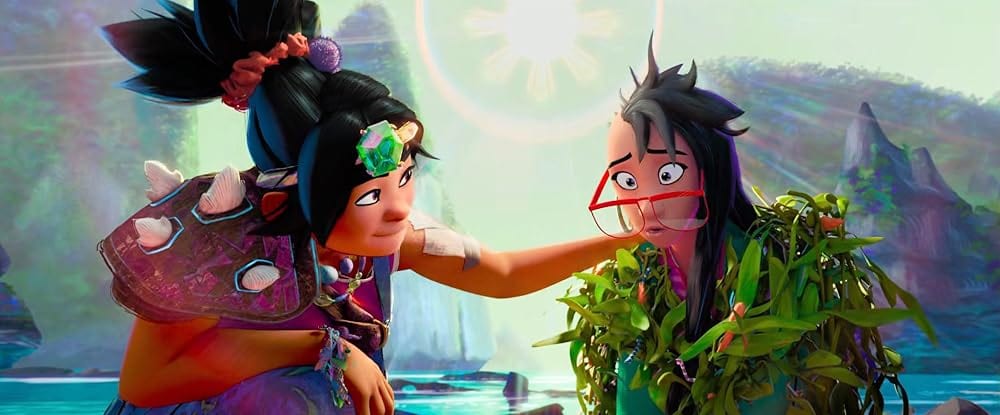
Forgotten Island is a fantasy adventure of the highest caliber, crammed to overflowing with magic and wonder. It’s a smorgasbord of lights and color, with a frenetic storytelling cadence that forces audiences to hold on tight or be left behind. It’s part K-Pop Demon Hunters, part Spider-Verse, and all Filipino. Well, mostly Filipino. This is still an American production with non-Filipino cast members like Dave Franco as a shapeshifting aswang or Ronnie Chieng as the king of the duwendes. Kevin McCann voices the siokoy, Mermahn (with the very Filipino ‘h’), a character so absurd he even has starfish nipple covers that talk (voiced by Nico Santos of Superstore). But the Filipinos shine, too. Soberano and H.E.R. are excellent, but Manny Jacinto is a scene-stealer as the blue-hued Bungi.
Nakali is a land that begs to be explored again and again, and the best friends Jo and Raissa are our tour guides. Their story revolves around how memories define us, how they should be cherished and protected, and how they hold great power. But most importantly, Forgotten Island encourages us to make more of them. How appropriate, then, that the film itself is an unforgettable experience, worthy of its own place in the charm bracelet of our lives. How incredibly lucky are we as Filipinos to have a Hollywood film that showcases our culture so loudly and unapologetically? Forgotten Island is as glorious a celebration of Filipino culture as DreamWorks’ iconic Kung-Fu Panda is a celebration of Chinese culture and deserves as much love as we Filipinos can give it.
ALSO READ:
‘Forgotten Island’ Is a Faithful Tapestry of Philippine Folklore
How a Filipino Kid Ended Up on Spider-Man: Brand New Day’s Most Memorable Scene
Zach really, really, really loves films.
View More Articles About: