Giancarlo Abrahan's 'Mag-Iina' Is a Gothic Answer to 'Kisapmata'
Giancarlo Abrahan's Cinemalaya Best Film winner swaps Kisapmata's monstrous father for a National Artist matriarch and finds the household just as capable of running a dictatorship.
Published on Aug 22, 2026
In 1981, Mike de Leon's Kisapmata was released. It was based on Nick Joaquin's reportage The House on Zapote Street, about a domestic murder-suicide in the 1960s. The film depicts a blood-curdling story of incest and domestic violence between a newly-wed daughter (played by Charo Santos) and her father (played by the enthralling Vic Silayan). Since then, Kisapmata has entered the canon of Philippine cinema as a black sheep. It's rare that the family drama, a genre tied to the fabric of the Filipino psyche, is smeared and perverted
Enter Giancarlo Abrahan with his Cinemalaya 2026 entry, Mag-Iina. Abrahan's strongest suit is his writing. But in this film, he takes the backseat on scriptwriting duties to give way to celebrated writer Guelan Varela-Luarca. Luarca, it turns out, also wrote and directed the recent stage adaptation of Kisapmata. And so the ouroboros tail continues eating itself.
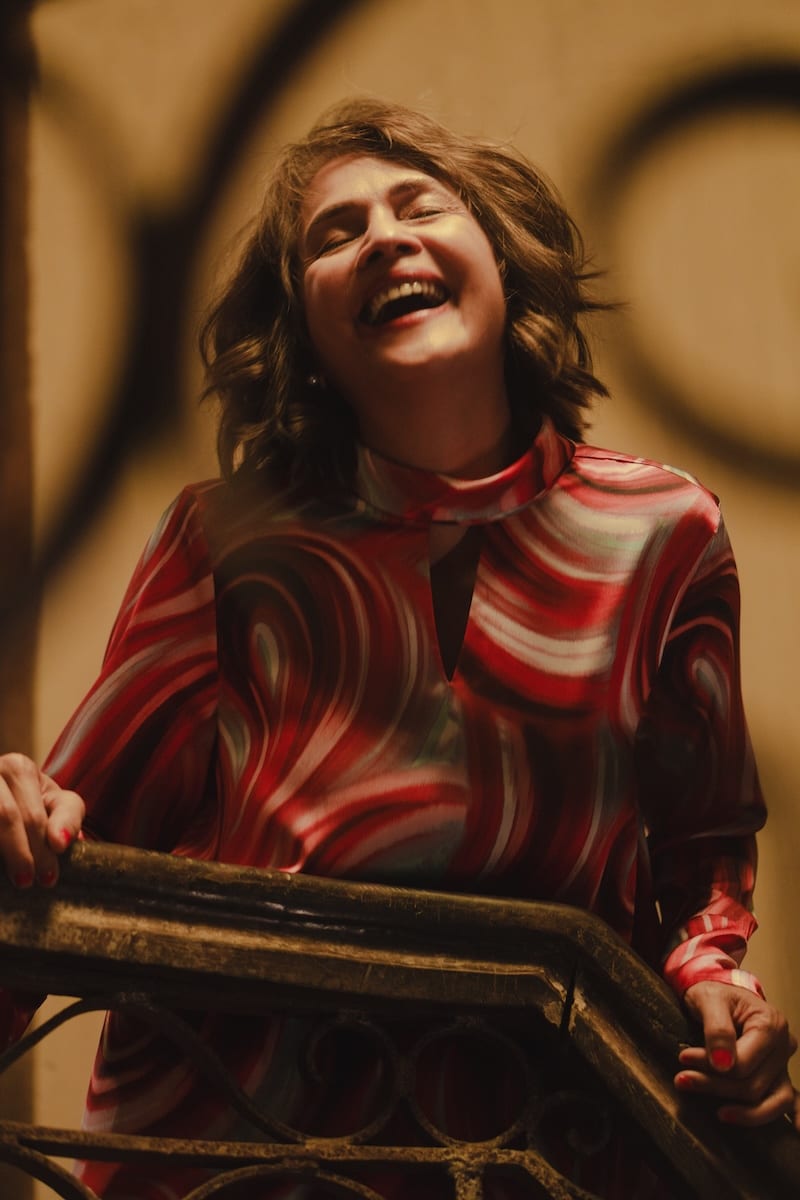
First, the cast of characters. In Mag-Iina, the patriarchal figure is absent. In its place is Jackie Lou Blanco transformed as the unnerving crone-like matriarch Angela Abreu. In fact, the film has no real male figures. There's the adopted Yñigo III, played by child actor Lucas Andalio. Then there's Yñigo II, a ghost in the house cameoed by Bart Guingona.
Restrained yet vicious is Cherry Pie Picache's predatory Ysobel. Her prey is the timid household help Katte, played by Ness Roque. Agot Isidro plays the manic and volatile Mita. Janine Gutierrez plays Mita's daughter Anj, our lead and stand-in in this crazy effed-up family. The female-fronted cast deserves accolades for their portrayals. The Abreus are, quite frankly, a powerhouse ensemble, feral and unrelenting in equal measure.
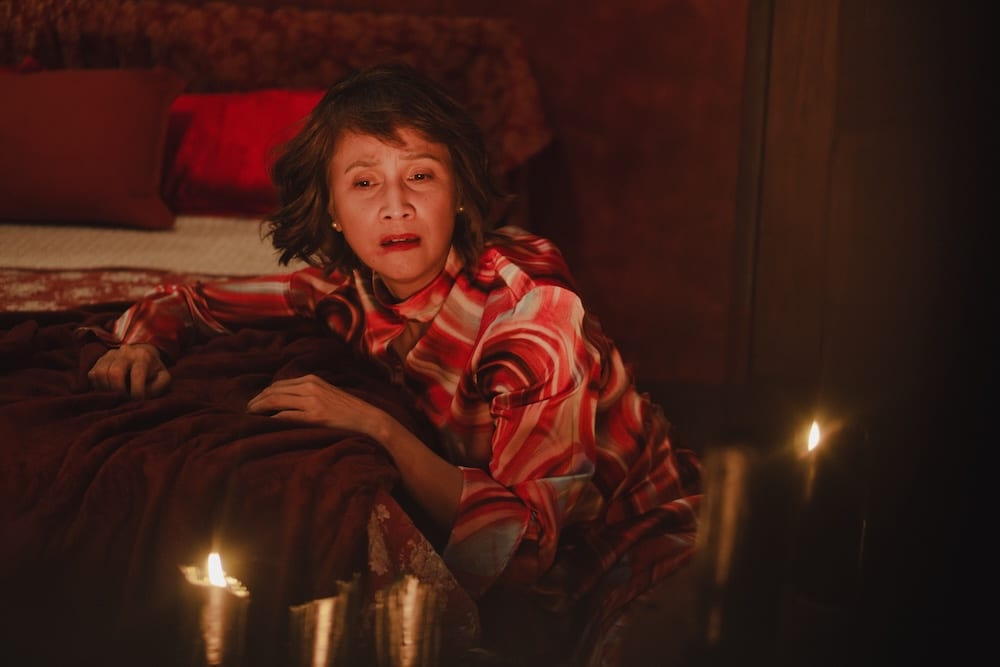
Mag-Iina is a film that revels in its bombast. This is not a negative. It simply knows what it is. A family drama cloaked in Gothic horror; of course, its substance rides in its loudness. Abrahan has always flirted with the mundane and the fantastic in his works. This film may not be his most comfortable step, but it's made in the right direction nonetheless. Mag-Iina delivers the imagery you'd expect. When it arrives, it's no less disturbing.
My question, however, ultimately rests on this: How does Mag-Iina converse with Kisapmata? Kisapmata is widely regarded as an allegory of strongman rule, of the dictatorial regime at the time. Could it be that Mag-Iina exists in a historical continuum? What does it say that it doesn't say outright?
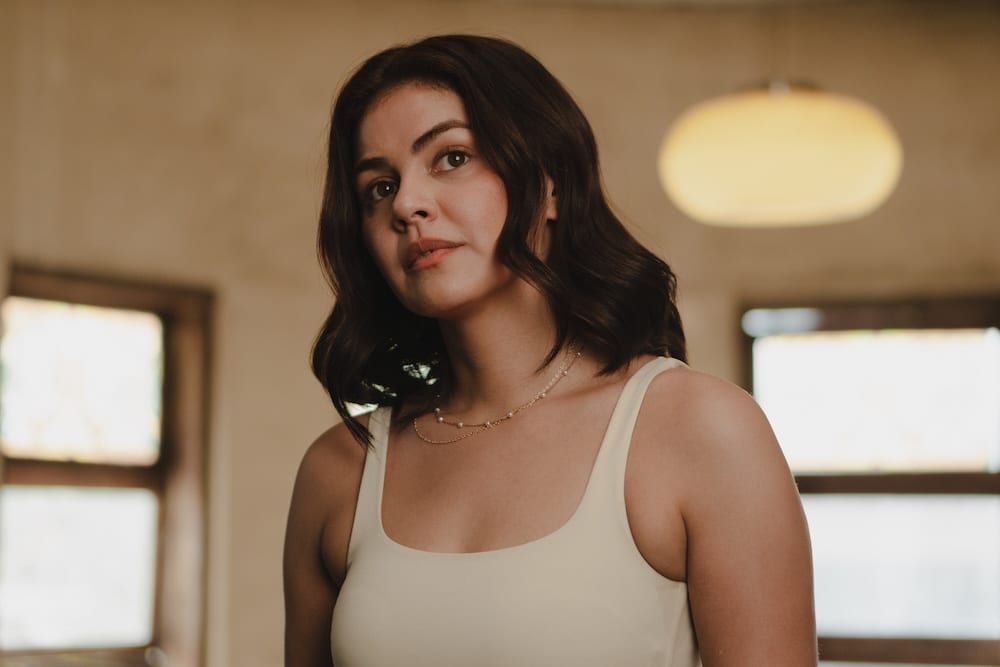
The film briefly mentions the then-Presidential children, opening the floodgates of subtextual interpretation. There's the frail mother, patron of the arts. The rebellious and ultimately subservient daughter. The infantile son, molded in the image of his namesake. Kisapmata's Dadong and Mag-Iina's Angela Abreu together make up a conjugal tyranny of their household. Power does not choose gender. The guard lies not with Anj, who is of the same blood and ilk, but with Katte, the persecuted working class who will soon achieve vindication.
Dadong in Kisapmata is monstrous simply because he's a man, while Angela achieves abjection through fantastic powers. Yet the normal Ysobel is as vile as Dadong and, arguably, more vile than Angela. It says those in power will use whatever means, unnatural or immoral, necessary to stay in power.
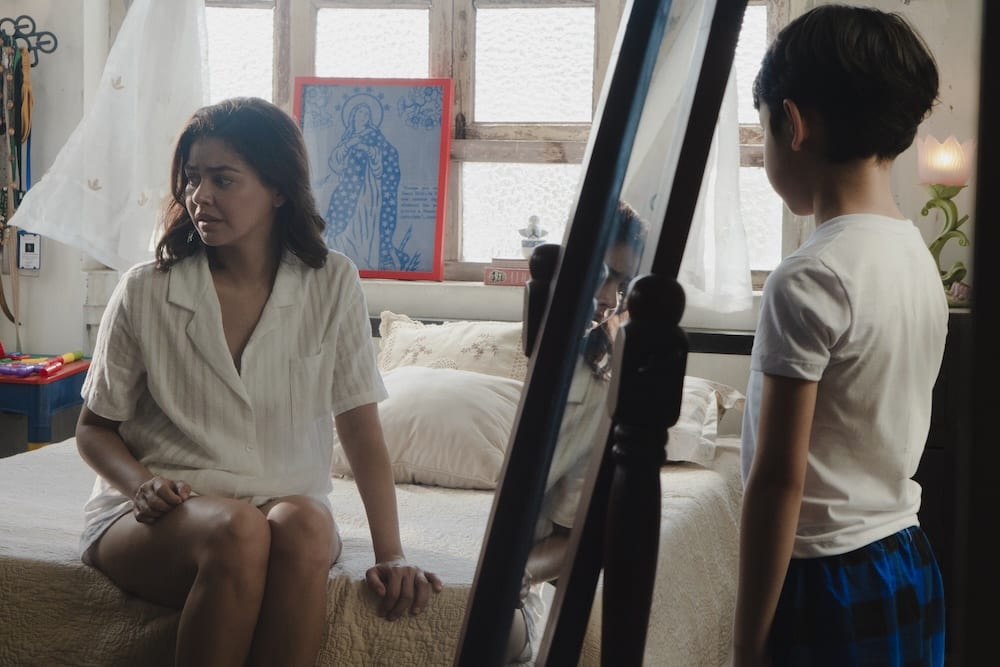
The distinction between the two texts is gendered, yes. But that's only the surface. It is also historical. Mag-Iina does not contradict Kisapmata. Rather, it furthers its discourse. Anj is subsumed by corruption not because she's a woman, for corruption does not concern itself with identity politics. In a scene where Anj finds beauty in Katte's suffering, it's shown that there's darkness in her all along.
Of course, all of these are conjectures. Mag-Iina is a wide canvas any interpreter can paint their interpretation over. But it doesn't have to be like that. It can be all these things or it can be nothing at all. In his acceptance speech after receiving the award for best film, Abrahan called out disgusting political dynasties. "Itong walang katapusang pagpapalit-palit ng asawa, anak, kapatid, meron pa bang mas incestuous diyan?" Subtext, as it happens, is for cowards.
Joker Manio is a freelance film critic and culture/lifestyle writer whose works have been published in various local broadsheets and magazines. His criticism is guided by the principle, "The form is the message."
View More Articles About: