Haunting and Endless Possibilities in Kane Parsons’ 'Backrooms'
The 20-year-old YouTuber-turned-director pulls off the film's tense atmosphere through precise use of camera and sound.
Published on Jun 8, 2026
Making its Philippine premiere, distributed by CreaZion Studios, Kane Parsons’ debut film Backrooms (2026) renders the eerie Internet image through the screen, tickling the audience's senses to make them feel the engulfing void of space while leaning heavily into the psychological horror genre.
Certainly, a 20-year-old directing their first feature film is a surprise to many, especially coming from a YouTuber-turned-director. However, while extremely ambitious, Parsons pulls it off through a precise use of camera and sound, which heightens the film's tense atmosphere.
And unlike Genki Kawamura’s Exit 8, a film released last year that renders the subway as an anxiety-inducing space inspired by the 2023 video game The Exit 8, tracing the Backrooms to its core means submerging into the deep abyss of the Internet phenomenon posted in 2019 on 4chan, an image-based bulletin board. Some people who are invested in the lore of the backrooms trace the image's metadata back to 2002, discovering it belongs to a former furniture store in Oshkosh, Wisconsin, turned indoor racing track.
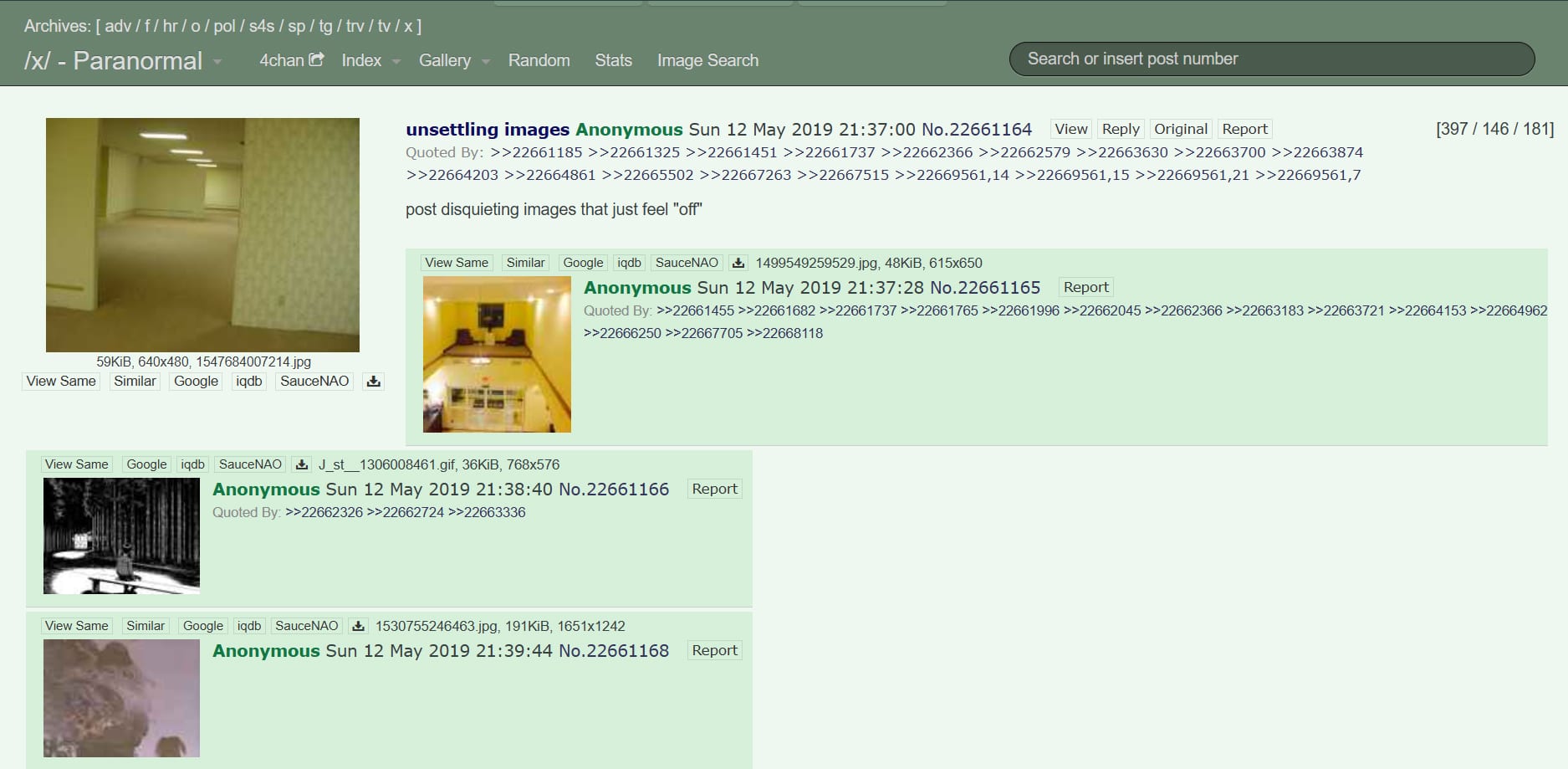
One of the anonymous comments in the 4chan post, which circulated on the Internet for years, mentioned "noclip," a video game term where solid objects pass through each other without interruption, allowing a player to explore what lies behind the playable space. This noclipping becomes associated with the backrooms, a place where you will end up if you fall out of the real world.
Building on this, Parsons created a series of shorts in 2022 that explored and extended the lore of the backrooms. In his shorts, the eerie image is not just a haunting, yellow hallway but one that is experimented on in relation to the gains of the powers that be. Moreover, some of the plotlines in Parsons’ shorts were referenced in the film. Like the A-Sync Research Institute, which has a project regarding Magnetic Resonance Imaging hardware.
Framed within Parsons’ established narrative, Will Soodik’s screenplay functions as a prequel to the Parsons universe; it shifts focus toward the protagonist's psyche, exploring their interiority as they traverse the endless yellow hallways. Additionally, narrative cohesiveness is not so much of a concern for Soodik and Parsons, but rather how they render the backrooms as a liminal space and its sensations through the audience’s psyche.
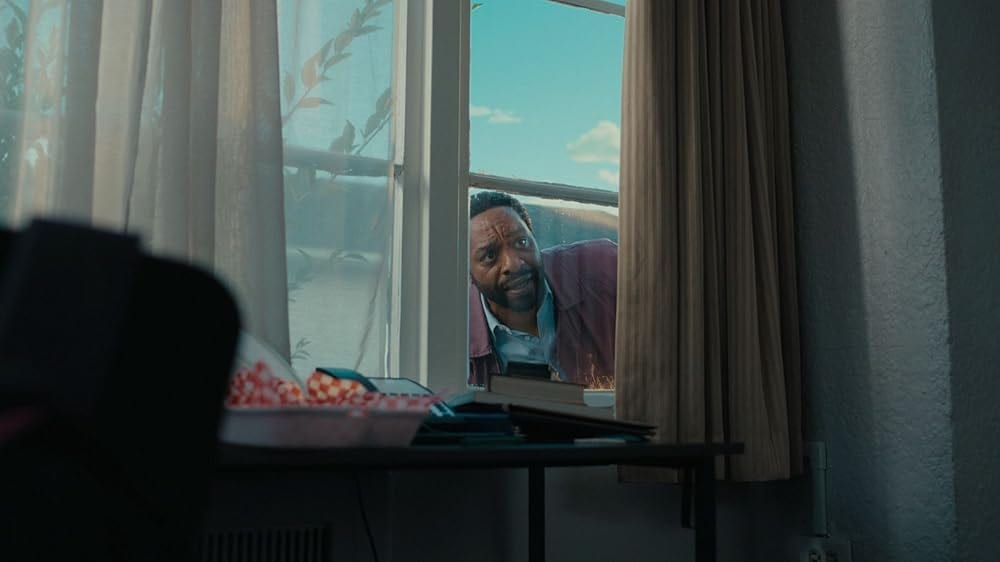
Set in the 1990s, the didactic narrative centers on a depressed alcoholic and failed architect named Clark, played by Chiwetel Ejiofor, and his therapist, Dr. Mary Kline, portrayed by Renate Reinsve. While the performances of the actors are both impressive, what is best to examine in the first part of the narrative is how the world's bizarre atmosphere makes itself known. Everything feels artificial, down to the complete absence of sound in space. This pervasive artificiality signals a disturbing possibility: that the world outside the backrooms is actually just another level of the backrooms itself.
I expected the camera to function like a surveillance tool as the exploration of the backrooms became the center of the film, turning the audience into spectators waiting for a spectacle to unfold. However, Jeremy Cox’ camera acts as an extension of the character's psyche, bringing the audience closer to the unfolding scenes. Through this, the film allows the audience to feel the weight of the environment and draws them into the 30,000-square-foot endless space themselves.
Furthermore, Cox’ camera becomes a character in its own right with every movement and pause, allowing the viewer to traverse the space. This shifts the focus toward the film's tone, balancing the textures of the opening found-footage style with a more traditional cinematic approach. This texture balance becomes integral because it underscores the interval between the past and the future, illustrating how the two connect. Through this method, the camera-as-character acts as a bridge, evoking nostalgia for the past and uncertainty in the present—both of which breed anxiety for the future. Ultimately, this liminal dread explains Clark’s desire to remain within the backrooms.
On the other hand, its effect may not be entirely sufficient to make the viewer experience the suffocating space and its terrifying possibility of infinity. Take, for instance, the scene where the still-life version of Clark chases Mary. While the camera cuts back and forth between their points of view, the building of suspense deflates because the camera lingers on their expressions instead of maximizing the chaotic visuals and sound design to keep pace with the audience's anticipation.
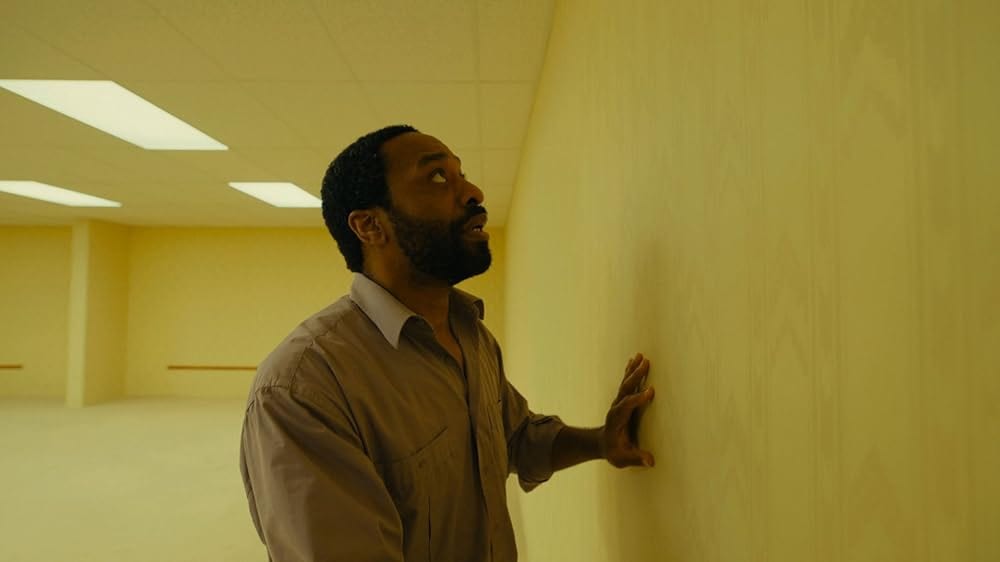
Consequently, these gaps, left hanging by the camera work, are resolved by the film's sound design. The sound captures our full attention and manipulates our emotions, directly shaping how we react to every single scene. It awakens our mind, practically forcing us to keep watching as the events unfold. In one poignant scene, Mary finally enters the backrooms; as she explores the deafening space, she finds a drawing on the wall. Like a trickster, the sound heightens our apprehension while simultaneously stimulating our minds.
But what is more unsettling in the film is when the camera moves downward from Mary’s living room to the backrooms. Here, Parsons reconfigures the backrooms as a liminal space, merging both the real world and the backrooms as they copy what is outside of them. The backrooms then become a place that is everything and nothing at the same time.
As these two become one, Backrooms forwards this proposition of endless possibilities of the self. Subsequently, those who dwell in the backrooms hone the place as a liminal space; while it strips away any sense of purpose, it simultaneously grants an opportunity for the desires and uncontrollable urges the mind longs for.
There are null zones everywhere, which means there are different doors opening that make this version of yourself infinite—freshly remembered or distortedly misremembered. These possibilities ask us a question: do you ever feel like you are in a state of feeling in the void?
And despite all of this, the backrooms become a repository not only of memories, but also of our minds stubbornly trying to make sense of the world as it continues to consume our very existence. Consists of endless artificial worlds that answer our dilemma in the midst of a reality pushing us into isolation and trapping us in the disillusionment of comfort, born from the numbness and trouble it brings.
Ultimately, although the film's narrative has gaps, it wonderfully assembles and reimagines our perceptual nature of experiencing these haunting, endless hallways. It places us in an endless in-between, stimulating our senses through its anticipatory, eerie atmosphere.
ALSO READ:
Urban Alienation and the Illusion of the Japanese Dream in Irene Villamor’s Midnight Girls
I Was Looking for a Chinese Series. I Found Taiwan Instead.
Lorence Lozano is a film critic and cultural worker from the Philippines. Their interests lie at the intersection of gender, politics, and space within Southeast Asian cinema.
View More Articles About: